Every tourist in Jakarta eventually hands cash to a stranger through a small window and hopes for the best. Get that transaction wrong and you can lose ten or fifteen percent of your holiday money before you have even checked into a hotel. Get it right, and it costs you nothing more than a five-minute stop and the faint discomfort of counting rupiah in six-figure sums. Currency exchange jakarta is not complicated once you know which four options exist, which one is genuinely best for most people, and which shopfronts to walk straight past.
This guide sits alongside our Jakarta travel tips pillar, which covers money and budgeting only in outline. Here we go deep on the exchange side specifically: banks, licensed money changers, ATMs, and airport counters, plus the scams that genuinely catch people out in this city. If you are still working out what a trip here costs overall, or whether Jakarta is safe day to day, those are separate questions worth reading up on before you land — this article assumes you have already decided to come and just need your cash sorted.
Currency Exchange Jakarta: The Quick Answer
If you want the short version before the detail: withdraw rupiah from an ATM attached to a major Indonesian bank — BCA, Mandiri, or BNI — using a fee-free or low-fee travel card, and top up with a licensed money changer in Kota or a shopping mall if you need a larger lump sum in cash for a market stall or a private driver. Skip the airport counters beyond a small amount to get you into the city. Avoid any money changer that isn’t displaying a Bank Indonesia registration number. That’s it. Everything below explains why, and what to do if your bank card doesn’t cooperate or you’re carrying foreign banknotes you want to convert.
Your Four Options for Getting Rupiah in Jakarta
There are, realistically, four ways to end up holding Indonesian rupiah in this city, and they behave very differently in terms of rate, speed, and risk.
Banks
Walking into a branch of BCA, Mandiri, or BNI and exchanging foreign notes over the counter is the safest option in the purest sense — no scam risk, transparent posted rates, a proper receipt — but it is slow. Expect to queue, fill in a form, show your passport, and wait while a teller inspects every note for damage. Bank rates are also usually a touch worse than a good money changer’s, because banks aren’t competing purely on forex margin the way dedicated exchange counters are. Useful if you’re already at a bank for something else; not worth a special trip.
Licensed Money Changers (Kurs Uang / Valas)
Indonesians call foreign exchange “valas” (short for valuta asing) and you’ll see “Kurs” boards everywhere showing buy and sell rates. A licensed, independent money changer — properly called a Pedagang Valuta Asing Berizin, or PVA Berizin — is usually your best rate for exchanging physical foreign banknotes, often noticeably better than a bank and sometimes better than the interbank rate implied by an ATM withdrawal, particularly for larger sums. The catch is that “money changer” also describes every unlicensed operator running a scam booth, so verifying legitimacy matters more here than with any other option. More on that below.
ATM Withdrawals
For most travellers this is the sensible default. You insert a debit or credit card, the machine dispenses rupiah at close to the real interbank exchange rate, and the screen discloses the local operator fee before you confirm. There’s no haggling, no counting notes under pressure, no possibility of being short-changed. The downsides are stacking fees — your home bank’s foreign transaction fee plus Indonesia’s local ATM fee — and per-transaction withdrawal caps that mean a large cash need takes several withdrawals.
Airport Exchange Counters
Convenient and, almost without exception, poor value. The counters at Soekarno-Hatta (CGK) exist to catch travellers who haven’t sorted money yet and are willing to pay for that convenience. Use them for a small amount to cover a taxi or airport transfer, then do the rest properly once you’re in the city.
How to Spot a Legitimate Money Changer (and Avoid a Scam)
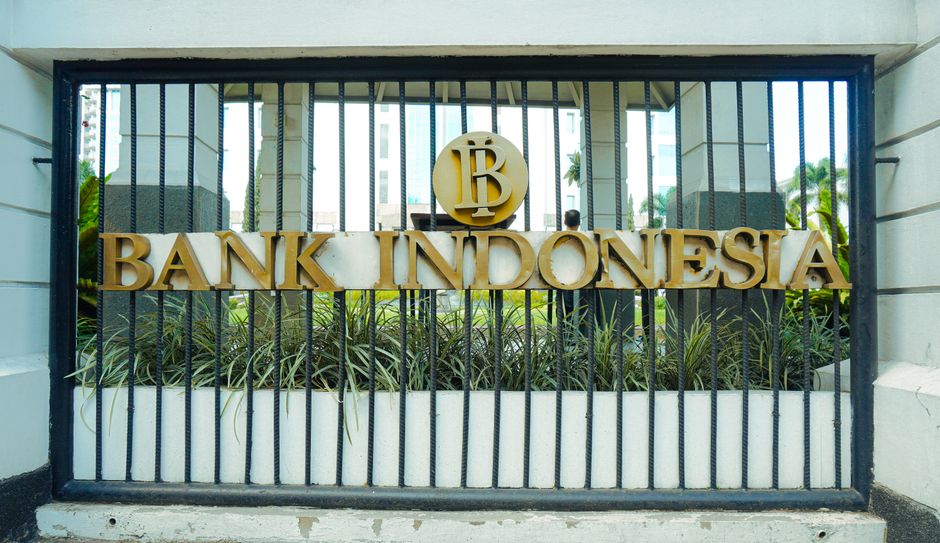
This is the part worth reading twice if you’re planning to change a meaningful amount of cash on this trip. Bank Indonesia licenses and regulates authorised money changers under the PVA Berizin scheme, and every legitimate operator is required to display specific proof of that licence. Unlicensed operators — sometimes just a folding table with a hand-written rate board — are where nearly every bad story about Jakarta currency exchange originates.
The Bank Indonesia PVA Berizin Logo
A properly licensed money changer displays a green PVA Berizin shield logo and a Bank Indonesia hologram sticker in the window, plus a registration number printed on the signboard itself. If you can’t find that logo and number within a few seconds of walking in, walk back out. It costs you nothing to ask the staff to point out their licence number, and a legitimate operator will do so without hesitation because they’re legally required to display it anyway.
Red Flags That Should Send You Elsewhere
A few patterns are almost always a warning sign. A rate that’s noticeably better than every other board on the street is bait, not generosity — nobody in a competitive market gives away margin for free. A counter with no visible licence number, no printed receipt on offer, or staff who get vague when you ask about registration is not somewhere to hand over cash. Small unmarked kiosks tucked into alleys or clustered around tourist-heavy corners without any bank affiliation deserve particular scepticism. And if a changer insists on counting your money somewhere out of your direct line of sight, or rushes you to sign or leave immediately after the count, that’s a deliberate tactic, not bad manners.
The Classic Money Changer Scams to Know Before You Go
None of this is theoretical. The same handful of tricks recur across Indonesia, and they’re worth knowing in specific detail because they’re designed to look ordinary while they happen.
The rigged calculator is the most common. A dishonest operator uses a calculator that’s been altered to skim a small percentage — sometimes as much as five percent — off the total, and because rupiah amounts run into the hundreds of thousands or millions, a small percentage error is easy to miss at a glance. Always run the maths yourself on your own phone before agreeing to a figure, using the rate posted on their own board.
The short count is the second classic. A changer will count out your rupiah in front of you, appear to finish, and then — while you’re reaching for your passport or your bag — quietly slide part of the stack back under the counter, or split the count into stages and “forget” to hand over the final portion. The trick relies on distraction and on rupiah’s large numbers making small missing amounts hard to notice on the spot. Count every note yourself, out loud, before you leave the counter, and don’t let anyone rush that process.
A third pattern involves sleight of hand with small denominations, typically Rp10,000 notes, dropped or palmed during the counting process so the visible stack looks correct but the actual total handed over is short. And a fourth, more basic pattern is simply refusing to honour the advertised rate once you’ve already committed — “the board rate was for amounts over $500” or similar excuses invented on the spot. Ask about minimums and conditions before you commit any cash, not after.
None of this means every unlicensed operator is actively dishonest, and none of it means every licensed one is flawless. But sticking to PVA Berizin-registered counters, doing your own arithmetic, and counting your money in full view before you walk away removes almost all of the risk.
Best Areas in Jakarta for Good Exchange Rates
Rates vary by neighbourhood more than most visitors expect, mostly because competition and rent both shape the margin a money changer can afford to offer.
Kota — the historic trading district
Kota, in the old town area near Kota Tua, has been Jakarta’s money-changing centre for decades, and competition there tends to produce some of the sharper rates in the city. PT Ayu Masagung, on Jalan Kwitang Raya in Central Jakarta, has operated since 1968 and is one of the longest-running licensed changers in Indonesia — a useful anchor point if you want a name you can look up in advance rather than picking blind from a row of kiosks.
Blok M
Down in South Jakarta, Blok M has a cluster of established money changers serving the area’s dense mix of offices, shopping centres, and hotels. It’s a sensible stop if you’re already spending a day around Blok M’s markets and malls, and the rates tend to be competitive precisely because there’s more than one changer within easy walking distance of each other.
Shopping malls
Most of Jakarta’s larger malls, including those covered in our guide to the best malls in Jakarta and specifically at Grand Indonesia, host licensed money changer counters, often on a lower ground or basement level near the banking services. Rates inside malls are occasionally a shade less generous than a standalone Kota specialist, but the trade-off is air conditioning, security cameras, mall management accountability, and zero risk of an unlicensed pop-up posing as something it isn’t. For anyone uneasy about street-level exchange, a mall counter is the more comfortable middle ground.
Comparing Your Options: Rate, Fee, and Convenience
| Method | Typical rate quality | Fees | Convenience | Scam risk |
|---|---|---|---|---|
| Bank counter | Fair, slightly below best money changers | Minimal, sometimes none | Slow — queues, forms, ID checks | Very low |
| Licensed money changer | Best available for cash, especially larger sums | None disclosed separately — built into the rate | Fast, walk-in | Low if properly licensed; high if not |
| ATM withdrawal | Close to real interbank rate | Local ATM fee + home bank foreign fee, both stack | Very fast, widely available | Very low |
| Airport counter | Poor — commonly 6 to 12 percent off the real rate | Built into a wide buy/sell spread | Extremely convenient | Low (legitimate but expensive) |
ATM Withdrawals: Fees, Limits, and Which Banks to Use
ATMs are the least dramatic option and, for that exact reason, the one worth defaulting to. Indonesian ATMs generally dispense at a rate close to the real Visa or Mastercard interbank rate, with the local operator fee shown on screen before you confirm the transaction — so there’s no ambiguity about what you’re paying. Local fees for foreign cards typically run somewhere between roughly Rp20,000 and Rp75,000 per withdrawal depending on the bank, though this shifts over time; Bank Mandiri, for instance, introduced a flat access fee for foreign Visa and Mastercard cards in early 2026, so it pays to check current terms rather than assume last year’s numbers still hold. BCA and BNI have generally been friendlier to foreign cardholders with lower or no separate local fee, while some other banks charge a percentage-based fee instead of a flat one.
On top of the Indonesian side, your own bank or card provider will typically charge a separate foreign transaction fee, commonly somewhere in the two to eight percent range depending on your card. A card built for travel — the kind that waives foreign transaction fees and reimburses ATM charges — makes a genuinely large difference over the length of a trip and is worth arranging before you fly rather than discovering the fee structure after the fact.
Per-transaction withdrawal limits at Indonesian ATMs generally sit somewhere between roughly one and three million rupiah, so a larger cash need may take two or three separate withdrawals, each attracting its own local fee. Your home bank may also cap your daily withdrawal amount, sometimes well below what the Indonesian ATM itself would allow, so check your own daily limit before you rely on a single big withdrawal to cover several days of spending.
ATM fees and limits at a glance
| Factor | Typical range | Notes |
|---|---|---|
| Local ATM operator fee | Roughly Rp20,000–75,000 per withdrawal | BCA and BNI have generally run lower or fee-free for foreign cards |
| Home bank foreign transaction fee | Roughly 2–8% of the amount withdrawn | A travel-focused card can waive this entirely |
| Per-transaction limit | Roughly Rp1,000,000–3,000,000 | Set by the Indonesian bank, varies by ATM |
| Daily limit | Often capped by your home bank, sometimes lower than the Indonesian limit | Check with your card provider before you travel |
Should You Bring Cash, or Rely on Cards?
A hybrid approach beats going all-in on either. Cards, including tap-to-pay, now work at most hotels, malls, restaurants, and chain stores across central Jakarta, and Jakarta’s own transit system runs increasingly on cashless payment through cards like the one covered in our Jak Lingko card guide. But plenty of Jakarta’s most worthwhile experiences are resolutely cash-based: street food stalls, becak or ojek rides paid informally, traditional markets like those in our guide to Jakarta’s traditional markets and at Tanah Abang, small warungs, and tipping. Turning up with only a card and no rupiah will genuinely limit what you can do and eat in this city.
A workable rule of thumb: carry enough cash for two or three days of small purchases, transport, and food at any given time, and top up from an ATM as that runs low rather than carrying a large amount of cash from day one. It reduces both the inconvenience of running dry and the exposure if a wallet ever goes missing.
Does Currency Matter? USD, EUR, GBP, AUD, SGD and the Clean-Bill Rule
If you’re exchanging physical foreign banknotes rather than withdrawing from an ATM, the currency and condition of those notes genuinely affects the rate you’re offered. US dollars remain the most widely and favourably exchanged foreign currency across Indonesia, with euros, Singapore dollars, and to a lesser extent British pounds and Australian dollars also accepted at most licensed changers, usually at a slightly less favourable spread than USD.
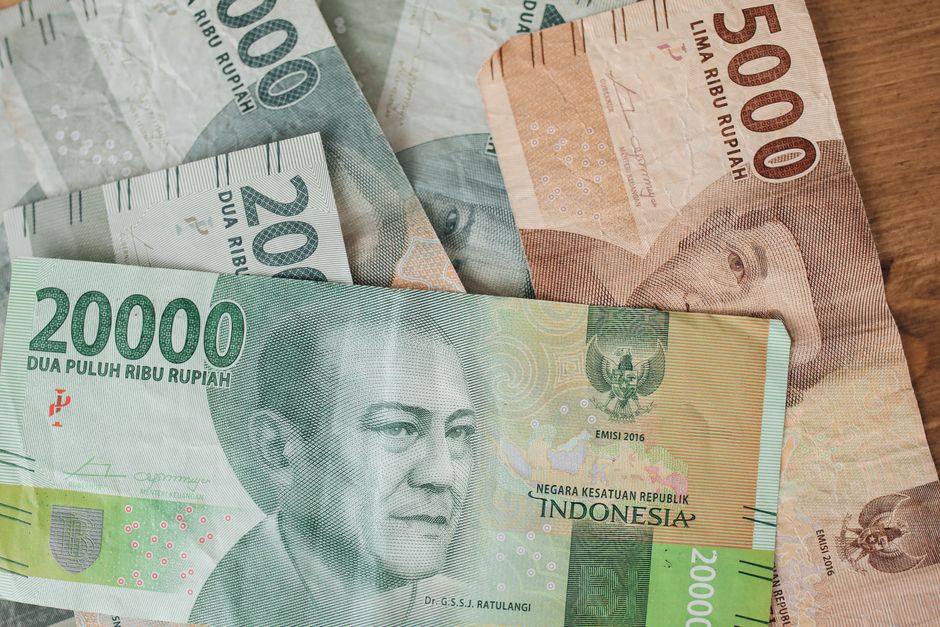
What surprises a lot of first-time visitors is how strict Indonesian money changers are about the physical condition of banknotes, particularly US dollars. Notes with any fold, crease, tear, ink mark, or handwriting on them are routinely refused outright or accepted only at a discounted rate — sometimes a flat deduction per imperfection. Series matters too: older pre-2006 US dollar notes are frequently rejected by banks and many money changers regardless of condition. If you’re planning to bring foreign cash specifically to exchange in Jakarta, request crisp, new, large-denomination notes from your bank before you leave home, and keep them flat rather than folded in a wallet for the whole trip.
Old, Torn, or Marked Notes: Why They Get Rejected or Discounted
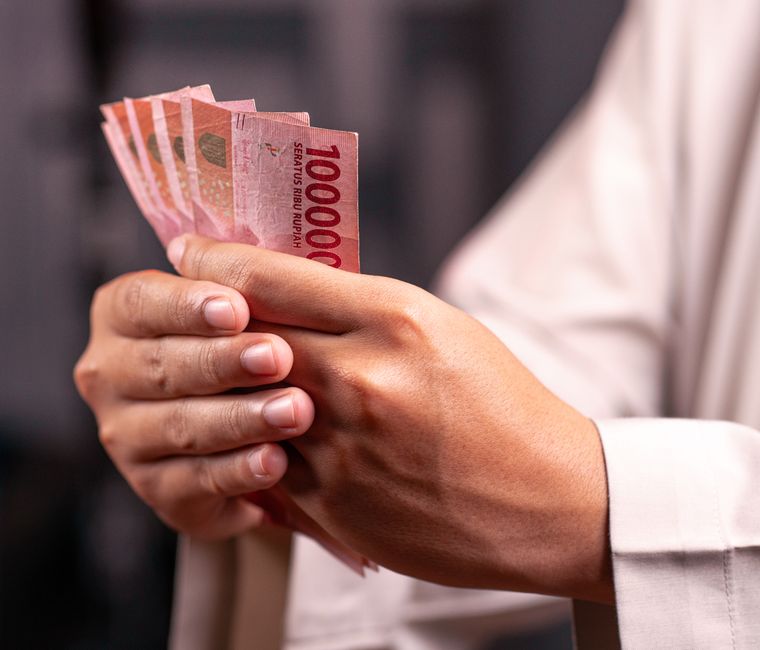
This cuts both ways. Just as foreign notes need to be pristine to get a good rate, rupiah notes you receive should be checked before you leave the counter, because a torn, heavily worn, or taped rupiah note can be difficult to spend on afterward — some smaller vendors and taxi drivers will refuse damaged notes just as firmly as a bank refuses a creased dollar bill. When you’re handed your rupiah, take a moment to flip through the stack and set aside anything visibly damaged, and ask for a replacement note on the spot rather than discovering the problem later at a food stall.
Dynamic Currency Conversion: The Trap at the Card Machine
One scam-adjacent trap has nothing to do with money changers at all. When you pay by card at a hotel, restaurant, or shop terminal, the machine will sometimes ask whether you’d like to be charged in your home currency instead of rupiah — this is Dynamic Currency Conversion, or DCC. It sounds convenient, but the exchange rate applied is set by the merchant’s payment processor and is reliably worse than what your own card issuer would apply if you simply pay in rupiah. Always choose to be charged in the local currency (IDR) when a terminal or ATM gives you the option, even though the machine will often visually nudge you toward your home currency by listing it first or in a bolder font.
How Much Cash Should You Actually Carry
There’s no need to walk around with a stack big enough to worry about, but running dry at an inconvenient moment is its own hassle. As a working figure, most visitors are comfortable carrying the rupiah equivalent of somewhere between thirty and eighty US dollars for daily use — enough for meals, a few short rides, market purchases, and tips — topped up every couple of days rather than exchanged in one large sum on arrival. If you’re heading somewhere specific with a known cash requirement, such as a private day trip, guided tour, or a market where haggling in cash is the norm, budget separately for that and carry it in a different pocket or bag compartment from your everyday spending money. Our broader look at budget travel in Jakarta and the breakdown of Jakarta transportation costs both give a sense of typical daily spending if you want to size your cash carry more precisely.
A Simple Routine for Exchanging Money Safely in Jakarta
Put together, the safe version of this whole process looks like this. Exchange a small amount at the airport, or better, withdraw a small amount from a bank ATM as covered in our guide to getting from the airport into the city, just enough to cover your transfer and first meal. Once you’re settled, identify a licensed money changer near where you’re staying — Kota and Blok M are reliable hunting grounds, and most malls have one too — and confirm the PVA Berizin logo and registration number before you commit any cash. Do your own maths on your phone using their posted rate rather than trusting their calculator. Count every note back in full view before you leave the counter. Then rely on ATMs from BCA, Mandiri, or BNI to top up as needed for the rest of the trip, checking your home bank’s fee structure in advance so there are no surprises. It sounds like a lot of steps written out, but in practice it adds perhaps ten minutes to your first day in the city.
FAQ
Is currency exchange jakarta better at banks or money changers? Licensed money changers usually offer a better rate than banks for physical cash, particularly on larger amounts, but banks carry effectively zero scam risk. If you’re only converting a small sum, the rate difference barely matters and a bank or ATM is simpler.
What is a PVA Berizin? It stands for Pedagang Valuta Asing Berizin, meaning a money changer licensed and regulated by Bank Indonesia. Licensed operators display a green shield logo, a Bank Indonesia hologram, and a printed registration number on their signboard.
Can I use US dollars to pay directly for things in Jakarta? Generally no. Almost all everyday transactions in Jakarta are conducted in rupiah, and vendors who do accept foreign cash typically apply a poor informal exchange rate. Convert to rupiah rather than trying to spend foreign notes directly.
Should I exchange money before I arrive in Indonesia? It isn’t necessary and rates abroad for rupiah are often worse than what you’ll get in Jakarta itself, since rupiah is a less commonly stocked currency outside Southeast Asia. Landing with a small amount of home currency or USD and sorting the rest on arrival works fine.
Are there ATM fees I should worry about in Jakarta? Yes — expect a local operator fee from the Indonesian bank plus a separate foreign transaction fee from your own card issuer. Together these can add up over a trip, so a fee-free travel card is worth arranging before departure.
What should I do if a money changer short-changes me? Count your money in full view of staff before leaving the counter and query any discrepancy immediately, on the spot, rather than after you’ve walked away — it is far harder to resolve once you’ve left. If a licensed operator genuinely shorts you, most will correct it when challenged directly at the counter.
Do large denomination USD bills get a better rate than small ones? Often yes, in line with wider Southeast Asian practice — larger, newer notes are viewed as easier to verify and resell, so changers sometimes offer a marginally better rate for $100 bills than for $20s or $10s, condition being equal.
Is it safe to use street-level money changers at all? Yes, provided they’re properly licensed. The risk sits with unlicensed operators specifically, not with street-level exchange as a category — some of the best rates in the city come from long-established street-level counters in districts like Kota.
Where to Go Next
For the wider picture on preparing for a trip here, head back to the Jakarta travel tips pillar. If safety in general, beyond money scams, is on your mind, read our take on whether Jakarta is safe for tourists. For working out roughly what you’ll spend day to day, see our guides to budget travel in Jakarta and Jakarta transportation costs. And once your cash is sorted, our guides to Jakarta’s best malls, Blok M shopping, and Jakarta’s neighbourhoods are good next stops for planning where to actually spend it.
The money changer sleight of hand is the most practised trick in the city, and it turns on one moment: the counted stack going back across the counter for a recount. Our guide to Jakarta travel scams sets out how that one works step by step, alongside ATM skimming and the card machine that offers to charge you in your own currency.
On a tight budget the small-note problem matters more than the exchange rate. Warteg cooks and street carts often cannot break a 100,000 note, so change big notes at minimarkets and choose ATMs that dispense 50,000s. Our guide to backpacking Jakarta has the rest of the money-saving detail, from 3,500 bus rides to laundry by the kilo.
The rate matters more than it looks on a tight budget. In September 2026, $25 bought about 445,000 rupiah, some 32,000 more than at the rupiah’s strongest point of the previous year. Our guide to Jakarta on 25 dollars a day shows what that buys, from TransJakarta rides at 3,500 to a week costed line by line.