Jakarta is a megacity of more than 10 million people, and the trick to enjoying it is to stop thinking of it as one place. Each neighborhood has its own personality, history, and pace — the colonial bones of Kota Tua, the café-lined lanes of Kemang, the glass towers and late nights of SCBD, the incense-and-noodles intensity of Glodok. Get a feel for the districts and the city stops being overwhelming and starts being legible. This Jakarta neighborhoods guide is the map I wish I’d had on a first visit: what each district is actually like, what to do there, and how to string them together without losing your day to traffic.
How to Use This Jakarta Neighborhoods Guide: Understanding the Layout
Jakarta is officially divided into five municipalities: Central Jakarta (Jakarta Pusat), South Jakarta (Jakarta Selatan), North Jakarta (Jakarta Utara), West Jakarta (Jakarta Barat), and East Jakarta (Jakarta Timur). Each municipality contains dozens of distinct neighborhoods, or kelurahan, that range from ultra-modern business districts to centuries-old kampungs (villages). The city sprawls across approximately 660 square kilometers along the northern coast of Java, with Jakarta Bay to the north and the foothills of Bogor to the south.
Getting between neighborhoods is easiest via the MRT (running north-south from Lebak Bulus to Bundaran HI and beyond), the TransJakarta bus rapid transit system, or ride-hailing apps like Grab and Gojek (our Grab vs Gojek comparison helps you pick). Traffic congestion is legendary, so plan your itinerary by clustering nearby neighborhoods together rather than zigzagging across the city. Many of Jakarta’s best neighborhoods are walkable once you arrive, making them perfect for half-day explorations on foot.

Kota Tua (Old Town) — Jakarta’s Historic Heart
Kota Tua, meaning “Old City,” is the richest stretch of old Jakarta you can still walk through, and probably the most atmospheric corner of the whole metropolis. Once known as “Batavia” during the Dutch colonial era, this district served as the administrative and commercial center of the Dutch East Indies for over three centuries. Today it stands as a living museum where crumbling colonial warehouses sit alongside beautifully restored heritage buildings, and the ghosts of spice traders and colonial governors seem to linger in every cobblestoned alley.
The centerpiece is Fatahillah Square (Taman Fatahillah), a grand European-style plaza surrounded by the Jakarta History Museum (Museum Fatahillah), the Fine Arts and Ceramics Museum, and the Wayang (Puppet) Museum. On weekends, the square transforms into a festive gathering place where locals rent colorful vintage bicycles, street performers entertain crowds, and food vendors sell everything from kerak telor (the spiced coconut-egg omelet that’s a Betawi signature) to cold es cendol; our guide to eating around Kota Tua maps the best of it. The Jakarta History Museum, housed in the former Stadhuis (City Hall) built in 1710, contains fascinating artifacts from Jakarta’s pre-colonial, colonial, and independence eras.
Beyond the square, explore Café Batavia, one of the city’s most iconic dining establishments, occupying a meticulously restored 19th-century building on the north side of the plaza. The café’s interior is adorned with vintage photographs and antique furnishings that evoke the glamour of colonial-era Batavia. Nearby, the Bank Indonesia Museum offers a surprisingly engaging journey through Indonesia’s monetary history in a stunning neoclassical building. Don’t miss the Kota Intan Bridge, the last remaining Dutch-era drawbridge in Southeast Asia, or the atmospheric Sunda Kelapa Harbor, where traditional wooden pinisi schooners still dock just as they have for centuries.
For the best experience, visit Kota Tua on a weekday morning to avoid crowds, or come on a Saturday evening when the area takes on a magical quality with warm lighting and live music events. The neighborhood is easily reached via TransJakarta (Kota station) or the commuter rail line to Jakarta Kota station.

Kota Tua is far bigger than Fatahillah Square, and the pedestrianisation changed how you get in and out of it. Our full Kota Tua neighbourhood guide covers the boundaries, the bank museums, Kali Besar and what the revitalisation actually altered.
Menteng — Jakarta’s Garden District
Menteng is Jakarta’s most prestigious residential neighborhood and a genuine oasis of tree-lined boulevards, elegant art-deco mansions, and refined cultural institutions in the heart of Central Jakarta. Designed in the early 1900s as a European-style garden suburb, Menteng retains an unmistakable elegance that sets it apart from the frenetic energy of surrounding districts. Wide, shaded streets like Jalan Diponegoro, Jalan Imam Bonjol, and Jalan Teuku Umar are lined with towering rain trees and stately residences, many of which now house embassies, cultural centers, and upscale restaurants.
The neighborhood’s cultural heart is Taman Menteng, a beautifully landscaped urban park that occupies the site of the former Persija Jakarta football stadium. This green space is popular with joggers, families, and elderly residents practicing tai chi in the early morning hours. Nearby, Taman Suropati is an intimate circular park surrounded by embassies and adorned with sculptures donated by ASEAN member nations — it’s one of Jakarta’s most photogenic spots, especially in the late afternoon when golden light filters through the canopy.
Menteng is home to several important cultural landmarks. The Textile Museum on Jalan KS Tubun showcases Indonesia’s extraordinary batik heritage with over 2,000 textile pieces spanning centuries. The Proclamation Monument on Jalan Proklamasi marks the exact spot where Sukarno and Hatta declared Indonesian independence on August 17, 1945 — a pilgrimage site for history enthusiasts. For a deeper dive into Indonesia’s founding father, the Sukarno Center contains personal artifacts and documents related to Indonesia’s first president.
Food lovers will find plenty to explore in Menteng. Jalan Sabang (officially Jalan HA Salim) is one of Jakarta’s most famous street food strips, running from the Welcome Statue roundabout eastward. Here you’ll find legendary stalls serving nasi goreng, sate ayam, martabak (both sweet and savory), and soto betawi. The strip comes alive after dark and stays buzzing until well past midnight. For a more refined dining experience, Menteng offers excellent restaurants like Bunga Rampai (Indonesian fine dining in a colonial mansion), Plataran Menteng (romantic garden setting), and numerous international options along Jalan Cikini Raya.
The area is well-connected by the MRT (Bundaran HI and Dukuh Atas stations are nearby) and multiple TransJakarta corridors. Menteng makes an excellent base for first-time visitors who want easy access to Jakarta’s top attractions while staying in a calm, walkable neighborhood.
For an hour-by-hour walking loop through the parks, the antiques market and the Cikini eating streets, read our Menteng guide, and see the wider Central Jakarta guide for how the district joins up with Gambir and Merdeka Square.
Kemang — Jakarta’s Expat and Creative Hub
Kemang, nestled in South Jakarta, has long been the unofficial headquarters of Jakarta’s expatriate community and creative class. This leafy neighborhood strikes a perfect balance between cosmopolitan sophistication and laid-back tropical charm, with an ever-evolving landscape of international restaurants, art galleries, boutique shops, and vibrant nightlife venues. If you’re looking for the neighborhood where Jakarta feels most international and culturally diverse, Kemang is your destination.
The main artery, Jalan Kemang Raya, and its perpendicular offshoots are packed with dining options representing virtually every cuisine on earth. You’ll find excellent Japanese izakayas, authentic Italian trattorias, craft beer brewpubs, Korean BBQ joints, Middle Eastern restaurants, and of course outstanding Indonesian cuisine. Some standout establishments include Loewy (a Kemang institution for brunches), Murphy’s Irish Pub (one of the longest-running expat hangouts), and Potato Head (creative cocktails in a stylish setting). The neighborhood’s dining scene is particularly vibrant on weekend evenings when Jakarta’s young professionals and creative types come out in force.
Kemang’s art scene is equally impressive. Kemang Art & Cultural District hosts regular exhibitions, open-studio events, and cultural festivals. Independent galleries like Dia.Lo.Gue Artspace showcase contemporary Indonesian and international art in beautifully designed spaces. On weekends, you’ll often find pop-up markets featuring local designers, artisan food producers, and vintage clothing vendors. The creative energy extends to Kemang’s many coworking spaces and design studios, making it a hub for Jakarta’s growing startup ecosystem.

For families, Kemang is one of Jakarta’s most livable neighborhoods, with excellent international schools (including the Jakarta Intercultural School), family-friendly restaurants, and well-maintained compounds; if you want to base yourself nearby, our guide to South Jakarta hotels covers the options. The Kemang Village mall provides convenient shopping with a good selection of international brands and a popular cinema. The neighborhood’s relatively quiet residential streets are also pleasant for morning walks and jogging.
The main downside of Kemang is traffic — the neighborhood has limited access points, and Jalan Kemang Raya can become severely congested during peak hours. Plan to use ride-hailing motorbikes (Grab Bike or Gojek) for quicker navigation, or time your visits for mid-morning or early afternoon when traffic is lighter.
Kemang is a different place before dark. Our daytime Kemang neighbourhood guide covers the cafes, galleries, murals and antique shops, and gives an honest verdict on whether a short-stay visitor should give it a day.
SCBD & Sudirman — The Modern Business Core
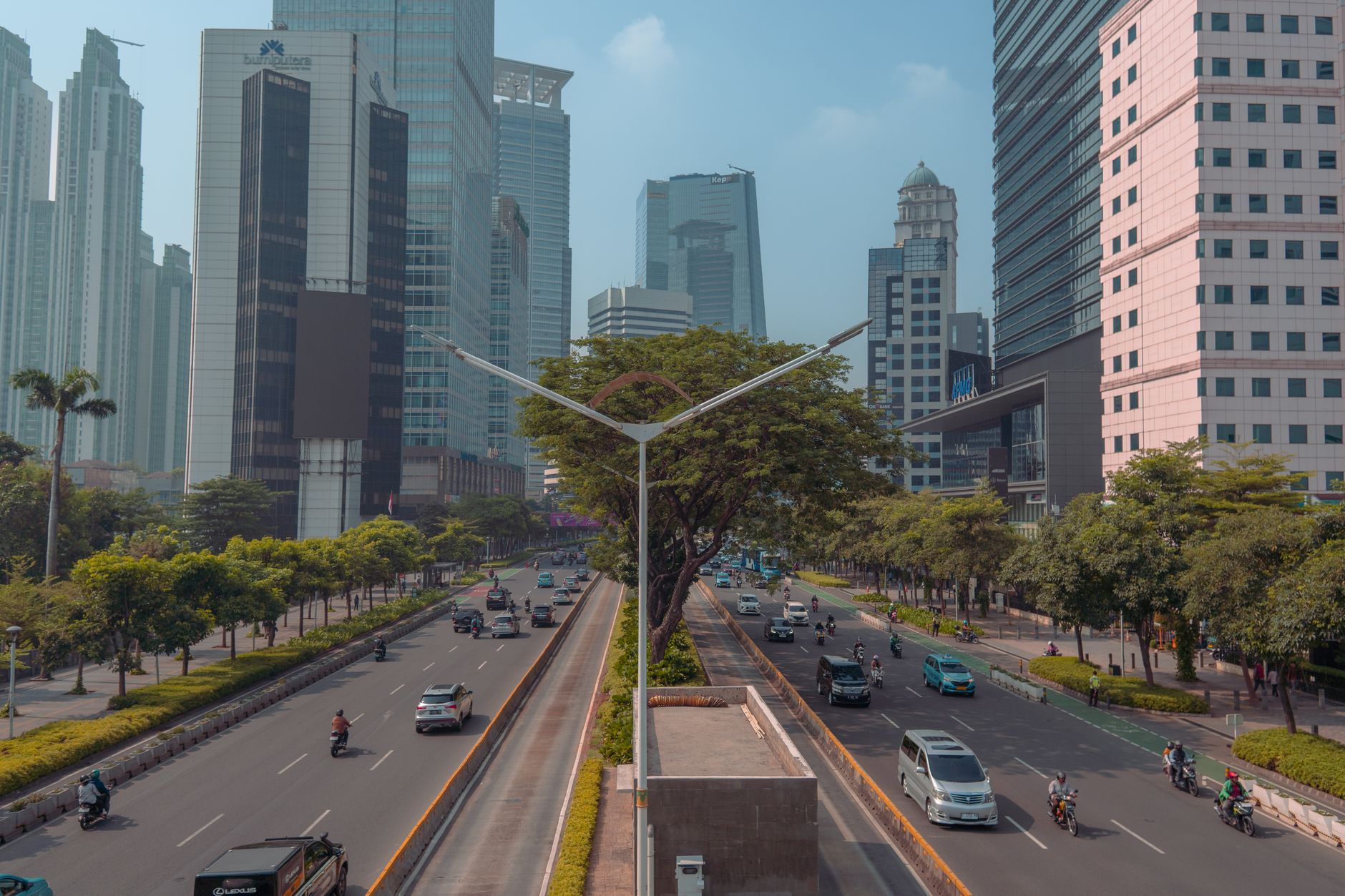
The Sudirman Central Business District (SCBD) and the Jalan Sudirman corridor represent Jakarta at its most modern, ambitious, and vertically dramatic. This is where gleaming glass-and-steel skyscrapers pierce the tropical sky, five-star hotels cater to international executives, and Jakarta’s most upscale shopping malls offer world-class retail therapy. If your image of Jakarta is one of a cutting-edge Asian megacity, SCBD is where that vision comes to life.
Jalan Jenderal Sudirman, Jakarta’s grand central boulevard, runs north-south through the heart of the business district. Along its length you’ll find the city’s tallest buildings, including the 64-story Gama Tower and numerous headquarters of major Indonesian corporations and multinational companies. The Bundaran HI (Hotel Indonesia Roundabout) at the northern end features the iconic Welcome Statue (Patung Selamat Datang) and serves as both a major transportation hub and a symbolic gateway to modern Jakarta.
Shopping in SCBD is a premium experience. Pacific Place offers high-end international brands, a gourmet food hall, and a premium cinema. Plaza Indonesia at the Bundaran HI end of Sudirman is Jakarta’s most exclusive shopping mall, home to luxury brands like Louis Vuitton, Hermès, and Chanel. Just off Sudirman, Grand Indonesia is one of the largest malls in Southeast Asia with hundreds of stores across multiple levels — it makes our shortlist of the best malls in Jakarta. For a more curated shopping experience in Jakarta, the boutique-style Ashta District 8 in SCBD focuses on lifestyle brands, artisanal food, and independent designers.
The dining scene in SCBD rivals any world capital. Rooftop bars like SKYE (atop the BCA Tower) offer panoramic views paired with creative cocktails. Lara Djonggrang provides an unforgettable Indonesian fine dining experience in an antique-filled Javanese setting. For casual dining, the Senayan Food Court and numerous restaurants along Jalan Senopati offer everything from traditional Padang cuisine to contemporary Asian fusion.
On Sunday mornings, Jalan Sudirman transforms during the beloved Car Free Day (CFD), when the boulevard is closed to traffic from 6 AM to 11 AM. Thousands of Jakartans come out to jog, cycle, do aerobics, walk their dogs, and enjoy street food — it’s one of the best free experiences in the city — and just one entry in our roundup of free things to do in Jakarta — a wonderful chance to see Jakarta’s population at its most relaxed.
The MRT runs directly through the SCBD area (Istora, Senayan, and Bundaran HI stations), making it one of the best-connected neighborhoods in the city. Several major hotels in this area — including the Ritz-Carlton, Fairmont, and Mandarin Oriental — make it a popular base for business travelers and luxury-seeking tourists alike.
By daylight this is the most walkable corridor in Jakarta. Our SCBD and Sudirman guide covers Car Free Day, the Dukuh Atas interchange, lunch at every price level and the malls compared.
Senopati — Jakarta’s Hipster Food Paradise
Tucked just south of SCBD, Jalan Senopati and its surrounding streets have quietly become one of Jakarta’s most exciting culinary and lifestyle destinations. What was once a sleepy residential road lined with modest houses has transformed over the past decade into a dense, walkable corridor of independently owned restaurants, specialty coffee shops, cocktail bars, and concept stores that reflect Jakarta’s increasingly sophisticated urban culture.
The Senopati dining scene is defined by its diversity and quality. Akira Back Jakarta serves innovative Japanese-Korean fusion in a sleek modern setting. Gia offers excellent Italian cuisine with handmade pasta and an extensive wine list. 1945 Restaurant reimagines classic Indonesian dishes with contemporary techniques and elegant plating. For something more casual, Buro is a beloved brunch spot, while Cali Deli satisfies cravings for American-style sandwiches and comfort food.
Coffee culture thrives in Senopati. The area is ground zero for Jakarta’s specialty coffee movement, with roasters and cafés like Common Grounds, Djournal Coffee, and Tanamera Coffee serving single-origin Indonesian beans prepared with meticulous care. Many of these cafés double as co-working spaces, making Senopati a favorite among digital nomads and remote workers.

The nightlife on Senopati is stylish but approachable. Bars like Loewy and Beer Hall attract a well-dressed crowd without the exclusivity or pretension of some club districts. The vibe is more conversation-friendly cocktail bar than thumping nightclub, making it ideal for travelers who want to experience Jakarta’s nightlife without committing to a full clubbing experience.
Senopati is best explored on foot, ideally starting in the late afternoon and continuing through dinner and drinks. The area is a short walk from the SCBD area and easily accessible via ride-hailing apps from the nearby Blok M MRT station.
Glodok — Jakarta’s Vibrant Chinatown
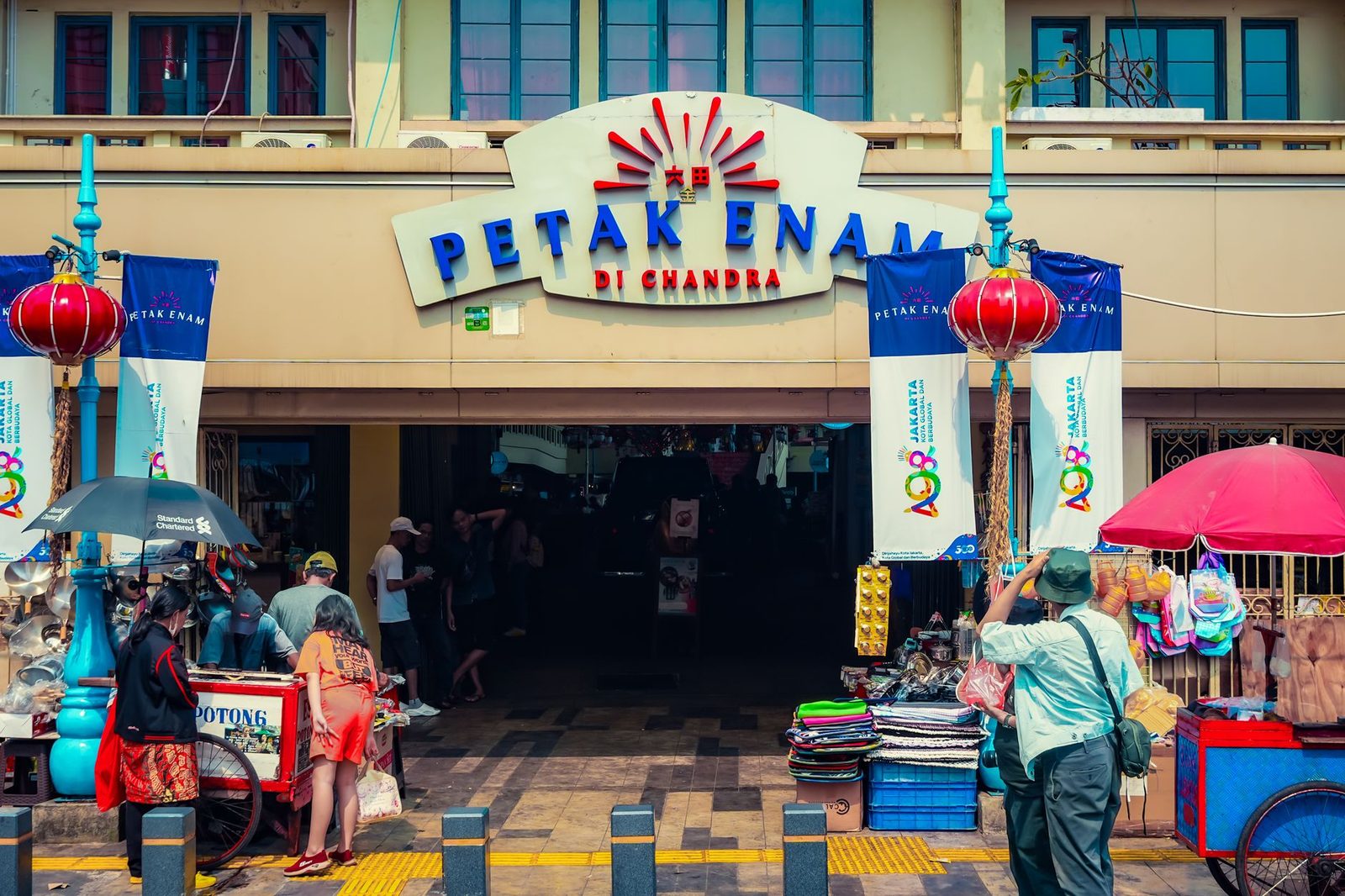
Glodok is Jakarta’s Chinatown, a densely packed, sensory-overloading neighborhood in West Jakarta that has been the center of Chinese-Indonesian life since the 18th century. Walking through Glodok’s narrow lanes is like stepping into a different world within Jakarta — one where the air is thick with the aroma of roasting pork, incense smoke drifts from ancient temples, and family-run shops sell everything from traditional Chinese medicine to the latest electronics.
The neighborhood’s spiritual heart is Vihara Dharma Bhakti (also known as Kim Tek Ie), one of the oldest Chinese temples in Jakarta, dating back to 1650. Despite suffering a devastating fire in 2015, the temple has been lovingly restored and remains an active place of worship where devotees burn incense and make offerings. Nearby, the Petak Sembilan (Gang Gloria) area is a narrow lane packed with traditional Chinese shophouses, herbal medicine stores, and some of the most authentic Chinese-Indonesian food in the city. During Chinese New Year, this lane erupts in a spectacular celebration of red lanterns, lion dances, and firecrackers.
Food is Glodok’s greatest draw. This is where you’ll find the city’s best bakmi (Chinese-style noodles), babi panggang (roast pork), kwetiau goreng (fried flat noodles), lumpia (spring rolls), and countless other Chinese-Indonesian specialties that have been perfected over generations. Legendary establishments include Bakmi Aboen, Gado-Gado Bon Bin, and the numerous unnamed stalls along Petak Sembilan that attract devoted followers from across the city. For the best food experience, visit in the morning when most stalls are freshly stocked, or late evening when the street food scene heats up.
Glodok also borders the electronics shopping district around Mangga Dua and Harco Glodok, massive multi-story malls where you can find almost any electronic gadget, component, or accessory at competitive prices. While these markets can be overwhelming for first-time visitors, they offer an authentic slice of Jakarta’s commercial energy and excellent deals for those willing to bargain.
Glodok is adjacent to Kota Tua, making it easy to combine both neighborhoods in a single day trip. The area is reachable via TransJakarta (Glodok station) or commuter rail (Jakarta Kota station). Wear comfortable walking shoes, bring cash (many stalls don’t accept cards), and come hungry.
Glodok rewards more than a snack stop. Our Glodok Chinatown guide covers Jin De Yuan, the Petak Sembilan lanes, the herbal medicine trade and the history that shaped the district.
Cikini — The Arts and Culture Corridor
Cikini is Jakarta’s bohemian quarter — a compact, walkable strip in Central Jakarta where art, culture, and intellectual life converge in a way found nowhere else in the city. Centered around Jalan Cikini Raya, this neighborhood has been a gathering place for artists, writers, and thinkers since the 1950s, and its cultural DNA remains strong despite the commercial pressures of modern Jakarta.
The anchor institution is Taman Ismail Marzuki (TIM), Jakarta’s premier cultural complex. Named after the legendary Indonesian composer, TIM houses multiple performance halls, exhibition galleries, a planetarium, and the Jakarta Arts Institute (Institut Kesenian Jakarta). On any given week, you might catch a traditional Javanese dance performance, a contemporary art exhibition, an indie film screening, or a poetry reading. The complex has a wonderfully bohemian atmosphere, with art students sketching in the gardens and musicians rehearsing in open-air spaces.

Beyond TIM, Cikini offers a treasure trove of cultural experiences. Galeri Cipta II and Galeri Cipta III host rotating exhibitions of Indonesian contemporary art. Independent bookstores and antique shops dot the side streets. The area around Jalan Surabaya (technically in neighboring Menteng) hosts Jakarta’s famous antiques and curiosities market, where you can browse Dutch colonial-era furniture, vintage wayang puppets, old maps, retro cameras, and all manner of fascinating bric-a-brac.
Cikini’s dining scene reflects its artistic character. You’ll find eclectic, independently owned restaurants and cafés rather than chain establishments. Tugu Kunstkring Paleis serves refined Indonesian cuisine in a breathtaking colonial-era building that was once the cultural society for Dutch residents. Warung Kopi Purnama is a time-capsule coffee shop that has been serving the same excellent kopi tubruk for decades. The area also has excellent street food, particularly along Jalan Cikini Raya in the evening hours.
Cikini is best reached via the Cikini commuter rail station or from the nearby Gondangdia station. The neighborhood pairs perfectly with a visit to Menteng, and the cultural attractions here easily fill a rewarding half-day exploration.
PIK (Pantai Indah Kapuk) — Jakarta’s New Waterfront Playground
PIK, or Pantai Indah Kapuk, is the neighborhood Jakarta can’t stop talking about — a waterfront district that has become the default answer to “where should we eat this weekend?” for half the city. Located in North Jakarta along the coast, this planned community has transformed from a quiet residential enclave into a bustling destination that draws visitors from across the metropolitan area, especially on weekends and holidays.
The main draw is PIK 2 (also called PIK Avenue and surrounding developments), a massive waterfront development featuring hundreds of restaurants, cafés, and food stalls representing virtually every Asian cuisine. The food scene here is extraordinary — from premium Japanese omakase restaurants to bustling Hong Kong-style dim sum halls, Korean fried chicken joints, Thai street food vendors, and Indonesian seafood restaurants. Pantjoran PIK is a particularly charming development styled after a traditional Chinese town, with red lanterns, ornate gates, and temple architecture creating an immersive cultural atmosphere. The seafood restaurants along the waterfront, where you can watch fishing boats and enjoy fresh catches, are among the best dining experiences in Jakarta.
PIK also offers recreational experiences unavailable elsewhere in Jakarta. Golf Island features a driving range with water views. The PIK waterfront boardwalk provides a rare opportunity in Jakarta to stroll along the sea. For families, the area includes Jakarta Aquarium (technically in Neo Soho but associated with the North Jakarta waterfront), amusement facilities, and numerous kid-friendly restaurants. The Cove at Batavia PIK is a beach club concept bringing resort vibes to the city.
The main challenge with PIK is access — it’s located far from central Jakarta (roughly 25-40 km depending on your starting point), and traffic on weekends can be extremely heavy. Plan for potentially 1-2 hours of travel time from South or Central Jakarta during peak periods. Many visitors opt for a ride-hailing car and plan to spend several hours in PIK to justify the journey. On weekdays, the trip is much more manageable and the area is pleasantly uncrowded.
Ancol & North Jakarta — Waterfront Fun and Entertainment
The Ancol Dreamland complex (Taman Impian Jaya Ancol) is Jakarta’s oldest and largest waterfront entertainment destination, sprawling across 552 hectares of North Jakarta’s coastline. While it may lack the polished modernity of PIK, Ancol offers a nostalgic, family-friendly atmosphere and several genuinely excellent attractions that make it well worth a visit, especially for travelers with children.
Dunia Fantasi (Fantasy World, locally called “Dufan”) is Indonesia’s premier theme park, featuring roller coasters, water rides, cultural attractions, and live entertainment. Though modest by international theme park standards, Dufan is hugely popular with Indonesian families and offers a fun day out. Atlantis Water Adventure next door is a large water park with slides, wave pools, and lazy rivers — perfect for cooling off in Jakarta’s tropical heat. Sea World Ancol houses an impressive aquarium with walk-through ocean tunnels, touch pools, and regular feeding shows.

Beyond Ancol, North Jakarta offers some unique experiences. The Sunda Kelapa Harbor area (overlapping with Kota Tua) provides a photogenic glimpse of traditional maritime life. The Muara Angke fish market is Jakarta’s largest and most atmospheric — arrive early in the morning when fishing boats unload their catches and the market is at its most vibrant. For those interested in religious history, Luar Batang Mosque, one of the oldest mosques in Jakarta, sits along the waterfront and attracts both worshippers and curious visitors with its historical significance.
North Jakarta is most easily reached by car or ride-hailing from central Jakarta. The commuter rail line to Ancol station provides public transit access. If you’re staying in a central Jakarta hotel, plan for a half-day excursion to make the most of the area.
North Jakarta is really three destinations sharing a coastline. Our North Jakarta and Ancol guide untangles the Ancol ticket system, Sunda Kelapa and PIK, and is honest about the subsidence.
Blok M & Melawai — South Jakarta’s Urban Village
Blok M, centered around the Blok M MRT station and the surrounding Melawai district in South Jakarta, has undergone a remarkable renaissance in recent years. Once known primarily for its aging shopping plazas and gritty reputation, Blok M has reinvented itself as one of Jakarta’s most vibrant neighborhoods for live music, independent bars, and authentic Indonesian street food, attracting a younger, more alternative crowd than the polished SCBD area just to the north.
The catalyst for Blok M’s revival has been M Bloc Space, a creative campus built on the grounds of a former military printing facility. M Bloc houses independent restaurants, coffee shops, a live music venue, a record store, a bookshop, and collaborative workspaces in a series of converted industrial buildings surrounded by green courtyards. It’s become a cultural hub for Jakarta’s creative community and a fantastic place to spend an afternoon exploring, eating, and soaking up the independent vibe.
The streets around Blok M are some of Jakarta’s best for street food exploration. Jalan Melawai and surrounding lanes are packed with warungs (small eateries) serving excellent nasi Padang, bakso (meatball soup), pecel lele (fried catfish), and ayam penyet (smashed fried chicken). The area is particularly lively at night when food stalls line the sidewalks and the atmosphere becomes energetically social.
For Japanese culture enthusiasts, Blok M has historically been Jakarta’s “Little Tokyo” district, with Japanese restaurants, karaoke bars, and izakayas concentrated around Jalan Melawai. While the Japanese community has diversified its presence across Jakarta, Blok M still retains excellent Japanese dining options. The Blok M Plaza and Blok M Square malls, while not as polished as their SCBD counterparts, offer affordable shopping and entertainment options including a popular gaming arcade.
Blok M is directly served by the MRT (Blok M station), making it one of the most accessible neighborhoods in South Jakarta. It’s an ideal evening destination after a day of sightseeing in central Jakarta.
Blok M is one stop on a much longer line. Our South Jakarta guide works down the MRT station by station, and the Pondok Indah guide covers the suburban south beyond the tracks.
Kebayoran Baru — Mid-Century Charm and Local Life
Kebayoran Baru is a planned residential district in South Jakarta that was built in the 1950s as one of independent Indonesia’s first major urban developments. Today it offers visitors a charming glimpse of mid-century Indonesian urbanism, with wide tree-lined streets, single-story houses with generous gardens, vibrant local markets, and a pace of life that feels remarkably relaxed compared to the frenetic energy of central Jakarta.
The neighborhood’s architectural heritage is its most distinctive feature. Unlike the high-rise developments that dominate newer Jakarta neighborhoods, Kebayoran Baru retains much of its original mid-century character with low-rise buildings, generous setbacks, and mature tropical landscaping. Walking through residential streets like Jalan Wijaya and Jalan Pakubuwono offers a rare experience of Jakarta at a human scale, with neighborhood warungs, local shops, and small mosques interspersed among the residences.

Pasar Santa is the neighborhood’s crown jewel for visitors. This renovated traditional market has become a beloved foodie destination where you’ll find everything from traditional Indonesian jamu (herbal drinks) to artisanal cheese, craft chocolate, vintage clothing, and vinyl records — one of several spots in our guide to Jakarta’s food markets. The upper floors house a rotating cast of pop-up food vendors and small creative businesses. It’s more authentic and less touristy than many of Jakarta’s more famous food destinations.
Nearby, Pasar Mayestik is known across Jakarta as the best place to buy fabric, particularly batik, songket, and other traditional Indonesian textiles at wholesale prices. If you’re interested in having custom clothing made, the tailors around Pasar Mayestik can produce beautiful garments at a fraction of what you’d pay for ready-made pieces.
Kebayoran Baru is adjacent to Blok M and easily accessible via the MRT. It pairs well with explorations of Senopati and SCBD, and offers a welcome change of pace for visitors looking to experience Jakarta’s everyday neighborhood life beyond the tourist highlights.
Tebet — Jakarta’s Emerging Creative District
Tebet has emerged as one of South Jakarta’s most exciting up-and-coming neighborhoods, driven by the opening of Tebet Eco Park, a beautifully designed 7-hectare urban park that has become one of the most popular green spaces in the entire city. The park features lush landscaping, walking paths, children’s play areas, and event spaces, and has catalyzed the development of surrounding streets into a vibrant strip of cafés, restaurants, and creative businesses.
Jalan Tebet Raya and Jalan Tebet Barat Dalam now host a dense cluster of specialty coffee shops, brunch spots, and casual dining establishments that rival Senopati for quality while offering a more relaxed, neighborhood atmosphere and lower prices. Notable spots include numerous independent coffee roasters, creative Indonesian restaurants, and international food concepts. The area around Tebet Eco Park on weekend mornings has a wonderful community atmosphere, with families picnicking, friends playing badminton, and street food vendors catering to the crowds.
Tebet is also becoming a center for co-living and co-working spaces, attracting digital nomads and young professionals priced out of more established neighborhoods. The combination of green space, good food, creative energy, and relatively affordable living makes it increasingly popular with both locals and longer-term visitors.
The neighborhood is well-served by public transport, with Tebet station on the commuter rail line providing direct connections to central Jakarta. It’s a great option for travelers who want to experience a more local, less touristy side of Jakarta while still having easy access to the city’s main attractions.
Practical Tips for Exploring Jakarta’s Neighborhoods
Navigating Jakarta’s neighborhoods effectively requires some strategic planning, but the rewards are well worth the effort. Here are essential tips to help you make the most of your neighborhood explorations.
Use the MRT as your backbone. The MRT line runs north-south through many of Jakarta’s best neighborhoods, from Bundaran HI through SCBD, Senayan, Blok M, and down to Lebak Bulus. Build your daily itinerary around MRT stations and use ride-hailing apps for the last mile to neighborhoods not directly on the line. The MRT is clean, efficient, air-conditioned, and incredibly affordable.
Cluster your neighborhood visits geographically. Jakarta’s traffic means that crosstown journeys can eat up hours. Group nearby neighborhoods together: Kota Tua + Glodok in one outing, Menteng + Cikini in another, SCBD + Senopati + Blok M in a third. This approach maximizes your sightseeing time and minimizes time stuck in traffic. For more transportation tips, check our comprehensive guide.
Time your visits wisely. Most neighborhoods have optimal visiting times. Markets like Glodok and Muara Angke are best early morning. Dining districts like Senopati and Kemang peak in the evening. Shopping areas like SCBD are comfortable during midday when the malls offer air-conditioned refuge from the heat. Cultural areas like Cikini and Kota Tua are ideal on weekday mornings before crowds arrive.
Stay hydrated and dress for the heat. Jakarta is hot and humid year-round, with temperatures typically between 27-34°C (80-93°F). Carry water, wear lightweight breathable clothing, and plan indoor breaks at cafés or malls during the hottest hours (11 AM – 3 PM). Comfortable walking shoes are essential, as sidewalks can be uneven.
Embrace the food scene. Every neighborhood in Jakarta has its own culinary identity. Don’t limit yourself to restaurants — street food stalls and local warungs often serve the most authentic and delicious food. Follow the locals and look for places with high turnover, which ensures fresh food and proven quality. For a deep dive into the city’s culinary landscape, explore our Jakarta food guide.

Which Jakarta Neighborhood Is Right for You?
Choosing the right neighborhoods to explore depends on your interests, travel style, and available time. Here’s a quick guide to help you decide.
For history buffs: Start with Kota Tua and Glodok. These adjacent neighborhoods offer the deepest dive into Jakarta’s past, from Dutch colonial architecture to centuries-old Chinese temples and traditional markets. Allow a full day to explore both thoroughly.
For foodies: Senopati, Glodok, and Blok M should top your list. Senopati offers the most diverse fine-dining scene, Glodok has the most authentic traditional food, and Blok M provides the best street food and casual dining atmosphere. For a food-focused Jakarta itinerary, you could easily spend a day on each.
For culture seekers: Menteng and Cikini are your neighborhoods. Between Taman Ismail Marzuki, the national monuments, Jalan Surabaya’s antiques market, and numerous galleries, you’ll find Jakarta’s richest concentration of cultural attractions within walking distance of each other.
For shoppers: SCBD and Grand Indonesia offer the full range, from luxury international brands to local designers. For something more unique, explore Pasar Santa in Kebayoran Baru or the markets of Glodok for one-of-a-kind finds.
For families: Ancol’s theme parks and aquarium provide a full day of kid-friendly entertainment. PIK offers excellent family dining, and Tebet Eco Park is perfect for active families who want green space. Check our guide to Jakarta with kids for more ideas.
For nightlife enthusiasts: SCBD and Senopati have the most sophisticated bars and lounges, Blok M offers live music and indie vibes, and Kemang provides the most diverse international nightlife scene. See our full Jakarta nightlife guide for detailed recommendations.
For first-time visitors on a short trip: Prioritize Menteng (for your base and street food on Jalan Sabang), Kota Tua + Glodok (for history and traditional food), and SCBD + Senopati (for modern Jakarta, shopping, and dining). These five neighborhoods together give you a well-rounded introduction to the city, and they slot neatly into our 2-day Jakarta itinerary if your time is tight.
Jakarta’s neighborhoods each tell a different chapter of the city’s extraordinary story — from its colonial past to its vibrant present and ambitious future. By exploring beyond the tourist headlines and diving into the distinct character of each district, you’ll discover a city of remarkable depth, warmth, and endless surprises. Whether you have three days or three weeks, Jakarta’s neighborhoods will reward your curiosity with experiences that go far beyond what any guidebook can fully capture.
Three districts get their own deep dives beyond the summaries above: the Central Jakarta guide for Gambir, Monas and the civic core, the Senayan area guide for sport, parks and event days, and the Pondok Indah guide for the family-oriented suburban south.