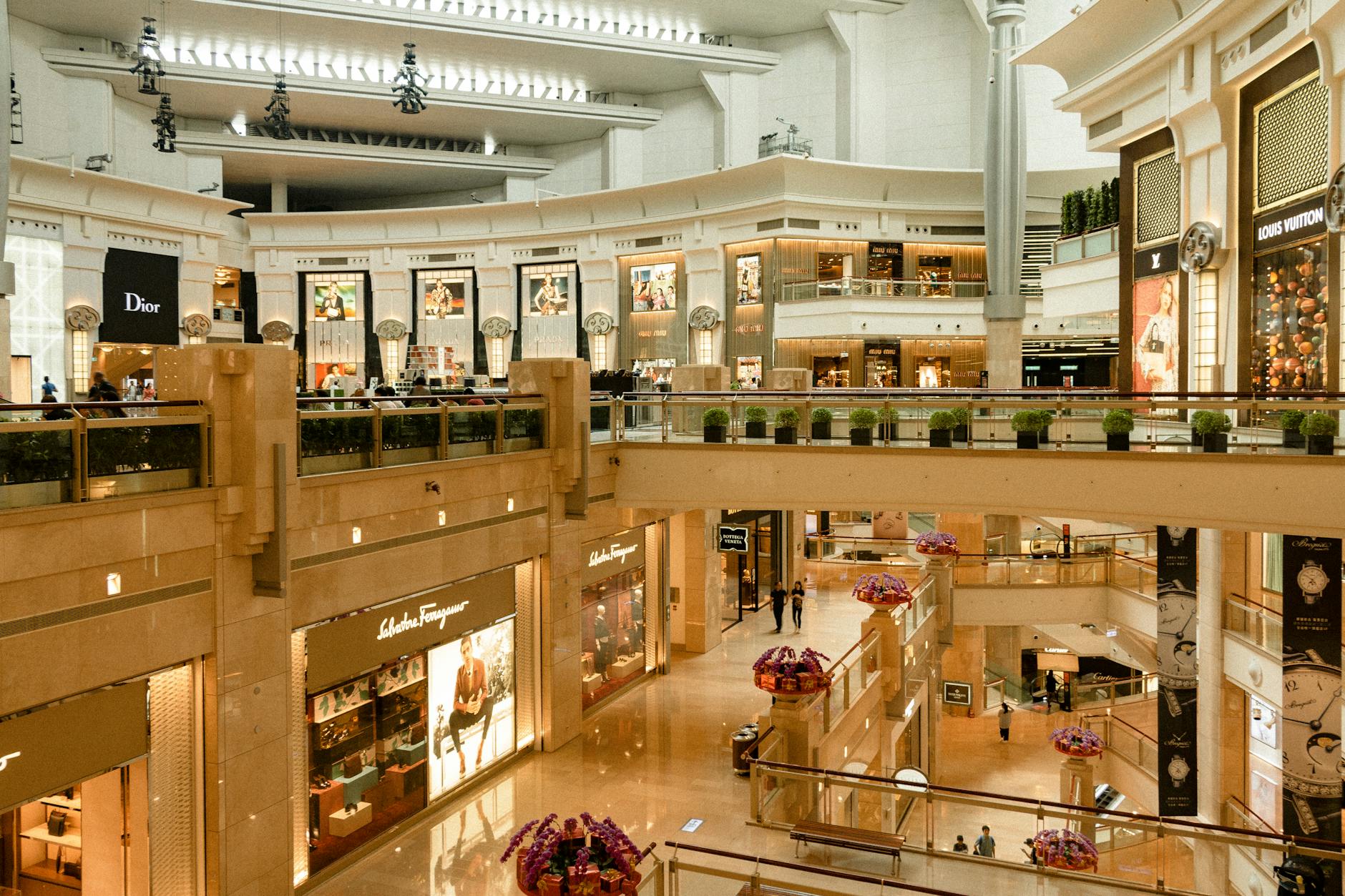
Jakarta’s flea markets are one of the city’s most underrated pleasures, and the antidote to a day of polished malls. They reward patience, a bit of bargaining nerve, and a willingness to dig through a pile to find the one good thing at the bottom. The frustration is that most English-language guides hand you a flat list of five markets without telling you which to pair, what to pay, or how to tell a genuine antique from a clever fake. This guide fixes all three: the top five Jakarta flea markets with realistic rupiah price ranges per category, a routed half-day itinerary, and a reproduction red-flags checklist. Whether you’re after vintage vinyl, antique brass, or a 1980s film camera, you’ll know where to go and roughly what it should cost.
This is the bargain-and-dig end of a much bigger retail scene; for the full sweep of malls, markets and craft, start with our pillar on shopping in Jakarta. If it’s genuine antiques and vintage you’re after rather than wholesale fabric or designer logos, read on.
Why Jakarta’s Flea Markets Are Worth a Tourist’s Time
Flea-market hunting is one of the city’s great under-the-radar pleasures, and it slots neatly alongside the rest of our Jakarta hidden gems.
I’d make time for at least one flea market on any Jakarta trip, for three reasons:
- Unique souvenirs — Authentic vintage Indonesian items (brass, batik, puppets, wayang masks) that you won’t find in the mall souvenir shops at the same price — a more characterful alternative to the usual Jakarta souvenirs.
- Cultural immersion — Flea markets are where locals shop, bargain, and gossip. You’ll experience Jakarta street culture in a way the best malls in Jakarta simply can’t offer.
- Genuine bargains — A vintage Rolleiflex camera that costs USD 200 in Europe might be IDR 800,000 (USD 50) here — the polar opposite of the marked-up world of luxury shopping in Jakarta. A 1970s Iwan Tirta batik panel that would cost IDR 5 million new might be IDR 800,000 second-hand — and if you want to understand what you’re looking at, our guide on where to buy batik in Jakarta covers the tells.
The Big Five Jakarta Flea Markets at a Glance
| Market | Specialty | Vibe | Price Level | English Level |
|---|---|---|---|---|
| Jalan Surabaya | Antiques, brass, art | Tourist-friendly, organized | Highest (foreigner pricing common) | Good |
| Pasar Santa | Vinyl, vintage clothing, cafés | Hipster, young crowd | Mid (closer to real market prices) | Good (younger vendors) |
| Pasar Baru | Textiles, fabric, heritage | Old-school commercial | Low to mid | Limited |
| Pasar Senen | Vintage 1970s-90s fashion | Crowded, working-class | Lowest | Minimal |
| Jembatan Item / Jatinegara | Mixed antiques, gemstones, books | Local, intense | Low (but tougher bargaining) | Minimal |
If you can only visit one: Jalan Surabaya. Tourist-accessible, English spoken, and authentically Indonesian.
Jalan Surabaya Antique Market (Menteng) — Full Walkthrough
This is Jakarta’s most famous antique market and the right place to start — tourist-accessible, English-friendly, and genuinely fun to browse even if you buy nothing.
- Address: Jl. Surabaya, RT.15/RW.5, Menteng, Central Jakarta 10310
- Hours: Daily 9 AM – 5 PM (most stalls open by 10 AM)
- Vendors: Approximately 150 along a single-street stretch
- Established: 1975
- Nearest transit: Cikini KRL Station (5-minute walk) or Gondangdia KRL
What’s Sold at Jalan Surabaya
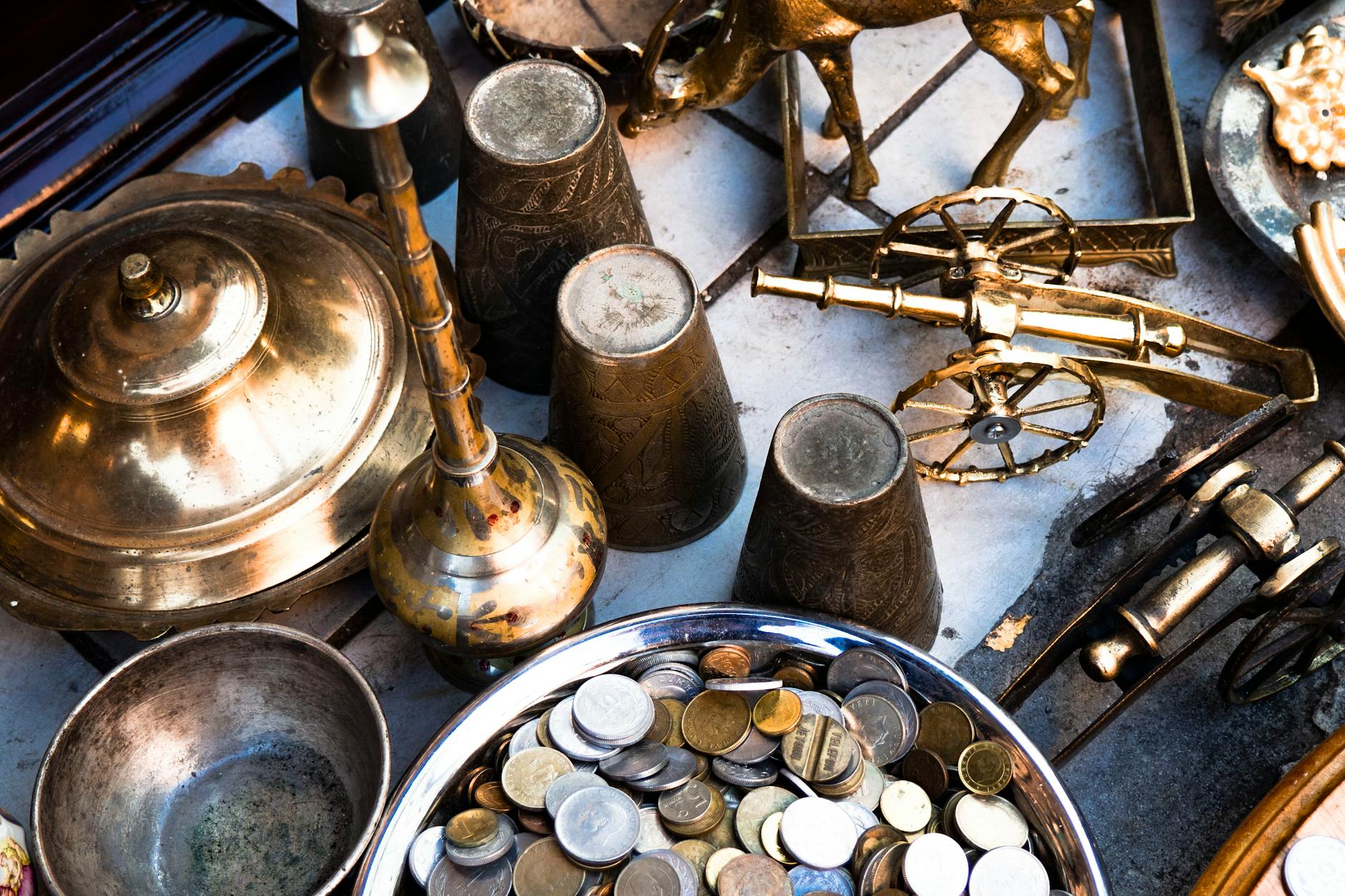
- Brass items — bells, candlesticks, lamps, sculptures (genuine and reproduction)
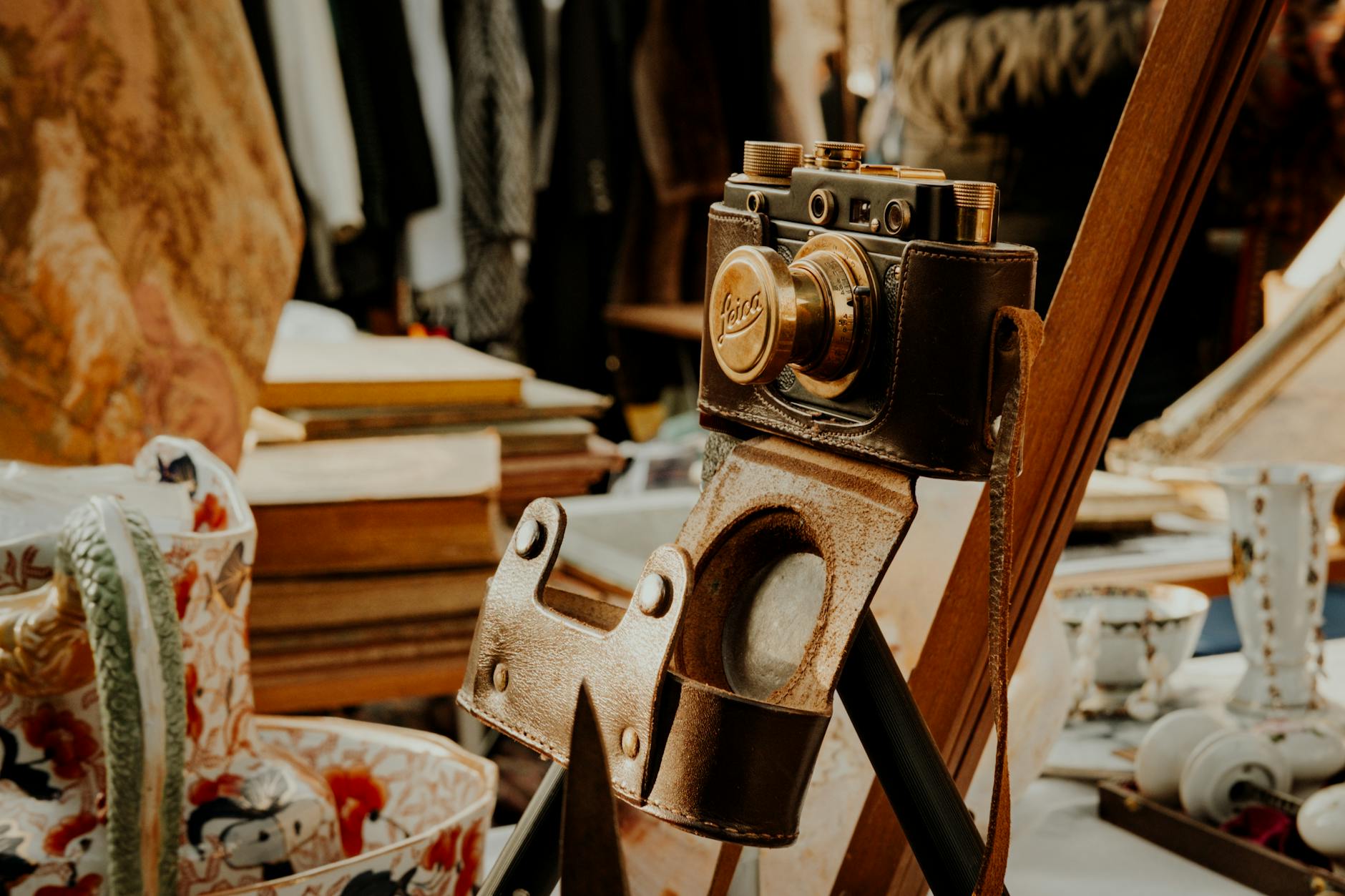
- Vintage cameras — Leica, Rolleiflex, Nikon F-series, Yashica (excellent vintage cameras inventory)
- Wayang puppets — both kulit and golek, some genuinely old, many newer
- Old batik — antique pieces, often Yogya or Cirebon-style
- Vintage records and gramophones
- Old Indonesian currency, stamps, and books
- Indonesian art — paintings, sketches, sculptures
- Antique furniture pieces — small items mostly (drawers, boxes)
Realistic IDR Price Ranges at Jalan Surabaya
| Item | Asking Price | Realistic Buy Price |
|---|---|---|
| Brass bell or candlestick | IDR 200,000–500,000 | IDR 100,000–250,000 |
| Vintage Yashica/Pentax film camera | IDR 1,000,000–2,500,000 | IDR 600,000–1,500,000 |
| Vintage Rolleiflex/Leica (rare) | IDR 5,000,000–15,000,000 | IDR 3,000,000–10,000,000 |
| Old wayang kulit puppet | IDR 300,000–800,000 | IDR 150,000–400,000 |
| Antique batik panel (old, signed) | IDR 1,500,000–5,000,000 | IDR 700,000–2,500,000 |
| Vintage gramophone | IDR 3,000,000–8,000,000 | IDR 1,500,000–5,000,000 |
| Old Indonesian rupiah currency | IDR 50,000–500,000 | IDR 25,000–250,000 |
Bargaining standard: Aim to pay 40–55% of the opening asking price. Foreigners are routinely quoted 1.5–2x the local price.
Tips for Jalan Surabaya Specifically
- Walk the whole length first — about 300 meters; survey before negotiating
- Compare prices — vendors carry similar inventory; ask three before committing
- Watch for “antique” reproductions — see authentication section below
- Cash strongly preferred — QRIS spotty; bring IDR 1–3 million
- Avoid mid-day Sundays — busier, less negotiation room
Pasar Santa (Kebayoran Baru) — Vinyl & Vintage Fashion
The hippest of Jakarta’s flea markets and the most accessible for younger travelers. Pasar Santa transformed from a sleepy traditional market into a creative hub around 2014, with vinyl shops, vintage clothing stalls, specialty coffee roasters, and craft beer bars sharing space with traditional vegetable sellers.
- Address: Jl. Cisanggiri II, Petogogan, Kebayoran Baru, South Jakarta
- Hours: Daily 9 AM – 8 PM (most cool stalls open by noon)
- Best floor: Ground floor (creative stalls); upper floors are mostly traditional
- Nearest transit: Senayan MRT (15-minute Grab) or Blok M MRT (10-minute Grab) — see getting around Jakarta for the apps and trains
What’s Worth Buying at Pasar Santa
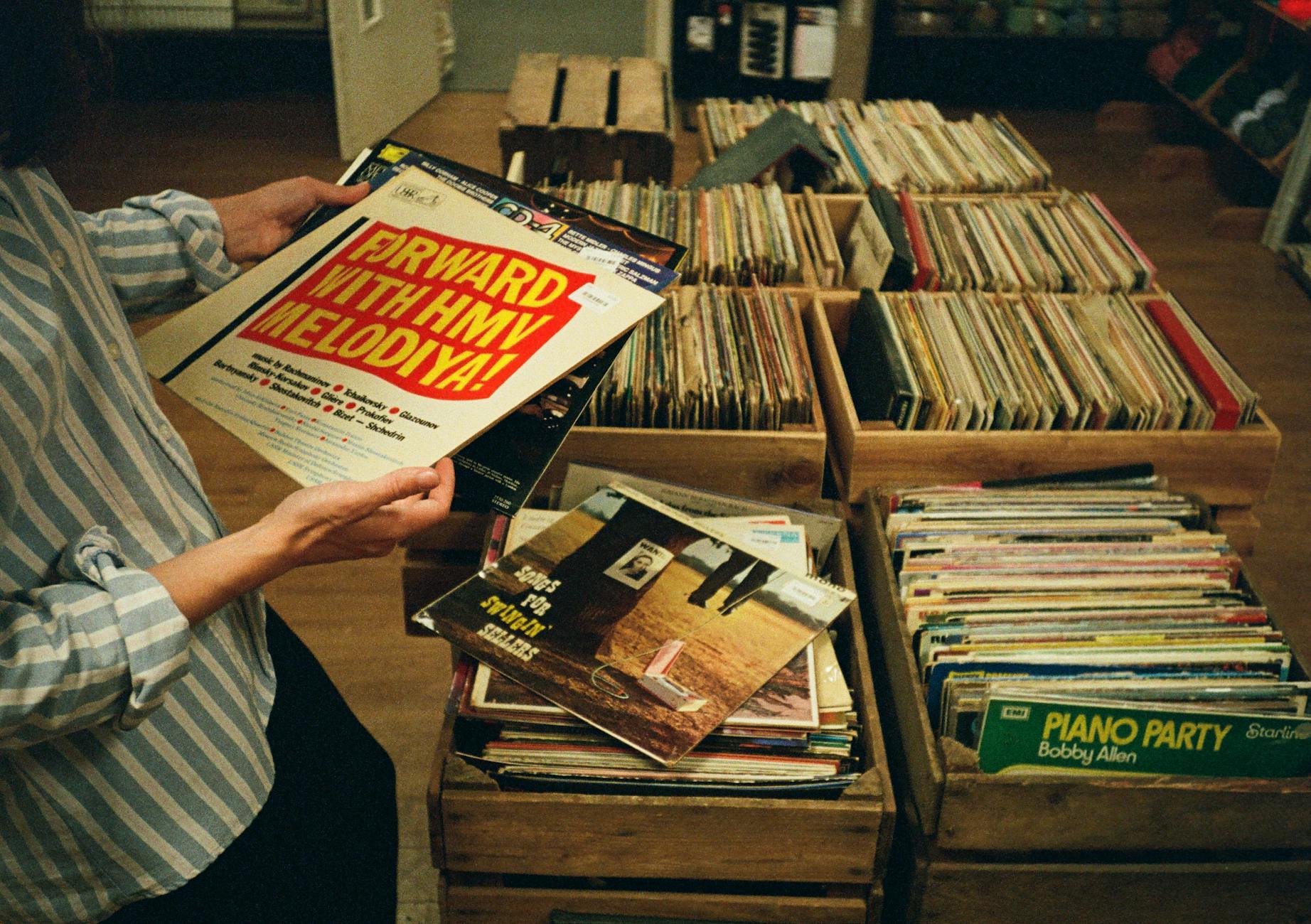
- Vinyl LPs and 7-inches — Indonesian, Western, jazz, soul, rock; the country’s best vinyl scene
- Cassette tapes — Genuine collector’s items, 1970s-90s Indonesian pop
- Vintage T-shirts, denim, sneakers — Curated 1980s-90s pieces
- Specialty coffee beans — Indonesian single-origin (Aceh Gayo, Toraja, Bali Kintamani)
- Craft beer and natural wines — Limited but present
- Vintage analog cameras — Smaller selection than Surabaya but often better prices
Realistic IDR Price Ranges at Pasar Santa
| Item | Typical Range |
|---|---|
| Vinyl LP (Western mainstream) | IDR 80,000–300,000 |
| Vinyl LP (rare, jazz, Indonesian) | IDR 300,000–2,000,000 |
| Cassette tape | IDR 30,000–150,000 |
| Vintage T-shirt | IDR 80,000–250,000 |
| Vintage denim or Levi’s | IDR 250,000–800,000 |
| Specialty coffee (200g) | IDR 100,000–250,000 |
Pasar Santa pricing note: Prices are closer to fixed than at Surabaya. Bargaining 10–20% off is reasonable; aggressive haggling not appreciated.
Pasar Baru — Heritage Textiles & Vintage Clothing
Jakarta’s oldest commercial street, dating to 1820. Pasar Baru retains a heritage commercial atmosphere with Indonesian, Chinese, and Indian-Indonesian textile traders.
- Address: Jl. Pasar Baru, Sawah Besar, Central Jakarta
- Hours: Daily 9 AM – 6 PM
- Best for: Custom-tailored shirts, antique textiles, and traditional Indian and Chinese-Indonesian fabrics (for new wholesale fabric, the Tanah Abang market is the giant)
- Nearest transit: Sawah Besar KRL or Juanda KRL
What’s Worth Buying at Pasar Baru
- Custom-made batik shirts — Tailors will make one in 24-48 hours for IDR 350,000–600,000
- Antique batik panels — Some vendors specialize in pre-1980s Yogyakarta and Solo pieces
- Sari and saree fabrics — Indian-Indonesian community; bridal and ceremonial
- Vintage shoes and leather goods — Indonesian colonial-era styles
- Old Indonesian books and magazines — Particularly 1970s-80s era
Pasar Senen — 1970s-90s Fashion Hunt
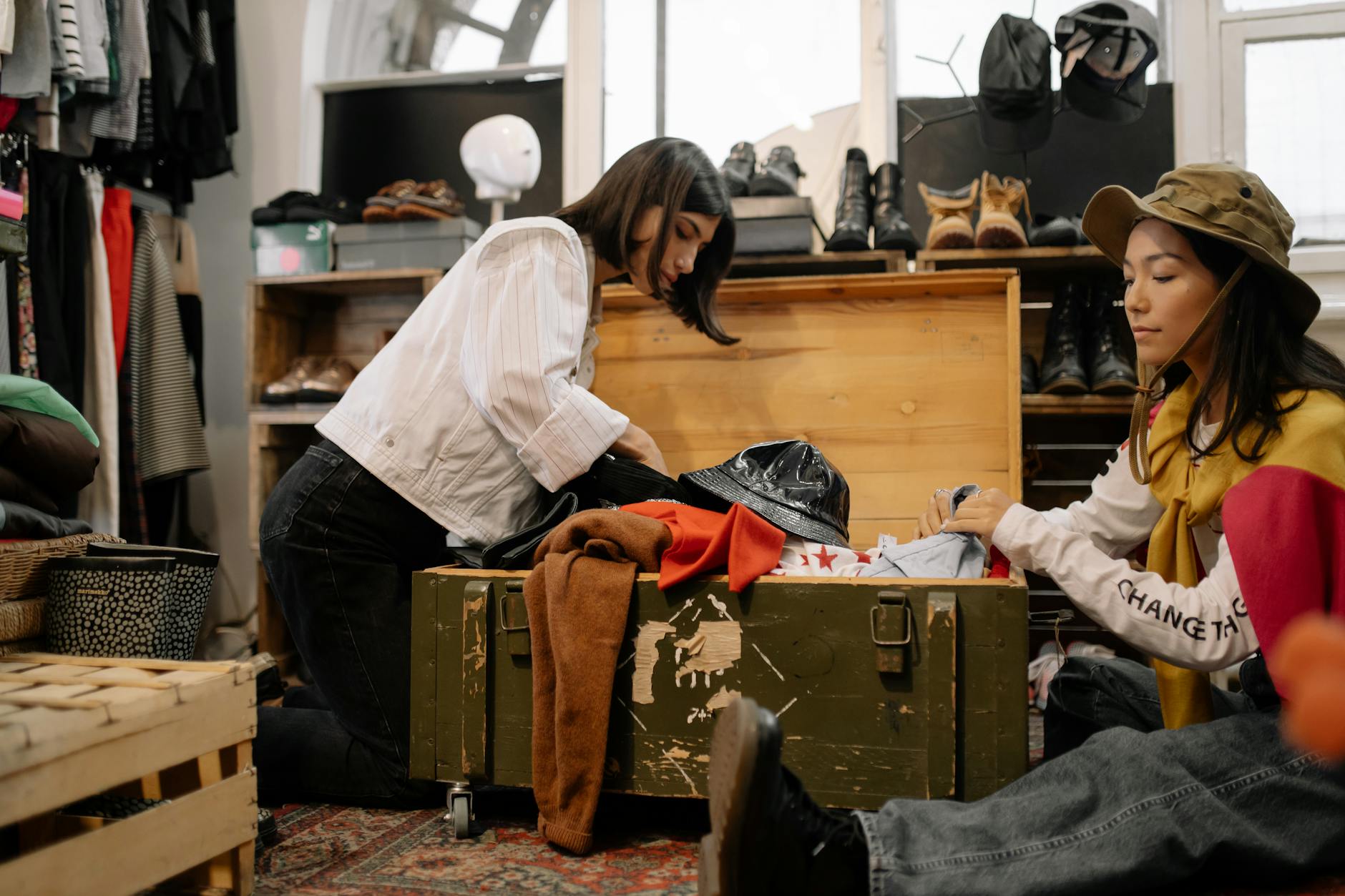
A working-class market with Jakarta’s deepest vintage-clothing inventory. Pasar Senen Block III is specifically the vintage-fashion section — bring patience, comfortable shoes and a willingness to dig through the piles. For a gentler take on secondhand and thrift, the Blok M district is easier going.
- Address: Jl. Senen Raya, Senen, Central Jakarta
- Hours: Daily 6 AM – 6 PM
- Best section: Block III (vintage clothing)
- Nearest transit: Senen KRL or Pasar Senen TransJakarta
What’s at Pasar Senen Block III
- 1970s-80s Indonesian and imported jackets, denim, t-shirts
- Vintage band tees (Rolling Stones, Led Zeppelin, etc.)
- Vintage Hawaiian shirts
- Authentic batik kemeja shirts
- Old Indonesian school uniforms (collectible)
Pasar Senen Realistic Pricing
| Item | Price Range |
|---|---|
| Vintage T-shirt or shirt | IDR 30,000–150,000 |
| Vintage denim jacket | IDR 100,000–400,000 |
| Vintage Levi’s denim | IDR 150,000–600,000 |
| Vintage band tee (authentic) | IDR 200,000–800,000 |
| Authentic vintage Hawaiian shirt | IDR 80,000–300,000 |
Senen specifically: Bring cash only. QRIS rare. English minimal — bring a translator app or basic Indonesian phrases.
Jembatan Item / Jatinegara — Hardcore Bargain Hunters Only
The most “local” of Jakarta’s flea markets. Genuine treasures hide here but you’ll work hard. Recommended only for travelers who speak some Indonesian or are comfortable navigating without English.
- Location: Jl. Matraman Raya, Jatinegara, East Jakarta (Jembatan Item area)
- Hours: Daily 6 AM – 5 PM
- Best for: Old books, gemstones, religious items, mixed antiques
- Nearest transit: Jatinegara KRL Station
What to Buy: Realistic IDR Price Ranges by Category
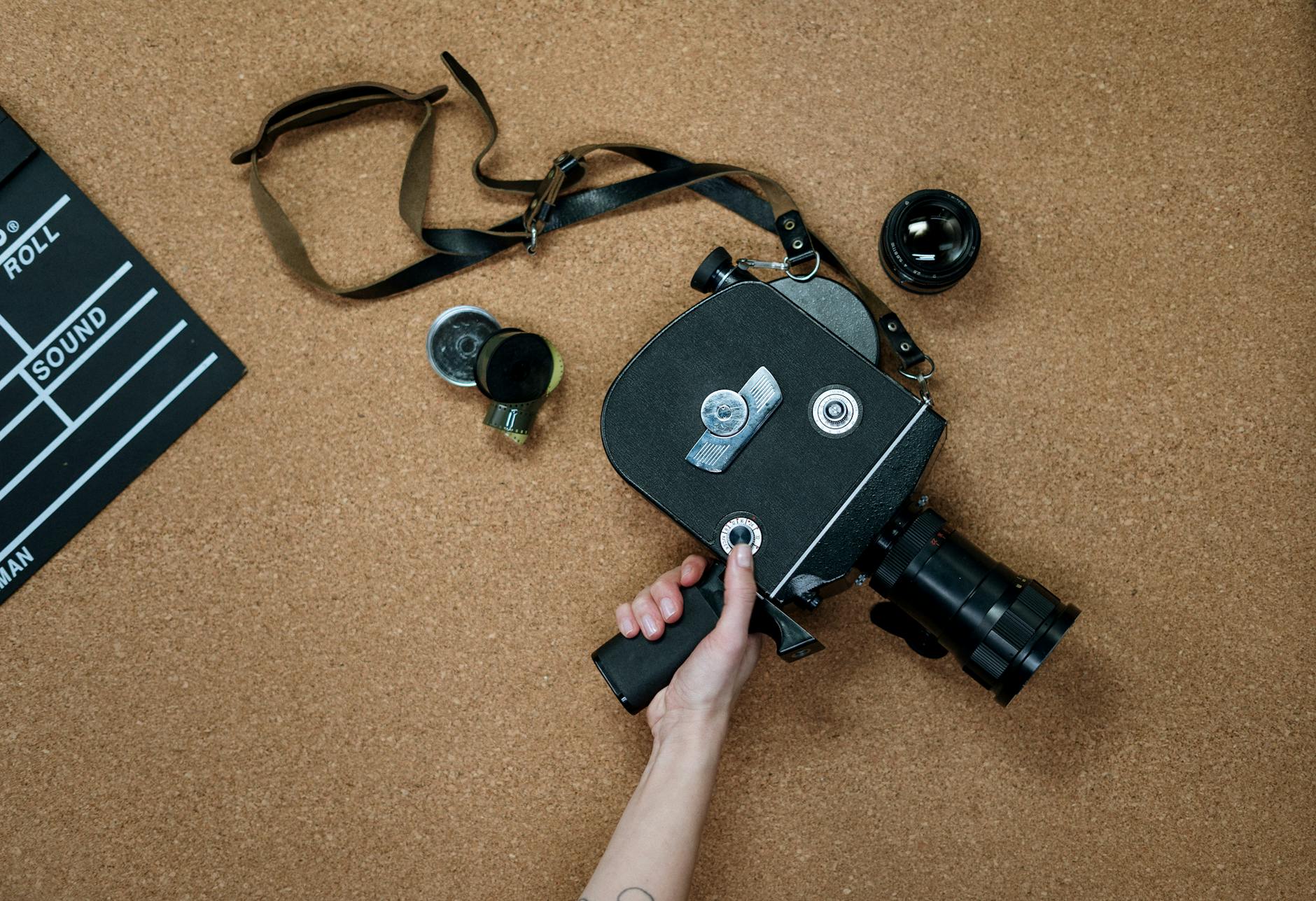
Vintage Cameras
Jakarta is one of Asia’s best places to buy vintage Western and Japanese cameras at fair prices. Stocks come from estates and tropical climate has surprisingly preserved many bodies.
- Yashica TLR (Mat-124, A-series): IDR 800,000–2,000,000
- Pentax K1000 / Spotmatic: IDR 600,000–1,200,000
- Nikon F2 / F3: IDR 1,500,000–3,500,000
- Leica M3 / M6: IDR 8,000,000–25,000,000
- Rolleiflex 2.8 / 3.5: IDR 5,000,000–15,000,000
- Polaroid SX-70: IDR 1,000,000–2,500,000
Camera buying tip: Always ask to test fire the shutter and check focus before buying. Films are still developable in Jakarta (Beta Lab on Jalan Tongkol).
Vintage Vinyl Records
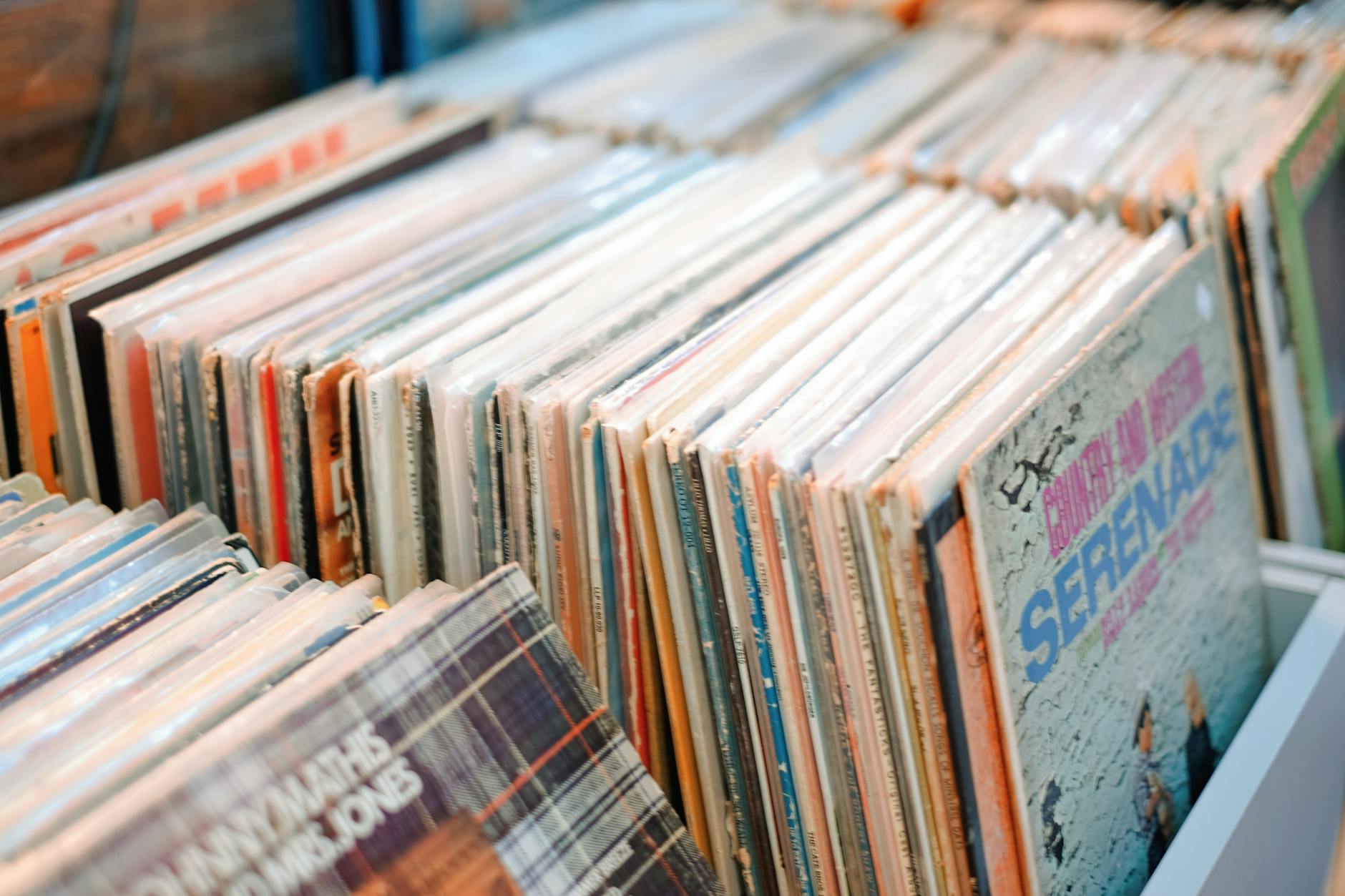
- Common Western pop/rock (Beatles, Stones, etc.): IDR 100,000–300,000
- Common Indonesian pop: IDR 50,000–150,000
- Rare Indonesian jazz/funk (Indra Lesmana, Ireng Maulana): IDR 500,000–2,000,000
- Classical, opera, world music: IDR 100,000–500,000
- Rare collectors (Dewa Budjana, original Koes Plus): IDR 1,000,000–5,000,000
Wayang Puppets & Indonesian Art
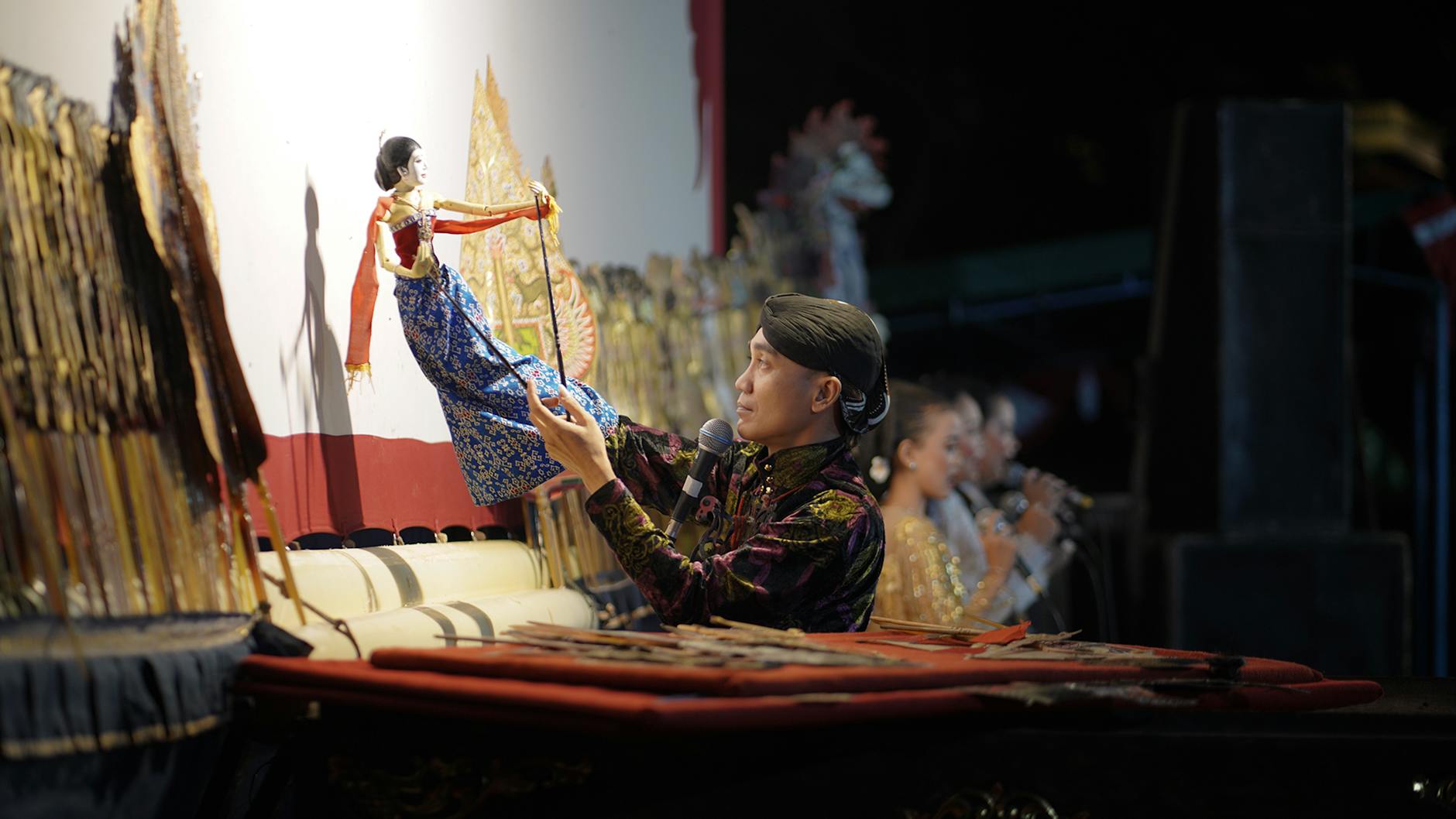
- New tourist wayang (mass-produced): IDR 50,000–250,000
- Quality wayang kulit (handmade): IDR 300,000–800,000
- Vintage/antique wayang (50+ years): IDR 800,000–3,000,000
- Master-artisan wayang (signed): IDR 3,000,000–15,000,000
Brass & Bronze Items
- Small brass bells, dishes: IDR 50,000–200,000
- Brass candlesticks, lamps: IDR 150,000–500,000
- Antique brass sculptures: IDR 500,000–3,000,000
- Bronze keris daggers (vintage): IDR 800,000–5,000,000+
How to Tell Real Antiques from Reproductions
Here’s the uncomfortable truth: most “antiques” at Jakarta flea markets are reproductions, and the same crafts often turn up new and properly sourced in the shops covered in our guide to Indonesian handicrafts in Jakarta. If you do want the genuine old article, here’s how to spot it.
Brass & Bronze: Authentication Checks
- Weight: Real old brass is dense; reproductions are often hollow or thin.
- Patina: Real old brass has deep, irregular patina (not uniform spray-applied).
- Casting marks: Old hand-cast brass shows file marks; modern casts are smooth.
- Smell test: Old brass smells slightly metallic-musty; new reproductions smell of polish or rubber.
Wayang Puppets: Authentication Checks
- Leather quality: Real old wayang kulit uses water buffalo hide; reproductions often goat or cardboard-stiffened paper.
- Painting: Real old wayang uses egg tempera and natural pigments; reproductions use acrylic.
- Wear patterns: Real old puppets show finger wear at handle areas, not at edges.
- Fragrance: Old wayang sometimes smells faintly of buffalo hide and Javanese incense.
Batik: Authentication Checks
- Look at the back: Real batik tulis shows wax penetration through to the back. Printed batik does not.
- Pattern variation: Real batik tulis has minor pattern inconsistencies. Mass batik is identical pattern-to-pattern.
- Smell: Genuine batik smells faintly of beeswax and natural dyes. Mass batik smells of synthetic dye.
- Edge consistency: Old batik shows fade at edges (sun exposure); new batik is uniform.
Vintage Cameras: Authentication Checks
- Serial numbers: Cross-reference against published serial number databases for the brand. Mismatches indicate replacement parts.
- Internal condition: Open the back, check shutter cleanliness, mirror condition.
- Smooth focus and shutter: Old cameras should function smoothly. Sticky shutters indicate disuse and dried-out lubricant.
- Original leather/covering: Original leather shows uniform wear; replaced leather is too pristine.
Bargaining Script for Foreigners
The bargaining ritual is half the fun and a small cultural experience in itself, one of the more memorable unique things to do in Jakarta. Use this script, in Indonesian if you can manage it:
- Start with greeting: “Selamat pagi/siang/sore, Pak/Bu” (Good morning/afternoon/evening, sir/ma’am)
- Show interest, browse: Don’t focus on one item immediately
- Ask price: “Berapa harganya?” (How much is this?)
- Express mild surprise: “Wah, mahal sekali!” (Wow, very expensive!)
- Counter with 40%: “Bisa kurang? IDR [40% of asking]?” (Can you discount? IDR [number]?)
- Vendor counter-offers
- Negotiate up to 50-60%: Two or three rounds
- Walk-away signal: “Saya pikir-pikir dulu, terima kasih” (I’ll think about it, thank you) — often triggers a final discount
- Close at 50-55% of opening price
Half-Day Routed Itinerary: Surabaya + Santa
The optimal foreign-tourist flea market day:
- 10:00 AM: Hotel breakfast or quick café stop
- 10:45 AM: Grab to Jalan Surabaya (Menteng) — 15-30 min from most hotels
- 11:00 AM – 1:00 PM: Browse Jalan Surabaya. Walk all 300m first, then return to negotiate.
- 1:00 PM – 2:00 PM: Lunch at SOI 3 Italian Restaurant or Bandar Djakarta in Menteng
- 2:00 PM: Grab to Pasar Santa (20 min) — Note: Santa quiet until ~noon, so this timing works
- 2:30 PM – 5:00 PM: Explore Pasar Santa’s ground floor — vinyl shops, vintage clothing, coffee
- 5:00 PM: Coffee break at one of Santa’s coffee roasters
- 6:00 PM: Return to hotel
Total budget potential: IDR 500,000–5,000,000 depending on purchases. Total transport (Grab): about IDR 150,000–250,000.
What NOT to Buy at Jakarta Flea Markets
Some items are export-restricted, illegal, or simply not what they’re sold as:
- Ivory products — Always illegal to export. Even if labeled “bone.”
- Sea turtle shell, coral, certain feathers — Endangered species; always prohibited.
- “Antique” Buddhas or Hindu statues claimed to be temple-stolen — Often modern reproductions sold as ancient; legitimate temples don’t sell their pieces.
- Drugs, drug paraphernalia — Severe Indonesian drug laws.
- “Pre-WWII” items with Nazi imagery — Many countries restrict import.
- Pirated DVDs or branded knockoffs — Customs at home will confiscate.
Cash, Payment, and Safety Tips
- Cash is king — Bring IDR 1–3 million for a casual shopping day, more for serious purchases
- ATMs available near major markets — BCA, BNI, Mandiri all common
- QRIS spotty — Younger vendors at Pasar Santa accept; older vendors at Surabaya don’t
- Pickpocket awareness — Standard urban precautions; flea markets are generally safe but crowded
- Don’t display large amounts of cash
- Wear comfortable shoes — Floors range from polished marble (Santa upstairs) to wet, uneven (Senen)
- Heat preparation — Jakarta humidity peaks at noon; bring water and dress light
Best Time to Visit Jakarta Flea Markets
- Dry season (May-September): Easiest to navigate Surabaya’s outdoor stalls
- Weekday mornings: Less crowded, more vendor attention
- Avoid Sunday afternoons: Crowded with local browsers
- Avoid rain: Surabaya’s stalls partially close; Senen and Jatinegara become difficult
- Ramadan timing: Vendors often close early during Ramadan and may not bargain as enthusiastically
Frequently Asked Questions About Jakarta Flea Markets
What are the best Jakarta flea markets for tourists?
Jalan Surabaya for antiques and brass, Pasar Santa for vinyl and vintage fashion, Pasar Baru for textiles. These three cover most foreign tourist interests with English-speaking vendors.
How do I get to Jalan Surabaya antique market?
Cikini KRL Station is closest (5-minute walk). From hotels in Sudirman or Thamrin, Grab takes 15-25 minutes (IDR 50,000-80,000). The market runs along Jl. Surabaya in Menteng, Central Jakarta.
Is bargaining expected at Jakarta flea markets?
Yes, at Jalan Surabaya, Pasar Senen, and Jembatan Item, bargaining is mandatory — opening prices for foreigners are typically 50-100% above realistic value. At Pasar Santa, bargaining is light (10-20% off). Pasar Baru is mixed.
Are flea market antiques in Jakarta real?
Mostly no — perhaps 20-30% of items labeled “antique” are genuinely old. Use the authentication checks in this guide: examine weight, patina, casting marks, smell, and wear patterns. Real antiques have stories, traceable provenance, and irregular wear.
Can I pay by card at Jakarta flea markets?
Generally no. Bring cash. Some Pasar Santa vendors accept QRIS (Indonesian QR payment). ATMs available within 5-10 minutes’ walk of all major markets.
What’s the safest Jakarta flea market for tourists?
Jalan Surabaya — well-policed, tourist-accessible, English-friendly. Pasar Santa is also very safe. Pasar Senen and Jembatan Item are safer than reputation but bring local-level awareness.
How much should I budget for a flea market day in Jakarta?
IDR 500,000 for casual browsing and small purchases (a few brass items, some vinyl). IDR 2-3 million for moderate purchases (one major item plus several smaller). IDR 5+ million for serious antique camera or signed batik purchases.
Jakarta’s flea markets reward patience and curiosity more than money — the hunt really is half the fun. Start at Jalan Surabaya, learn to read a patina, bargain with a smile, and you’ll come home with something nobody else has. When you’re ready to widen the trip, our shopping in Jakarta pillar ties the markets in with the malls, the traditional markets in Jakarta guide covers the wet and dry markets, and for more vintage and thrift, the Blok M shopping district has its own secondhand corners.
External Resources for Jakarta Flea Market Shopping
For market history and visitor accounts, the Wikipedia entry on Jalan Surabaya Antiques Market provides background. The Indonesia Expat guide offers additional expat-traveler perspectives.