Yes, you need it, and the reason has nothing to do with pickpockets. The real argument for jakarta travel insurance is a single number: a serious road accident in Jakarta that requires evacuation to a hospital in Singapore can run to US$25,000-80,000, and from a smaller facility outside the capital that figure climbs further. Jakarta’s private hospitals are decent for routine care, but for major trauma, complex neurosurgery or burns, the standard move is to fly the patient out. That bill lands on you in full if you’re not covered, and it lands fast, often before you’ve even left the ICU. Everything else insurance covers — a cancelled flight, a stolen phone, a missed connection — is an inconvenience you can absorb. A six-figure medical bill is not.
This sits alongside our Jakarta travel tips pillar guide, which covers insurance in passing as one line among dozens of practical points. This article is the deep dive on the insurance product itself: what a policy needs to actually contain, what it costs, how claims play out when something goes wrong, and where cheap or “free” cover quietly lets you down. It sits alongside forthcoming cluster pieces on health precautions, staying safe day to day, and building a realistic trip cost budget — this one is specifically about the financial product that sits behind all of that.
Do You Actually Need Jakarta Travel Insurance?
Short answer: yes, and it isn’t close. Indonesia doesn’t require proof of insurance to enter as a tourist, unlike some countries that now mandate it at the border, so nothing stops you flying in uninsured. That’s exactly the trap. Jakarta is a huge, congested city where motorbikes weave between lanes of stalled traffic, pavements are uneven or absent, and ambulance response times in gridlock can stretch well past what you’d expect at home. None of that makes the city dangerous in a dramatic sense — most visits are entirely uneventful — but it does mean the tail-risk events (a bad fall, a traffic collision, a sudden case of dengue or a burst appendix) are more likely to require the kind of care that gets expensive quickly. Insurance is not about assuming the worst will happen. It’s about making sure that if it does, the outcome is a stressful phone call rather than a bankrupting one.
What a Jakarta-Ready Policy Should Actually Cover
Not all travel insurance is built the same, and the cheapest policy on a comparison site is frequently cheap because it strips out the cover that matters most for a city like Jakarta. Before you buy anything, check the policy document — not just the marketing page — for these specific items:
- Emergency medical treatment with a limit of at least US$100,000, ideally US$250,000 or more
- Emergency medical evacuation and repatriation, separately itemised, with a limit of at least US$100,000 (many good policies go to US$500,000-1,000,000)
- Cover that explicitly includes motorbike and scooter riding, or an add-on that does
- Trip cancellation and interruption, covering non-refundable flights and hotels
- Travel delay cover with a reasonable per-day payout for meals and accommodation
- Baggage and personal effects cover, including a sensible single-item limit for phones and cameras
- 24/7 emergency assistance line with English-speaking staff who can coordinate a hospital transfer
- Optional adventure/activity cover if you’re planning diving, hiking on nearby volcanoes, or white-water rafting day trips
The evacuation limit is the one people skip past fastest and regret most. A policy can look comprehensive on the surface — decent medical limit, cancellation cover, baggage cover — and still cap evacuation at a token US$20,000, which barely covers a domestic transfer, let alone an international one to Singapore.
Medical Evacuation: The Cover That Actually Matters
This is worth dwelling on because it’s the one figure that determines whether insurance was worth buying at all. Jakarta has good private hospitals — Siloam, Mayapada, and a handful of others handle the vast majority of foreign traveller cases competently, and for anything from a stomach bug to a broken wrist you’ll likely be treated well without ever needing to leave the city. The problem is the narrower category above that: major trauma, spinal injury, serious burns, complex cardiac events, or anything needing specialist neurosurgery. Indonesia’s trauma and tertiary care network, while improving, doesn’t yet match what’s available three hours away by air in Singapore, at hospitals like Mount Elizabeth or Raffles. When a case is serious enough, the standard clinical decision is evacuation, and that decision gets made regardless of whether you can pay for it — the bill just arrives afterward.
Air ambulance evacuation from Jakarta to Singapore typically runs from the mid five figures into six figures depending on the aircraft, medical crew, and distance from a suitable airstrip. A policy with a US$1,000,000 combined medical and evacuation limit costs barely more than one with a US$50,000 limit, because insurers price the probability, not the payout — serious evacuations are rare, so the premium difference is small. There is no good reason to buy a policy with a low evacuation cap to save the equivalent of a couple of coffees.

Why Jakarta’s Roads Push Up the Risk
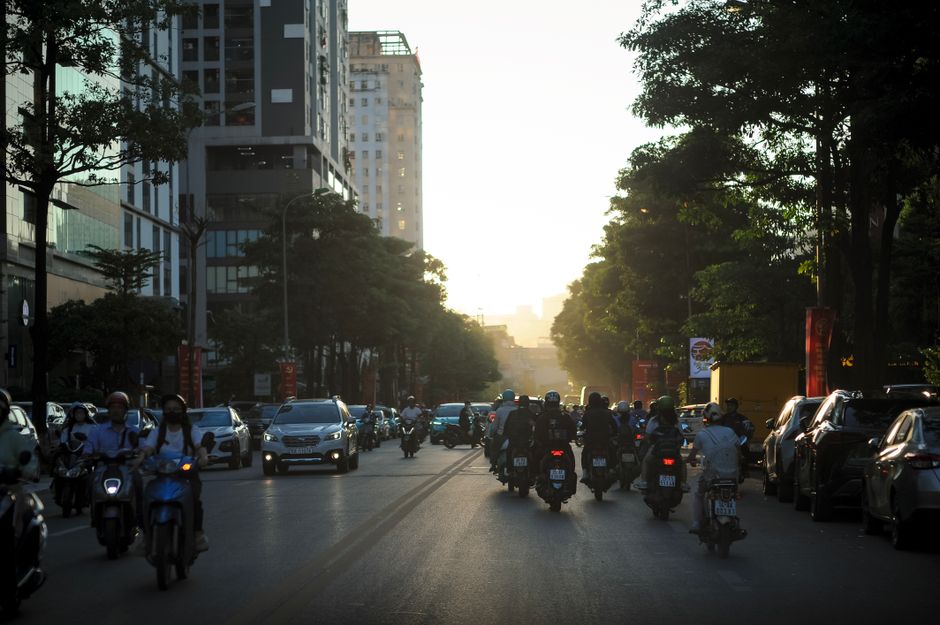
Traffic is the honest reason evacuation cover matters here more than in a lot of other Southeast Asian capitals. Jakarta’s road network moves an enormous volume of cars, buses, and motorbikes through a layout that wasn’t built for the current traffic load, and the result is congestion that produces low-speed but high-frequency incidents, plus the occasional high-speed one on toll roads. Our guide to avoiding Jakarta traffic covers the practical side of staying out of the worst of it; the insurance angle is simpler — the more time you spend around Jakarta traffic, on foot, on a bike, or as a passenger, the more that evacuation limit is doing real work in the background. If your trip includes multiple days of city-centre movement rather than a quick airport transfer and a hotel stay, treat the medical and evacuation limits as the numbers to scrutinise hardest, ahead of baggage cover or cancellation cover.
The Motorbike and Scooter Exclusion Trap
This is the single most common way travellers in Indonesia discover their policy doesn’t cover them, usually at the worst possible moment. A large share of budget and mid-range travel insurance policies either exclude motorbike and scooter riding outright, or attach conditions that are easy to miss: you need a valid motorcycle licence from your home country, and in many cases an International Driving Permit with the motorcycle category specifically endorsed. Riding on a licence that only covers cars, or on no licence at all because a rental shop handed you a scooter without asking, is enough for an insurer to deny a claim entirely — not reduce it, deny it. If you’re weighing up Grab against Gojek for getting around, note that riding as a passenger on an app-based ojek is usually treated differently to renting and riding a bike yourself, but policies vary and it’s worth confirming directly with the insurer rather than assuming.
If motorbike riding is any part of your Jakarta plans, don’t buy the first cheap policy you find — go through the policy wording specifically for the word “motorcycle” or “moped” and read the exclusion clause in full. Several mid-market insurers offer motorbike cover as standard or as a low-cost add-on; it’s worth paying slightly more for a policy that includes it than saving that money and gambling on never needing it.
Theft and Petty Crime: What’s Realistic to Cover
Jakarta’s crime profile for tourists skews heavily towards opportunistic, petty theft rather than anything violent: a phone lifted from a table, a bag snatched from a scooter, a wallet gone from an unzipped daypack in a crowded market. None of this is unique to Jakarta, but it’s common enough that baggage and personal effects cover is worth checking closely, particularly the per-item limit — many policies cap a single item (your phone, most likely) at a few hundred dollars, well under replacement cost for a recent smartphone. If you’re travelling with camera gear or a laptop, check whether it needs to be declared separately; insurers often apply a much lower blanket limit to electronics than to general baggage. Keep receipts, and if something is stolen, get a police report (a “surat keterangan kehilangan”) within 24 hours — insurers won’t pay out on a theft claim without one, no exceptions.
Flood, Weather and Trip Disruption Cover
Jakarta floods. It’s a recurring seasonal issue, particularly from roughly November through March, and when heavy rain coincides with high tides and a full river system, low-lying parts of the city can be disrupted for days — roads closed, the airport toll road backed up, occasionally flights delayed. This is where trip delay and trip interruption cover earn their premium: a decent policy pays out for meals, an extra hotel night, and rebooking costs if flooding or another weather event strands you past your planned departure. The important timing point is that this only works if you buy the policy before the disruptive event is already forecast or underway — insurers exclude claims for events that were foreseeable at the time of purchase, so there’s no last-minute top-up once a flood warning is already out. Buy cover when you book your flights, not the week before you fly.
What Good Cover Actually Costs
Prices vary by age, trip length, and how much adventure activity you’re doing, but the numbers below give a realistic sense of the range for a policy with solid medical and evacuation limits, based on current published rates from mainstream providers.
| Traveller profile | Typical trip length | Approx. cost range (USD) |
|---|---|---|
| Solo traveller, 25-39, budget/mid-range provider | 1-2 weeks | $25-60 |
| Solo traveller, 25-39, comprehensive provider | 1-2 weeks | $50-110 |
| Couple, mid-range cover | 2 weeks | $110-220 combined |
| Family of four, mid-range cover | 2 weeks | $200-400 combined |
| Digital nomad / long stay (subscription-style) | 4 weeks, rolling | $55-165 per 4 weeks |
| Traveller over 65 | 2 weeks | $150-350, provider-dependent |
Age is the single biggest cost driver after trip length — premiums step up noticeably past 60 and again past 70, and some budget insurers stop offering cover above a certain age entirely, which is worth checking before you assume a familiar cheap brand will quote you at all. If your trip is business-oriented, our business travel in Jakarta guide is worth reading alongside this, since business trips often need cover for expensive equipment and tighter cancellation terms around client meetings that a standard leisure policy doesn’t handle well. At the other end, if you’re travelling on a luxury Jakarta itinerary, it’s worth raising your baggage and cancellation limits accordingly — the standard limits in a budget policy assume a much lower-cost trip than a five-star one.
Is Your Credit Card’s Travel Insurance Enough?
For a lot of travellers, no, and this is the most common false sense of security in the whole topic. Plenty of premium credit cards bundle in complimentary travel insurance, and it’s genuinely useful for what it covers — often trip cancellation, delayed baggage, and rental car excess. Where it falls short is the exact area that matters most for Jakarta: emergency medical cover and evacuation are frequently minimal, capped low, or entirely absent, because card issuers price these perks assuming most claims will be small and mundane. Some cards also require you to have paid for the entire trip (or a defined portion of it) on that specific card for the cover to apply at all, which catches people out when a flight was booked with points or a different card.
The sensible approach is to actually read your card’s guide to benefits document — not the marketing page, the PDS or terms document — and look specifically at the medical and evacuation limits. If they’re absent or under roughly US$50,000, treat the card’s cover as a supplement at best and buy a standalone policy with proper medical and evacuation limits as your primary cover. It’s rarely a large extra cost relative to the gap it closes.
How Claims Actually Work in Practice
The process is more manageable than people expect, provided you do a few things in the right order. For anything involving hospital treatment, call the insurer’s 24-hour emergency line before or as soon as possible after you’re admitted — most policies require this for anything beyond minor treatment, and skipping it can reduce or void the payout even if the treatment itself was legitimate. Reputable insurers can often arrange direct billing with major Jakarta private hospitals, meaning you don’t pay upfront at all; this is worth confirming with the insurer’s assistance line at the point of admission, since it varies by provider and by hospital.
For smaller claims — a delayed flight, a stolen bag, a cancelled tour — keep everything: boarding passes, delay confirmation from the airline, the police report for theft, and original receipts for anything you’re claiming the cost of. Photograph documents on the spot rather than relying on finding them later. Most insurers give you a window of 30-90 days after the trip to file, and claims move faster with a complete file submitted once than with a partial one followed by requests for more evidence. Digital claims portals have made this considerably less painful than it used to be, but the paperwork discipline still matters.
A Good Policy vs a Bad One, Side by Side
| Coverage area | Weak/budget policy | Solid policy for Jakarta |
|---|---|---|
| Emergency medical | $20,000-50,000 limit | $100,000-1,000,000 limit |
| Medical evacuation | Bundled into medical limit, or capped under $50,000 | Separate limit, $100,000-1,000,000 |
| Motorbike/scooter riding | Excluded outright | Included, or available as a clear add-on |
| Theft/baggage per-item limit | $100-300 per item | $500-1,500 per item, electronics declarable |
| Trip delay payout | Small fixed sum after 12+ hours | Daily allowance from 6-8 hours |
| 24/7 assistance line | Email-only or business hours | Phone line, English-speaking, hospital coordination |
The pattern across almost every cheap policy is the same: the headline price looks fine because the limits that rarely get used (small baggage claims, short delays) are funded generously on paper, while the limits that would actually bankrupt you if triggered (evacuation, major medical) are quietly capped low or excluded. Read the policy schedule, not the sales page, before you compare price.
Providers Worth Comparing
There’s no single best insurer for every traveller, but a few names come up repeatedly for Indonesia trips and are worth using as a starting comparison rather than a final answer. World Nomads is popular with independent and adventure travellers and covers a long list of activities as standard, including some that budget insurers exclude. SafetyWing built its Nomad Insurance product for long-stay and remote-working travellers, with a rolling monthly structure that suits people basing themselves in Jakarta for weeks, and its Complete tier adds a materially higher medical limit than the cheaper Essential plan. Beyond these two, most national insurers (Allianz, AXA, Chubb and equivalents at home) offer comparable Southeast Asia policies, and pricing on the same coverage tier can vary 20-30% between providers for no obvious reason, so it’s worth getting two or three quotes. Whichever you choose, run the same checklist from earlier in this article against the policy wording — brand recognition isn’t a substitute for reading the exclusions.
Common Mistakes That Void a Claim
Most denied claims aren’t the result of an insurer acting in bad faith — they’re the result of a traveller unknowingly breaching a condition written into the policy from the start. The recurring ones: riding a motorbike without the right licence category, as covered above; buying insurance after a known event (a storm warning, an already-delayed flight) has occurred; failing to call the emergency assistance line before extended hospital treatment when the policy requires it; being heavily intoxicated at the time of an accident, which many policies exclude outright; and doing something that falls under a paid add-on, diving below a certain depth for instance, without having bought it. None of these are exotic edge cases — they’re common, everyday ways a legitimate claim gets rejected on a technicality. Reading the exclusions section once, properly, before you fly removes almost all of this risk.
Renting a Car? Check Your Excess Cover Separately
If your Jakarta trip includes a self-drive car rental — less common than hiring a driver, but not unusual for longer stays — standard travel insurance often doesn’t cover the rental company’s damage excess, or covers it only up to a low limit. Our guide to renting a car in Jakarta covers the practical side of hiring locally; on the insurance side, check whether your travel policy includes excess/collision waiver cover as standard, since a lot of policies treat it as a separate add-on priced at a few dollars a day. It’s cheap enough that skipping it to save money rarely makes sense given Jakarta traffic conditions.
Families, Longer Trips and Multi-Stop Itineraries
If you’re travelling with kids, cover for pre-existing conditions and paediatric medical treatment is worth double-checking, since not every policy treats children’s cover identically to adult cover within a family plan; our family-friendly hotels in Jakarta guide covers the accommodation side of a family trip, and it’s worth pairing that planning with a family policy that has a genuinely equal medical limit per person rather than one high limit shared across the group. For anyone following our one-week Jakarta itinerary or a longer multi-city Indonesia route, check whether your policy is priced and structured for the whole trip length in one go or needs to be extended partway through — some budget insurers only sell in short blocks and it’s easy to let cover lapse partway through a longer trip without noticing.
Getting to and from the Airport, Covered
The gap between landing and reaching your hotel is a common point where people assume they’re covered and aren’t. If you’re arranging your own airport to city transfer rather than a hotel pickup, that journey is still covered under a standard policy the same as any other point in your trip, but it’s worth having your insurer’s emergency number saved in your phone before you land, not after. The same applies once you’re moving around day to day — whether you’re weighing up taxis against ride-hailing apps, or working out the best way to get around Jakarta generally, none of it changes your cover, but knowing the assistance line is saved and reachable matters more than which transport mode you pick.
On a Tight Budget? Don’t Cut This Corner
If you’re planning a budget trip to Jakarta, insurance is one of the few costs worth ring-fencing rather than trimming. A decent policy with real medical and evacuation limits typically runs $30-60 for a one-to-two-week trip for a traveller under 40 — a small fraction of a realistic daily budget, and genuinely cheap insurance against a bill that could otherwise run into five or six figures. If money is tight, the place to economise is baggage and gadget cover, which you can reasonably self-insure by simply travelling with less expensive kit, not medical and evacuation cover, which you can’t self-insure against at all.
When You Might Genuinely Skip a New Policy
There are a small number of situations where buying a fresh standalone policy is genuinely unnecessary — mainly if you already hold comprehensive annual multi-trip insurance through your employer, an expat health policy that explicitly covers travel within Indonesia, or a digital nomad plan that already includes evacuation to regional hospitals. Even then, confirm the specific evacuation limit and motorbike clause rather than assuming existing cover simply carries over, since annual policies quietly cap single-trip claims lower than their headline limit suggests. Outside these specific cases, arriving in Jakarta with no travel insurance at all is a real financial risk, not a theoretical one.
Frequently Asked Questions
Do I legally need travel insurance to enter Indonesia? No. Indonesia doesn’t require proof of travel insurance for tourist entry, unlike some countries. That’s a reason to buy it deliberately, not a reason to skip it.
How much does jakarta travel insurance typically cost? For a solo traveller under 40 on a one-to-two-week trip, expect roughly $25-110 depending on the coverage tier and provider, with comprehensive policies at the higher end of that range.
Does travel insurance cover motorbike accidents in Jakarta? Only if the policy explicitly includes motorbike/scooter cover and you’re riding with the correct licence, usually a home motorcycle licence plus an International Driving Permit endorsed for motorcycles. Many budget policies exclude this entirely.
Is my credit card’s travel insurance enough on its own? Usually not for medical and evacuation cover specifically, even though it may handle cancellation and baggage reasonably well. Check the actual medical and evacuation limits in the card’s guide to benefits before relying on it as your only cover.
What does medical evacuation from Jakarta actually involve? For serious trauma or specialist care beyond what’s available locally, patients are typically flown to Singapore, a journey of a few hours, at a cost that can run from the tens of thousands into six figures depending on the case.
Will insurance cover flight delays caused by flooding? Yes, provided you bought the policy before the flooding or weather event was forecast. Cover bought after a disruptive event is already known about is excluded.
What documents do I need to make a theft claim? A police report filed within 24 hours of discovering the theft, plus receipts or other proof of ownership for the item. Claims without a police report are routinely refused.
Should I buy insurance for a short layover or day trip through Jakarta? If you’re not leaving the airport, existing cover for your onward destination usually applies. If you’re heading into the city even briefly, it’s worth having cover active for that window, since a short stay doesn’t reduce the risk of a serious incident, just the odds of one.
Where to Go Next
For the wider practical picture beyond insurance, start with our Jakarta travel tips pillar guide. If road safety is on your mind, read up on avoiding Jakarta traffic before you decide how much you’ll be moving around the city. For day-to-day transport decisions, compare taxis, Grab and Gojek, and the wider options in our guide to getting around Jakarta. And if you’re still building your trip, our one-week Jakarta itinerary and transportation cost guide are good next stops for putting the rest of the budget together.