Is Jakarta safe? Yes, in the way that matters most: violent crime against tourists is rare, and you are far more likely to be delayed by a jam than threatened by anyone in it. The risks that actually shape a trip here are duller than the ones people worry about before they arrive — traffic, flooding, heat, and the odd bout of food poisoning, not muggings or kidnapping. That doesn’t mean you switch your brain off. It means you point your caution at the right things.
This article sits underneath our Jakarta travel tips pillar guide, which covers safety at a summary level alongside visas, packing, and health prep. If you haven’t read that yet, it’s worth doing first — it links out to more specific pieces on things like what to pack for Jakarta’s climate, visa requirements for various nationalities, and vaccinations worth having before you fly. What follows here goes much deeper on the safety side alone: crime patterns, which neighbourhoods deserve extra care, why traffic is the thing that will actually put you at risk, flooding in wet season, and practical advice for travelling solo or as a woman.
Is Jakarta Safe? The Short Answer
Jakarta is a big, dense, occasionally chaotic capital of around 10 million people in the city proper and closer to 30 million across the wider metropolitan area. It has the safety profile you’d expect from a city that size in Southeast Asia: low rates of violent crime against foreigners, moderate rates of opportunistic petty theft in crowded spots, and infrastructure that hasn’t quite kept pace with the population. Tourists who come here worried about being robbed at knifepoint are usually worrying about the wrong thing. Tourists who cross a six-lane road without checking both directions twice, or who wade through ankle-deep floodwater during a January downpour, are taking the real risk without realising it.
None of this makes Jakarta unusual. It puts it roughly in line with Bangkok, Manila, or Ho Chi Minh City — cities where the headline fear (crime) is overstated and the quiet fear (roads, weather, infrastructure) is understated. Millions of tourists and business travellers pass through every year without incident. The sensible approach is the same one you’d use in any large unfamiliar city: know which areas warrant more attention after dark, keep your bag zipped and close to your body in crowds, use registered transport, and pay attention to the weather forecast during wet season.
What the Official Advisories Actually Say
It’s worth reading the primary sources rather than relying on secondhand summaries. The UK’s Foreign, Commonwealth and Development Office does not single out Jakarta with a specific warning; its Indonesia-wide advice covers general safety, entry requirements, and terrorism risk that applies to the whole country, including public places like malls and hotels in major cities. It also flags volcanic risk in regions well outside Jakarta — Sinabung, Marapi, Semeru — irrelevant to a Jakarta-only trip but worth knowing if you’re combining the capital with somewhere like Yogyakarta.
The US State Department rates Indonesia at Level 2, “exercise increased caution,” citing terrorism, unrest, and natural disaster risk, with demonstrations flagged as something to avoid rather than pre-empt. Its specific area warning covers Central Papua and Highland Papua, thousands of kilometres from Jakarta, and doesn’t apply to the capital. Australia’s Smartraveller rates Indonesia at a “high degree of caution,” noting petty and violent crime as a real but manageable risk, sexual assault reports with a specific note that solo women should be more alert in taxis and nightlife venues, and flooding in greater Jakarta as a seasonal disruption.
None of the three governments tells its citizens to avoid Jakarta. All three flag terrorism as a background risk in the way they would for most large Southeast Asian capitals — real but statistically small, and more relevant to embassy guidance than to your day-to-day decisions. Check the advisory for your own country before you go, since these things update.
Crime in Jakarta: What Tourists Actually Encounter
Violent crime targeting foreign tourists is genuinely uncommon in Jakarta. What you’re more likely to run into is petty theft — pickpocketing on crowded public transport, bag-snatching from a moving motorbike, or a phone disappearing from a café table while you’re distracted. These aren’t unique to Jakarta; they’re the standard hazards of any large city with pockets of economic inequality and dense crowds. The pattern is predictable: thieves target obvious tourist behaviour (phone out, bag unzipped, wallet visible) in crowded, anonymous settings — traditional markets, packed TransJakarta buses at rush hour, train platforms, tourist sites in the old town.
A few habits cut this risk drastically. Wear your bag across your body rather than on one shoulder, and keep it in front of you on crowded public transport. Don’t leave a phone on a table facing the street-side of a café. Use a hotel safe for your passport and keep only a photocopy or photo of it on you day to day. Split your cash and cards rather than carrying everything in one pocket. None of this is Jakarta-specific advice — it’s the same advice that applies in Rome, Bangkok, or Mexico City — but it applies here too, and the areas where it matters most are the crowded, anonymous ones rather than the upscale ones.
Violent robbery does happen occasionally, generally late at night in poorly lit areas, and reports involving tourists are rare enough to make local news when they occur. Sexual assault has been reported in Indonesia including in areas frequented by tourists, and advisories specifically flag that solo women should be more cautious in taxis, rideshares, bars, and crowds — covered in more depth further down. Scams — overcharging, fake tour operators, currency-exchange tricks — are common enough to warrant their own guide on this site, so this article keeps that part brief: use metered or app-based transport, agree prices before boarding anything that isn’t metered, and be sceptical of anyone offering an unprompted, unusually good deal.
Jakarta Neighbourhoods: Where to Relax, Where to Stay Sharp
Jakarta doesn’t have a single “dangerous zone” tourists should avoid entirely, but it does have real variation between districts, and knowing the map helps more than any generic advice. If you’re deciding where to stay in Jakarta, safety is one of several reasons Central and South Jakarta dominate most recommendations — see our fuller breakdown of the best areas to stay in Jakarta for the accommodation side of this. Our separate Jakarta neighbourhoods guide covers character and things to do area by area; this table is about relative safety specifically.
| Area | General safety level | Notes |
|---|---|---|
| Menteng | Very safe | Leafy, embassy district, well-lit, popular with expats and diplomats. |
| SCBD / Sudirman-Thamrin | Very safe | Corporate core, heavy security presence around malls and towers, busy late into the evening. |
| Senopati / South Jakarta business belt | Very safe | Modern, well-patrolled, popular with residents and business travellers. |
| Kemang | Generally safe | Expat-heavy nightlife strip; occasional bag-snatching reported late at night, otherwise low-key. |
| Kota Tua (Old Town) | Safe by day, more caution at night | Popular tourist site; pickpocketing and low-level scams reported more than violent crime. |
| Tanah Abang | Fine by day, busier and rougher-edged after dark | Huge, chaotic textile market; crowded and disorienting rather than dangerous, but watch belongings. |
| Glodok (Chinatown) | Moderate caution | Interesting but grittier, narrower streets; more petty crime reported than in central districts. |
| Parts of North and East Jakarta away from tourist routes | More caution, especially after dark | Less developed, fewer tourists, less reason to be there alone at night as a visitor. |
The genuinely fine areas
Menteng, the SCBD-Sudirman corridor, and the newer South Jakarta business districts are where most business travellers and a large share of tourists end up staying, and it shows in how relaxed those areas feel. Wide pavements where they exist, visible security at malls and hotel entrances, and a steady stream of people well into the evening. If you want the lowest-friction base for a first visit, this is it, and it lines up with what our guide to the best areas to stay in Jakarta already recommends for other reasons — proximity to attractions, transport links, restaurant density.
Where to be a bit sharper
Kota Tua, Glodok, and Tanah Abang are worth visiting — they’re some of the most atmospheric parts of the city — but they reward more situational awareness than a mall in SCBD does. Crowds are denser, streets are narrower, and lighting is patchier after dark. None of this means avoid them; it means go during the day if it’s your first time, keep valuables minimal, and take a car or app-based ride back rather than walking a long stretch after dark once the crowds thin out.
Traffic Is the Real Danger, Not Crime
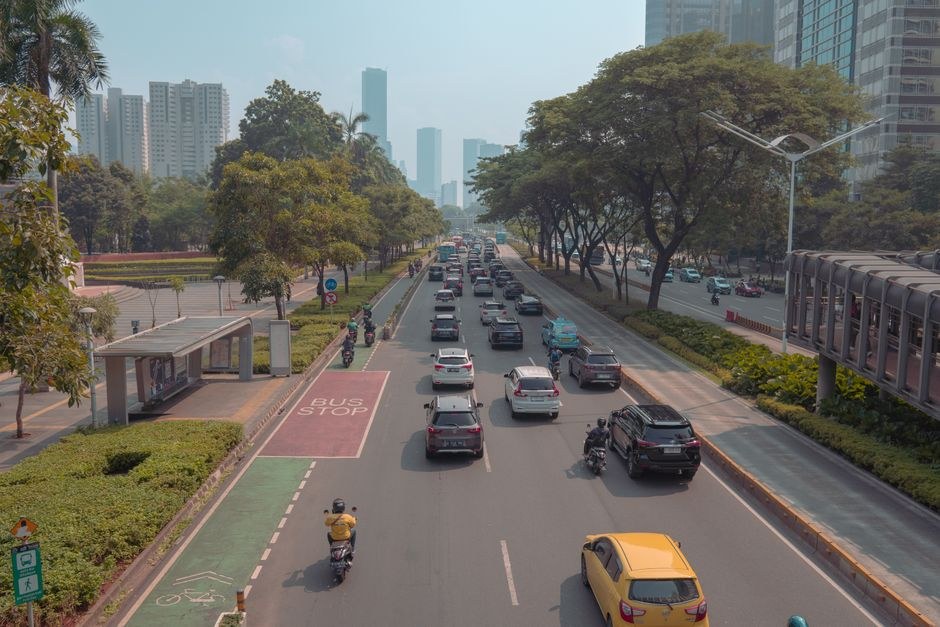
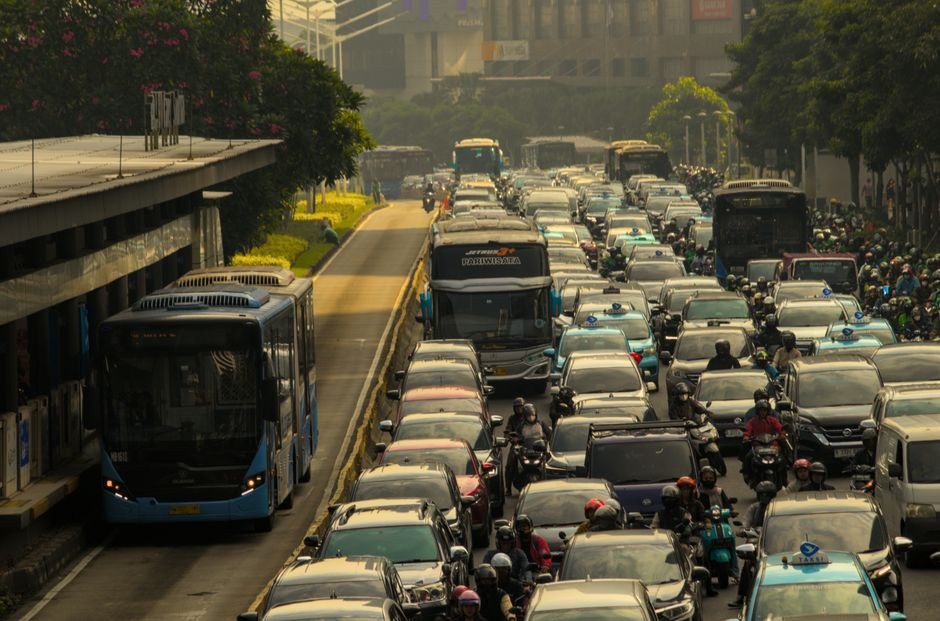
If you want the one statistic that should actually change your behaviour in Jakarta, it’s this: Indonesia records upward of 25,000-30,000 road traffic deaths a year nationally, and motorcycles are involved in roughly seven out of ten of them. Jakarta’s roads are dominated by motorbikes weaving between lanes, and the gap between “technically has a red light” and “cars actually stop at it” is wider than many visitors expect. This is the risk that should occupy more of your attention than pickpockets do. It rarely gets flagged in generic safety content because it’s less dramatic than crime, but it’s the risk with the biggest real chance of affecting you.
Our dedicated guide on how to avoid Jakarta’s traffic covers timing and routing in detail; the safety angle specifically comes down to who’s driving and how you’re crossing. If you’re renting a motorbike yourself as a tourist — something we’d generally discourage unless you already have real riding experience in chaotic traffic — accept that Jakarta’s roads are unforgiving of small mistakes. If you’re a passenger, the choice of operator matters. Licensed taxis like Blue Bird and app-based options such as Grab and Gojek carry insurance and vetted drivers; unmarked cars or informal ojek pickups do not offer the same protections. Our Jakarta taxi guide and comparison of Grab versus Gojek both cover how to book safely and avoid unlicensed drivers who approach you directly at airports or tourist sites.
| Mode of transport | Relative safety | Notes |
|---|---|---|
| MRT / KRL commuter rail | Very safe | Modern, well-regulated, low accident risk; crowding is the main issue at peak times. |
| TransJakarta busway | Safe | Dedicated lanes reduce accident exposure; watch belongings in crowded carriages. |
| Blue Bird taxi / Grab or Gojek car | Safe | Licensed, trackable, insured; the recommended default for most tourists. |
| Gojek/Grab motorbike (ojek) | Moderate risk | Fast and cheap but you’re exposed in traffic; wear the helmet provided. |
| Self-driven rental car or motorbike | Higher risk | Only for those genuinely comfortable with dense, undisciplined traffic conditions. |
| Walking along main arterial roads | Requires care | Pavements are inconsistent; crossing points aren’t always respected by drivers. |
Crossing the Road and Getting Around Safely
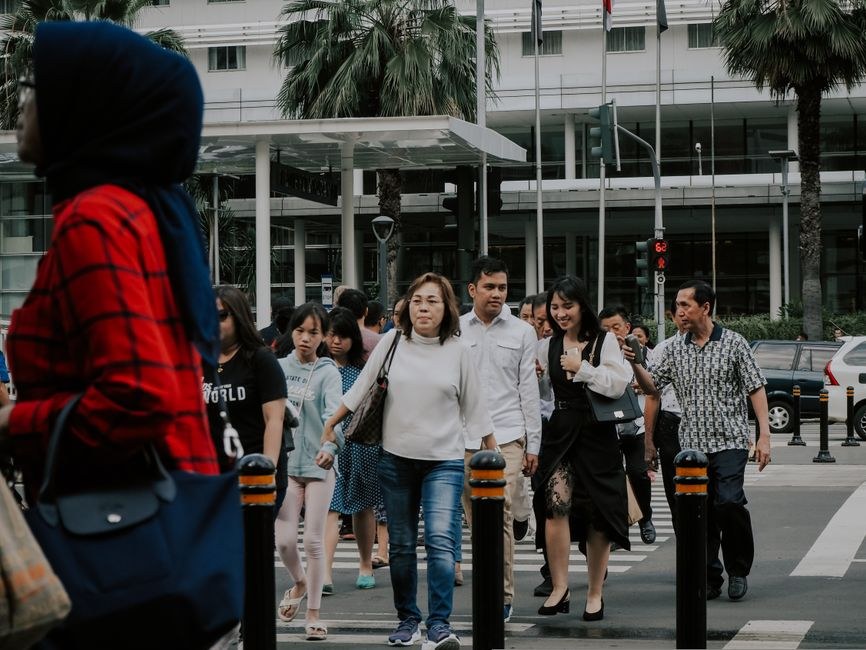
Pedestrian infrastructure in Jakarta has improved considerably around the central business district — wider pavements, more marked crossings, pedestrian bridges near major malls — but it’s inconsistent the further you get from the core. Zebra crossings exist widely but don’t guarantee a driver will stop for you the way they might in London or Melbourne. The practical approach locals use, and one worth adopting: cross with a group of pedestrians rather than alone, move at a steady predictable pace rather than stopping and starting, and make eye contact with oncoming drivers where you can. Don’t assume a green pedestrian signal means every vehicle has actually stopped.
For getting around more broadly, our guide to getting around Jakarta covers the full range of transport options and how to combine them for a typical day. The MRT and the newer KRL commuter lines are genuinely excellent by regional standards — clean, punctual, air-conditioned — and among the lowest-risk ways to move around the city. TransJakarta’s busway network, running in dedicated lanes, is a reasonable middle ground between rail and road traffic. For anything the rail network doesn’t reach, app-based cars are the sensible default over hailing something off the street.
Flooding and Wet Season Risks
Jakarta floods. This isn’t a rare event — it’s a structural feature of a low-lying, partly-below-sea-level city built across thirteen rivers, with a wet season that runs roughly from November through March and peaks in January and February. In a bad year, flooding closes roads across West and South Jakarta, disrupts the busway and parts of the rail network, and turns a normal commute into a multi-hour ordeal. Early 2026 saw exactly this pattern: heavy rain flooded dozens of neighbourhoods, water reached up to 90 centimetres in the worst-hit spots, and road damage from the deluge contributed to a rise in traffic accidents across the city that same month.
For a tourist, the practical implications are manageable if you plan around them. Check the forecast if you’re travelling between November and March, and build slack into your itinerary rather than scheduling back-to-back activities with tight transfer windows — a flooded underpass can add an hour or more to a cross-city trip with no warning. Avoid wading through floodwater; it’s often contaminated and can conceal open drains or debris. If a downpour hits while you’re out, the sensible move is usually to wait it out somewhere covered — a mall, a café — rather than push on through standing water. Malls, hotels, and the elevated MRT line are generally unaffected even when street-level flooding is significant, which is one more reason central, well-drained districts are the more comfortable base during wet season.
Solo and Women Travellers
The consistent theme in accounts from solo women who’ve travelled through Jakarta is that the city is more welcoming than its reputation suggests — curious, warm, generally respectful — while still requiring the ordinary caution any large city demands. Indonesia is a Muslim-majority country and Jakarta, while cosmopolitan by regional standards, leans more conservative than a European capital; modest dress (covered shoulders and knees is a safe default, particularly outside malls and business districts) draws less unwanted attention and is simply more comfortable in a lot of everyday settings, mosques especially.
Government advisories are specific enough on this point to repeat directly: solo women should be more alert in taxis and rideshares, on public transport, in crowds, and in bars and nightlife venues, and should favour licensed transport over anything unmarked or unmetered. In practice that means booking through Grab or Gojek rather than hailing on the street, sharing your trip details with someone before you get in, sitting near the driver or in the back depending on the vehicle, and trusting your instincts if a situation feels off enough to cancel and rebook. Staying in Central or South Jakarta — Menteng, SCBD, Kemang, Senopati — puts you closest to well-lit, well-populated streets and the shortest rides back after dark; our guide to the best areas to stay in Jakarta and roundup of family-friendly hotels in Jakarta both lean toward these same neighbourhoods for overlapping reasons.
None of this is unique to Jakarta or even unusual by regional standards — it’s the same calculus a solo woman applies in Bangkok, Kuala Lumpur, or Ho Chi Minh City. The difference between an uneventful trip and an uncomfortable one usually comes down to transport choices and neighbourhood, both of which are within your control.
Jakarta After Dark
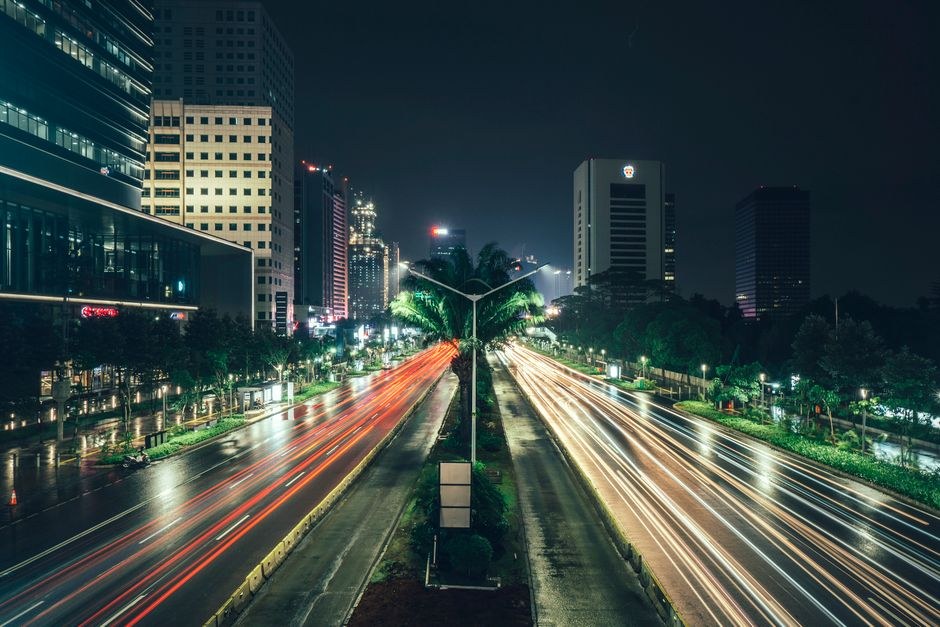
Nighttime in Jakarta isn’t inherently more dangerous than daytime so much as it concentrates the same risks into a smaller set of decisions: how you’re getting home, and where you’re spending the evening. Our Jakarta nightlife guide and roundup of things to do in Jakarta at night cover where to actually go; this is about doing it safely. SCBD, Kemang, and the main rooftop bar scene around Sudirman-Thamrin stay busy and well-lit late into the evening, with steady security at venue entrances and easy access to app-based rides. The risk profile shifts once you’re on a quiet side street at 2am trying to flag something down informally — that’s when a booked ride beats a hailed one, every time.
Drink safety is worth a specific mention. Stick to sealed bottles or drinks made in front of you at reputable venues, and be aware — as Australia’s Smartraveller specifically flags for Indonesia generally — that methanol-contaminated spirits have caused serious poisoning incidents in the country, almost always tied to cheap, informally-produced arak or mixed drinks rather than reputable bars. It’s a real risk worth knowing about, low-probability at established venues, and easily avoided by not accepting unbranded spirits from an unfamiliar source.
Natural Hazards Beyond the Rain
Jakarta sits in a seismically active region, and Indonesia as a whole experiences regular earthquakes, occasional tsunamis, and active volcanic activity — none of it unique to the capital, and none of it should dominate your planning for a Jakarta-only trip. The city isn’t near an active volcano, and significant seismic events affecting it directly are infrequent. If your itinerary extends into Java’s interior or further afield, that’s a different risk calculation worth a fresh look — for a Jakarta city break, it’s background noise rather than a planning priority.
Air quality is a more everyday consideration. Jakarta’s pollution is high by international standards, particularly in dry season when traffic and industrial emissions aren’t being cleared by rain. It’s rarely severe enough to disrupt a short visit, but travellers with respiratory conditions should check current air quality readings and may want to pack a mask for high-traffic areas.
Scams, Briefly
Scams targeting tourists exist in Jakarta as they do in most major destinations — worth a passing mention here even though we cover the topic properly in a separate dedicated article. Common patterns are overpriced unmetered taxis, currency exchange counters offering suspiciously good rates with hidden fees, unofficial “guides” who attach themselves uninvited, and vendors quoting inflated prices assuming you won’t know better. None of these carry real physical risk — they’re financial nuisances, not safety threats — and all are avoidable by booking transport through an app, exchanging money at licensed banks rather than a street counter, and agreeing a price before accepting a service, not after.
Practical Health and Safety Precautions
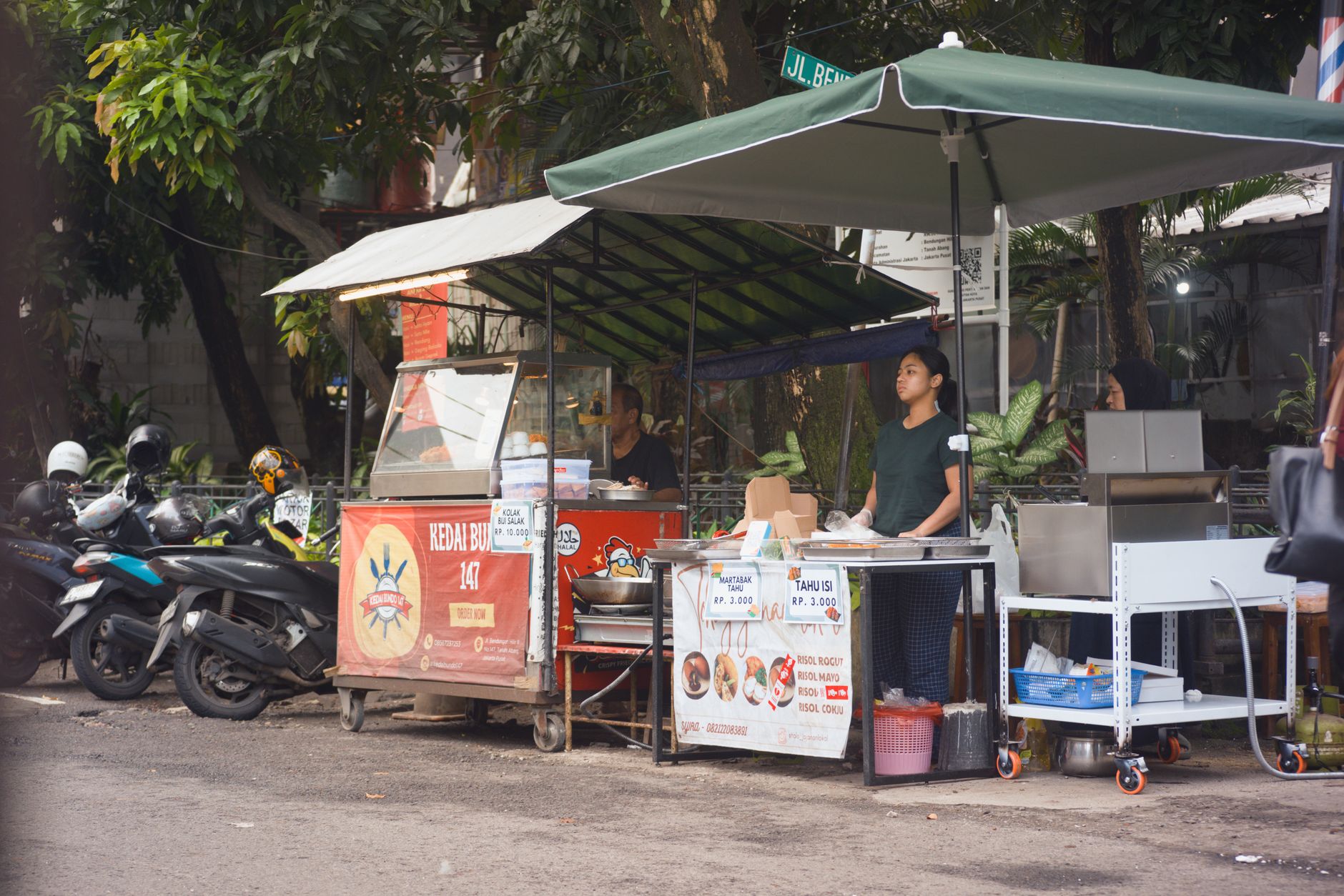
Tap water isn’t safe to drink — stick to bottled or filtered water, and be cautious with ice from anywhere that isn’t a reputable restaurant or hotel. Street food is generally fine and often excellent; go where there’s a queue of locals and high turnover, and be wary of anything that’s been sitting out. Dengue is present year-round with a seasonal uptick during the rains, so repellent and covering up in the evening are worth the minor inconvenience.
Keep a photo of your passport and insurance details on your phone, know your embassy’s address in Jakarta, and save local emergency numbers before you need them — 112 is the general line, 110 for police, 118 or 119 for ambulance, though English-language response can be inconsistent outside major hospitals. Travel insurance covering medical evacuation is worth having; private hospitals in central Jakarta (Siloam, Mayapada) are good, but costs without insurance add up fast for anything beyond a routine consultation.
Frequently Asked Questions
Is Jakarta safe to visit right now? Yes — no government currently advises against travel to Jakarta specifically, and the day-to-day experience for most tourists is uneventful. The main practical risks are traffic and, in wet season, flooding-related disruption, not crime.
Is it safe to walk around Jakarta at night? In central, well-populated areas like SCBD, Menteng, and Kemang, yes, with the same awareness you’d bring to any large city at night. In quieter or unfamiliar areas, book a car rather than walking a long stretch alone after dark.
Is public transport safe in Jakarta? The MRT and KRL commuter rail are very safe and among the best-run parts of the city’s infrastructure. TransJakarta’s busway is safe but can be crowded, which is when pickpocketing risk is highest — keep bags zipped and in front of you.
Do I need to worry about terrorism in Jakarta? Government advisories flag terrorism as a background risk across Indonesia, including in places tourists visit, such as malls and hotels. It’s a real but statistically low risk that shapes official guidance more than it should shape a normal itinerary; stay aware of your surroundings in crowded public places as you would in any major world city.
Is Jakarta safe for solo female travellers? Broadly yes, with sensible precautions — favour licensed transport over hailing on the street, dress modestly outside malls and business districts, and stick to central, well-lit neighbourhoods for evening plans. Most accounts from solo women describe a welcoming, curious local population rather than a threatening one.
What’s the biggest safety risk in Jakarta really? Traffic, by a wide margin. Indonesia’s road death toll runs into the tens of thousands annually, heavily weighted toward motorbike accidents, and Jakarta’s roads are dense and undisciplined by Western standards. Choosing licensed transport and being deliberate about crossing roads matters more than most other safety advice combined.
Should I avoid Jakarta during rainy season? Not necessarily, but plan around it. Flooding between November and March can disrupt roads and transport with little warning, particularly in January and February. Build extra time into transfers and keep an eye on the forecast.
Is street food in Jakarta safe to eat? Generally yes. Choose stalls with high turnover and a queue of locals, watch food being cooked fresh in front of you, and be more cautious with anything that’s been sitting out for a while.
Where to Go Next
With the safety picture covered, the practical next steps are working out where to base yourself and how to move around once you’re there. Start with our guide to where to stay in Jakarta, cross-reference it against the Jakarta neighbourhoods guide for character and vibe, and pair it with getting around Jakarta for the transport logistics. If traffic timing is a concern for your schedule, our tips on how to avoid Jakarta’s traffic and a breakdown of Jakarta transportation costs will help you plan realistic days. Once the logistics are settled, our one-week Jakarta itinerary is a solid framework to build a full trip around, and for a broader refresher on the basics — visas, packing, and health prep — head back to the Jakarta travel tips pillar guide this article sits under.
Physical safety is only half the picture. The other half is knowing which behaviours quietly mark you out — losing your temper in public is the fastest way to lose an argument in this city, and drinking or eating on the street during Ramadan daylight hours will earn you a reaction that has nothing to do with crime. The Jakarta etiquette and customs guide works through all of it, including the legal lines around drugs, the revised criminal code and what LGBTQ+ travellers should expect.
Separate from personal safety, there is the smaller and much more common question of who is quietly overcharging you. Our guide to Jakarta travel scams works through the airport taxi touts, the fake Bluebird liveries, the money changer recount and the nightlife bills that arrive without a menu — and explains why Jakarta scams visitors considerably less than Bali or Bangkok do.