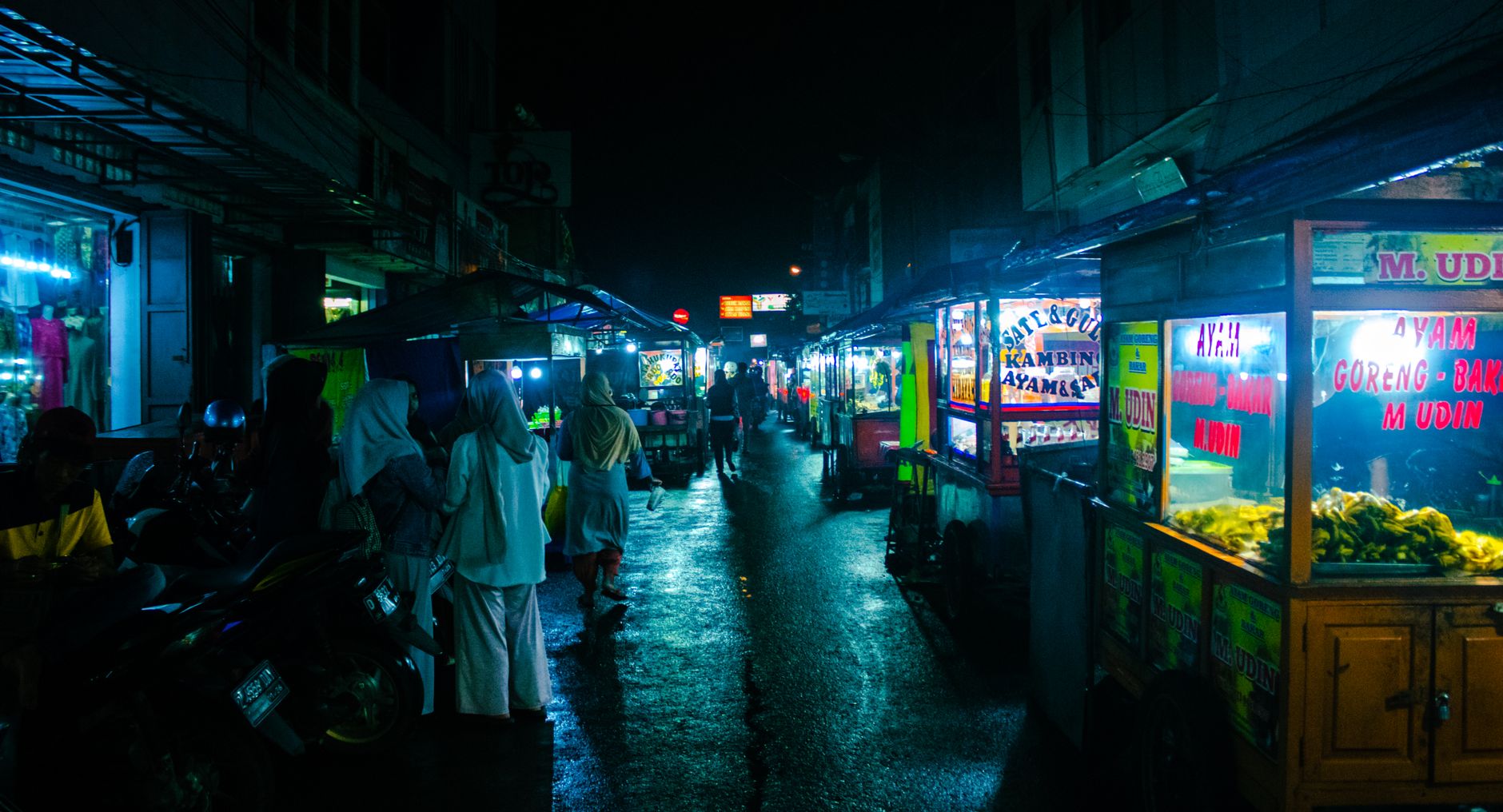
Most Jakarta food guides quietly stop caring around 10pm. That is exactly the hour the city gets interesting. Kitchens that closed at nine hand the night over to wheeled carts, tented seafood stalls, wartegs with the lights permanently on, and dim sum halls that never lock the door. But the scene changes character every ninety minutes or so, and a place that was heaving at 11pm can be shuttered and hosed down by 1am. This guide to Jakarta late night eats is organised by the clock rather than by neighbourhood, because after midnight the only question that matters is what is still open — and how you get to it.
For the wider picture, start with our pillar Jakarta nightlife guide. If you are eating before you drink, pair this with the best bars in Jakarta and the best nightclubs Jakarta guides. If it is still early enough to browse rather than refuel, our night food markets guide covers the market strips in far more depth than we do here.
Jakarta Late Night Eats, Hour by Hour
Before the venue lists, get the shape of the night into your head. Jakarta does not have one late-night scene; it has four, and they hand off to each other.
| Window | What is open | Where to go |
|---|---|---|
| 9pm – midnight | Everything. Markets at full volume, restaurants still seating | Pecenongan, Sabang, Blok M, Mangga Besar |
| Midnight – 2am | Market tails, satay and nasi goreng carts, warungs | Sabang, Kebon Sirih, Blok M Gultik, Tebet |
| 2am – 4am | 24-hour institutions only, plus delivery | Warteg Warmo, Bubur Kwang Tung, dim sum halls, SCBD |
| 4am – 6am | Pre-dawn markets, bubur carts, hotel breakfast | Pasar Kue Subuh Senen, residential kampung streets |
The practical takeaway: the window between roughly 2am and 4am is the genuinely thin one. If you have been at a club in SCBD until closing, you are not walking into a night market — you are going to a place that never closes. Plan for that before you leave the venue, not after.
Midnight to 2am: Where the City Still Cooks
This is the sweet spot, and it is where most visitors should aim. The crowds have thinned enough that you can find a plastic stool, but the stalls are still running full kitchens.
Nasi Goreng Kambing Kebon Sirih
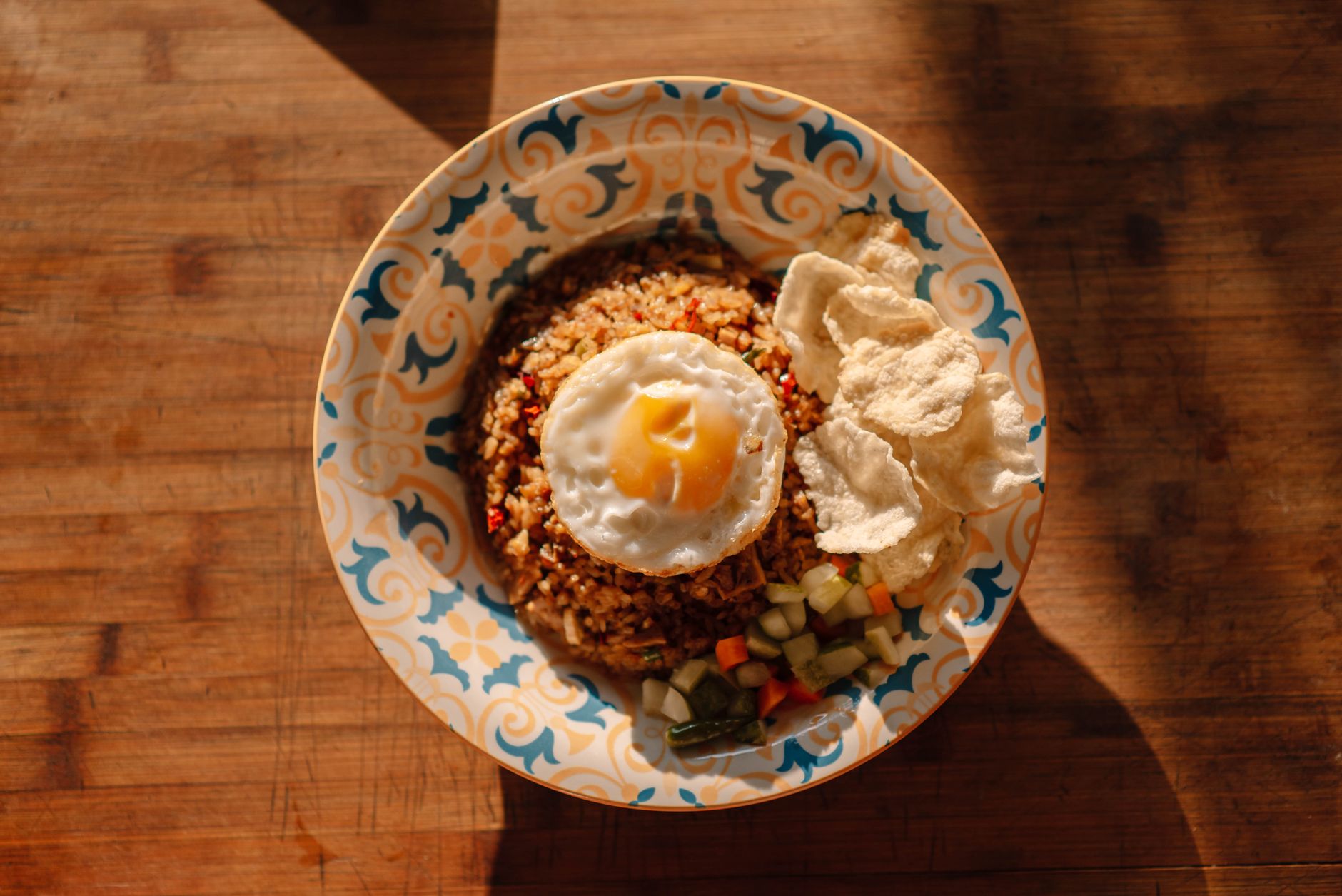
If you eat one late-night meal in Jakarta, make it this one. The stall has been on Jalan Kebon Sirih since the 1950s, cooking goat fried rice in woks the size of satellite dishes over a fire that could heat a small building. The spicing is the interesting part: cardamom, clove and coriander pushed further toward the Middle East than a standard nasi goreng, which is a legacy of the Arab-Indonesian trading community in this part of Central Jakarta. It arrives smoky rather than greasy, and it is properly seasoned rather than sweet.
Hours vary depending on who you ask and what night it is — most reports put it somewhere between 4pm and 2am or 3am, so treat 1am as a comfortable arrival and anything past 2am as a gamble. Expect to pay roughly IDR 45,000–70,000 for a plate. The stall is a short Gojek hop from most Central Jakarta hotels and sits close enough to the Sabang strip that you can do both in one outing.
Jalan Sabang (Jalan Agus Salim)
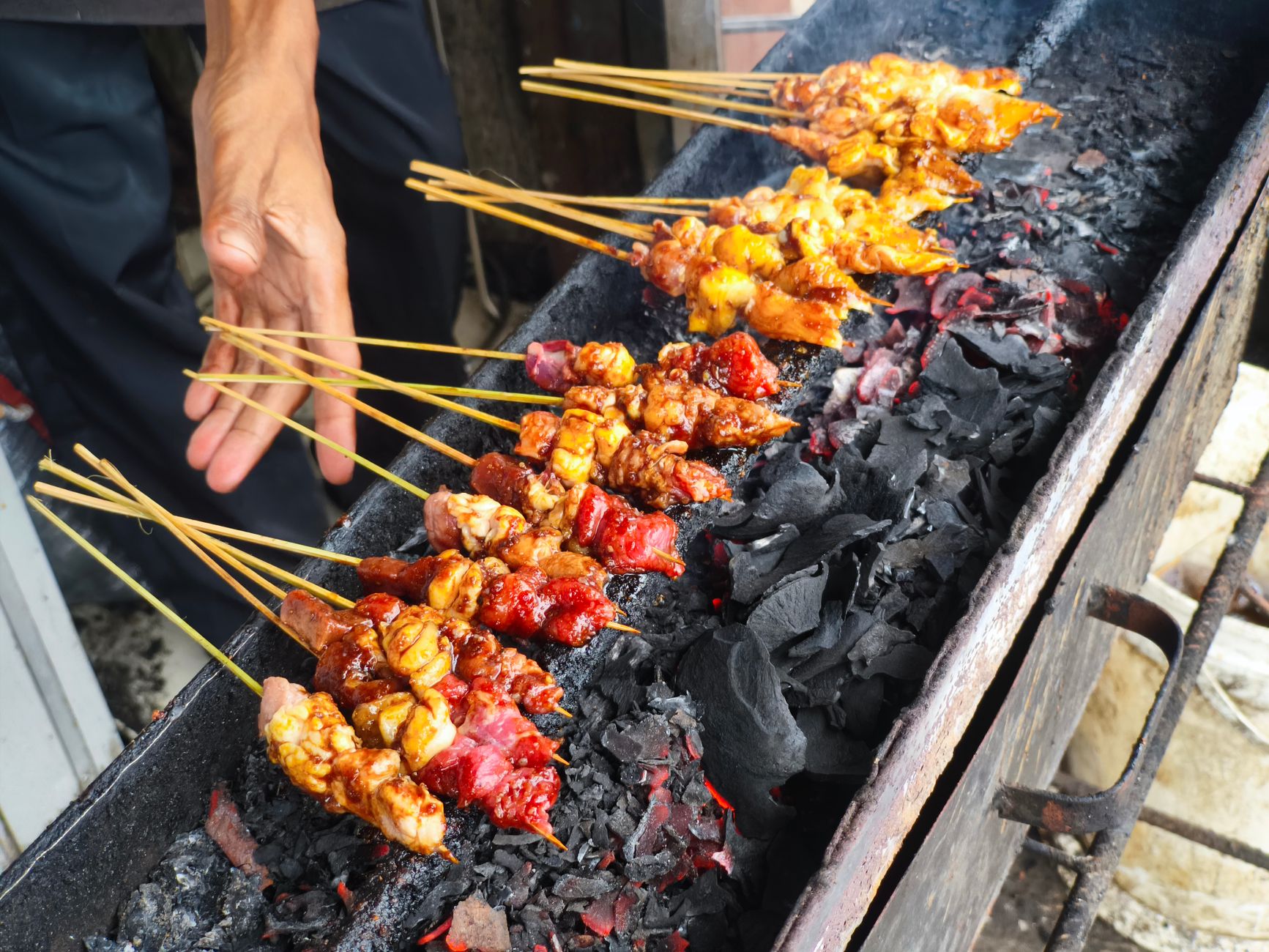
Sabang is the most forgiving late-night option in the city for a first-timer: a bright, busy, roughly 500-metre strip in Menteng where dozens of vendors set up from around 5pm and the last of them hold on until 1am, sometimes 3am on a Friday or Saturday. It is well lit, there are always other people around, and the food is cheap enough that ordering badly costs you nothing.
Sate Ayam Pak Kumis is the name most locals will give you — Madurese-style chicken satay, small pieces charred hard over charcoal, served with peanut sauce, lontong and raw shallot. Sate Lamongan Jaya Agung has been on the strip since 1975 and is the other reliable pick. Around them you will find nasi goreng, martabak, soto and a rotating cast of drinks carts. Budget IDR 30,000–60,000 per person and bring cash in small notes.
Pecenongan, Late Shift
Pecenongan is the classic Central Jakarta night food street and we cover it properly in the night food markets guide. The relevant point here is timing: the seafood tents and the sit-down restaurants are an evening proposition, and much of the strip winds down between 11pm and midnight. What outlasts them are the martabak specialists — Martabak Pecenongan 65A, Martabak Orins, and the various numbered rivals — which will keep folding chocolate, cheese, condensed milk and butter into a pancake the density of a paving slab well past midnight. A whole martabak manis runs IDR 60,000–150,000 depending on the toppings, and it feeds two people who have already eaten, or one person who has been drinking.
Gultik, Blok M
Tucked into the corner between Jalan Mahakam and Jalan Bulungan, the row of gulai tikungan carts — “corner curry”, universally shortened to Gultik — is South Jakarta’s late-night ritual. It is beef in a thin, spiced coconut broth ladled over a small mound of rice, sold for a few tens of thousands of rupiah, eaten on a bench at the roadside. Portions are deliberately small; two or three plates per person is normal and nobody will look at you strangely. The carts run from evening until roughly 2am or 3am and are busiest after 11pm, which makes them the natural landing spot after a night in Blok M or Senopati.
2am to 4am: The Places That Never Close
This is where visitors get caught out. The markets are packing up, the carts are wheeling home, and you are hungry. Learn two or three of these names before you go out.
Warteg Warmo, Tebet
A warteg is a Javanese cafeteria — a glass counter of pre-cooked dishes, you point at what you want, it lands on rice. Warmo, on Jalan Tebet Timur Raya, has been the South Jakarta night-owl institution for decades and runs 24 hours. The food is honest rather than remarkable: fried chicken, tempeh, egg in sambal, vegetables, whatever has been sitting in the trays. A full plate rarely breaks IDR 35,000. The value is that it is open at 3:40am on a Tuesday and there will be other people in there, which after a certain hour matters more than the cooking.
Bubur Kwang Tung
Cantonese-style rice porridge, cooked down until it is almost a cream, topped to order with pork or chicken, century egg, fried shallots and youtiao. It is the ideal 3am food: hot, soft, salty, and it will not fight you. Branches operate across Central and South Jakarta with a well-known one on Jalan Pecenongan. Hours differ by branch — the Wolter Monginsidi location, for instance, has been reported as running 6am to 2am Sunday through Thursday and a full 24 hours on Friday and Saturday — so check the specific branch on Google Maps before committing to a ride across town. Budget IDR 40,000–75,000.
The 24-Hour Dim Sum Halls
Jakarta’s late-night dim sum culture is a genuine local quirk and worth experiencing. Haka Dimsum runs multiple branches around the clock, and the hall at Gedung Djakarta Theatre near Thamrin is a Jakarta institution with a queue that seems not to care what time it is — pre-club at 10pm, post-club at 4am, the same line. Steamer baskets are cheap, ordering is by ticking a paper form, and you can eat well for IDR 60,000–120,000. It is also one of the few late options that works for a group of six without a reservation.
If You Are in SCBD or Kemang
The nightlife districts have their own 24-hour safety nets, which saves you a cross-city ride at 3am. Lobi Lobi in SCBD runs 24 hours and is the default post-club stop for the crowd leaving the clubs we cover in the SCBD nightlife guide. Ramen 38 Sanpachi has branches at Melawai, Panglima Polim and Kemang with long hours and bowls in the IDR 50,000–90,000 range. Neither is the most authentic meal you will eat in Indonesia, and at 3am neither needs to be.
4am to Dawn: The Strangest and Best Hour
If you are awake at four in the morning in Jakarta, either through jet lag or bad decisions, there is one thing worth doing with it.
Pasar Kue Subuh at Senen is a wholesale cake market that runs roughly 7pm to 5am, and it peaks between 2am and 4am. Several hundred vendors work under strip lighting across two blocks of Gedung Senen Jaya, selling traditional Indonesian and Betawi kue — steamed, fried, layered, wrapped in banana leaf — by the box to resellers who will be selling them at breakfast stalls in four hours’ time. Vendors hand out samples freely. The smell is palm sugar and pandan and hot oil. You can buy a mixed box of a dozen pieces for under IDR 50,000 and it is, by a distance, the cheapest genuinely memorable thing you can do in Jakarta at that hour.
Go by Grab or Gojek, treat it as a working market rather than a tourist attraction, and do not photograph vendors without asking. Around 5am the first bubur ayam carts appear on residential streets across the city — chicken porridge with crackers, soy sauce and fried shallots, IDR 15,000–25,000 — which is the natural end point of a Jakarta all-nighter.
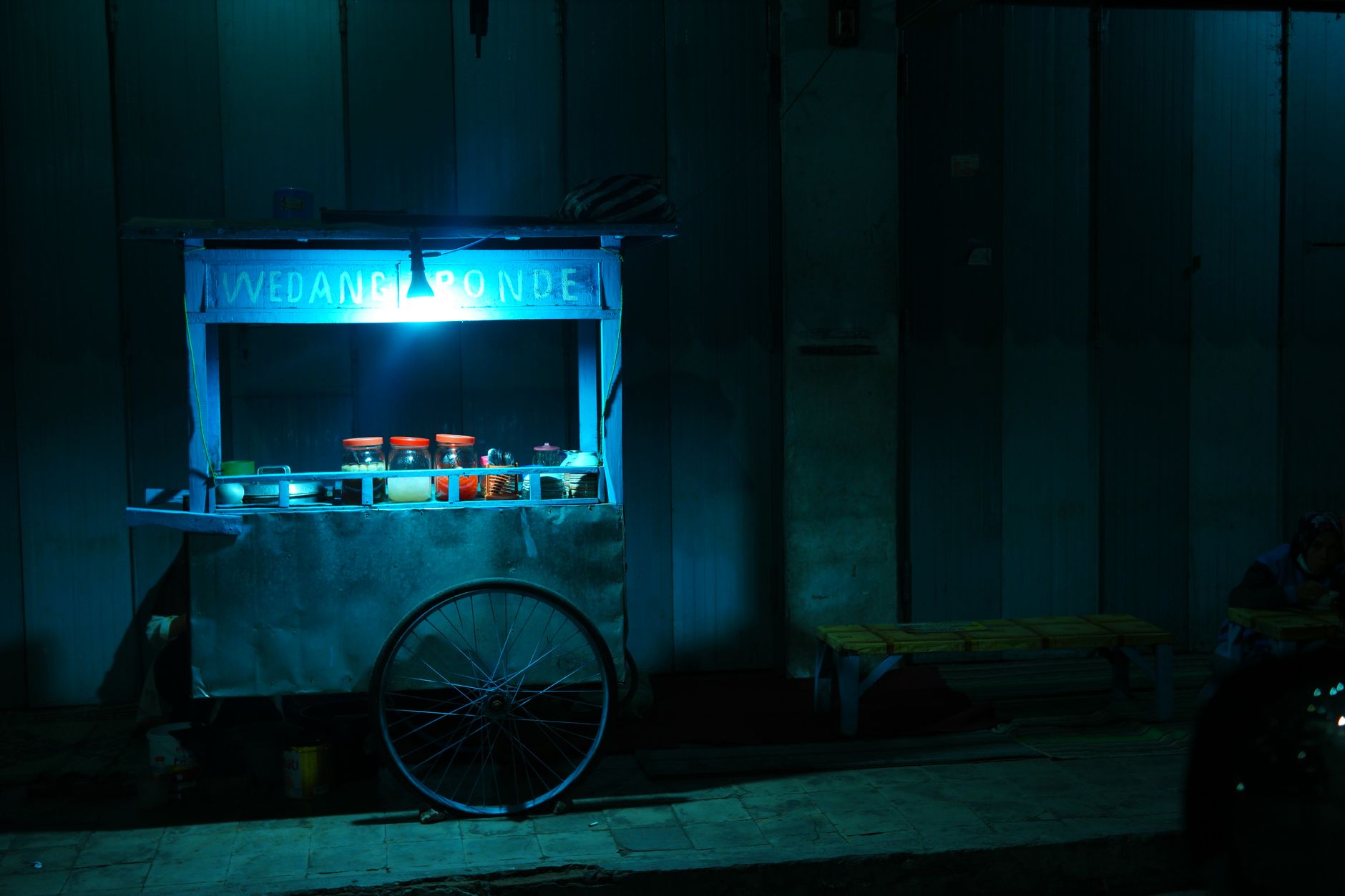
What to Order After Midnight
Jakarta late night eats skew toward two poles: heavy, spiced, restorative broths and rice dishes, or aggressively sweet snacks. Here is what you will actually see on the boards.
| Dish | What it is | Typical price | Best at |
|---|---|---|---|
| Nasi goreng kambing | Goat fried rice, heavily spiced, wok-charred | IDR 45,000–70,000 | Kebon Sirih |
| Sate ayam | Charcoal chicken skewers, peanut sauce, lontong | IDR 30,000–50,000 | Sabang |
| Gulai tikungan | Thin spiced beef curry over rice, small portions | IDR 15,000–25,000 per plate | Blok M |
| Sop kaki kambing | Goat trotter soup, rich and restorative | IDR 50,000–80,000 | Tanah Abang, Mangga Besar |
| Martabak manis | Thick sweet pancake, chocolate, cheese, condensed milk | IDR 60,000–150,000 | Pecenongan |
| Bubur (Cantonese) | Rice porridge, century egg, youtiao | IDR 40,000–75,000 | Bubur Kwang Tung |
| Bubur ayam | Chicken porridge, the dawn breakfast | IDR 15,000–25,000 | Street carts, from 5am |
| Indomie goreng | Fried instant noodles, cooked to order at warkops | IDR 15,000–25,000 | Anywhere, any hour |
One note on sop kaki kambing: it is goat trotter soup, thick with collagen and offal, and it is what Jakartans eat when they have been up too long. Sop Kambing Bang Karim in Tanah Abang trades in the middle of the night; Sop Kambing Pak Kumis “1001” on Jalan Mangga Besar VII has been going since the 1980s. It is not a beginner’s dish, but if you like pho or bone broth you will understand it immediately.
Ordering In at 3am
Both major apps run around the clock, and if you are staying somewhere central this is often the smartest move. GoFood and GrabFood both list 24-hour merchants, though the selection between 2am and 5am collapses to maybe a tenth of what you see at dinner — mostly convenience stores, the 24-hour chains, and a scattering of warungs. Filter by “open now” or you will spend ten minutes building a cart that gets rejected.
Two practicalities. First, driver supply thins overnight and both apps use dynamic pricing, so delivery fees climb noticeably after midnight; the app shows the total before you confirm, so you can see what you are paying. Second, most hotels will not let a driver up to your floor, so plan to meet them in the lobby. Our Grab vs Gojek comparison covers account setup and payment, which is worth sorting out on day one rather than at 3am.
Getting There and Back
This is the single thing that ruins late-night food plans in Jakarta, so be clear about it. The MRT North-South line runs roughly 5am to midnight — see our Jakarta MRT guide for the detail — and regular TransJakarta corridors stop around 10pm, though a limited number of night routes continue on the main arteries. In practice, from midnight onward you are travelling by Grab or Gojek and nothing else.
That is fine, and it is cheap: a cross-city car at 1am costs a fraction of what the equivalent would anywhere else in the region, and traffic — the thing that makes Jakarta exhausting by day — has evaporated. A ride from Menteng to Blok M that takes an hour at 6pm takes twenty minutes at 1am. Book a car rather than a motorbike if you have been drinking or if it is raining, save your hotel in the app as a favourite so you can get home without typing, and keep IDR 100,000–200,000 in small notes because most street vendors are still cash-only.
Eating Safely at 2am
Jakarta’s late-night food is, on the whole, low risk, and the usual street-food logic applies with one adjustment for the hour.
- Follow the queue. Turnover is the best hygiene indicator there is. A stall with ten people waiting at 1am is cooking fresh; an empty one at the same hour is reheating.
- Prefer things cooked to order in front of you — satay off the grill, nasi goreng out of the wok, noodles from boiling water. Be more cautious with pre-cooked trays late in the night, which is the one genuine knock against wartegs at 4am.
- Skip ice and raw garnishes if your stomach is unaccustomed. Bottled and canned drinks are everywhere and cost almost nothing.
- Carry small notes. A vendor at 2am will not have change for a IDR 100,000 note, and QRIS coverage on carts is patchy.
- Keep your phone in your pocket while walking. Petty snatch theft, usually from motorbikes, is the main realistic risk on quiet streets. It is not common and it is not violent, but it is the thing to be alert to.
Solo travellers, including women, eat on Sabang and at Blok M late at night without much trouble; both are busy and well lit. The advice we give in the Jakarta travel tips guide holds — stay on the main strips, take a car rather than walking between neighbourhoods, and trust your read of a street.
Ramadan Changes the Whole Calendar
During Ramadan the late-night food scene does not shrink — it inverts and expands. Stalls that would normally close at midnight trade through to the pre-dawn sahur meal, and whole streets that are quiet the rest of the year fill up between 2am and 4am with people eating before the fast begins. It is arguably the best time of year to be hungry in Jakarta at three in the morning.
The trade-off is daytime and early evening: many warungs close or curtain their frontage during fasting hours out of respect, and the hour immediately after sunset is chaos as everyone breaks fast at once. Bars and clubs reduce hours or close entirely. If your trip falls in Ramadan, flip your eating schedule rather than fighting it.
Three Routes for a Late Night
The easy one (11pm – 1am)
Start on Jalan Sabang with satay from Pak Kumis and a plate of nasi goreng from whichever cart smells best. Walk ten minutes or take a short Gojek to Kebon Sirih for the goat fried rice. Finish with martabak from Pecenongan, ordered to take back to the hotel. Total spend under IDR 200,000 per person, and you are in bed by two.
The post-club one (2am – 4am)
Leave SCBD or Kemang at closing, and go straight to 24-hour dim sum near Thamrin or Lobi Lobi if you cannot face the ride. Follow with porridge at Bubur Kwang Tung when the dim sum stops working. Pairs naturally with the venues in our best nightclubs Jakarta guide.
The all-nighter (midnight – 6am)
Gultik in Blok M around midnight, Warteg Warmo in Tebet at two, Pasar Kue Subuh at Senen between three and four, and a bubur ayam cart at first light. It is a genuinely strange and wonderful way to see a city of eleven million with the volume turned down, and it costs less than one cocktail in a rooftop bar.
Mistakes Visitors Make
Assuming the night markets run all night. They mostly do not. Pecenongan and the market strips are an evening scene that fades between 11pm and 1am. The word “night market” does you no favours here.
Leaving the venue without a plan. At 3am, standing on a pavement in SCBD searching Google Maps for “open now”, you will find slim pickings and a rising ride fare. Decide where you are eating before you leave the club.
Turning up with only large notes or only a card. Carts are cash, and cash means IDR 10,000, 20,000 and 50,000 notes.
Trusting posted hours. Street vendors close when the food runs out, which on a good night is early. Treat listed closing times as optimistic and go an hour before you think you need to.
Trying to walk between neighbourhoods. Jakarta’s pavements are inconsistent and the distances are larger than the map suggests. Walk within a strip; ride between them.
Frequently Asked Questions About Jakarta Late Night Eats
What time does street food in Jakarta actually stop? The bulk of it winds down between midnight and 1am, with the Sabang strip and a handful of carts running to 2am or 3am at weekends. After that you are relying on 24-hour establishments rather than street vendors.
Is there anything open at 4am? Yes — Warteg Warmo in Tebet, several Bubur Kwang Tung and Haka Dimsum branches, Lobi Lobi in SCBD, convenience stores everywhere, and Pasar Kue Subuh at Senen until around 5am. Delivery apps also run, with a reduced merchant list.
How much should I budget for a late-night meal? IDR 30,000–70,000 per person at street stalls and wartegs; IDR 60,000–150,000 at 24-hour restaurants and dim sum halls. Even the expensive end of that is under ten US dollars.
Can I get around after the MRT closes? Only by Grab or Gojek in practice. Both run 24 hours, fares rise modestly overnight, and the absence of traffic makes journeys far quicker than by day.
Is it safe to eat street food at 2am? Generally yes, with the standard caveats: choose busy stalls, favour food cooked to order in front of you, avoid ice if your stomach is sensitive, and be more sceptical of pre-cooked trays in the small hours than you would be at dinner.
Is late-night food halal? A large share of it is, including nasi goreng kambing, satay, sop kaki kambing and most wartegs. The Chinese-Indonesian strips — Pecenongan in part, Mangga Besar in particular — include a lot of pork. Stalls are usually clear about it; ask if you are unsure.
Where should I stay if I want good food after midnight? Menteng and Thamrin put you within a short ride of Sabang, Kebon Sirih and Pecenongan. Blok M and Senopati work for the South Jakarta scene. Our where to stay in Jakarta guide breaks the districts down properly.
Where to Go Next
Jakarta late night eats are one thread of a much larger food city. For the daytime and dinner picture, our Jakarta food guide is the place to start, and the best street food in Jakarta guide maps three walking circuits, one of which is a midnight Pecenongan-to-Sabang route. For the rest of the night, see the rooftop bars, live music venues and karaoke guides, or the full things to do in Jakarta at night roundup.
One last piece of advice. Hours in this guide are the best current picture we have, but Jakarta’s street vendors keep their own calendar — they close for family events, for Ramadan, for rain, and for having sold everything by half past midnight. Check Google Maps before you commit to a ride across town, and have a second option in your pocket. That habit alone will save most of your late nights.
Late night is also when Jakarta is cheapest to eat in. Angkringan carts sell rice parcels for a few thousand rupiah each, warmindo stalls cook noodles to order around the clock, and Roti Bakar Eddy in Kebayoran Baru has been toasting bread over charcoal into the early hours since 1971. Our guide to eating on a budget in Jakarta explains how each format works.