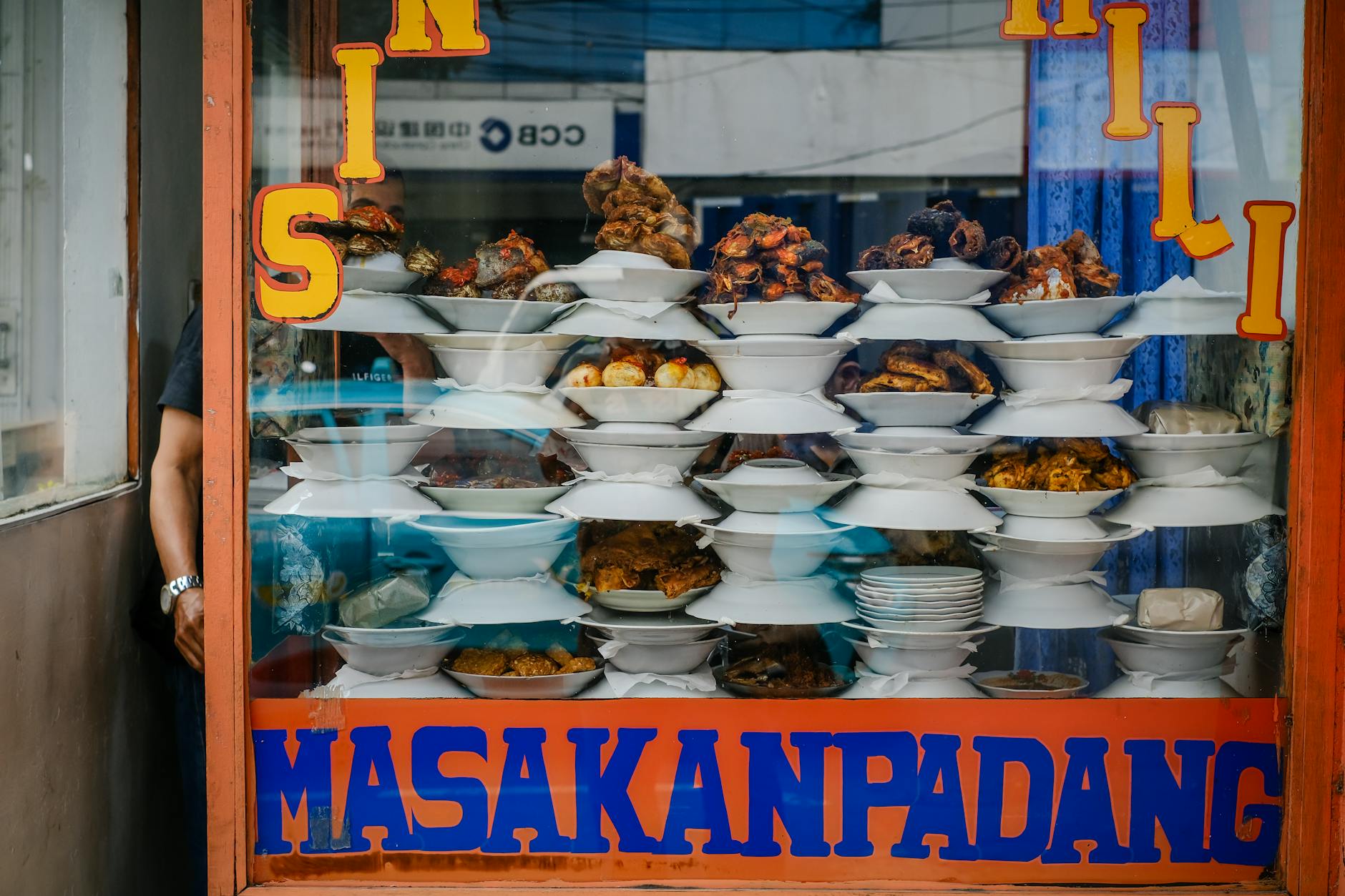
Most guides to the best street food in Jakarta read like dish dictionaries — kerak telor, ketoprak, sate ayam, martabak, soto, bubur, satay taichan — followed by a few neighborhood names dropped in passing. They tell you what to eat but never how to walk it, which is the part that actually matters when you are standing on a hot sidewalk deciding where to go next. So I built this differently. After dozens of evenings tracking the city’s strips, I’ve turned them into three walking circuits with real pacing, exact stall names, what to order, and timing. Whether you are hungry at 7am in Menteng, mid-afternoon in Glodok, or 2am in Pecenongan, you’ll know where to walk, what to eat at each stop, and how to chain it all into one coherent meal.
If you want the bigger picture before you start grazing, the pillar Jakarta food guide frames how all of this fits together. Everything below is the walking version.
How to Use This Guide — Three Walking Circuits
Jakarta street food has three distinct vibes by time of day, each clustered in different neighborhoods. Rather than visit one strip and miss the others, we recommend pairing your trip with at least one of these three circuits:
- Morning Menteng Breakfast Walk — 7:00–10:00 AM; bubur ayam, nasi uduk, kerak telor breakfast; gentle 2 km loop
- Afternoon Glodok Chinatown Loop — 11:00 AM–3:00 PM; bakmi, nasi tim ayam, Petak Sembilan jajanan; 1.5 km circuit
- Midnight Pecenongan-Sabang Marathon — 8:00 PM–2:00 AM; seafood, sate, nasi goreng, martabak; 3 km point-to-point
| Circuit | Best window | Distance | What it’s for | Rough spend (per person) |
|---|---|---|---|---|
| Morning Menteng breakfast walk | 7:00–10:00 AM | 2 km loop | Bubur ayam, nasi uduk, kerak telor, gado-gado | IDR 105,000–175,000 |
| Afternoon Glodok Chinatown loop | 11:00 AM–3:00 PM | 1.5 km circuit | Bakmi, nasi tim ayam, soto Betawi, market snacks | IDR 130,000–245,000 |
| Midnight Pecenongan–Sabang marathon | 8:00 PM–2:00 AM | 3 km point-to-point | Satay, nasi goreng, seafood, martabak | IDR 300,000–500,000 |
Each circuit below is sequenced for energy, hunger, and walking distance. Pace yourself, share dishes with a partner if you can, and bring small denominations of rupiah (most stalls don’t accept cards).
Circuit 1: Morning Menteng Breakfast Walk (7:00–10:00 AM, 2 km)

Menteng wakes up early. From around 6:00 AM, breakfast warungs and street carts open across the neighborhood’s tree-lined streets, serving the dishes Jakartans have eaten before work for a century.
Stop 1: Bubur Ayam Cikini Sudimampir (7:00 AM, Jalan Cikini Raya)
Start with bubur ayam — Indonesia’s beloved chicken congee. The warung-tenda style stall around the Cikini KRL station has been serving thick rice porridge with shredded poached chicken, fried soybeans, scallions, fried shallots, krupuk, and a drizzle of kecap manis and chili oil since the 1980s. Add an extra hard-boiled egg or chicken liver if you’re particularly hungry. Order: “bubur ayam komplit.” Cost: IDR 20,000–35,000. Walk: 600 m south to Sabang.
Stop 2: Nasi Uduk Kebon Kacang Zainal Fanani (8:00 AM, Jalan Kebon Kacang)
The legendary Nasi Uduk Kebon Kacang opened in 1967 and remains the gold standard for Jakarta’s quintessential breakfast dish — coconut rice with cinnamon, ginger, pepper, nutmeg, and lemongrass, served alongside ayam goreng (fried chicken), empal (sweet beef), tahu, tempeh orek, and a fiery sambal kacang. The Zainal Fanani stall is one of three legendary Kebon Kacang uduk vendors within 200 meters of each other — the “Pioneer’s Row” I map out in the guide to the best nasi uduk in Jakarta. Order: “nasi uduk komplit + sambal.” Cost: IDR 25,000–50,000. Walk: 400 m east to Jalan Wahid Hasyim.
Stop 3: Kerak Telor Street Cart (9:00 AM, near Sarinah)

Jakarta’s most distinctive Betawi street snack, kerak telor is a savory crepe made by combining glutinous rice (ketan), egg, dried shrimp powder (ebi), fried coconut, and fried shallots in a flat clay pan over open coals — flipped and crisped until golden. The carts near Sarinah and along Jalan Wahid Hasyim are reliable. Choose chicken egg (ayam) for milder flavor or duck egg (bebek) for richer. Order: “kerak telor bebek” (duck egg). Cost: IDR 25,000–45,000. Walk: 400 m to Tugu Tani.
Stop 4: Gado-Gado Bonbin Cikini (9:30 AM, Jalan Cikini IV)
A 60-year-old institution, Gado-Gado Bonbin serves Jakarta’s most celebrated version of the dish — boiled vegetables (long bean, cabbage, potato, water spinach, bean sprouts), hard-boiled egg, fried tempeh, fried tofu, lontong, all drenched in a thick handmade peanut sauce and topped with emping (melinjo crackers) and fried shallots. The peanut sauce here is ground fresh every morning. Order: “gado-gado komplit.” Cost: IDR 35,000–55,000.
This 2 km circuit ends near the Cikini specialty coffee scene — grab a single-origin pour-over at Tanamera, 1/15 Coffee, or Common Grounds to finish.
Circuit 2: Afternoon Glodok Chinatown Loop (11:00 AM–3:00 PM, 1.5 km)

Jakarta’s Chinatown — Glodok — is the most concentrated Chinese-Indonesian food scene in Indonesia, and it sits right beside the old town, so it pairs naturally with the wider route in the guide to eating around Kota Tua. The streets around Pasar Petak Sembilan hold hundreds of vendors, century-old shophouses, and Chinese-Indonesian dishes you won’t find anywhere else in the country.
Stop 1: Kopi Es Tak Kie (11:00 AM, Gloria Alley)
A 1927 institution and one of Indonesia’s oldest coffee shops, Kopi Es Tak Kie serves traditional iced black coffee sweetened with condensed milk in tall glasses. Generations of Jakartans have started or ended their Glodok meals here. The atmosphere — yellowing walls, marble-top tables, a stand-up counter — is essentially unchanged from 1927. Order: “kopi es” or “kopi panas” (hot). Cost: IDR 10,000–20,000.
Stop 2: Bakmi Amoy at Petak Enam (11:30 AM)
The legendary Bakmi Amoy at the Petak Enam hawker market is Jakarta’s most celebrated Hokkien noodle stall. Thin egg noodles with charcoal-grilled pork (or chicken for halal versions), bok choy, scallions, and a slick of garlic oil. The portions are generous, the price is shocking, and the queue moves quickly. Order: “bakmi spesial.” Cost: IDR 35,000–55,000.
Stop 3: Nasi Tim Ayam (12:00 PM, Petak Enam)
Steamed rice with marinated chicken, mushrooms, and a savory soy-based sauce, nasi tim ayam is Jakarta’s Chinese-Indonesian comfort food perfected. The Petak Enam stalls serve it with a side bowl of clear chicken broth. Order: “nasi tim ayam + kuah.” Cost: IDR 30,000–50,000.
Stop 4: Pantjoran Tea House (1:00 PM, Jalan Pancoran)
Free hot tea for any passerby — a 110-year tradition continuous since 1910. The Pantjoran Tea House has eight ceramic teapots on a public counter at the front; pour yourself a cup, sip in the shade, and continue. The dim sum menu is excellent if you’re staying for lunch. Order: “kopi es” or take advantage of free tea. Cost: Free (tea) to IDR 100,000 (dim sum).
Stop 5: Soto Betawi Afung (1:30 PM, Glodok)
The Soto Betawi Afung stall serves a beautifully creamy version of Jakarta’s signature beef-and-coconut soup — the dish that anchors the whole tradition of Betawi cuisine. The interior is no-frills — plastic chairs, neon lights — but the soto is among the best in the city, and if you fall for it there is a whole ranking in the guide to the best soto Betawi in Jakarta. Order: “soto Betawi campur” (mixed cuts) or “soto Betawi daging” (beef only). Cost: IDR 40,000–60,000.
Stop 6: Wander Pasar Petak Sembilan (2:00 PM)
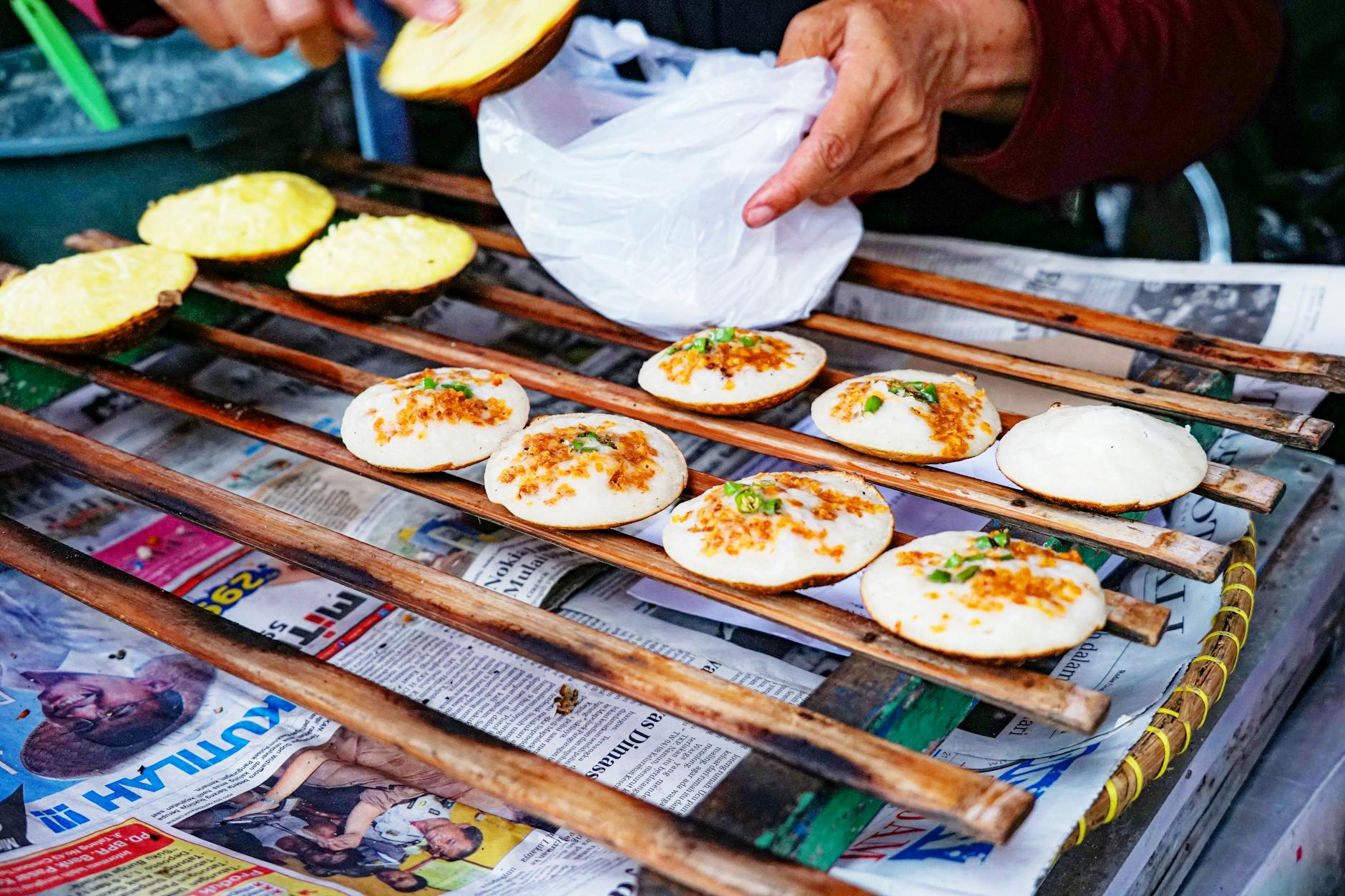
Finish with a slow walk through Pasar Petak Sembilan — Glodok’s traditional market lane. Snack as you go: kue keranjang (Chinese New Year cake), fresh durian, kue ape (mini Indonesian pancakes), kue cucur (palm sugar pancakes), and traditional Chinese medicine shops selling dried sea-horses and exotic herbs.
Circuit 3: Midnight Pecenongan-Sabang Marathon (8:00 PM–2:00 AM, 3 km)

Jakarta’s street food peaks at night. This 3 km point-to-point walk strings together the city’s two most iconic late-night strips — Pecenongan (open until 2:00 AM) and Sabang (peaks 8:00 PM–midnight) — into a 4–6 hour marathon eating session.
Stop 1: Sate Ayam Pak Kumis (8:00 PM, Jalan Sabang)

The most famous satay stall on Jalan Sabang, Sate Ayam Pak Kumis grills chicken skewers over charcoal in the traditional Madurese style. The peanut sauce is thick, sweet-savory, and topped with garlic flakes; served with lontong (compressed rice cakes), sliced shallots, and fresh lime. Watch the smoke for the queue. Order: “sate ayam 10 tusuk + lontong.” Cost: IDR 40,000–60,000.
Stop 2: Nasi Goreng Kambing Kebon Sirih (9:00 PM)
Indonesia’s most famous lamb fried rice, Nasi Goreng Kambing Kebon Sirih is a legendary stall a short walk from Sabang. Tender lamb pieces are wok-tossed with rice, kecap manis, fried shallots, and a kiss of shrimp paste — finished with a fried egg on top. Pungent, sweet, savory, deeply satisfying. Order: “nasi goreng kambing + telor.” Cost: IDR 50,000–80,000. Walk: 1.2 km north to Pecenongan.
Stop 3: Pecenongan Seafood Stalls (10:30 PM)
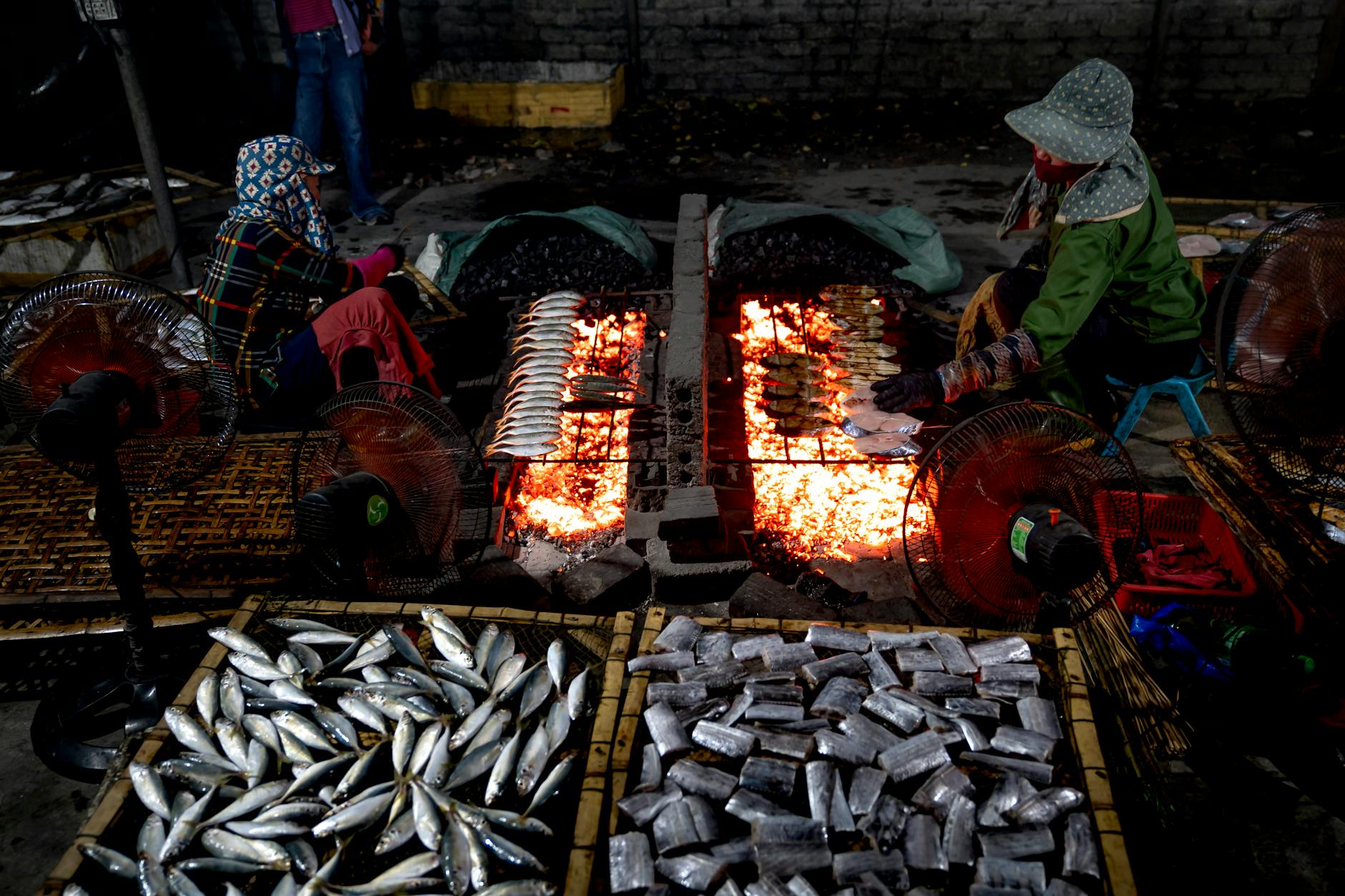
From 6:00 PM until 2:00 AM, Jalan Pecenongan transforms into Jakarta’s most famous late-night seafood strip. Dozens of open-air stalls serve fresh-grilled fish (ikan bakar), Padang-style crab (kepiting saus padang), butter-garlic prawns, and salt-baked grouper at prices a fraction of restaurant rates. Choose your fish from ice displays; pick the cooking style. Order: “kepiting saus padang” + grilled fish + nasi putih. Cost: IDR 150,000–300,000 per person sharing.
Stop 4: Martabak Pecenongan 78 (12:30 AM)

The most legendary martabak stall in Jakarta, Martabak Pecenongan 78 serves the city’s gold-standard sweet stuffed pancake: thick, dense pancake filled with melted chocolate, grated cheese, crushed peanuts, sweetened condensed milk, and butter. Modern variations add Nutella, Toblerone, and Ovomaltine. Split into squares to share. Some versions weigh more than 1 kg. Order: “martabak coklat keju” (chocolate cheese). Cost: IDR 75,000–250,000 (depending on toppings).
Stop 5: Optional — Pasar Kue Subuh (2:00 AM, Senen)
For genuinely hardcore food walkers, finish with a Grab to Pasar Kue Subuh (“Dawn Cake Market”) in Senen. Hundreds of vendors sell traditional Indonesian and Betawi kue (cakes, sweets, savory pastries) from 7:00 PM to 5:00 AM, with free samples generously offered. The atmosphere at 3:00 AM — bakers stacking pastry boxes meters high — is one of Jakarta’s most unforgettable food experiences. Cost: IDR 5,000–20,000 per item. See our Jakarta night food markets guide for more.
Bonus Strips Worth a Stop
Mangga Besar (8:00 PM–2:00 AM) — late-night Chinese-Indonesian seafood plus adventurous palate options (frog leg, durian)
Blok S in Kebayoran Baru — favorite South Jakarta evening street food cluster
Pasar Lama Tangerang — weekend traditional jajanan if you have a half-day to spend
Jalan Suryakencana (Bogor) — combine with a Bogor day trip for the city’s famous Sundanese street food
Dishes Glossary — What to Order Where

- Bubur ayam — chicken congee, breakfast
- Nasi uduk — coconut rice with sides, breakfast or dinner
- Kerak telor — Betawi coconut-rice crepe
- Gado-gado — Indonesian salad with peanut sauce
- Bakmi — Hokkien-style noodles
- Nasi tim ayam — steamed rice with chicken, Chinese-Indonesian
- Soto Betawi — Jakarta’s signature beef-and-coconut soup
- Sate ayam — chicken satay with peanut sauce
- Nasi goreng — Indonesian fried rice
- Nasi goreng kambing — lamb fried rice (Kebon Sirih specialty)
- Ikan bakar — charcoal-grilled fish (Pecenongan)
- Kepiting saus padang — Padang-style crab
- Martabak manis — sweet stuffed pancake
- Martabak telor — savory egg-stuffed pancake
- Es teler — tropical fruit dessert
For the full dish dictionary, see our must-try Jakarta dishes guide.
Street Food Safety & Etiquette
Eat at busy stalls — turnover is the best food-safety indicator. Watch the cooking — woks and grills should be visibly hot; cooked food should be served immediately. Drink bottled water rather than tap; carry a refillable bottle. Carry small denominations — most stalls don’t take cards; vendors appreciate exact change.
Ordering basics in Bahasa Indonesia: “Satu, please” (one), “berapa harganya?” (how much?), “tidak pedas” (not spicy), “pedas sekali” (very spicy), “terima kasih” (thank you). Most vendors speak at least basic English in tourist neighborhoods.
Halal-conscious eating: Most Indonesian street food (sate ayam, nasi uduk, bubur ayam, gado-gado) is halal by default. Chinese-Indonesian dishes in Glodok often include pork — confirm with “ada babi?” (any pork?) before ordering.
Walking-Friendly Neighborhoods for Street Food
- Menteng / Cikini — best for breakfast, well-paved sidewalks, safest for solo walkers
- Sabang / Wahid Hasyim — best for dinner and late-night, packed but safe
- Glodok / Petak Sembilan — best for lunch and afternoon snacks, narrow lanes
- Pecenongan — best for late-night seafood, busy with traffic — be mindful
- Senen / Pasar Kue Subuh — best for predawn snack walks, energetic at 3:00 AM
For deeper neighborhood profiles, see our Jakarta neighborhoods guide.
Budget for Jakarta Street Food
An average street-food meal costs IDR 20,000–80,000 (US$1.30–5.00). A full street-food day with 6–8 stops typically runs IDR 200,000–500,000 (US$13–32) per person — which makes Jakarta one of the most affordable serious food cities anywhere. When you want a roof, air-con, and a table, the guide to the best restaurants in Jakarta covers the sit-down end, and you can stretch a street budget even further with the cheap eats in Jakarta and free things to do in Jakarta guides.
How to pace a street food circuit (and mistakes to avoid)
The single biggest rookie error is treating a circuit like a buffet and ordering a full portion at every stop. You will be done in three stalls. The fix is to share: one plate split between two people at each stop keeps you grazing for hours and lets you hit eight or ten vendors instead of three. If you are walking solo, ask for the smallest portion — “setengah” (half) works at many stalls — and skip the rice where you can, since the rice is what fills you up fastest.
A few other things I’ve learned the hard way. Go where the locals queue. A line of office workers or families is the most reliable signal of both quality and freshness; an empty stall at peak hour is empty for a reason. Carry tissues and hand sanitizer. Many stalls don’t provide napkins, and a lot of the best food is eaten with your hands. Bring small notes. Trying to pay for a IDR 20,000 plate with a IDR 100,000 bill will get you a frown and a long wait for change. Pace your spice. Sambal escalates across a night, and the chili builds; start mild and work up rather than blowing out your palate at stop one. Mind the timing windows. Breakfast stalls sell out by mid-morning and the night strips don’t hit full swing until well after 8pm, so trying to do a “breakfast” dish at noon usually means a closed cart.
Finally, build the walk around the weather. Jakarta’s afternoons can dump sudden rain, and the open-air strips empty fast when it does. The morning Menteng loop and the late-night Sabang stretch are your safest bets for dry, comfortable walking; save the exposed Pecenongan seafood tables for a clear evening.
Frequently Asked Questions About Best Street Food in Jakarta
What is the most famous street food in Jakarta?
Sate ayam, nasi goreng, kerak telor, bubur ayam, nasi uduk, gado-gado, and martabak manis are Jakarta’s most famous street foods. Kerak telor is the most distinctively Jakartan dish — uniquely Betawi and hard to find elsewhere in Indonesia.
Where is the best place for street food in Jakarta?
Jalan Sabang (evening sate and nasi goreng), Jalan Pecenongan (late-night seafood and martabak), Glodok Chinatown (afternoon Chinese-Indonesian), and Kebon Kacang (morning nasi uduk) are Jakarta’s four most concentrated street food strips.
Is street food in Jakarta safe?
Yes — Jakarta’s busy street food stalls are generally safe. Choose stalls with high turnover, ensure food is cooked fresh, drink bottled water, and you’ll have no issues. Most international travelers eat street food daily without incident.
How much should I budget for Jakarta street food?
An individual stop costs IDR 20,000–80,000 (US$1.30–5.00). A full street-food day of 6–8 stops typically runs IDR 200,000–500,000 (US$13–32) per person — extraordinary value compared to Singapore, Tokyo, or Bangkok.
What time is best for Jakarta street food?
Morning breakfast street food (bubur ayam, nasi uduk) peaks 6:00–10:00 AM. Afternoon Chinese-Indonesian food in Glodok peaks 11:00 AM–3:00 PM. Evening and late-night street food on Sabang and Pecenongan peaks 7:00 PM–1:00 AM. Pasar Kue Subuh operates 7:00 PM–5:00 AM.
Are there guided street food tours in Jakarta?
Yes — Jakarta Good Guide, Jakarta Hidden Tour, and Klook all offer guided street food walks of 3–4 hours covering 6–10 stops. Tours typically cost IDR 350,000–600,000 per person and include all food.
These three circuits cover the best street food in Jakarta across every time of day and every major neighborhood — a far more useful map than the usual dish-list listicle. From here, the Jakarta food guide ties the whole scene together, and the must-try Jakarta dishes rundown is the dish dictionary to read alongside the walking.
External Resources for Jakarta Street Food
For more street food research, the TasteAtlas Jakarta dishes guide ranks traditional foods by global culinary popularity, and Mark Wiens’s Jakarta food travel guide covers his personal street food explorations with detailed video documentation.