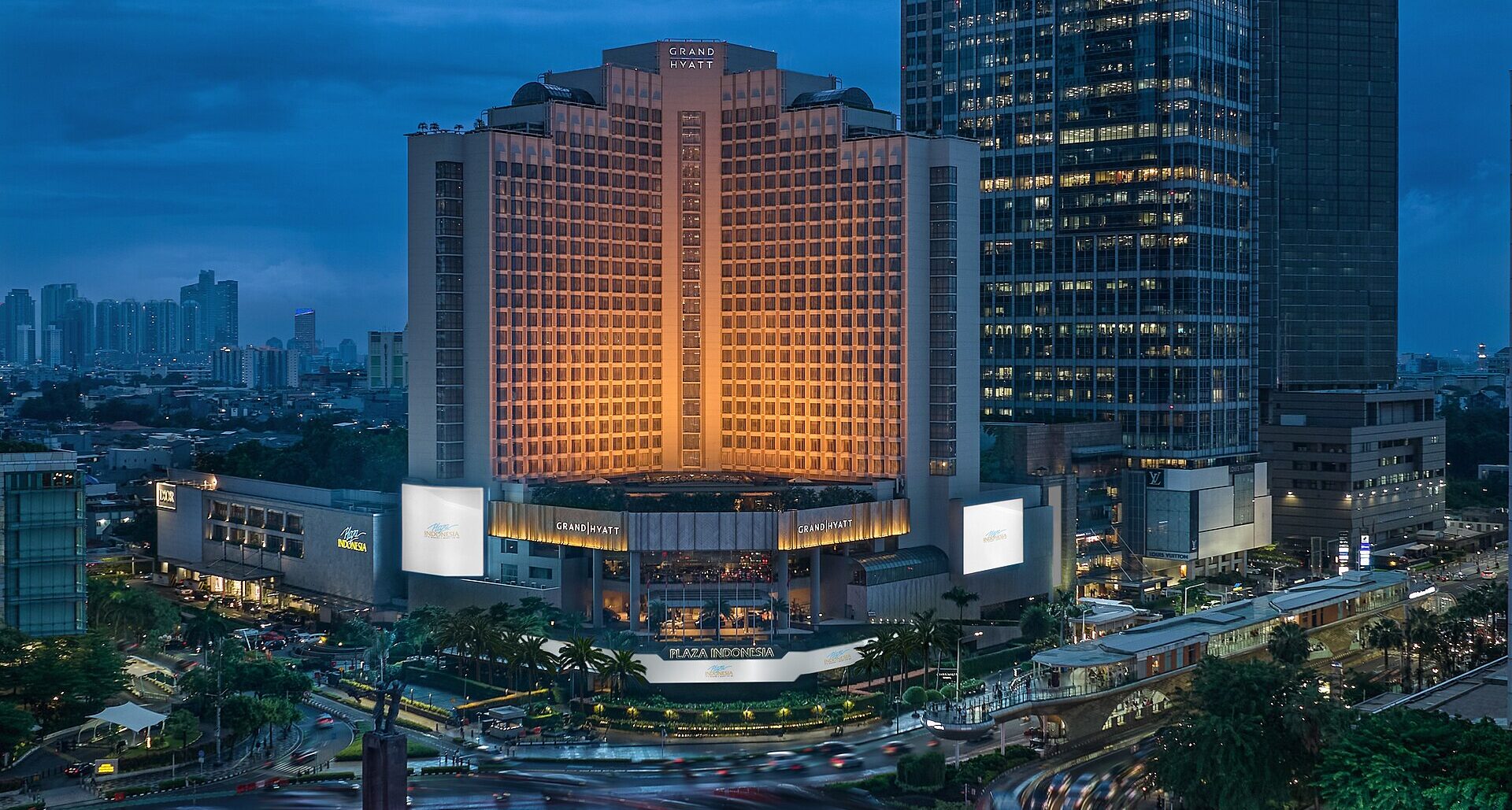
One of the most valuable things a visitor can carry home from Jakarta is not a handbag. It is a length of cloth. A hand-drawn batik tulis, waxed dot by dot over weeks, or a tenun ikat woven on a backstrap loom in eastern Indonesia, can cost more than a designer scarf from Plaza Indonesia, and unlike the scarf you cannot buy it in Paris or Singapore. That is the case for treating high-end shopping Jakarta-style as two different pursuits: the international luxury houses, which are here in force and priced much as they are anywhere else, and the Indonesian high end, from couture designers and kebaya ateliers to wastra, fine crafts and curated homeware, which is the part of the city’s shopping that is genuinely worth the trip.
This guide concentrates on the second, with enough on the premium malls to help you choose between them. It covers the Indonesian designers whose boutiques sit inside those malls, how to buy fine batik and tenun without paying couture prices for a printed copy, where to find high-end Indonesian craft and homeware, how the premium malls differ in feel, and the practical side: timing, traffic, taking things home. Details were checked in October 2026 against the brands’ and malls’ own pages and Indonesia’s tourism board. Boutiques move between malls more often than you might expect, so confirm an address on the label’s own channels before you set out. For a brand-by-brand locator of Hermès, Chanel, Louis Vuitton and the watch houses, and the tourist VAT refund, see our guide to luxury shopping in Jakarta.
The shortlist
| If you want | Go to | Why |
|---|---|---|
| Indonesian couture and evening wear | Designer boutiques in Plaza Indonesia, Plaza Senayan, Pacific Place and Grand Indonesia | Biyan, Anne Avantie and Ghea Panggabean have mall showrooms listed by Indonesia’s tourism board, and Sebastian Gunawan’s own site lists a Plaza Indonesia boutique |
| Wastra, crafts and Indonesian brands under one roof | Sarinah, Jalan M.H. Thamrin | The refurbished national emporium: wastra, fashion, art, herbal, furniture and more |
| Curated Indonesian craft and gifts in a mall | Alun Alun Indonesia, Grand Indonesia | Listed by the mall as one of its mini-anchors |
| The international houses | Plaza Indonesia, Plaza Senayan, Pacific Place | See our brand locator |
| A mall with everything, open late | Grand Indonesia, Thamrin | Daily 10:00–22:00; East and West Malls joined by a skybridge |
| A day of shopping in one district | Senayan or SCBD | Several premium malls close together, with hotels and restaurants between them |
What “high-end” means in Jakarta
Jakarta has a deep luxury retail scene, and on a weekday afternoon in Plaza Senayan or Plaza Indonesia you could be in any wealthy Asian capital. Many of the global houses are present. What is less obvious to visitors is that the city’s own fashion scene runs alongside them in the same malls: Indonesian designers with decades-long careers dress the country’s weddings, state occasions and red carpets, and their boutiques share the same malls as the international houses.
That matters for how you shop. Import duty can push international luxury prices higher in Indonesia, so compare before buying a global-brand bag here. An evening kebaya from an Indonesian couturier, a piece of hand-drawn batik from a respected house, or a woven textile from Sumba or Flores is different. Those are things that are easier to find in Indonesia than elsewhere, and buying them in the capital gives you a wide choice.
The other distinctive feature is scale. Indonesian high-end shopping is concentrated in a handful of enormous malls, connected to five-star hotels and office towers, rather than on shopping streets. There is no Bond Street or Orchard Road to stroll. Instead, you choose a mall, or a cluster of them, and spend the day inside, out of the heat and the traffic. Choosing the right cluster is half the job.
Indonesian designers
Indonesia’s best-known designers work in a tradition that blends Western couture technique with Indonesian textiles, embroidery and silhouettes, above all the kebaya, the fitted blouse worn over a wrapped batik or songket skirt. Most of them run a ready-to-wear line alongside made-to-measure couture and bridal work. Indonesia’s tourism board lists the Jakarta showrooms of several of them, and the names below are established houses a visitor may want to see.
Biyan
Biyan Wanaatmadja is a well-known Indonesian designer, known for intricate embroidery and beading and a refined, quietly luxurious style. The tourism board lists Biyan showrooms at Pacific Place, on the ground level, and at Plaza Senayan, on the first level. It is the label to look at if you want something wearable and exquisitely made rather than a statement piece.
Sebastian Gunawan
Sebastian Gunawan’s house is synonymous in Jakarta with glamorous evening and bridal wear. The label’s own site lists several lines with their own contacts: SEBASTIANred, which has a boutique at Plaza Indonesia; SEBASTIANsposa, the bridal line, with a boutique in Sunter in North Jakarta; and VOTUM Heritage. There is also an official online store for ready-to-wear. For bridal or made-to-measure work, contact the relevant line by WhatsApp to arrange an appointment rather than turning up.
Anne Avantie
Anne Avantie is a name closely associated with the modern kebaya, often heavily embellished and in bold colours, and her work is a fixture at Indonesian weddings and formal occasions. The tourism board lists her showroom on the UG floor of Grand Indonesia’s West Mall. Even if you are not buying, a visit shows how far the kebaya has travelled from its traditional form.
Ghea Panggabean
Ghea Panggabean has spent her career working Indonesian textiles, especially wastra patterns, into contemporary fashion, and she turns batik, tenun and jumputan into ready-to-wear. The tourism board lists showrooms in Plaza Senayan, Grand Indonesia and Pacific Place. In 2026 Ghea Fashion Studio worked with Sarinah on the Indonesian team’s official uniform for the Asian Games, which gives a sense of the label’s standing.
How to shop Indonesian couture
- Ready-to-wear is the visitor’s way in. Couture and bridal pieces take weeks of fittings. Ready-to-wear, scarves and accessories can be bought on the spot.
- Book made-to-measure early. If you want something made for an occasion, contact the house well before you arrive, and expect at least one fitting in person.
- Try everything on. Sizing and cut can differ from European or US labels.
- Check the showroom before you go. Boutiques move between malls. The designer’s Instagram and the mall’s directory are the quickest way to confirm a current address.
Fine batik and tenun: buying wastra well
Wastra is the Indonesian word for traditional textiles, and it covers an extraordinary range: batik from Java, songket woven with metallic thread from Sumatra, tenun ikat from Nusa Tenggara and dozens more. UNESCO inscribed Indonesian batik on its Representative List of the Intangible Cultural Heritage of Humanity in 2009, and for many Indonesians a good piece of wastra is closer to an heirloom than to a garment.
It is also where the gap between a bargain and a rip-off is widest, because the same pattern can be made in three very different ways, and only one of them is what most collectors mean by fine batik.
Batik tulis, batik cap and printed fabric
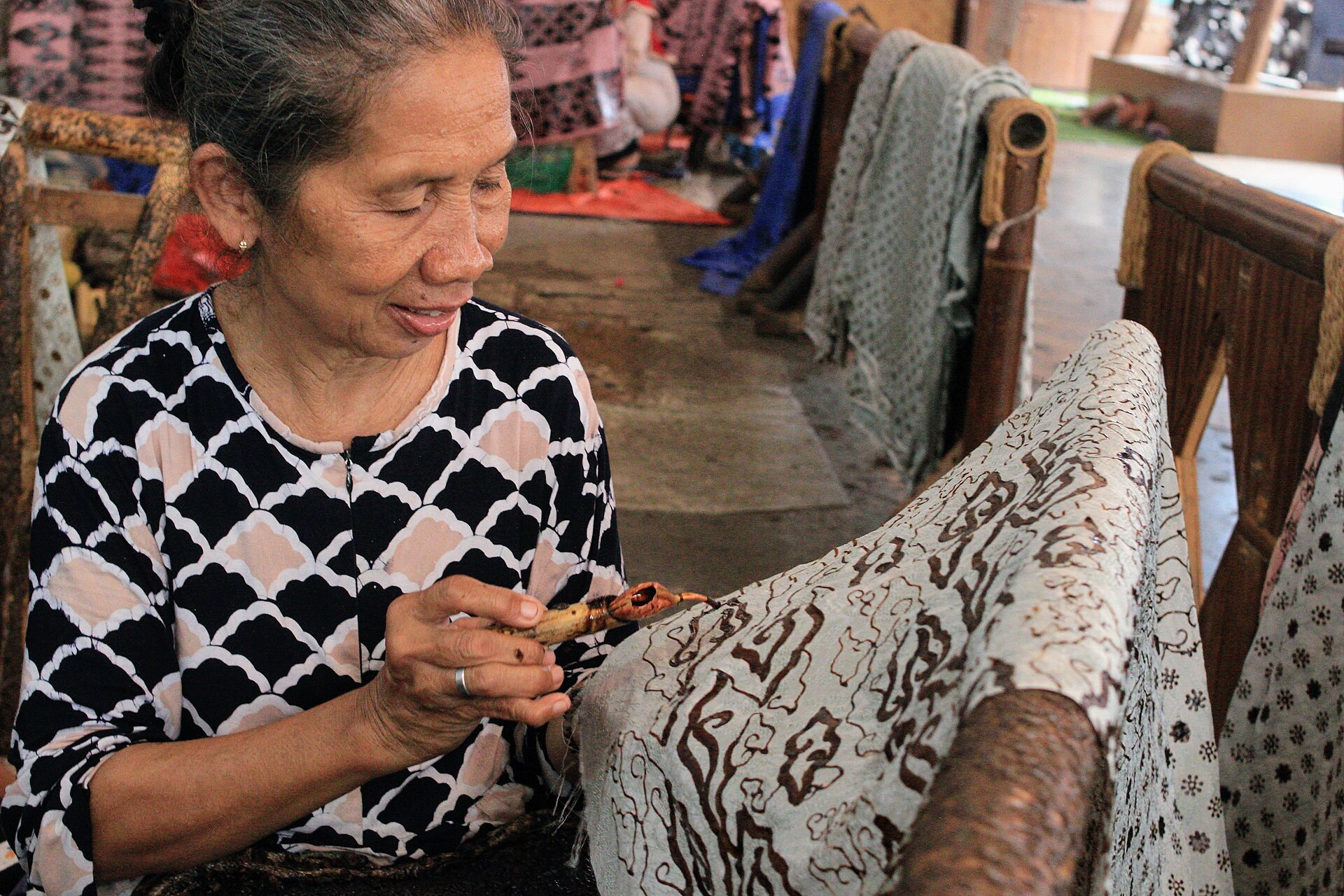
- Batik tulis, “written batik”, is drawn by hand. Hot wax is applied with a canting, a small copper cup with a spout, on a bamboo handle, to resist the dye; the cloth is dyed, the wax removed, and the process repeated for each colour. A complex piece can take weeks or months. This is the top of the market.
- Batik cap uses a copper stamp to apply the wax in repeated blocks. It is still a wax-resist batik, made by hand, but it is far quicker, and the pattern repeats with mechanical regularity.
- Printed “batik” is simply fabric printed with a batik pattern. It is cheap, colourful and perfectly good for a shirt, but it is not batik in the traditional sense, and it should never carry a batik tulis price.
To tell them apart, look at the back. On a tulis or cap piece the wax resists the dye through the cloth, so the pattern is almost as strong on the reverse as on the front. On a printed fabric the back is noticeably paler. On tulis, look for slight irregularities: lines that thicken and thin, dots that are not quite identical, small cracks where the dye has seeped into the wax. Perfect, identical repeats suggest a stamp or a printer. And ask. A reputable shop will tell you exactly how a piece was made and where; a vague answer is a reason to walk away.
Tenun and songket
Woven textiles are a different craft altogether. In ikat, the threads are tie-dyed before weaving, so the pattern emerges as the cloth is woven, with the characteristic soft, feathered edges. The finest hand-woven pieces from Sumba, Flores, Timor and other islands of eastern Indonesia are made with natural dyes and can take months on a loom. Songket, from Sumatra and elsewhere, adds supplementary threads, often gold or silver, woven into the fabric to make a raised pattern.
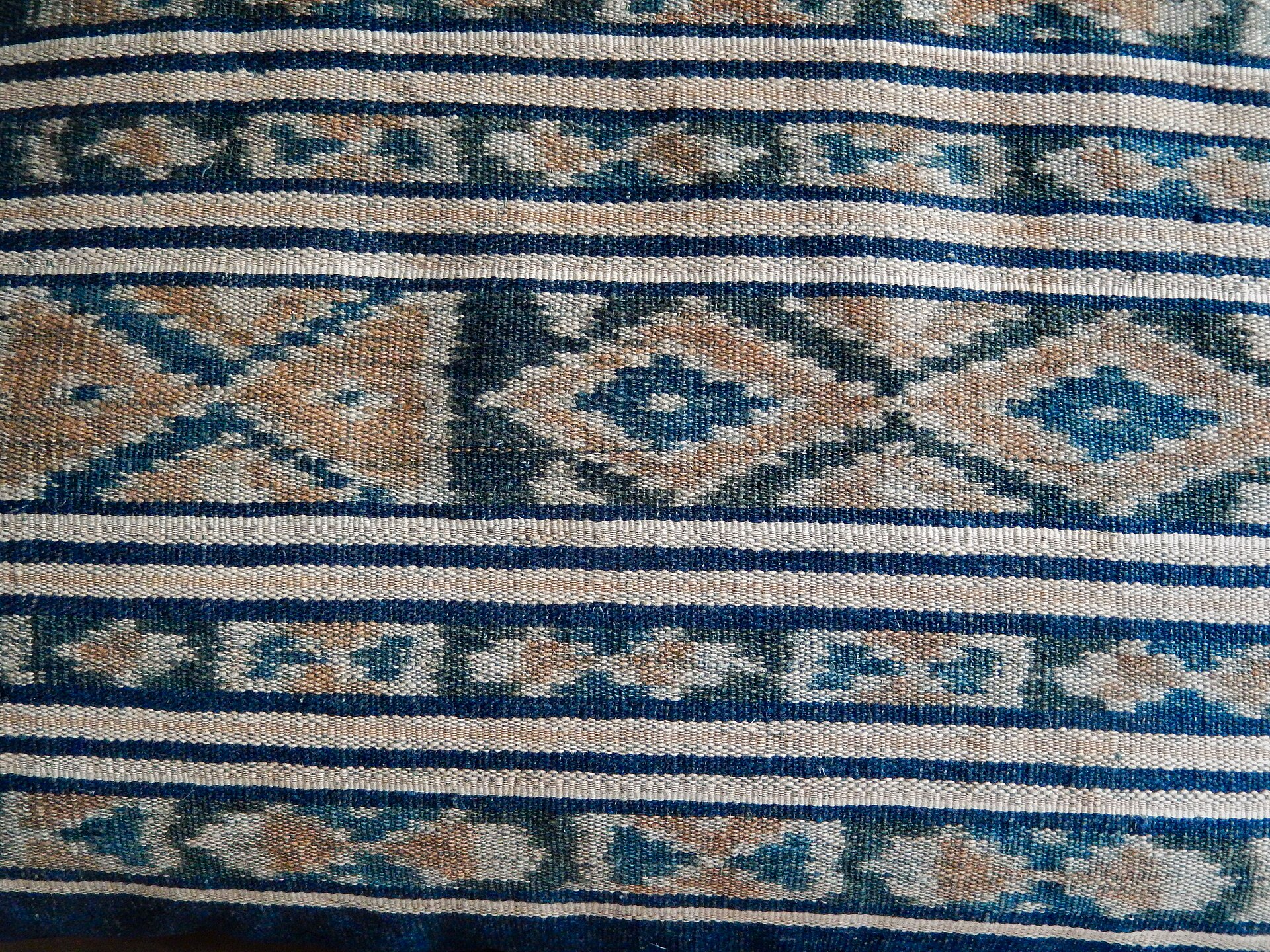
For a visitor, the key questions are whether a piece is hand-woven or machine-made, and whether the dyes are natural or synthetic. Hand-woven cloth has slight irregularities in the weave and the edges; machine-made tenun is perfectly even. Natural dyes tend to give deeper, softer colours, synthetic ones brighter and flatter. Neither is wrong, but the price should reflect which you are buying.
Where to buy
Sarinah and Alun Alun Indonesia, below, are the easiest places to see a wide range in one visit. The designer houses above work wastra into their collections. And for a more detailed tour of batik shops at every level, from markets to galleries, see our guide to where to buy batik in Jakarta. Before you buy anything expensive, an hour in the Textile Museum is the best possible education in what good cloth looks like.
Sarinah: the national emporium
Sarinah, on Jalan M.H. Thamrin, describes itself as Indonesia’s first modern department store, and it has been operating since August 1966. After a substantial refurbishment it has reinvented itself as a showcase for Indonesian products, and its own site lists the range: Indonesian food, wastra, fashion, wellness products, a supermarket, furniture, herbal products, art, a duty-free shop and a stage for performances.
It is not a luxury store in the sense that Plaza Indonesia is, and some of what it sells is everyday. But as a single place to see good Indonesian brands, crafts and textiles, from the affordable to the collectable, it is a good introduction, and it is a walk up Jalan M.H. Thamrin from the Bundaran HI roundabout and its MRT station. Go with time to browse, and use it to calibrate prices before you visit specialist shops elsewhere.
Alun Alun Indonesia, Grand Indonesia
Grand Indonesia, the huge mall on Jalan M.H. Thamrin, lists Alun Alun Indonesia among its mini-anchor stores. Alun Alun is a store for Indonesian crafts, textiles, homeware and gifts. It is a practical stop if you have limited time and want quality Indonesian gifts in one place; confirm the floor and opening hours on the mall’s directory.
Grand Indonesia itself is open daily from 10:00 to 22:00, with an East Mall and a West Mall joined by a skybridge, and Seibu and Central among its department-store anchors. Our Grand Indonesia mall guide covers it in full.
High-end crafts, homeware and gifts
The Indonesian design scene has grown rapidly, and a lot of what is most interesting at the top end is homeware: hand-thrown ceramics, carved and woven furniture, textiles for the house, natural skincare and scents. The best of it is sold through concept stores, designer showrooms and well-curated sections of the big malls and Sarinah rather than through dedicated luxury boutiques. A few principles help.
- Buy the maker, not the souvenir. At the high end, the best pieces are signed, labelled or sold with the maker’s name. Ask who made it and where.
- Think about weight and shipping. Ceramics and furniture are wonderful and heavy. Ask whether the shop ships internationally and how it packs before you fall in love with a teak bench.
- Keep the receipts. Both for customs at home and, for eligible purchases, for the VAT refund our luxury shopping guide explains.
For a wider look at Indonesian craft, from wayang puppets to woven baskets, see our guides to Indonesian handicrafts in Jakarta and the best Jakarta souvenirs.
Jewellery and pearls
Indonesia produces South Sea pearls in its eastern waters and has a long tradition of gold and silver work, and Jakarta’s malls carry both international jewellers and Indonesian ones. At the high end, the rules are the same as anywhere: buy from an established jeweller, ask for a written description of what you are buying (pearl type and size, metal and purity, stones and their grading), and get a receipt that states all of it. Gold in traditional gold shops is usually sold by weight and purity, with a separate charge for the work, which makes prices easy to compare between shops. Be wary of anyone offering “certified” pearls or stones in a market at a price that seems too good; it almost always is.
Art for collectors
Jakarta has commercial galleries, auction houses and a calendar of art fairs, and many collectors buy here. For a visitor, the best starting point is usually a museum rather than a gallery. Museum MACAN, the city’s major modern and contemporary art museum, has announced a temporary closure on its website, so check museummacan.org for reopening before you plan around it; our Museum MACAN guide covers the museum itself.
If you buy a significant work, ask the gallery about documentation, packing and export. Antiques and objects of cultural heritage can be subject to export controls, so for anything old, check with Indonesian Customs (Bea Cukai) or the dealer’s paperwork before you buy rather than at the airport.
The premium malls, compared
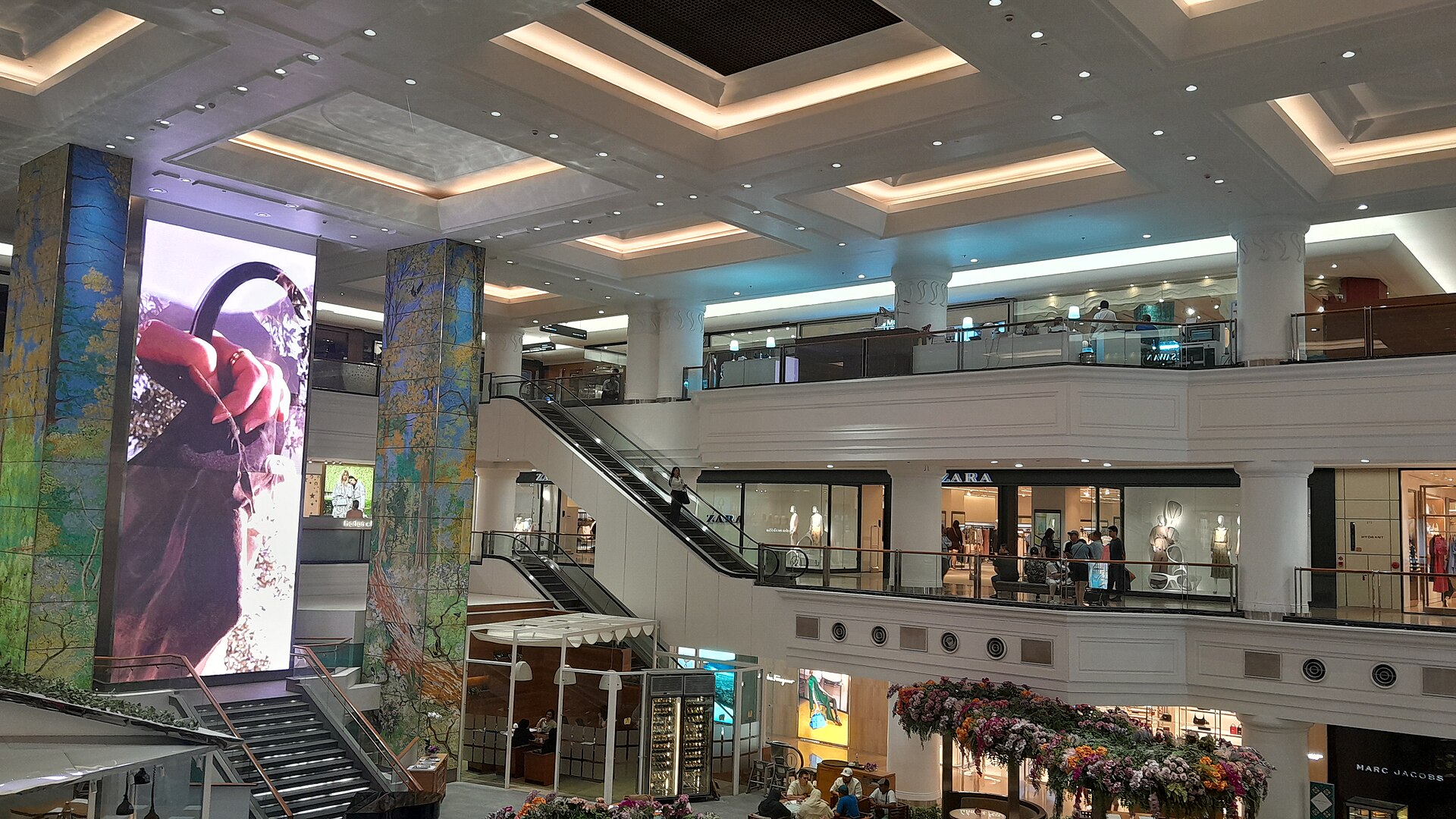
Jakarta’s luxury malls carry overlapping lists of brands, so the real differences are in location, atmosphere and what is around them. The brand-by-brand detail is in our luxury shopping guide; here is how they feel.
Plaza Indonesia, Thamrin
On the Bundaran HI roundabout, attached to the Grand Hyatt, Plaza Indonesia is the polished, grown-up luxury mall of central Jakarta: marble, quiet, with a strong line-up of international houses and Indonesian designers, including SEBASTIANred. It is the obvious choice if you are staying on Thamrin, and it pairs naturally with Grand Indonesia opposite and Sarinah further up the road for a full day of very different kinds of shopping.
Grand Indonesia, Thamrin
Grand Indonesia, opposite, is bigger, busier and broader: a vast mall of 263,226 square metres, by its own count, that runs from mass-market to premium, with department stores, Alun Alun and a huge choice of restaurants. It is less exclusive than Plaza Indonesia and far more useful for a mixed group.
Plaza Senayan and Senayan City, Senayan
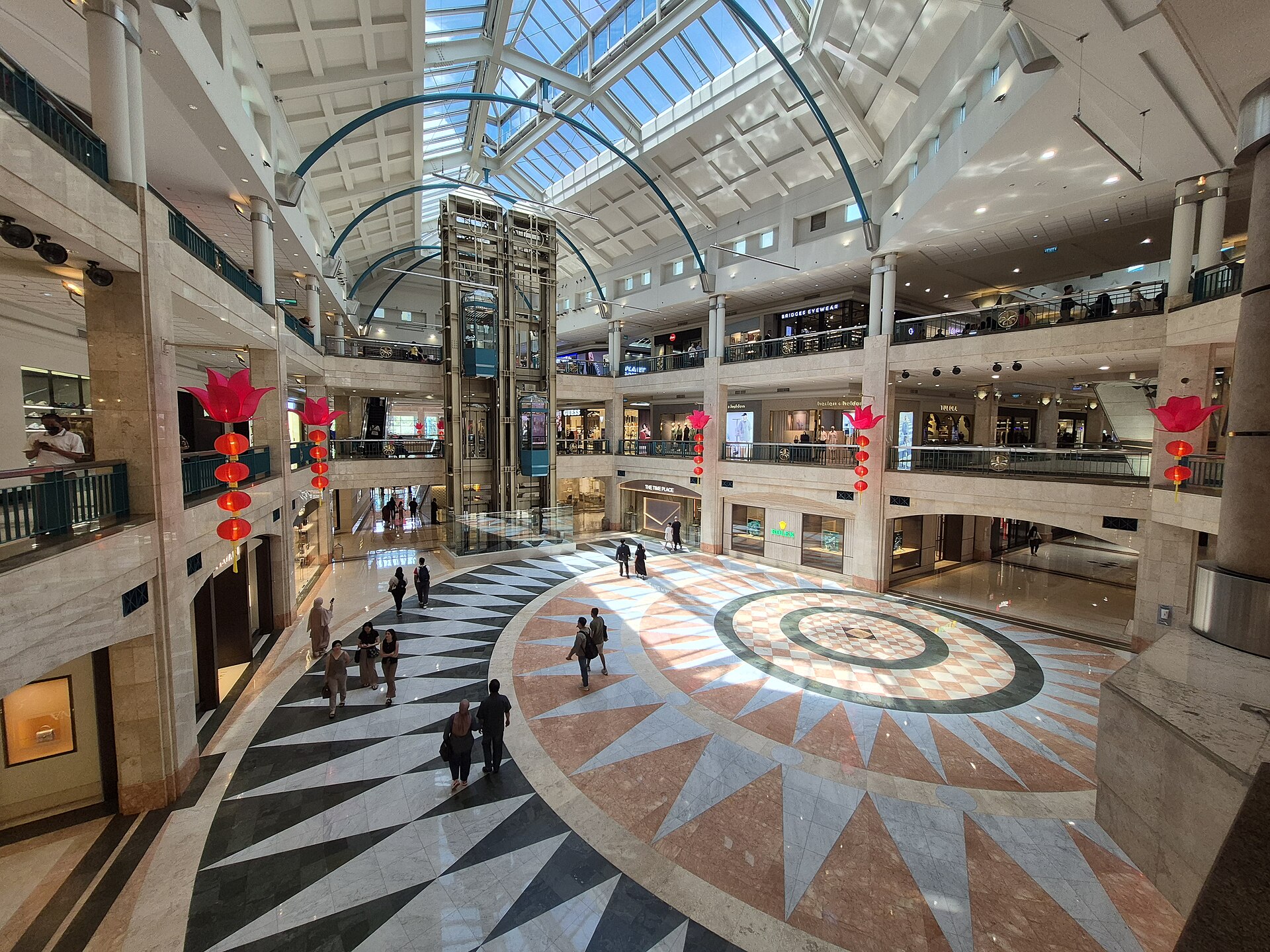
In Senayan, Plaza Senayan is one of the city’s longest-established luxury addresses, with a deep roster of international houses and Indonesian designer showrooms, including Biyan and Ghea Panggabean. Senayan City, close by, is more contemporary and accessible-luxury in tone. With the two together, and the Senayan sports complex and hotels nearby, the area makes a full day out. Our Senayan area guide has the details.
Pacific Place and Ashta District 8, SCBD
Pacific Place describes itself as a high-end lifestyle destination in SCBD, and it is connected to The Ritz-Carlton Jakarta, Pacific Place. Biyan and Ghea Panggabean are among the Indonesian designers listed there. Ashta District 8, the newer mall in the District 8 development that also holds The Langham, adds another premium option in the same district. SCBD is a good area if you want shopping, a hotel spa and a serious dinner without getting back in a car; our SCBD and Sudirman guide covers it.
Dressing for an Indonesian occasion
Many visitors arrive at high-end Indonesian fashion with a specific need: a wedding, a formal dinner, a business event where the hosts will be in batik. Indonesian formal dress has its own logic, and getting it right is a compliment to your hosts.
For men, a good batik shirt is formal wear. A long-sleeved batik shirt, worn untucked over smart trousers, is acceptable at most official and formal events in Indonesia, including many weddings and business dinners, and you will see ministers and chief executives wearing them. Indonesians mark National Batik Day on 2 October, the anniversary of the UNESCO inscription, and many offices encourage batik on Fridays. The difference between an everyday shirt and a formal one is in the cloth and the cut: a batik tulis or a fine cap on good cotton or silk, lined, with a precise fit, reads very differently from a printed shirt from a market stall. If you are buying one for an occasion, go to a designer or a specialist batik house rather than a souvenir shop, and allow time for alterations.
For women, the kebaya is the formal choice. A kebaya worn with a batik or songket skirt is the classic outfit for weddings and formal events, and the modern versions from designers such as Anne Avantie range from restrained to spectacular. A visitor is not expected to wear one, and a smart dress is always fine. But if you are close to the family at an Indonesian wedding, a kebaya is a lovely gesture, and an Indonesian designer can advise on colour and formality. As a guest, avoid white, which may compete with the bride, and check whether the family has chosen a colour theme, a common practice at Indonesian weddings.
Modesty matters. At Muslim weddings and religious events, covered shoulders and knees are the norm. Designers in Jakarta are well used to dressing guests for exactly these occasions, so explain the event when you shop and let them guide you.
Paying and haggling at the top end
Prices in Jakarta’s premium malls, designer boutiques, department stores and Sarinah are fixed. Bargaining there is not done and would embarrass everyone. Where haggling is normal, in markets, small independent shops and with private dealers, a polite negotiation is part of the transaction, but at the high end the better question is not the discount but provenance: how a piece was made, by whom and where.
- Cards are widely accepted in malls and boutiques. Indonesia’s QR payment standard, QRIS, is widely accepted too, though most visitors will use cards.
- Carry some cash for markets and small workshops, where cards may not be taken.
- Ask about authenticity papers for fine textiles, jewellery and art: a written description, the maker or workshop, and for art a certificate from the gallery.
- Get everything on the receipt. It protects you if something is not what it was described as, and you will need it for customs and any tax refund.
Our guide to travel scams in Jakarta covers the “genuine antique” and “certified stone” stories to be wary of outside the reputable shops.
Timing, traffic and getting between malls
The malls open mid-morning and stay open into the evening; Grand Indonesia, for example, opens daily from 10:00 to 22:00. Check each mall’s own site for its current hours, especially around public holidays. Weekday mornings and early afternoons are the quietest; weekend afternoons are the busiest, as the malls are where much of Jakarta spends its free time.
Traffic decides how much you can fit in. The Thamrin malls (Plaza Indonesia, Grand Indonesia, Sarinah) are within walking distance of each other along Thamrin, and the MRT stops at Bundaran HI. Senayan and SCBD are each compact clusters too. Moving between the clusters is where the time goes: a few kilometres across the centre can take a long time in the evening rush. Pick one cluster per half-day, use the MRT along Sudirman and Thamrin where you can, and our guide to beating Jakarta’s traffic covers the rest.
Taking it home
- VAT refund. Foreign visitors can reclaim VAT on eligible purchases from participating shops. The conditions and the airport process are in our luxury shopping guide; keep every receipt and ask in-store whether the shop takes part.
- Textiles travel well. Fold, do not crease, and carry fine batik and tenun in your hand luggage if you can.
- Heavy and fragile items. Ask the shop to ship, and get the shipping terms and insurance in writing.
- Antiques and heritage objects. Check the export position with the dealer and Indonesian Customs before you buy.
- Your own customs allowance. High-value purchases may need declaring when you get home. Check your own country’s rules.
Which shopping for which traveller
One afternoon, one purchase: Sarinah for an overview of Indonesian textiles and crafts, then Plaza Indonesia or Grand Indonesia, further down Thamrin at Bundaran HI, for designer boutiques.
A wedding or formal occasion: contact Biyan, Sebastian Gunawan or Anne Avantie well before you travel about made-to-measure or ready-to-wear, and allow time for a fitting.
A textile collector: the Textile Museum first, then the batik and wastra specialists in our batik guide, then the designer houses that work with wastra.
A business traveller with an hour: whichever premium mall is attached to your hotel or office tower. In SCBD that is Pacific Place or Ashta District 8; on Thamrin, Plaza Indonesia.
A family: Grand Indonesia, with the widest range and the most places to eat, and Alun Alun for gifts.
Is high-end shopping in Jakarta worth it?
For international luxury, mostly not on price. Indonesian import duties mean Jakarta is often not the cheapest place to buy a particular bag or watch. The reasons to shop the global brands here are convenience, the quiet of a weekday luxury mall, and the occasional piece that is not available elsewhere.
For the Indonesian high end, yes. Fine batik tulis, hand-woven tenun, a kebaya from an Indonesian couturier, a piece of contemporary Indonesian design: these are things you cannot easily buy anywhere else, made by people at the top of their crafts, and in Jakarta you can see a wide range in one place. Spend less time on the brands you know and more on the ones you don’t, and you will go home with something genuinely worth having.
Frequently asked questions
What is the most upmarket mall in Jakarta?
Plaza Indonesia on Thamrin and Plaza Senayan in Senayan are the two long-established luxury addresses, with Pacific Place and Ashta District 8 in SCBD close behind. Our luxury shopping guide shows which brands are in which mall.
Where can I buy Indonesian designer fashion in Jakarta?
In the premium malls. Indonesia’s tourism board lists Biyan at Pacific Place and Plaza Senayan, Anne Avantie at Grand Indonesia’s West Mall, and Ghea Panggabean at Plaza Senayan, Grand Indonesia and Pacific Place. Sebastian Gunawan’s SEBASTIANred has a boutique at Plaza Indonesia. Confirm the current address on each label’s own channels.
How can I tell real batik tulis from printed batik?
Look at the back. On hand-made batik the pattern goes right through the cloth and is almost as strong on the reverse; on printed fabric the back is paler. Hand-drawn tulis also has slight irregularities in its lines and dots, where a stamp or printer repeats perfectly.
Is luxury shopping cheaper in Jakarta than in Singapore?
Often not for international brands, which can carry import duty in Indonesia, so compare prices before buying. Indonesian designers, textiles and crafts are where Jakarta offers something you cannot easily buy elsewhere.
What are Sarinah’s highlights for a visitor?
Its range of Indonesian products under one roof: wastra, fashion, crafts and art, herbal and wellness products, and a duty-free shop. It is on Jalan M.H. Thamrin, near the Bundaran HI roundabout and MRT station.
What time do Jakarta’s malls open?
Mid-morning, closing in the evening. Grand Indonesia, for example, is open daily from 10:00 to 22:00. Check each mall’s own site, especially on public holidays.
Can I claim a VAT refund on purchases in Jakarta?
Foreign visitors can reclaim VAT on eligible purchases at participating shops. Our luxury shopping guide explains how.
Related Jakarta Guides
- Luxury Shopping in Jakarta: Brand Locator and VAT Refund
- Luxury Travel in Jakarta
- Where to Buy Batik in Jakarta
- The Best Malls in Jakarta
- Grand Indonesia Mall Guide
- Indonesian Handicrafts in Jakarta
- The Textile Museum
- Shopping in Jakarta
Photo Credits
Plaza Indonesia and the Grand Hyatt at dusk: Facade Plaza Indonesia Night Time 2025 by Tomutomo, CC BY 4.0, via Wikimedia Commons.
A batik artisan applying wax with a canting: Batik Artisan Applying Wax with Canting in Trusmi Cirebon Indonesia by Ahaetulla, CC BY-SA 4.0, via Wikimedia Commons.
Ikat cloth from Sumba: Ikat cloth from Sumba, detail by Ian Alexander, CC BY-SA 4.0, via Wikimedia Commons.
Inside Plaza Indonesia: Interior of Plaza Indonesia by VulcanSphere, CC BY 4.0, via Wikimedia Commons.
Plaza Senayan’s atrium: Interior Plaza Senayan (2025) by Medelam, CC BY 4.0, via Wikimedia Commons.