The first surprise about sleeping cheaply in Jakarta is how little of it happens where the guidebooks say. Jalan Jaksa, the old backpacker street, now has more budget hotels than hostels. The dorm beds with the best reviews are scattered: one on a main road in Central Jakarta, one down a Glodok side street near a Chinatown mall, one in a colonial building on the Kota Tua square, and a capsule hostel with more reviews than any of them. Finding the good budget hostels Jakarta has is less about a scene and more about choosing a base, because in a city this size, where you sleep decides how you spend your days.
This guide covers the hostels worth booking, what capsule and pod hostels are really like, the guesthouses and small private-room stays, how a hostel compares with a budget hotel room, the best areas to base yourself, what to expect inside, and how to stay for a month. Ratings and details were checked in September 2026; hostels open, close and change hands quickly here, so read the most recent reviews before you pay.
The shortlist
| Where to stay | Area | Type | Why book it |
|---|---|---|---|
| Konko Hostel | Jl. Kebon Sirih Raya, Central | Hostel | Top-rated in the city; 13 minutes’ walk to Monas |
| The Packer Lodge | Glodok, West Jakarta | Hostel | Well-reviewed favourite; gym and prayer space; Chinatown on the doorstep |
| Wonderloft Hostel | Kota Tua square | Hostel | Colonial building, female dorm, kitchen, pool table |
| My Capsule Jakarta – Batavia | Central, about 2 km from the centre | Capsule hostel | The most-reviewed hostel in Jakarta; private pods |
| Tuju Arteri Pods | Near Pondok Indah Mall, South | Pods | A pod bed in the southern suburbs |
| Bangka Bed & Breakfast | South Jakarta | Guesthouse | Private rooms with breakfast |
| RedDoorz, OYO and similar | Everywhere | Budget rooms | Cheap private rooms; quality varies by building |
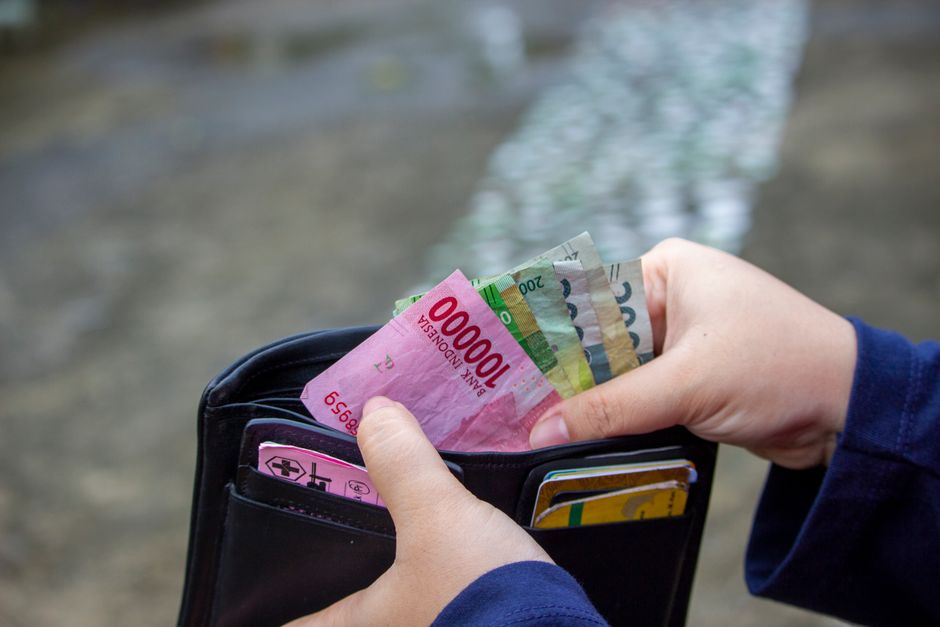
Dorm beds in Jakarta typically cost the equivalent of about €5 to €10 a night, with Wonderloft from around €9. The very cheapest listings, a couple of US dollars a night, are cheap for reasons you will discover on arrival.
Which hostel suits which traveller
If you only read one section, make it this one. The right hostel in Jakarta depends far more on what you plan to do than on the bed itself.
- First visit, want to walk to the sights: Konko on Jalan Kebon Sirih Raya. Monas, the National Museum, Istiqlal and the Jalan Sabang food carts are all within walking distance, heat permitting, and Gambir station is close for the trains out.
- Here mainly to eat: The Packer Lodge in Glodok. Chinatown’s food lanes start at the end of the street, and Kota Tua is a short ride away.
- Photographer, or simply want the city to feel old: Wonderloft on the Kota Tua square. Be on Fatahillah Square at 06:30, before anyone else is.
- Arriving late or leaving at dawn: a capsule hostel close to your transport. You are paying for a clean, quiet eight hours, not a common room.
- Travelling as a couple: compare two dorm beds with a budget chain room before you book; the private room is often barely more.
- Woman travelling alone: Wonderloft’s female dorm, a capsule hostel with a women-only floor, or for a longer stay a female-only residence.
- Staying a month: a kos room rented by the month, not a hostel at all. See the section on longer stays below.
- Business in SCBD or Sudirman on a budget: the hostels here are all in the north and centre, so a budget chain hotel on the MRT line will save you more in taxis than a dorm saves on the bed.
How Jakarta’s hostel scene works
Jakarta is not Yogyakarta or Bali, where travellers pass through in their thousands and hostels compete on rooftop bars and pub crawls. Most foreign visitors to the capital are here on business, visiting family, or passing through on the way to somewhere else, and the budget accommodation market is built mainly for Indonesians — students, workers in town for a job interview, families on a shopping trip, people between flights.
That shapes what you find. There are relatively few classic backpacker hostels, and the good ones are well known and fill up at weekends. There are a great many capsule hostels and pod hotels, a format that suits one-night stays and has spread across the city. And there is an enormous supply of cheap private rooms in small hotels and guesthouses, many badged by booking networks such as RedDoorz and OYO, which in Jakarta often cost little more than two dorm beds.
The social side is thinner than in the backpacker capitals of Southeast Asia. You will meet other travellers in the common rooms of the hostels below, and the staff will often be your best guide to the neighbourhood, but you will not find a strip of hostels with a nightly party. If that matters to you, pick the hostel for its common room. If it does not, pick it for its location and its air conditioning.
The hostels worth booking
Konko Hostel, Kebon Sirih
At 9J Jalan Kebon Sirih Raya in Central Jakarta, Konko was the highest-rated hostel in the city on Hostelworld when we checked, scoring 9.2 out of 10 from more than 400 reviews. That kind of score, sustained over hundreds of stays, usually means clean rooms, staff who help and a building that works.
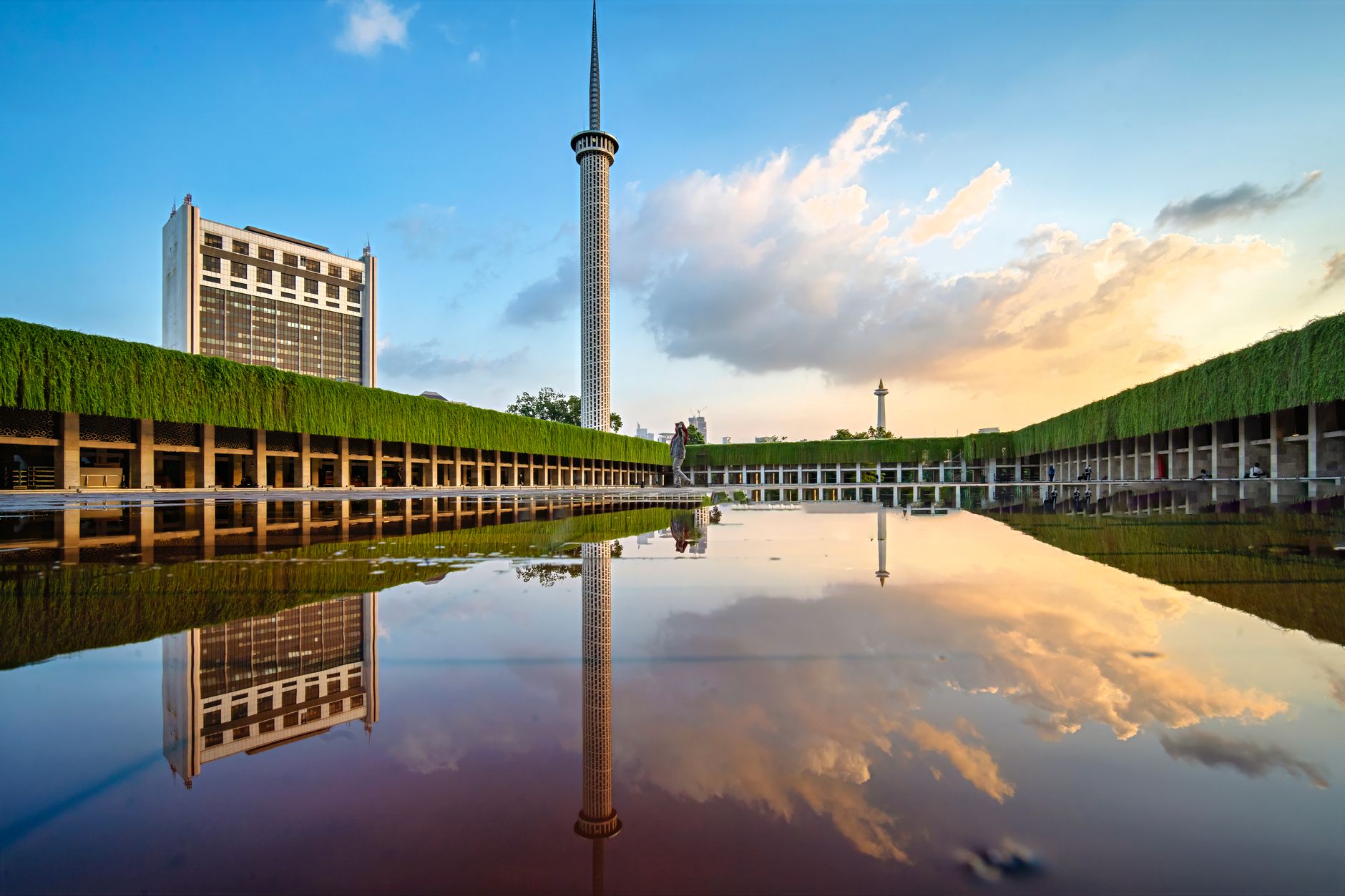
The location is the other reason to book. Jalan Kebon Sirih runs along the top of the old backpacker quarter: Jalan Jaksa and the night-time food carts of Jalan Sabang run south from it, Monas is about 13 minutes’ walk away, and Gambir station, the Thamrin malls and TransJakarta’s Corridor 1 are all close. It is the best base in this guide for a first-time visitor who wants to walk to the main sights.
The Packer Lodge, Glodok
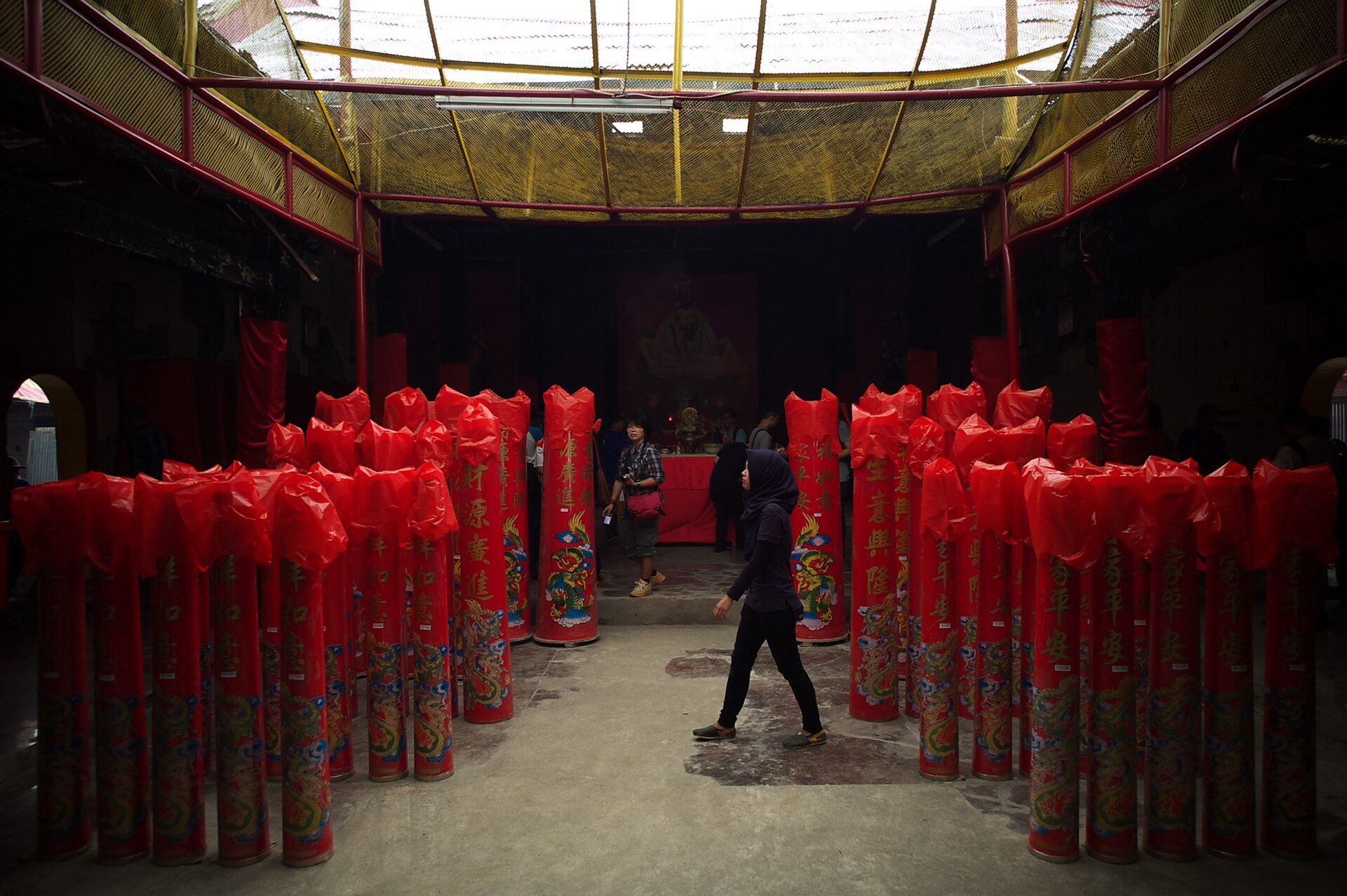
At Jalan Kemurnian IV No. 20–22 in Glodok, Tamansari, in West Jakarta, The Packer Lodge is one of the most-reviewed hostels in Jakarta, scoring 8.9 from more than 1,800 Hostelworld reviews. It has a gym and a prayer space, runs events for guests, and sits a couple of minutes’ walk from the Gajah Mada Citywalk mall. The same team runs Luci’s House, a sister property with private rooms, if you want the hostel’s help without a dorm.
Glodok is Jakarta’s Chinatown, and staying here means waking up to it: the temples and medicine shops around Petak Sembilan, the food lanes, the old shophouses. Kota Tua is a short ride north. The trade-off is the same as for everywhere in the north of the city: it is a long way from the business districts of Sudirman and SCBD, a journey of 30 minutes off-peak and more than an hour in the evening rush. Our Glodok guide covers the neighbourhood.
Wonderloft Hostel, Kota Tua
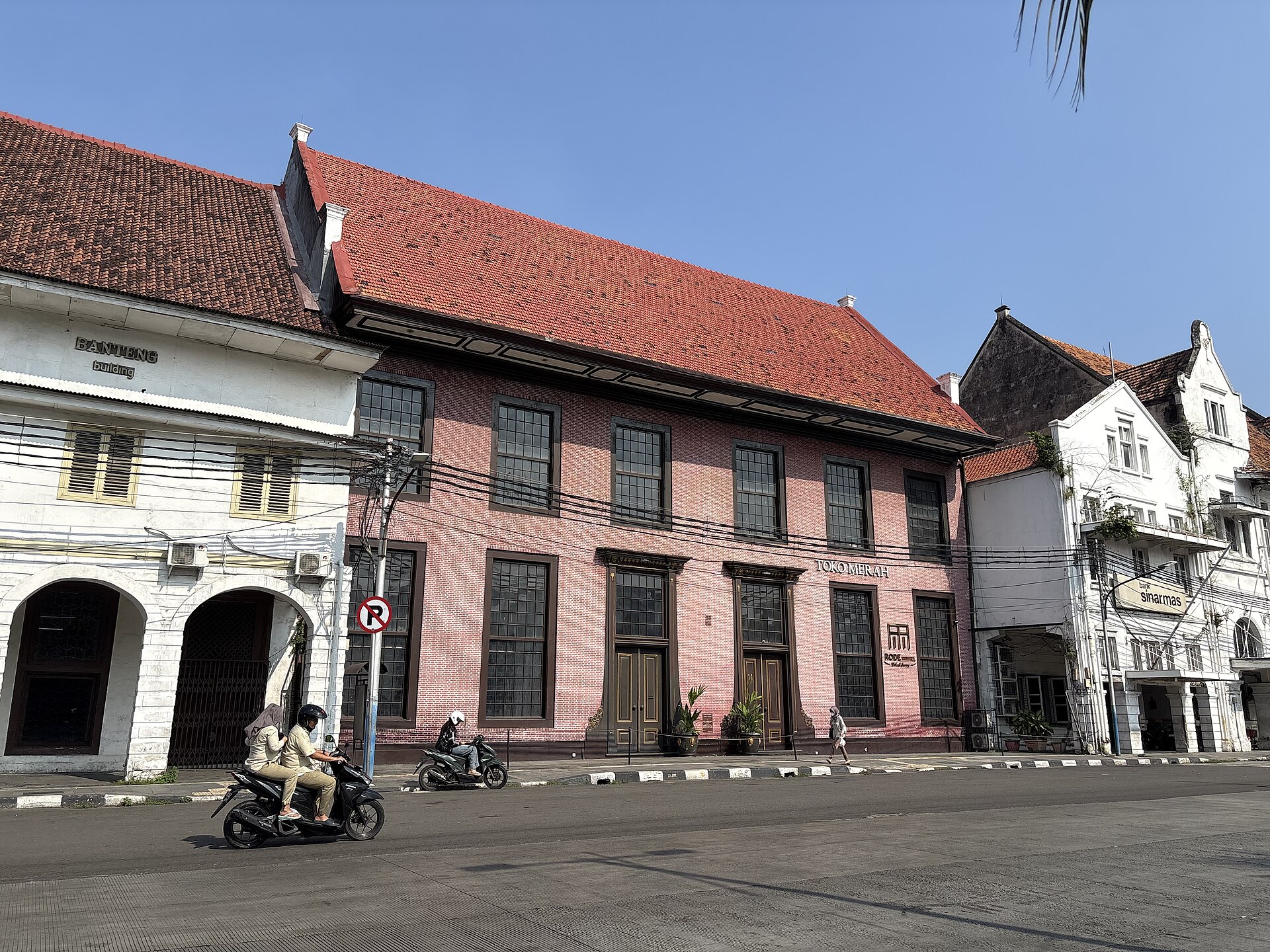
The atmospheric choice. Wonderloft occupies a yellow-painted, green-shuttered colonial building on the old town square, with mixed and female dorms, capsule-style beds with curtains, air conditioning throughout, a guest kitchen, luggage storage, a 24-hour front desk and a games room with a pool table and board games. Dorms start from about €9, and it scored 8.4 from more than 1,100 reviews when we checked.
Staying in Kota Tua means having Fatahillah Square almost to yourself in the early morning, before the day-trippers arrive, and walking to Glodok and the schooners at Sunda Kelapa. Jakarta Kota station and the northern end of TransJakarta Corridor 1 are close by. The MRT does not reach Kota Tua yet, so trips to the south of the city mean a train, a bus or a long car ride. Our Kota Tua guide has more on the area.
My Capsule Jakarta – Batavia
A capsule hostel with more than 2,100 Hostelworld reviews, more than any other hostel in the city, scoring 8.3. The booking sites place it about 2 km from the centre, which makes it more central than the Kota Tua and Glodok hostels; check the map pin against where you want to spend your days before you book. For a traveller who wants a bed, a curtain, a locker and air conditioning at a hostel price without a twelve-bed dorm, it is the obvious choice.
Tuju Arteri Pods, South Jakarta
A pod hostel about a kilometre from Pondok Indah Mall. It had few reviews when we checked, so treat it as a promising newcomer rather than a proven favourite. It shows how the pod format has spread to the southern suburbs, and it is useful if your reason for being in Jakarta is in the south, where classic hostels barely exist.
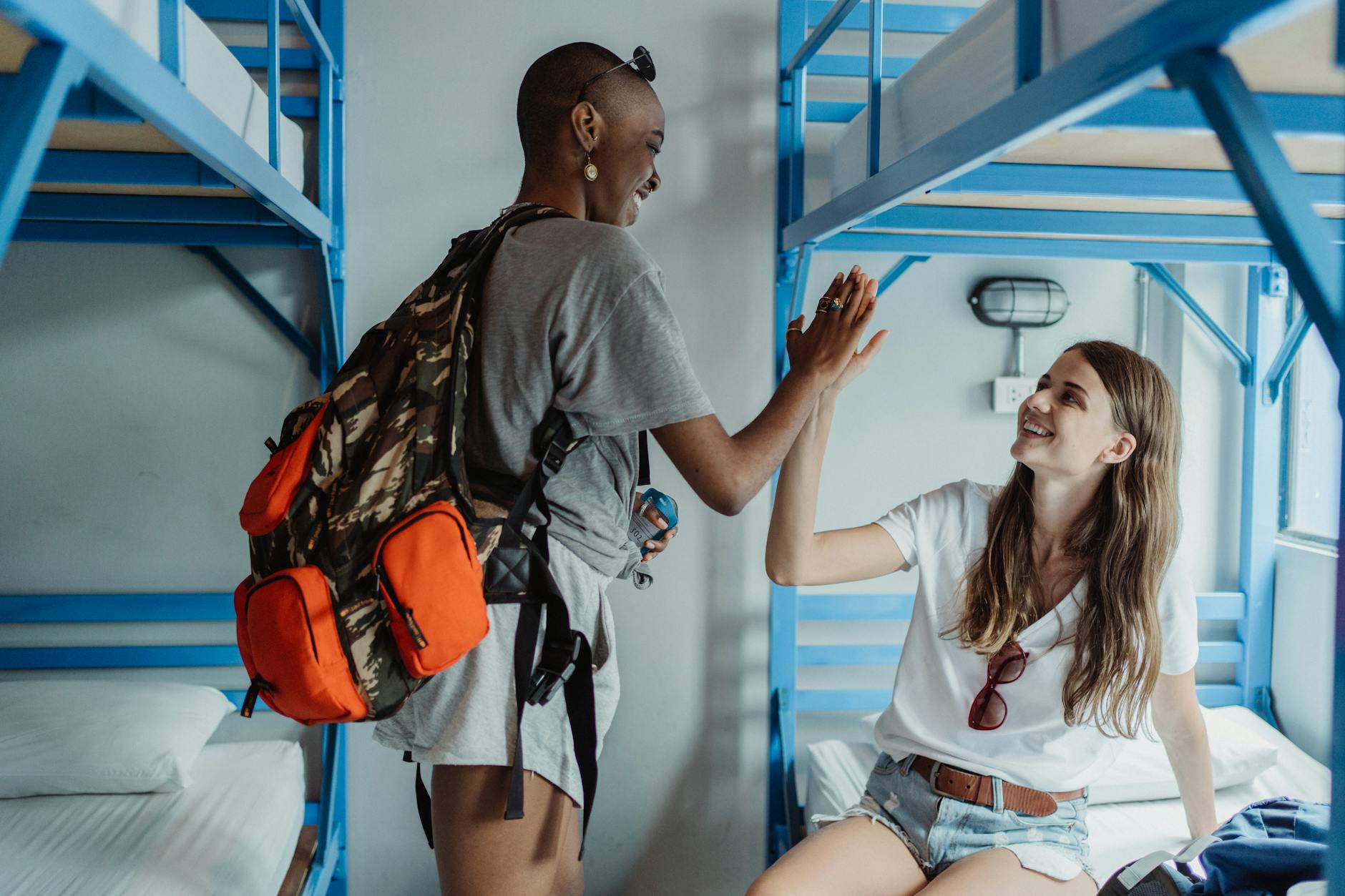
Capsules and pods: what you are actually buying
Capsule hostels are everywhere in Jakarta, and they are a genuinely good format for a budget traveller if you know what they are.
You get a sleeping pod — a fibreglass or timber box, or a curtained bunk built into a wall of them — with a mattress, a reading light, a power socket, often a small shelf and a mirror, and a curtain or shutter at the end. You get a locker for your bag, usually outside the pod. Bathrooms are shared, and in the better places they are clean and separated by gender. Some capsule hostels are mixed, some have separate floors for men and women, and a few are single-sex throughout.
What you do not get is space. There is nowhere to open a rucksack except the floor of the corridor, and you cannot sit upright in some pods. A tall traveller should check the pod length. Noise travels: a curtain stops light, not snoring. And capsule hostels tend to have less of a common room than traditional hostels, because the whole design is about fitting more beds in.
The verdict: excellent for one or two nights, for arriving late or leaving early, and for travellers who value privacy over sociability. Less good for a week, when a small private room at a budget hotel starts to look much better value.

Guesthouses and cheap private rooms
The booking networks
A large share of Jakarta’s cheapest private rooms are small independent hotels and guesthouses badged by networks such as RedDoorz and OYO, including OYO’s Capital O and Townhouse brands. The model is simple: an owner signs up, the network sets standards and takes bookings, and the room is sold through an app at a low price. RedDoorz even lists a hostel near LTC Glodok alongside its private rooms.
The quality varies from one building to the next more than the brand suggests. Some are clean, quiet and excellent value; some are tired rooms with no window in an alley behind a market. Read the reviews for the specific property, not the brand, look at guests’ photos rather than the listing’s, and check the map pin rather than the district name in the title.
Independent guesthouses
Small guesthouses and B&Bs run by families are the nicest way to stay cheaply in Jakarta if you find a good one. Bangka Bed & Breakfast in South Jakarta, for example, offers private rooms with breakfast included and runs events for guests. Around Jalan Jaksa and in the side streets of Cikini and Menteng, a handful of long-running guesthouses survive from the backpacker era, alongside budget hotels. They are cheaper than the chains, more personal and more variable.
Syariah hotels: know before you book
Some budget hotels and guesthouses describe themselves as syariah, meaning they follow Islamic principles: no alcohol on the premises, sometimes separate facilities for men and women, and in some cases a request that couples sharing a room show they are married. They are perfectly comfortable for solo travellers and married couples. Unmarried couples should book elsewhere, and the booking sites usually include “Syariah” in the property’s name.
Separately, Indonesia’s revised criminal code, in force since 2 January 2026, criminalises sex outside marriage and unmarried cohabitation, but only on a complaint from a spouse, parent or child. Ordinary hotels and hostels are not required to check marital status and are not turning unmarried couples away. See our safety guide for the detail.
Hostel or budget hotel? The honest maths
In most Southeast Asian cities the hostel is the obvious budget choice. In Jakarta it often is not, and it is worth doing the sums before you book.
- Travelling alone: a dorm bed or capsule wins. It is the cheapest safe, clean, air-conditioned bed in the city, and it comes with staff who will tell you how the buses work.
- Travelling as a pair: compare two dorm beds with one private room. Budget hotel rooms from the chains — ibis Budget, POP!, Whiz, Amaris, favehotel — and the better booking-network rooms often cost about the same as, or only a little more than, two beds, with your own bathroom and a door that locks.
- Staying a week: the private room usually wins on sleep alone. Capsules are brilliant for two nights and tiring for seven.
- Arriving at midnight or leaving at dawn: a capsule near your transport, not a hostel across the city.
Our budget hotels guide covers the chains and what each one offers, and the daily budget guide shows how the bed fits into the cost of a whole day.
Where to base yourself
In Jakarta, location matters more than the bed, because the city’s traffic turns a cheap room in the wrong place into an expensive one. A car across the city costs more than a night in a dorm, and it can take an hour.
| Base | Best for | Transport | The catch |
|---|---|---|---|
| Kebon Sirih / Jalan Jaksa / Sabang | First-timers; walking to Monas and the museums; street food at night | Gambir station, TransJakarta Corridor 1 on Thamrin, MRT at Bundaran HI | Busy main roads; the old scene has faded |
| Kota Tua | Atmosphere; photography; early mornings in the old town | Jakarta Kota KRL station; Corridor 1 terminus | No MRT; far from the south |
| Glodok | Food; temples; Chinatown life | Corridor 1 along Gajah Mada and Hayam Wuruk; Kota station nearby | Far from SCBD at rush hour |
| Cikini / Menteng edge | Cafés, the arts centre, a quieter base | Cikini KRL station | Fewer hostels; more budget hotels |
| Blok M | Cheap nights out; the MRT south | Blok M MRT station; bus terminal | Few classic hostels |
| Near the airport | A dawn flight | Airport shuttles | Nothing to do; a long way from the city |
A rule of thumb: stay somewhere you can reach on the MRT, the KRL or TransJakarta Corridor 1 without a change. Off-peak, a bus or train from Kebon Sirih to Kota takes about half an hour; a car from Kota to SCBD takes 30 minutes at eleven in the morning and more than an hour at half past five. Our best areas to stay guide compares the districts in more detail.
Split your stay
One of the best budget tricks in Jakarta is to spend your nights in two places rather than one. The city’s sights fall into two broad halves — the old north, with Kota Tua, Glodok and the harbour at Sunda Kelapa, and the centre and south, with Monas, the museums, the malls, Blok M and the business districts — and the journey between them is where the time and the taxi money go.
For a four-night stay, two nights in Kota Tua or Glodok followed by two around Kebon Sirih or Cikini puts you within walking distance of everything in turn, and turns the cross-city journey into a single trip with your bag rather than a daily commute. Do the old town on the mornings you wake up there, when it is cool and empty, and the museums, Monas and the evening food streets once you have moved south.
Moving costs one short ride and an hour of packing. It saves you three or four long ones, and it means you see Kota Tua at dawn rather than at midday with everybody else.
Getting from the airport to your hostel
Soekarno-Hatta is well west of the city, and how you get in depends on which area you have chosen.
- Kebon Sirih, Jalan Jaksa, Sabang: the DAMRI airport bus to Gambir, at roughly 80,000–95,000, drops you a short ride from the hostels. Or take the airport train to BNI City, 70,000–90,000 and 40 to 50 minutes, and a short Grab from there.
- Cikini: the same Gambir bus, or the airport train and a short ride.
- Kota Tua and Glodok: a Grab or Blue Bird taxi is the simplest option, and split between two or three people it is not much more per head than the bus. It is often under an hour off-peak and much longer at the evening rush.
- Blok M: the DAMRI bus to Blok M, then walk or take a short ride.
The airport train runs from about 05:00 to around 22:00, and the DAMRI buses from early morning until roughly 23:00. Arriving after that, a car is the only option. Our airport transfer guide covers the detail.
What to expect inside a Jakarta hostel
- Air conditioning. Essential, and standard in the hostels above. At the bottom end of the market, check the listing says the dorm is air-conditioned and not just “fan”.
- Drinking water. Tap water is not drinkable anywhere in Jakarta, so hostels usually have a refill dispenser with large water bottles. It saves money and plastic.
- Breakfast. Often included and usually simple — toast, eggs, sometimes nasi goreng. Breakfast from a cart outside is cheap and often better.
- Lockers. Standard. Bring your own padlock; some places sell or rent them.
- Laundry. Hostels often have a service; the laundry kiloan shops on nearby streets wash, dry and fold by the kilo for less.
- Prayer rooms. Common, in hostels as everywhere in Jakarta — The Packer Lodge lists a prayer space.
- Your passport. Accommodation in Indonesia registers foreign guests, so expect to show your passport at check-in.
- The dawn call to prayer. In older neighbourhoods such as Kota, Glodok and the kampung streets behind the main roads, the call to prayer from nearby mosques starts at around half past four in the morning. It is part of the city. Bring earplugs.
- Rain. In the wet season, roughly October or November to April, heavy afternoon storms can flood low-lying streets. A ground-floor room in an old building can be damp.
Women travelling alone
Jakarta is a straightforward city for women staying in hostels. Wonderloft has a female dorm, many capsule hostels separate men and women by floor or section, and the booking sites list female-only residences — mostly aimed at students and working women staying for weeks or months — that suit a longer solo stay. On public transport, the KRL has women-only carriages at each end of the train and TransJakarta buses have a women-only section at the front, both widely used. Dress more modestly than you might in Bali, particularly away from the malls and in older neighbourhoods; it reduces unwanted attention and is simply polite. Our etiquette guide explains the norms.
Staying a month: kos and co-living
For stays of a month or more, the way Indonesians do it is the kos (also spelled kost): a room in a boarding house, rented by the month, often with air conditioning, a private or shared bathroom, wi-fi and a cleaning service. Kos buildings are in every neighbourhood, from student areas around the universities to office districts, and some are single-sex. A few now take nightly bookings on the hostel sites, sometimes under the name kostel. Monthly rates are far below nightly prices for the same standard of room.
Local apps such as Mamikos list kos rooms across the city, and co-living operators rent furnished rooms by the month with shared kitchens and lounges. Serviced apartments at the top end offer monthly rates too. Whatever you choose, ask what is included — electricity is sometimes metered separately — and view the room before you pay a month in advance.
Booking tips and red flags
- Read the latest reviews, not the score. A hostel’s average can hide a recent change of management. The last month of reviews tells you what you will get.
- Check the map pin. Listings often use the name of a smarter neighbourhood nearby. Where the pin sits, relative to a station, matters more than the name.
- Look for windows. Rooms without windows are common in budget buildings. Guests’ photos show you what the listing does not.
- Weekends fill up. Jakarta’s good hostels are busiest on Friday and Saturday nights and around national holidays. Book those nights ahead.
- Avoid the rock-bottom listings. Beds at a couple of US dollars a night exist. Scroll past them.
- Know how to get there. Arriving at 23:00 without a SIM card and a pin on the map is how people end up paying a tout. The DAMRI airport bus and the airport train both run until late; see our airport transfer guide.
For the rest of a budget trip, our backpacking Jakarta guide covers getting around, eating and moving on, and the budget travel guide gathers the money-saving tricks.
Frequently asked questions
What is the best hostel in Jakarta?
On reviews, Konko Hostel on Jalan Kebon Sirih Raya in Central Jakarta, which scored 9.2 out of 10 on Hostelworld when we checked, followed by The Packer Lodge in Glodok at 8.9 and Wonderloft in Kota Tua at 8.4. Konko has the best location for walking to Monas and the Jalan Sabang food carts; Wonderloft has the most atmosphere.
How much is a hostel in Jakarta?
A dorm bed typically costs the equivalent of about €5 to €10 a night, with Wonderloft from around €9. Capsule beds cost about the same. Private rooms in guesthouses and budget hotels start a little higher.
Where do backpackers stay in Jakarta?
Around Kebon Sirih, Jalan Jaksa and Jalan Sabang in Central Jakarta, the historic backpacker quarter; in Kota Tua for atmosphere; and in Glodok for the food. Blok M is popular for nights out but has few classic hostels.
Are capsule hostels in Jakarta any good?
Yes, for a night or two. You get a private pod with a curtain, a light, a power socket and a locker, usually with air conditioning and clean shared bathrooms. There is little space and noise travels, so for a longer stay a small private room is often better value.
Are there female-only hostels in Jakarta?
Wonderloft in Kota Tua has a female dorm, many capsule hostels separate men and women, and the booking sites list female-only residences aimed at longer stays. On public transport, the KRL and TransJakarta both have women-only sections.
Is it better to stay in a hostel or a budget hotel in Jakarta?
Alone, a hostel is usually cheaper and more sociable. As a pair, a private room at a budget chain such as ibis Budget, POP!, Whiz or Amaris often costs about the same as two dorm beds, with your own bathroom. For a week or more, the private room usually wins.
Can unmarried couples share a room in Jakarta?
In ordinary hotels, hostels and guesthouses, yes — they are not required to check marital status and do not turn couples away. Some hotels that describe themselves as syariah may ask couples to show they are married, so unmarried couples should book elsewhere. Check your own government’s current travel advice on Indonesia’s revised criminal code.
How do I rent a room for a month in Jakarta?
Look for a kos, a boarding-house room rented by the month, through local apps such as Mamikos, or a furnished co-living room. Monthly rates are much lower than nightly ones. Ask what is included, particularly electricity, and view the room before paying.
Is Jalan Jaksa still the backpacker street?
In name more than in practice. Jalan Jaksa was Jakarta’s backpacker street from the late 1960s, but budget airlines, booking apps and Bali drew the crowds away. Today it is a quieter street of budget hotels, a few surviving guesthouses and bars, and it is still a cheap, central base beside the Jalan Sabang food carts. The best-rated hostel in the area, Konko, is on Jalan Kebon Sirih Raya at its northern end.
Are hostels in Jakarta safe?
The established ones are. Use the locker, bring a padlock, keep your passport and cards with you or locked away, and read recent reviews rather than relying on an old average. The risks in Jakarta are mostly outside the hostel — phone snatching from passing motorbikes and pickpocketing on crowded trains — rather than inside it.
Do Jakarta hostels have air conditioning?
The good ones do, in the dorms as well as the common areas, and it is essential in Jakarta’s heat. At the very bottom of the market, some rooms are fan-only, so check the listing.
Your choice of bed decides whether a very tight budget works. With a dorm, $25 a day is comfortable; with the cheapest booking-network private room, it is possible but leaves little room for paid sights. Our guide to Jakarta on 25 dollars a day runs the numbers for both, and for two people sharing.
Related Jakarta Guides
- Budget Hotels & Hostels in Jakarta Under $30
- Backpacking Jakarta
- Budget Travel in Jakarta
- Jakarta Daily Budget
- Best Areas to Stay in Jakarta
- Where to Stay in Jakarta
- Kota Tua Neighbourhood Guide
- Glodok Chinatown Guide
- Central Jakarta Guide
- Cheap Eats in Jakarta
Photo Credits
Temple candles at Petak Sembilan, Glodok: Chinese temple, Petak Sembilan Market, Glodok, West Jakarta, Indonesia by Seika N, CC BY 3.0, via Wikimedia Commons.
Toko Merah, Kota Tua: Jakarta – Toko Merah (2025) – img 01 by Chainwit., CC BY 4.0, via Wikimedia Commons.