For 3,500 rupiah — about twenty US cents at September 2026’s exchange rate — you can ride a TransJakarta bus in its own lane from Blok M in the south to Kota in the north, past the whole length of the city’s business district, and change onto another corridor at no extra cost. Jakarta has a reputation as one of the world’s most car-choked cities, and it has earned it. What the reputation leaves out is that the city has also built one of the cheapest public transport networks in Asia, and that cheap transportation Jakarta-style is often the fastest way to get around too.
This guide is about tactics rather than timetables: the free buses and minibuses most visitors never find, the one card that does everything, which mode wins for which trip, when a car is actually the cheaper choice, and the traps that turn a 3,500 journey into a 150,000 one. Fares were checked in September 2026. Two changes are under discussion — a rise in the TransJakarta fare and a charge for the currently free minibuses — so check before you rely on any number here.
Cheap transportation at a glance
| Mode | Fare (IDR) | Best for |
|---|---|---|
| Jakarta Explorer double-decker tourist buses | Free (tap your card; nothing is deducted) | Sightseeing loops around Monas, Thamrin and Sudirman |
| Mikrotrans JakLingko minibuses | Free (tap your card) | The last kilometre to places the buses and trains miss |
| Soekarno-Hatta Skytrain | Free | Moving between airport terminals and the airport train |
| TransJakarta bus rapid transit | 3,500 flat, free transfers inside stations | Crossing the city on its own lanes |
| MRT | 3,000–14,000 by distance | Sudirman and Thamrin at rush hour |
| KRL commuter line | 3,000 for 25 km, +1,000 per 10 km | Kota, Bogor and the long north–south trips |
| Motorbike taxi via Grab or Gojek | Cheap for short hops | Two to five kilometres, off the rail lines |
| Taxi or app car | Taxi about 9,000 flag fall, then about 6,000/km | Groups of three or four, late at night, heavy rain |
| Private car with driver | About 1,000,000 a day, petrol, tolls and parking included | Day trips for a group |
Tactic 1: get one card and use it for everything
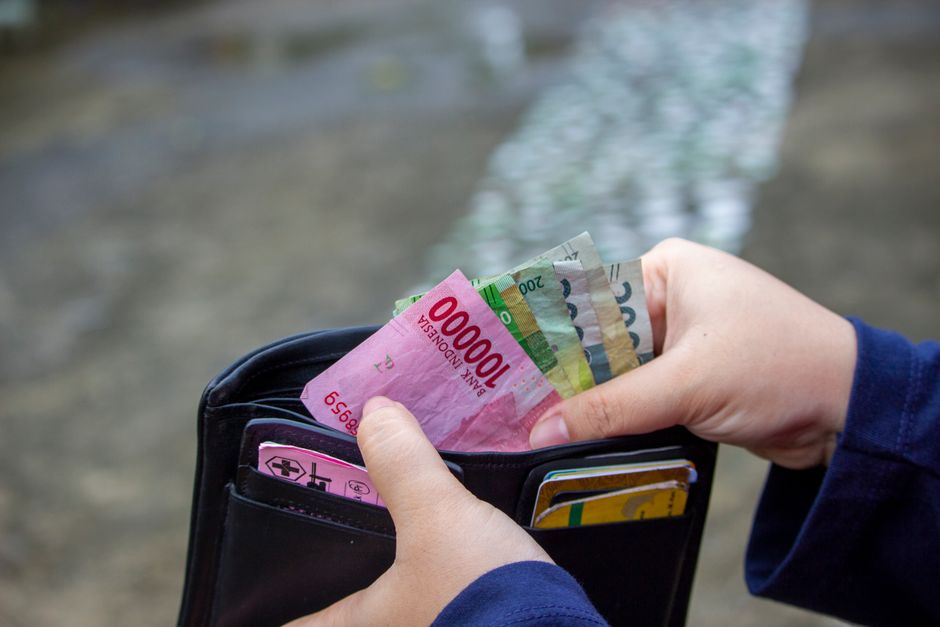
Almost every cheap option in Jakarta runs on a stored-value card, and TransJakarta does not accept cash at all. On your first day, buy a JakLingko card or one of the bank e-money cards — Mandiri e-money, BCA Flazz, BNI TapCash or BRI Brizzi — at a station, or at the counter of an Indomaret or Alfamart. The same card works on TransJakarta, the MRT, the KRL, the free minibuses and the free tourist buses, and you top it up at the same minimarkets.
Two small points save frustration. Keep a healthy balance, because the gates will refuse you if the card falls below the minimum fare. And on the TransJakarta network, tap in and tap out wherever there is a reader, including on the free services, because that is how the system records your journey. Our JakLingko card guide explains the options, and a multi-mode fare cap of 10,000 per journey has been offered through the JakLingko system — worth checking in the app before a long, multi-change trip.
Tactic 2: ride the free tourist buses
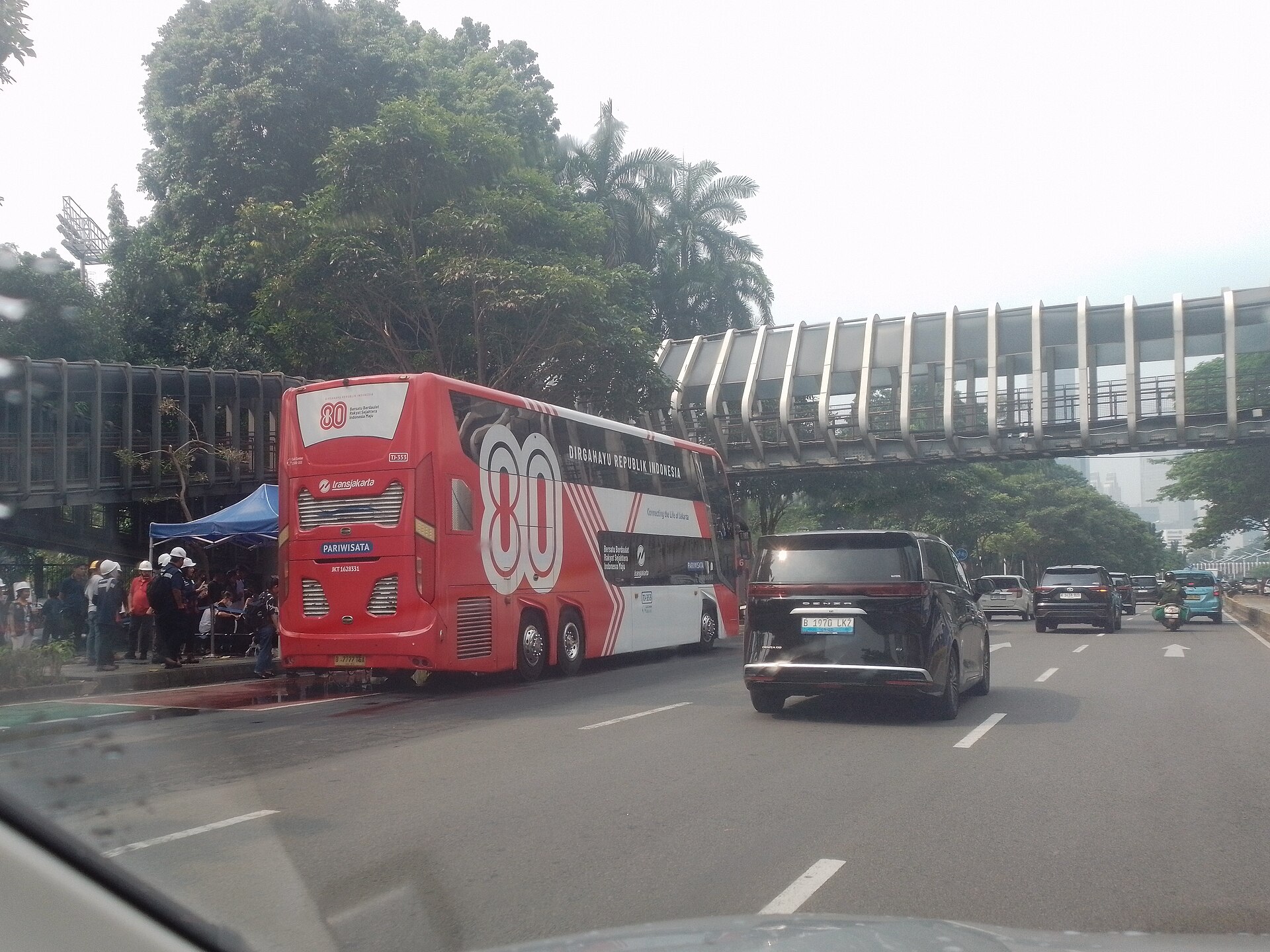
This is the best-kept budget secret in Jakarta. Transjakarta runs a fleet of about twenty double-decker buses on free sightseeing routes, known as Jakarta Explorer, and most visitors have no idea they exist. The buses leave mainly from the Balai Kota (City Hall) stop or the IRTI stop at Monas, and you tap in and out with your card as normal — nothing is deducted.
Routes change from time to time, but two have been long-standing:
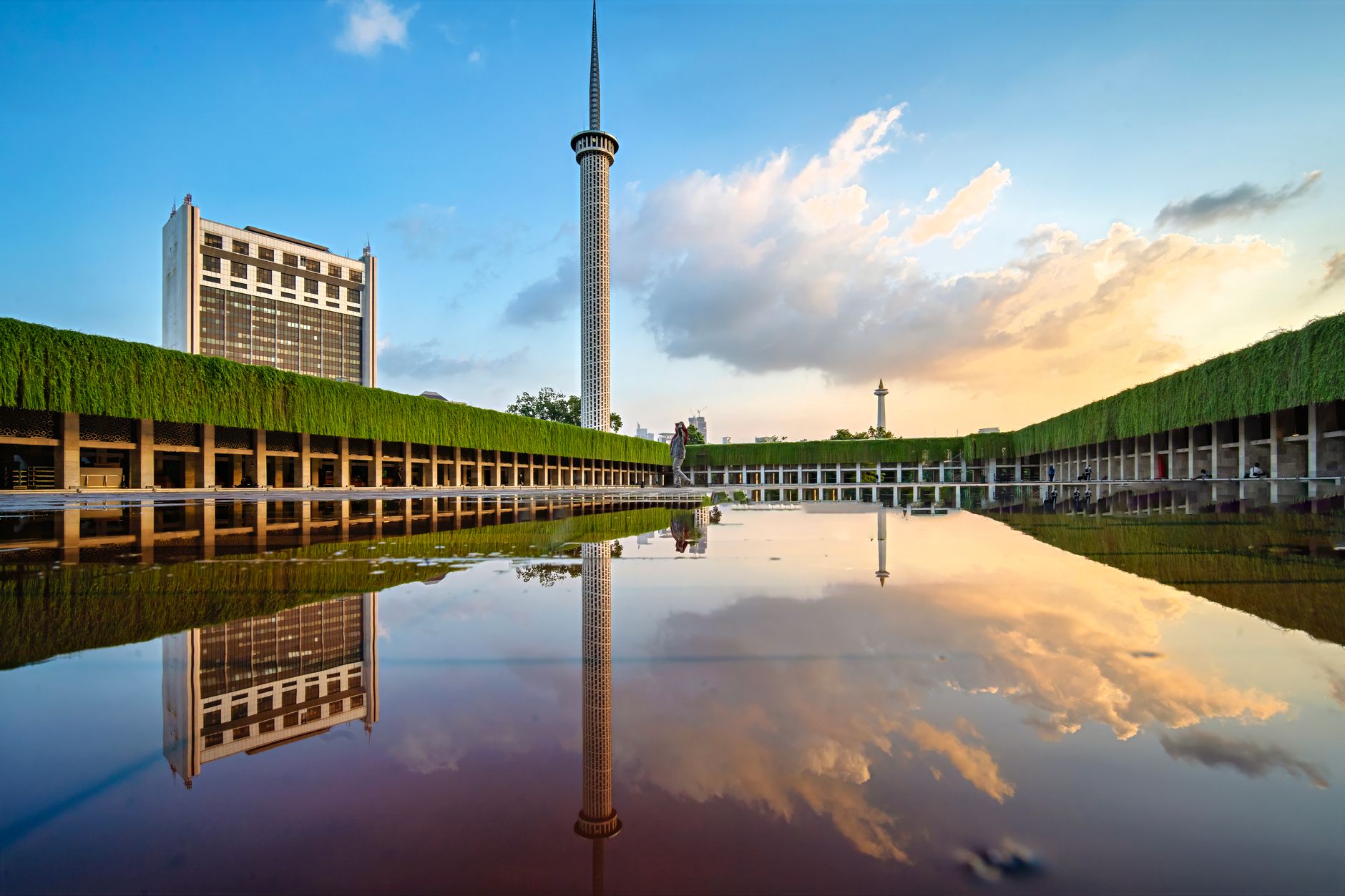
- History of Jakarta (Sejarah Jakarta): a loop from Monas past City Hall, the National Library, Tugu Tani, Gambir and Istiqlal. A good orientation ride on your first morning.
- Jakarta Skyscrapers (Pencakar Langit): Tuesday to Sunday, 10:00 to 17:00, from Monas down Thamrin and Sudirman past Dukuh Atas and Karet to Gelora Bung Karno and Senayan, and back past Plaza Indonesia, the National Museum and Pasar Baru. The upper deck gives you the city’s skyline for nothing.
Sit upstairs at the front. Expect queues at weekends and on public holidays, when Jakarta families use the buses exactly as you do. Check the current routes and timings in the Transjakarta app before you go.
Tactic 3: use the free minibuses for the last kilometre
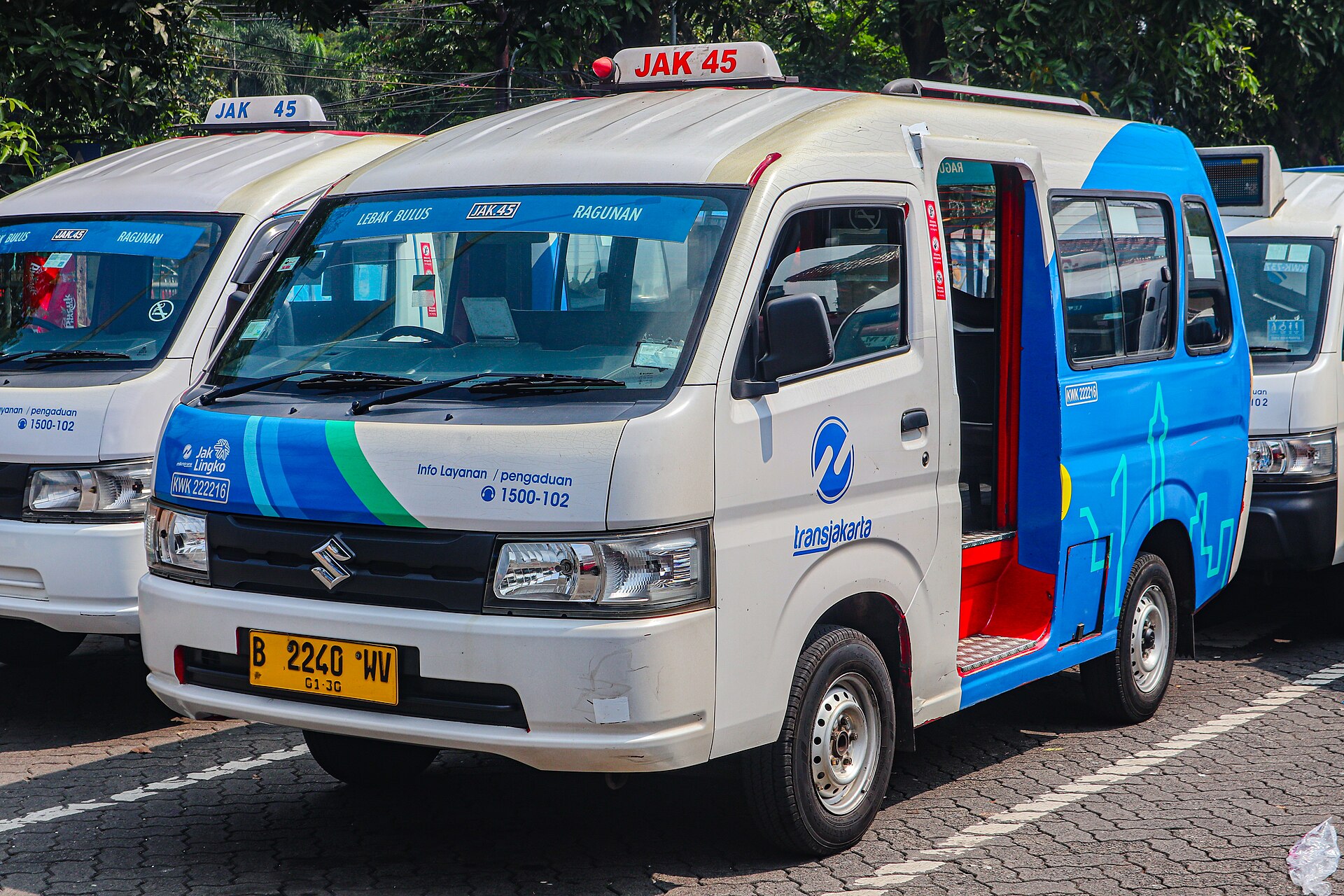
Jakarta’s old angkot minibuses have been folded into the JakLingko system as Mikrotrans: small vans in blue and white with a route number on the roof, running on dozens of routes through the neighbourhoods that the buses and trains do not reach. They cost nothing — you tap your card at the door and ride free.
They are the answer to the “last kilometre” problem that otherwise sends people to a motorbike taxi. JAK 45, for example, links the MRT at Lebak Bulus with Ragunan and its zoo. The catches are that routes are not always intuitive, the vans stop wherever passengers ask, and there is no room for large bags. Google Maps and the JakLingko app both show the routes.
One caution: Jakarta’s transport council has proposed a 2,000 fare for Mikrotrans journeys that do not connect to TransJakarta. It had not been introduced when we checked, but it may be by the time you visit.
Tactic 4: make TransJakarta your backbone
The bus rapid transit network is the heart of cheap transportation in Jakarta. Buses run in separated lanes on the main roads, stations sit in the middle of the carriageway, reached by footbridges, and one 3,500 fare covers your whole journey as long as you change inside the stations. It reaches far more of the city than the rail lines.
- Corridor 1 — Blok M to Kota, up Sudirman and Thamrin — is the one visitors use most: it links the malls, Monas, the old town and Blok M.
- Change inside the station to switch corridors without paying again. Leave the station and you pay again.
- Front of the bus: the women-only section, usually marked in pink.
- Peak hours are crowded. Between 07:00 and 09:00 and between 17:00 and 19:00 the buses and stations fill up, and queues form on the platforms.
A rise in the flat fare from 3,500 to 5,000 has been proposed, as part of a reshaped integrated fare. Our TransJakarta guide explains the corridors and stations.
Your first TransJakarta ride, step by step
- Find the station. Stations — halte — sit in the middle of the road, reached by a footbridge or a crossing. Google Maps shows them, with the corridor numbers that call there.
- Tap in at the gate with your card. The 3,500 fare is taken once, however far you go.
- Find your platform door. Signs above the doors show which corridors and destinations stop there. Larger stations have several doors for different routes.
- Board and ride. Screens and announcements name the next stop. Hold on: the buses brake hard.
- Change without leaving. To switch corridors, walk through to the right platform inside the station or the connecting bridge. You do not pay again unless you exit.
- Tap out where there are exit readers, and head for the footbridge.
Your first ojek, step by step
Open Grab or Gojek, choose the motorbike option, set the pick-up point precisely — a named building entrance or a shop front works better than a GPS pin on a busy road — and confirm the fixed price. Check the plate number when the driver arrives, put on the helmet you are handed, keep your bag on your front, and hold on to the grab rail rather than the driver. Pay in the app or in cash, and rate the ride. It sounds like a lot of steps. After the second trip, it takes thirty seconds.
Tactic 5: pay a little more for the MRT at rush hour
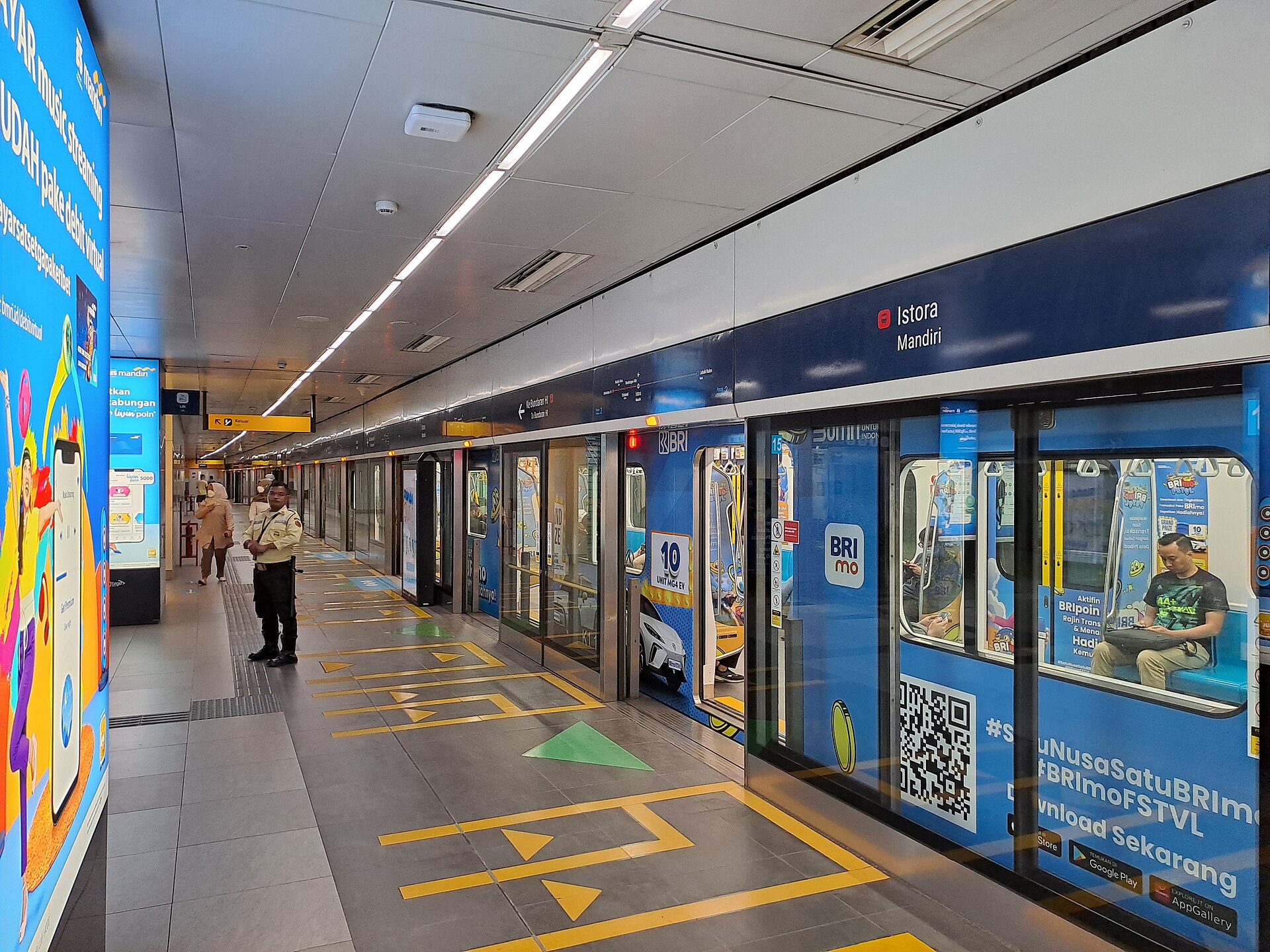
The MRT costs 3,000 to 14,000 depending on distance, so it is the most expensive of the three public networks — and still costs less than the flag fall on a short taxi ride. What you buy with it is predictability. At 17:30, when a car along Sudirman can take 45 minutes to cover a few kilometres, the MRT does it in minutes, underground or above the traffic.
For a budget traveller, the MRT is the mode to use at exactly the times the buses and roads are at their worst, and for any journey along the Sudirman–Thamrin spine between Blok M and Bundaran HI. Our MRT guide lists the stations.
Tactic 6: use the KRL for long distances
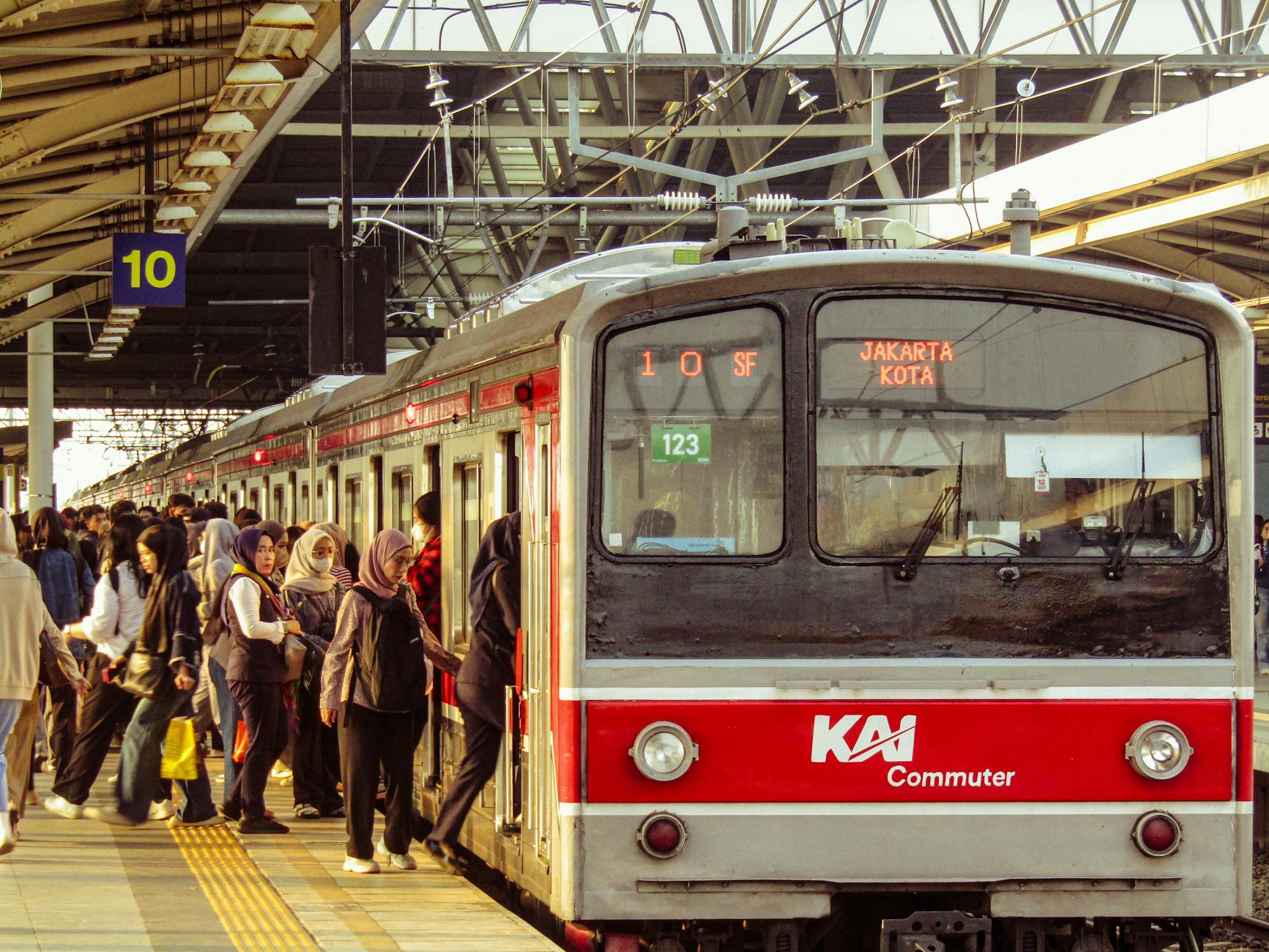
The KRL commuter line is the cheapest way to cover real distance. Fares start at 3,000 for the first 25 km and add 1,000 for each further 10 km, so a trip to Bogor, about 60 km away, costs under 10,000, and a train to Kota for the old town is a few thousand. On a quiet Sunday it is a pleasant way to see the city; at rush hour it is packed beyond anything you will have experienced, and the trains out of the centre in the evening are the worst of all.
Travel after 09:30 and before 16:00 on weekdays, or at weekends. The first and last carriages are women-only. See the KRL guide.
Tactic 7: take an ojek for short hops
For two to five kilometres off the rail lines, a motorbike taxi booked through Grab (GrabBike) or Gojek (GoRide) is usually the cheapest door-to-door option and often the fastest, because it moves through traffic that stops cars dead. The fare is fixed in the app before you ride, the driver brings a spare helmet, and you pay in the app or in cash.
Book through the apps rather than at the traditional ojek pangkalan stands on street corners, whose drivers set their own prices and tend to set them higher for visitors. And be realistic: an ojek is not the right tool in heavy rain, with a big bag, late at night on a long trip, or with a small child. Our Grab versus Gojek guide compares the two apps.
Tactic 8: know when a car is actually cheaper
Public transport is not always the budget choice. A car wins when:
- There are three or four of you. Split four ways, an app car across town can cost each person little more than a couple of bus fares, with no changes.
- It is late at night and the trains have stopped.
- It is raining hard. Stations and footbridges become miserable, and streets flood.
- You have luggage, on the way to or from the airport or a station.
- You are going somewhere the network does not reach, such as parts of North Jakarta or the far south.
Book through Grab or Gojek so the price is fixed before you set off, choose the basic car tier, and use Blue Bird’s official ranks and app if you prefer a metered taxi — around 9,000 on the flag and about 6,000 per kilometre. The cost to watch is time: fares rise at peak hours and a car at rush hour spends much of its journey stationary. Our taxi guide has more.
Tactic 9: time everything
The single most effective cheap-transport tactic in Jakarta costs nothing: stay off the roads between 07:00 and 09:00 and between 17:00 and 19:00 on weekdays. At those hours, app fares rise, taxis crawl, buses and trains are packed, and a trip that takes 25 minutes at eleven in the morning can take an hour and a half.
Plan around it. Do your crossings in the middle of the day, spend the evening rush where you intend to have dinner, and see one area of the city per day rather than zigzagging. Friday evenings, the eve of long weekends and the days around Lebaran are worse still. Our traffic guide goes into detail.
Tactic 10: walk more than you think — but not at noon
Central Jakarta is more walkable than its reputation, particularly since the pavements along Sudirman and Thamrin were rebuilt: wide, level and shaded in places, with pedestrian bridges and underpasses at the MRT stations. Menteng is lovely on foot, Kota Tua and Glodok are best explored on foot, and Senayan’s sports complex and parks are made for it.
The limits are heat and pavements. From late morning to mid-afternoon, a 20-minute walk in the sun is hard work, and away from the main avenues pavements narrow, vanish or become motorbike parks. Walk in the morning and evening, take the bus at midday, and carry water.
Which mode for which trip
Most visitors make the same dozen journeys. Here is the cheap way to make each of them, and how long the car alternative takes, because in Jakarta the real cost of a trip is measured in time as much as in rupiah.
| Journey | Cheapest sensible way | By car instead |
|---|---|---|
| Thamrin or Sudirman to Blok M | MRT, up to 14,000 | 20 minutes off-peak; 45 minutes or more at rush hour |
| Thamrin to Kota Tua | TransJakarta Corridor 1, 3,500; or the KRL from Juanda, Gondangdia or Cikini to Jakarta Kota for a few thousand | 25 minutes off-peak; an hour at peak |
| Blok M to Kota, end to end | Corridor 1, 3,500, about 45 minutes off-peak | An hour or more for much of the day |
| Central Jakarta to Ragunan Zoo | MRT to Lebak Bulus, then the free JAK 45 minibus | 30 minutes early in the morning; an hour in weekday traffic |
| Central Jakarta to Ancol | App car, split between several people | 30 minutes off-peak; much longer on weekend afternoons |
| Central Jakarta to Bogor | KRL, under 10,000; an hour or a little more | 75 minutes on a good run; well over two hours on a bad one |
| Central Jakarta to the airport | Airport train from BNI City, 70,000–90,000, 40 to 50 minutes | 45 minutes at midnight; two hours or more at the evening peak |
| Anywhere, after midnight | App car or motorbike taxi | — |
The pattern is consistent: the rail lines and the busway win at peak times on price and on time, and cars only come into their own late at night, in groups, and for places the network does not reach.
Getting to and from the airport cheaply
Soekarno-Hatta is well west of the centre and the airport transfer is often the most expensive single journey of a trip. The cheap options:
- The Skytrain between terminals and the airport rail station is free.
- The airport train runs from SHIA station, between Terminals 1 and 2, to BNI City in 40 to 50 minutes for roughly 70,000–90,000, every 15 to 20 minutes, from about 05:00 until the last departure from the city at around 22:00. It is immune to traffic, and the MRT at Dukuh Atas is a short walk from BNI City.
- DAMRI airport buses run to Gambir, Blok M, Rawamangun and many other termini for roughly 80,000–95,000, from early morning until about 23:00. The journey takes under an hour late at night and two hours or more at the evening peak.
- A shared car is competitive for three or four people, but use the official ranks or ride-hailing pick-up points, never the touts inside arrivals.
Our airport transfer guide has the full detail.
Leaving Jakarta cheaply
- Bogor: by KRL, under 10,000 each way. The cheapest good day trip there is. See the Bogor guide.
- Bandung: Whoosh high-speed trains from Halim in 36 minutes cost roughly 275,000–600,000, with promotional fares from about 100,000 if you book early — up to a month ahead. Slower trains from Gambir take around three hours and cost less. See the Jakarta to Bandung guide.
- Yogyakarta and beyond: economy trains, mostly from Pasar Senen, are far cheaper than the executive services from Gambir; an overnight train also saves a night’s accommodation.
- The Thousand Islands: the traditional ferry from Kali Adem at Muara Angke costs a fraction of the speedboat from Marina Ancol, which is around 175,000 each way, and takes two to three hours rather than one.
Apps that make it cheaper
- Google Maps plans journeys across TransJakarta, the MRT, the KRL and walking, and is the easiest way to work out which bus or train you need.
- Grab and Gojek fix the price of a car or motorbike ride before you book, which removes haggling and overcharging entirely. Compare both for the same trip; prices differ.
- The operators’ own apps — Transjakarta’s, the MRT’s and KAI’s — show routes, service changes and the free tourist bus timetable, and some let you check your card balance.
- The JakLingko app covers the integrated network, including the Mikrotrans minibus routes.
All of it depends on mobile data, which is one more reason to buy a local SIM or eSIM on arrival. Our SIM card guide explains how.
After dark
The rail lines wind down around midnight, and the cheap options thin out after that. Late at night, app cars and motorbike taxis are the practical choice, and they are generally safe: the ride is tracked, the driver’s details are in the app, and you can share your trip with a friend. Blue Bird taxis run through the night from their ranks and app. The roads are also at their emptiest, so a car across the city at 01:00 costs less and takes a fraction of the time it would at 18:00.
In the wet season
From roughly November to April, heavy afternoon storms are routine. They flood low streets, slow the roads to a crawl and push app prices up as everyone books a car at once. The cheap response is patience: storms often pass within an hour or so, and waiting in a mall, a café or a warung is cheaper and drier than sitting in a stationary car. The MRT, running underground and on its own viaduct, is the most reliable mode in the rain; motorbike taxis are the least pleasant. Carry an umbrella from November onwards, and build slack into any trip to the airport or a train.
Five myths about getting around Jakarta
“You need a car”
You do not. For most visitors, TransJakarta, the MRT and the KRL, topped up with the occasional motorbike taxi, reach everything worth seeing in the city, and they are faster than a car for much of the day.
“Public transport is too confusing”
It was, a decade ago. Today Google Maps plans the routes, the MRT’s signs and announcements are in English as well as Indonesian, and one card works on everything.
“The buses are old and unsafe”
TransJakarta’s fleet is modern and air-conditioned, and its buses run in their own lanes. The realistic risks are crowding at peak times and pickpockets, not the buses themselves.
“The taxis will rip you off”
Only the unofficial ones. Blue Bird uses the meter, and Grab and Gojek fix the price in advance. Avoid the touts in the airport arrivals hall and you avoid almost every taxi problem there is.
“Nobody walks in Jakarta”
Plenty of people do, particularly along the rebuilt pavements of Sudirman and Thamrin and in Menteng, Kota Tua and Senayan. The honest limit is the heat, not the city. Walk early and late, and take the bus at midday.
A cheap transport day, costed
| Journey | How | IDR |
|---|---|---|
| Hotel on Thamrin to Kota Tua | TransJakarta Corridor 1 | 3,500 |
| Kota Tua to Glodok and back | On foot | 0 |
| Kota to Monas for the free Jakarta Explorer bus | TransJakarta Corridor 1 | 3,500 |
| Skyscrapers loop on the upper deck | Jakarta Explorer | 0 |
| Bundaran HI to Blok M for the evening | MRT | Up to 14,000 |
| Blok M back to the hotel late | GrabBike | A short-hop fare |
| Total | About 21,000 plus one ojek |
That is a whole day of sightseeing across Jakarta for less than the price of a café cappuccino. The same day by app car, with the evening rush in the middle of it, could easily cost ten times as much and take longer. For more on daily costs, see our daily budget guide and transportation costs guide.
What costs more than it should
- Airport touts. The men who approach you in arrivals charge several times the going rate. Use the official taxi ranks, the ride-hailing points, the train or the bus.
- Unmetered taxis. Use Blue Bird, or book in an app so the price is fixed.
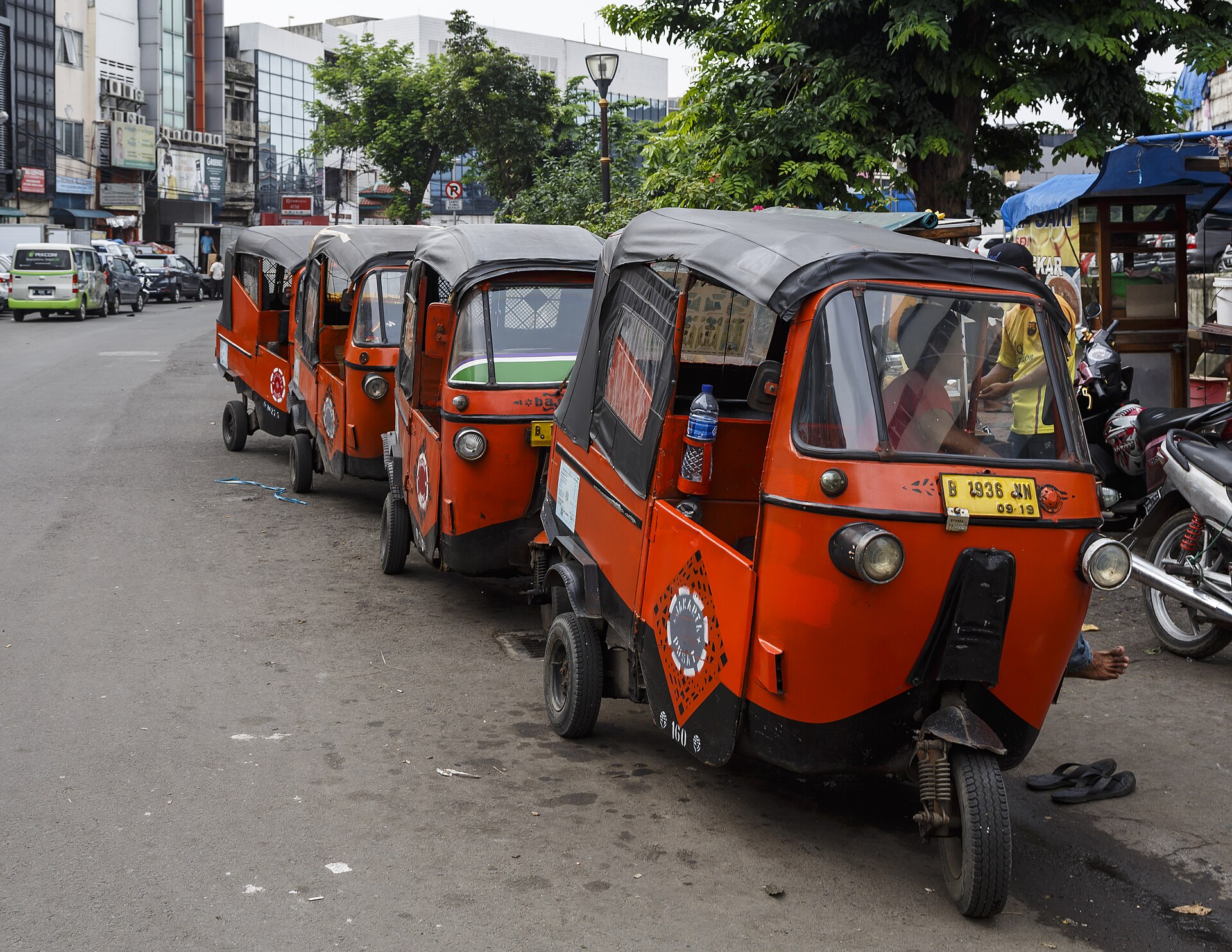
- Bajaj without an agreed price. The orange three-wheelers have no meter. Agree the fare before you get in, and expect to pay more than an ojek for the same trip.
- Rush-hour surge. App fares rise when demand is high. Wait twenty minutes, walk to a station, or take the MRT.
- Tolls and parking. If you hire a car without a driver-inclusive price, tolls and parking are added on top.
- Leaving a TransJakarta station to change buses. You pay again. Change inside.
Staying safe and comfortable on cheap transport
- Pickpockets work crowded KRL trains and TransJakarta stations. Keep bags in front and phones in a front pocket.
- Women-only spaces exist on the KRL, in the first and last carriages, and at the front of TransJakarta buses. Both are widely respected.
- Helmets come with every app ojek. Wear it properly, and hold on.
- Accessibility is best on the MRT, which has lifts at its stations. TransJakarta stations are reached by ramps and footbridges, some long; KRL stations vary.
- Rain: in the wet season, roughly November to April, afternoon storms flood streets and stop traffic. Carry an umbrella and build in time.
For the full picture, see our pillar guide to getting around Jakarta.
Frequently asked questions
What is the cheapest way to get around Jakarta?
TransJakarta, at 3,500 for any journey inside the network with free transfers inside stations, plus the free Mikrotrans minibuses for the last kilometre and the free Jakarta Explorer tourist buses for sightseeing. The KRL is the cheapest way to cover long distances, from 3,000.
Are there free buses in Jakarta?
Yes. Transjakarta runs free double-decker tourist buses, Jakarta Explorer, mainly from the Balai Kota and IRTI Monas stops, and the Mikrotrans JakLingko minibuses are free on their neighbourhood routes. You tap your card on both, but nothing is deducted. A charge for some Mikrotrans trips has been proposed, so check before you travel.
Can I pay cash on TransJakarta?
No. You need a stored-value card — a JakLingko card or a bank e-money card such as Mandiri e-money, BCA Flazz, BNI TapCash or BRI Brizzi — bought and topped up at stations and minimarkets. The same card works on the MRT and the KRL.
Is Grab or Gojek cheaper than public transport in Jakarta?
For a single person, public transport is almost always cheaper. A motorbike taxi can be competitive for short hops off the rail lines. For three or four people sharing, an app car can cost each person little more than a couple of bus fares, especially late at night or in heavy rain.
How much does the MRT cost in Jakarta?
Between 3,000 and 14,000 depending on distance. It is the most expensive of the public networks but the fastest along Sudirman and Thamrin at rush hour.
What is the cheapest way from the airport to Jakarta?
The DAMRI airport bus, at roughly 80,000–95,000, or the airport train to BNI City at roughly 70,000–90,000. The train avoids traffic; the bus goes to more destinations. The Skytrain between the terminals and the airport train is free.
When is the worst time to travel in Jakarta?
Weekdays from 07:00 to 09:00 and from 17:00 to 19:00, when the roads jam, app fares rise and trains and buses are packed. Friday evenings, the eve of long weekends and the Lebaran holiday period are worse still.
Is it safe to use public transport in Jakarta?
Yes. The main risk is pickpocketing on crowded trains and at busy stations, so keep valuables close. Women can use the women-only carriages on the KRL and the women-only section at the front of TransJakarta buses.
Do children pay on the Jakarta MRT?
Children under 90 cm tall ride free, carried or walking through the gate with you. Taller children need their own ticket, whatever their age. See our guide to Jakarta with toddlers for more on travelling with small children.
Related Jakarta Guides
- Getting Around Jakarta
- Jakarta Transportation Costs
- TransJakarta Bus Guide
- Jakarta MRT Guide
- KRL Commuter Line Guide
- JakLingko Card Guide
- Grab vs Gojek in Jakarta
- How to Avoid Jakarta Traffic
- Budget Travel in Jakarta
- Backpacking Jakarta
Photo Credits
Transjakarta tourist double-decker bus: Bus Wisata Transjakarta dengan Livery Khusus HUT 80 RI by RasyaAbhirama13, CC BY-SA 4.0, via Wikimedia Commons.
Mikrotrans JakLingko minibus, route JAK 45: KWK-222216 Mikrotrans JAK.45 Suzuki New Carry by Sulthan Naufal, CC BY 4.0, via Wikimedia Commons.