Walk out of Terminal 3 at Soekarno-Hatta with a suitcase and you will hear it before you see it: “Taxi? Taxi, sir? Taxi.” Half a dozen men, no uniforms, no rank, standing in the gap between the arrivals doors and the actual taxi queue. That thirty-metre stretch of pavement is where the overwhelming majority of Jakarta travel scams begin and end, and walking straight past it costs you nothing but eye contact.
This guide sets out what actually happens to visitors in Jakarta, in rough order of how often it happens, along with the specific counter-move for each. It is deliberately not a scare piece — Jakarta is a working capital rather than a tourist economy, and the professional tourist-fleecing industries that operate in Bali, Bangkok and Ho Chi Minh City barely exist here. Prices mentioned were checked in September 2026; treat them as the right order of magnitude rather than fixed.
The honest verdict first
Jakarta scams you considerably less than you are probably expecting. There is no equivalent here of the Bangkok gem shop circuit, the Bali scooter damage racket or the Ho Chi Minh City motorbike-tour bait-and-switch — those industries need a steady conveyor belt of tourists to be worth running, and Jakarta simply does not have one. Most visitors to this city are here for business, for family, or in transit. You are far more likely to be helped by a stranger than fleeced by one.
What Jakarta does have is a set of low-grade, opportunistic overcharges that thrive on unfamiliarity: the driver who does not start the meter, the money changer whose counting hand is quicker than yours, the market stall whose price triples when a foreigner asks. None of these will ruin a trip. Collectively they might cost you a couple of hundred thousand rupiah over a week if you are completely passive, and almost nothing at all if you read this page once.
The genuinely expensive risks in Jakarta are not scams at all. They are the nightlife bill you did not read, the online booking you paid for by bank transfer, and the phone snatched from your hand while you stand at the kerb looking at a map. Those three are worth more attention than everything else on this page combined.
At a glance: what actually happens, and what it costs
| The scam | Where | Typical loss | The counter-move |
|---|---|---|---|
| Airport taxi tout | CGK arrivals halls | 3–5× the metered fare | Walk to the official rank or use the app pickup zone |
| Fake Bluebird livery | Taxi ranks, hotel forecourts | 2–3× the fare | Check the bird logo and the driver ID card |
| “Meter is broken” | Street-hailed taxis | 2–4× the fare | Say “pakai argo” or get out. Do not negotiate |
| Bajaj fare invented on arrival | Kota Tua, Pasar Baru, Menteng | 2–5× local price | Agree the number before you sit down |
| Money changer sleight of hand | Independent kiosks | 10–20% of the exchange | Authorised changers only; count once, in your own hands |
| ATM skimming | Standalone street ATMs | Your whole account | Use ATMs inside bank branches and malls |
| “It’s closed today” | Outside Monas, museums | A wasted afternoon plus a shop markup | Check hours yourself and walk to the gate |
| The over-friendly card game | Menteng, Kota Tua, near hotels | Potentially thousands of dollars | Never go anywhere private with a new acquaintance |
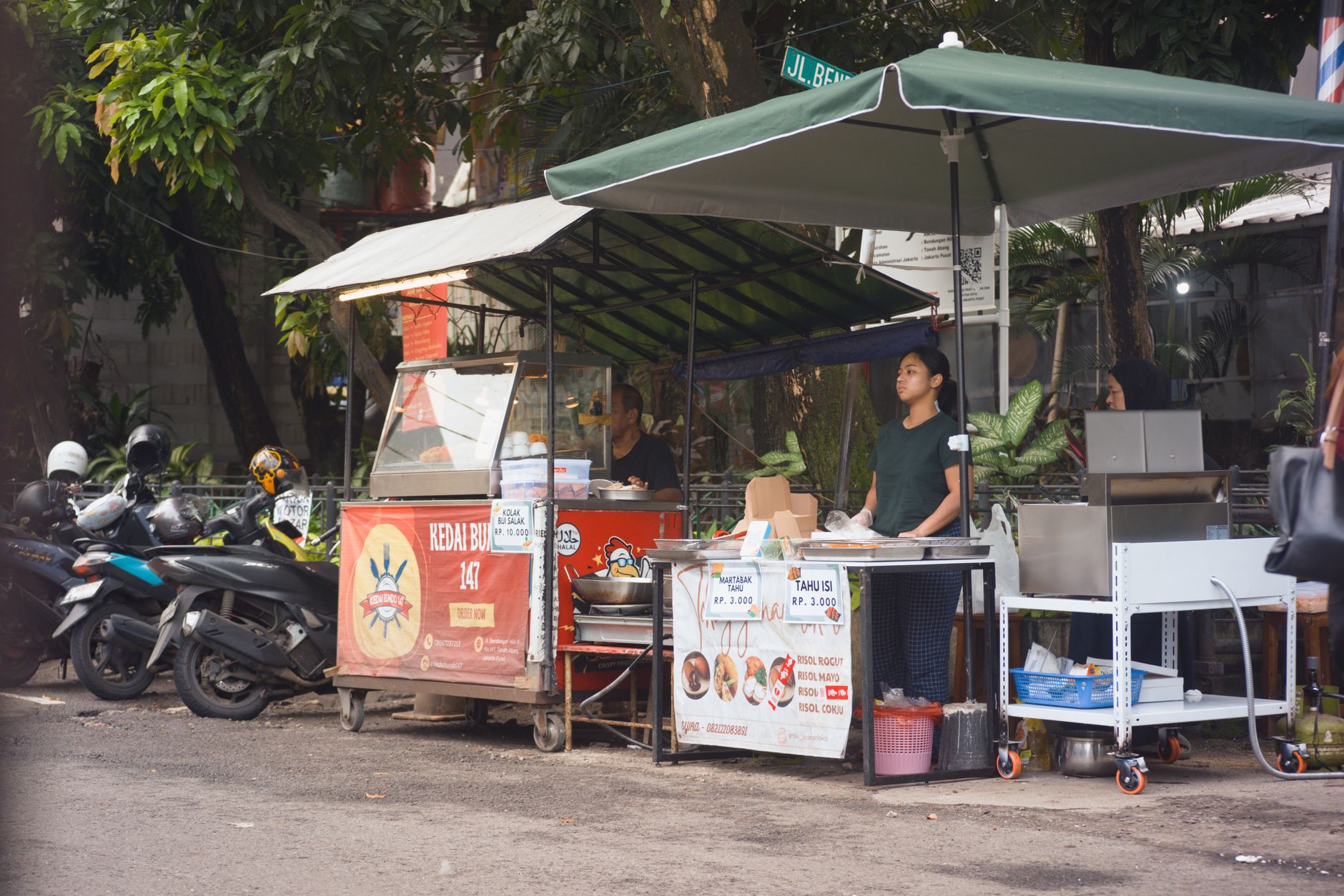
| The bule price at markets | Tanah Abang, Pasar Baru, street stalls | 50–200% markup | Ask “berapa?” before touching anything |
| Nightlife bill shock | Blok M, some Kota bars | Millions of rupiah | See a printed price list before you order |
| Fake booking / bank transfer | Instagram, WhatsApp, island homestays | The full trip cost | Book through a platform with buyer protection |
| Phone snatched from your hand | Kerbsides, traffic lights | The phone | Do not use a phone at the edge of a road |
Arrivals at Soekarno-Hatta: where most of it starts
The airport is the single highest-risk place in your Jakarta trip, not because it is dangerous but because you are tired, disoriented, holding luggage and carrying unfamiliar currency for the first time. Everyone working that pavement knows it.
The taxi tout
A man approaches inside the terminal or immediately outside the doors, offers a taxi, quotes a flat fare and walks you to a car in the car park. He is not a taxi driver, the car is not licensed, and the fare will be three to five times the metered rate. The quote may even sound reasonable — that is the point.
Legitimate taxis at CGK queue at marked ranks outside each terminal, with a dispatcher and a printed sign. Bluebird has its own counters. Grab and Gojek have designated pickup zones with numbered bays, signposted in English, and you match the plate number in the app before you get in. Anyone who approaches you is by definition not part of any of those systems. The single sentence that ends the conversation is “tidak, terima kasih” while continuing to walk. Do not stop, do not explain, do not let anyone touch your bag — a hand on your suitcase handle is the oldest way of turning a “no” into a negotiation.
The alternatives are all covered properly in our airport to Jakarta city transfer guide, including the airport train, which runs to BNI City in about 40 to 50 minutes for roughly 70,000 to 90,000 and sidesteps the whole question.
The fake Bluebird
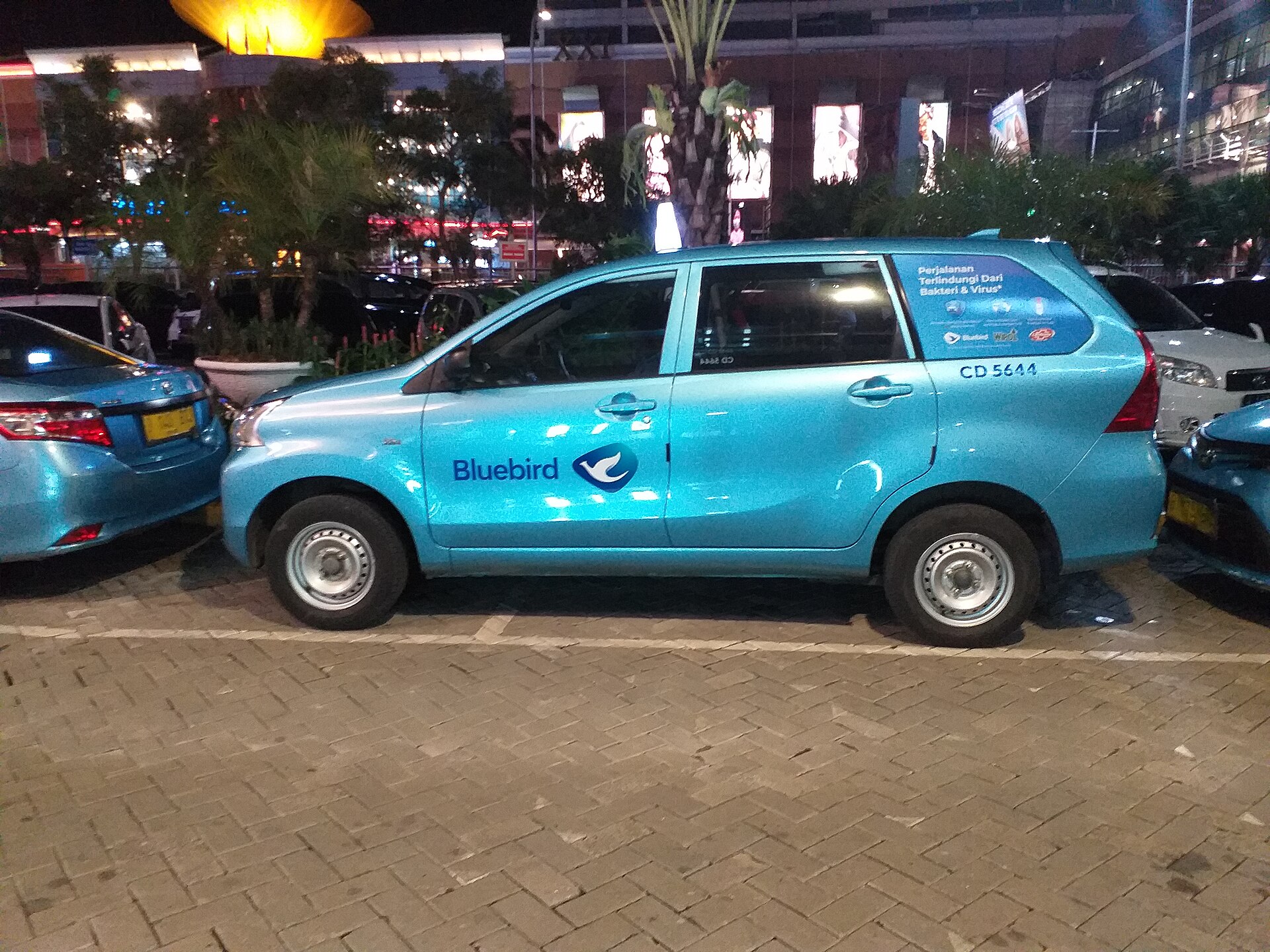
Bluebird is the taxi company everyone tells you to use, which is precisely why other operators paint their cars a very similar pale blue. The imitations are not always illegal — some are simply rival firms in a similar colour — but the fare structure and the driving standards vary a great deal, and a few are outright chancers relying on the resemblance.
What to check, in about two seconds:
- The logo. A genuine Bluebird carries a stylised white bird beside the word “Bluebird”. Imitators use a different bird, a different font, or a word that reads similarly at a glance.
- The driver’s ID card, displayed on the dashboard or the seat back, with a photograph and a fleet number.
- The meter, which should be visible and should be switched on as you pull away.
The simplest defence is to book through the MyBluebird app or to order a Bluebird through Grab, which removes the identification problem entirely. Our Jakarta taxi guide goes through the fleet in detail.
The airport SIM card markup
SIM cards at airport arrivals kiosks are sold at a considerable premium over the same product in a mall or an official operator store, sometimes with a “registration fee” attached that does not exist. Registration is mandatory in Indonesia and is done by the vendor with your passport, but it is part of the sale, not an extra. If you need connectivity immediately, buy the smallest package at the airport and top up properly later, or use an eSIM bought before you fly. The Jakarta SIM card guide has the operator-by-operator version.
Taxis, bajaj and ride-hailing
The meter that is broken
You flag a taxi on the street, state your destination, and the driver says the meter is broken and offers a flat fare. Sometimes it genuinely is broken. Far more often it is not, and the flat fare is two to four times what the meter would show.
The response is a single Indonesian phrase: “Pakai argo, ya?” — use the meter, yes? Said pleasantly, it resolves most of these instantly. If the driver still refuses, get out and take the next one. Do not try to negotiate a better flat rate: once you are haggling, you have accepted his frame, and you cannot win a negotiation about a price you do not know. There is always another taxi in Jakarta.
A related move is the driver who accepts the meter and then adds a “toll fee” or “airport surcharge” at the end. Tolls on a genuine toll route are legitimately passed on and you will have seen the driver pay them; anything invoked at the destination that you did not watch happen is not.
The scenic route
Hard to prove and easy to prevent. Open Google Maps on your own phone at the start of the journey and leave it running. Drivers who can see you watching the route drive the route. This also protects you against the honest version of the same problem, which is a driver who genuinely does not know the way and will not say so, because admitting it would be a loss of face — a dynamic our Jakarta etiquette guide explains at length.
Bear in mind that Jakarta traffic makes route comparison genuinely difficult. A driver taking what looks like a detour may be avoiding a jam that would add forty minutes. Judge journeys in time rather than distance — a 15 km crossing of this city is fifteen minutes at 06:00 and ninety at 17:30, and neither figure means anything about honesty. Understanding Jakarta traffic is worth more than suspicion.
Bajaj: no meter, no argument later
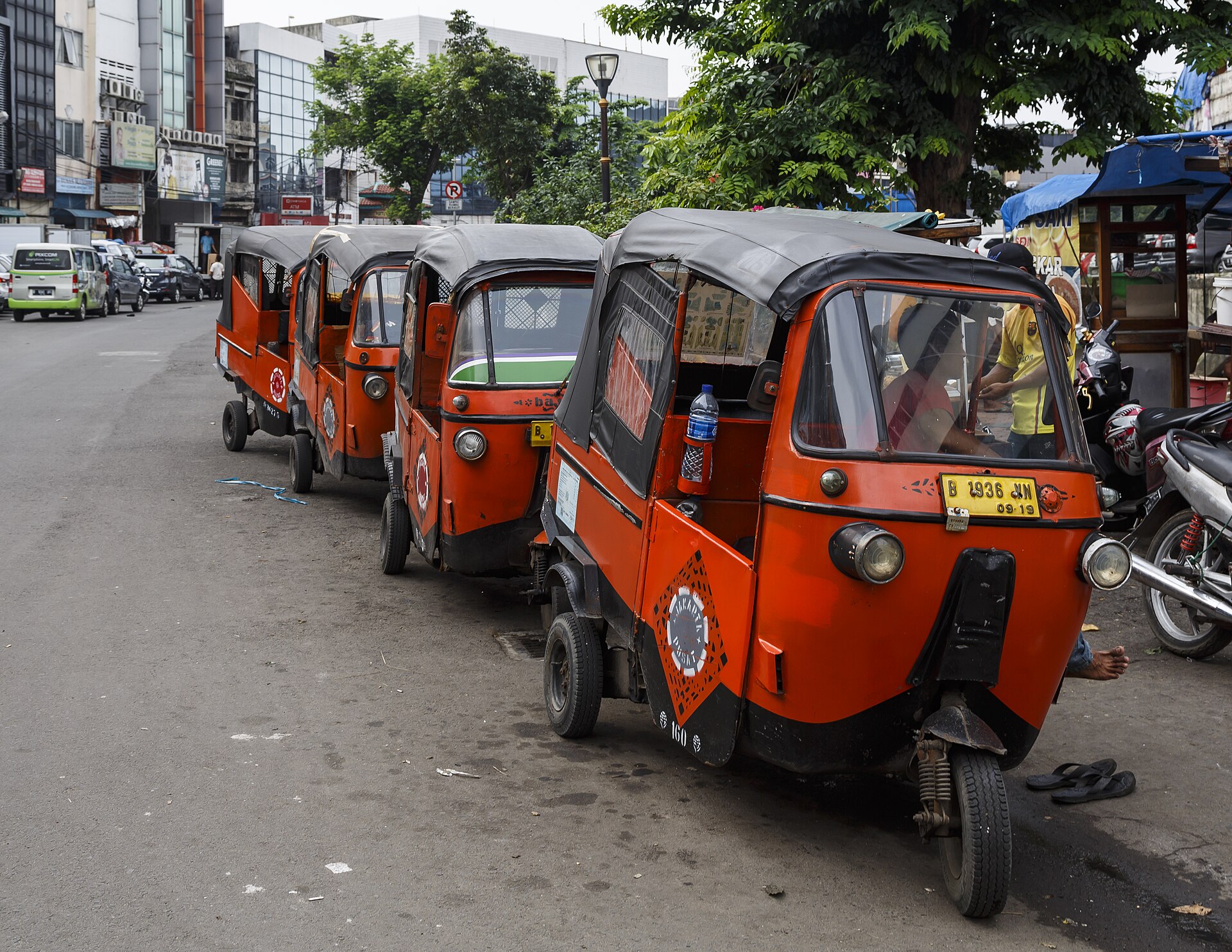
The orange three-wheelers are part of the fabric of the city and worth riding once for the sheer noise of it. They have no meters at all, so the fare is whatever you agree — and it must be agreed, out loud, in numbers, before you sit down. The scam is not the price; it is being told the price at the destination, when you have no leverage.
Ask your hotel front desk what a given hop should cost before you flag one down. Have the exact money ready. And be realistic: bajaj are not cheaper than a Gojek for most trips, so ride one because you want to, not to save money.
Cancel and pay cash
A Grab or Gojek driver messages asking you to cancel the booking and pay him directly in cash, usually at a slightly higher price. This is mostly fare-avoidance on his part rather than a scam against you, but it strips out everything the app gives you: the fixed price, the recorded route, the driver’s identity and any recourse if something goes wrong. Decline politely. If he then cancels on you, book again — the loss is two minutes. The Grab versus Gojek guide covers the app etiquette that keeps these interactions smooth.
Money: changers, machines and the zeros
Money changers
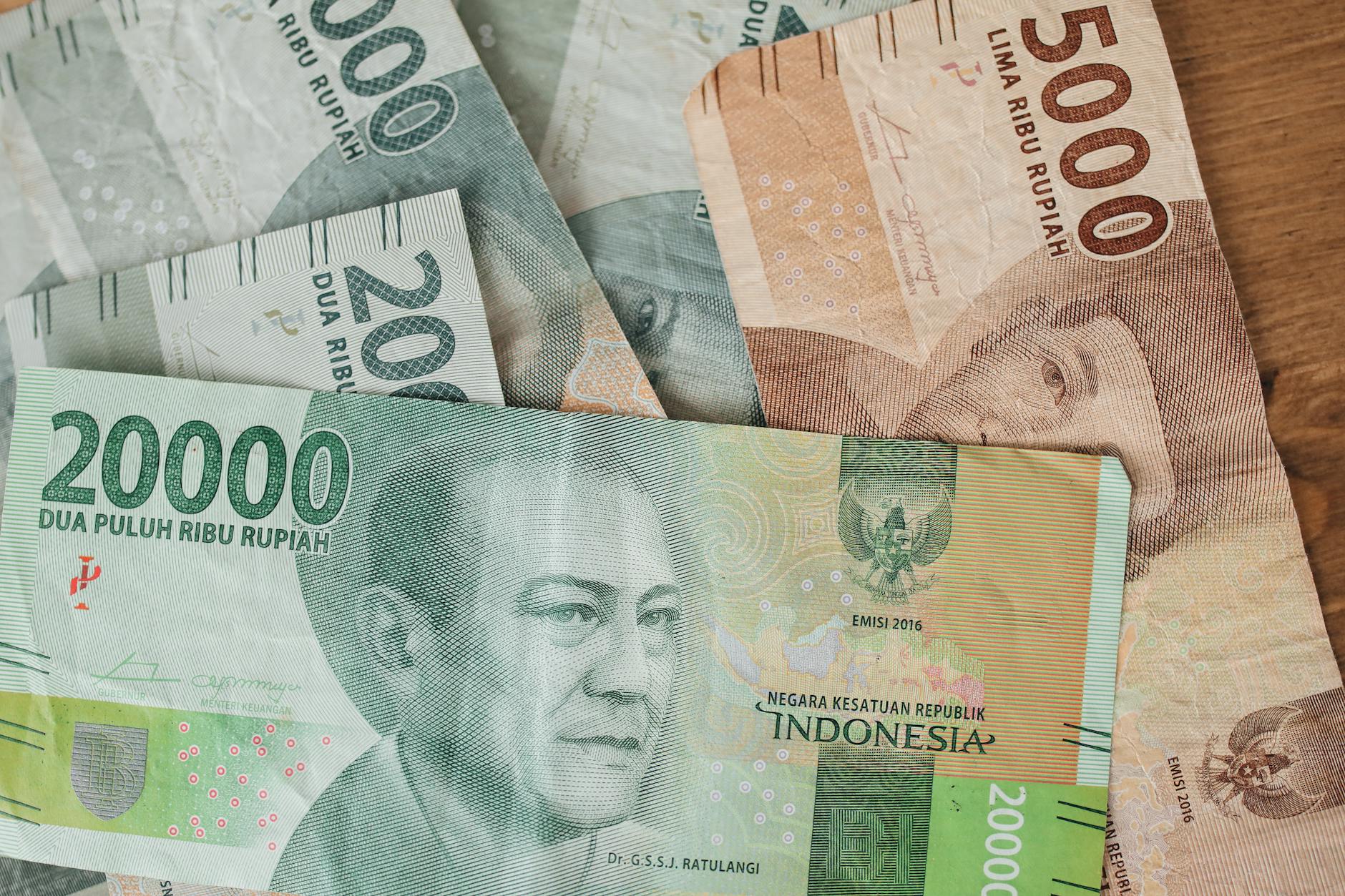
This is the most sophisticated scam operating in Jakarta and the one that catches the most experienced travellers, because it is a genuine skill rather than an opportunistic grab. The mechanics vary but the shape is constant: a kiosk advertises a rate noticeably better than the banks, you hand over your foreign currency, the cashier counts out a large stack of rupiah, you count it, it is correct, and then — because a form needs signing, or a note looks worn, or the phone rings — the stack goes back across the counter and returns lighter. The recount is where the money leaves.
Defences, in order of importance:
- Use an authorised money changer. These are licensed by Bank Indonesia, display the licence, and are mostly found inside malls and in dedicated shopfronts rather than in kiosks on the street. The well-known chains in the Sudirman and Melawai areas have long-standing reputations.
- Treat a spectacular rate as a warning. Nobody beats the market by five per cent out of generosity.
- Never hand the counted money back. Once it is in your hands, it stays there. If a form needs signing, sign it one-handed.
- Count it yourself, slowly, in front of them, before you leave the counter. Nobody in Indonesia will think this rude — locals do it too.
- Ask about commission before you commit. “Ada komisi?” The advertised rate should be the rate.
- Bring clean, new, unmarked notes. Torn, marked or older-series foreign banknotes are routinely refused or discounted, and that part is not a scam.
Our currency exchange guide for Jakarta names the areas to use and the rates to expect.
ATMs
Card skimming exists in Indonesia, and standalone ATMs in poorly lit street locations are where it happens. Use machines inside bank branches during opening hours, or inside malls where there is constant footfall and camera coverage. Cover the keypad. Check for anything loose around the card slot. Set up transaction alerts on your phone before you travel, and tell your bank you are coming so a legitimate withdrawal is not blocked.
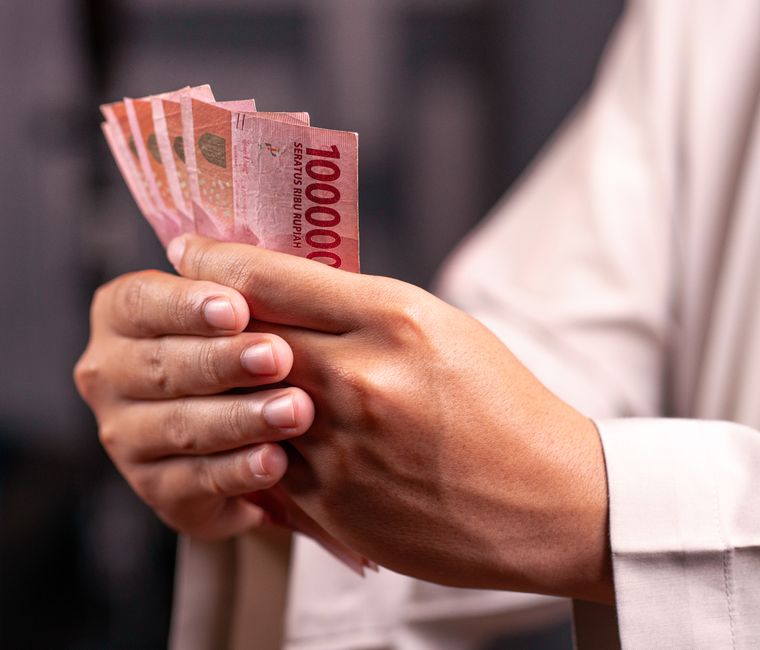
Note also that most Indonesian ATMs dispense 50,000 and 100,000 notes and that many small vendors cannot break a 100,000. Take some of your withdrawals to a convenience store or a mall to break down into smaller notes early.
Short-changing and the zeros
Rupiah amounts are long. A meal is 45,000, a taxi is 85,000, a hotel night is 1,200,000, and a tired brain at the end of a long day genuinely does miscount. Some short-changing is deliberate; a good deal of it is simply the arithmetic. Either way the fix is the same: count your change before you walk away, keep small notes accessible and large ones separate, and never pull out a full wallet in a market.
The 1,000 and 100,000 notes are not similar enough to confuse in daylight, but in a dim warung at eleven at night they can be. Count the zeros, not the colour.
Card machines and currency conversion
When a card machine offers to charge you in your home currency rather than rupiah, decline. That is dynamic currency conversion, it applies a poor exchange rate plus a margin, and it is entirely legal — which is why it is more expensive than anything else on this page. Always pay in IDR and let your own bank do the conversion.
Keep an eye on your card at all times in restaurants and bars. In Indonesia the machine is normally brought to your table, so a card disappearing to a back room is worth questioning.
Approaches on the street
“It’s closed today”
You are walking towards Monas, the National Museum or Kota Tua and a friendly, well-dressed, excellent-English-speaking man tells you it is closed today — a public holiday, a ceremony, maintenance. He happens to know somewhere much better, and can arrange transport. What follows is a batik gallery, a gem shop or an “art exhibition” where he collects a commission on whatever you buy.
This is a classic Indonesian scam that is far more common in Yogyakarta and Bali than in Jakarta, but it does surface here around the main sights. The counter-move is simply to keep walking to the gate and look for yourself. Monas is open Tuesday to Sunday, 08:00 to 16:00, and closed on Mondays — check the actual opening hours in advance and you cannot be told otherwise. Our Jakarta landmarks guide lists the real hours for the major sites.
The over-friendly stranger and the card game
This one is worth taking seriously because the losses are large. The approach is warm and slow: someone strikes up a conversation in a park, near a hotel or in a mall, mentions that a relative is about to study or work in your country, and invites you home to meet them. At the house there is food, hospitality and eventually a card game “for fun”. You win at first. Then the stakes rise, and you lose a great deal of money in a room full of people you do not know.
Indonesians are genuinely, unusually hospitable, and invitations to a home are often completely sincere — which is exactly what makes this work. The line to hold is simple and costs you almost nothing: accept coffee in a public place, accept a conversation, accept a WhatsApp number, and do not go to a private address with someone you met an hour ago. If a card game or any kind of wager appears, leave immediately and without explanation.
The self-appointed guide
At Kota Tua, Monas and the larger museums, someone attaches himself to you, delivers some genuinely interesting commentary, and then names a substantial fee at the end. Occasionally the fee is preceded by an unpleasant scene.
The fix is to establish the terms in the first thirty seconds. If someone starts guiding you, ask straight away: “Berapa?” — how much? Either you agree a price and enjoy the tour, or you say “tidak, terima kasih” and walk. What you must not do is accept twenty minutes of unpriced service and then argue about it. Official guides at Istiqlal are volunteers and genuinely free, though a donation is customary; official museum guides have identification.
The distraction pickpocket
Something is spilled on you, a wallet appears on the pavement in front of you, a group of children surrounds you, someone bumps you hard on a crowded TransJakarta bus. The distraction is the operation. Whatever happens, your first instinct should be to put a hand on your own valuables rather than to look at the thing you are being shown.
Crowded corridors, busway platforms at rush hour, Tanah Abang on a Saturday and the pavement outside Kota station are the places where this is worth thinking about. Everywhere else in Jakarta, the risk is low.
Shopping and markets

The bule price
In markets and at street stalls without displayed prices, foreigners are frequently quoted more than locals. This is less a scam than an opening bid in a negotiation you are expected to join, and it happens to out-of-town Indonesians too. It becomes a problem only when you pay the opening bid.
Ask “berapa?” before you pick anything up, because handling an item shifts the balance. Assume the first number is somewhere between 50 and 200 per cent above the settling price. Counter at roughly half, settle in the middle, and stay cheerful throughout — a Jakarta market negotiation is a social exchange, not a confrontation, and vendors respond to good humour far more than to hard bargaining. Walking away is entirely acceptable and often produces the real price before you reach the end of the aisle.
Note that this applies only where prices are not marked. Malls, supermarkets, chains and restaurants are fixed-price and haggling there is simply awkward. Our traditional markets guide and the Tanah Abang guide cover the district-by-district reality.
Gems, batik and “factory prices”
If someone offers to take you to a batik “factory outlet”, a gem workshop or a government-sponsored craft exhibition closing tomorrow, the prices there will be several times retail and a commission will be paid to whoever brought you. Certificates of authenticity supplied on the spot mean nothing. Nobody selling genuinely undervalued gemstones needs to recruit customers on the pavement.
Buy batik at Sarinah, Pasar Baru, Thamrin City or a named boutique, where prices are displayed and the provenance is real. Our guide to buying batik in Jakarta is the shortcut.
Counterfeit goods
Fake watches, bags, trainers and electronics are openly sold in several Jakarta markets. Nobody is deceiving you about what these are, and buying them is your own decision — but two things are worth knowing. Counterfeit electronics genuinely do fail, sometimes dangerously in the case of chargers and battery packs. And bringing counterfeit goods home can attract customs seizure and, in some countries, a fine.
Nightlife: where the real money goes
The bill you did not agree to
Jakarta’s mainstream bar and club scene — the rooftops in SCBD, the venues in Kemang and Senopati — is well run, priced on a menu, and no more expensive than any other Asian capital. The problem is confined to a specific type of venue: hostess bars and small karaoke lounges, particularly in parts of Blok M and Kota, where drinks for you and for anyone who joins your table go onto a bill you have not seen, at prices nobody quoted.
The rule that solves this completely is to see a printed price list before you order anything, including for anyone else at the table. Somewhere that will not show you a menu is telling you something. Pay as you go rather than running a tab, keep every receipt, and be aware that arguing about an inflated bill at two in the morning in a venue with its own security staff is a losing position — which is why the prevention matters more here than anywhere else in this guide.
Our nightlife guide and the rooftop bars guide stick to venues where this is a non-issue.
Drink spiking and methanol
Two separate risks, both real, both preventable by the same habits. Watch your drink being poured, keep it with you, and do not accept an opened drink from a stranger. Separately, avoid unbranded spirits, “free” cocktails and suspiciously cheap arak anywhere in Indonesia: methanol poisoning from adulterated spirits kills and blinds people every year, including tourists. Branded product from a licensed venue, or nothing.
Bookings: the biggest losses of all
Island homestays and boat trips
The Thousand Islands run largely on homestays and small operators, many of whom take bookings by WhatsApp and ask for a bank transfer deposit. Most are entirely legitimate family businesses. A minority are not, and a bank transfer to an Indonesian account is effectively unrecoverable.
Book through a platform that holds your money until you arrive, or through your hotel, or pay a deposit small enough to lose. Check that the operator has a trading history you can actually see — reviews on multiple platforms, a phone number that answers, a physical address. Our Thousand Islands guide explains how the boats and the piers actually work, which makes an implausible offer easier to spot.
Instagram tour operators
A slick Instagram account with a good feed, a WhatsApp number and a request for full payment up front is the single most efficient way to lose real money in Indonesia. Photographs are free to steal. Insist on a booking platform, a card payment or payment on the day. If an operator will accept only a bank transfer for the full amount, that is your answer.
Accommodation that does not exist
Book hotels through established platforms rather than direct-message offers, and be wary of a listing whose price is far below comparable properties in the same area. Our guide to where to stay in Jakarta gives you the price baselines that make an outlier obvious.
Fake authority, and the real thing
Someone in plain clothes or partial uniform stops you, claims to be police or immigration, asks to inspect your passport or wallet, and finds a problem that can be resolved with an on-the-spot payment.
Genuine Indonesian police wear a full uniform with a name tag and can produce identification. You are entitled to ask for it, and to say you would rather resolve any matter at the police station — a real officer will accept that and an impostor will lose interest immediately. Never hand over your wallet for inspection. Carry a photocopy or a phone photograph of your passport for day-to-day identification and leave the passport itself in the hotel safe.
This is uncommon in Jakarta and should not colour how you feel about the police here, who are generally helpful to foreign visitors. But knowing the script in advance is what makes it easy to follow calmly.
Snatch theft, which is not a scam but costs more
The most common way visitors actually lose something valuable in Jakarta involves no deception at all: a phone taken from an outstretched hand by someone on a passing motorbike. It takes under two seconds and there is no recovering from it.
The habits that prevent it:
- Do not use your phone standing at the edge of a road, at a traffic light, or through a car window. Step back from the kerb, or into a shop doorway.
- Carry a bag on the side away from traffic, strap across the body.
- Do not wear an expensive watch or visible jewellery on the street. Nobody in Jakarta cares what watch you have.
- At an ATM, put the cash away before you turn round.
- Keep one card and a small amount of cash in a separate pocket from everything else, so a single loss is not a total loss.
Broader safety context — areas, night-time, solo travel, flooding — is in is Jakarta safe.
If it happens anyway
Most scam losses in Jakarta are small enough that the practical answer is to write them off and adjust. For anything larger:
- Cards. Freeze them in your banking app immediately — this is faster than any phone call — then report the fraud.
- A police report. Required for almost any travel insurance claim. Go to the nearest Polsek or Polres station; larger stations in central Jakarta have officers who speak English, and your hotel can call ahead or send someone with you.
- Insurance. Notify your insurer within their stated window, which is often 24 or 48 hours, and keep every receipt and reference number. See our Jakarta travel insurance guide.
- A stolen passport. Report to police, then contact your embassy — most are in Central and South Jakarta. This is the one loss that genuinely disrupts a trip, which is why the passport belongs in the safe.
- A dispute with a driver or a venue. Stay calm and stay in public. Raising your voice in Indonesia loses you the room instantly, and a hotel manager or a mall security desk is a far more effective ally than an argument in the street.
Ten habits that make you a hard target
- Book transport through an app, not from a person who approaches you.
- Agree every unmetered price out loud, in numbers, before the service starts.
- Never hand counted money back across a counter.
- Use ATMs inside banks and malls, never on the street.
- Always pay in rupiah, never in your home currency.
- Carry a photocopy of your passport and leave the original in the safe.
- Keep your phone out of sight at the kerb.
- Learn “berapa?” and “tidak, terima kasih” on day one.
- Never go to a private address with someone you met that day.
- Read the bill before you order, not after you drink.
Do all ten and the realistic worst case in Jakarta is that you pay a bit over the odds for a sarong. The Jakarta travel tips guide is the hub for the rest of the practical picture.
Frequently asked questions
Is Jakarta full of scams?
No, and noticeably less so than the region’s big tourist cities. Jakarta’s economy runs on business rather than tourism, so the industrial-scale tourist scams found in Bali and Bangkok have never had a market here. What exists is opportunistic overcharging — taxis, markets, money changers — and it is easy to sidestep.
Are taxis in Jakarta safe?
Yes, provided you use a metered taxi from a reputable fleet or book through an app. Bluebird is the name everyone gives, and ordering through the MyBluebird app or through Grab removes any question about whether the car you are getting into is genuine. Street-hailed taxis are fine too — just insist on the meter.
Should I use Grab or Gojek instead of taxis?
For most journeys, yes. The price is fixed before you book, the route is recorded, the driver is identified, and there is nothing to negotiate. Taxis still win for the airport rank and for the occasions when the app cannot find a car.
Where is the safest place to change money in Jakarta?
An authorised money changer inside a mall, or one of the long-established changer shopfronts in the Sudirman or Melawai areas. Avoid street kiosks advertising rates well above the market, count your money in your own hands before you leave the counter, and never hand it back for a recount.
Do people overcharge foreigners in Jakarta?
In unmarked-price settings — street stalls, markets, bajaj, some warungs — the first quote to a foreigner is often higher. It is an opening bid rather than a fixed price. Ask “berapa?” before touching anything, counter cheerfully, and accept that the gap is usually smaller than the effort of arguing about it. Everywhere with a price tag, the price is the price.
Is it safe to eat street food in Jakarta?
Yes, and it is one of the best things about the city. This is a hygiene question rather than a scam question: choose stalls with visible turnover, food cooked in front of you and a queue of locals. Our street food guide and the health precautions guide cover it properly.
What should I do if a taxi driver refuses to use the meter?
Get out and take another one. Do not negotiate a flat fare, because you cannot bargain sensibly over a price you do not know. Jakarta has an effectively unlimited supply of taxis and the next one will start the meter without being asked.
Is it safe for solo female travellers in Jakarta?
Broadly yes, and the scams on this page are not gendered. The practical additions are the women-only carriages on the KRL and the pink sections on TransJakarta, both worth using at rush hour, and booking rides through an app so a journey is always tracked. Dress conservatively away from the malls and the southern nightlife strips and unwanted attention drops sharply.
Can I trust people who approach me on the street in Jakarta?
Usually, yes — most of the time someone approaching a foreigner in Jakarta wants to practise English, take a selfie, or help you find something. That genuine warmth is what a small number of people exploit. The workable rule is that curiosity is fine, help is fine, coffee in a public place is fine, and going anywhere private is not.
Related Jakarta Guides
- Is Jakarta Safe? Honest Safety Advice for Visitors
- Jakarta Travel Tips: Everything to Know Before You Go
- Jakarta Etiquette & Customs
- The Jakarta Taxi Guide
- Grab vs Gojek in Jakarta
- Currency Exchange in Jakarta
- Airport to City Transfers
- Jakarta Travel Insurance
- Traditional Markets in Jakarta
- Jakarta Transport Costs
Photo Credits
Bluebird taxi in Jakarta: BluebirdTaxi by Tokyo Metro 6000 series, CC BY-SA 4.0, via Wikimedia Commons.
Bajaj auto-rickshaws in Glodok: Jakarta Indonesia Bajaj-in-Glodok-01 by CEphoto, Uwe Aranas, CC BY-SA 3.0, via Wikimedia Commons.