Every great city writes its history in stone, steel, and bronze, and Jakarta has written more of it than most visitors expect. Spread across 660 square kilometers, Indonesia’s capital is dotted with Jakarta landmarks that, read together, trace one of the more dramatic trajectories in Southeast Asia: from a 4th-century Sundanese kingdom, to the most important port of the Dutch East India Company, to a young republic insisting on its place in the world, and on to the restless city you land in today. The 15 must-see landmarks below are the structures locals actually point to when they explain who they are. Walk them in something like the right order and you are not just sightseeing — you are reading a nation’s autobiography, chapter by chapter.
I’ve put this list in the rough sequence I’d send a first-time friend, and it sits inside our wider things to do in Jakarta guide. A few of these are quick photo stops; others swallow a whole morning. Where a landmark opens onto a bigger subject — colonial history, religious life, the modern skyline — I’ve flagged the deeper read so you can follow the thread that interests you rather than wade through all of them at once.
1. National Monument (Monas) — The Symbol of Independent Indonesia
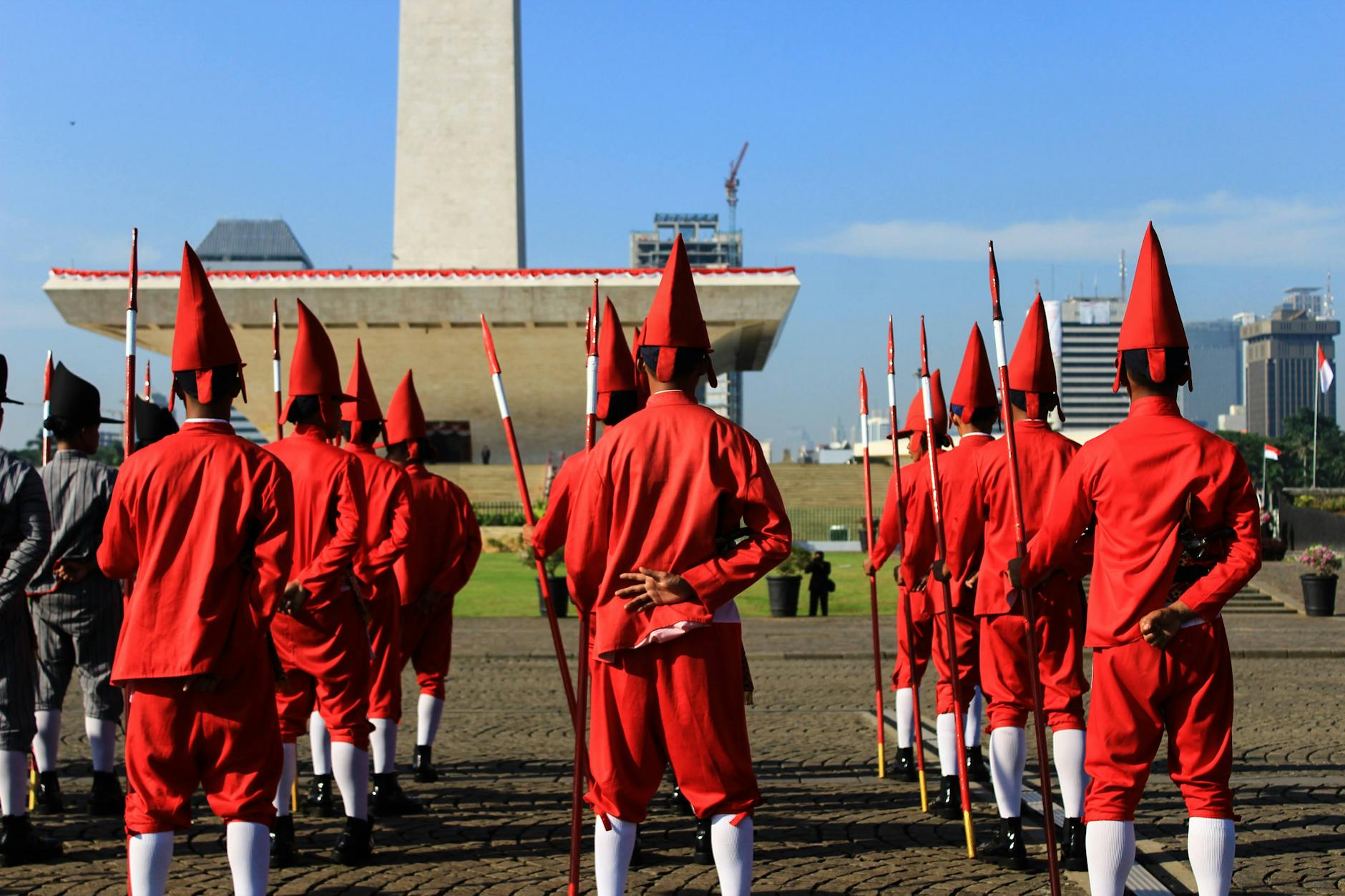
No structure speaks for the city more plainly than the National Monument, which every Indonesian schoolchild knows simply as Monas. The white marble obelisk rises 132 meters from the middle of Merdeka Square in Central Jakarta. President Sukarno commissioned it in 1961; it was finally finished under his successor Suharto in 1975, after fourteen years of stop-start construction. The design, by architects Friedrich Silaban and R.M. Soedarsono, is loaded with national symbolism. The rectangular base echoes a traditional Indonesian rice mortar (lesung) and pestle (alu), while the tall shaft stands for masculine creative force balanced against the feminine receptivity of the base — a Javanese cosmological idea you’ll meet again and again in the city’s older art.
Crowning the obelisk is a 14.5-meter bronze flame clad in 50 kilograms of pure gold leaf, 35 kilograms of it donated by an Aceh-born tycoon at the time of construction. The flame stands for Indonesia’s eternal independence struggle. Down in the base, the Independence Hall keeps the original handwritten text of the Proclamation of Independence in a gold-plated reliquary that opens with theatrical fanfare on the hour. The basement Diorama Museum runs 51 illuminated dioramas tracing Indonesian history from prehistory to the present, and it’s a fast, surprisingly good primer if the rest of this list is your first brush with the country’s past.
Take the lift to the observation platform at 115 meters for the best cheap city view going; the ticket is small and the panorama is huge. Around the obelisk, the 80-hectare Merdeka Square fills up with joggers at dawn, kite-flyers by mid-afternoon, and synchronized fountain shows on weekend evenings. Go early — both the heat and the lift queue build fast after nine. If you only see one entry on this whole list, make it this one; it pairs naturally with the culture and history museums clustered around the square.
2. Selamat Datang Monument — Jakarta’s Welcoming Statue
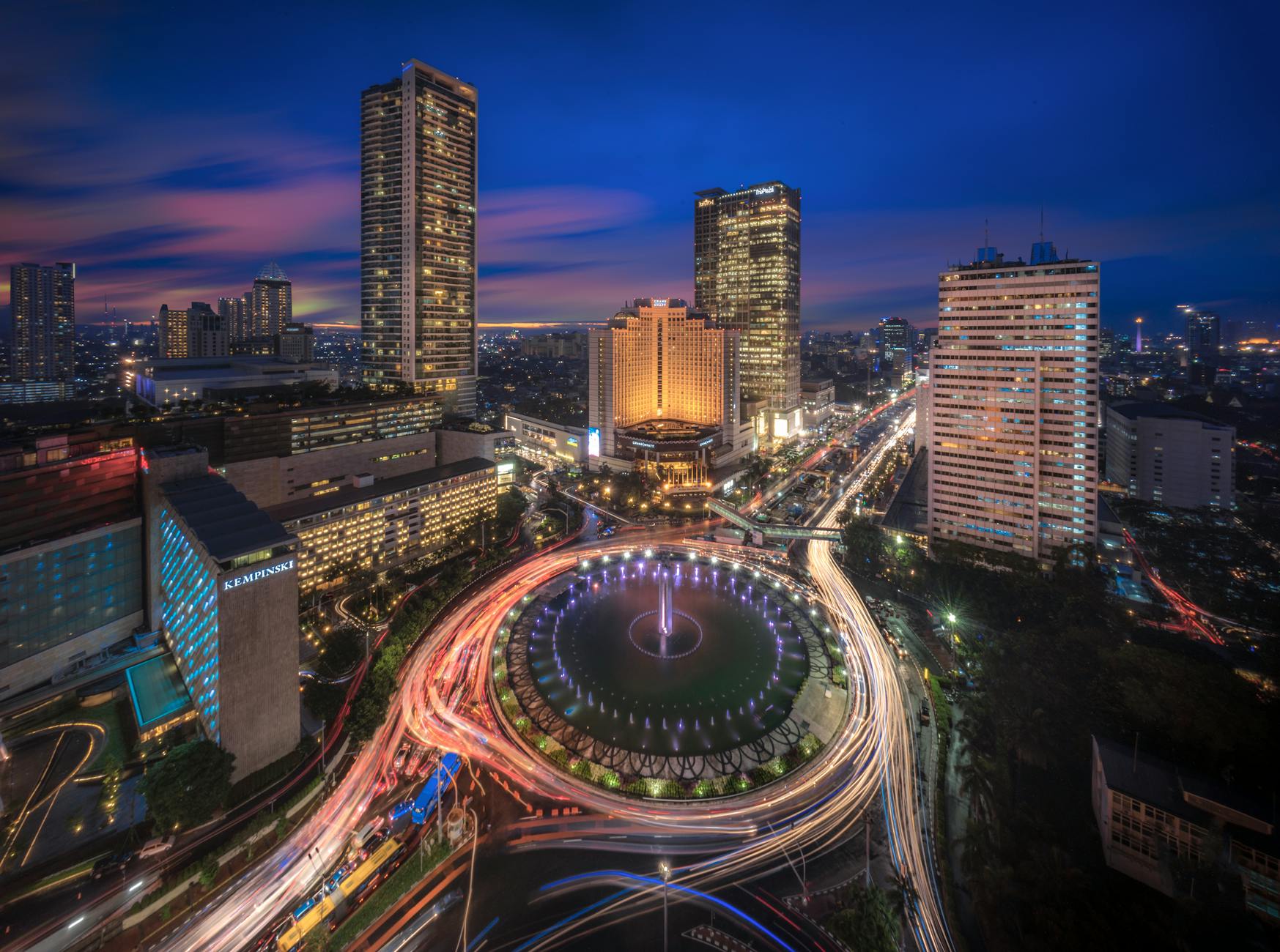
Two bronze figures — a young man and woman, arms raised in welcome — stand at the center of the Hotel Indonesia roundabout, the spot everyone just calls Bundaran HI. This is Jakarta’s most photographed civic landmark, and it earns it. Officially the Tugu Selamat Datang (“Welcome Monument”), it was unveiled in 1962 for the Asian Games, designed by Sukarno himself with sculptor Edhi Sunarso, and cast in bronze in Italy. It sits where Jalan Thamrin meets Jalan Sudirman — the city’s central business spine — and works as the symbolic gateway from the leafy old streets of Menteng into the modern downtown.
The roundabout fountains light up after dark, and the open plaza around the statue draws political rallies, marathons, and the world’s largest Sunday Car-Free Day, when the avenues fill with cyclists and food carts. Stand on the steps of the adjacent Grand Hyatt or Plaza Indonesia and you get the classic shot: the statue framed by towers. It’s also the northern anchor of Jakarta MRT Phase 1, so you can photograph the monument and be underground on the city’s newest transit line inside a 30-second walk — handy to know if you’re still working out how to get around Jakarta without a car.
3. Istiqlal Mosque — The Largest Mosque in Southeast Asia
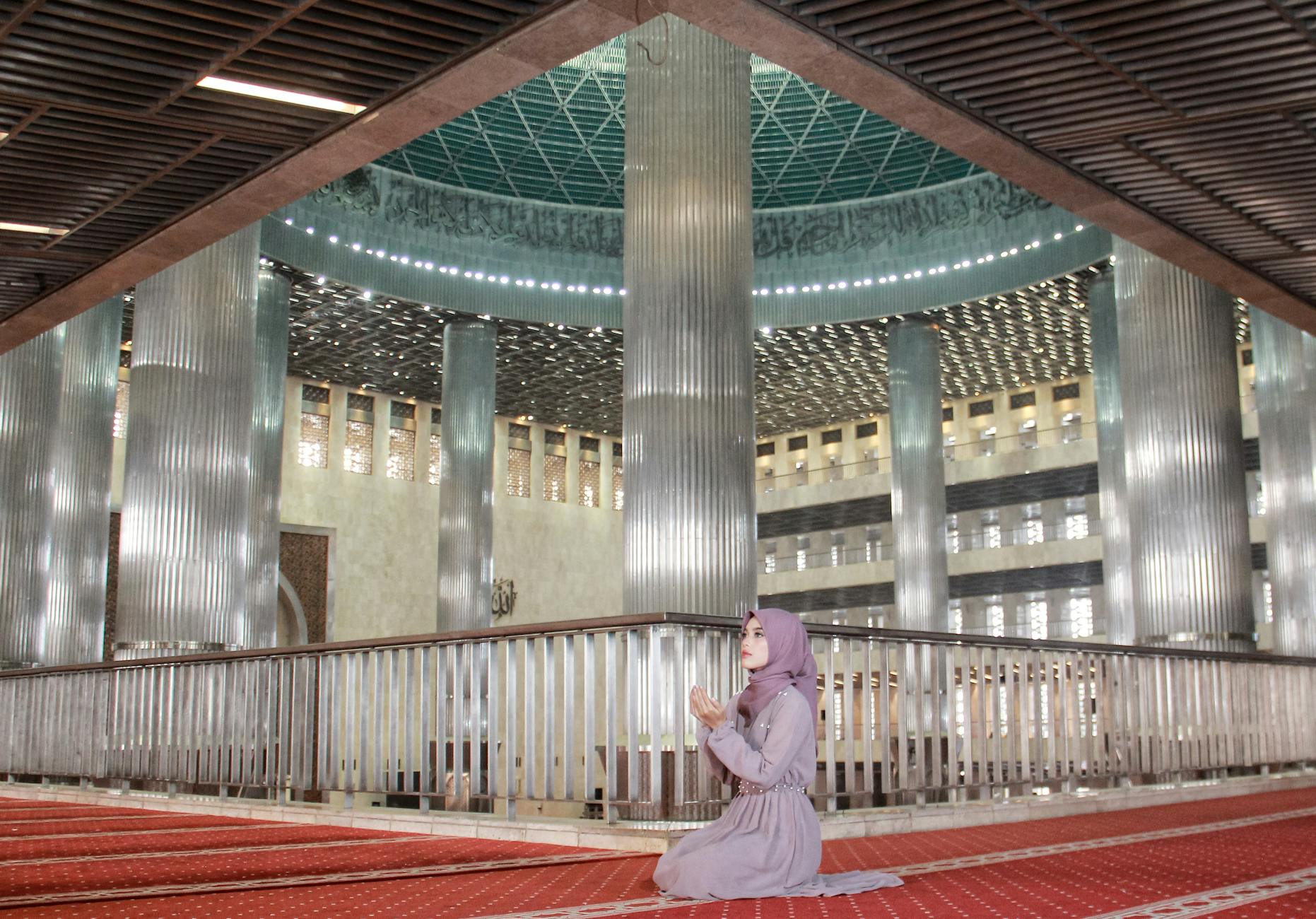
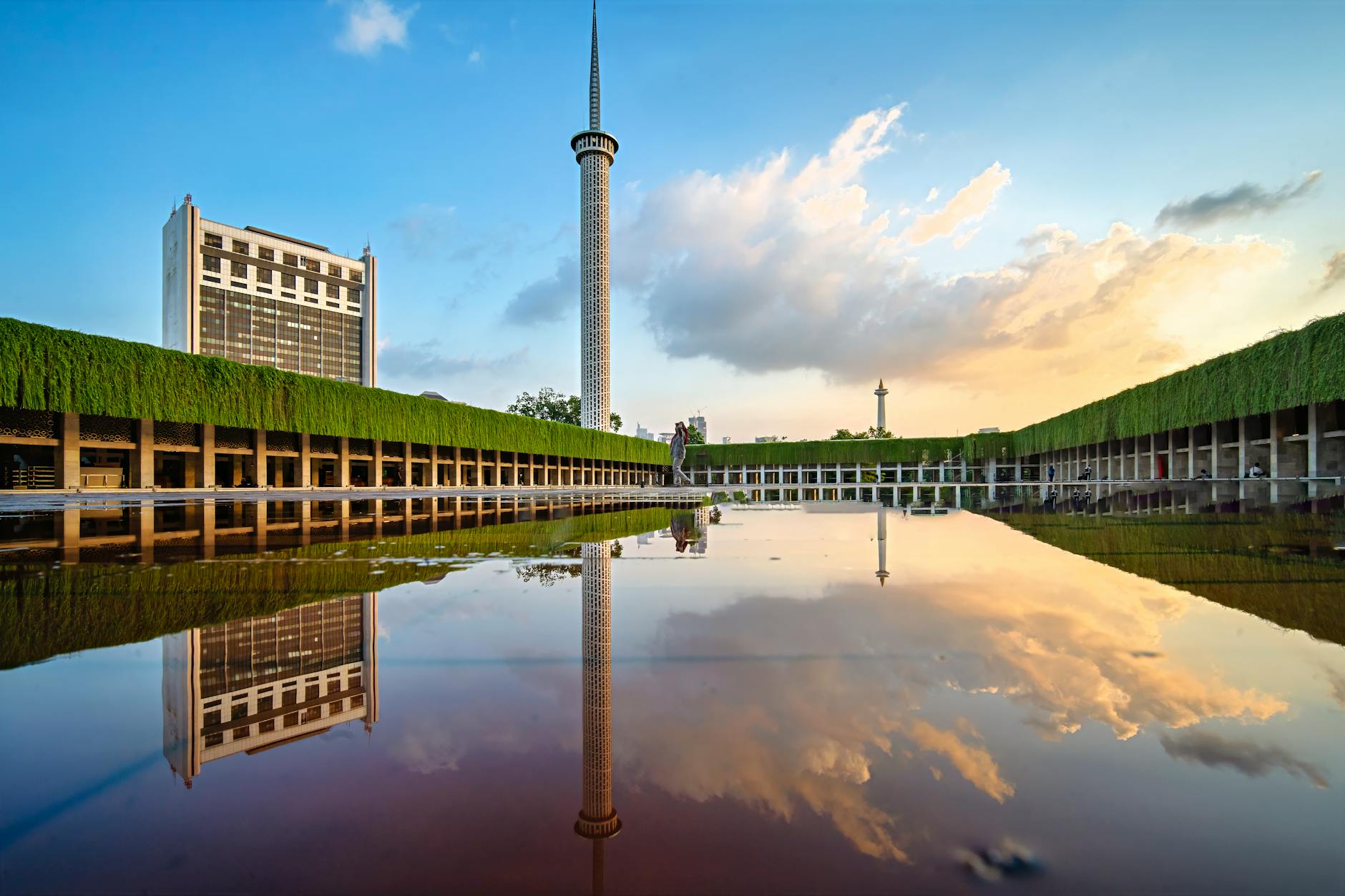
The Istiqlal Mosque was designed by the Christian Indonesian architect Frederich Silaban — the same man behind Monas — and opened in 1978 after seventeen years of building. It remains the largest mosque in Southeast Asia. Raised on land that once held Wilhelmina Park in colonial days, the complex covers nearly 10 hectares and holds 200,000 worshippers across its main prayer hall and surrounding plazas. The 45-meter central dome rests on 12 stout steel columns, a nod to the 12th day of Rabi’al-Awwal, the birthday of the Prophet Muhammad.
Scale is only half the story. What makes Istiqlal a defining landmark is the message Sukarno built into it. He deliberately handed the commission for the country’s largest mosque to a Christian architect, then placed it directly across the street from the Jakarta Cathedral — a permanent, in-stone statement of religious tolerance. A 2020 renovation by Andramatin added the Tunnel of Friendship that physically links mosque and cathedral underground, making the point about as literal as architecture can. Free 30-minute guided tours in English run daily; modest dress is required, and robes are loaned at the visitor desk. If the religious side of the city draws you in, our guide to the temples and mosques of Jakarta picks up the thread.
4. Jakarta Cathedral — Neo-Gothic Across the Plaza
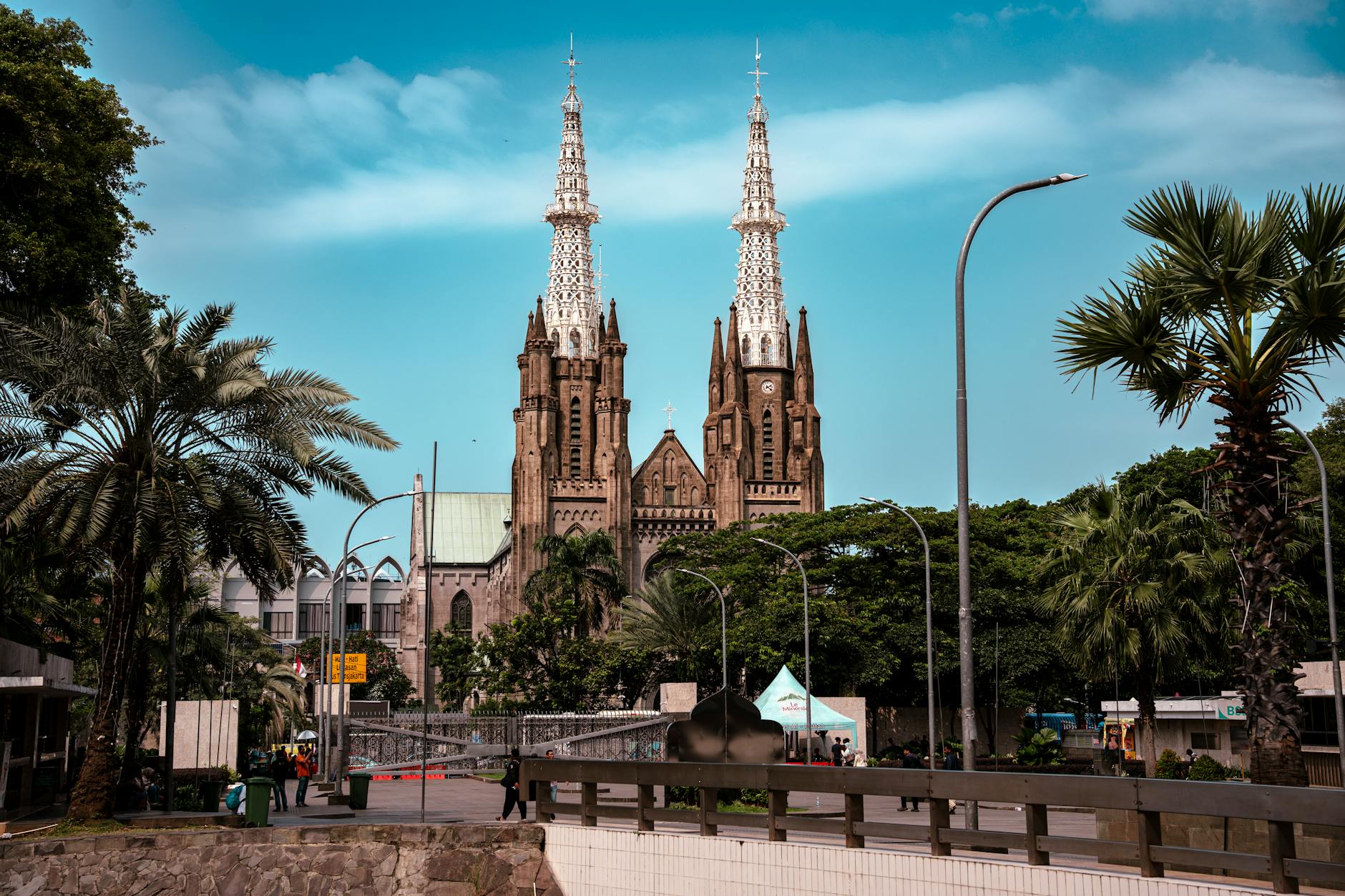
Cross the road from Istiqlal and you reach its deliberate counterpart. Officially the Cathedral of Our Lady of the Assumption, Jakarta Cathedral was consecrated in 1901 to replace an earlier wooden church that had collapsed in 1890. The Dutch architect Antonius Dijkmans designed it in Neo-Gothic style, and Marius Hulswit completed the work; its three iron spires climb 60 meters above Lapangan Banteng. Using imported European iron instead of stone let those spires reach higher than masonry would have allowed in tropical, soft-soiled Jakarta — a gutsy engineering call for its day.
Step inside and the nave runs long and high, lined with stained glass that mixes classical Catholic scenes with distinctly Indonesian saints and motifs, including frescoes worked through with batik patterns and tropical flora. The altar’s 17th-century pieta from Spain is one of the few things rescued from the original wooden cathedral. A small museum upstairs walks you through 500 years of Catholicism in the archipelago. With Istiqlal right across the street and the two congregations sharing parking lots on each other’s big holidays, the pair is the most vivid built expression of Pancasila, Indonesia’s founding principle of religious harmony — a side of the capital our overview of Jakarta’s museums and cultural sites explores in more depth.
5. Stadhuis — The Former City Hall of Batavia
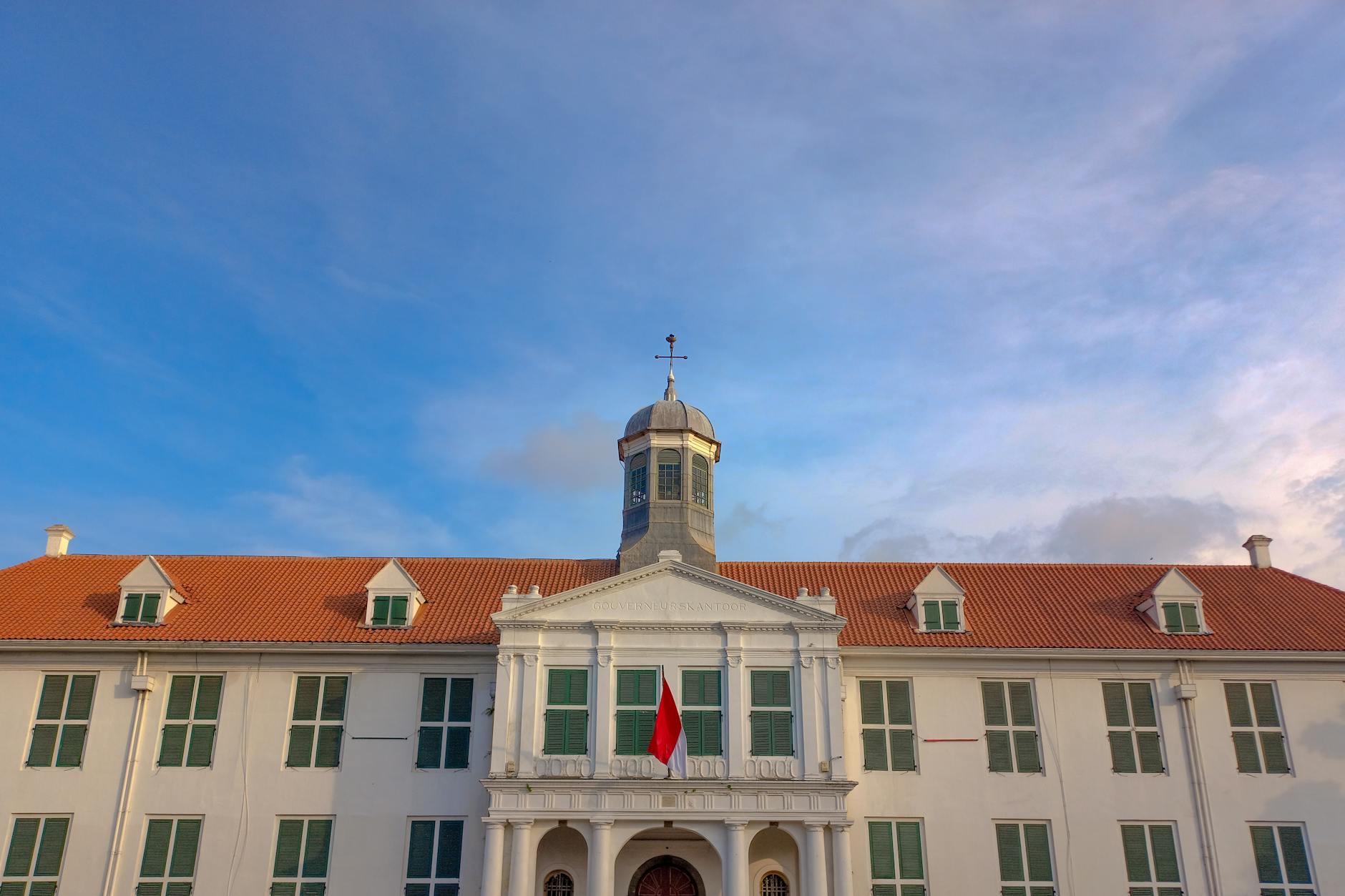
Built between 1707 and 1710 to replace a 1620 structure, the Stadhuis ran the Dutch East India Company’s most important colonial city for more than 200 years. It houses the Jakarta History Museum now, but honestly the building is the exhibit. Modeled on the Dam Palace in Amsterdam and wrapped around an interior courtyard, its three-story brick-and-stucco façade — shuttered windows, a bell-tower clock — holds the look of 17th-century Dutch civic architecture intact. Underneath, a run of dungeons once held political prisoners, among them the freedom fighter Pangeran Diponegoro and the leader of a major slave revolt; you can still go down on a guided tour, and the damp, low-ceilinged cells make the colonial period feel a good deal less picturesque.
The Stadhuis anchors Fatahillah Square at the heart of Kota Tua, ringed by other carefully kept colonial buildings. The square itself — rentable candy-colored bicycles, costumed photo-op performers, and a 17th-century Portuguese cannon called Si Jagur that some still touch for fertility — is one of the most photographed corners of the whole city. It’s also a natural base for the rest of the old town, including the warehouses and warung that fill the surrounding lanes.
6. Pancoran Statue (Patung Dirgantara) — Indonesia’s Aviation Pioneer
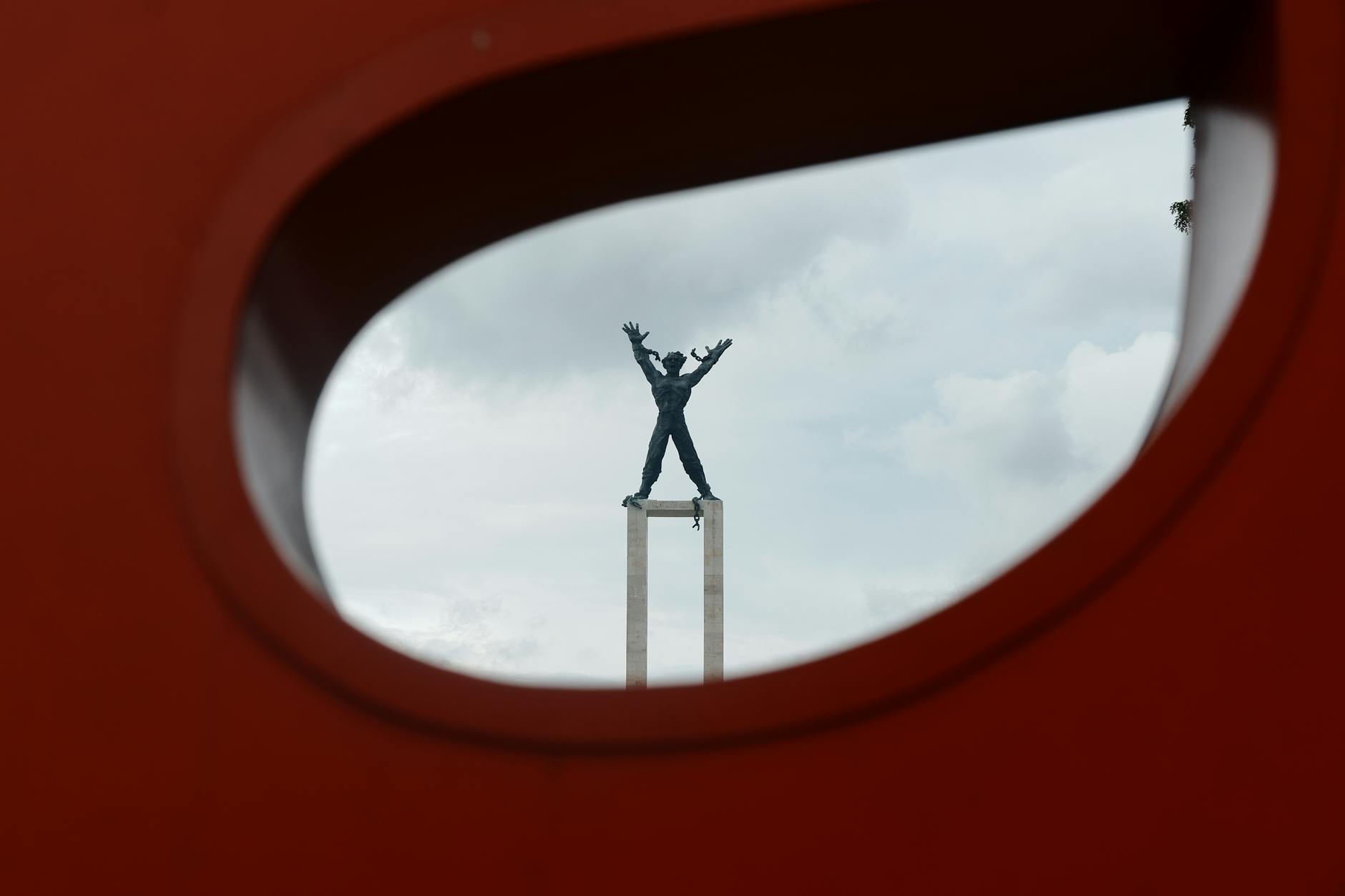
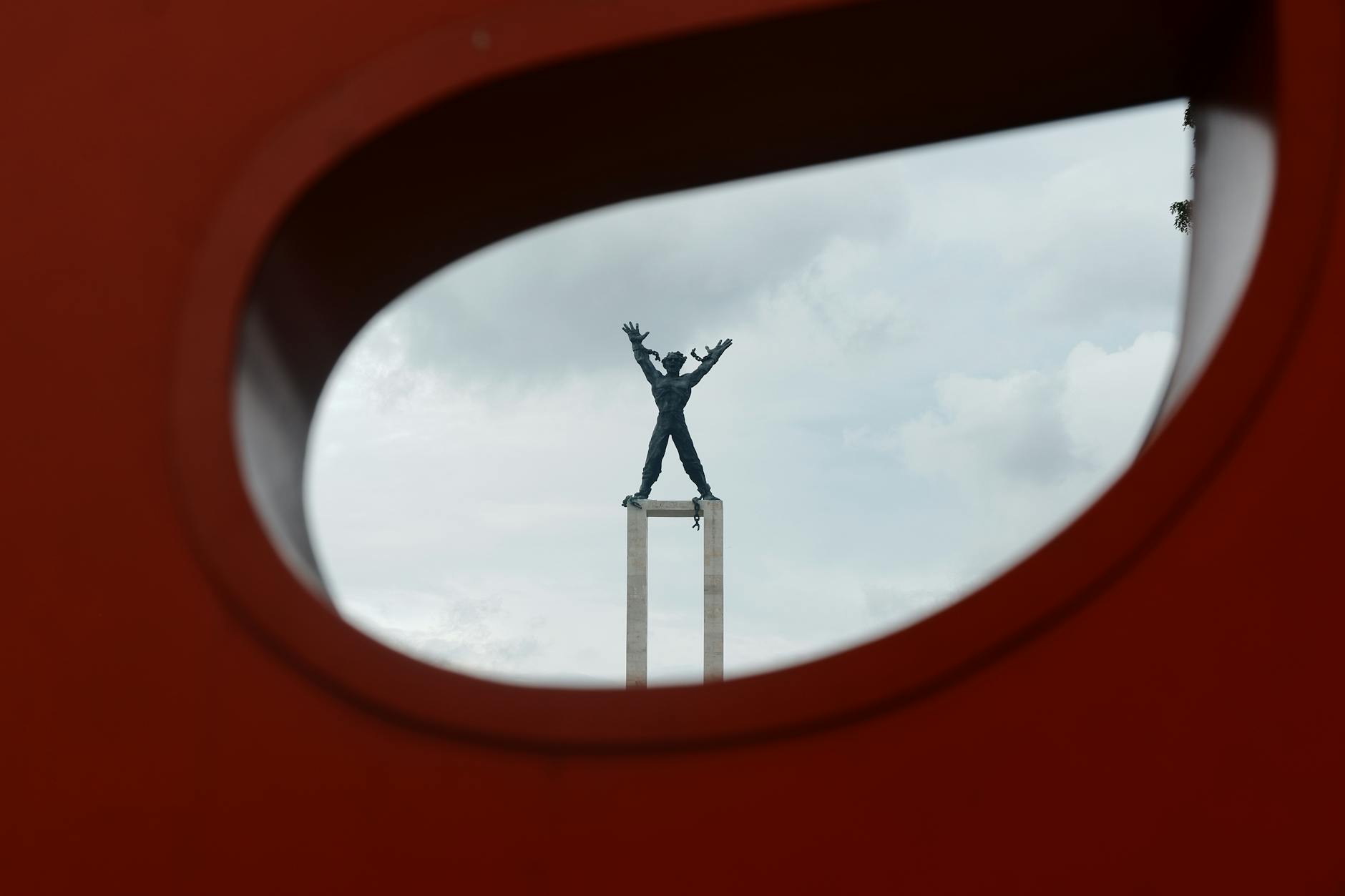
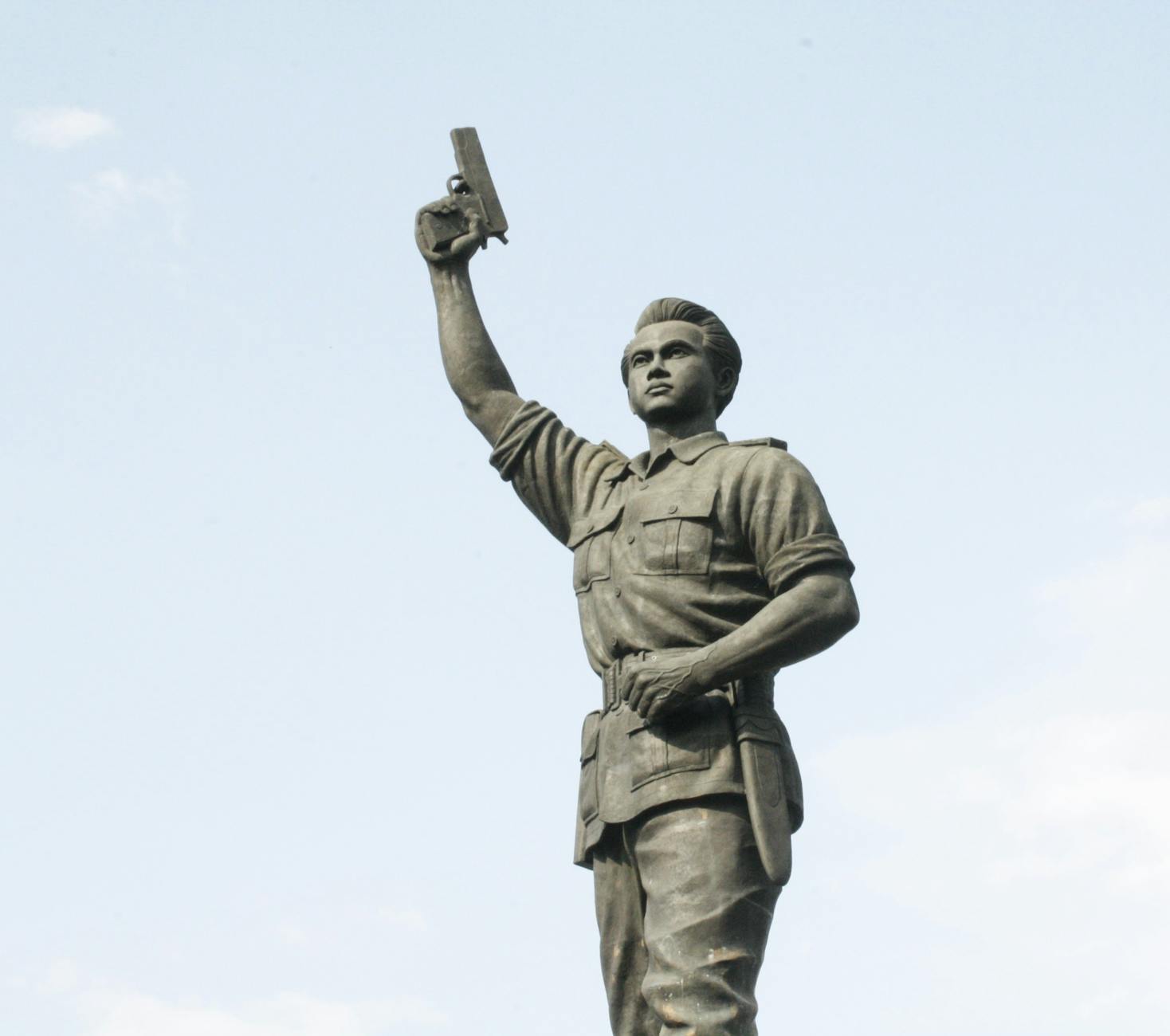
One of the most dramatic statues in the country, Patung Dirgantara (“Aerospace Statue”) — everyone calls it the Pancoran Statue — shows a muscular figure flinging an arm toward the sky, body pitched forward as if about to lift off the ground. Edhi Sunarso, the sculptor behind the Selamat Datang Monument, designed it, and it went up in 1965: an 11-meter bronze figure on a 27-meter pedestal at the Pancoran intersection in South Jakarta, once the gateway from Halim Airport into the center of town.
The gesture salutes Indonesia’s pioneer aviators, but Sukarno also meant it as a statement of national ambition, the country looking outward and upward. The well-worn story is that he covered part of the casting cost from his own pocket when government funds dried up. The best view is from the elevated MRT platform at Pancoran Station, or from the tangle of overpasses around it; either way it’s a beloved icon and a regular stop for anyone chasing Sukarno-era civic art. If that vein of the city appeals, several of these monuments turn up again in our look at the more unusual and offbeat things to do in Jakarta.
7. Arjuna Wijaya Chariot Statue — Mythology in Bronze
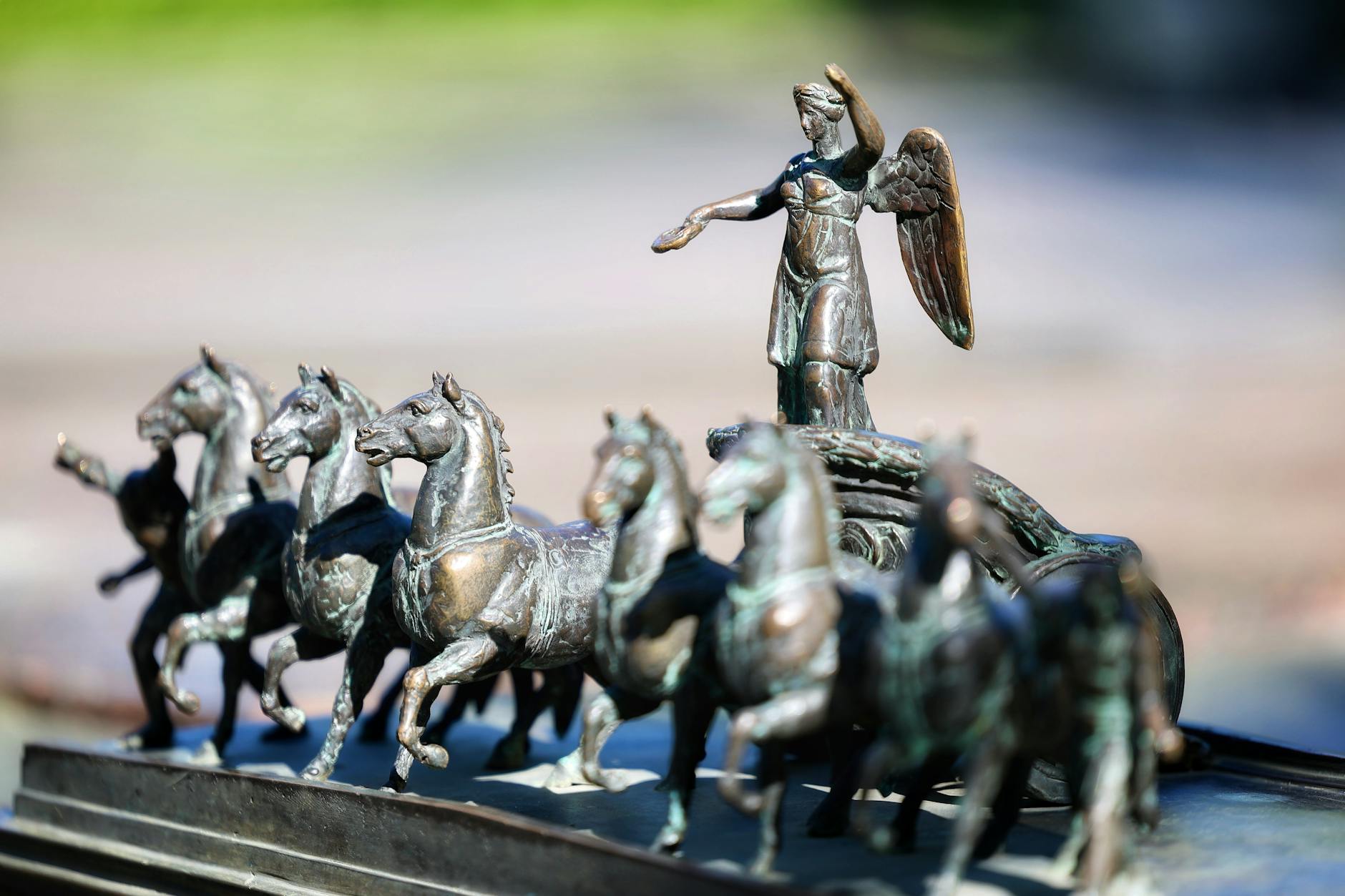
At the meeting of Jalan Merdeka Barat and Jalan Medan Merdeka, just south of Monas, the bronze Arjuna Wijaya Statue stops traffic with one of the most theatrical scenes in Indonesian public art. It shows the warrior-prince Arjuna in his chariot, pulled by eight rearing horses, with his charioteer Krishna at the reins — a famous moment from the Mahabharata as retold in Javanese wayang theater. The horses are carved with so much motion they look one breath away from tearing loose of the bronze.
Nyoman Nuarta — the sculptor also behind Bali’s colossal Garuda Wisnu Kencana — designed it, and it was unveiled in 1987 to celebrate Hindu-Buddhist heritage woven into modern Indonesian identity. The fountains around it switch on after dark. Because it’s a five-minute walk from Monas, it slots cleanly into a Central Jakarta morning, and it’s an easy add to any compact two-day Jakarta itinerary built around the Merdeka Square cluster.
8. Tugu Proklamasi — Where Indonesia Was Born
On the morning of August 17, 1945 — two days after Japan’s surrender closed the Pacific War — Sukarno stepped onto the front porch of his modest home at Jalan Pegangsaan Timur 56 and read out a two-sentence text proclaiming Indonesian independence. The original house was pulled down in 1960, but the spot now holds the Tugu Proklamasi (“Proclamation Monument”): a calm park where bronze statues of Sukarno and Vice President Mohammad Hatta face each other beside an open monument carrying the Proclamation’s wording in stone. A separate spire rises behind them, shaped to suggest the lightning-bolt instant the struggle was declared complete.
The site, now formally part of Menteng, is quiet and dignified — the kind of place where you slow down without being told to. It’s free to enter, an essential stop for anyone curious about how the country began, and it sits comfortably on our roundup of free things to do in Jakarta.
9. Independence Palace (Istana Merdeka) — The President’s Residence
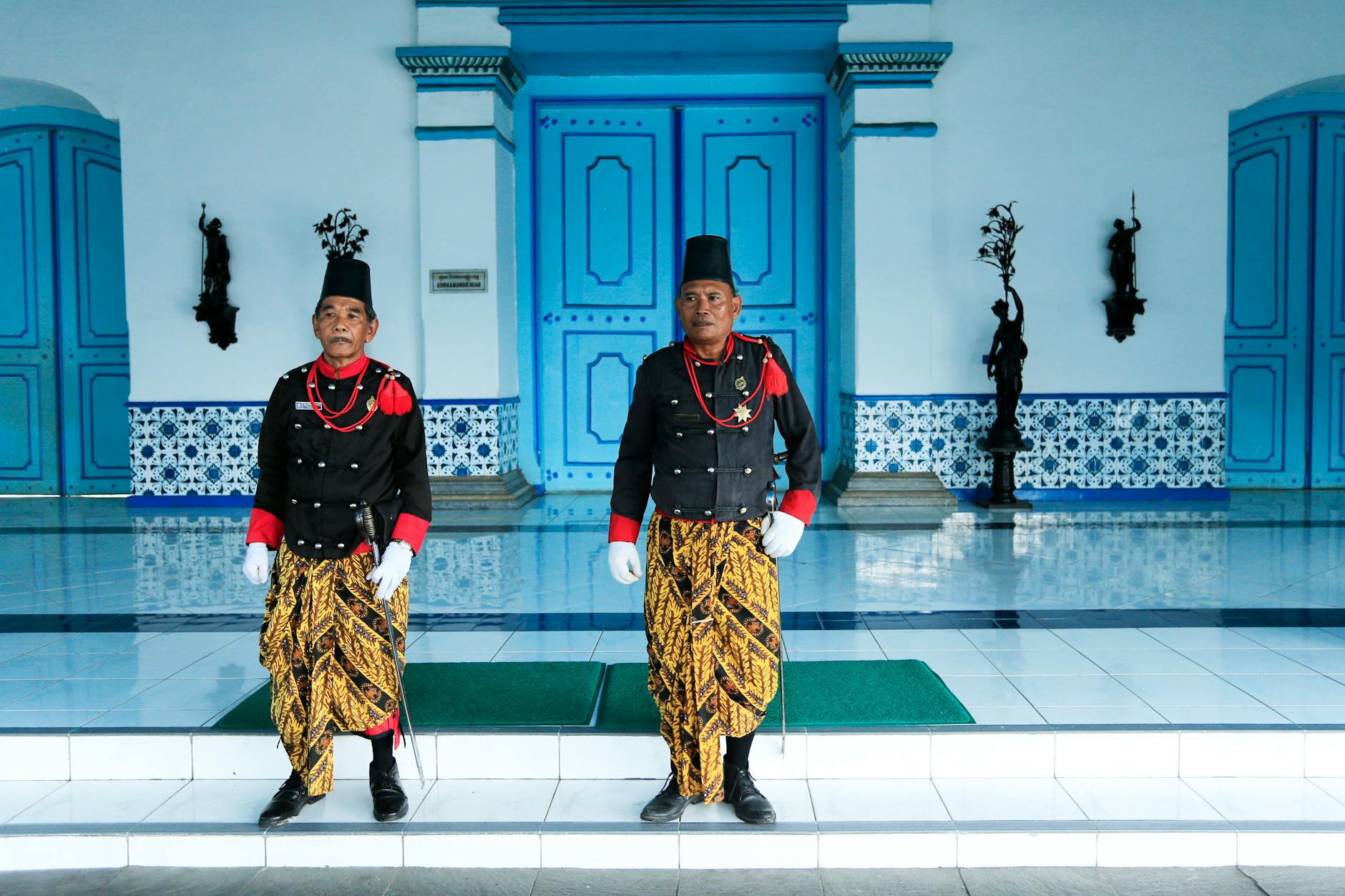
Just north of Merdeka Square, set back behind a long lawn and an elegant white iron fence, stands the Independence Palace — roughly Indonesia’s answer to the White House. It went up in 1873 as the residence of the Dutch East Indies governor-general, then was renamed Istana Merdeka (“Freedom Palace”) on December 27, 1949, the day the Dutch formally handed sovereignty to the new Republic of Indonesia in a ceremony held inside this very building. The Indonesian flag flew over the front lawn as a sovereign symbol for the first time that afternoon.
The interior stays closed except for the occasional state event, but you’re free to admire the palace from the surrounding sidewalks, and it’s worth timing a pass for the daily 5:00 PM changing of the guard, performed by the elite Pasukan Pengamanan Presiden. The adjacent Istana Negara (State Palace) and the larger Bogor Palace, 60 km south, round out the trio of presidential residences. The gardens and exterior look their best at sunset, so this is an easy late-afternoon bookend to a Central Jakarta day — and if you’re still deciding which area to stay in, basing yourself near Menteng or Thamrin puts most of these palace-and-monument stops within a short ride.
10. Menara Syahbandar — Jakarta’s Leaning Tower
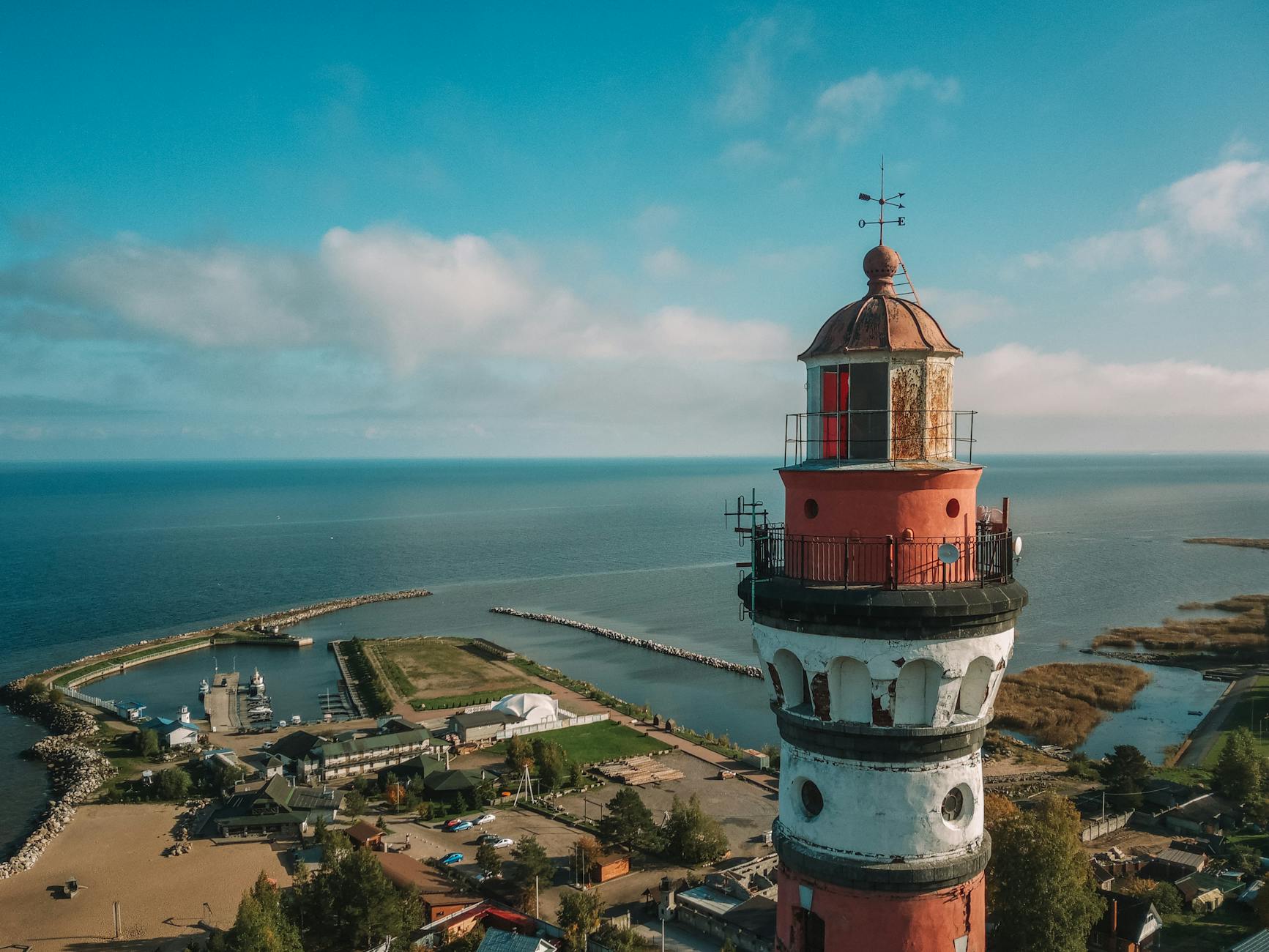
Inside the old Sunda Kelapa port complex stands one of Jakarta’s most charming oddities, the Menara Syahbandar (“Harbor Master Tower”), an 18-meter watchtower built in 1839 to spot incoming ships and signal their arrival to the customs house below. Northern Jakarta is sinking — badly — and the tower has tilted noticeably off vertical as a result, which is how it picked up the nickname “Indonesia’s leaning tower.” Haul yourself up the steep wooden stairs and you get a view that’s barely changed in a century: wooden Buginese pinisi schooners still loading cargo by hand at the docks below.
Right beside it sits the equally absorbing Maritime Museum, set inside 1652 VOC warehouses where pepper, cloves, nutmeg, and the rest of the spice trade were once stockpiled before the long haul to Europe. Together they make one of the most atmospheric historical pockets in the city, and on a quiet weekday morning you may have most of it to yourself.
11. Wisma 46 — Indonesia’s First True Skyscraper
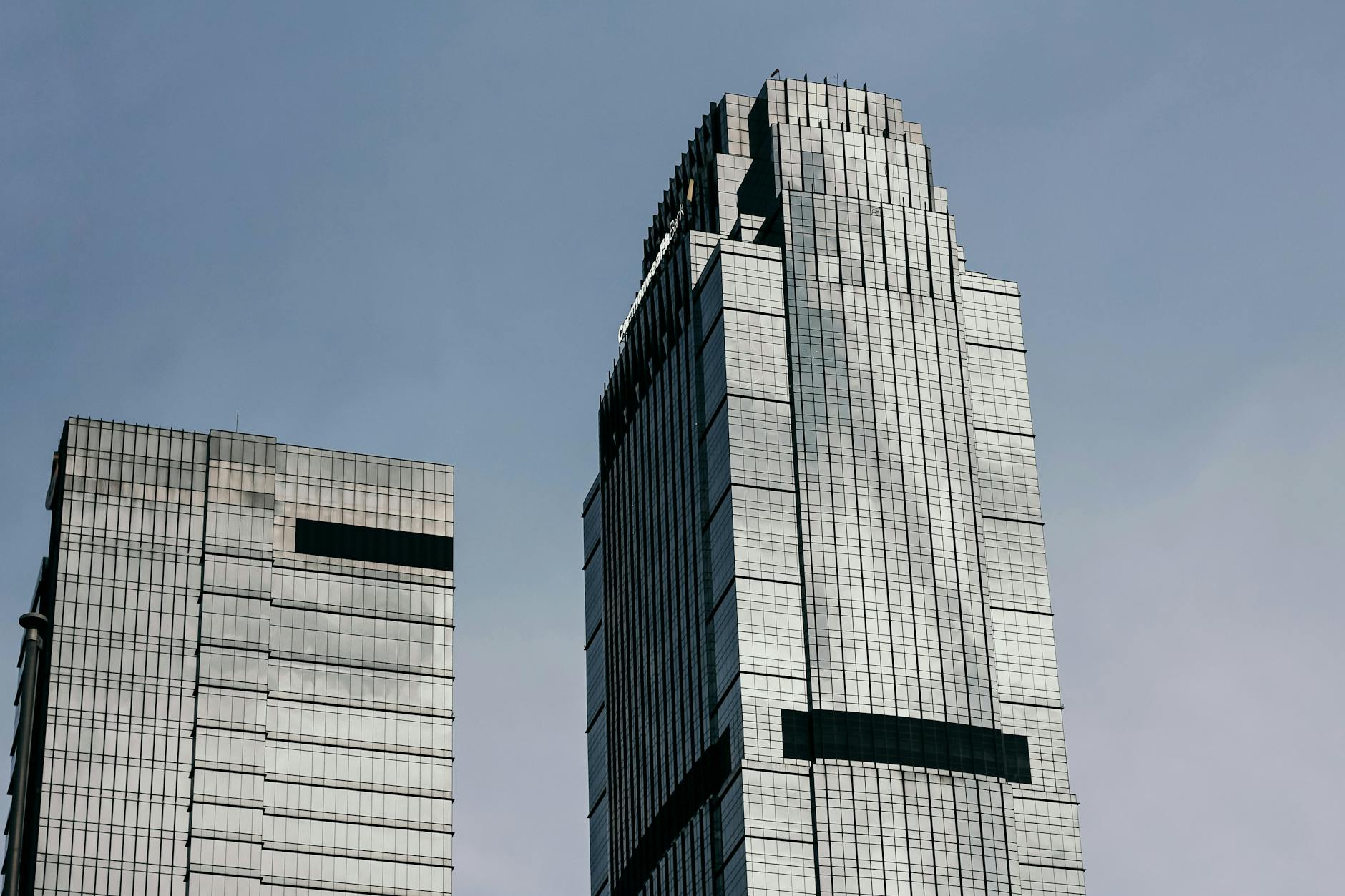
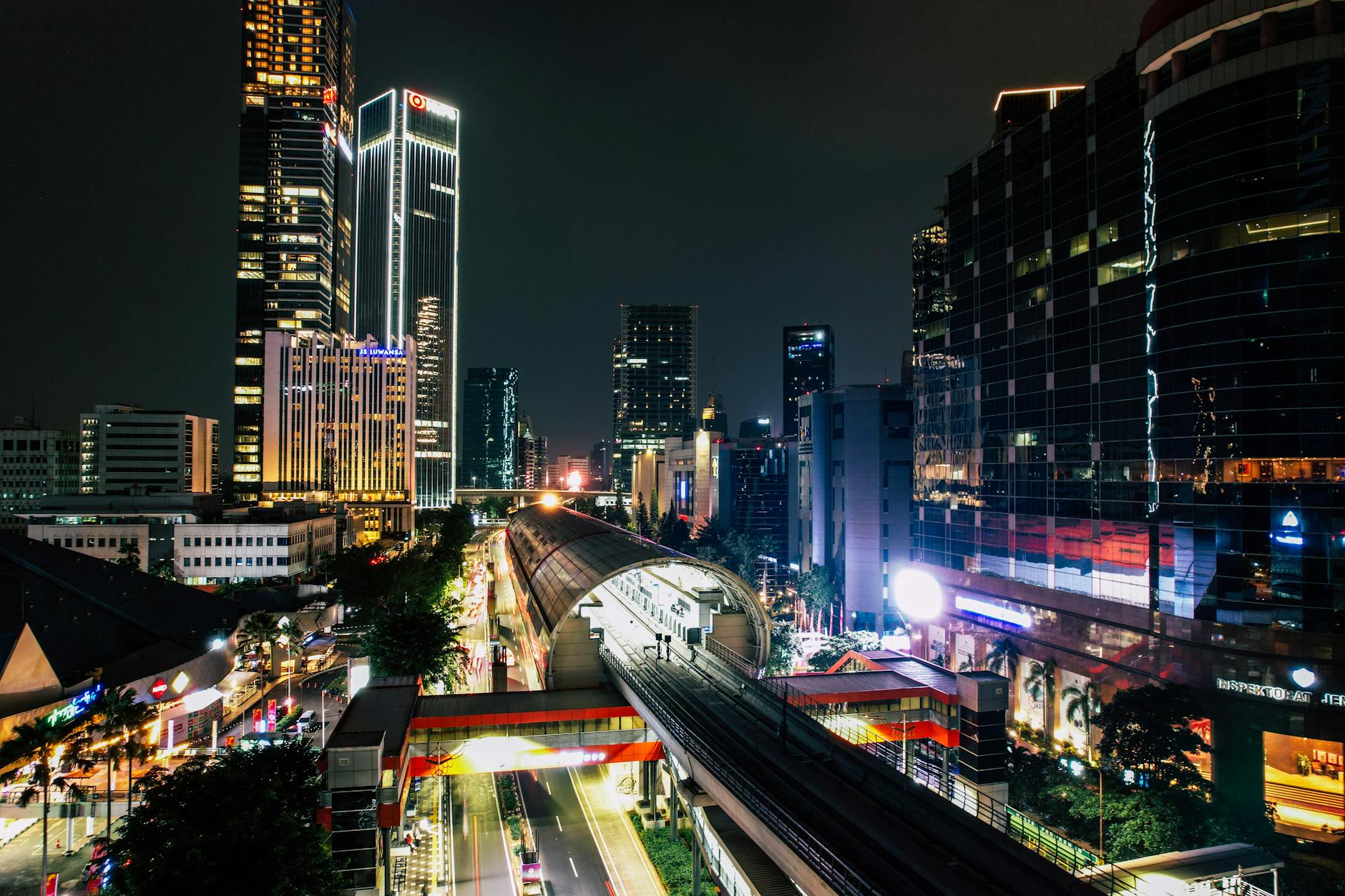
For more than two decades after it opened in 1996, until newer towers finally overtook it, Wisma 46 was the tallest building in Indonesia at 250 meters and one of the tallest in Southeast Asia. The American firm Zeidler Roberts Partnership designed it, capping the 48-floor tower with a sloped, fountain-pen-shaped crown that catches the afternoon sun and makes it easy to pick out of the Sudirman Central Business District skyline. The “46” isn’t a floor count — it points to 1946, the year Bank BNI, the building’s principal tenant, was founded.
The interior belongs to office workers, but the plaza below, the open spaces of Kota BNI, and the wider SCBD park system reward a slow wander with a camera. Wisma 46 looks its sharpest at golden hour, either from the top of Monas or from a rooftop bar like SKYE a few blocks over — and if you’re lining up the modern skyline as a separate afternoon, it pairs well with the air-conditioned stops in our guide to Jakarta’s indoor attractions when the heat finally wins.
12. Gelora Bung Karno Stadium — Indonesia’s Sporting Heart
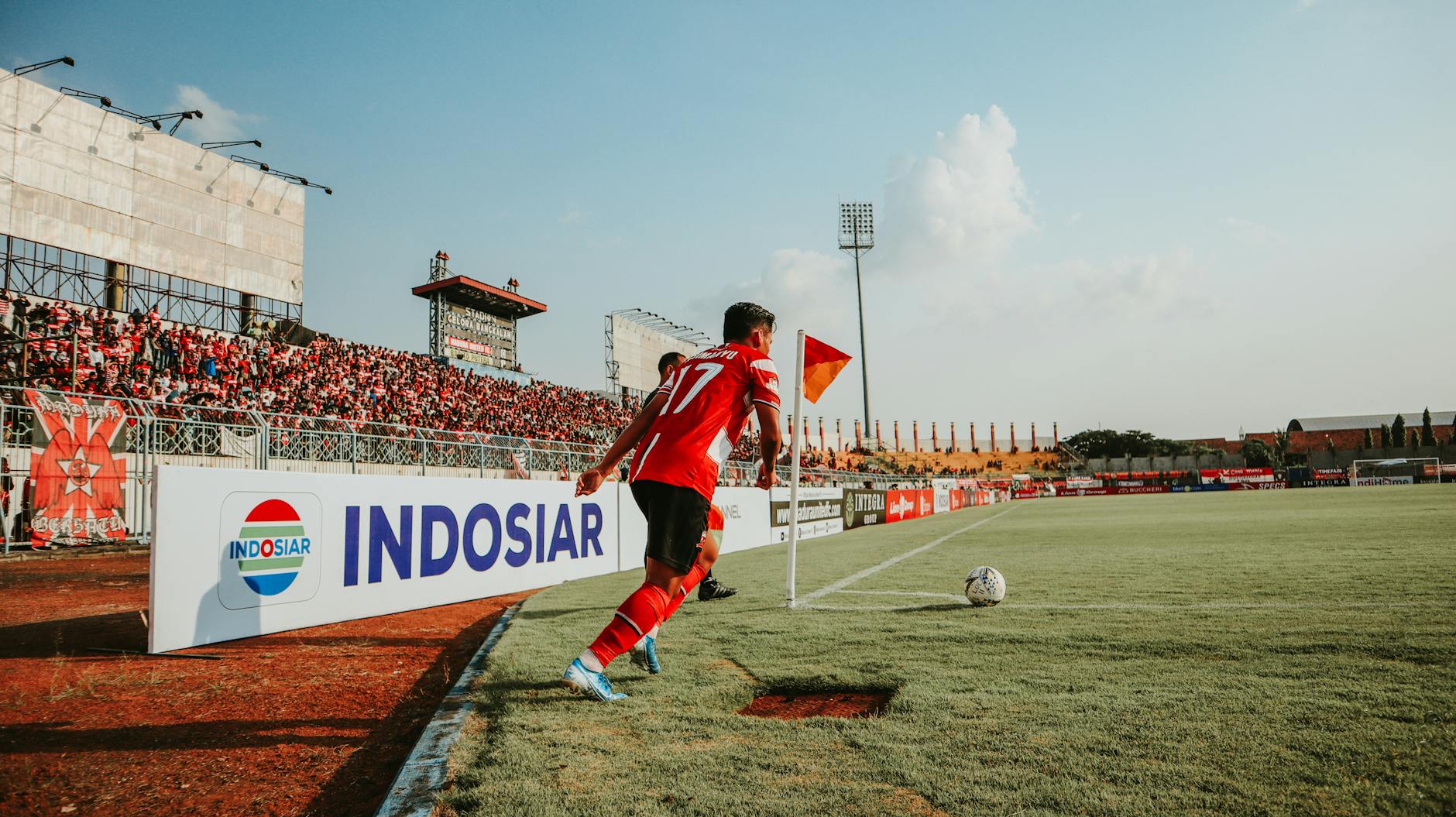
Built between 1960 and 1962 for the 4th Asian Games — partly designed by Soviet architects Sukarno invited in when no other foreign government would commit aid — Gelora Bung Karno Stadium (GBK) is the spiritual home of Indonesian football and the centerpiece of the 279-hectare Senayan sports complex in South Jakarta. The 77,193-seat oval was overhauled for the 2018 Asian Games and now sits among the finest football stadiums anywhere. On a match night for the national team or local club Persija, the noise is something else entirely.
Even with nothing scheduled, the surrounding GBK grounds are one of the busiest gathering places in the city. Wide jogging tracks, public soccer pitches, basketball courts, free outdoor gym equipment, and shaded forest paths pull in tens of thousands of locals each weekend, and it’s a fine spot to feel ordinary Jakarta at play. The complex is fully reachable by MRT (Senayan and Istora stations) and is an easy fit for families working through our list of things to do in Jakarta with kids.
13. Patung Pemuda Membangun — The Building Youth
Known to most Jakartans as “patung pizza man” thanks to the silvery dish he holds overhead, the Patung Pemuda Membangun (“Statue of the Youth Who Build”) stands at the busy Senayan roundabout where Jalan Sudirman meets Jalan Asia Afrika. Imam Supardi designed it, and it was unveiled in 1971 to honor the youthful drive behind Indonesia’s national development. The bronze figure is a muscular young man raising a flaming torch — but the proportions and the angle have led generation after generation to rename it after the takeaway-pizza pose, which tells you something about how affectionately Jakartans treat their monuments. The cleanest view is from the surrounding malls, Plaza Senayan and Senayan City, or from the elevated walkway that links them.
14. Tugu Tani — The Farmer Monument
At the busy meeting of Jalan Menteng Raya and Jalan Imam Bonjol, Tugu Tani (“Farmer’s Monument”) shows a man and a woman — farmer and worker — looking ahead with stoic resolve, a sheaf of rice and a hand-tool between them. The Russian sculptor Matvey Manizer and his son Otto Manizer made it in 1962, a gift to Indonesia from the Soviet Union and one of the few solid reminders of Sukarno’s close ties to the socialist bloc during the Cold War. Its formal name is the Pahlawan Monument (“Heroes’ Monument”), but nobody uses it; everyone says Tugu Tani. Free to view and quietly powerful, it’s a fitting addition to any Sukarno-era monument tour.
15. Café Batavia and Toko Merah — Living Colonial Architecture
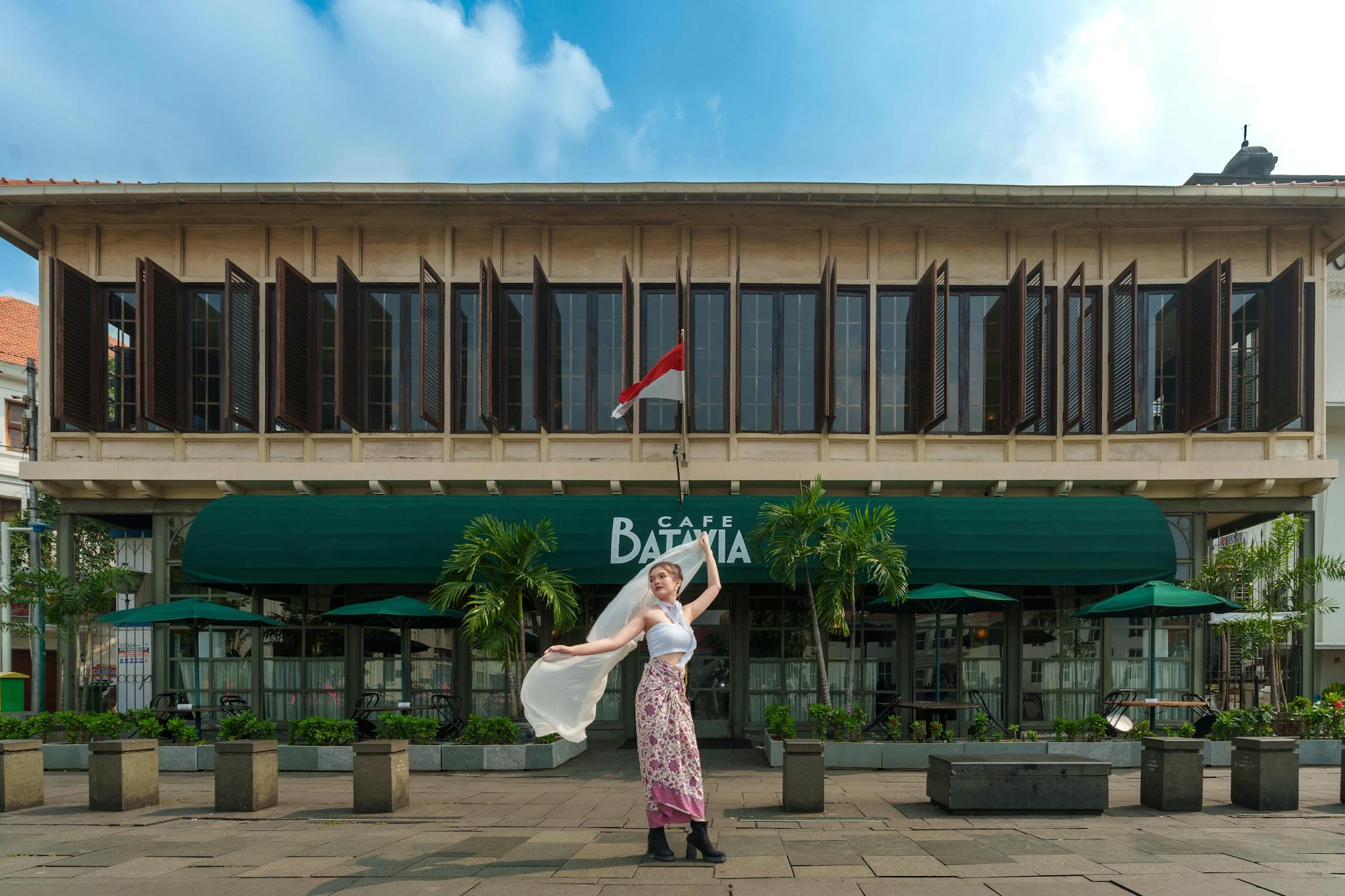
To close the tour, two buildings on Fatahillah Square carry the romance of colonial-era Jakarta better than anything else left standing: Café Batavia and Toko Merah. Café Batavia fills an 1805 mansion that was, for two centuries, the largest private residence in the colonial city. The inside — sweeping wooden staircases, bevelled mirrors, walls of governor-general portraits, and a rooftop wood-paneled bar — works as a kind of living museum where you can also order a genuinely good meal. It’s the sort of place an afternoon disappears into without much resistance.
A short walk off, Toko Merah (“Red House”) is older still, built in 1730 by Governor-General Gustaaf Willem van Imhoff and named for its distinctive red wash. The restored exterior is a museum-piece of late-VOC residential architecture; it’s usually open only by appointment but does host the occasional cultural event. Alongside the rest of the old town’s museums and the lively warung scene a few streets over — covered in our guide to Jakarta’s hidden gems — these living buildings give you the tactile, slightly faded version of the city’s colonial past that no reconstruction can fake.
A Suggested Walking Route Through Jakarta’s Landmarks
Plenty of these landmarks cluster within walking distance in Central Jakarta, so you can string a good number into one full day. I’d start at Monas a little after 8:00 AM, before the heat and the lift queue settle in. From the obelisk, walk west to Arjuna Wijaya, then carry on to the National Museum opposite. Cross Merdeka Square to Istana Merdeka on its north edge for the morning guard ceremony. Grab a quick ride east to Istiqlal Mosque and Jakarta Cathedral, which you take one after the other since they face each other. Push on to Tugu Proklamasi in Menteng for lunch and a quiet pause, then give the afternoon to Kota Tua — Stadhuis, Toko Merah, and Café Batavia — and finish at Sunda Kelapa with the climb up Menara Syahbandar at sunset.
The rest — Selamat Datang, Pancoran, Wisma 46, GBK, Pemuda Membangun, and Tugu Tani — line up neatly along the Jakarta MRT and TransJakarta corridor between Bundaran HI and Pancoran. A second half-day with a transit pass mops them all up. If you’d rather slow the whole thing down and fold in food and a museum or two, our three-day Jakarta itinerary spreads the same ground over a gentler pace, and the Jakarta tourist attractions map shows the exact transit options and walking distances between each stop.
First-Timer Tips for Stringing the Jakarta Landmarks Together
If this is your first run at the city and you want the landmarks to actually connect rather than fight the traffic, a few hard-won pointers go a long way:
- Anchor each day on one transit line. The MRT runs north–south under Jalan Sudirman and Thamrin, linking Bundaran HI, Senayan, Istora, and Pancoran. Pick the cluster on that line for one day and Kota Tua (reached by TransJakarta or the KRL commuter train) for another, rather than crisscrossing the city.
- Front-load the outdoor stops. Monas, the palaces, and the open monuments are punishing by midday. Do them before 10:00 AM, then retreat to a mall, museum, or Café Batavia through the worst of the afternoon heat.
- Keep small rupiah notes on hand. Entry fees are tiny — IDR 20,000 at Monas, IDR 5,000 at the Jakarta History Museum — but kiosks rarely break large bills, and most outdoor monuments cost nothing at all.
- Treat ride-hailing as your default. Gojek and Grab are cheaper and far less stressful than flagging a cab, and they spare you the guesswork of crossing eight-lane roads on foot near the bigger statues.
- Build in a buffer. Jakarta traffic is unpredictable; a five-kilometer hop can take ten minutes or fifty. Leave slack between timed stops like the 5:00 PM guard change so a jam doesn’t blow up your plan.
Practical Tips for Visiting Jakarta’s Landmarks
Jakarta’s tropical sun is no joke. The best photography light falls between 6:30 and 9:00 AM, then again from 4:30 PM until just after sunset. Most monuments sit at busy intersections, so stick to sidewalks rather than darting across unsigned gaps in the traffic. Modest dress is required at the religious landmarks (Istiqlal, Jakarta Cathedral), and long pants with covered shoulders are the safe call for guided palace tours. Carry small bills of rupiah for entry fees — Monas is IDR 20,000, the Jakarta History Museum is IDR 5,000, and most outdoor monuments are free.
For getting between stops, lean on ride-hailing apps (Gojek, Grab, Bluebird) for door-to-door trips, or the MRT for the modern downtown landmarks, since Bundaran HI, Senayan, and Pancoran stations all sit on the line. The TransJakarta bus rapid transit reaches nearly every landmark on this list and stays the most affordable option at IDR 3,500 a ride; if you’d rather see the city after dark first, our guide to things to do in Jakarta at night covers when these plazas and fountains are floodlit.
Frequently Asked Questions About Jakarta Landmarks
What is the most famous landmark in Jakarta?
The National Monument (Monas) is by far the most famous landmark, recognized worldwide as Jakarta’s defining symbol. Its 132-meter obelisk is visible from much of Central Jakarta.
How many days do I need to see Jakarta’s main landmarks?
Two full days are enough to comfortably see all 15 landmarks on this list, with one day focused on Central Jakarta (Monas, Istiqlal, Cathedral, palaces) and a second day on Kota Tua plus the Sudirman corridor monuments.
Are Jakarta’s landmarks free to visit?
Most outdoor landmarks — including Monas (the surrounding park), Istiqlal Mosque, Jakarta Cathedral, Tugu Proklamasi, the Selamat Datang Monument, Pancoran Statue, Tugu Tani, Arjuna Wijaya, and Patung Pemuda Membangun — are free to visit. Only the Monas observation deck, Jakarta History Museum, and Maritime Museum charge small entrance fees.
When were Jakarta’s main landmarks built?
Jakarta’s landmarks span four centuries. The oldest — Toko Merah and the Stadhuis — date from the early 1700s. The bulk of the iconic monuments (Selamat Datang, Pancoran, Tugu Tani) were commissioned by President Sukarno in the 1960s. The most recent — Wisma 46 — opened in 1996.
Is the Selamat Datang Monument the same as Bundaran HI?
The Selamat Datang Monument stands in the center of Bundaran HI (“Hotel Indonesia roundabout”), and the two names are often used interchangeably. The roundabout takes its name from the historic Hotel Indonesia, the country’s first international-standard hotel, which still operates on the eastern edge.
Taken together, these 15 must-see Jakarta landmarks form the visual narrative of modern Indonesia — its colonial past, its independence struggle, its postcolonial ambition, and its 21st-century rise. To keep exploring, browse the wider list of best attractions in Jakarta, or pick something hands-on from our roundup of fun activities for first-time tourists. Each landmark you stand in front of adds a chapter to your sense of one of Asia’s most consequential capitals.
External Resources About Jakarta Landmarks
For deeper context on these Jakarta landmarks, the official Wonderful Indonesia tourism portal includes detailed history of the National Monument and other monuments, while the UNESCO World Heritage list for Indonesia documents the broader cultural heritage context that shapes Jakarta’s monumental architecture.