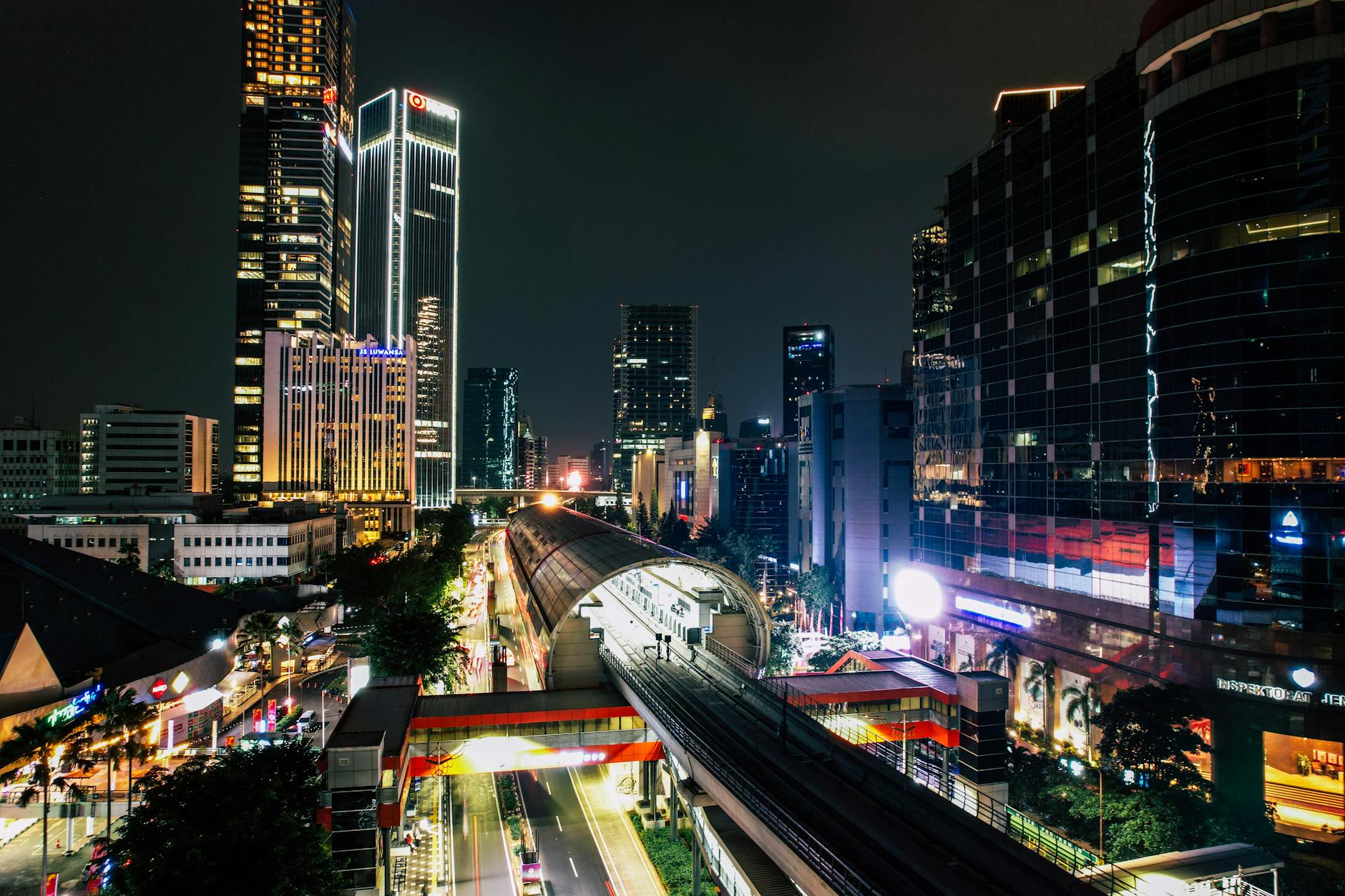
Jakarta has a reputation built on luxury malls and skyscraper rooftop bars, and that reputation isn’t wrong, exactly. But it’s incomplete. After enough time wandering this city on a thin wallet, I came to think some of the most honest experiences in Indonesia’s capital are the ones that cost nothing at all. From the country’s largest mosque to a 17th-century working port, from Sunday street parties to a cup of free hot tea poured at a 100-year-old Chinese tea house, here are 25 of the best free things to do in Jakarta. Every one is genuinely free of charge, not a “freemium” come-on or a discount dressed up as a gift, and every one taught me something about how this place actually works. If you’re here on a tight budget, you can string a few satisfying days together out of this list alone.
I’d start by reading our budget travel in Jakarta guide alongside this one, because the two cover different ground: that piece handles cheap food, transit passes, and where to sleep without overpaying, while this one is purely about what to do for free. If you want the bigger picture first, the complete things to do in Jakarta overview is the parent guide that this list grows out of, and the Jakarta tourist attractions map is what I leaned on to plot a sensible walking route between these spots.
1. Marvel at Monas from Merdeka Square
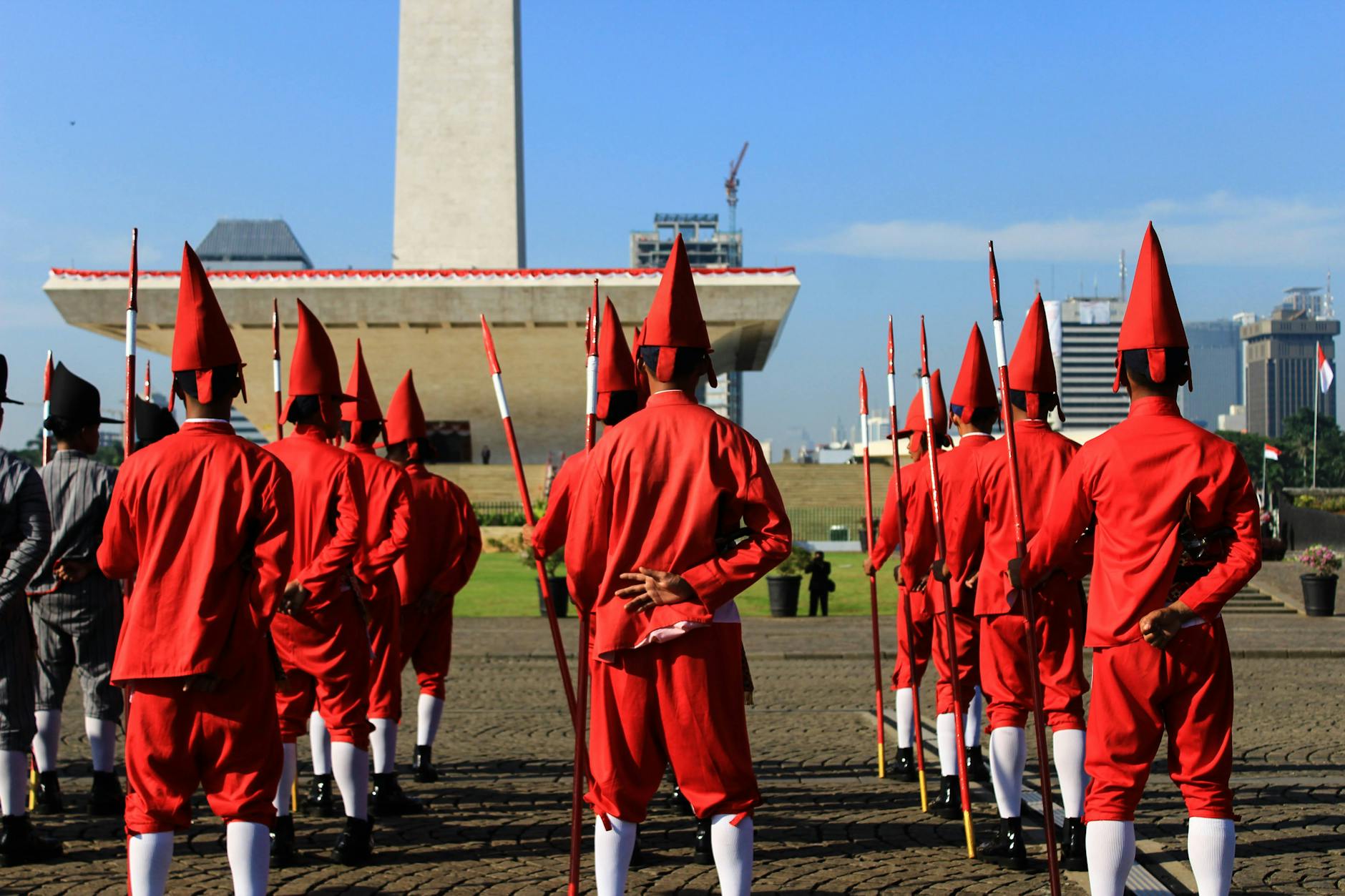
The elevator up the obelisk to the observation platform costs IDR 20,000, but you don’t need it. Walking the 80-hectare Merdeka Square around the National Monument is completely free, and honestly it’s the better experience anyway. The base of Monas, with its 14.5-meter gold-clad flame towering 132 meters overhead, photographs well from every angle, and the crowd changes character through the day: joggers and tai-chi groups at sunrise, school groups and selfie-takers at midday, couples and families spreading picnic blankets at sunset. The square is one of the largest urban open spaces in Asia, which you feel in your legs by the time you’ve crossed it.
On Saturday and Sunday evenings, free musical fountain shows run at the southern edge of Monas, with two performances at 7:30 PM and 8:30 PM lasting around 20 minutes each. Synchronized water, lights, and Indonesian patriotic music pull in a crowd of thousands. It’s the kind of thing I expected to find corny and instead stayed for both shows. Monas turns up on nearly every list of Jakarta landmarks, and standing under it for free is the easiest way to understand why.
2. Take a Free Guided Tour of Istiqlal Mosque
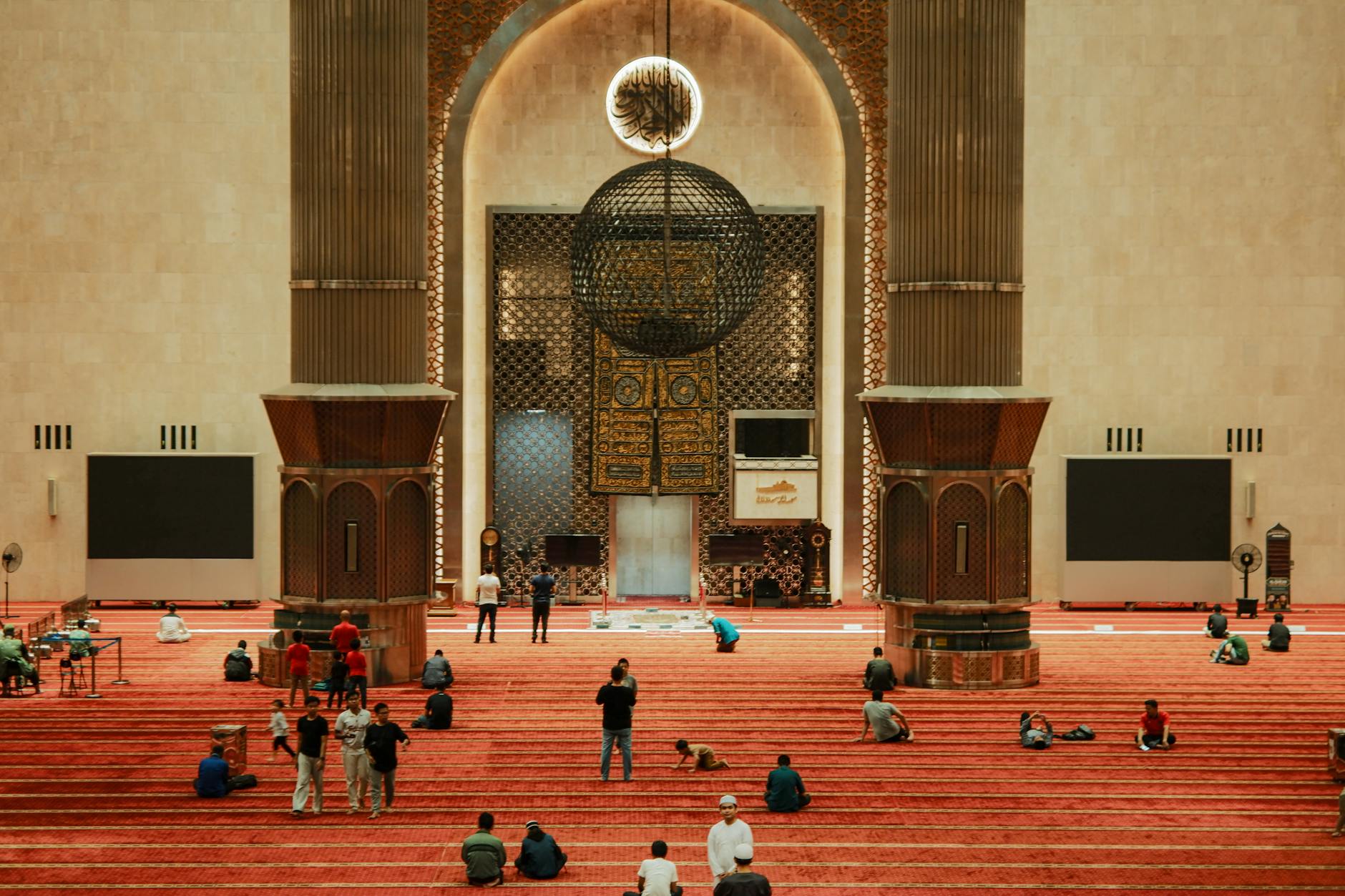
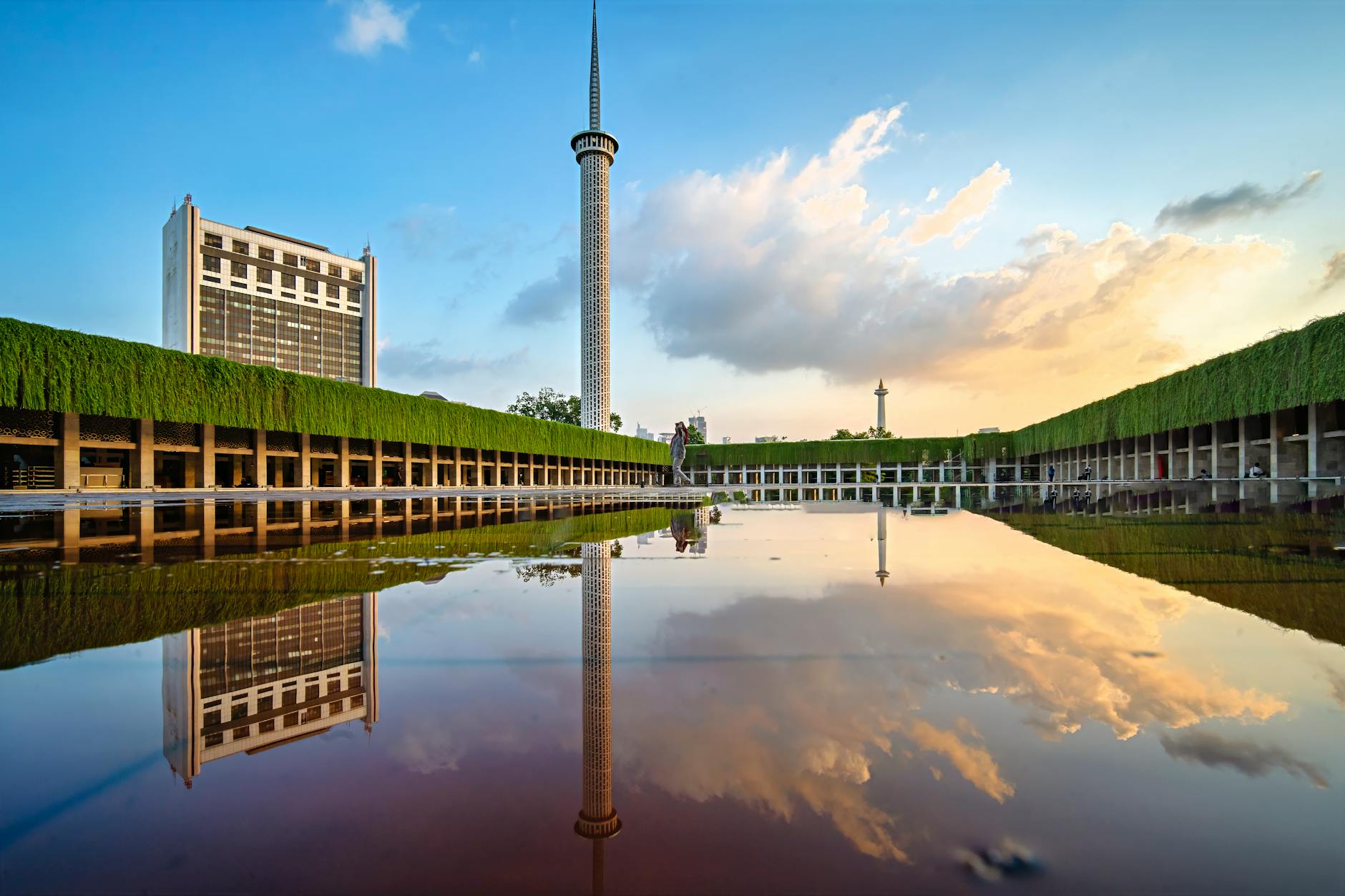
The largest mosque in Southeast Asia, able to hold 200,000 worshippers, the Istiqlal Mosque opens its doors to non-Muslim visitors through the day and runs free 30-minute guided tours in English, Mandarin, Arabic, and Bahasa Indonesia. My guide was a retired engineer who clearly relished the job; others I saw were university students. They walk you through the seven-story prayer hall, the recently completed Tunnel of Friendship connecting the mosque to the Catholic cathedral across the street, and an underground museum on the history of Islam in Indonesia. Modest dress is required, and loaner robes are handed out free of charge at the visitor reception, so don’t fret about your wardrobe. One practical thing: ask in advance about prayer times, since the main hall closes to non-Muslims during them.
If sacred architecture is your thing, this is the headline act but far from the only one. Our guide to temples and mosques in Jakarta maps out the rest, and most of them, like Istiqlal, ask nothing at the door.
3. Visit Jakarta Cathedral
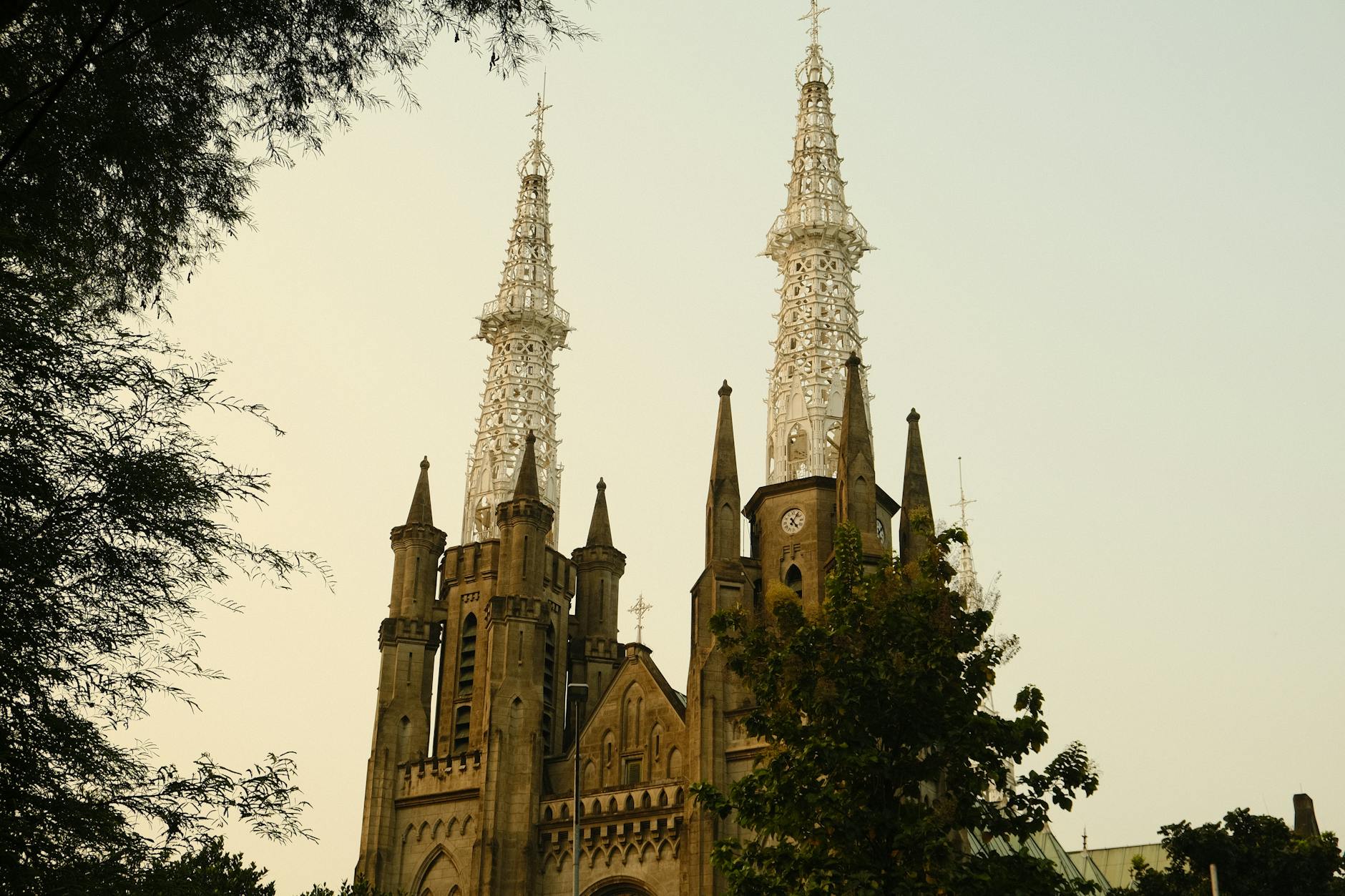
Straight across Lapangan Banteng from Istiqlal stands the neo-gothic Jakarta Cathedral, open to the public free of charge. The 1901 building’s three iron spires rise 60 meters, and the nave is lined with stained-glass windows that fold traditional Catholic iconography together with batik patterns and tropical flora, which I’d never seen done quite like this anywhere else. A small museum upstairs documents 500 years of Catholicism in the archipelago. Do the cathedral and the Istiqlal tour back to back: two great houses of worship facing each other across one street, both free, is about as neat an illustration of Indonesia’s religious harmony as you’ll get in a single morning.
4. Wander Kota Tua and Fatahillah Square
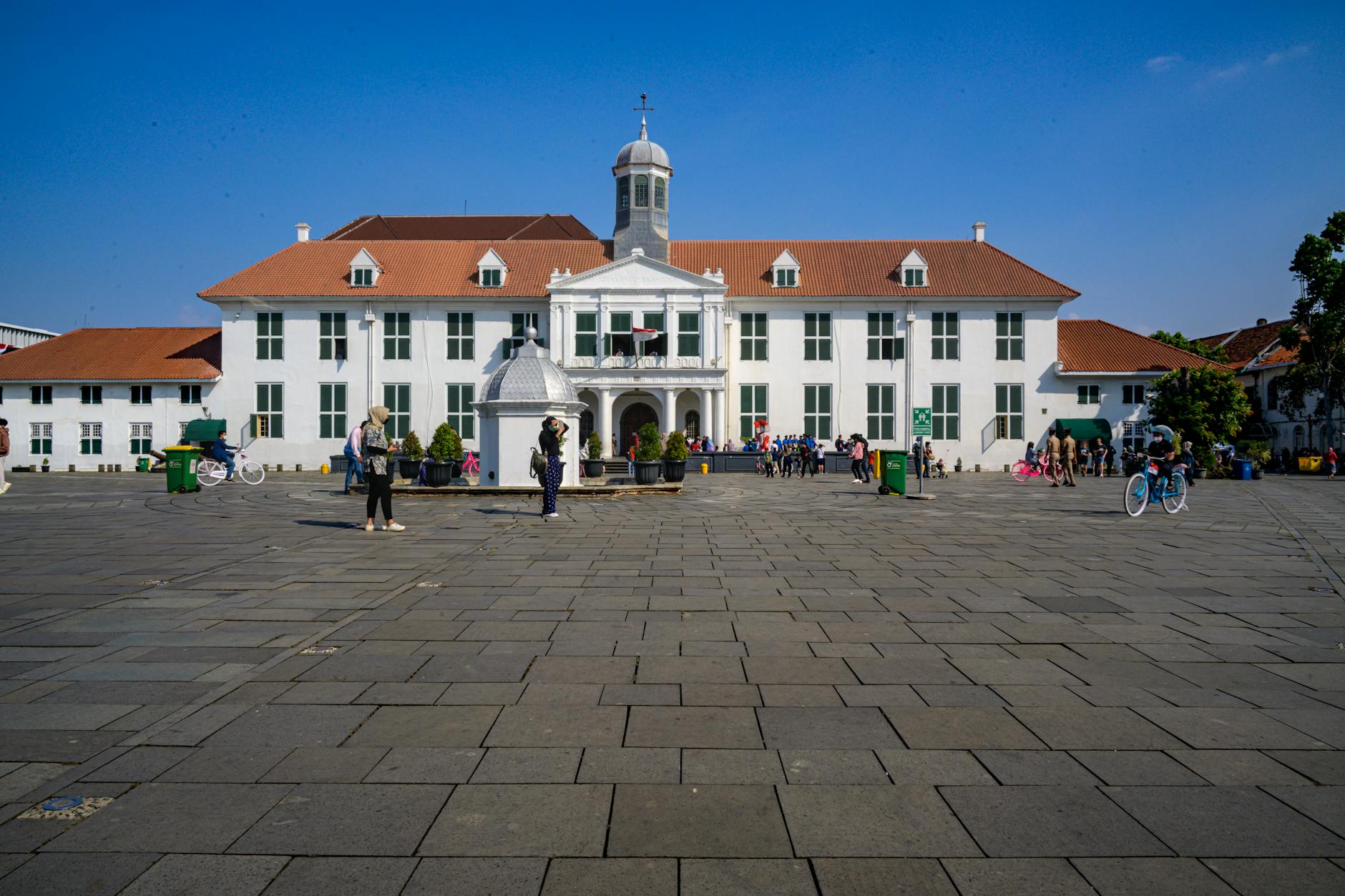
The cobbled Fatahillah Square at the heart of Kota Tua (Old Town) is one of the most photogenic public spaces in the country and free to enjoy in full. Ochre-painted Dutch colonial buildings from the 17th and 18th centuries ring the square, and the foreground fills with street performers in superhero costumes posing for photos, traditional ondel-ondel giant puppets dancing for tips, and rentable colorful bicycles parked under striped umbrellas. Entry to the surrounding museums, the Jakarta History Museum, the Wayang Museum, the Fine Arts Museum, runs a token IDR 5,000 to 10,000 each, but you can pass a whole afternoon photographing the square and watching the parade of locals without spending a rupiah. If the colonial layers grab you, our deeper dive into Jakarta’s culture, history, and museums picks up where the square leaves off.
5. Walk Sunda Kelapa Harbor
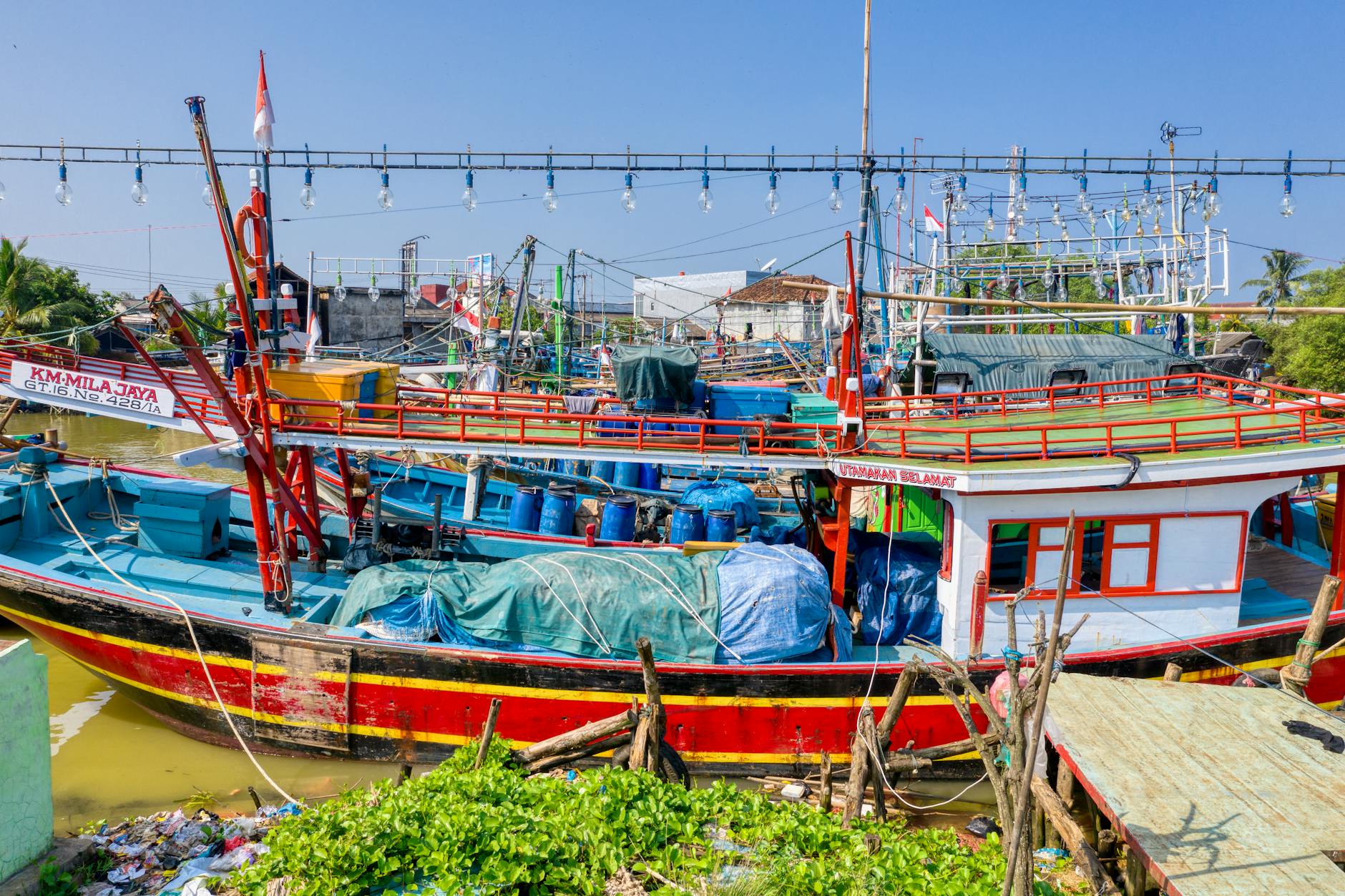
Sunda Kelapa is a working harbor, not a museum piece, and that’s exactly what makes it one of the most atmospheric in the world. Dozens of traditional wooden pinisi schooners still load rice, timber, and cement bound for the outer Indonesian islands. Walking the long wooden docks is free, and as you go you pass stevedores hauling cargo across bamboo planks, captains nursing coffee on deck, and small fishing boats unloading the morning catch. The scene looks essentially unchanged from photographs taken a century ago. A small motorboat will ferry you across the harbor for around IDR 10,000 to 20,000 if you want a closer look from the water, but the walk itself costs nothing. It’s a short hop from Kota Tua, so I’d pair the two; you can read about doing exactly that in our guide to Jakarta’s hidden gems, where the old port earns its place.
6. Experience Setu Babakan Betawi Cultural Village
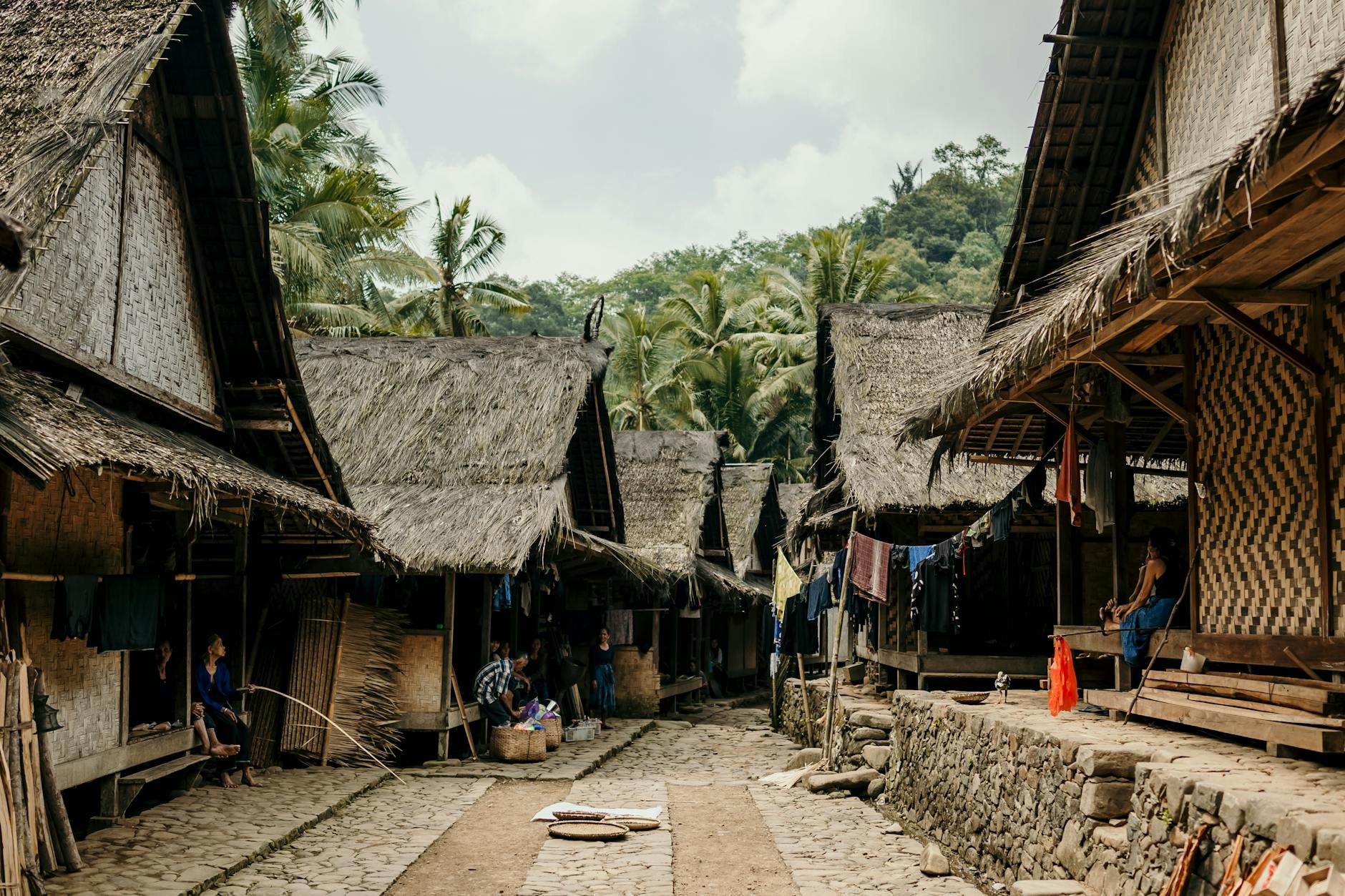
The 32-hectare Setu Babakan village in South Jakarta is the most extensive living cultural space dedicated to the Betawi, Jakarta’s indigenous people. Wooden Betawi houses with steep red-tiled roofs cluster around a calm lake, and on weekends the open-air pavilion puts on free performances of palang pintu (a martial-arts-and-poetry wedding ceremony), lenong theater, tanjidor brass band music, and the ondel-ondel giant puppet dance. Cooking demonstrations, craft workshops (occasionally ticketed for materials), and small museums fill out the day. Entry is free; only food and souvenirs cost anything, and the grilled snacks by the lake are worth the few thousand rupiah. Of all the genuinely free cultural stops in the city, this is the one I’d push first-timers toward, and it’s a fixture in our roundup of the most unique things to do in Jakarta.
7. Sunday Car-Free Day on Sudirman-Thamrin
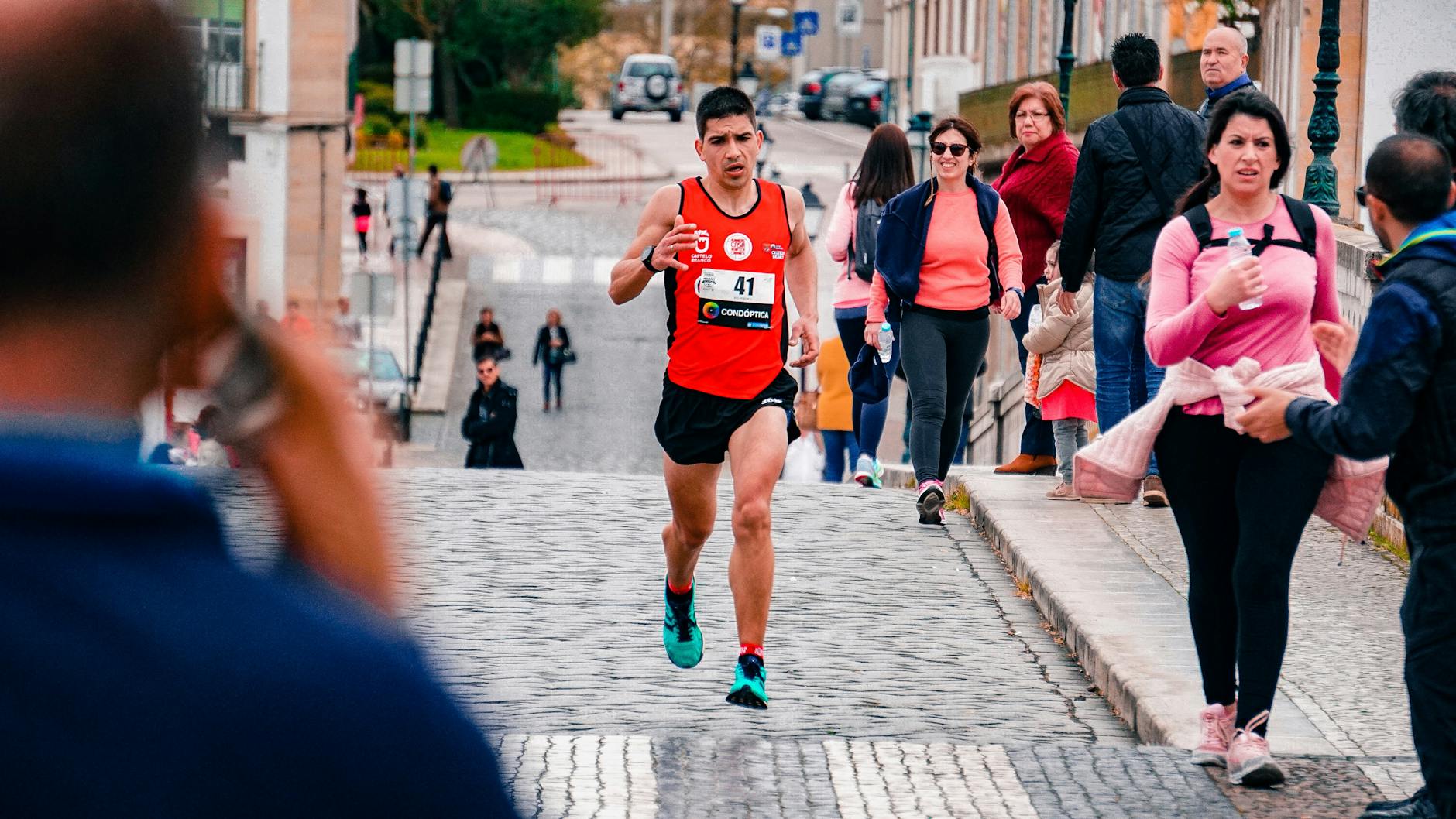
Every Sunday from 6:00 AM to 11:00 AM, the entire 7-kilometer stretch of Jalan Thamrin and Jalan Sudirman, Jakarta’s main commercial spine, shuts to motorized traffic for Hari Bebas Kendaraan Bermotor (Car-Free Day). What’s left is one of Asia’s largest weekly public events: tens of thousands of joggers, cyclists, skateboarders, families with strollers, and street musicians take over avenues that on any other morning would be a wall of cars. Free aerobics classes spring up in the roundabouts, promotional teams hand out food samples, and the whole thing has the loose, friendly feel of a street festival. Public bikes rent for a small fee, but watching and walking is completely free. Getting there is easy on a Sunday, and if the transit map looks daunting our guide to getting around Jakarta breaks down the MRT and TransJakarta lines that drop you right onto Thamrin.
8. Sip Free Tea at Pantjoran Tea House
In the heart of Glodok Chinatown, the Pantjoran Tea House has handed out free hot tea to passersby since 1910, a 110-year-old tradition that began as an act of charity by Chinese merchants and has been carried on by every owner since. Eight ceramic teapots sit on a public counter at the front; you pour yourself a small cup, sip in the shade, and go on your way. No purchase, no tip, no salesperson hovering. The tea house serves excellent dim sum if you want to linger, but the original gesture, free tea for whoever walks by, is one of the small things about Jakarta I think about most. It costs them something and asks nothing of you, which in a city this size feels almost radical.
9. Photograph Selamat Datang Monument at Bundaran HI
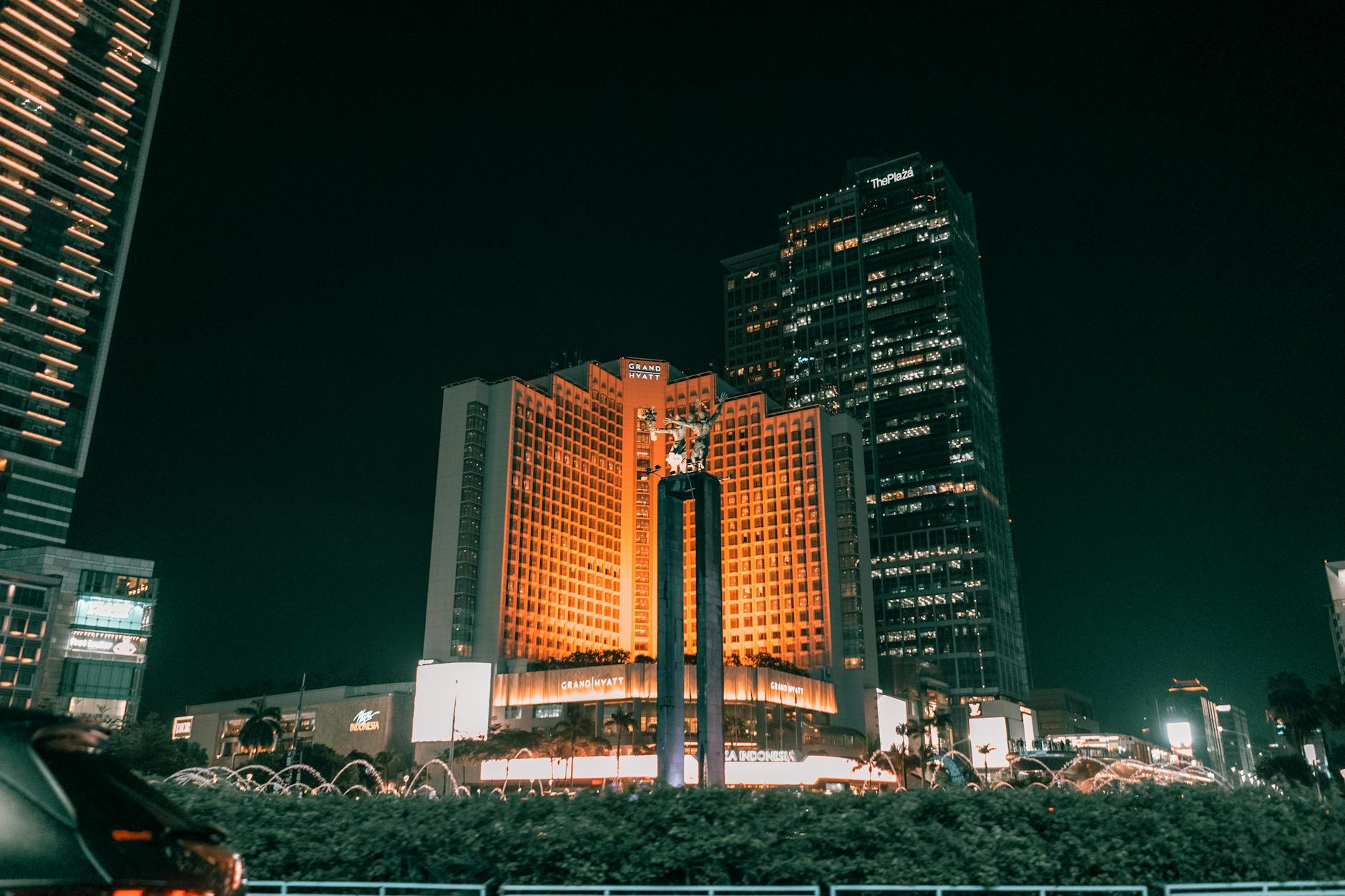
The bronze “Welcome Monument” at the Hotel Indonesia roundabout is Jakarta’s most photographed civic landmark, designed under Sukarno and unveiled in 1962 for the Asian Games. The figures of a young Indonesian man and woman waving the city in are lit at night, when the surrounding fountains make for a genuinely romantic backdrop. Stand in the open plaza on the eastern edge of the roundabout and you can frame the monument against modern towers like Wisma 46, old greeting and new skyline in one shot. It’s free, accessible 24 hours, and sits directly above the Bundaran HI MRT station, so it’s hard to miss.
10. Reflect at Tugu Proklamasi
The Proclamation Monument at Jalan Pegangsaan Timur 56 in Menteng marks the exact spot where, on August 17, 1945, Sukarno read the brief two-sentence text proclaiming Indonesian independence. The original house was demolished in 1960, but the site is now a quiet park with bronze statues of Sukarno and Mohammad Hatta facing each other beside an open monument holding the engraved Proclamation text. A separate spire rises behind, meant to evoke the lightning strike of the moment. It’s free to enter, and of all the no-cost places on this list it’s the one where I found myself talking in a lower voice without deciding to.
11. Walk Glodok Chinatown
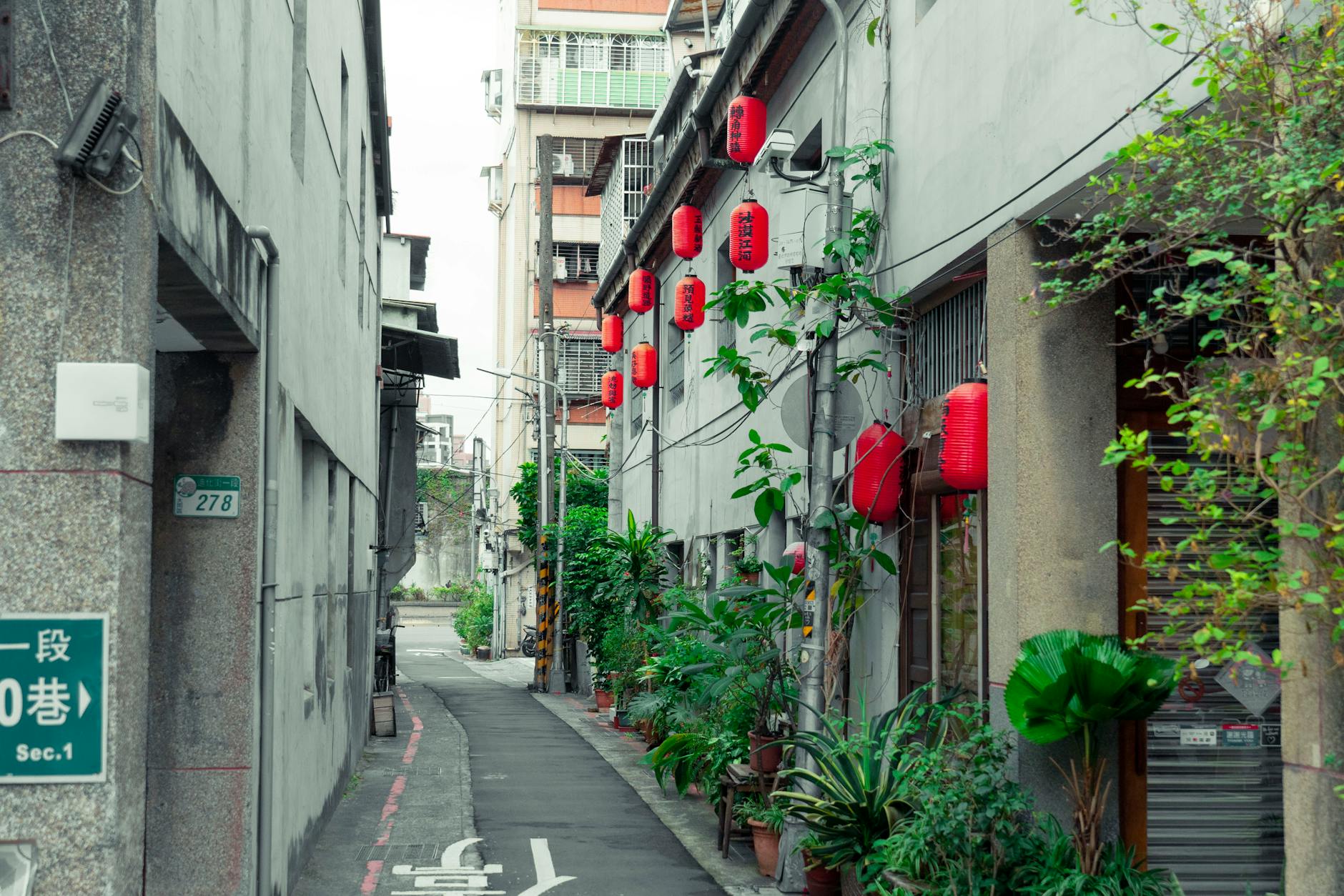
Jakarta’s Chinatown, Glodok, is one of Southeast Asia’s largest and most atmospheric Chinese quarters, and walking it costs nothing. Start at the 17th-century Jin De Yuan temple, the oldest Chinese place of worship in the city and still in active use, free to enter, with quiet respect expected. From there, head down the lanes of Petak Sembilan (“Block Nine”), a 200-meter market street packed with traditional medicine shops, durian vendors, and dim-sum stalls. Come between 6:00 and 10:00 AM for the best of the street life, when deliveries arrive and the lanes are loudest. Buying anything is optional; the sights, the smells, and the sheer density of it are free. Glodok also happens to be one of the most rewarding eating walks in town, which our best street food in Jakarta guide gets into if you decide to spend a little after all.
12. Relax in Taman Suropati Park
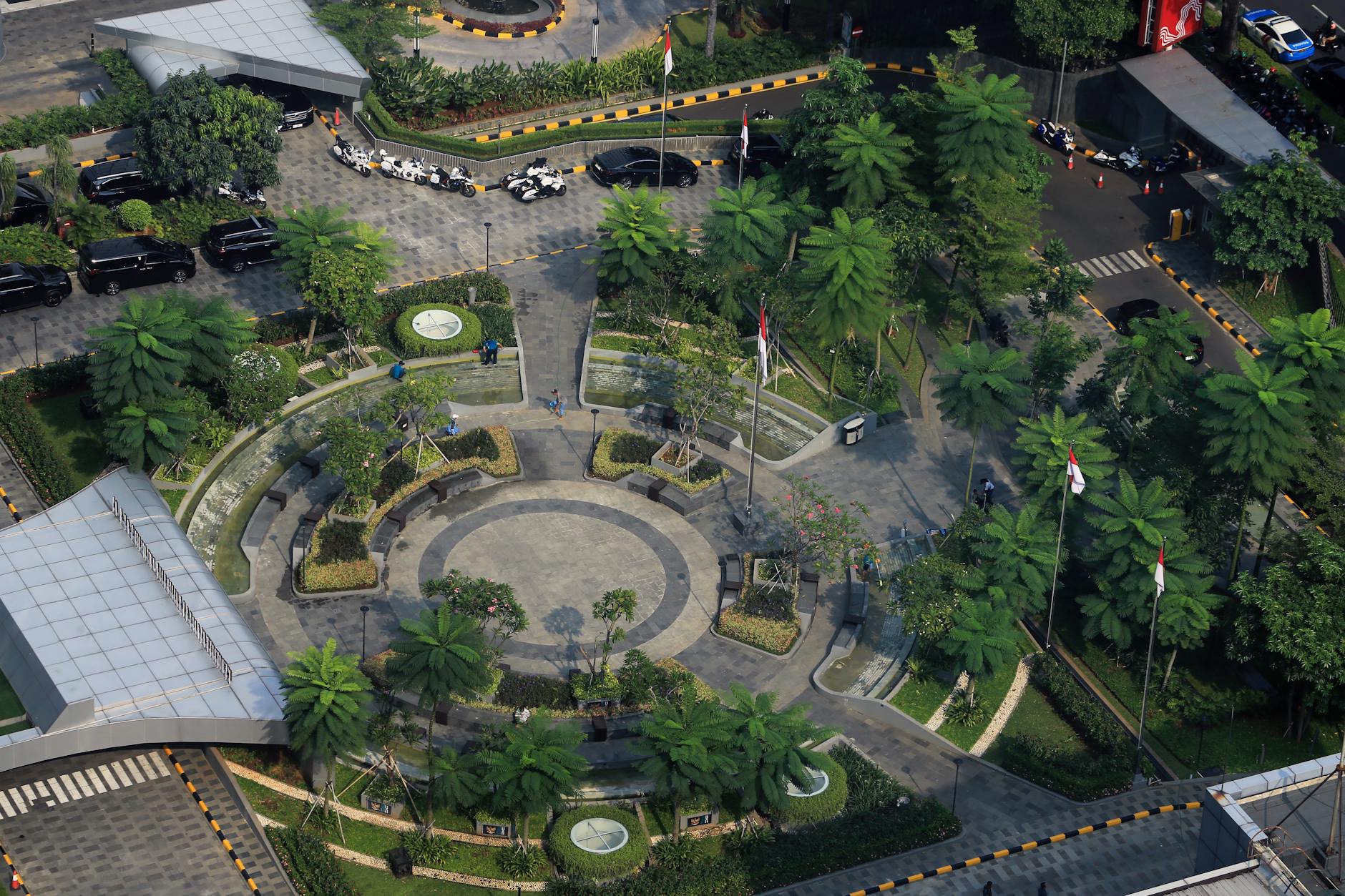
The most beloved public park in Jakarta’s elegant Menteng district, Taman Suropati is a calm 16,000-square-meter circle of mature trees, trimmed lawns, and a central fountain. On weekday mornings it fills with neighborhood joggers; on weekend afternoons, with picnicking families and impromptu music from local artists, sometimes a whole cluster of violin students practicing under the trees. The five sculptures ringing the fountain, gifts from the five founding members of ASEAN, turn it into a small open-air sculpture garden. It’s free, shaded, and one of the easiest places in the city to let your pulse drop. Menteng rewards aimless walking generally, and our Jakarta neighborhoods guide explains why this leafy enclave feels so unlike the rest of town.
13. Exercise at Gelora Bung Karno (GBK) Sports Complex
The 279-hectare GBK sports complex in South Jakarta, built for the 1962 Asian Games and handsomely renovated for the 2018 edition, is open to the public and one of the most popular free recreational spaces in the city. Inside you’ll find a 5 km jogging track looping the main stadium, public soccer and basketball courts, outdoor fitness equipment, shaded forest paths, and the Hutan Kota by Plataran urban forest. On weekend mornings the place hums with thousands of locals exercising, and the mood is welcoming rather than competitive; nobody cares how slow you jog. MRT access is via Senayan and Istora stations.
14. Take Free Sunday-Morning Parkour Lessons
Every Sunday at 8:30 AM, Parkour Jakarta, the city’s largest free-running community, runs completely free parkour lessons at GBK Sports Complex for anyone aged 10 and up, no experience or fitness level required. Sessions cover basic technique, vaulting, balance, and conditioning, run about two hours, and are led by certified instructors who do it simply because they love the sport. Wear athletic clothes and grippy shoes and show up at the GBK plaza by the main stadium. I went expecting to watch and ended up being talked into a few clumsy vaults by a teenager half my age, which tells you something about how friendly the group is. It’s one of the most distinctly Jakartan free things you can do and a genuinely good way to meet locals.
15. Wander Pasar Baru’s Historic Shophouses
The 200-year-old Pasar Baru (“New Market”) shopping street in Central Jakarta is the country’s oldest commercial district and photogenic from end to end. The covered, pedestrian-only street runs between century-old Indo-European shophouses, many held by the same families for generations, selling Indian fabrics, traditional Indonesian instruments, leather goods, and inexpensive antiques. You don’t have to buy a thing; just walking the street, photographing the architecture, and watching the shopkeepers at their old rhythms is free and quietly rewarding. It also sits an easy walk from Pasar Kue Subuh and the cathedral, so it slots neatly into a longer free day.
16. Visit Galeri Nasional Indonesia
Indonesia’s National Gallery on Jalan Merdeka Timur, just east of Monas, is the largest contemporary and modern art museum in the country and entirely free to enter. The permanent collection holds more than 1,800 works by Indonesian masters, including Affandi, Raden Saleh, S. Sudjojono, and Hendra Gunawan, alongside rotating temporary shows of contemporary work. The galleries occupy a beautifully restored colonial-era building, cool and hushed, a welcome contrast to the square outside. It’s closed on Mondays, so plan around that, and it pairs perfectly with the other free art and history stops a short walk away.
17. Browse the National Library of Indonesia
The 27-story National Library of Indonesia on Jalan Medan Merdeka Selatan opened in 2017 and is one of the tallest libraries in the world. You’re welcome to browse the public reading rooms, look over the remarkable 200,000-book collection, and head up to the rooftop garden for skyline views, all completely free after a brief check-in at reception. The architecture alone justifies the trip, and on a brutal Jakarta afternoon the air-conditioning is a genuine mercy. I ducked in to escape the heat and stayed an hour longer than I meant to. It’s one of the more comfortable stops on any list of indoor attractions in Jakarta, free or otherwise.
18. Tour the Bank Indonesia Museum
Housed in the grand former Javasche Bank building (1828) on Fatahillah Square, the Bank Indonesia Museum traces the country’s monetary history from precolonial trade beads to the modern rupiah, and entry is completely free. Interactive exhibits, restored colonial interiors, and strong air-conditioning make it one of the best-value indoor stops in all of Kota Tua. Give it about 90 minutes. I came in skeptical that a money museum could hold my attention and left having learned more about the archipelago’s trade history than I had anywhere else in the city.
19. Watch a Sunday Wayang Performance
Every Sunday morning at the Wayang Museum on Fatahillah Square, free abridged wayang kulit (shadow puppet) and wayang golek (rod puppet) performances run in the inner courtyard. Drawing on episodes from the Mahabharata and Ramayana and backed by a live gamelan orchestra, they last about 90 minutes and are some of the most quietly magical free entertainment in Jakarta. Museum entry itself is a token IDR 5,000, but the courtyard performance is free, so arrive early to claim a decent seat; by showtime the good spots are gone.
20. Catch a Pre-Game Persija Atmosphere at GBK
You don’t need a match ticket to enjoy a Persija home game. The streets and concourses around GBK Stadium on match-day are free entertainment in their own right. Thousands of orange-clad Jakmania fans gather hours before kickoff, singing, drumming, and parading through Senayan with chants and flares, while vendors line the surrounding streets selling jerseys, scarves, and street food. The atmosphere is electric, and standing in the middle of it is the closest you’ll get to Indonesian football fan culture without paying for a seat. For more after-dark energy in the same vein, our guide to things to do in Jakarta at night rounds up where the city’s evenings go.
21. Sample Pasar Kue Subuh Pre-Dawn Market
One of Jakarta’s strangest experiences is Pasar Kue Subuh (“Dawn Cake Market”), a nocturnal wholesale food market in Senen that runs from 7:00 PM to 5:00 AM. Hundreds of vendors sell traditional Indonesian and Betawi cakes, sweets, fried snacks, and savory pastries, and many freely offer free samples to potential buyers. A late-night or pre-dawn visit can quietly take care of serious hunger without spending a rupiah, while introducing you to dozens of regional Indonesian sweets you’d probably never meet otherwise. Bring a friend, mind the crowds and the forklifts threading between stalls, and dress for energy rather than elegance.
22. Picture-Hunt Jakarta’s Sukarno-Era Monuments
President Sukarno commissioned a remarkable set of monumental public sculptures in the 1960s, and they still stand free to view at their original locations. A self-guided “Sukarno monument tour” can take in the Pancoran Statue (Patung Dirgantara) at the Pancoran intersection, Tugu Tani (the Russian-gifted Farmer Monument) on Jalan Imam Bonjol, the Selamat Datang Monument at Bundaran HI, the Arjuna Wijaya Chariot on Jalan Merdeka Barat, and the Patung Pemuda Membangun at the Senayan roundabout. All sit within reach of the MRT and TransJakarta, all are visible straight from the surrounding sidewalks, and all are free. It makes a surprisingly coherent half-day if you chain them by transit line.
23. Visit Pasar Tanah Abang as a Cultural Experience
Pasar Tanah Abang is famous as a place to shop, but simply walking through Southeast Asia’s largest textile and garment market is a cultural experience in itself, and it costs nothing if you don’t buy anything. Four interconnected blocks hold thousands of stalls stacked with traditional batik, songket, mukena, abaya, sneakers, and bridal wear. The sheer volume of color, fabric, and human energy is overwhelming in the best way. Go on a weekday morning for the most photogenic version, before the weekend crush makes the aisles a contact sport.
24. Watch the Lapangan Banteng Fountain Show
The 4-hectare Lapangan Banteng (“Buffalo Field”) park, sitting between Istiqlal Mosque and Jakarta Cathedral, got a thorough renovation in 2018 and now centers on a large fountain that performs synchronized water-and-light shows on Friday, Saturday, and Sunday evenings. Around it are sculpted gardens, jogging paths, an amphitheater, and the historic Liberation of West Irian Monument. It’s free to enter, peaceful by day and lively after dark, and makes a satisfying low-key way to close an evening in the heart of Central Jakarta, especially if you’ve spent the day at the mosque and cathedral on either side of it.
25. Climb the Monas Observation Deck on Free Days
A few times each year, the city makes the Monas observation platform completely free to mark national holidays, most reliably on August 17 (Independence Day), the Jakarta city anniversary on June 22, and occasional January cultural events. The queues on those days are long, no way around it, but riding the elevator to the top of Indonesia’s defining national monument at zero cost is the kind of thing worth a bit of waiting. Check the official @TamanMonas Instagram and Jakarta tourism social channels for announcements before you go, since the free days aren’t always advertised far ahead.
How to Do a Whole Free Day in Jakarta
If you only have one day and want to test how far “free” can stretch, here’s the route I’d actually walk. Start early at Merdeka Square with the Monas exterior in the cooler morning light, then cut over to Galeri Nasional a few minutes east before the heat builds. From there it’s a short walk to the Istiqlal Mosque for the free guided tour, then straight across the street to Jakarta Cathedral, with Lapangan Banteng right between them for a breather. Break for a cheap lunch in Menteng (your one real expense), spend the early afternoon at Taman Suropati and the quietly moving Tugu Proklamasi, then loop back to Lapangan Banteng or Monas for the evening fountain show. Linked by TransJakarta and the MRT, the whole day costs you only lunch, water, and well under IDR 50,000 in transit. If you have more time, our two-day Jakarta itinerary and the longer three-day Jakarta itinerary show how to fold these free stops in among the paid headliners without blowing a budget.
Suggested Free Itineraries
One-Day Free Plan: Start at Merdeka Square and the Monas exterior, walk to Galeri Nasional, take the Istiqlal free tour, visit Jakarta Cathedral, lunch (your only spend) in Menteng, afternoon at Taman Suropati and Tugu Proklamasi, evening Lapangan Banteng fountain show.
Free Sunday Special: Car-Free Day morning on Sudirman/Thamrin, free parkour at GBK at 8:30 AM, lunch break, Setu Babakan free Betawi performances in the afternoon, Wayang Museum free wayang show or the musical fountain at Monas in the evening.
Free History Crawl: Tugu Proklamasi in the morning, Sunda Kelapa harbor walk, Bank Indonesia Museum, Kota Tua and Fatahillah Square in the afternoon, Pantjoran Tea House in the evening.
Practical Tips for Free Sightseeing in Jakarta
Public transit is nearly free relative to most cities. TransJakarta is IDR 3,500 flat-rate and the MRT runs IDR 4,000 to 14,000 depending on distance, so a full day of attractions links together for less than IDR 50,000 in transit. Carry a refillable water bottle, because Jakarta’s heat dehydrates you fast and bottled water adds up over a long day; many malls and government buildings have free dispensers. The full breakdown of fares and passes lives in our budget travel guide if you want to squeeze every rupiah.
Bring a sun hat and an umbrella for double duty against tropical sun and sudden afternoon downpours. Dress modestly at religious sites, shoulders and knees covered, with loaner sarongs available at Istiqlal if you forget. Free Wi-Fi turns up at most malls, the National Library, McDonald’s, and Starbucks, which is handy for checking maps and translating signs on the move.
Frequently Asked Questions About Free Things to Do in Jakarta
Are there really free things to do in Jakarta?
Yes. Many of Jakarta’s most authentic experiences are completely free, including walking Merdeka Square, free guided tours of Istiqlal Mosque, Sunday Car-Free Day on Sudirman, Setu Babakan Betawi performances, Galeri Nasional, the Bank Indonesia Museum, and the National Library.
Which free attraction should I visit first in Jakarta?
Most first-time visitors find that Merdeka Square (the Monas exterior), the free Istiqlal Mosque guided tour, and the Sunday Car-Free Day events offer the most rewarding free experiences for getting a feel for the city.
Is Kota Tua free to enter?
Yes. Fatahillah Square and the surrounding streets of Kota Tua are completely free. Only the surrounding museums (Jakarta History Museum, Wayang Museum, Maritime Museum, and so on) charge token entrance fees of IDR 5,000 to 10,000.
Can I attend Istiqlal Mosque free guided tours without booking?
Generally yes. The volunteer guides are usually on hand throughout the day. That said, scheduling a tour in advance via Istiqlal’s official website or calling ahead is wise on Friday afternoons (when the mosque hosts large prayer congregations) and during Ramadan.
Are there free things to do in Jakarta with kids?
Yes. Setu Babakan, Taman Suropati, Hutan Kota at GBK, the Sunday Car-Free Day, and the Sunday wayang performance at the Wayang Museum are all family-friendly and free or near-free. The musical fountain at Lapangan Banteng is an especially easy win with children.
Jakarta’s reputation as an expensive city is, at best, half the story. With a bit of planning and this list of 25 free things to do in Jakarta, even budget travelers can reach the most meaningful, beautiful, and culturally rich corners of the Indonesian capital without their wallet noticing. To stretch your no-cost days further, lean on our complete budget travel guide, the fun activities for first-time tourists, and the Jakarta tourist attractions map. Between them, they turn up dozens more cheap and free ways to fall for this maddening, generous, endlessly surprising city.
External Resources for Budget Travel in Jakarta
For more free things to do in Jakarta, the Wonderful Indonesia tourism portal highlights cultural events with free admission, and the official TransJakarta website publishes route information for the IDR 3,500 flat-fare bus system that links most free attractions across the city.
Not quite free, but close enough to belong in the same conversation: Ragunan charges four thousand rupiah for adults and three thousand for children, for 147 hectares of shaded parkland in South Jakarta. Our Ragunan Zoo guide has the opening hours, the Monday closure and how to reach it on the bus.
If you would rather plan by place than by experience, our companion guide to free attractions in Jakarta lists twenty spots with no ticket at all, grouped by area with opening hours: from Pos Bloc in the old post office and the National Library’s reading rooms to Tebet Eco Park, Taman Literasi in Blok M and the Berlin Wall sections at Kalijodo.