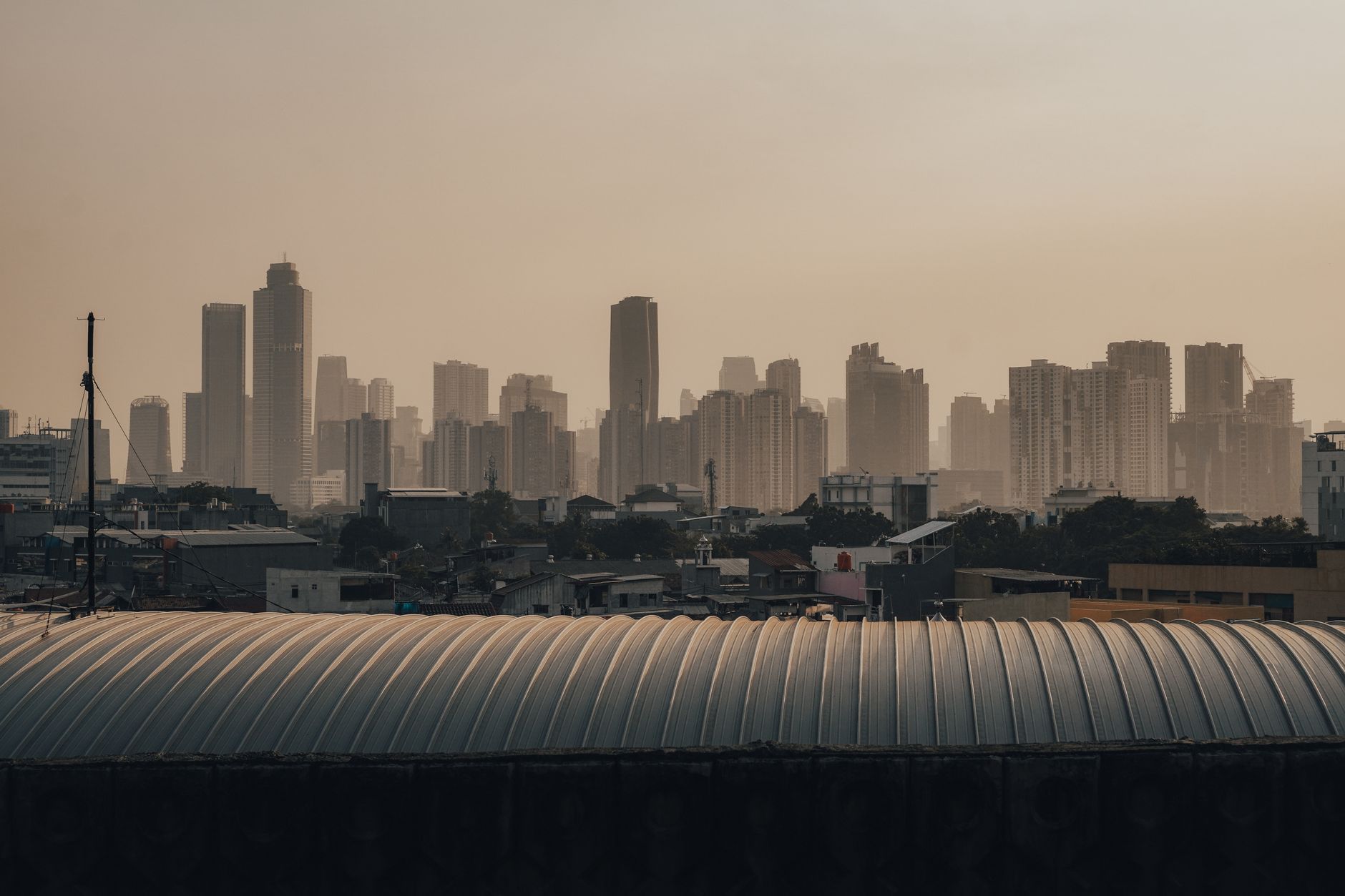
Ask someone who lives in Jakarta what the sky looked like that morning and you’ll get a real answer, because here the sky isn’t scenery — it’s information. On a good day in November, after a proper overnight downpour, it’s the kind of high, hard blue you get maybe a dozen times a year in a lot of cities. On a bad day in August the horizon dissolves into a beige smear and the towers along Jalan Sudirman look like they’ve been shot through a dirty window. That’s the honest picture of jakarta air quality: it swings between those two extremes more than most places you’ll have travelled to, and if you’re planning a trip here it’s worth knowing which version of the sky you’re likely to get, why it happens, and — the question that actually matters — whether it should change anything about your plans.
This sits alongside the broader groundwork covered in our Jakarta travel tips hub, the kind of practical planning you’d do before any trip here, from working out the best time to visit to checking whether your travel insurance actually covers a respiratory flare-up abroad. Air quality tends to get a single throwaway line in most general Jakarta guides — “check the AQI before you go” — and then the subject is dropped. That’s not much use if you have asthma, you’re travelling with a toddler, or you’re just someone who’d rather know what they’re breathing than guess. This is the deep dive those other guides skip.
How Bad Does Jakarta’s Air Actually Get?
In blunt numbers: Jakarta’s annual average PM2.5 concentration sat around 34 micrograms per cubic metre in 2025, which works out to a US AQI in the high moderate range — brushing up against “unhealthy for sensitive groups” as a yearly average, not just on a bad afternoon. That figure is roughly six times the World Health Organization’s annual guideline of 5 µg/m³, which sounds alarming until you realise almost every major city in South and Southeast Asia is in the same boat, several of them considerably worse. Indonesia as a whole was ranked the most polluted country in Southeast Asia in 2025 and the 17th most polluted country globally.
Day to day, the swings are the real story. On a calm dry-season afternoon the AQI can sit at 150 or higher — solidly “unhealthy” on the US scale — and on the worst days of a bad year, usually clustered in July and August, readings have pushed past 180 and occasionally into the low 200s, briefly putting Jakarta at or near the top of global “most polluted city right now” rankings that outlets like IQAir publish daily. Those spikes make headlines precisely because they’re notable, not because they’re the daily norm. Most days fall somewhere in the moderate-to-unhealthy-for-sensitive-groups band, which is unpleasant if you’re paying attention and largely a non-event if you’re not.
The Jakarta Air Quality Calendar: Month by Month
If you only remember one thing from this article, make it this: Jakarta’s air pollution is heavily seasonal, and the season matters more than almost anything else you can control. The dry season, roughly June through September, is when things get genuinely bad. The wet season, October through May with a rainfall peak around January and February, is when the city breathes easier — not spotless, but a different world. Here’s roughly how it plays out, based on multi-year PM2.5 monitoring trends and recent IQAir seasonal data. Treat the numbers as indicative ranges rather than a forecast; any given week can buck the pattern, especially in an El Niño year.
| Month | Season | Typical PM2.5 (µg/m³) | Typical AQI (US) | What to expect |
|---|---|---|---|---|
| January | Wet (peak rain) | 20–30 | 70–90 | Cleaner air, but flooding is the bigger travel headache |
| February | Wet | 18–28 | 65–85 | Still reliably rainy; some of the best air of the year |
| March | Wet, tapering | 22–32 | 70–95 | Rain becomes less consistent through the month |
| April | Transition | 25–35 | 75–100 | Humidity climbs, haze starts creeping back |
| May | Transition to dry | 30–45 | 85–120 | First real spikes of the year appear |
| June | Dry (onset) | 40–60 | 110–150 | Rain stops clearing particulates; noticeably hazier |
| July | Dry (peak) | 45–70 | 120–160 | Often the single worst or second-worst month |
| August | Dry (peak) | 45–80 | 120–165 | Frequently the worst month; regional haze possible |
| September | Dry, tailing off | 35–55 | 100–140 | Still poor early on, improving toward month’s end |
| October | Early wet | 25–40 | 80–110 | First real rains bring welcome relief |
| November | Wet | 20–30 | 70–90 | Reliable improvement, good visibility days common |
| December | Wet | 18–28 | 65–85 | Usually the cleanest month, alongside flood risk |
If clean air is genuinely a priority — not just a mild preference — the calendar lines up neatly with our best time to visit Jakarta guide’s own recommendation of the shoulder months either side of the wettest weeks. November and early December, or February into March, tend to offer the best combination of manageable rain and genuinely breathable air.
Why Jakarta’s Air Gets So Bad in Dry Season
It isn’t one thing. It’s three or four ordinary problems stacking on top of each other for four months straight.
Traffic that never really stops
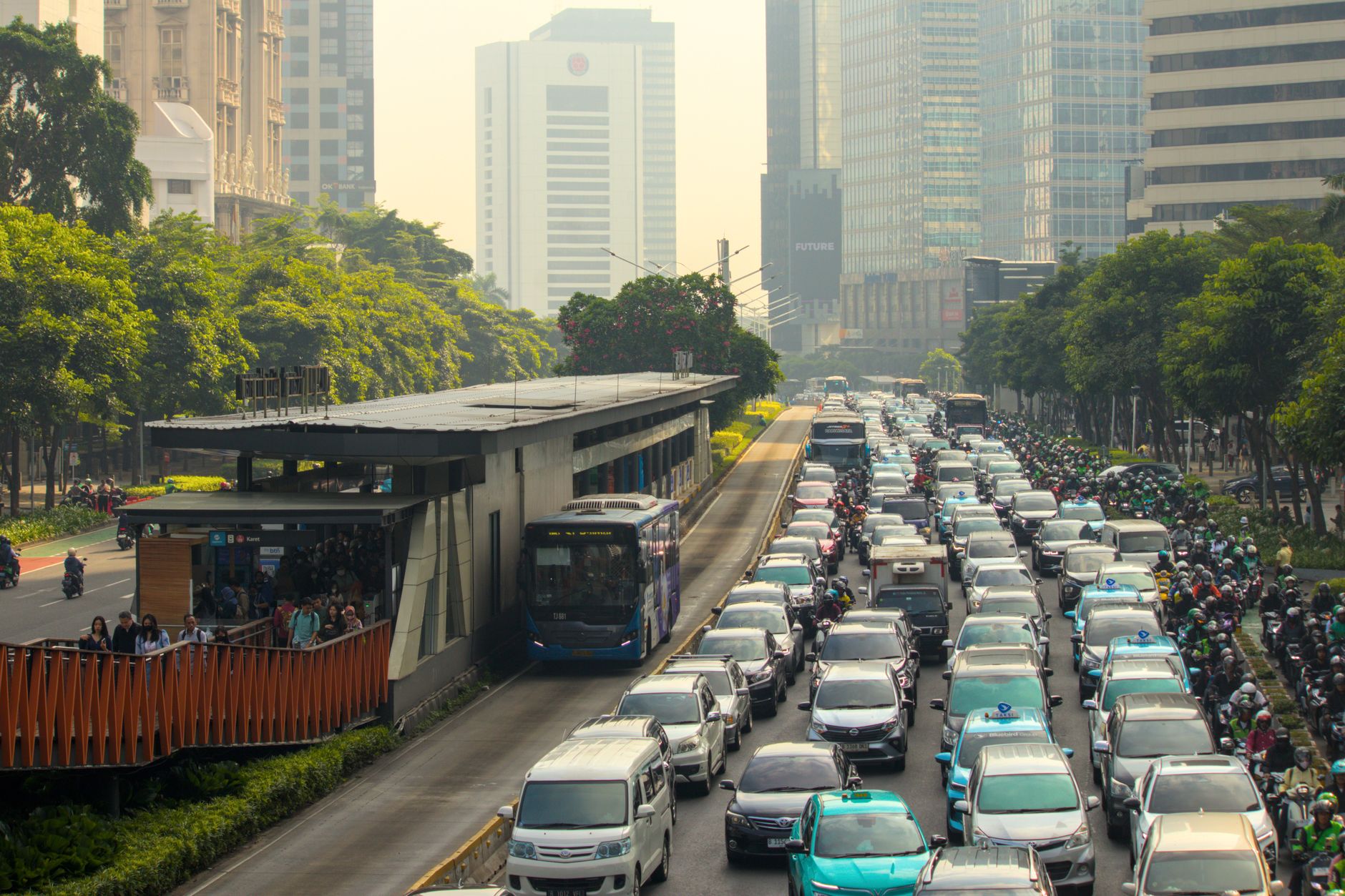
Jakarta has somewhere north of 20 million vehicles registered across the greater metropolitan area, a huge share of them motorbikes running on lower-grade fuel and rarely serviced to the standard you’d expect in, say, Tokyo or Singapore. Road transport is consistently identified as the single largest source of the city’s PM2.5 and nitrogen dioxide. If you’ve read our notes on how to avoid Jakarta traffic, you already know the gridlock is bad for your schedule; it’s also, quite directly, bad for your lungs, since idling engines pump out particulates for hours at a stretch on the city’s arterial roads.
Coal, industry and the regional haze problem
Coal-fired power plants ringing the Jakarta metropolitan area, plus heavy industry in Banten and West Java, add a steady background load of sulphur and particulate pollution that doesn’t fluctuate much with the seasons — it’s the traffic and weather layered on top that push totals into unhealthy territory. In some dry-season weeks, transboundary haze drifting in from land-clearing fires on other Indonesian islands adds a further, less predictable spike, though this affects Jakarta far less consistently than it does Sumatra or Kalimantan.
The weather works against you
This is the part people underestimate. Rain is Jakarta’s most effective, most free air purifier, physically washing particulates out of the atmosphere. Take away months of consistent rain, as the dry season does, and everything else — the traffic, the industry, the construction dust — has nowhere to go. Low wind speeds and temperature inversions in the mornings trap pollutants close to street level, which is exactly where you’re standing when you’re out sightseeing on foot.
Jakarta vs Other Major Asian Cities
Context matters here, and I’d rather give it to you straight than let you assume Jakarta is either uniquely awful or perfectly fine. It’s neither. Recent monitoring puts Jakarta and Hanoi in a similar bracket — both now frequently posting worse annual PM2.5 averages than Beijing, which has cleaned up substantially since the crackdowns of the mid-2010s. Delhi remains in an entirely different category, regularly recording readings that dwarf every other city on this list, particularly during its post-monsoon crop-burning season from October to January.
| City | Approx. annual PM2.5 (µg/m³) | Roughly x WHO guideline | Worst season |
|---|---|---|---|
| Jakarta | 30–34 | ~6–7x | June–September (dry season) |
| Hanoi | 35–40 | ~7–8x | October–February (dry NE monsoon) |
| Beijing | 28–35 | ~6–7x | Winter heating season |
| Bangkok | 18–25 | ~4–5x | December–March (burning season) |
| Delhi | 90–110+ | ~18–22x | October–January (crop burning + inversion) |
The takeaway I’d actually stand behind: Jakarta is a genuinely polluted city by global standards, on par with or slightly better than Hanoi and modern Beijing, and dramatically cleaner than Delhi on its worst days. It is not the extreme case some headlines make it sound like, and it is not the non-issue some tourism boards would prefer you believe. It sits in an uncomfortable, very real middle.
Reading the AQI Scale: What the Numbers Actually Mean
Every app quotes a number, but the number is meaningless without the bands behind it. This is the US EPA scale most apps default to, and it’s the one worth memorising before you land.
| AQI range | Category | What it means for you |
|---|---|---|
| 0–50 | Good | No concern for anyone |
| 51–100 | Moderate | Fine for almost everyone; very sensitive individuals may notice mild effects |
| 101–150 | Unhealthy for Sensitive Groups | Asthma, heart conditions, children, elderly: limit prolonged outdoor exertion |
| 151–200 | Unhealthy | Everyone may notice effects; sensitive groups should stay indoors during peak hours |
| 201–300 | Very Unhealthy | Avoid outdoor exertion; consider a mask if you must go out |
| 301+ | Hazardous | Rare in Jakarta; treat as an emergency-level health warning |
Jakarta spends most of the dry season oscillating between the second and fourth rows of that table. It very rarely reaches the bottom two, which is worth holding onto when a scary headline number crosses your feed.
What Poor Air Quality Actually Feels Like on the Ground
On a genuinely bad day — AQI 150 to 180, say — you’ll notice it before you check your phone. The light goes flat and slightly yellow-grey even at midday. Distant buildings that should be crisp against the sky blur into a soft outline. Your eyes might feel gritty after a few hours outside, particularly near major roads, and if you’re doing anything strenuous — climbing the stairs at a temple, power-walking around Kota Tua — you may notice you’re working slightly harder to get the same effect you’d get at home. None of that is dangerous for a healthy adult on a short trip. It’s uncomfortable in the way a smoggy day in Los Angeles or a hazy week in Singapore during Sumatran fire season is uncomfortable: noticeable, mildly irritating, not something you’ll still be thinking about a month later.
The Real Health Risk: Short Trip vs Long-Term Resident
This is where I’ll take a clear position rather than hedge: for a healthy adult on a trip of a few days to two weeks, Jakarta’s air quality is not a reason to cancel or dramatically restructure your plans. The health literature on air pollution is overwhelmingly about long-term, cumulative exposure — the kind that raises the risk of cardiovascular disease, respiratory illness and other chronic conditions over years of daily living in a polluted environment. That’s the real and serious risk residents of Jakarta carry, and it’s a legitimate public health issue for the city. It’s a fundamentally different exposure profile than a tourist breathing the same air for five or six days.
Short-term exposure to elevated PM2.5 can cause temporary throat and eye irritation, a mild cough, or in sensitive individuals a tightening of the chest — symptoms that typically resolve once you’re back in cleaner air or indoors with air conditioning, which covers the overwhelming majority of Jakarta’s hotels, malls and museums. If you want a broader read on how this fits into the general risk picture of visiting, our Jakarta safety guide covers it alongside the more commonly asked questions about crime, traffic and scams — and air quality ranks well below all three as a practical concern for most visitors.
Who Should Actually Take Precautions
The honest answer is a specific list, not “everyone should be careful.” Take this seriously if you have asthma, COPD, or any diagnosed respiratory condition; if you have cardiovascular disease, including a history of angina or heart failure; if you’re pregnant; if you’re travelling with infants or very young children, whose lungs are still developing and who breathe faster relative to their body size than adults; or if you’re elderly with any underlying condition. Endurance athletes planning to run or cycle hard outdoors during dry season should also pay attention, since heavy exertion pulls far more polluted air deep into the lungs than walking around a museum does.
If you fall into any of those groups, the practical adjustment isn’t to avoid Jakarta — it’s to build slightly more indoor time into a dry-season itinerary. The city has no shortage of excellent indoor attractions that let you dodge a bad-air afternoon without dodging the trip itself.
Practical Advice If You Have Asthma or a Respiratory Condition
Talk to your GP before you travel, specifically about Jakarta’s pollution profile, and make sure your reliever inhaler is in your day bag, not packed away in checked luggage or left at the hotel. Bring more than you think you’ll need — pharmacies in Jakarta are plentiful and generally well stocked, but you don’t want to be tracking one down mid-flare-up. Check the AQI each morning as part of your routine, the same way you’d check the weather, and treat “unhealthy” readings as your cue to shift plans indoors rather than push through.
Galleries and museums are your friend here. A dry-season afternoon that would otherwise mean an hour of outdoor walking becomes a comfortable few hours at somewhere like the Museum MACAN, or a browse through one of the city’s enormous air-conditioned complexes covered in our best malls in Jakarta guide. Neither feels like a compromise; both are genuinely worthwhile ways to spend a few hours regardless of the sky outside.
Real-Time Air Quality Apps and Sites Worth Checking
Don’t rely on how the sky looks — haze can be deceptively mild-looking on a day that’s actually reading unhealthy, and clear on a day when a specific pollutant is elevated. Three sources are worth having on your phone before you land. IQAir’s AirVisual app is the most widely used globally, pulls from a broad network of monitoring stations, and gives you a simple current reading plus a forecast. Nafas Indonesia, a locally built app, is arguably more useful for Jakarta specifically — it runs the largest network of outdoor sensors in the greater Jakarta area, over 120 of them, and includes a “Clean Air Zone” feature flagging public spaces independently verified to have healthy indoor air, plus activity recommendations based on current readings. BMKG, Indonesia’s official meteorological, climatological and geophysical agency, is the authoritative source for weather and rainfall forecasting, which is directly useful here since rain is the best predictor of a coming improvement in air quality, even if its dedicated air-quality monitoring network is sparser than the commercial apps.
Worth a five-second habit each morning of a dry-season trip: open one of these, glance at the number, and let it inform — not dictate — how you structure the day.
Are Masks Worth Carrying?
When a mask actually helps
A well-fitted N95 or KN95 respirator, ideally NIOSH-certified, genuinely filters out the fine particulates that matter — PM2.5 — and is worth packing if you fall into any of the higher-risk groups above, or if you’re visiting during peak dry season and want the option available. The fit matters more than the brand: a mask with gaps at the edges does much less than the rating on the box suggests. If you have a diagnosed respiratory or cardiac condition, check with your doctor before relying on one regularly, since a snug respirator does increase the effort needed to breathe, which can itself be uncomfortable for some conditions.
What not to bother with
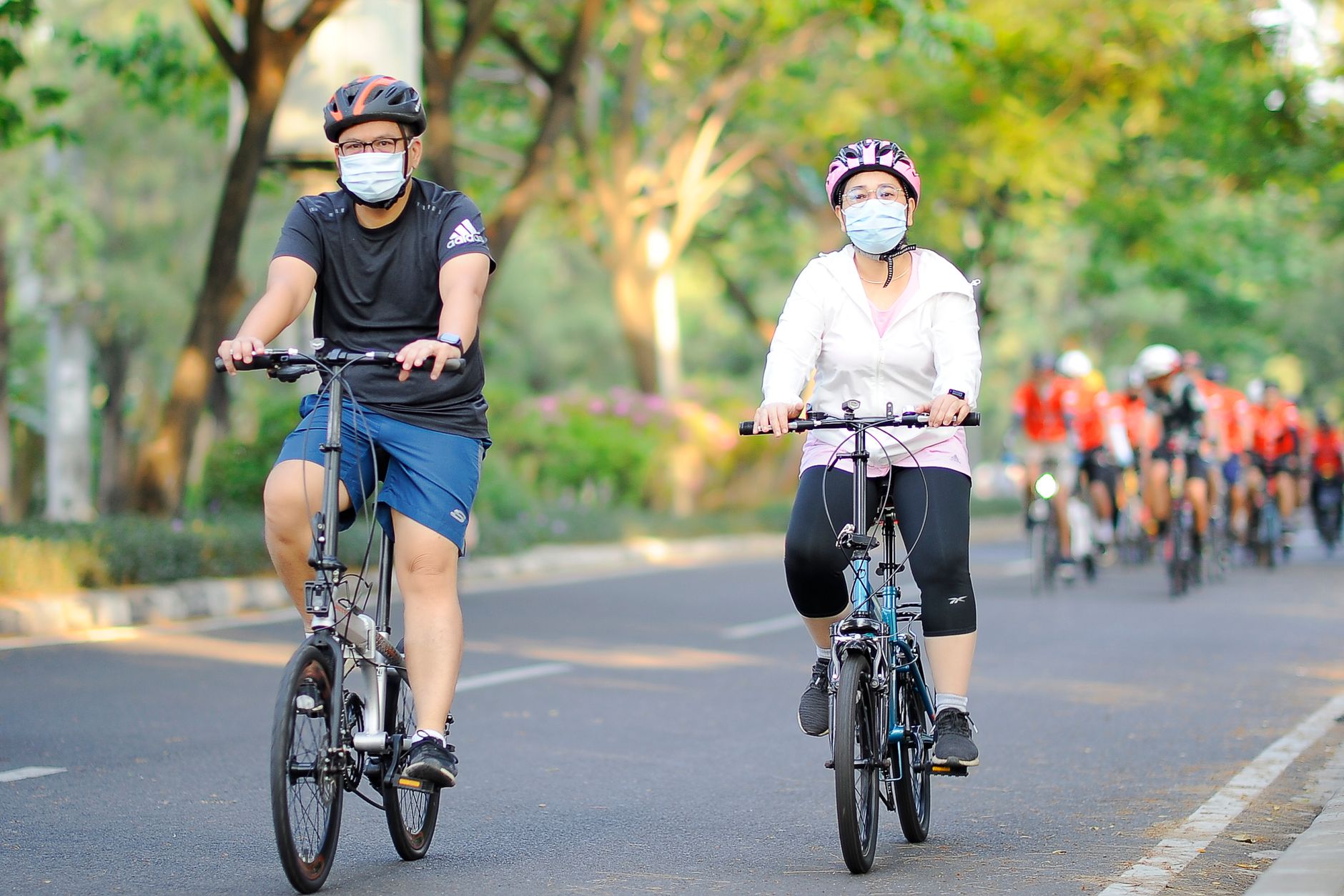
Surgical masks and cloth masks, the kind you’ll see plenty of locals wearing on motorbikes, do very little against PM2.5 — they’re designed to stop droplets, not fine particulates, and mostly persist as a pandemic-era habit and sun protection rather than genuine pollution control. For most healthy travellers, I wouldn’t bother wearing anything at all for general sightseeing, even on a moderately hazy day. I would pack two or three proper N95s in a side pocket for the specific scenario of a red-AQI day combined with something you can’t avoid doing outdoors — waiting for transport, an outdoor market, a long walk between sights. Used that selectively, rather than as a daily accessory, a mask earns its space in your bag without becoming a costume.
Practical Day-to-Day Tips to Cut Your Exposure
Small adjustments do more than any piece of gear. Schedule strenuous outdoor activity — a long walk through a neighbourhood you want to explore properly, say — for early morning before traffic peaks, or for the afternoon after a rain shower has cleared the air, rather than the late-afternoon rush hour when both traffic and trapped heat are at their worst. Favour air-conditioned transport over walking long stretches alongside arterial roads; our guide to getting around Jakarta covers the MRT, TransJakarta and ride-hailing options that let you skip the worst roadside exposure entirely. If you’re mapping out a longer stay, building a spare, flexible day into a week-long itinerary gives you room to swap an outdoor day for an indoor one if the AQI spikes unexpectedly, which it periodically does even outside peak dry season.
Hydrate more than you would at home — it genuinely helps with the mild throat irritation some people notice — and don’t schedule your one big hiking or cycling day for what turns out to be the worst-air week of your trip if you can help it. Check the calendar table above before you book.
Frequently Asked Questions
What is a typical jakarta air quality reading during a visit? Most days fall between AQI 70 and 150 depending on season, with dry-season afternoons (June to September) most likely to push into the 120–160 range and wet-season days more often sitting at 60–90.
Is Jakarta’s air pollution dangerous for a short holiday? For a healthy adult on a trip of days rather than years, no — it’s an occasional discomfort, not a health emergency. The real risk profile is about long-term residency, not a short visit.
When is the best time to visit Jakarta for cleaner air? November through February offers the most consistently good air quality, with the trade-off of higher rainfall and occasional flooding risk. Late September and early October, right as the rains begin, are a decent shoulder option too.
Do I need to wear a mask in Jakarta? Not as a default. Pack a couple of proper N95s for high-AQI dry-season days if you’re in a sensitive group, but most healthy travellers won’t need one for general sightseeing.
What AQI is considered unhealthy? On the US scale, 101–150 is “unhealthy for sensitive groups,” 151–200 is “unhealthy” for everyone, and anything above 200 is rare in Jakarta but warrants real caution.
How can I check real-time air quality in Jakarta? IQAir’s AirVisual app and Nafas Indonesia both give live local readings; BMKG is the official source for the rainfall forecasts that predict when air quality will improve.
Is Jakarta more polluted than Bangkok or Delhi? Jakarta is typically worse than Bangkok on an annual basis but nowhere near Delhi, which records PM2.5 levels several times higher than Jakarta’s during its worst months.
Should I cancel my trip if the AQI is high on the day I land? No. A single high reading is normal during dry season and usually passes within days. Check the forecast, plan an indoor day if needed, and carry on.
Where to Go Next
Pair this guide with the practical basics in our Indonesia visa requirements overview if you haven’t sorted entry paperwork yet, and once you’ve got a feel for how air quality might shape your daily schedule, browse our full list of things to do in Jakarta to start building an itinerary with the right mix of indoor and outdoor days for whichever season you’re travelling in.
Small children breathe faster than adults and spend more time close to the ground, so poor-air days hit them harder. If you are travelling with a toddler, check the reading before any outdoor morning and swap the park for an aquarium or an indoor playground when it is bad. Our guide to Jakarta with toddlers sets out a daily rhythm built around exactly that.