Jakarta rearranges a toddler’s day before you have finished your coffee. By nine the pavement is already warm, the traffic has set its own timetable, and the question of where to find a clean changing table has a surprisingly good answer: the mall, which in this city is less a shop than a piece of public infrastructure. Travelling in Jakarta with toddlers is mostly a matter of accepting that geometry — air conditioning, short hops, one proper outing a day — and then enjoying a capital that, under all the noise, adores small children more openly than almost anywhere in Asia.
This guide is about the under-fours specifically: car seats and ride-hailing, pushchairs against carriers, what the MRT charges a small child, where to buy nappies and formula, heat and mosquitoes, nursing rooms, doctors, and the handful of outings that genuinely suit a two- or three-year-old. For the big attractions and older children, our guide to Jakarta with kids is the place to start. Prices were checked in September 2026; treat them as the right order of magnitude and confirm anything that matters before you set off.
Toddler costs at a glance
| What | Toddler price (IDR) | The catch |
|---|---|---|
| MRT Jakarta | Free under 90 cm | Height, not age: over 90 cm needs a ticket |
| Ragunan Zoo | 3,000 per child | Adults 4,000. JakCard only, closed Mondays |
| Sea World Ancol | Full 175,000 from 80 cm | Plus the 35,000 Ancol gate fee per person |
| KidZania | Free under 2; from 325,000 | Adult companion from 260,000 on weekdays |
| Museum Layang-Layang | 20,000 per child | Includes a kite-making workshop |
| Playtopia, Pondok Indah Mall | 115,000 on weekdays | Includes one adult companion |
| Miniapolis, Plaza Indonesia | 200,000 per child | Two-hour sessions; companion free |
| Taman Safari Bogor | 170,000 weekday / 210,000 weekend | 90 minutes to two hours each way |
| Taman Suropati, Tebet Eco Park | Free | Go early; shade runs out by late morning |
| Private car with driver | About 1,000,000 a day | Includes petrol, tolls and parking; ask about a child seat |
The honest picture
Parents who have done Bangkok or Singapore with a toddler usually arrive expecting Jakarta to be harder, and in two specific ways it is. It is hotter and more humid than a small body likes for more than an hour at a time, and it is a city built for cars and motorbikes rather than for anyone pushing anything with wheels. Pavements appear, vanish, narrow to a kerb and reappear as a motorbike park. A two-kilometre walk that looks sensible on a map is frequently not.
Everything else is easier than you would expect. Indonesians love small children with an openness that takes some visitors aback: waiting staff will pick up your baby to give you a minute, strangers will ask to take a photo with your toddler, grandmothers on the MRT will offer a seat and a biscuit. Nobody frowns at a meltdown. Help is cheap and available, the malls have better baby facilities than most European airports, and the food — plenty of rice, noodles, chicken and soup, with the chilli served on the side — suits cautious eaters well.
The verdict, then: Jakarta with a toddler works well, provided you build each day around one outing, keep journeys short, and treat air conditioning as a scheduled stop rather than a failure of nerve. What does not work is trying to see Jakarta the way you would without children, crossing the city twice a day in traffic. That plan fails with adults too, just more quietly.
The photo question
It deserves its own paragraph because it surprises nearly everyone with a fair-haired child. People will want photographs of your toddler, sometimes a queue of them at Monas or Ancol, and they will reach out to touch cheeks and hair. It is affectionate and entirely well-meant. You are also entitled to decline, and a smile with maaf, tidak ya — sorry, no — is received without offence. If your child is tired, say no early; the second photo always turns into the tenth.
Arriving at Soekarno-Hatta with a small child
Most international flights land at Terminal 3, and the first decision is how to get into the city. Soekarno-Hatta sits well to the west of the centre, and the drive to Thamrin or Sudirman takes 45 minutes in light traffic and well over two hours at the wrong moment on a weekday evening. With a toddler who has just done a long-haul flight, that difference matters more than any other fact in this guide. If you can choose, a flight that lands mid-morning or late at night is kinder than one that lands at five in the afternoon.
The airport train is a real option if your hotel is near Sudirman. From the terminals you ride the free Skytrain to SHIA station, between Terminals 1 and 2, then take the train to BNI City in 40 to 50 minutes for roughly 70,000 to 90,000 per adult, with departures every 15 to 20 minutes. Pushchairs go on without fuss. The drawback is the number of changes with luggage — terminal, Skytrain, train, then a car for the last stretch — which is manageable with one child and two adults and tiresome with anything more.
For most families the answer is a car. A hotel transfer or pre-booked private driver can be asked to bring a child seat; a Blue Bird taxi from the official rank or a Grab from the designated pick-up point is cheaper, but neither will have one. Our airport transfer guide sets out the options and fares in detail.
One small kindness to know about: families with babies are often waved towards shorter queues at immigration and security. Do not count on it, but do not refuse it either. Every child needs their own passport and visa, babies included — see our visa guide before you fly.
Car seats, Grab and the taxi question
This is the practical issue that causes the most anxiety, so plainly: ordinary Grab and Gojek cars in Jakarta do not carry child seats, and there is no option in either app to request one. Grab’s child-seat service, GrabFamily, operates in Singapore and Kuala Lumpur but not in Indonesia. There is no national car-seat law here, and you will see local families with toddlers on laps in the back of every car on the road.
What you do about that is a personal decision, but the realistic options are these:
- Bring your own. A lightweight travel car seat, or a harness-style restraint approved for aircraft, is the only way to have one in every car. Check that it can be fitted with a lap-and-shoulder belt, because that is what Jakarta taxis and ride-hailing cars have; ISOFIX points are common in newer cars but not guaranteed.
- Hire a car with a driver. Around 1,000,000 a day buys a Toyota Avanza or similar with driver, petrol, tolls and parking included, and many rental companies can supply a child seat if you ask when you book. Get the confirmation in writing and check the seat when the car arrives. For a family doing one outing a day, a driver who waits outside the zoo while your toddler naps in the car is worth every rupiah. Our car rental guide covers how to book one.
- Use hotel cars. Five-star hotels will usually find a child seat for their own transfers with notice.
Two firm lines regardless of the above. Never put a toddler on a motorbike taxi — GrabBike and GoRide are brilliant for adults and the wrong tool entirely for a two-year-old. And the open-sided three-wheeled bajaj is fun for a photo, not for a journey. Our Grab versus Gojek guide explains which car tiers to book for more room, and the taxi guide covers Blue Bird.
Pushchair or carrier? Bring both
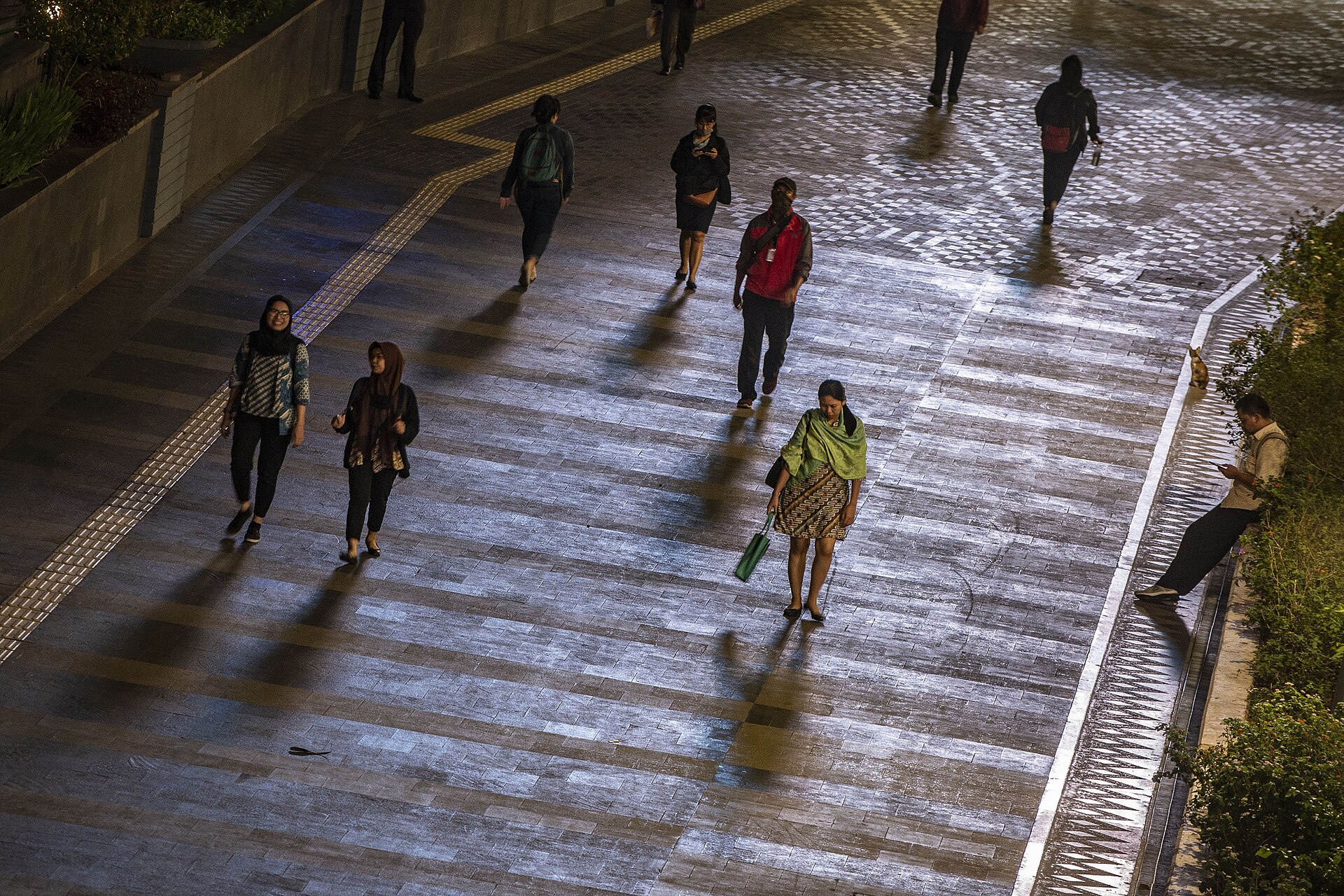
The right answer for Jakarta is a compact, one-hand-fold pushchair and a soft carrier, used for completely different things.
The pushchair earns its place anywhere that has been built in the last twenty years: the malls, the MRT, the hotels, the airport, the rebuilt pavements along Sudirman and Thamrin, the Gelora Bung Karno complex in Senayan, Tebet Eco Park and the paved paths at Ragunan. It is also a portable bed, and a toddler who naps in a reclined pushchair in an air-conditioned mall while you eat lunch is the single best outcome available to a parent in this city.
The carrier is for everywhere else: Kota Tua’s cobbles, the market lanes of Glodok and Pasar Baru, the kampung streets where the pavement is a gutter cover, footbridges with stairs, and any pavement blocked by a parked motorbike, which is most of them. Crossing a busy road with a toddler strapped to your chest is also markedly less stressful than doing it with a pushchair. Jakarta’s pedestrian bridges usually have stairs rather than ramps, so if you only bring one of the two, bring the carrier.
A large travel system with a separate bassinet is the wrong kit here. It will not fit in the boot of an Avanza with luggage, it will not fold into the MRT’s designated area gracefully, and you will carry it up a footbridge at least once.
Public transport with little ones

MRT Jakarta — the one to use
The MRT is the most toddler-friendly thing in the city. It is air-conditioned, clean, quiet and punctual, the stations have lifts, and children under 90 cm ride free — they are carried or walk through the gate beside you. The rule is height, not age, so a tall two-year-old may need their own ticket. Pushchairs are allowed and there is a designated area for them in cars 3 and 4; aim for those doors on the platform.
Better still, every MRT station has a nursing room (ruang menyusui). That turns a station into a feeding stop, which is not something you can say about many metro systems. Priority seats are marked, and people give them up readily to anyone carrying a small child. Avoid 07:00 to 09:00 and 17:00 to 19:00 on weekdays, when the trains fill with commuters and nobody can give anything up. Our MRT guide has the stations and fares.
TransJakarta
The bus network reaches far more of the city, and it has priority seats and a women-only section at the front of each bus, which is where mothers with small children tend to sit. It is also much more crowded at rush hour than the MRT, some station access is by long ramps or stairs, and the buses brake hard. Use it outside peak hours and with the carrier rather than the pushchair. The TransJakarta guide explains the cards and corridors.
KRL commuter trains
The KRL is how you reach Bogor, and it is a good train — but it is a commuter railway in one of the most populous metropolitan areas on earth, and at peak times it is packed beyond anything a toddler should experience. Off-peak, especially on a weekday late morning or a Sunday, it is fine. Women-only carriages run at each end of the train. See the KRL guide.
Heat, sun and the shape of a toddler day
Jakarta is 25 to 32 °C all year, and the humidity makes 32 feel like considerably more. The temperature does not change much between seasons; the rain does. The wet season runs roughly from October or November to April, with the heaviest rain in January and February, and it tends to arrive as a hard afternoon thunderstorm that stops everything for an hour and floods low streets. The dry season, May to September, is easier, though it is also when smoke and haze push the air quality down — check it before an outdoor morning, and see our air quality guide for how.
That climate gives a toddler day its natural shape, and the families who enjoy Jakarta most are the ones who stop fighting it:
- 07:00 to 10:00 — outside. Parks, the zoo, anything open-air. Jakarta wakes early; Ragunan opens at 07:00 and the joggers are at Taman Suropati before that.
- 10:00 to 15:00 — inside. Hotel pool in the shade, a mall, an aquarium, lunch, a nap. This is also when the sun is at its most punishing.
- 15:00 to 17:00 — out again, gently. A second park session, a short walk, or the rain, depending on the month.
- 17:00 to 19:00 — stay put. The evening rush is the worst traffic of the day. Be where you intend to have dinner before it starts.
The traffic, oddly, is also a resource. A toddler who fell asleep in the car at the zoo gate will sleep through forty minutes of Jalan TB Simatupang, and more than one Jakarta parent has timed a crosstown journey specifically to catch the nap. Plan journeys for nap time and outings for waking time, and the city’s worst feature turns into a kind of mobile quiet room. Our traffic guide has more on timing.
Pack for it: a wide-brimmed hat, toddler sunscreen, a water bottle they will actually drink from, and — the one people forget — a light layer. Malls, cinemas and the MRT are air-conditioned hard, and going from 32 °C outside to 20 °C inside several times a day is how small children end up with runny noses on day three.
Mosquitoes, water and staying well
Dengue is the health risk that actually matters in Jakarta, and it matters more for small children because the early signs look like any other fever. The mosquito that carries it bites in daytime, particularly in the early morning and late afternoon, and it breeds in standing water in the city itself, not only in the countryside. Ask your doctor or pharmacist before you travel for a repellent suitable for your child’s age, dress toddlers in light long sleeves and trousers at dawn and dusk, and keep the hotel room closed and air-conditioned. Plug-in repellent vaporisers are sold in every minimarket.
If your toddler develops a high fever, see a doctor the same day rather than waiting it out. Doctors generally advise against ibuprofen and aspirin when dengue is a possibility, so get a proper diagnosis before reaching for the usual bottle.
The water rules are simple and absolute: no tap water, including for making formula, rinsing bottles or brushing teeth. Bottled water is cheap and everywhere, and gallon dispensers are standard in serviced apartments. Ice in malls, hotels and established restaurants is made from treated water and is fine; at roadside stalls it is more variable. Hand gel before every meal saves days of misery.
For an upset stomach, rehydration sachets are sold in every pharmacy as oralit; the chains to know are Kimia Farma, Century, Guardian, Watsons and the 24-hour K-24. Children’s paracetamol syrup is easy to find. For anything more serious, the hospitals that expat families use include RSIA Bunda in Menteng, which specialises in mothers and children, RS Pondok Indah in the south, and the Siloam and Mayapada groups, all with paediatric departments. The SOS Medika clinic in Cipete, run by International SOS, is used to foreign families and foreign insurers. Telemedicine apps such as Halodoc will put you in front of a doctor on your phone within minutes and deliver prescriptions to your hotel.
Our health precautions guide covers vaccinations, food safety and hospitals in more depth, and the travel insurance guide explains what to check in a policy when a child is on it.
Nappies, formula and food: what to bring, what to buy
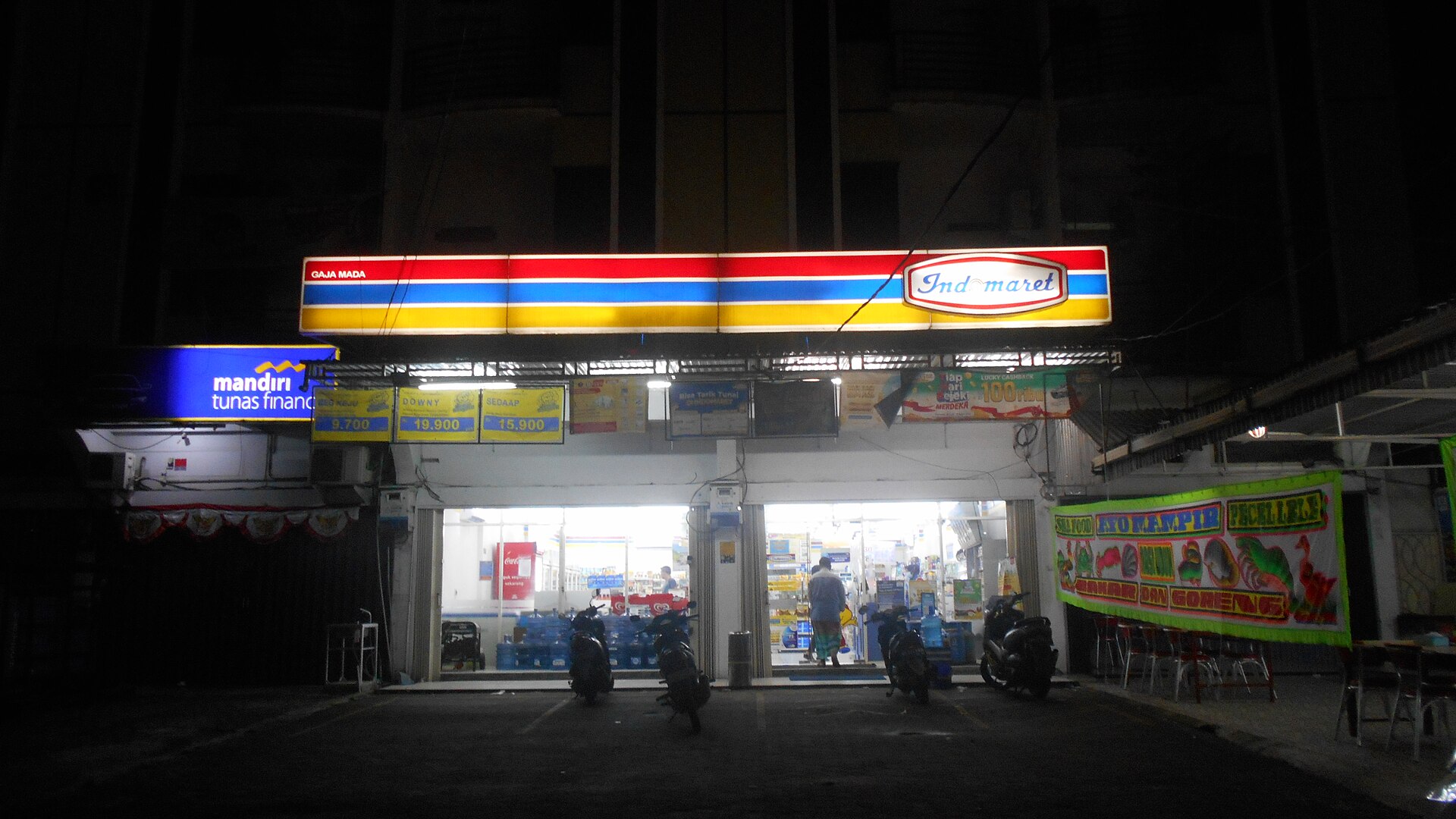
You need to pack far less than you think. Indonesia is a nation of young families, and the everyday supplies are sold on almost every street corner.
Nappies and wipes
Every Indomaret and Alfamart minimarket sells nappies and wipes, usually in small packs, often around the clock. Japanese brands such as MamyPoko and Merries are the ones you will see everywhere and are good quality; familiar Western brands exist but are not on every shelf. Bring enough for the first couple of days and buy the rest here. Swim nappies are harder to find outside the large supermarkets, so pack those.
Formula and baby food
The big international formula brands are sold in Jakarta, but the specific formulation your child is used to may not be, or may come in a different version for the Indonesian market. If your toddler is fussy about formula, bring enough for the whole trip. Jars and pouches of baby food are stocked in the upmarket supermarkets — Ranch Market, Farmers Market, Grand Lucky, the Food Hall branches in the big malls and Kem Chicks in Kemang — and are scarce elsewhere.
What Indonesian toddlers eat
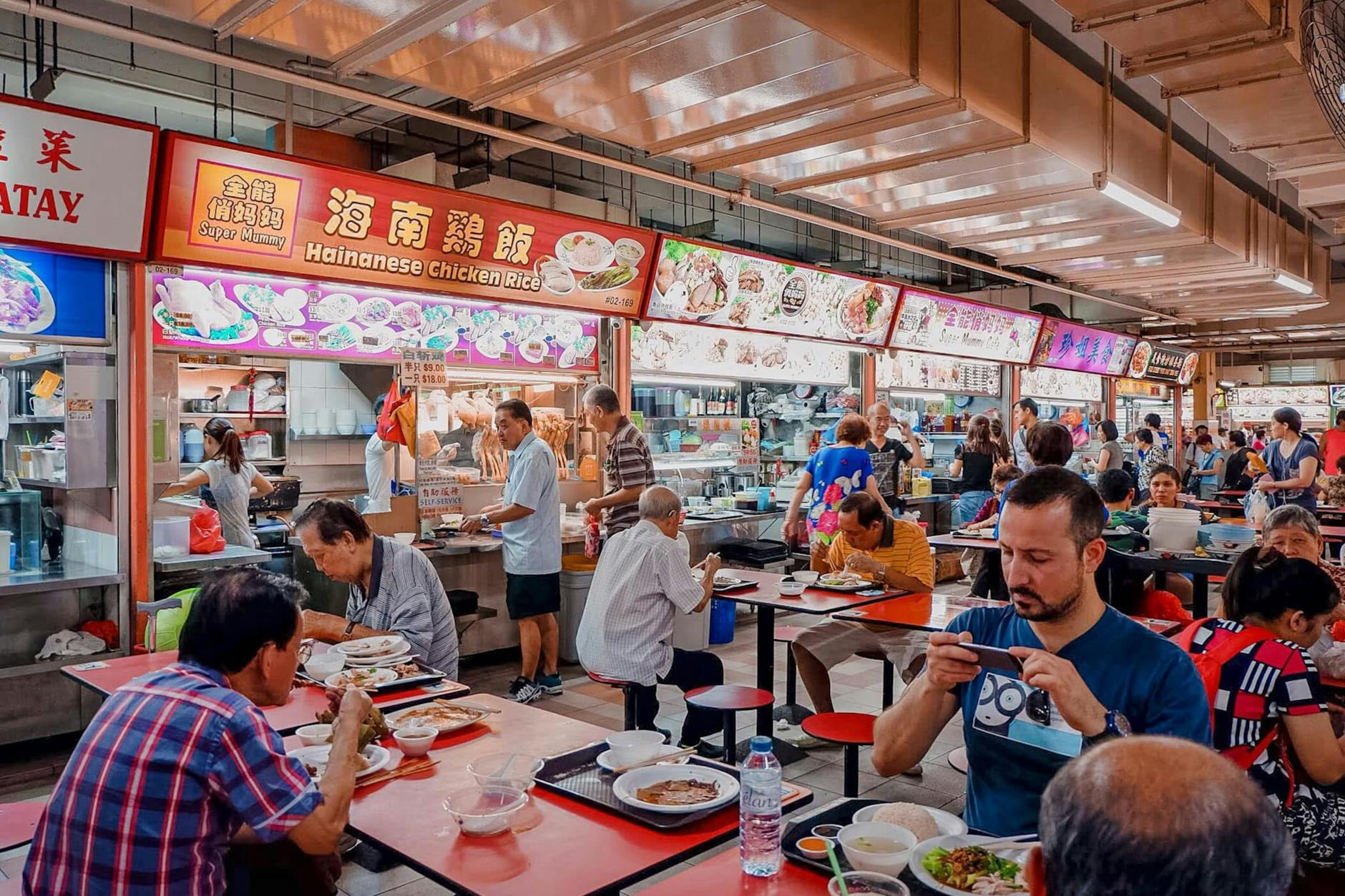
Here is the better news. Indonesian food has its own toddler canon, and it is on sale everywhere for very little. Bubur ayam, rice porridge with shredded chicken, is the classic breakfast and the classic food for small children; ask for it without the sambal and the crunchy toppings if your child is very young. Nasi tim, steamed rice with chicken, is what Indonesian grandmothers feed toddlers. Bakso, meatball soup, soto ayam, mild turmeric chicken soup, and plain nasi goreng are all reliably gentle. Say tidak pedas, not spicy, when you order, not after. Our family-friendly restaurants guide names the places with play areas, and the must-try dishes guide explains the rest of the menu.
Delivery
The trick Jakarta parents actually use: order it. GoMart in the Gojek app and GrabMart in the Grab app will deliver nappies, formula, wipes and groceries from nearby shops to your hotel lobby, usually within the hour. On a wet afternoon with a sleeping toddler upstairs, it is a small miracle.
Nursing and changing
Jakarta is unusually well set up for this, and it is one of the reasons the malls matter so much. Nursing rooms, signed ruang laktasi or ruang menyusui, are standard in the large malls, and the better ones are private, air-conditioned rooms with a sofa, a changing table, a sink and sometimes a microwave and a water dispenser. Every MRT station has one, as do the airport terminals and many offices and public buildings.
Breastfeeding in public is accepted, and in a Muslim-majority city most local mothers feed discreetly with a nursing cover or a scarf. Nobody will object to you doing the same. Changing tables outside malls, hotels and the airport are rare to non-existent, so a portable changing mat earns its space in the bag.
Where to stay with a toddler
The single most useful thing a hotel can do for a family with a toddler in Jakarta is to be physically joined to a mall. It sounds unromantic. It means that on a wet afternoon, or at 17:30 when the traffic has closed in, you can walk from your room to a food court, a supermarket, a nursing room, an indoor playground and a pharmacy without going outside. Hotel Indonesia Kempinski connects to Grand Indonesia, the Grand Hyatt to Plaza Indonesia, and The Ritz-Carlton Pacific Place to Pacific Place, the mall with KidZania on its sixth floor.
Beyond that, the things worth asking for when you book:
- A cot (the hotel will say baby cot or baby crib) and whether there is a charge.
- A bathtub. Many Jakarta rooms have a walk-in shower only.
- A shaded shallow pool. The pool will be busiest and most useful between 10:00 and 15:00, which is exactly when an unshaded deck is unusable.
- Babysitting. Most five-star hotels can arrange a babysitter with notice, usually through an agency. Ask how sitters are vetted and what the hourly rate is before you need one.
- A kettle and a fridge, or better, a kitchenette. Serviced apartments — Fraser, Oakwood and Somerset all operate in Jakarta — give you a kitchen, a washing machine and a separate bedroom for nap time, which for a stay of more than a few nights beats any hotel.
On location: Thamrin and Menteng put you on the MRT, beside the big malls and close to Taman Suropati; SCBD and Senayan put you near Pacific Place and the green space of Gelora Bung Karno; Pondok Indah has Pondok Indah Mall, a water park and RS Pondok Indah, which is not a bad set of neighbours for a family. Our family-friendly hotels guide names specific properties, and the best areas to stay guide compares the districts.
What toddlers actually enjoy
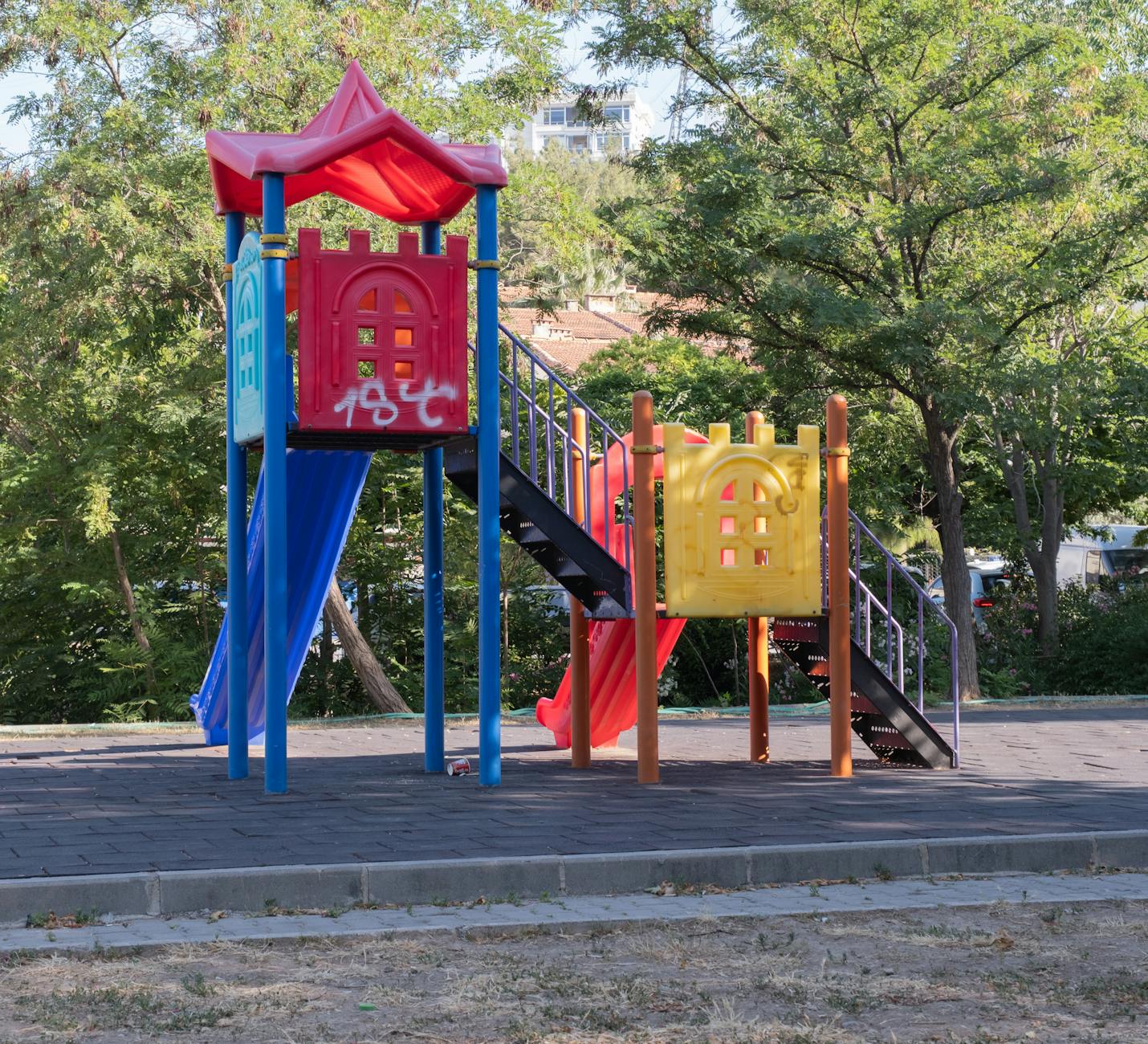
The attractions that work for a two- or three-year-old are not the same as the ones that make the family itineraries, and several of the headline sights are wasted on this age group. What they want is animals, water, space to run and somewhere to climb. Jakarta supplies all four.
Indoor playgrounds in the malls
The rainy-afternoon solution, and the thing Jakarta families actually do on a Sunday. Playtopia has branches at Pondok Indah Mall and Gajah Mada Plaza, with trampolines, slides and ball pools; the PIM branch charges around 115,000 on weekdays including one accompanying adult. Miniapolis at Plaza Indonesia is the smart version, about 200,000 per child with the companion free, run in two-hour sessions starting at 10:00, 12:30, 15:00, 17:30 and 20:00; the Lippo Mall Puri branch in West Jakarta is cheaper at around 100,000 plus 30,000 for the adult. Kidzooona, the Japanese chain, runs ball pools, air tracks and kinetic sand at lower prices — confirm which branch and what the session rules are before you go. Resellers such as tiket.com and Traveloka discount all of them, often heavily.
Almost every large mall also has a free or cheap play corner, plus a Timezone-style arcade that will be too loud for most toddlers. The malls guide covers what each one has.
Ragunan Zoo
Ragunan is the best-value outing in Jakarta for this age: 147 hectares of shaded paths, over 2,000 animals, and a child’s ticket of 3,000. It opens at 07:00, Tuesday to Sunday, and the right plan is to be there when the gates open and to leave by eleven, before the heat and the crowds peak. Payment is cashless and you must buy a JakCard at the gate, but one card covers the whole family. It is far too big to see in a morning with a toddler, so pick an area — the children’s animal park, the swan boats, the pony rides — and let the rest go. Our Ragunan guide has the route and the rest of the prices.
Sea World Ancol
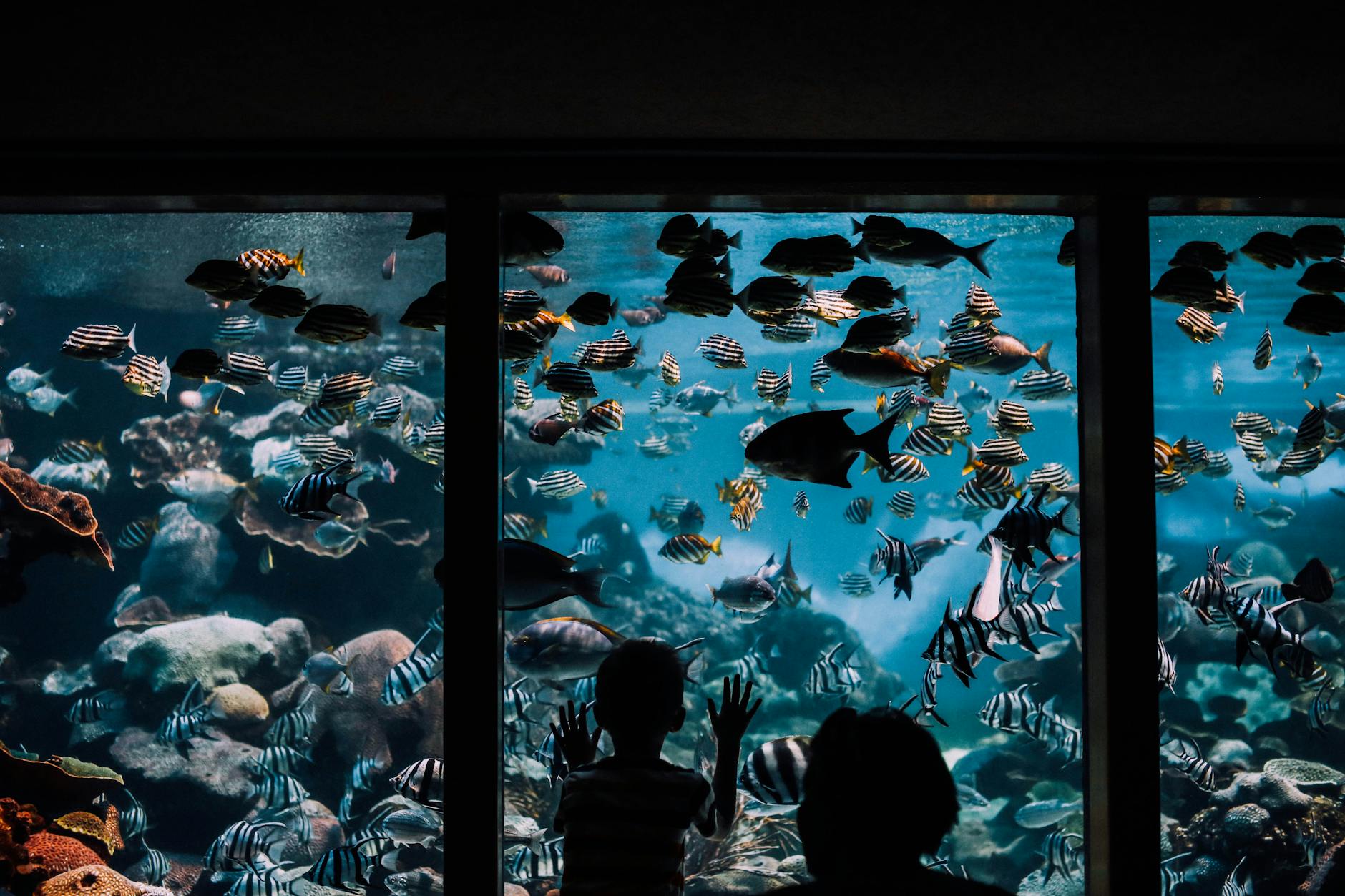
Dark, cool, calm and full of fish, which is close to a toddler’s ideal environment. The Antasena tunnel puts sharks and rays over their heads, the Kolam Sahabat Laut touch pool lets them put their hands in the water, and the scheduled feedings — the main aquarium at 11:00 and 14:00 — are events a two-year-old will talk about for a week. Children 80 cm and taller pay the full 175,000, and the 35,000 Ancol gate fee is charged on top. Allow 45 minutes to an hour from Central Jakarta, and considerably more on a weekend morning. See our Sea World guide.
Parks, early
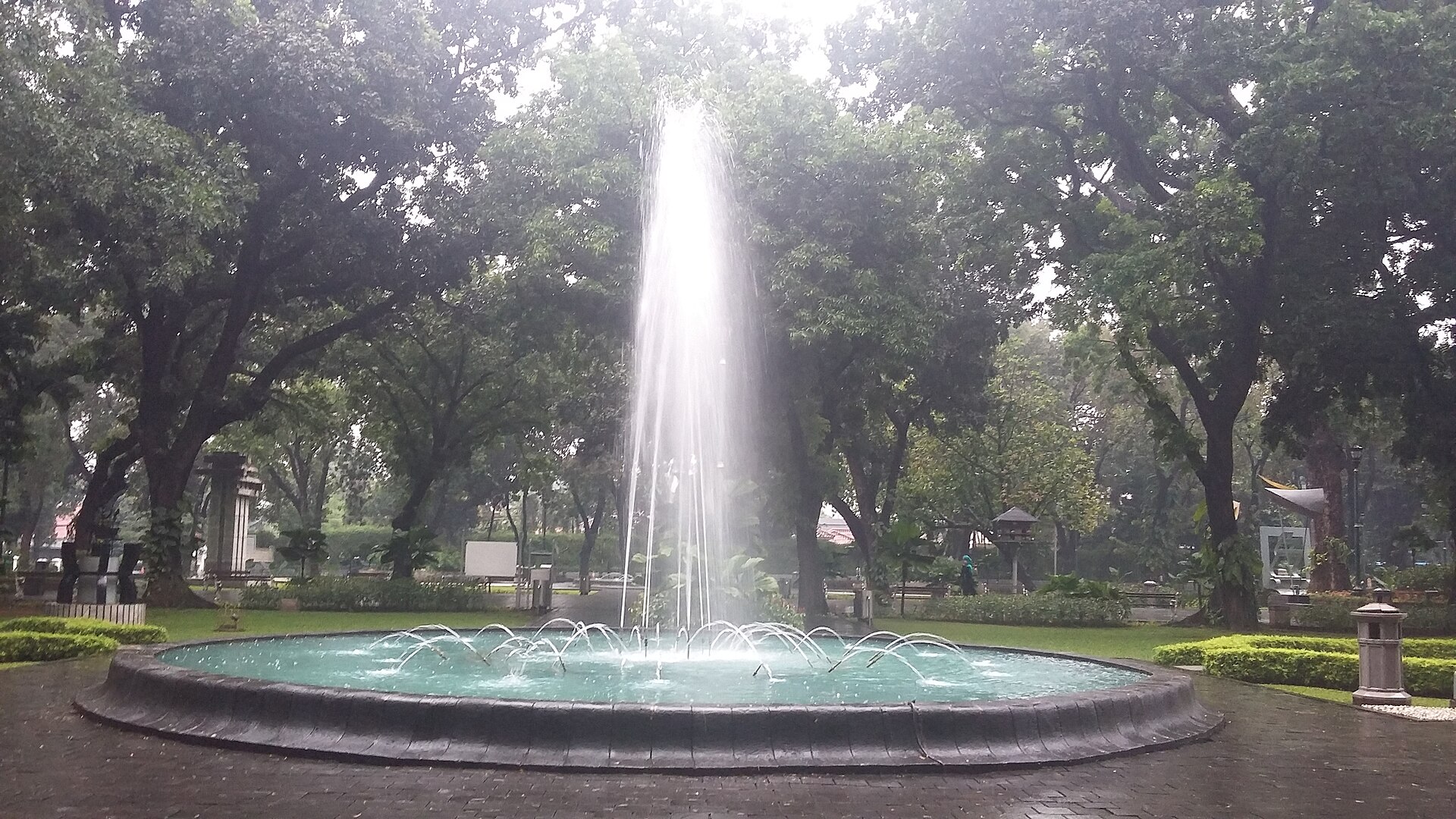
Taman Suropati in Menteng is the loveliest small park in central Jakarta: mature trees, lawns, sculptures and a fountain, and at 07:30 it belongs to joggers, grandparents and small children. Tebet Eco Park in South Jakarta is bigger and newer, with a proper playground on its southern side and the orange Infinity Link Bridge joining the two halves; it is free and it is busy at weekends. On Sunday mornings the main avenue from Sudirman to Thamrin closes to cars until around 11:00 for car-free day, and the whole spine of the city becomes a pushchair-friendly promenade with street food along the edges. For a toddler who has spent the week in malls and cars, it is a small liberation.
Museum Layang-Layang
The Kite Museum in Pondok Labu, South Jakarta, is open daily from 09:00 to 17:00, and the 20,000 child ticket includes a kite-making workshop and a short film. A two-year-old will colour in the kite and wave it about; a four-year-old will make one and fly it in the garden. Either way it is the best-value hour in the city. Our museums for kids guide covers it alongside the others that work for children.
Water
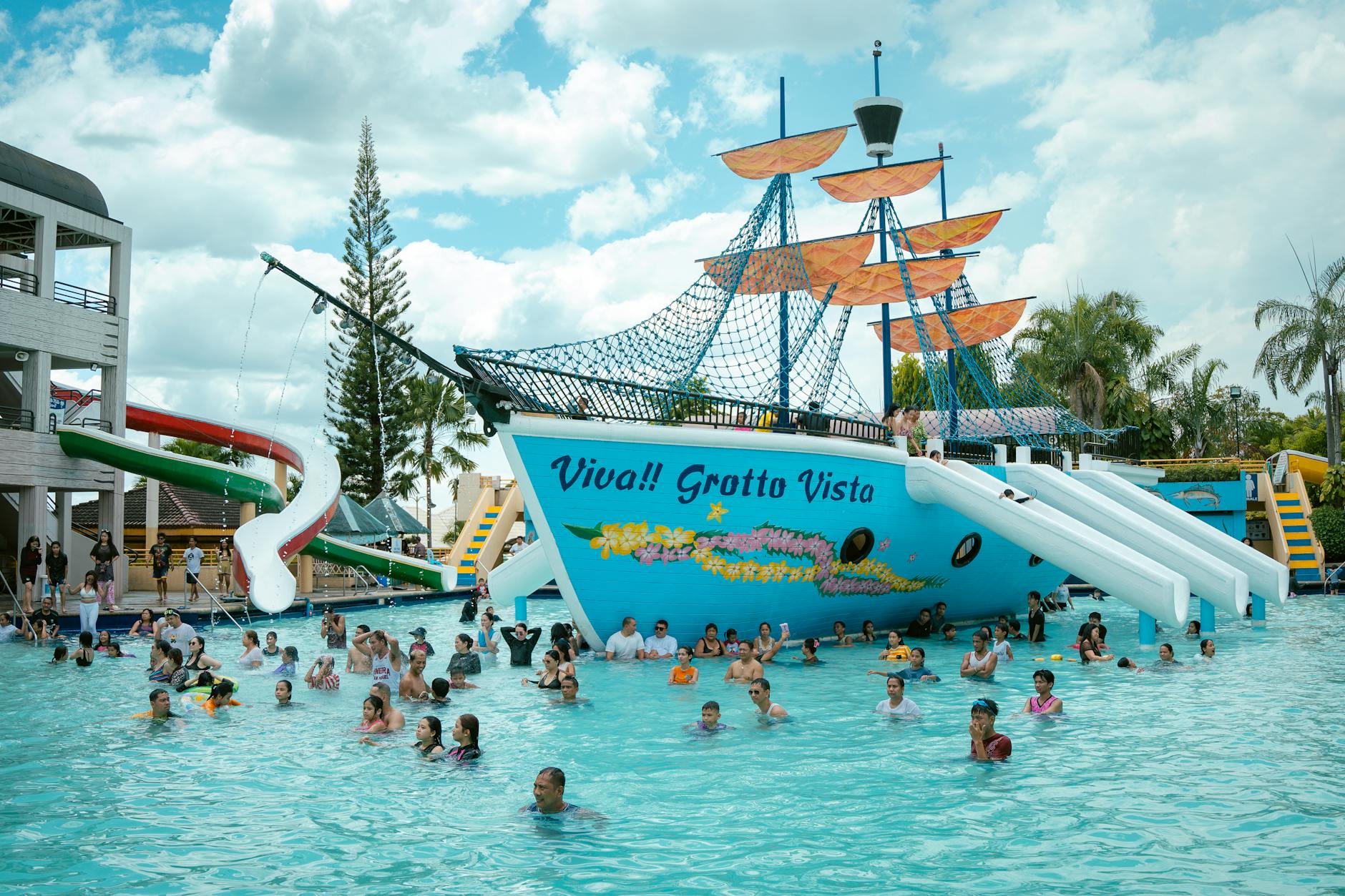
Most of the water parks have a dedicated toddler pool — Atlantis at Ancol has its Kiddy Pool, Snowbay inside TMII and The Wave at Pondok Indah have shallow areas — and a morning in a kiddy pool is a very good morning. The big slides are for older children. Our water parks guide has the prices and hours.
Taman Safari, if you have a car
The drive-through safari park at Cisarua works surprisingly well for a toddler, precisely because they stay in the car: zebras at the window, a bear ambling past, a nap if needed. The catch is the journey — 90 minutes to two hours each way via the Jagorawi toll road, much more on weekends and holidays — which is why it is a day trip for families with a private driver rather than a thing to attempt by public transport. Children’s tickets are 170,000 on weekdays and 210,000 at weekends.
What to skip or postpone
This is where the honest verdict earns its keep. Several of Jakarta’s best-known experiences are poor value with a child under four, and it is kinder to everyone to know that in advance.
- KidZania. Technically a child ticket is required from age two, and the place is superb — for children who can follow an instruction, queue for a role-play activity and enjoy being a firefighter for twenty minutes. That is realistically four and up. Paying 325,000 plus an adult ticket for a two-year-old to wander the streets of a miniature city is poor value. Our KidZania guide explains the right age and timing.
- Dunia Fantasi. A handful of Dufan’s rides suit small children — the Istana Boneka boat ride is the obvious one — but at 275,000 a head on a weekday and more at weekends, you are paying for rides a toddler is too small to go on. Wait a few years. The Dufan guide has the height rules.
- Monas at midday. The observation deck lift queue can be long and the plaza around the monument has almost no shade. If you want to go, be at the north entrance before 08:00, and remember it is closed on Mondays.
- Kota Tua in the afternoon. The old town is fascinating, cobbled, hot and very busy. Early morning with a carrier works; three in the afternoon with a pushchair does not. The Kota Tua guide has the timings.
- The Thousand Islands with an under-two. The traditional ferry from Muara Angke takes two to three hours with little shade; the speedboat from Marina Ancol is about an hour but can be rough, and child-sized life jackets are not guaranteed, so bring your own. The islands have homestays rather than resorts. With a confident three- or four-year-old it can be wonderful — see the Thousand Islands guide.
- Anything with a 04:30 pickup. The Krakatau day trips start then. Enough said.
- Puncak on a weekend. The highland road is notorious for weekend traffic that can turn a two-hour drive into five. Go midweek or not at all.
Three toddler days that work
A central day
Taman Suropati at 07:30 while it is cool. Back to the hotel by 09:30 for the pool in the shade. Early lunch at 11:30 in the Grand Indonesia food hall, then a pushchair nap while the adults browse. A Miniapolis session at Plaza Indonesia at 15:00, or the nursing room and a quiet hour if nobody has the energy. Dinner at 17:30 without leaving the mall complex, and you have missed the evening rush entirely because you never joined it.
A south day
Ragunan at 07:00 — from Menteng that is around 30 minutes on a quiet morning and nearer an hour at weekday rush hour. Two or three hours inside, then out before the midday heat. Lunch at one of the play-area restaurants in Cipete or Kemang, ten to twenty minutes away. Nap in the car or back at the hotel, then the indoor playground at Pondok Indah Mall late in the afternoon if anyone still has anything left.
A north day
Leave at 08:00 for Sea World, which opens at 09:00 — allow 45 minutes to an hour from the centre. Catch the 11:00 feeding in the main aquarium, then lunch at the seafood halls by the marina, where choosing a fish from a tank counts as an activity in its own right. Home in the car in the early afternoon, with a very good chance of a long nap on the toll road.
For fuller family itineraries that include older children, see the family-friendly attractions guide.
A toddler packing list for Jakarta
- A lightweight travel car seat or approved harness, if you want one in every car
- A compact one-hand-fold pushchair, with a rain cover for the wet season
- A soft carrier for cobbles, markets, stairs and crossings
- Wide-brimmed sun hat, toddler sunscreen, and a light layer for air-conditioned malls
- A repellent your doctor has approved for your child’s age
- Enough of your usual formula for the trip, and swim nappies
- Two days of nappies — buy the rest locally
- Steriliser bags or tablets, and a bottle brush
- A thermometer and children’s paracetamol (both also sold locally)
- A portable changing mat and plenty of hand gel
- A familiar toy or book for long drives in traffic
Our general Jakarta packing list covers the adults, and the best time to visit guide explains how the seasons change the plan.
Frequently asked questions
Is Jakarta a good city to visit with toddlers?
Yes, with the right expectations. Indonesians are exceptionally warm towards small children, the malls have excellent baby facilities, supplies are cheap and everywhere, and the food suits young eaters. The hard parts are the heat, the traffic and the pavements, so plan one outing a day, keep journeys short and use air-conditioned places in the middle of the day.
Do Grab and Gojek cars in Jakarta have child seats?
No. Neither app offers a child-seat option in Jakarta — GrabFamily runs in Singapore and Kuala Lumpur but not in Indonesia — and there is no national car-seat law. Bring a travel car seat or approved harness, or hire a private car and driver and ask for a seat in writing when you book.
Can you use a pushchair in Jakarta?
In malls, hotels, the MRT, the airport, Senayan, Tebet Eco Park and along the rebuilt main avenues, easily. On side streets, in Kota Tua and in the markets, barely. Bring a compact pushchair and a soft carrier and use each where it works.
Do toddlers pay on the Jakarta MRT?
Not if they are under 90 cm tall; they ride free, carried or walking through the gate with you. Taller children need their own ticket whatever their age. Pushchairs are allowed and go in the designated area in cars 3 and 4, and every station has a nursing room.
Where can I buy nappies and formula in Jakarta?
Nappies and wipes are sold in every Indomaret and Alfamart minimarket, often around the clock, and MamyPoko and Merries are the common brands. Formula is sold in supermarkets and pharmacies, but bring your child’s specific formula if they are particular. GoMart and GrabMart deliver both to your hotel.
Is the tap water safe for making formula?
No. Use bottled water for formula, for rinsing bottles and for brushing teeth. Ice in malls, hotels and established restaurants is made from treated water; at street stalls it is more variable.
Where can I breastfeed in Jakarta?
Nursing rooms (ruang laktasi or ruang menyusui) are standard in the big malls, the airport and every MRT station, and are usually private and air-conditioned with a changing table. Breastfeeding in public is accepted; most local mothers use a cover.
What should I do if my toddler gets a fever in Jakarta?
See a doctor the same day, because dengue is common and its early symptoms look like an ordinary fever. RSIA Bunda in Menteng specialises in mothers and children, RS Pondok Indah and the Siloam and Mayapada hospitals have paediatric departments, and apps such as Halodoc offer a video consultation within minutes. Ask a doctor before giving ibuprofen.
What is the best area to stay in Jakarta with a toddler?
Thamrin, Menteng, Sudirman or SCBD, ideally in a hotel joined to a mall — the Kempinski to Grand Indonesia, the Grand Hyatt to Plaza Indonesia or The Ritz-Carlton to Pacific Place. You get the MRT, food courts, nursing rooms, pharmacies and indoor play without stepping outside.
Is KidZania worth it for a two-year-old?
Not really. A child ticket is required from age two and costs from 325,000, plus an adult ticket, but the role-play activities suit children of around four and up who can follow instructions. For a two-year-old, an indoor mall playground or Sea World is better value.
Related Jakarta Guides
- Things to Do in Jakarta with Kids
- Best Family-Friendly Attractions in Jakarta
- Family-Friendly Hotels in Jakarta
- Family-Friendly Restaurants in Jakarta
- Ragunan Zoo Guide
- Sea World Ancol Guide
- Museums for Kids in Jakarta
- Health Precautions for Jakarta
- The Jakarta MRT Guide
- Getting Around Jakarta
Photo Credits
Pedestrians on a widened Indonesian city pavement: Pejalan Kaki di Trotoar by Government of Indonesia, Public domain, via Wikimedia Commons.
Fountain at Taman Suropati, Menteng: Air mancur Taman Suropati by Marwan Mohamad, CC BY-SA 4.0, via Wikimedia Commons.
Indomaret minimarket at night: Indomaret Jalan Gajah Mada – Jelutung, Kota Jambi, JA by Firzafp, CC BY-SA 4.0, via Wikimedia Commons.