You cannot pay cash at the gate. That is the first thing that stops most first-time visitors, and it stops them at the ticket window with a queue behind them: Ragunan Zoo Jakarta went fully cashless years ago and admission is bought with a JakCard, which you also have to buy, and which costs more than about ten adult tickets. Sort that out before you arrive and the rest of the day is one of the best-value things you can do in this city — 147 hectares of shaded parkland, well over two thousand animals, and an adult ticket priced at 4,000 rupiah.
This guide covers the card, the prices, the opening hours, the layout, the Schmutzer Primate Centre, how to get there by TransJakarta and MRT, and an honest view of what the zoo is and is not. Prices and hours were checked in September 2026 — they are set by the Jakarta city government and change rarely, but check before you go.
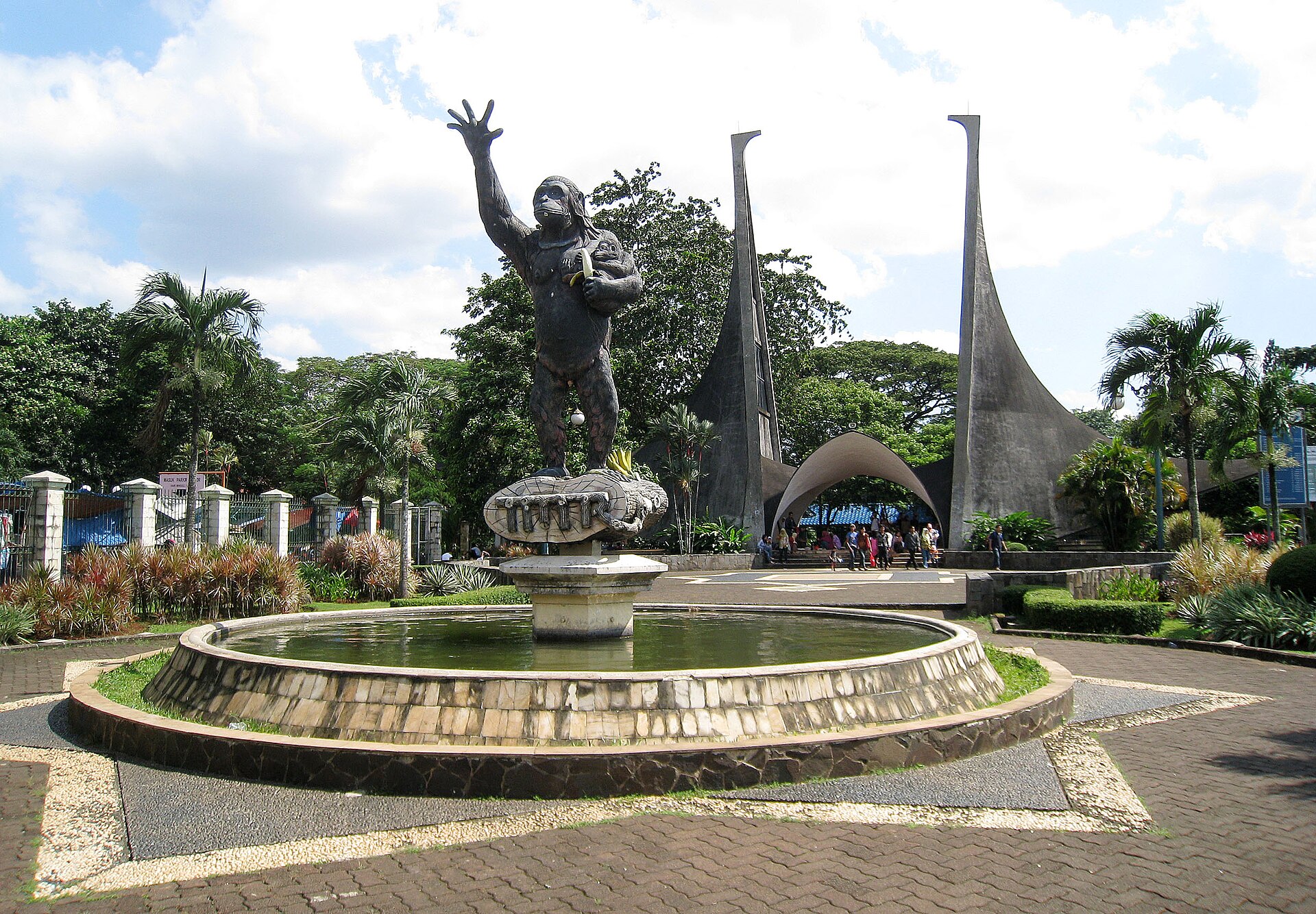
The essentials
| Detail | |
|---|---|
| Where | Jl. Harsono RM, Ragunan, Pasar Minggu, South Jakarta |
| Size | 147 hectares |
| Hours | Tuesday–Sunday 07:00–16:00 |
| Closed | Mondays |
| Adult ticket | 4,000 |
| Child ticket | 3,000 |
| Schmutzer Primate Centre | 6,000 weekday / 7,500 weekend and holidays, 09:00–16:00 |
| Payment | JakCard only. No cash. Card 45,000 or 75,000 including balance |
| Parking | Motorbike 3,000 · Car 6,000 · Bus 15,000 |
| Evening sessions | Tue–Fri 17:00–22:00; Sat 18:00–21:00 |
| Time needed | Half a day minimum; a full day if you do Schmutzer properly |
The JakCard problem, and how to avoid it
Ragunan does not accept cash. Every ticket — entry, the Schmutzer Primate Centre, the internal train — is paid for by tapping a JakCard, the Bank DKI prepaid card. You can buy one at the gate, but the cards on sale come loaded: around 45,000 for a card carrying a 20,000 balance, or 75,000 for one carrying 50,000. Minimum top-up is 20,000.
Two things make this less painful than it sounds. First, one card can pay for several people — tap it once per person at the turnstile. A family of four does not need four cards. Second, the JakCard is not single-use: it works on TransJakarta and at several other city-run attractions, so it is not money thrown away if you are in Jakarta for more than a day or two.
The practical advice is to buy the card before you arrive — most Bank DKI branches, Indomaret and Alfamart outlets and the TransJakarta halte counters sell them — and to load enough to cover entry, Schmutzer and a couple of rides. Our Jak Lingko and JakCard guide explains how the various Jakarta transit cards relate to each other, which is more confusing than it needs to be.
What 4,000 rupiah actually buys
Context, because the price genuinely sounds like an error to anyone arriving from Europe or Australia. Four thousand rupiah is about twenty pence, or twenty-five US cents. It buys entry to a 147-hectare park containing well over two thousand animals, run by the Jakarta city government as a public amenity rather than a commercial attraction.
That is the frame to hold the whole visit in. Ragunan is a public park with animals in it, in a middle-income country, priced so that any family in Jakarta can afford to go. It is not competing with Singapore Zoo, it is not trying to, and judging it as though it were misses what it is for.
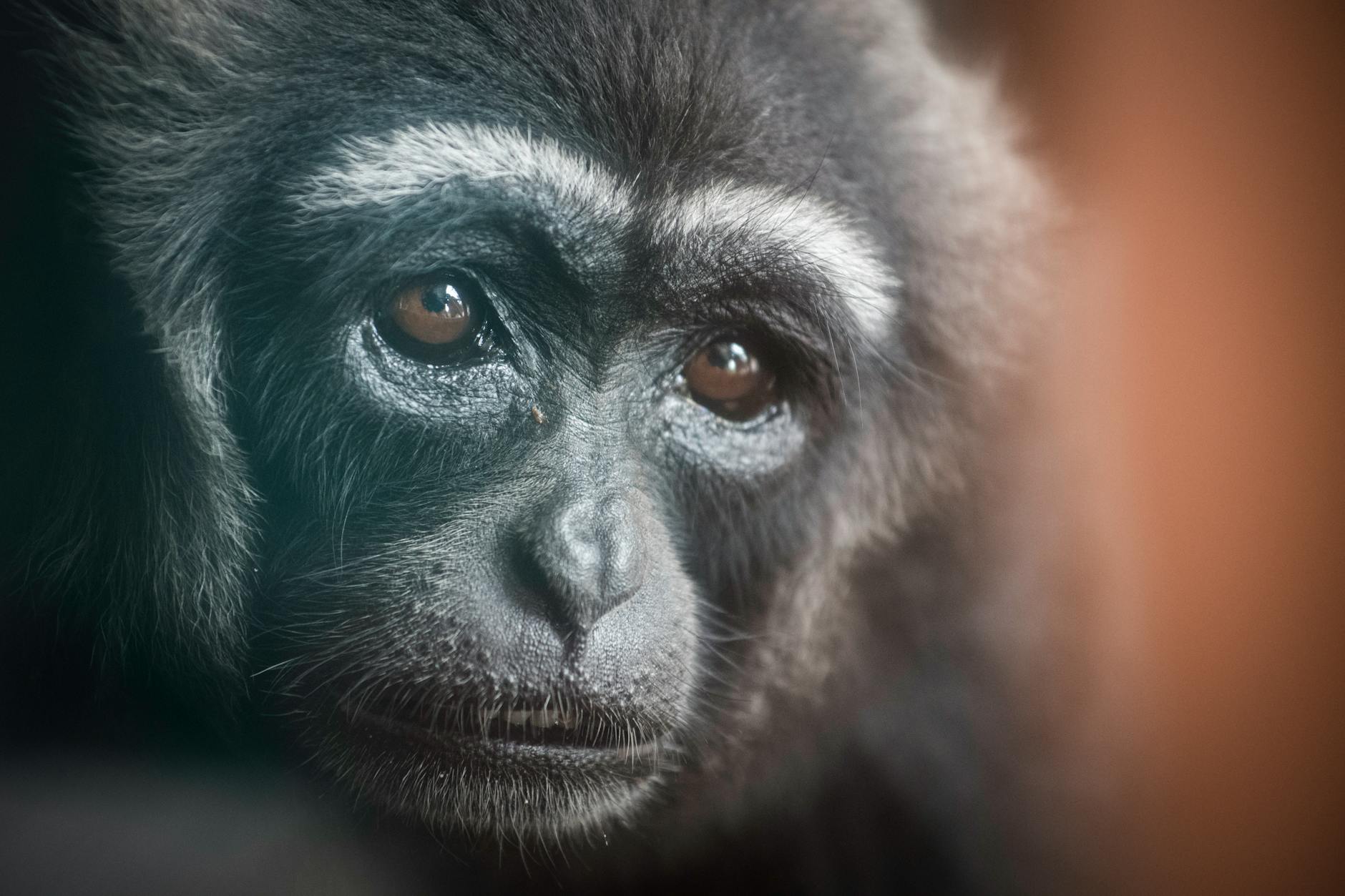
A little history
Ragunan is not a new institution dressed up as an old one. Jakarta’s zoo began in Cikini, in what is now Menteng, in the 1860s, on land donated by the Javanese painter Raden Saleh — the site later became the Taman Ismail Marzuki arts centre. By the middle of the twentieth century the Cikini grounds were far too small for a growing collection in a growing city, and in 1966 the zoo moved out to Ragunan, then well beyond the built-up edge of Jakarta and now firmly inside it.
That inheritance explains a great deal about the place. The mature tree cover is a product of six decades of growth on what was originally agricultural land. The generous, slightly rambling layout comes from a period when land in South Jakarta was cheap and nobody was designing for a hundred thousand visitors on a public holiday. And the pricing — a few thousand rupiah, set by the city government — reflects an institution conceived as a civic amenity rather than a commercial attraction, which it remains.
The Schmutzer Primate Centre, opened in the early 2000s and funded by a bequest from Puck Schmutzer, a Dutch-Indonesian conservationist, is the exception to all of that: purpose-built, privately funded and designed to a completely different specification. The contrast between Schmutzer and the older parts of the zoo is the clearest illustration anywhere in Jakarta of what money and intent can do to an enclosure.
The layout, and how to walk it
The single most important thing to understand about Ragunan is the scale. One hundred and forty-seven hectares is roughly twice the size of Bogor Botanical Gardens and around fourteen times the size of the whole of Tebet Eco Park. You will walk several kilometres, in heat and humidity, and small children will run out of legs long before they run out of interest.
The zoo is organised loosely by region and by animal type, with the primate collection — the reason most people come — concentrated around the Schmutzer centre in the southern part of the grounds. Between the enclosures there is a great deal of mature tree cover, wide paths, lakes and open lawns, which is why so many Jakartans treat it as a park in its own right rather than as a zoo visit.
Ways to cover the ground
- The road train loops the grounds and is the sensible way to cover the long stretches. Small extra charge, paid by JakCard.
- Bicycle hire, including tandems and family bikes, is available near the main entrances and is genuinely the best way to see the place if your children are old enough to ride.
- Swan boats on the lake and pony rides are the standard small-child diversions.
- Walking works if you pick a section rather than trying to complete the whole map. Nobody sees all of Ragunan in one visit and trying to is how the day goes wrong.
What to prioritise
- The Schmutzer Primate Centre — the best thing here by some distance. See below.
- The reptile house, with reticulated pythons and Komodo dragons, which are the animals foreign visitors most want to see and which Indonesia is the only place on earth to have wild.
- The bird collection — pelicans, cassowaries, hornbills, and a good showing of Indonesian species.
- The children’s animal park (taman satwa anak), with smaller animals at child height and an arapaima well over 100 kg.
- The lakes and open lawns, which are where you should plan to stop, eat and let children run.
The Schmutzer Primate Centre
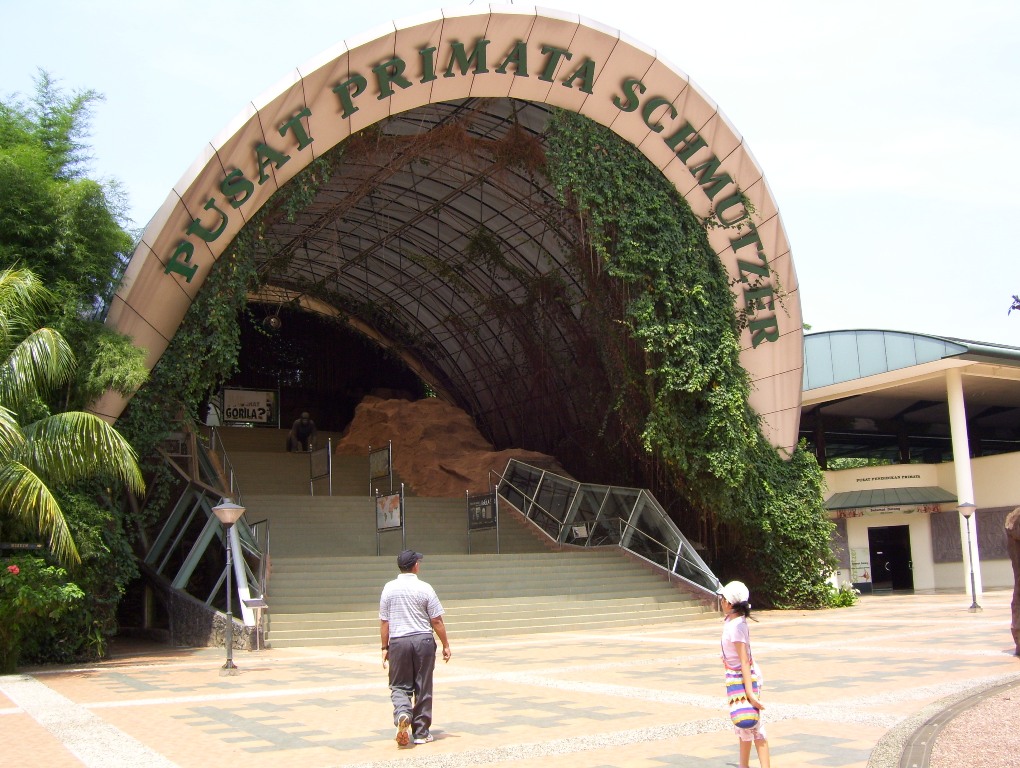
Inside Ragunan, and charged separately, the Pusat Primata Schmutzer is a purpose-built primate facility funded by a private bequest and opened in the early 2000s. It is a genuinely different standard from the rest of the zoo: large naturalistic enclosures, glass viewing walls, elevated walkways, and a gorilla habitat that is among the better ones in Asia.
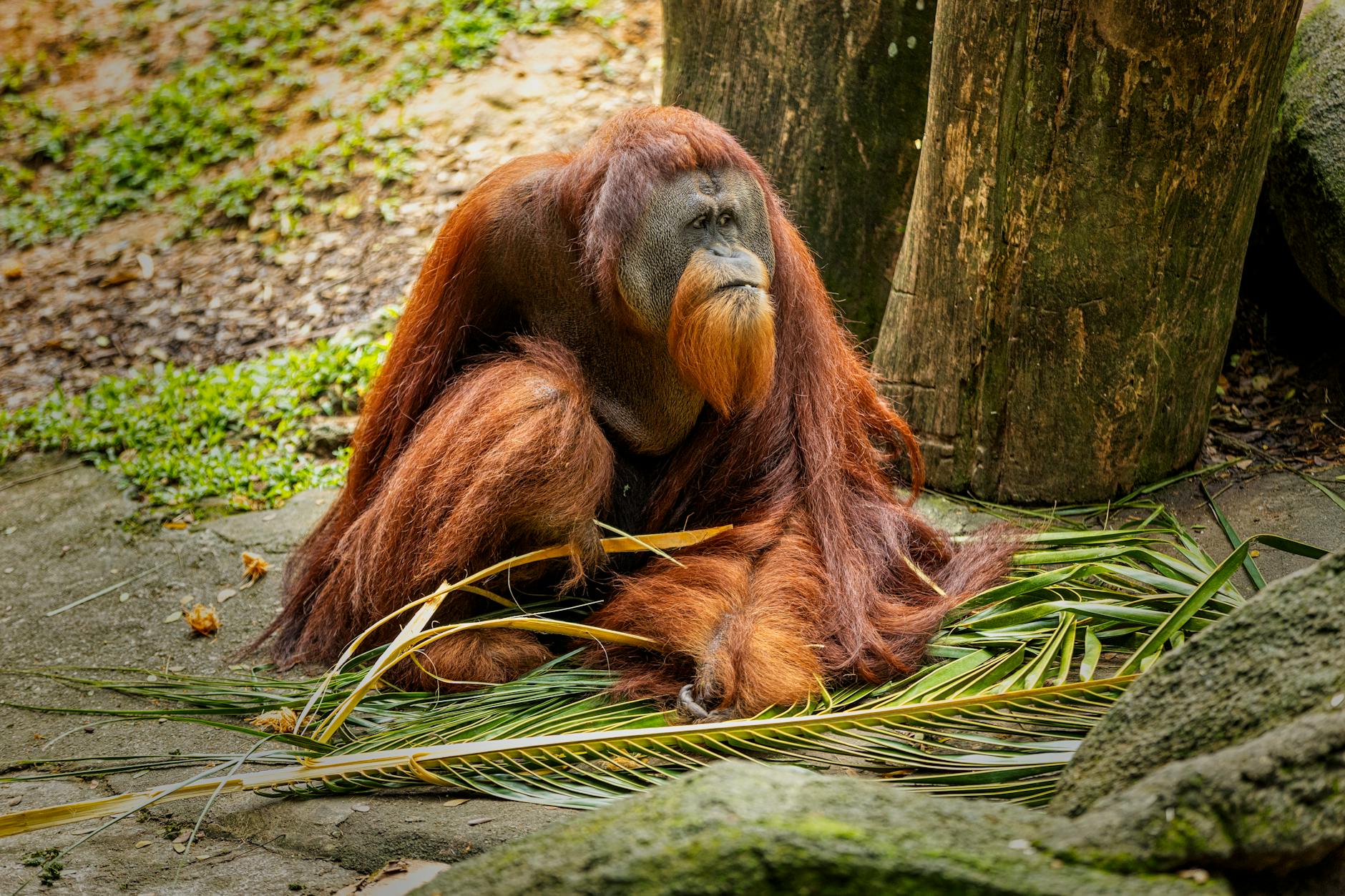
The collection covers gorillas, orangutans, chimpanzees, gibbons and a range of smaller Southeast Asian primates. For anyone with an interest in Indonesian wildlife, the orangutans are the point — this is the closest most visitors will get to an animal whose wild population is confined to Sumatra and Borneo.
Practicalities: it costs 6,000 on a weekday and 7,500 at weekends and on public holidays, on top of zoo entry, and it opens at 09:00 and closes at 16:00 — later than the zoo gates open, which catches out early arrivals. Allow at least an hour, ideally ninety minutes. It is by far the best value in the whole complex and it is the answer to anyone asking whether Ragunan is worth it.
The animals worth planning around
The collection is broad rather than deep, and heavily weighted towards Indonesian and wider Asian species — which is exactly what most foreign visitors want, since these are the animals you have come to this part of the world to see.
| What | Why it matters |
|---|---|
| Orangutans | Wild only in Sumatra and Borneo. The Schmutzer enclosures are the best place in Jakarta to see them |
| Gorillas | The Schmutzer habitat is among the better ones in the region |
| Komodo dragons | Found wild nowhere on earth except a handful of Indonesian islands |
| Reticulated pythons | The world’s longest snake, and considerably larger in person than in photographs |
| Sumatran tigers | Critically endangered; fewer than a few hundred remain in the wild |
| Hornbills and cassowaries | The bird collection is a genuine strength and is often overlooked |
| Pelicans and waterbirds | Around the lakes, and a reliable hit with small children |
| Arapaima | In the children’s animal park; over 100 kg and faintly prehistoric |
Two practical notes. Animals in a tropical zoo are most active in the first two hours after opening and again in the late afternoon; between about eleven and three most of them are asleep in shade, which is the single biggest reason a 07:00 arrival beats a 10:00 one. And feeding times are not published to a fixed public schedule the way they are at Sea World, so ask at the gate on the day.
Getting there

Ragunan sits in Pasar Minggu, in the far south of the city, and is better connected by public transport than most Jakarta attractions.
- TransJakarta is the standout option. Ragunan is a terminus, so the bus goes there directly and you cannot miss the stop. It is cheap, air-conditioned and pays with the same JakCard you need for the zoo. See our TransJakarta guide for how the halte system works.
- MRT plus a short ride. Take the north–south line to Lebak Bulus or Fatmawati and finish with a Grab or Gojek. Faster than the bus from the Sudirman corridor and considerably faster than driving in the morning peak. See our MRT guide.
- Grab or Gojek door to door. From central Jakarta expect 40 minutes on a quiet morning and well over an hour in the peak; cost the journey in minutes, not kilometres. Our traffic guide explains the daily pattern.
- Driving is straightforward and parking is cheap — 6,000 for a car — but Sunday mornings see queues at the car parks that can add half an hour.
There are several entrance gates. If you are arriving by TransJakarta you will come in through the west side; if you are driving, follow signs for the main gate on Jalan Harsono RM.
When to go
Three rules, in order of importance.
Not on a Monday. The zoo is closed. This is the single most common wasted journey in South Jakarta.
Go early. The gates open at 07:00, which is unusually early for a Jakarta attraction and is a gift. The first two hours are cool by local standards, the animals are active, and the grounds are almost empty. By eleven it is hot, the crowds have arrived and the animals have found shade. Arriving at 07:15 and leaving at 11:30 is a better visit than arriving at 10:00 and staying until closing.
Avoid Sundays and public holidays if you can. Ragunan on a Sunday is one of the busiest public spaces in Jakarta — a genuinely cheerful scene, families picnicking everywhere, but not a quiet wildlife experience. Tuesday to Friday mornings are the sweet spot.
The evening sessions are worth knowing about: Tuesday to Friday from 17:00 to 22:00 and Saturday from 18:00 to 21:00. Cooler, quieter and a different set of animals awake, though not every enclosure is included.
What to bring
- A JakCard, pre-loaded. Everything above.
- Water, and more than you think. There are vendors, but you will be a long way from them at points.
- Hats and sun protection. Much of the park is shaded, but not all of it, and the walk between sections is exposed.
- Insect repellent. There are lakes and mature trees, and there are mosquitoes. Our health precautions guide covers dengue sensibly.
- A picnic. This is what Jakartans do, the lawns are made for it, and the food inside is basic. See our cheap eats guide for what to buy on the way.
- Comfortable shoes. Several kilometres, in heat.
- A light buggy for very small children — the paths are wide and mostly smooth, and the alternative is carrying them by ten o’clock.
A morning at Ragunan, hour by hour
| Time | What you are doing |
|---|---|
| 06:45 | Arrive at the gate. Buy or top up the JakCard if you have not already |
| 07:00 | Gates open. Walk the first section on foot while it is cool and the animals are awake |
| 08:00 | Hire bicycles, or catch the road train, and cover the longer stretches |
| 09:00 | Schmutzer Primate Centre opens. Go straight in — this is the best hour of the day for it |
| 10:30 | Reptile house and the bird collection, both largely shaded |
| 11:15 | Picnic on one of the lawns. Children run; adults sit down for the first time |
| 12:15 | Children’s animal park, swan boats or pony rides, depending on remaining energy |
| 13:00 | Leave. Anything after this is heat and diminishing returns |
That gets you six hours, the best of the collection, and a car journey home that happens well before the afternoon congestion sets in. If you would rather do it in reverse, the 17:00 evening sessions Tuesday to Friday are cooler still and much quieter, though not every enclosure is open.
Accessibility and facilities
The main paths are wide, tarmacked and largely flat, which makes Ragunan more buggy- and wheelchair-manageable than most Jakarta attractions — the constraint is distance rather than terrain. The road train and hired bicycles both help enormously.
Toilets are distributed around the grounds and vary in condition; the ones near the main entrances and near Schmutzer are the best. There are prayer rooms. Baby-changing facilities are limited, so plan around the entrance areas. Shade is plentiful but shelter from a downpour is not, and in the wet season, roughly November to April, a heavy afternoon shower is likely — another argument for the early start.
Signage is inconsistent and frequently Indonesian-only, so a translation app is genuinely useful if you want to know what you are looking at. Staff are helpful; English is patchy. Our etiquette guide has the handful of Indonesian phrases that make interactions like this easier.
The honest verdict
Ragunan divides visitors sharply, and it is worth being straight about why.
What is good: the price is almost unbelievable, the grounds are large, green and genuinely pleasant, the Schmutzer Primate Centre is a serious facility by any standard, and the atmosphere on a weekend — extended families picnicking under the trees, children everywhere — is one of the warmest public scenes in Jakarta. For a family with young children and a spare morning, it is very hard to beat.
What is not: this is a municipal zoo operating on a municipal budget, and outside Schmutzer some enclosures are dated, smaller and plainer than visitors from northern Europe, Australia or North America will expect. Signage is inconsistent and often Indonesian-only. Maintenance varies across the grounds. Visitors who care strongly about contemporary zoo standards will find parts of it uncomfortable, and that is a fair reaction rather than squeamishness.
Our recommendation: go early on a weekday, budget an hour and a half for Schmutzer, treat the rest as a very large and pleasant park that happens to have animals in it, and set your expectations by the ticket price rather than by the last zoo you visited at home. On those terms it is excellent. If you want a zoo experience that will bear comparison with the best, take the drive to Taman Safari in Cisarua instead — it costs around fifty times as much and it shows.
Ragunan or Taman Safari?
| Ragunan | Taman Safari Bogor | |
|---|---|---|
| Distance from central Jakarta | About 45–75 minutes | 90 minutes to 2 hours, worse at weekends |
| Adult ticket | 4,000 | 195,000 weekday / 230,000 weekend |
| Enclosure standard | Variable; Schmutzer is excellent | Consistently good |
| Signature experience | Gorillas and orangutans at Schmutzer | Drive-through safari with animals loose around the car |
| Climate | Jakarta heat and humidity | Cool mountain air, a real relief |
| Time commitment | Half a day | A full day, with an early start |
| Best for | A spare morning, small children, tight budgets | A dedicated day out, a proper wildlife experience |
Both are covered alongside the rest of the options in our guide to family-friendly attractions in Jakarta, and the Puncak road situation — which is the real constraint on Taman Safari — is explained in the Puncak guide.
Nearby, if you have the rest of the day
Ragunan is deep in South Jakarta, so combine it with things in the same half of the city rather than crossing town afterwards.
- Tebet Eco Park, about twenty minutes north, for a late-afternoon hour of playground and the orange Infinity Link Bridge.
- Kemang, for lunch and the best concentration of independent cafés and restaurants in the city — see our Kemang guide.
- Blok M, for cheap food, the MRT and a very ordinary, very likeable slice of Jakarta.
- Pondok Indah or Senayan, for a mall, air conditioning and a cinema when the heat has finished everyone off.
What we would not do is attempt Ragunan in the morning and Ancol or Kota Tua in the afternoon. That crossing will cost you the day. Our South Jakarta guide has more that sits within easy reach.
Frequently asked questions
How much is a ticket to Ragunan Zoo?
Four thousand rupiah for an adult and three thousand for a child, plus 6,000 on a weekday or 7,500 at weekends for the Schmutzer Primate Centre inside. Parking is 3,000 for a motorbike, 6,000 for a car and 15,000 for a bus. It is comfortably the cheapest major attraction in Jakarta.
Can I pay cash at Ragunan Zoo?
No. Ragunan is entirely cashless and admission is paid with a JakCard, which you can buy at the gate for 45,000 with a 20,000 balance or 75,000 with a 50,000 balance. One card can be tapped for several people, and the same card works on TransJakarta, so it is not wasted money.
What days is Ragunan Zoo open?
Tuesday to Sunday, 07:00 to 16:00. It is closed on Mondays. There are also evening sessions from 17:00 to 22:00 Tuesday to Friday and 18:00 to 21:00 on Saturdays.
How long does it take to see Ragunan Zoo?
Half a day for a reasonable visit, a full day if you want to see most of the 147 hectares and do the Schmutzer Primate Centre properly. Nobody sees all of it in one go. Pick a section, use the road train or hire a bicycle for the long stretches, and stop when the children have had enough.
Is Ragunan Zoo good for young children?
Very — provided you go early, bring water, and use the train or a buggy for the distances. The children’s animal park, the swan boats and the pony rides are all pitched at under-eights, and the grounds are wide, green and safe. The heat, not the zoo, is what ends these visits.
What is the Schmutzer Primate Centre?
A separately ticketed primate facility inside Ragunan, funded by a private bequest, with gorillas, orangutans, chimpanzees and gibbons in large naturalistic enclosures. It is a substantially higher standard than the rest of the zoo and it is the main reason to visit. Open 09:00 to 16:00, 6,000 on weekdays and 7,500 at weekends.
How do I get to Ragunan Zoo by public transport?
TransJakarta terminates at Ragunan, which makes it the simplest option — and the same JakCard pays for both the bus and the zoo. Alternatively take the MRT south to Lebak Bulus or Fatmawati and finish with a short Grab or Gojek ride.
Is Ragunan Zoo crowded?
On Sundays and public holidays, extremely — it is one of Jakarta’s great public gatherings and enormous fun to be part of, but not a quiet wildlife visit. Tuesday to Friday mornings are calm. Arriving at opening at 07:00 gets you the best two hours of any day of the week.
Are there restaurants inside Ragunan Zoo?
There are food stalls and simple warungs around the grounds, and they are cheap and fine. Most Jakartan families bring a picnic and eat on the lawns, which is the better plan — the grounds are made for it and the alternative is a long walk back to a vendor when someone gets hungry.
Is Ragunan Zoo worth visiting?
Yes, with the right expectations. Go for the Schmutzer Primate Centre, the price, the trees and the atmosphere; do not go expecting a modern flagship zoo. If contemporary enclosure standards matter a great deal to you, spend the money on Taman Safari in Cisarua instead.
For lunch after the zoo, Warung Betawi H. Apen on Jalan Saco, a short ride away, serves proper Betawi cooking from around 20,000 a person — a good deal more interesting than the snack kiosks inside the gates. Our guide to eating on a budget in Jakarta lists more cheap places across the south of the city.
The cheapest way here from the city is the MRT to its southern terminus at Lebak Bulus, then the free Mikrotrans minibus on route JAK 45, which runs between Lebak Bulus and Ragunan — you tap your card and nothing is deducted. Our guide to cheap transportation in Jakarta explains how the free minibuses work.
Related Jakarta Guides
- Best Family-Friendly Attractions in Jakarta
- Things to Do in Jakarta with Kids
- South Jakarta Area Guide
- The Jak Lingko & JakCard Guide
- The TransJakarta Bus Guide
- Free Things to Do in Jakarta
- Best Day Trips from Jakarta
- The Puncak Highlands Guide
- Budget Travel in Jakarta
- Kemang Neighbourhood Guide
Photo Credits
The main gate at Ragunan Zoo: Ragunan Zoo Gate by Gunawan Kartapranata, CC BY-SA 3.0, via Wikimedia Commons.
The entrance to the Schmutzer Primate Centre: Pintu masuk smutzer by Serenity, CC BY-SA 3.0, via Wikimedia Commons.