The difference between a lovely day in the hills and nine hours trapped in a car on the Puncak pass is not luck. It is arithmetic. On busy weekends the police physically reverse the direction of the road, so for a block of hours traffic only goes up, and for another block it only comes down. Time it right and you are drinking tea at 1,200 metres by ten in the morning. Time it wrong and you spend Saturday watching a stationary lorry. Everything else about the Puncak tea plantations Jakarta weekenders love — the walking rows, the mist, the sate stalls, the safari park — hangs off that one piece of timing.
This guide sits under our round-up of the best day trips from Jakarta, and is worth reading alongside the Bogor day trip guide, because Bogor is the town you pass through and a good plan B when the pass is closed. If you were considering two nights further into the mountains instead, compare the Bandung weekend getaway, which uses the same Jagorawi toll before swinging away from the bottleneck.
What buka-tutup and one-way actually mean on the Puncak pass
The road from Ciawi over the pass to Cianjur — Jalan Raya Puncak — is a single carriageway, one lane each way, climbing through Gadog, Megamendung, Cisarua, Tugu and Ciloto before dropping to Cipanas. On an ordinary Tuesday it copes. On a Saturday in school holidays, tens of thousands of cars from Greater Jakarta try to use the same narrow strip of tarmac at once, and it cannot absorb them.
Satlantas Polres Bogor — the Bogor police traffic division — solves this by taking the road away from one direction at a time, using two tools people constantly muddle. Buka-tutup literally means open-close: officers hold one direction at a checkpoint, release the other for a stretch, then swap, so traffic alternates in slabs of ten to thirty minutes. It is the transitional measure, used when volumes are building but have not yet justified the bigger one.
One-way is that bigger intervention. The whole pass is given to a single direction — arus naik, uphill from Gadog, in the morning, flipping to arus turun, downhill towards Ciawi and the toll road, in the afternoon. While one-way runs against you, you do not queue. You are stopped, diverted or held at a police post until the flow reverses, commonly for ninety minutes to three hours. So there is a window in the morning when going up is fast and going down is impossible, and a window in the afternoon when the reverse is true. Plan inside those windows and Puncak is easy. Plan around a restaurant booking and you will lose the day.
Typical hours — and why you must check them yourself
Across recent weekends the pattern reported by Bogor police has been roughly this: uphill one-way from around 07:00 to 11:30, a transitional buka-tutup period, then downhill one-way from around 12:00 until as late as 18:00. On heavy weekends the downhill phase has run into the evening; on quiet ones it has not been applied at all.
Treat those hours as a shape, not a timetable. The scheme is explicitly situasional: officers start it early if the queues build early, extend it if they do not clear, and cancel it if the roads are quiet. Two consecutive Saturdays can look nothing alike, and the announcement usually appears on the Friday afternoon or the morning of, not weeks ahead.
There is a second layer. Ganjil-genap — odd-even number plate restriction — has been applied to the Puncak route on some peak weekends and long holidays, typically from Friday afternoon, filtering cars by the last digit of the plate against the date. On many weekends it is explicitly not applied, and police say so in the same announcement that carries the one-way hours. In a hire car, check the plate before you commit.
How to check before you leave
The reliable sources are the Bogor police traffic accounts — TMC Polres Bogor and Satlantas Polres Bogor publish the weekend arrangement on social media, usually the night before, and local Bogor news sites republish it within the hour, so a search for “jadwal one way Puncak” plus the date will nearly always surface it. Google Maps shows whether a queue has formed but does not know a road is about to be reversed, so it will happily route you into a closure.
Check twice: the night before, to set your departure time, and again half an hour before you leave in case the schedule was pulled forward. That second check is the one people skip. Our Jakarta traffic-avoidance tips apply here too.
The route from Jakarta, and how long it really takes
From central Jakarta you join the Jagorawi toll heading south, run past Bogor and exit at Ciawi. The Jagorawi is an open-system toll with a flat charge — around Rp8,000 for a Class I private car whether you leave at Bogor or Ciawi — payable only by e-money card, so top yours up before you set off. From Ciawi you drop onto the Gadog junction and the pass climbs steadily: Megamendung, the Cilember turning, Cisarua and the Taman Safari road, the tea estates at Tugu, the mosque at the summit, then down through Ciloto to Cipanas and Cianjur.
It is only 80 to 90 kilometres from central Jakarta to Cisarua. Midweek, leaving South Jakarta before six, two hours door to door is realistic and ninety minutes is possible. The toll section is quick; it is the ten kilometres above Gadog that decide everything. On a Saturday with one-way running, the honest range is three to five hours if you timed it well and five to nine if you did not, because everyone sets off at once the moment the downhill phase opens.
| Depart Jakarta | Likely arrival in Cisarua | What the pass is doing | Verdict |
|---|---|---|---|
| 04:00–05:00 Saturday | 06:30–07:30 | Ahead of the uphill one-way, roads still clear | The only genuinely reliable Saturday plan |
| 06:00–07:00 Saturday | 08:30–10:00 | Uphill one-way usually running in your favour | Works, but Gadog will already be slow |
| 10:00–11:00 Saturday | 13:30–16:00 | Uphill window closing, downhill phase starting | Avoid — you may be held for hours |
| Any time Sunday afternoon | Do not attempt | Downhill one-way, the whole of Jakarta returning | Pointless |
| Tuesday–Thursday, any hour | 2–3 hours | No traffic engineering at all | Comfortably the best trip |
Two alternative routes exist and both are oversold. The Sentul Selatan exit leads through Babakan Madang and Bukit Pelangi — past the Rainbow Hills golf course — down to Megamendung and Citeko near Pasar Cisarua. It bypasses Gadog and it is pretty, but it is narrow, steep, unlit and potholed, and rejoins the main pass anyway. The Jonggol route, often called Puncak 2, is longer, rougher and has been closed by landslides more than once. Use either only with a driver who knows them, never in heavy rain.
There is no train, so this is a car trip
The KRL commuter line runs from Jakarta to Bogor and stops there. Nothing continues up the pass. Beyond Bogor you are into angkot minibuses, which technically reach Cisarua but take hours, involve several changes and leave you a long walk from every attraction with no way home after dark.
That leaves three options. Hire a car with a driver for the day, typically Rp700,000 to Rp1,200,000 for twelve hours plus fuel and tolls — the right choice for most visitors, because the driver knows the closures and you are not the one at the wheel for nine hours. Drive yourself, which our car rental guide for Jakarta covers and which only really makes sense midweek. Or book a return through Grab or Gojek, fine going up but a gamble coming back, since drivers avoid Puncak during the downhill one-way and Sunday surge pricing is brutal. Check our breakdown of Jakarta transport costs before assuming ride-hailing is cheaper; for four people it usually is not. Metered Blue Bird taxis will go on a negotiated fare, but a running meter through a two-hour hold is not a happy experience.
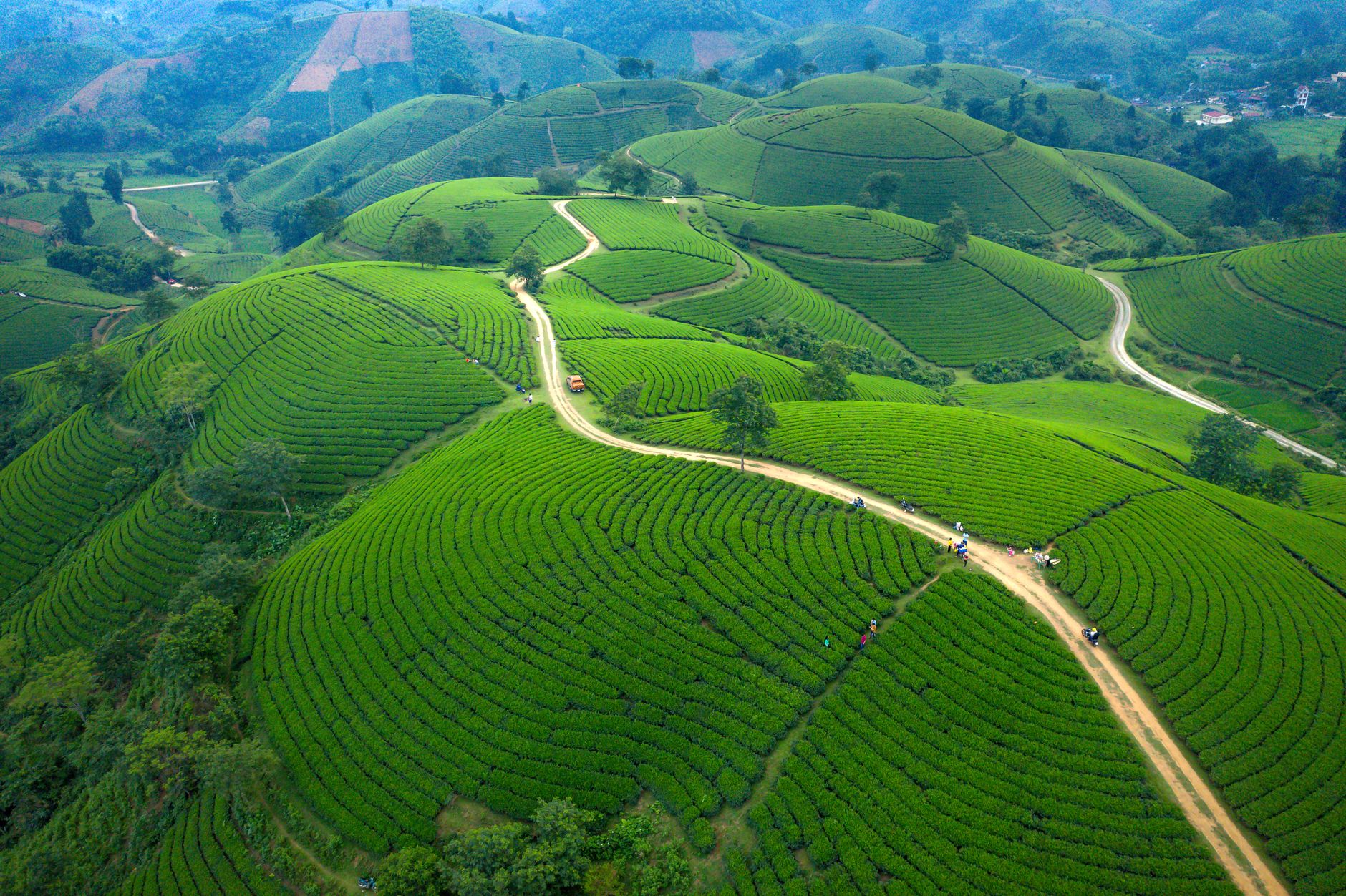
Gunung Mas and the Puncak tea plantations Jakarta families come for
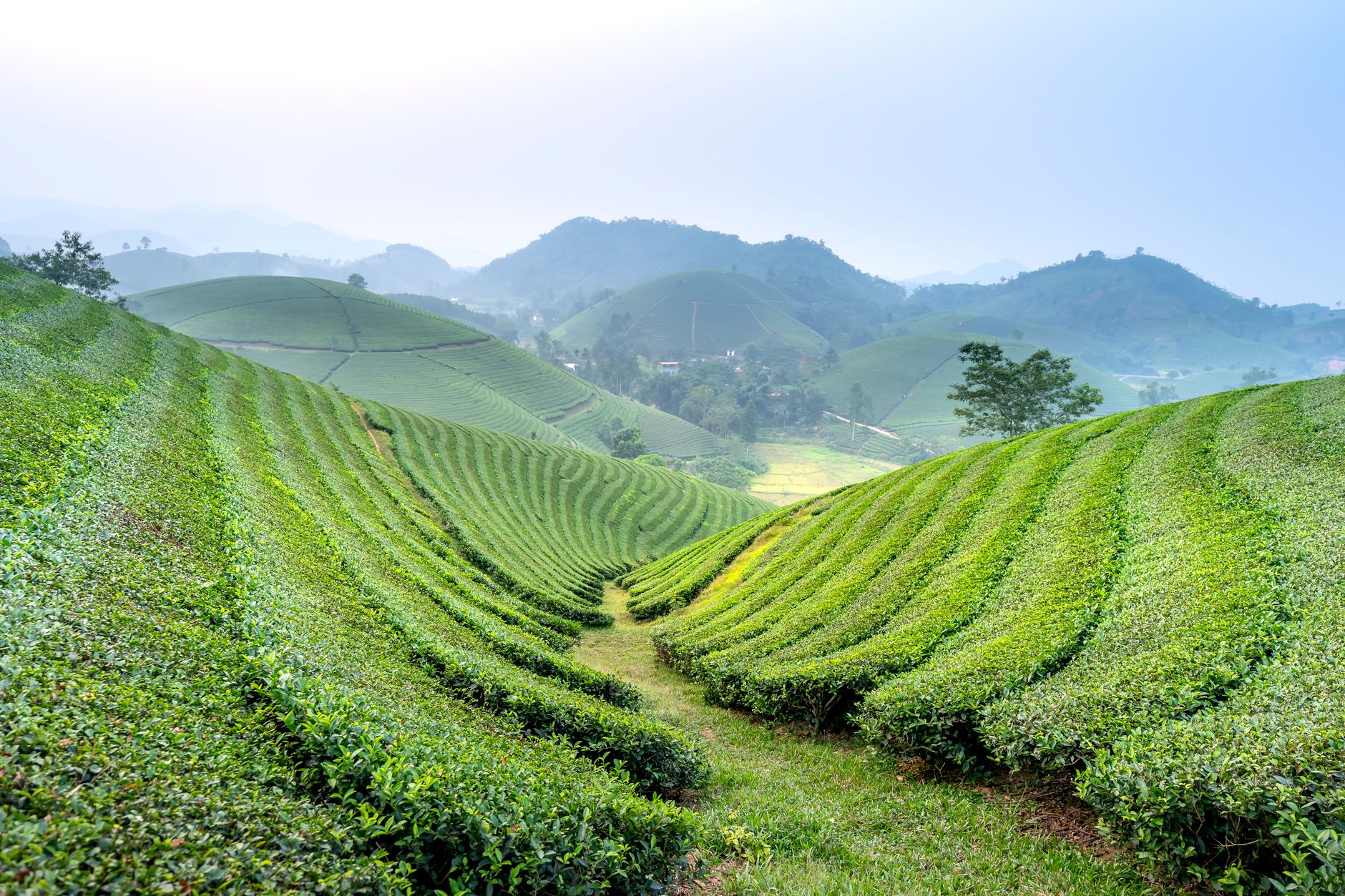
Agrowisata Gunung Mas is the estate everyone means when they say they went to the tea gardens. It sits at Tugu Selatan in Cisarua between roughly 800 and 1,200 metres, and it is worked land rather than a theme park — a producing estate run by the state plantation company PTPN, with pickers in the rows on working days and a factory that still processes leaf.
Entry is cheap: around Rp15,500 on weekdays and Rp20,000 at weekends, plus a few thousand rupiah to park, with gates open roughly 08:00 to 17:00. That ticket buys the estate and nothing else — every activity inside is priced individually, which catches people out — though bundle packages have been sold at around Rp175,000 per person on weekdays. Bring cash; card and QRIS acceptance has improved but the signal up there drops out constantly.
What you actually do is walk. The paths run between the bushes and up the ridgelines, and after twenty minutes the only sound is wind. Do the tea factory tour if it is running — a short, genuinely informative walk through withering, rolling and drying, for very little money. Tea picking sessions put a basket in your hands alongside a picker, a better hour with children than any photo platform. Pony and horse rides run in thirty and sixty minute loops. Bukit Gantole, the paragliding launch above the estate, is one of the best-known tandem flying sites in West Java, usually Rp400,000 to Rp600,000 and entirely wind-dependent, so nobody can promise you a flight in advance.
The tea does not stop at the estate boundary — the bushes carry on over the summit and down the Ciloto side towards Cianjur, and some of the best views of the day come from lay-bys with no ticket at all.
Taman Safari Indonesia, and why it eats the entire day
Taman Safari at Jalan Kapten Harun Kabir 724, Cisarua is why a large share of Jakarta families drive up here at all. You take your own car — or the park tram — through open enclosures where zebras, deer, bison and llamas walk up to the window, then park and spend the rest of the day in the walk-through zone: panda house, bird aviary, primate centre, roughly two dozen fairground rides and around eight animal presentations.
Pricing is tiered and moves with the season, so check the official site rather than a blog. As a guide, the standard daytime package including the panda house has recently run at roughly Rp230,000 adult and Rp185,000 child on weekdays, rising to about Rp255,000 and Rp195,000 at weekends, with the wildlife-train version some Rp25,000 higher and school-holiday pricing higher still. Opening is around 08:30 to 17:00 with the gate closing roughly an hour before the park, so a late arrival can cost you the safari drive. The Saturday-only night safari is about Rp180,000 adult and Rp160,000 child, and reported start times differ between sources, so book online and read the timing on your own ticket.
The honest part: Taman Safari is a full day. With the drive, the safari loop, lunch and the walk-through section, you will not meaningfully add the tea estate or a waterfall. Families with young children should treat it as the entire itinerary. Our guide to things to do in Jakarta with kids and the Taman Mini Indonesia Indah guide cover the in-city alternatives.
If you have one day and must choose, pick Gunung Mas. Taman Safari is a decent zoo-safari hybrid, but comparable parks exist in a dozen countries, and doing it under the one-way system means more of the day in the car than with the animals. The tea estate costs a twentieth as much and releases you by early afternoon. Choose Taman Safari only if you have children under ten, in which case it wins outright.
| Attraction | Adult entry (approx.) | Time needed | Best for |
|---|---|---|---|
| Agrowisata Gunung Mas | Rp15,500 weekday / Rp20,000 weekend, activities extra | 2–4 hours | Walking, photography, tea factory, first-time visitors |
| Taman Safari Indonesia | Rp230,000–Rp280,000 depending on day and package | Full day, 6–8 hours | Families with young children, nothing else |
| Curug Cilember | Rp25,000 domestic / Rp75,000 foreign | 2–3 hours | Short forest walk, cheap, close to Gadog |
| Telaga Warna and Telaga Saat | Around Rp31,000–Rp35,000 combined with plantation access | 1–2 hours | Quiet lake walk near the summit |
| Masjid Atta’awun | Free | 20–40 minutes | Summit views, prayer stop, coffee break |
Telaga Warna, Telaga Saat and the summit mosque
Telaga Warna is a small crater lake in protected forest near the top of the pass, named for the way the water shifts colour as the light moves. It is a twenty-minute walk in from the road, with macaques that will take an unattended bag. Combined ticketing with the surrounding plantation area and nearby Telaga Saat has run at roughly Rp31,000 per person on weekdays and Rp35,000 at weekends. Telaga Saat, past Melrimba, is smaller, higher and quieter, and marks a source point of the Ciliwung river that later floods parts of Jakarta.
Masjid Atta’awun sits at the summit, its tiered umbrella-shaped roof above a courtyard looking straight out over the tea. Entry is free, visitors are welcome outside prayer times, and it is the best free viewpoint on the pass. Dress modestly, cover shoulders and knees, and women should carry a scarf.
Curug Cilember and the waterfall walk
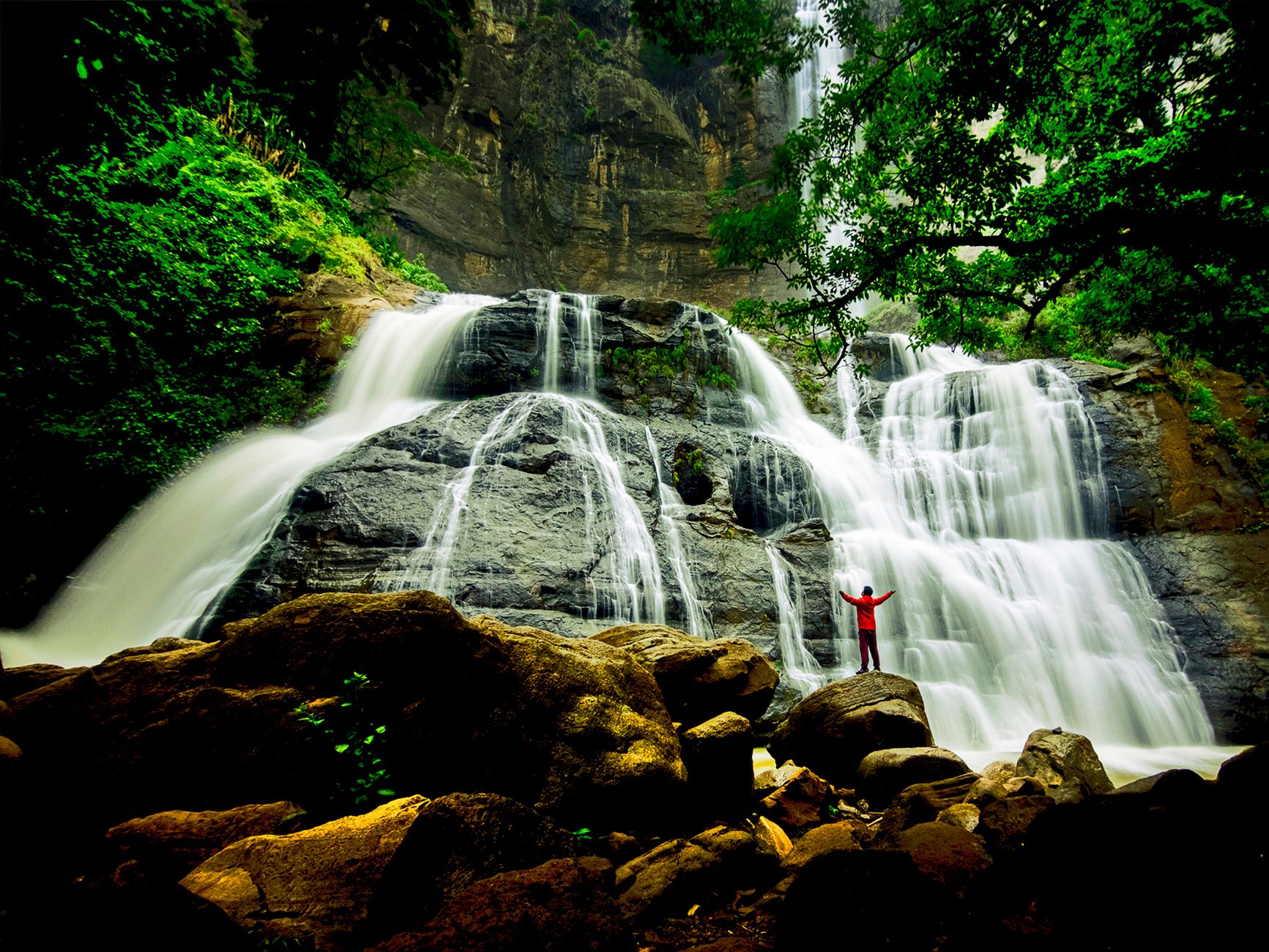
Curug Cilember is the easiest waterfall to reach from Jakarta, signposted off the pass at Cilember in Megamendung not far above Gadog. The ticket — around Rp25,000 for Indonesian visitors and Rp75,000 for foreigners, with car parking about Rp10,000 — covers a chain of seven falls numbered from the bottom up. Curug 7, the lowest, is five minutes from the entrance and is where the crowds and the swimming are; Curug 5 is a thirty to forty minute climb through pine forest and is far better; Curug 1 takes a couple of hours each way and a guide. Hours run roughly 08:00 to 17:00, with the butterfly garden and camping ground ticketed separately. Wear shoes with grip, because wet pine needles turn the path into a slide.
Strawberries, and the Cipanas end of the pass
Over the summit and down towards Cipanas in Cianjur regency, the roadside switches from tea to greenhouses. Pick-your-own strawberry farms are the local speciality — Puncak Pass Farm and Puncak Berry Farm among the established ones — with entry typically around Rp15,000, often including a small strawberry juice, picked fruit charged separately at roughly Rp80,000 per kilogram, and hours of about 07:30 to 17:00 on weekdays and slightly longer at weekends.
Manage expectations. Rp80,000 a kilo is well above supermarket price and the berries are frequently small and underripe, because the plants have been picked over by the previous four hundred visitors. It is an activity, not a bargain. With children it is a good forty minutes; without them, buy from the roadside vendors instead.
Eating on the pass: sate, jagung bakar and the cafe problem
The best food on Puncak is cooked outdoors at the roadside. Sate kambing and sate maranggi stalls run the length of the pass, charcoal grills pushed out towards the traffic, and a plate of ten skewers with lontong rice cakes usually lands between Rp35,000 and Rp60,000. Jagung bakar — grilled sweetcorn brushed with butter, chilli and sometimes cheese — is the definitive Puncak snack at Rp15,000 to Rp25,000 a cob, and it exists precisely because it is something to eat while cold and stationary. Add mie rebus, bandrek and hot ginger tea and you have the highland canon. Our Jakarta street food guide and the wider Jakarta food guide cover the same dishes as you meet them in the city.
Then there are the cafes. The pass has sprouted dozens of glass-fronted terrace cafes selling identical flat whites at Jakarta prices with a photo platform out the back. A few are lovely at eight in the morning when the valley is clear. Most are thin: a queue, a wait for a table by the railing, an overpriced drink and a view you could have had free from the mosque car park. Sit-down venues add around 21 per cent service and tax, and churn is severe, so any cafe recommended by name in an older article may already have closed.
Villas: what a Puncak weekend actually costs
Puncak’s real industry is not day tourism; it is villa rental. Thousands of houses with pools, karaoke rooms and barbecue terraces fill the valleys either side of the pass, rented by the night to extended families and office groups from Jakarta. Split between a group the economics are decent: a modest villa sleeping eight might be Rp750,000 on a weekday, Rp1,000,000 on a Friday and Rp1,250,000 at weekends. Shared-pool properties start around Rp1,200,000, private pool from roughly Rp2,000,000, premium houses to Rp10,000,000 and beyond.
Book through an established agent or a platform with reviews. The direct-from-owner WhatsApp market is enormous and unregulated, deposits are usually non-refundable and photographs are frequently a decade old. Ask whether the pool is heated, whether hot water works in every bathroom, and how far the house is from the main road, because “10 minutes from Puncak” can mean forty minutes up an unpaved track. If you would rather not gamble, compare our family-friendly hotels in Jakarta and the wider where to stay in Jakarta guide; for many visitors a good Jakarta hotel plus a midweek day trip beats a mediocre villa plus a weekend on the pass.
Cold, mist and what to wear
Bogor city can sit at 33°C at midday. The summit of the pass, at roughly 1,400 to 1,500 metres, runs between the high teens and the mid twenties by day and can drop towards 15°C after dark. It is the only place within two hours of Jakarta where you will want a jacket.
The bigger issue is cloud. Puncak makes its own weather, and on a large share of afternoons the mist rolls in from about two o’clock and the view is simply gone — you can stand at the mosque and see thirty metres. It happens year-round, not only in the wet season. If you have come to see the Puncak tea plantations Jakarta photographs promise, you need to be there in the morning, which is one more argument for the ludicrously early start.
Pack a light waterproof, a warm layer, closed shoes with grip and cash in small notes for parking attendants, toilets and stalls. Our Jakarta travel tips cover the rest.
Landslides, demolitions and other reasons the plan changes
Between roughly November and March the pass takes a lot of rain and the slopes above it are not stable. In 2026 alone there have been landslides in front of Masjid Atta’awun, at Naringgul and at Cipayung near Cibogo, plus around twenty metres of carriageway collapsing at Cipayung Datar in Megamendung; the Puncak 2 alternative has been blocked outright. Repairs are slow and usually mean single-lane working for weeks, multiplying the effect of the one-way system. Gunung Gede Pangrango’s hiking trails have also closed for long stretches on extreme-weather warnings.
Separately, the authorities have been demolishing illegal construction across the catchment: around 163 unlicensed kiosks cleared in the Cipanas–Puncak corridor from June 2026, traders offered Rp10 million each in provincial compensation, and further demolitions in Cisarua continuing alongside planned road widening. Good for the watershed, mildly chaotic for visitors — warungs you read about may no longer be standing.
If the forecast is bad, take the hint. Postpone, stop at Bogor, or fall back on our indoor attractions in Jakarta. A wet Saturday on the pass with a landslide diversion in force is the worst day out in West Java.
Is Puncak worth it at all? An honest verdict
Midweek, yes, comfortably. Two hours up, tea gardens by mid-morning, mosque and lake at lunchtime, a waterfall after that, home by seven, no traffic engineering, lower prices and the rows more or less to yourself. Overnight, also yes, if you are splitting a villa with a group and treating it as a relaxed weekend rather than a sightseeing sprint: up on Friday morning, down on Monday morning, never touching the pass during a one-way phase.
As a Saturday or Sunday day trip, honestly, no — not unless you leave before five in the morning and are back on the toll road by early afternoon. The upside is genuine but modest; the downside is losing a whole day of a short holiday to a queue. Visitors on a three-day Jakarta itinerary should skip it for Bogor’s botanical gardens. On a week in Jakarta there is room, provided you place it on a weekday.
Be realistic about the setting too. The romantic image of an empty tea plateau does not survive contact with the road, which is near-continuously built up with villas, minimarkets, cafes and billboards from Gadog almost to Ciloto. The tea is beautiful once you walk away from the tarmac; from the tarmac it is a busy hill town with a view. On a tight budget, weigh the day against the alternatives in our budget Jakarta guide, because the transport cost dwarfs the entry fees.
FAQ: Puncak tea plantations Jakarta visitors ask about
What is the buka-tutup system and how is it different from one-way? Buka-tutup means officers alternately hold and release each direction in blocks, so traffic still moves both ways but in turns. One-way means the whole pass is given to a single direction — uphill in the morning, downhill in the afternoon — and the opposite flow is stopped completely. Buka-tutup is usually the transitional step before full one-way is imposed on a busy weekend.
What time does the one-way system usually run? Recent weekends have seen uphill flow from roughly 07:00 to 11:30 and downhill from around 12:00 to 18:00, but this is situational and set by Bogor police on the day. It can start earlier, run later, or not happen at all. Check TMC Polres Bogor or Satlantas Polres Bogor announcements the night before and again just before you leave.
Is there odd-even plate restriction on the Puncak route? Sometimes. Ganjil-genap has been applied on peak weekends and long holiday periods, typically from Friday afternoon, filtering cars by the final digit of the plate against the date. On many ordinary weekends it is explicitly not applied. It is announced in the same police bulletin as the one-way hours, so check both together.
How much does Gunung Mas tea plantation cost to enter? Entry has recently been around Rp15,500 on weekdays and Rp20,000 at weekends, plus a small parking charge. That covers the estate only — the tea factory tour, tea picking, horse riding and paragliding are all charged separately, and bundle packages combining several activities have been offered around Rp175,000 per person. Bring cash, because mobile signal is unreliable up there.
Gunung Mas or Taman Safari if I only have one day? Gunung Mas, unless you are travelling with young children. Taman Safari is a genuine full-day commitment at roughly Rp230,000 to Rp280,000 per adult and it cannot be combined with anything else once the drive time is counted. The tea estate costs a fraction, takes two to four hours, and lets you get back down the pass before the afternoon one-way traffic builds.
Will I actually see the view? Only if you are early. Cloud commonly closes in over the summit from early afternoon year-round, and on those days you will see nothing beyond thirty metres. Mornings are far more reliable than afternoons regardless of season, which conveniently aligns with the uphill one-way window.
Where to Go Next
If the pass is closed or the forecast turns, stop short at Bogor’s botanical gardens or push further into the mountains for two nights. Back in the city, work through the things to do in Jakarta list, start with the headline attractions if this is your first visit, or dig into the quieter corners in our round-up of Jakarta’s lesser-known places. Whatever you plan up in the hills, check the police announcement the night before. On this road, that single check is worth more than any itinerary.