Jakarta’s traditional markets are some of the most rewarding food experiences in Asia, but most guides lump them together and skip the one distinction that actually matters on the ground: the difference between markets you eat at and markets you shop at. So I’ve split the city’s Jakarta food markets into three useful categories — modern hipster food courts (Pasar Santa, the Pasar Mayestik basement), traditional wet markets with food stalls (Pasar Petak Sembilan, Pasar Mester, Pasar Minggu), and specialty markets (the predawn Pasar Kue Subuh, snack-focused Pasar Asemka) — plus a short bargaining guide for navigating a wet market with confidence even if you don’t speak Indonesian.
These markets are one corner of the wider Jakarta food guide, and many of the dishes you’ll graze on here are explained in the rundown of must-try Jakarta dishes.

Markets to Eat At vs. Markets to Shop At
Jakarta’s traditional markets serve two distinct functions:
- Eat-here markets — primarily food court or food stall operations; you sit and eat at the market
- Shop-and-snack markets — primarily wholesale or retail shopping with food stalls scattered throughout; you graze while shopping
This guide focuses on eating, with notes on shopping context where relevant. For dedicated shopping coverage, see our shopping in Jakarta guide.
| Market | Type | What it’s for | Hours |
|---|---|---|---|
| Pasar Santa | Hipster food court | Modern stalls, indie cafes, live music | 11 AM–10 PM |
| Pasar Mayestik (basement) | Food court | Traditional regional warung dishes | 6 AM–6 PM |
| Pasar Petak Sembilan | Wet market | Glodok Chinese-Indonesian, atmosphere | 6 AM–8 PM |
| Pasar Mester Jatinegara | Wet market | Heritage Betawi, local feel | 5 AM–6 PM |
| Pasar Kue Subuh (Senen) | Specialty (predawn) | Traditional kue, free samples | 7 PM–5 AM |
| Pasar Asemka | Specialty (wholesale) | Snacks to take home | 8 AM–5 PM |
Modern Hipster Food Courts (Eat-Here Focus)
1. Pasar Santa — South Jakarta’s Hipster Food Court
The grandfather of Jakarta’s modern food court scene, Pasar Santa in Kebayoran Baru transformed itself in 2014 from a sleepy traditional wet market into a buzzy upper-floor food court packed with 50+ small kitchens run by ambitious young Indonesian chefs. The food court boom peaked around 2015 and has since stabilized into a curated mix of long-running standout stalls.
Standout stalls:
- Agneya — modern Indian-Indonesian fusion
- Sushi Go! — affordable sushi and Japanese
- Kedai Tjikini — Indonesian-Chinese comfort food
- BroCutsBlade — American-style barbecue
- Kopi Tuku — Indonesian specialty coffee
- Pandan Loaf — bakery with pandan-flavored breads
- Burgreens Pasar Santa branch — vegan
On Saturday and Sunday afternoons, indie bands play live in the courtyard. Atmosphere is young, creative, and noisy. Spend: IDR 100,000–250,000 per person across multiple stalls. Hours: 11:00 AM–10:00 PM daily.
2. Pasar Mayestik — Basement Food Court
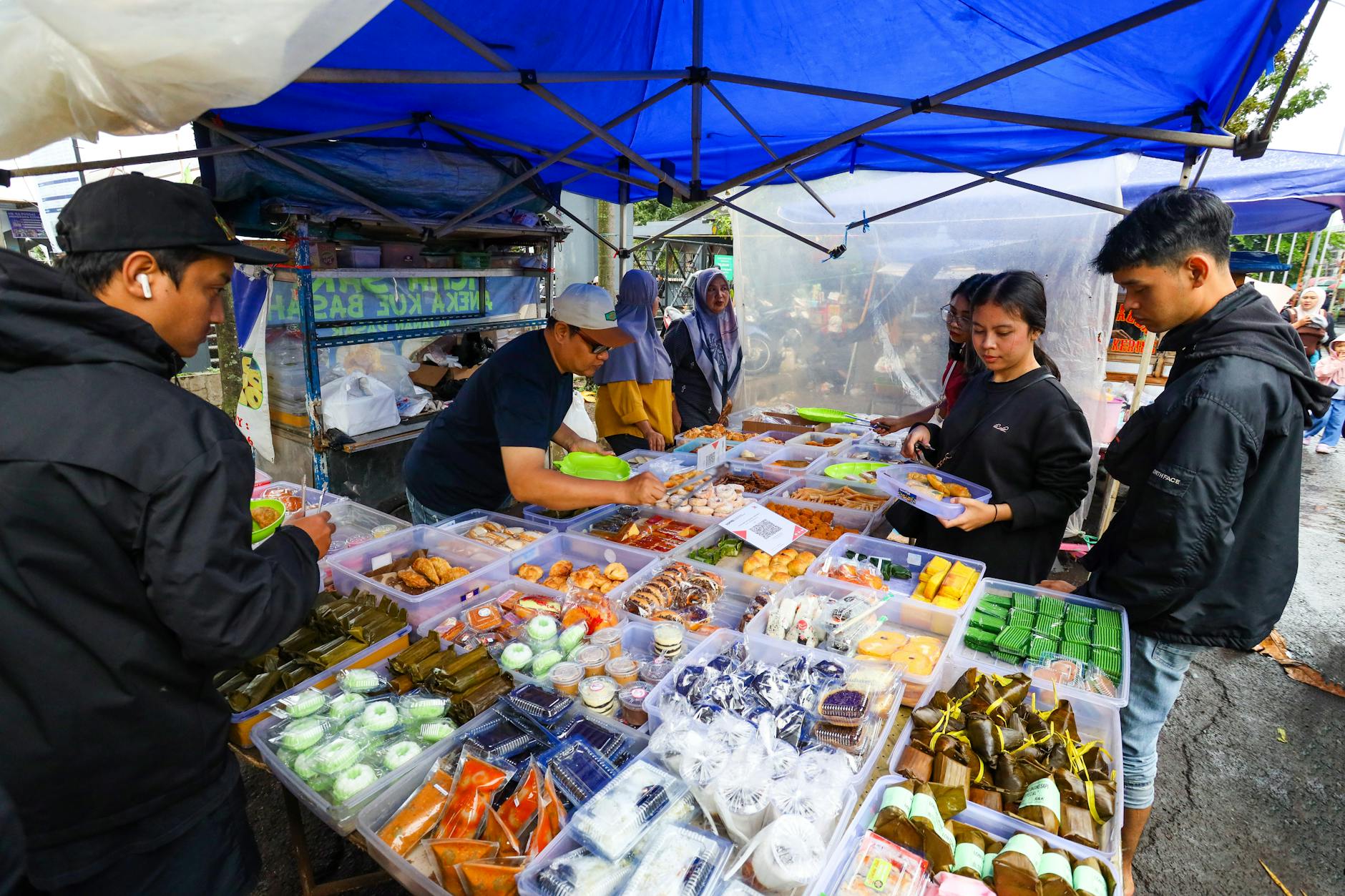
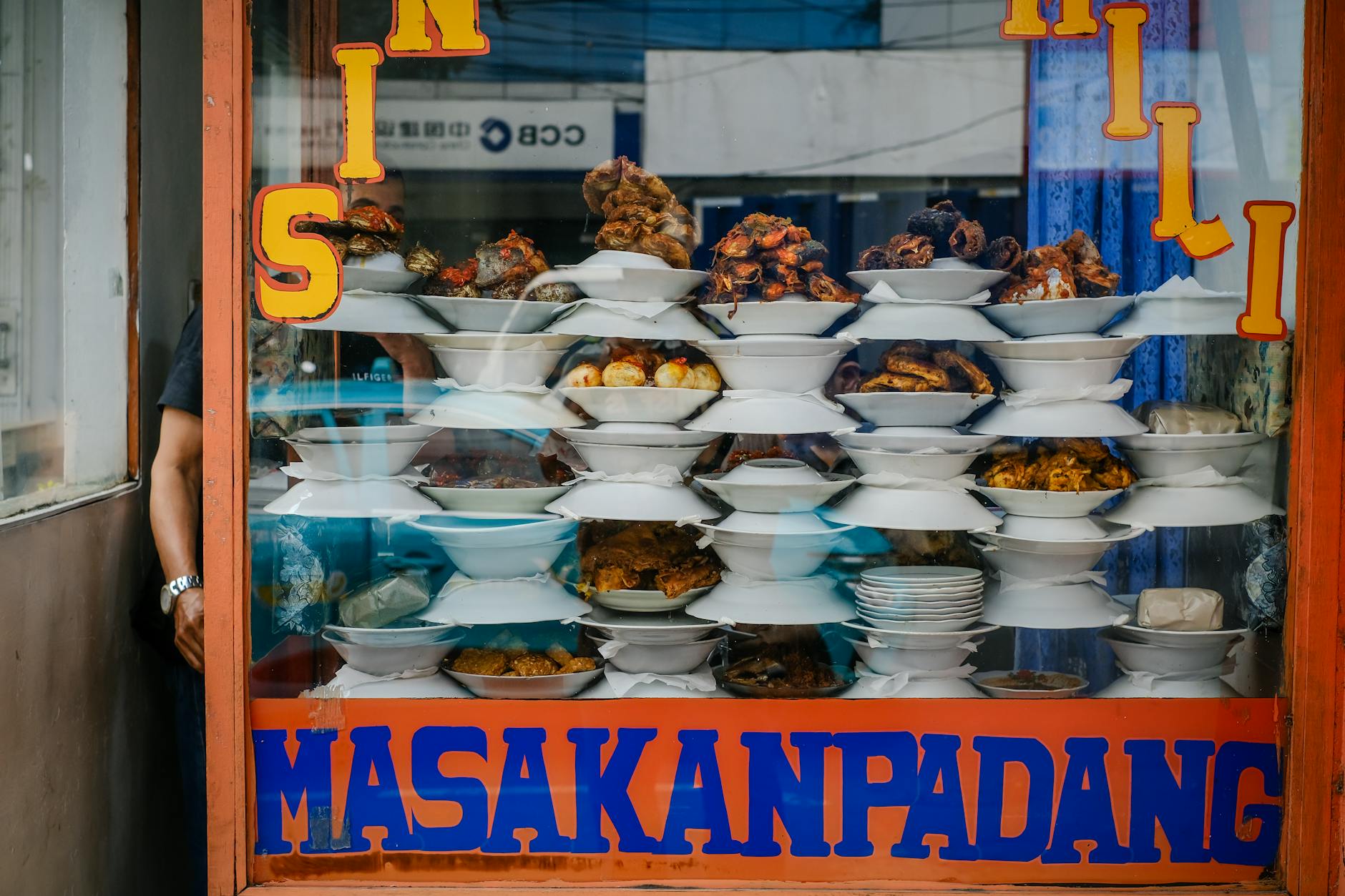
Pasar Mayestik in Kebayoran Baru is primarily a fabric and traditional shopping market, but its basement food court is one of South Jakarta’s hidden food destinations. Dozens of warung stalls serve Indonesian regional dishes — Padang, Sundanese, Javanese, Manado — at warung prices. Strong on traditional dishes that hipster food courts don’t serve. Spend: IDR 30,000–80,000 per dish. Hours: 6:00 AM–6:00 PM.
3. M Bloc Space — Blok M Modern Food Hub
A newer hipster food complex in Blok M built into a converted government office, M Bloc Space hosts indie cafes, modern Indonesian restaurants, live music venues, and rotating contemporary art exhibitions. Less a “market” than a curated food hall but functions similarly. Spend: IDR 100,000–250,000.
Traditional Wet Markets with Food Stalls (Shop-and-Snack Focus)
4. Pasar Petak Sembilan — Glodok Chinatown
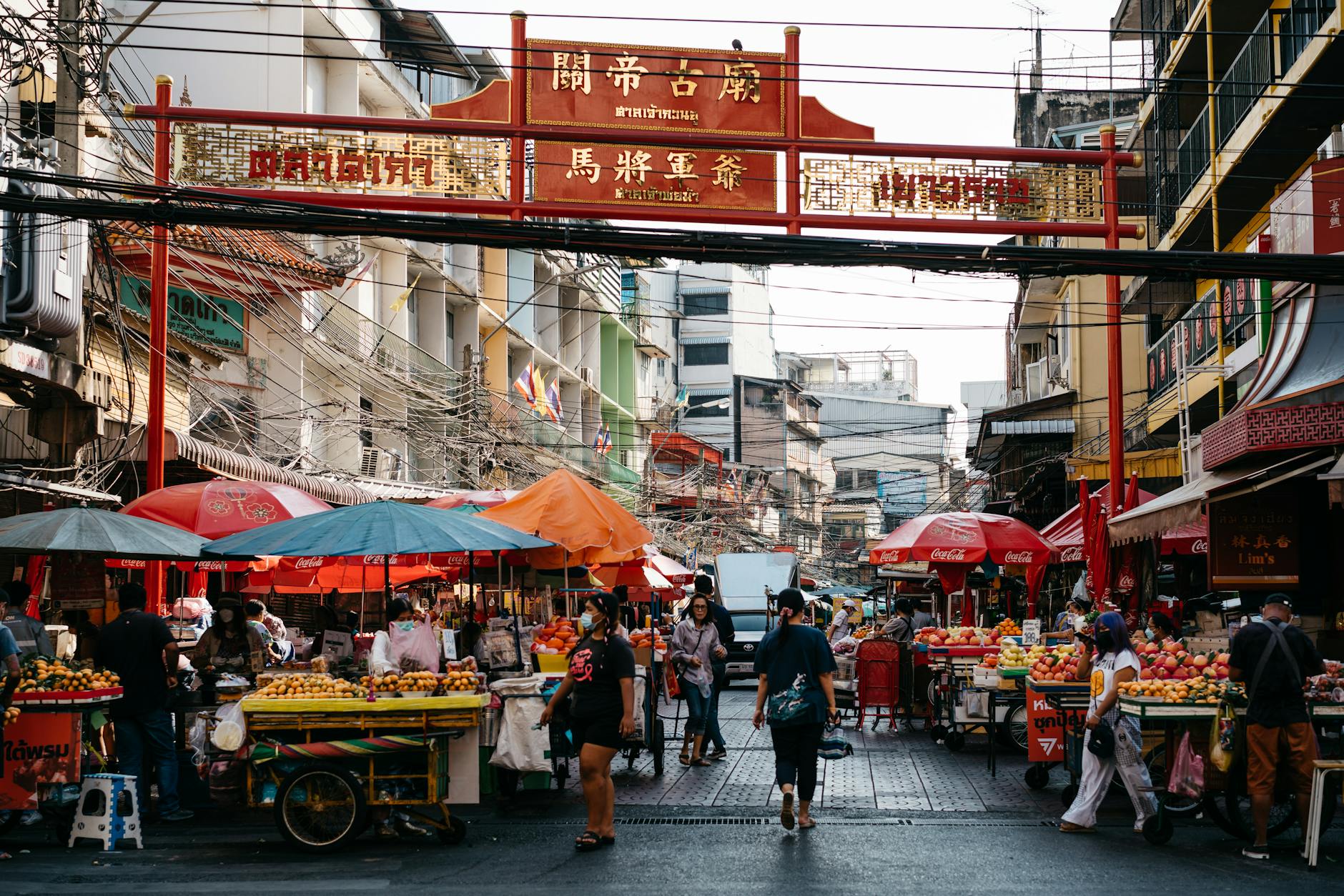
The 200-year-old Pasar Petak Sembilan in Glodok Chinatown is Jakarta’s most atmospheric traditional Chinese-Indonesian wet market, and the natural heart of a day spent eating around Kota Tua. Narrow lanes lined with century-old shophouses sell live frogs, durian, traditional Chinese medicine, dried sea-horses, ginseng, Chinese New Year cakes, and an extraordinary variety of fresh produce. Food stalls scattered throughout serve Indonesian-Chinese street food. The morning hours (6:00–10:00 AM) are best for atmosphere.
Food highlights: Kopi Es Tak Kie (since 1927), Bakmi Amoy at Petak Enam, Soto Betawi Afung, Pantjoran Tea House free hot tea, and durian by the kilogram — many of which feature in the guide to the best street food in Jakarta. Hours: 6:00 AM–8:00 PM.
5. Pasar Mester Jatinegara — East Jakarta Heritage Market
One of Jakarta’s oldest surviving wet markets, Pasar Mester Jatinegara serves East Jakarta with traditional fresh produce, Indonesian spices, and authentic Betawi food stalls. Less touristic than Petak Sembilan, more local atmosphere. Hours: 5:00 AM–6:00 PM.
6. Pasar Minggu — Heritage Betawi Market
Pasar Minggu in South Jakarta is one of the city’s oldest markets, with traditional Betawi food stalls and heritage produce vendors. Adjacent Warung Betawi H. Muhayar serves Pasar Minggu’s most beloved Betawi cuisine. Hours: 5:00 AM–5:00 PM.
7. Pasar Gondangdia — Central Jakarta Local
A small but lively local wet market in the Gondangdia area of Central Jakarta. Food stalls serve nasi uduk, bubur ayam, and traditional Indonesian breakfast dishes. Hours: 5:00 AM–10:00 AM.
Specialty Markets
8. Pasar Kue Subuh (Senen) — Predawn Cake Market
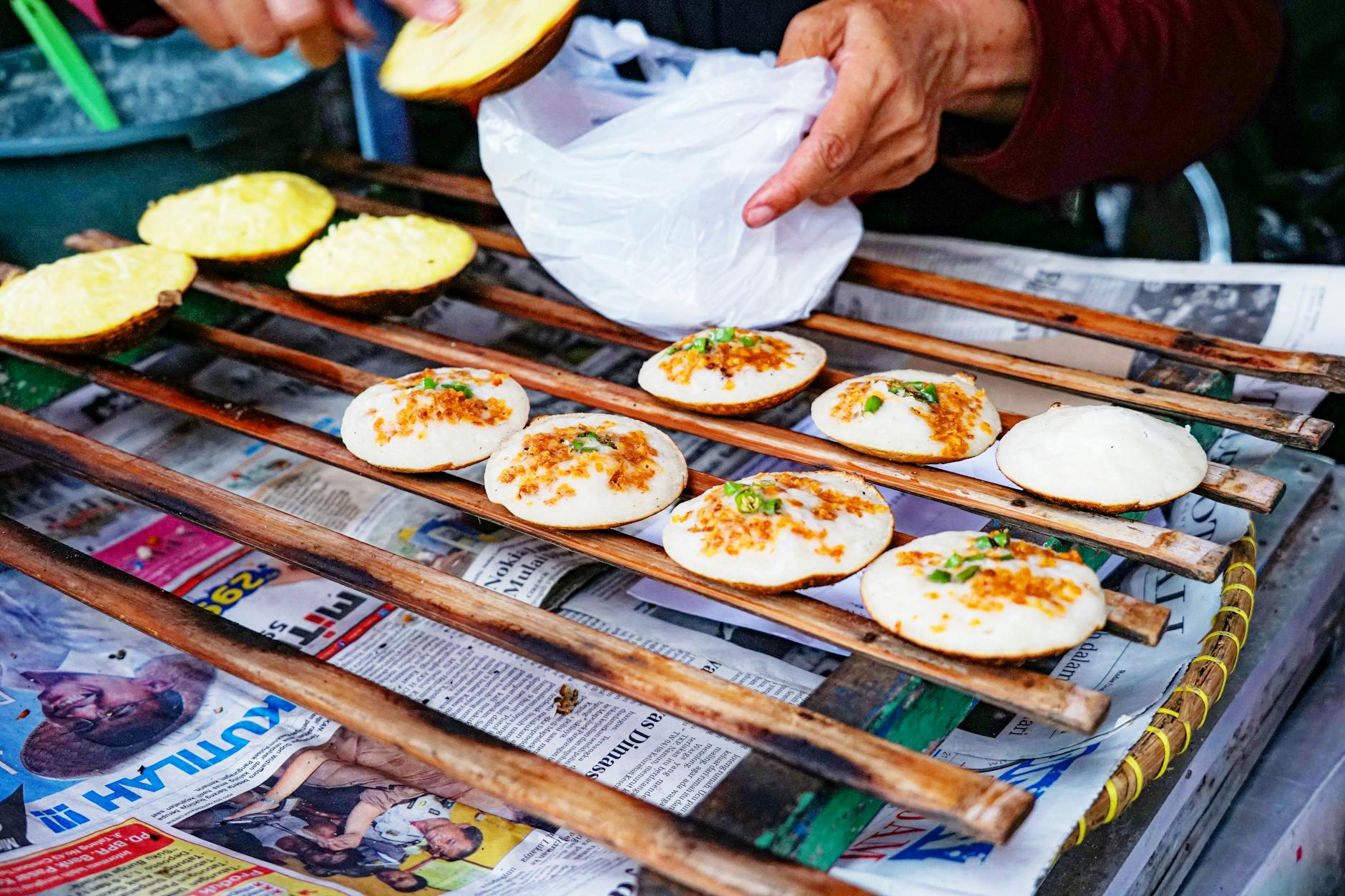
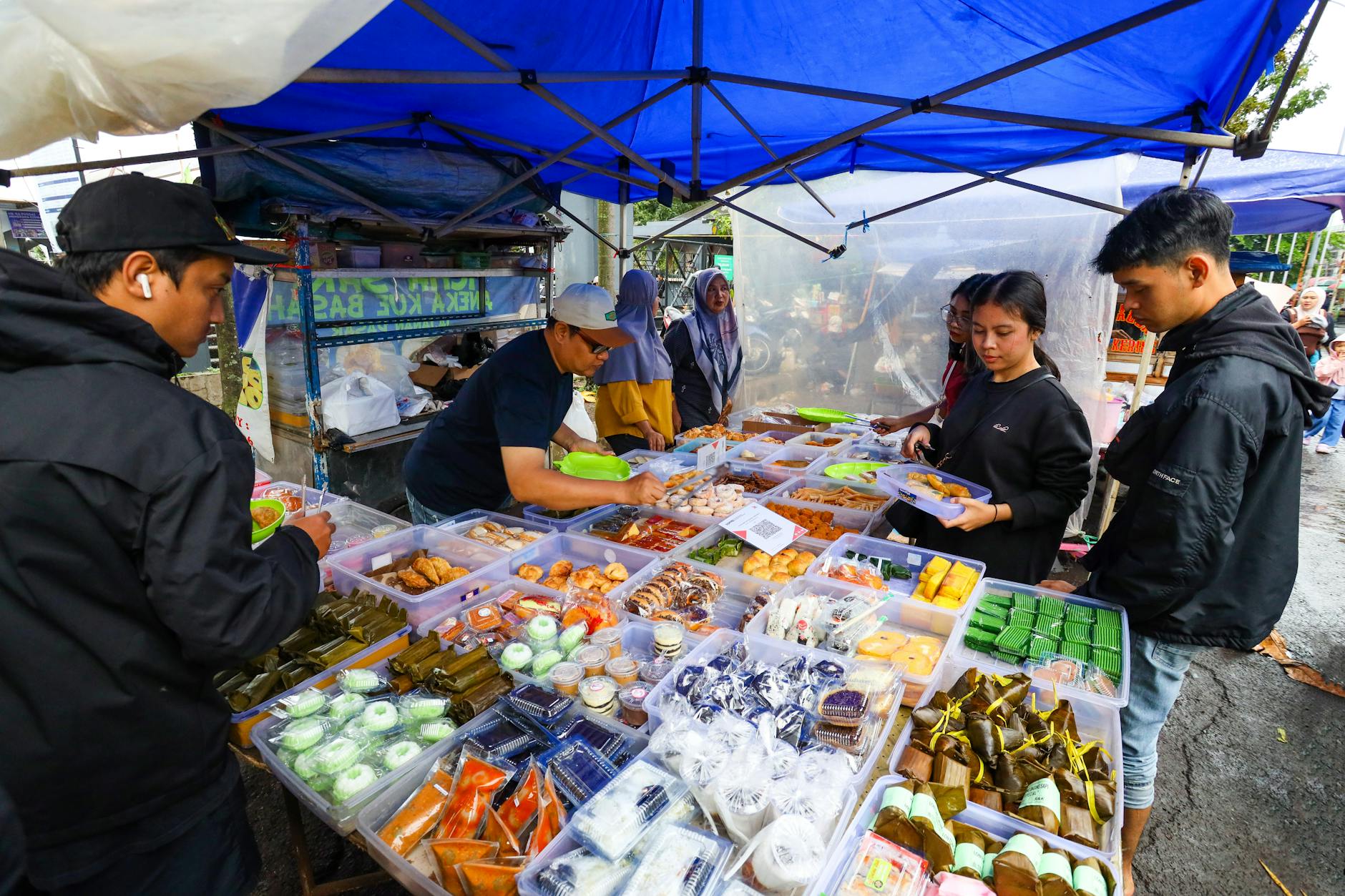
One of Jakarta’s most extraordinary food experiences, Pasar Kue Subuh (“Dawn Cake Market”) in Senen operates 7:00 PM–5:00 AM nightly. Hundreds of vendors sell traditional Indonesian and Betawi kue with generous free samples. Peak atmosphere at 2:00–4:00 AM with bakers stacking pastry boxes meters high. Featured in our Jakarta night food markets guide.
9. Pasar Asemka — Snacks & Stationery
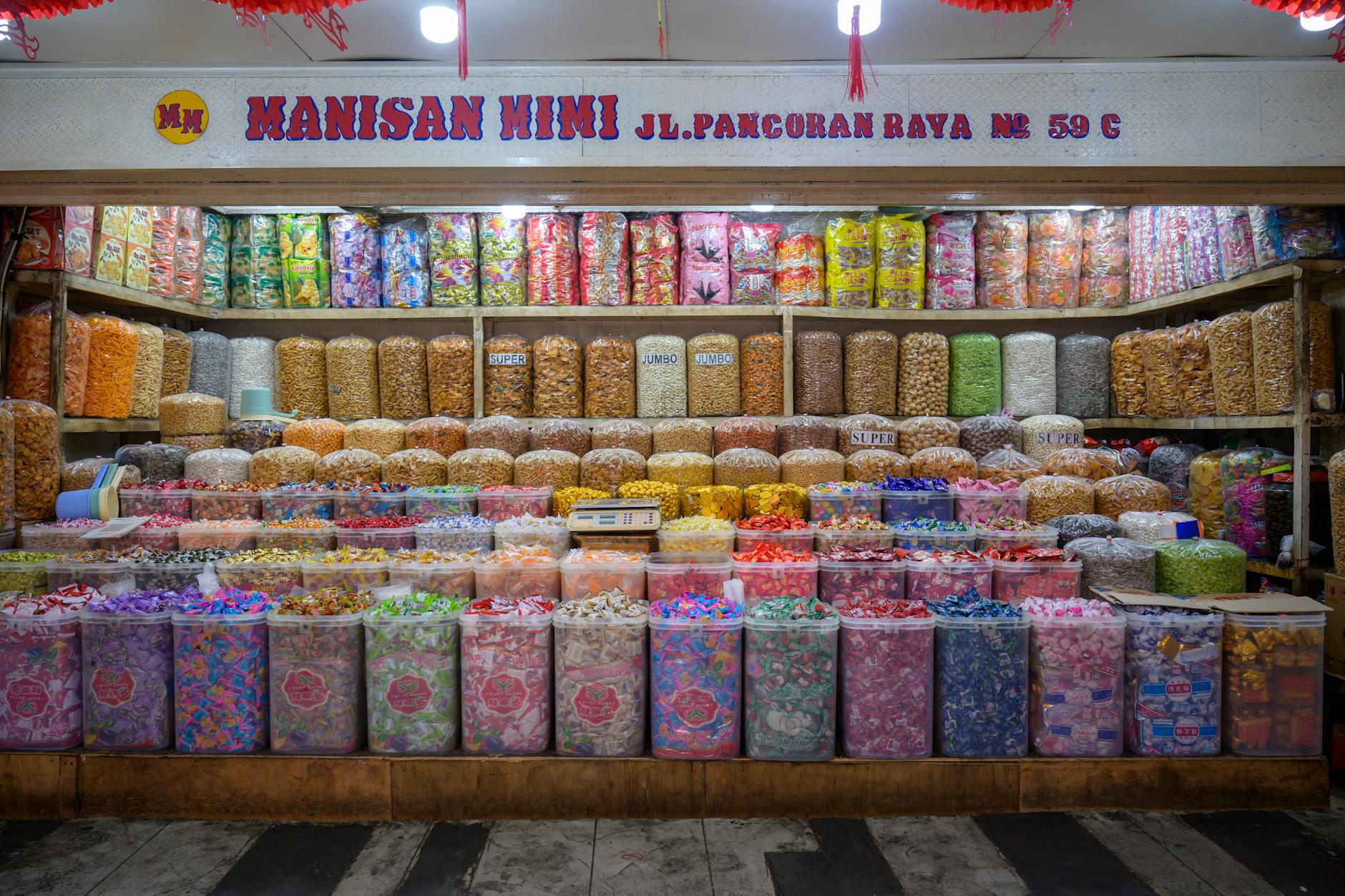
A specialty wholesale market in West Jakarta, Pasar Asemka sells Indonesian snacks, stationery, and traditional confections in bulk. Strong destination for buying traditional Indonesian snacks (krupuk, emping, kue kering) to take home. Hours: 8:00 AM–5:00 PM.
10. Pasar Lama Tangerang — Weekend Food Mecca
Outside Jakarta proper in Tangerang, Pasar Lama activates on weekends as one of the metropolitan area’s most beloved traditional Chinese-Indonesian and Betawi food markets. Worth the 45-minute Grab if you have a weekend morning. Hours: Best Saturday-Sunday 6:00 AM–noon.
Traditional Wet Market Bargaining Guide
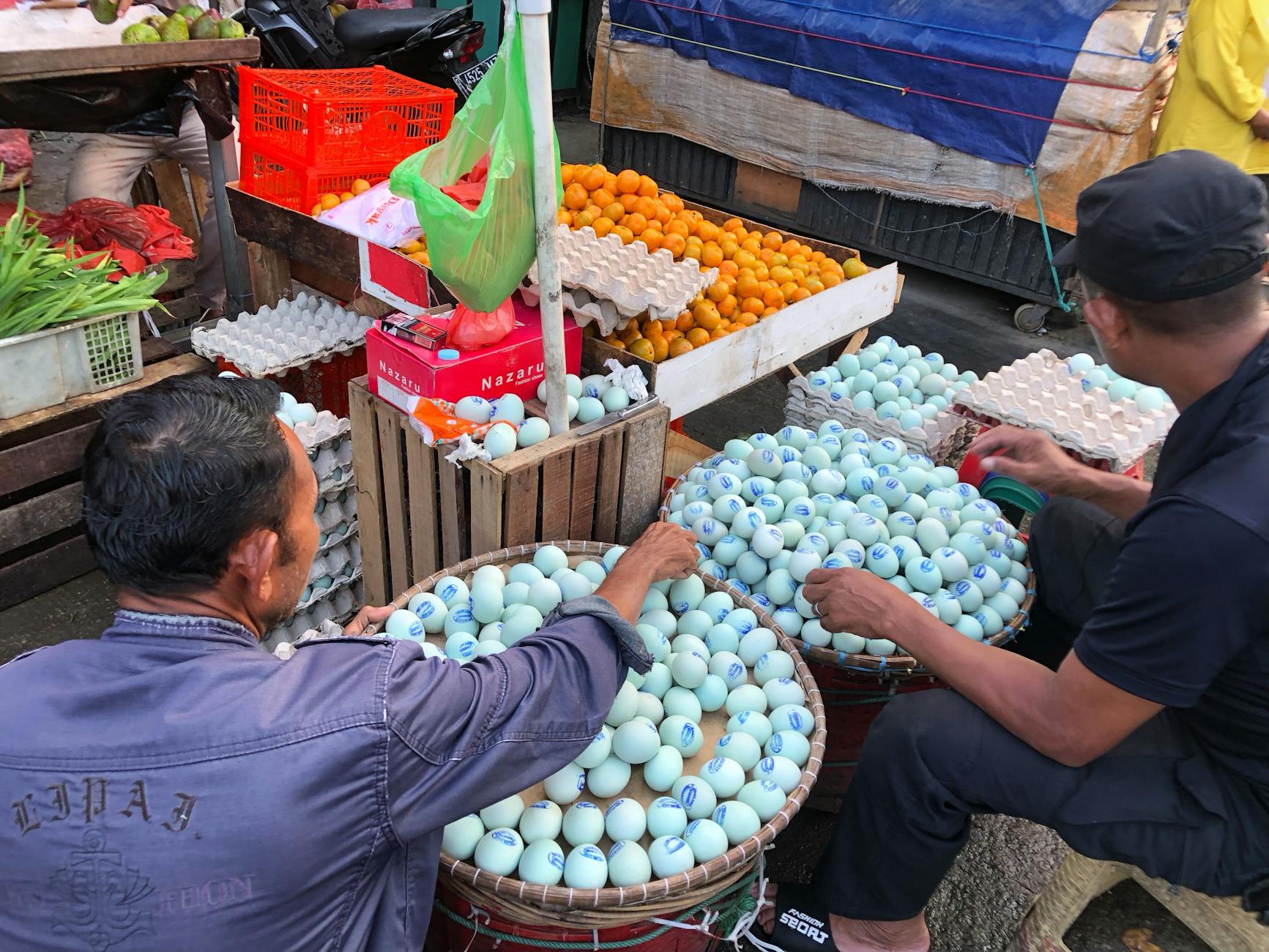
For travelers wanting to shop at traditional wet markets despite limited Bahasa Indonesia, here’s how to navigate confidently:
Basic Phrases
- “Berapa harganya?” — How much?
- “Mahal sekali” — Very expensive (start of bargaining)
- “Bisa kurang?” — Can you lower it?
- “Setengah saja” — Half please (for produce)
- “Satu ons” — 100 grams
- “Satu kilo” — One kilogram
- “Terima kasih” — Thank you
Bargaining Strategy
- Smile and be friendly — bargaining is social, not adversarial
- Quote 50–60% of asking price — vendor will counter
- Meet in the middle — typical end-price is 70–80% of asking
- Walk away gently — vendor will often call you back
- Show genuine interest — ask questions about the produce
When NOT to Bargain
Don’t bargain at food stalls (prices are usually fixed at small amounts), at modern food courts (Pasar Santa, Pasar Mayestik basement), or at predawn cake markets (volume-pricing already includes good rates).
Food Markets by Neighborhood
Markets cluster by district, so it pays to pick by where you’re based — the Jakarta neighborhoods guide helps, and the broader shopping-focused traditional markets in Jakarta guide covers the non-food side.
Central Jakarta
Pasar Gondangdia (small local market), Pasar Senen (night markets and Pasar Kue Subuh), Sabang street food strip.
South Jakarta
Pasar Santa (Kebayoran Baru hipster food court), Pasar Mayestik basement, Pasar Minggu heritage Betawi market, M Bloc Space (Blok M).
West Jakarta
Pasar Petak Sembilan (Glodok Chinatown), Pasar Asemka, Pasar Tanah Abang (primarily textiles but food stalls scattered).
East Jakarta
Pasar Mester Jatinegara (heritage), various local neighborhood markets.
North Jakarta
Muara Karang fish market (covered in our night food markets guide), Glodok market overlaps.
Greater Jakarta (Worth a Trip)
Pasar Lama Tangerang (weekend food destination), Pasar Modern BSD (suburban upscale).
Sample Food Market Itineraries
Foodie weekend morning: A guided market walk can stitch these together for you if you’d rather not navigate solo — see the Jakarta food tour guide. Otherwise: start at Pasar Santa (10:00 AM) for hipster food court breakfast → Grab to Pasar Petak Sembilan (12:00 PM) for Glodok Chinatown wet market + Bakmi Amoy lunch → finish with afternoon at Pasar Mayestik basement (3:00 PM).
Traditional heritage market crawl: Pasar Gondangdia breakfast (7:00 AM) → Pasar Mayestik mid-morning → Pasar Mester Jatinegara lunch → Pasar Minggu evening Betawi dinner at H. Muhayar.
Predawn experience: Late dinner anywhere (10:00 PM) → 2:00 AM Grab to Pasar Kue Subuh → traditional kue sampling until 4:00 AM → breakfast at Sabang street food (6:00 AM) → return to hotel.
Practical Tips for Jakarta Food Markets
Carry cash in small denominations — most market vendors don’t accept cards, and the food here is some of the cheapest in the city, which makes markets a backbone of the guide to cheap eats in Jakarta. Wear comfortable closed-toe shoes — wet market floors are often slippery and wet. Bring a reusable shopping bag if buying produce or snacks. Visit early morning (6:00–10:00 AM) for the freshest produce and best vendor mood. Use ride-hailing rather than driving — parking is limited and confusing at most markets.
Photography etiquette: Ask before photographing vendors and their products. Most are happy to be photographed and even pose, but ask first. Buying a small item from a vendor before requesting a photo is appreciated.
How to actually eat your way through a wet market
A wet market can feel overwhelming on a first visit — narrow lanes, no English, a hundred smells at once — but the way to eat one is simple once you know it. Go early, ideally between 6 and 9am, when the produce is freshest and the stalls are at their liveliest. Do a slow lap first without buying anything, just to see what’s there and where the busy stalls are; the ones with a local queue are where you eat. Then graze in small amounts: a single kue here, a bowl of something there, a coffee at a counter, rather than committing to one big plate.
A few practicalities make the difference between a stressful visit and a great one. Wear closed-toe shoes — wet market floors are exactly as the name suggests, often slick with melted ice and rinse water. Carry small notes, since nothing here takes cards and vendors rarely have change for big bills. Keep your bag in front of you in the crowded sections. And ask before photographing — most vendors are delighted to pose, but buying a small item first turns a transaction into a friendly exchange. The reward for all this is real: the food at a good Jakarta wet market is fresher, cheaper, and more genuinely local than almost anything you’ll eat in a restaurant.
Frequently Asked Questions About Jakarta Food Markets
What is the best food market in Jakarta?
For modern hipster food court atmosphere, Pasar Santa (Kebayoran Baru) is the best. For traditional Chinese-Indonesian wet market atmosphere, Pasar Petak Sembilan in Glodok. For predawn Indonesian cakes, Pasar Kue Subuh in Senen.
Are Jakarta wet markets safe for tourists?
Yes — major Jakarta wet markets (Petak Sembilan, Mayestik, Mester) are very safe for tourists. Use standard urban precautions: keep valuables secure, watch for pickpockets in crowded sections, wear closed-toe shoes.
What time do Jakarta food markets open?
Most traditional wet markets open 5:00–6:00 AM and close 5:00–6:00 PM. Modern food courts (Pasar Santa, Pasar Mayestik basement) open 10:00 AM–10:00 PM. Pasar Kue Subuh is unique at 7:00 PM–5:00 AM.
Should I bargain at Jakarta food markets?
Bargain at traditional wet markets when buying produce or shopping for non-food items. Do NOT bargain at food stalls (prices are fixed), modern food courts, or Pasar Kue Subuh (volume pricing already includes fair rates).
Can I take photos at Jakarta wet markets?
Yes — ask vendors first as a courtesy. Most are happy to be photographed. Buying a small item from a vendor before photographing is appreciated and ensures friendly interactions.
What’s the best market to buy Indonesian snacks to take home?
Pasar Asemka in West Jakarta specializes in Indonesian snacks (krupuk, emping, kue kering) at wholesale prices. Pasar Mayestik basement also has strong snack and traditional sweet selection.
Jakarta’s food markets are one of the most rewarding food destinations in Asia once you know which to visit for what. From here, the Jakarta food guide ties the whole scene together, and the after-dark version of all this — the predawn cake market and the seafood strips — gets its own treatment in the guide to Jakarta night food markets.
External Resources for Jakarta Food Markets
For real-time vendor reviews and market guides, the Jakarta100Bars traditional markets guide provides comprehensive market documentation, and the What’s New Indonesia traditional markets feature offers updated coverage of Jakarta’s market scene.