At about half past eleven on any Jakarta morning, with the humidity at ninety per cent and the pavement giving off heat like a radiator, the appeal of a large volume of cold water becomes overwhelming and entirely rational. That is the honest case for the water parks Jakarta has scattered across its five districts: not that any of them is world class, but that on the right day one of them is the most sensible thing you can possibly be doing in this city.
This guide runs through every water park worth knowing about, from the 5-hectare operation at Ancol down to a 20,000-rupiah neighbourhood pool with a tipping bucket, with 2026 prices, opening hours and an honest note on who each one suits. Prices were checked in September 2026 and change frequently; confirm before you travel, and check the promotional pages, which are often much cheaper than the gate.
Every Jakarta water park, compared
| Park | Where | Adult ticket | Hours | Best for |
|---|---|---|---|---|
| Atlantis Water Adventure | Ancol, North Jakarta | From about 102,000 + 35,000 Ancol gate | Check — listings vary | The biggest day out; families |
| Waterboom PIK | Pantai Indah Kapuk, North Jakarta | 150,000 adult / 100,000 child | 11:00–21:00 | Late openings; the best slides |
| Pondok Indah Waterpark (The Wave) | Pondok Indah, South Jakarta | 100,000 weekday / 200,000 weekend | 06:00–18:00 | Swimmers; the FlowRider |
| CX Waterpark | Ciracas, East Jakarta | 30,000 weekday / 40,000 weekend | 08:00–18:00 | Value; local family day |
| SS Waterpark | TMII, East Jakarta | 20,000 Mon–Thu / 25,000 weekend | 08:30–17:00 | The cheapest option in the city |
| Palm Bay Waterpark | Kalideres, West Jakarta | Check locally | 09:00–16:00, later at weekends. Closed Tuesdays | West Jakarta convenience |
| The Jungle | Bogor, ~1h15 away | 58,000 weekday / 68,000 weekend | 09:00–17:00 | Cooler air and better value |
Why this is a smarter Jakarta day than it sounds
Three arguments, all of which hold up.
The climate makes it rational. Jakarta sits at roughly 25 to 33 °C year round with humidity that makes an hour of outdoor sightseeing genuinely draining. A water park is the only outdoor attraction in this city that gets better as the day gets hotter, which inverts the usual Jakarta planning problem.
It solves the traffic problem. A water park is a single-destination day. You go there, you stay, you come back — one journey out and one back, both of which you can time to miss the peaks. Compare that with an itinerary of three separate sights, which in this city is three separate hours in a car. Our traffic guide explains why that matters more here than almost anywhere.
It is where Jakarta actually goes. These are not tourist attractions. On a Sunday, a Jakarta water park is extended families with picnic mats, teenagers in groups, mothers in full-coverage swimwear supervising toddlers in the shallow end, and grandparents sitting in the shade with the bags. It is one of the more genuinely enjoyable pieces of ordinary Indonesian life a visitor can drop into.
The big three
Atlantis Water Adventure, Ancol
The largest water park in Jakarta at around five hectares, on the Ancol waterfront in the north of the city, and the one most visitors end up at because it sits inside the complex that also holds Dufan and Sea World.
It runs eight main pools — Kiddy Pool, Poseidon, Octopus, Plaza Atlas, Atlantean, Antilla and Aquarius among them — covering everything from ankle-deep toddler areas to slides and a wave pool. Tickets have been quoted anywhere from 85,000 to 165,000 depending on the day and the promotion, with around 102,000 to 110,000 the common figure and promotional rates down near 90,000.
The catch, as always at Ancol: the 35,000 per-person gate fee is separate, and so is the vehicle ticket. Published opening hours vary between listings — one source gives 08:00 to 15:30 and another 07:00 to 18:00 — so check ancol.com before you build a day around a late finish.
The strong argument for Atlantis is combination. Since you have paid the gate fee anyway, an Atlantis afternoon pairs beautifully with a Sea World morning: air-conditioned first, wet second, which is the right order in Jakarta. Add dinner at the Ancol seafood market and you have a genuinely full day for one journey.
Waterboom PIK
In Pantai Indah Kapuk, the reclaimed and heavily developed strip in the far north-west, and the most polished water park in the city. Adult tickets 150,000, children 100,000 — the most expensive on this list, and the one that most obviously spends the money on maintenance.
The signature is a 118-metre slide dropping from 15 metres, plus a ride called the Twister that the operator claims reaches 70 km/h. There is a full children’s section. What genuinely distinguishes it is the opening hours: 11:00 to 21:00 daily, which makes it the only water park in Jakarta where an evening visit is possible — and an evening visit, in this climate, is a materially better experience than a midday one.
PIK itself is worth knowing about beyond the water park: it has become one of Jakarta’s better eating districts, with the Pantjoran food street and a dense run of restaurants. Combining an evening at Waterboom with dinner in PIK is one of the better North Jakarta plans. Our North Jakarta guide covers the area.
Pondok Indah Waterpark (The Wave)
In Pondok Indah in South Jakarta, and structurally different from the others: as well as a tube slide, a wave pool and a FlowRider surf simulator, it has a 50-metre Olympic-size pool. That makes it the only entry on this list that works for an adult who actually wants to swim lengths.
Pricing is the sharpest weekday-weekend split in the city — 100,000 on a weekday against 200,000 at weekends and on public holidays. Opening at 06:00 is also unusual and useful: an early swim before the heat arrives is a genuinely good Jakarta morning.
For visitors staying in South Jakarta this is the convenient option, and Pondok Indah is a comfortable, leafy, well-served district — our Pondok Indah guide has more.
The cheap ones, which are not bad
Worth taking seriously. These are neighbourhood facilities rather than destinations, but they are clean, cheerful, easy, and cost a fraction of the headline parks. If your children mainly want to be in water and are not fussed about slide statistics, this is where the value is.
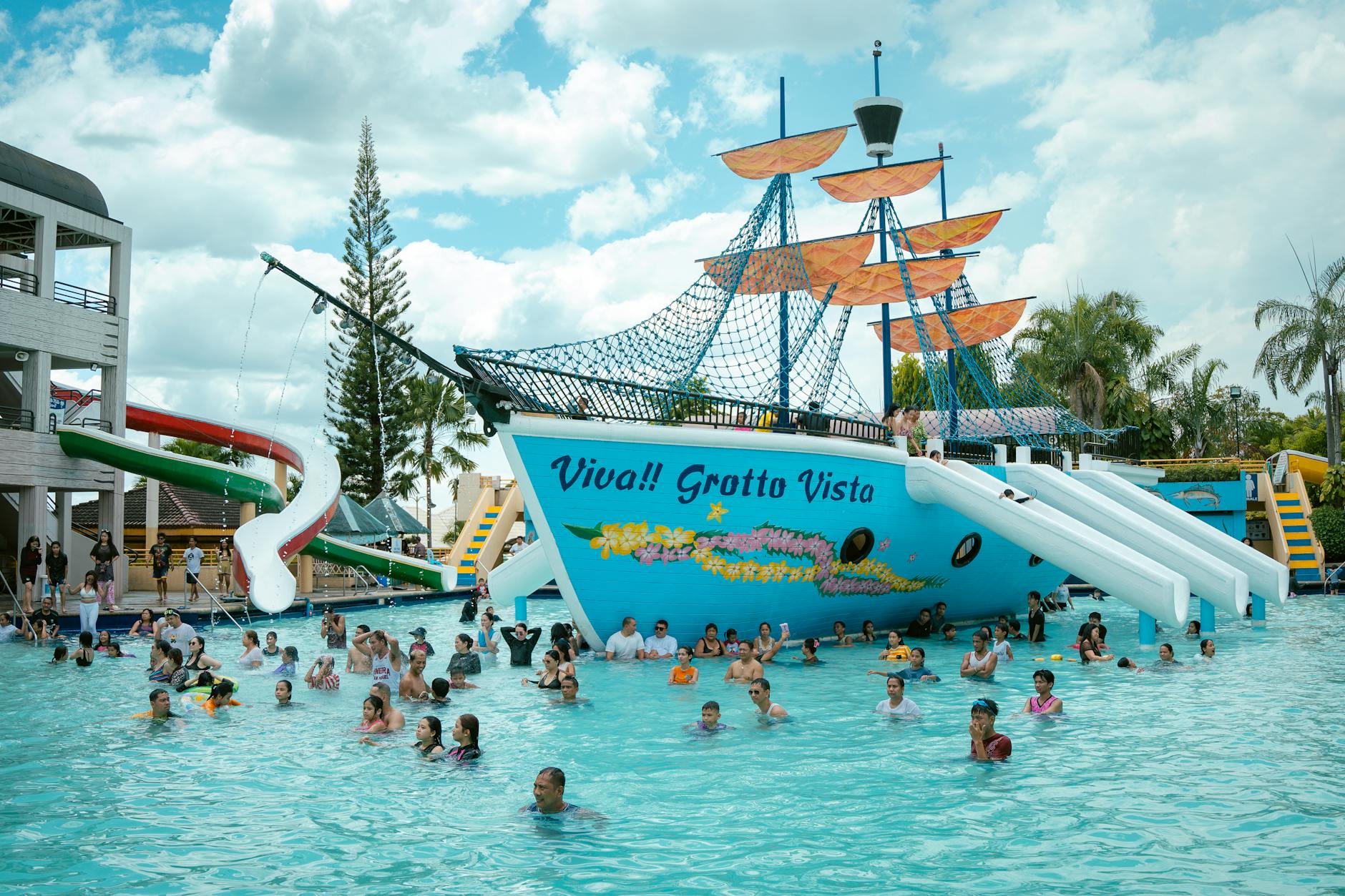
- SS Waterpark, also inside Taman Mini, is the cheapest in the city at 20,000 Monday to Thursday and 25,000 at weekends, open 08:30 to 17:00. It has water slides, a replica ship with two slides built into it, two tipping-bucket structures and castle towers. For under-eights this is arguably better value than anything else here.
- CX Waterpark on Jalan Centex in Ciracas, East Jakarta — 30,000 Monday to Friday, 40,000 at weekends, 50,000 in peak holiday periods, open 08:00 to 18:00. A giant tipping bucket, a lazy river and slides.
- Palm Bay Waterpark in Kalideres, West Jakarta, with a rainbow slide, a boomerang, a wave pool and a beach pool. Open 09:00 to 16:00 on weekdays and to 17:00 at weekends, and closed on Tuesdays — worth remembering.
- Neighbourhood pools — Kolam Renang Tirtamas in Pulo Gadung, Batoe 54 in Jagakarsa, the Villa Meruya pool in West Jakarta and Taman Air Tirtamas in Pondok Kelapa all charge somewhere between 15,000 and 70,000 and all have some combination of children’s pools, short slides and a tipping bucket. Batoe 54 closes on Fridays.
The Indonesian term you will see everywhere in these listings is ember tumpah — literally “spilling bucket”, the giant tipping bucket that fills slowly and then dumps on everyone underneath. Every water park in Indonesia has one, and it is invariably the most popular thing in the building.
Out of town: The Jungle, Bogor
In the Bogor Nirwana Residence development in Bogor Selatan, about an hour and a quarter from Jakarta on a good run and considerably more in traffic. Tickets are 58,000 on weekdays and 68,000 at weekends and public holidays, open 09:00 to 17:00, with promotional rates appearing regularly.
Two reasons to consider it over anything in Jakarta. It is substantially cheaper than the big city parks. And Bogor sits higher and is noticeably cooler than Jakarta — a genuine relief, and the same reason people go to Bogor and Puncak generally.
The counter-argument is the journey. The KRL commuter train reaches Bogor in about an hour and is far more reliable than the road, but you still need a ride at the far end, and Bogor’s famous thunderstorms mean an afternoon closure for lightning is a real possibility. Go early, go on a weekday, and treat it as a full day rather than an add-on.
Ocean Dream Samudra: not actually a water park
It gets listed alongside the water parks and it is not one. Ocean Dream Samudra at Ancol — the old Gelanggang Samudra — is a marine mammal and show park: dolphin and sea lion performances, a Water Stuntman Show, an underwater show and a 4D theatre. Tickets are 110,000 on weekdays and 130,000 at weekends, open 09:00 to 15:30.
If you want a show, it delivers one. If you want your children to be in water, it will disappoint them. And visitors with views about performing marine mammals should know what they are buying before they buy it.
Further afield: the Bekasi and Tangerang parks
Greater Jakarta — Jabodetabek, in the local acronym — sprawls well beyond the city boundary, and several of the largest water parks in the metropolitan area sit in the satellite cities rather than in Jakarta proper. Go Wet at Grand Wisata in Bekasi, to the east, and the water parks attached to the big residential developments in Tangerang and BSD City to the west and south-west all fall into this category.
These are worth considering only if you are staying in one of those areas or passing through. For a visitor based in central or South Jakarta, the journey out to Bekasi or Tangerang in weekend traffic will comfortably exceed two hours each way, and no water slide is worth four hours in a car. If you happen to be near one, they are typically newer, larger and better maintained than the in-city budget parks, and priced somewhere between the cheap options and the headline ones. Check current prices and opening hours directly, since these change more often than the established parks.
The same logic applies to the Puncak direction. There are pools and small water parks scattered up the road towards Cisarua, and the mountain air makes them pleasant, but the Puncak road is subject to one-way traffic management at weekends and can swallow an entire day. Our Puncak guide explains that road system, which is the deciding factor for anything in that direction.
Which one should you actually pick?
| Your situation | Go to |
|---|---|
| Already doing an Ancol day | Atlantis — the gate fee is sunk, so use it |
| Want the best slides, budget is fine | Waterboom PIK, in the evening |
| Already doing Taman Mini | SS Waterpark, inside the same complex |
| Staying in South Jakarta | Pondok Indah Waterpark, on a weekday |
| Want to swim properly | Pondok Indah — it has the 50 m pool |
| Toddlers only | SS Waterpark or any neighbourhood pool. Do not overpay |
| Want cooler air and a day out of the city | The Jungle, Bogor |
| One hot afternoon and no plan | Whichever is closest. This is not a decision worth an hour in traffic |
What to know before you go
Swimwear
This is the question visitors most often want answered and least often see addressed. Indonesian water parks are relaxed but they are not European. In practice:
- Most Indonesian women swim in full-coverage swimwear — a burkini, or leggings and a long-sleeved rash top. This is entirely normal and you will see it everywhere.
- Foreign women in a standard one-piece will not be stopped or told off, and at the more upmarket parks and hotel pools this is unremarkable. A bikini will attract attention at a busy public park on a Sunday, and rather less at Waterboom PIK or a private club.
- Men should wear proper swim shorts rather than board shorts with pockets or, obviously, anything cotton.
- Many parks require actual swimwear and will refuse cotton T-shirts and jeans in the water — a hygiene rule rather than a modesty one. A rash top or swim shirt satisfies both requirements at once and solves the sun problem as well.
The comfortable answer for most visitors is a one-piece or swim shorts plus a rash top. Nobody looks twice, you stay covered, and you do not burn. More on this in our Jakarta etiquette guide.
Sun
Jakarta is six degrees south of the equator. The sun here is not the sun you are used to, it works through cloud, and it works through water. High-factor sunscreen, reapplied after every slide, plus a rash top for children, plus a hat between swims. Sunburn is the single most common way a water park day goes wrong.
Lockers, towels and food
Bring your own towels — most parks either do not provide them or charge. Lockers are available at the bigger parks for a small fee and are worth it; do not leave a phone on a sun lounger. Food is available at every park on this list, at park prices, and outside-food policies vary, so check at the gate. Several parks bundle meal vouchers into promotional tickets.
Safety
Lifeguards are present at all the significant parks. Supervision standards are decent but not obsessive, and the wave pools get genuinely crowded at weekends. Watch your own children, particularly in wave pools and lazy rivers, and particularly if they are not strong swimmers. Height and health restrictions on the bigger slides are posted and enforced.
Rain, lightning and the season
In the wet season, roughly November to April, a heavy afternoon downpour is likely most days. Outdoor pools close during lightning and stay closed until it passes, which can cost you an hour or more of a paid day. Morning sessions are more reliable in the wet season; the dry months of May to September are the safer bet overall. Our guide to the best time to visit Jakarta has the full seasonal picture.
Getting there
None of these parks is on the MRT, which is the single biggest practical constraint on all of them. Grab and Gojek reach every one of them, and the journey time is entirely a function of the hour rather than the distance — a 20 km run to PIK is thirty-five minutes at nine on a Sunday morning and well over an hour on a Friday afternoon.
Two exceptions worth knowing. Ancol is served by the KRL commuter line, which is cheap and immune to traffic, and by TransJakarta. And Taman Mini sits close enough to the eastern KRL and TransJakarta network to be reachable without a car, though you will still want a ride at the far end because the complex is enormous. For everything else, budget for a car and plan the return leg to miss the evening peak — leaving a water park at 17:30 on a Sunday is the worst possible timing.
What to pack
- Towels, because most parks do not provide them.
- A rash top for everyone, which solves modesty and sunburn in one item.
- High-factor sunscreen, reapplied constantly.
- A waterproof phone pouch — a few thousand rupiah at any Indomaret.
- Small notes for lockers, food and the odd deposit.
- Flip-flops, because the paving gets genuinely too hot to walk on barefoot by midday.
- A dry change of clothes each, since you will be getting into a car afterwards.
Crowds
Weekdays in Indonesian school term time are quiet and cheap. Weekends are busy. Indonesian school holidays, national public holidays and the week after Idul Fitri are extremely busy — the wave pool at Atlantis on a Lebaran holiday is a memorable experience but not a relaxing one. The events calendar tracks the dates.
The alternative nobody mentions: just use a hotel pool
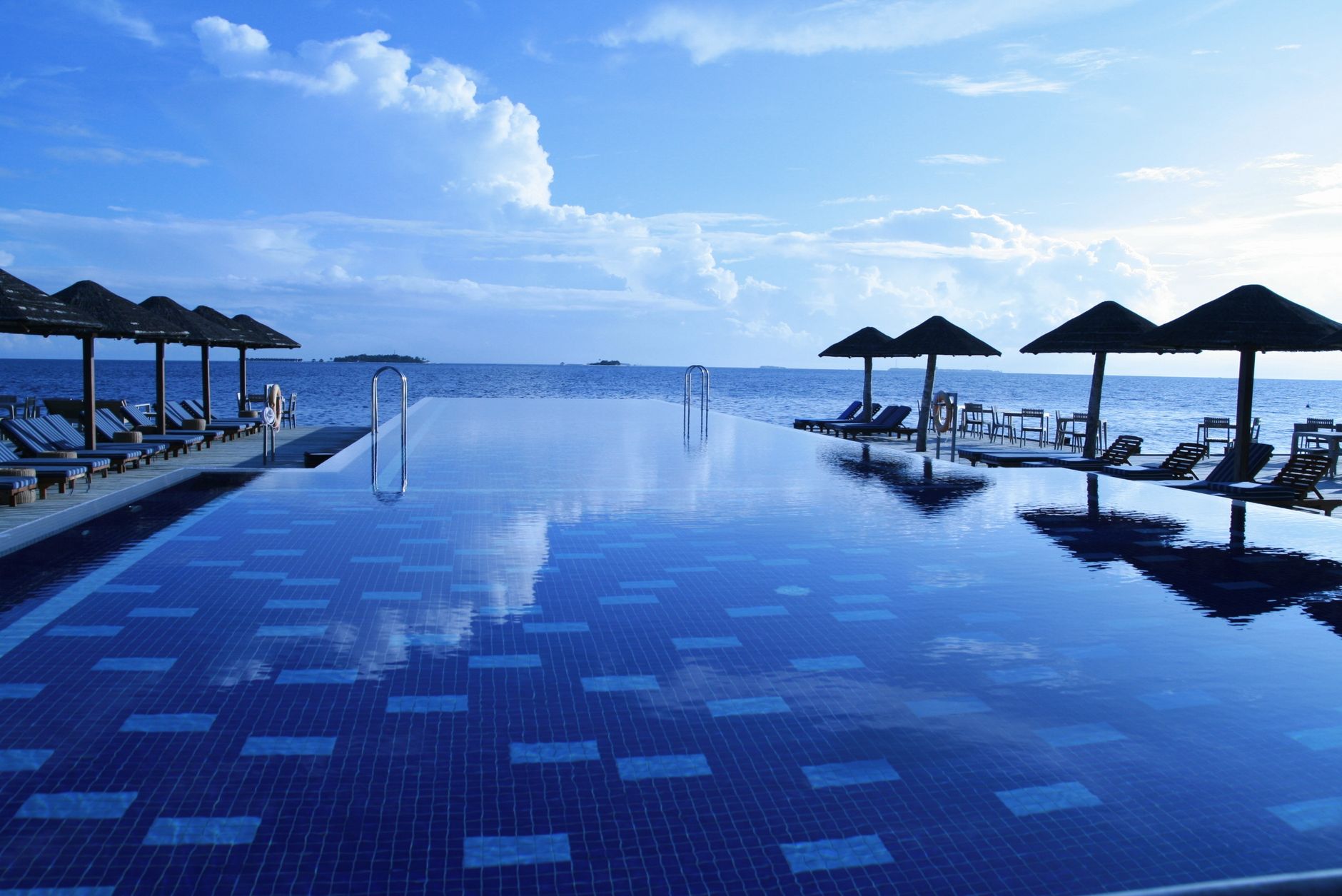
If what you actually want is to be in cool water on a hot afternoon, rather than to go down a slide, a hotel pool is very often the better answer — and many Jakarta hotels sell day passes to non-residents, frequently bundled with a food and drink credit that covers a good chunk of the price.
For adults, for couples, and for families with under-threes, this is comfortably the better option: no crowds, no queues, a lounger, shade, proper food, a clean bathroom and no journey across the city. The larger business and luxury hotels along the Sudirman corridor and in South Jakarta are the ones to enquire at. Our guides to luxury hotels in Jakarta and family-friendly hotels point at the properties with the best pools.
The honest verdict
None of Jakarta’s water parks is a reason to come to Jakarta. Compared with Waterbom Bali, or with what Singapore and Malaysia offer, they are mid-range at best and the maintenance is variable outside PIK and Ancol.
But that is the wrong test. The right test is whether, on the third day of a Jakarta trip, with the heat winning and the children mutinous and the traffic making a museum feel like a punishment, one of these is a good idea. It is — and at 20,000 to 150,000 rupiah, an inexpensive one.
Our picks, in short: Waterboom PIK if the budget allows and you can go in the evening; Atlantis if you are already at Ancol; SS Waterpark if you have small children and any interest in value; and a hotel day pass if you are travelling without children and simply want to be somewhere cool.
Frequently asked questions
What is the best water park in Jakarta?
Waterboom PIK, on the combination of slide quality, maintenance and its 11:00 to 21:00 opening hours, which allow an evening visit — much the most comfortable time to be outside in this city. It is also the most expensive at 150,000 for adults. Atlantis at Ancol is bigger and cheaper but comes with a separate 35,000 gate fee.
How much does a Jakarta water park cost?
From 20,000 at SS Waterpark inside Taman Mini up to 200,000 for a weekend ticket at Pondok Indah Waterpark. The mid-range parks sit between 100,000 and 150,000. Remember that Atlantis, being inside Ancol, adds a 35,000 per-person area gate fee plus a vehicle ticket on top of its own price.
Is Atlantis Ancol worth it?
Yes if you are already spending a day at Ancol, because the gate fee is a sunk cost and Atlantis is the largest water park in the city at around five hectares with eight pools. Less so as a standalone trip, when Waterboom PIK is better maintained and Pondok Indah is closer to most visitors’ hotels.
What should women wear at a water park in Jakarta?
Most Indonesian women wear full-coverage swimwear — a burkini, or leggings with a long-sleeved rash top. Foreign visitors in a one-piece are entirely unremarkable. A bikini will draw looks at a busy public park, less so at the upmarket ones and at hotel pools. A rash top over a swimsuit is the comfortable answer, and it deals with the equatorial sun as well.
Are there water parks near Jakarta with cooler weather?
The Jungle in Bogor, about an hour and a quarter away, sits higher than Jakarta and is noticeably cooler, and at 58,000 on a weekday it is cheaper than anything comparable in the city. Take the KRL commuter train rather than driving, go early, and be aware that Bogor’s afternoon thunderstorms can close outdoor pools.
Which Jakarta water park is best for toddlers?
SS Waterpark at Taman Mini, at 20,000 to 25,000, or any of the neighbourhood pools — they have shallow children’s pools, short slides and tipping buckets, and there is no sense paying 150,000 for slides a three-year-old cannot use. Atlantis also has a dedicated Kiddy Pool if you are already at Ancol.
Can you bring your own food into Jakarta water parks?
Policies vary and change, so check at the gate. Most parks have food outlets at park prices, and several bundle meal vouchers into promotional tickets. Bringing your own water is almost always fine and always sensible.
When is the best time to go to a water park in Jakarta?
A weekday in Indonesian school term time, mid-morning or late afternoon rather than the middle of the day, in the dry season between May and September. Avoid weekends, public holidays and the week after Idul Fitri unless you enjoy a crowd. Waterboom PIK’s evening hours are the single most comfortable slot available anywhere.
Do Jakarta hotels have pools you can use without staying?
Many do sell day passes to non-residents, often bundled with a food and drink credit. For adults and for families with very small children this is frequently a better afternoon than any water park — quieter, cleaner, closer, with a lounger and proper food, and no journey across the city.
Is it safe to swim in Jakarta water parks?
Yes. Lifeguards are on duty at all the significant parks and water treatment at the major ones is adequate. Supervise your own children in wave pools and lazy rivers, which get crowded at weekends, and observe the posted height and health restrictions on the larger slides, which are enforced.
Related Jakarta Guides
- Best Family-Friendly Attractions in Jakarta
- Sea World Ancol: Aquarium Visit Guide
- Dunia Fantasi (Dufan) Theme Park
- Taman Mini Indonesia Indah
- North Jakarta & Ancol Area Guide
- Family-Friendly Hotels in Jakarta
- Bogor Day Trip from Jakarta
- Things to Do in Jakarta with Kids
- The Best Time to Visit Jakarta
- Pondok Indah Area Guide
Photo Credits
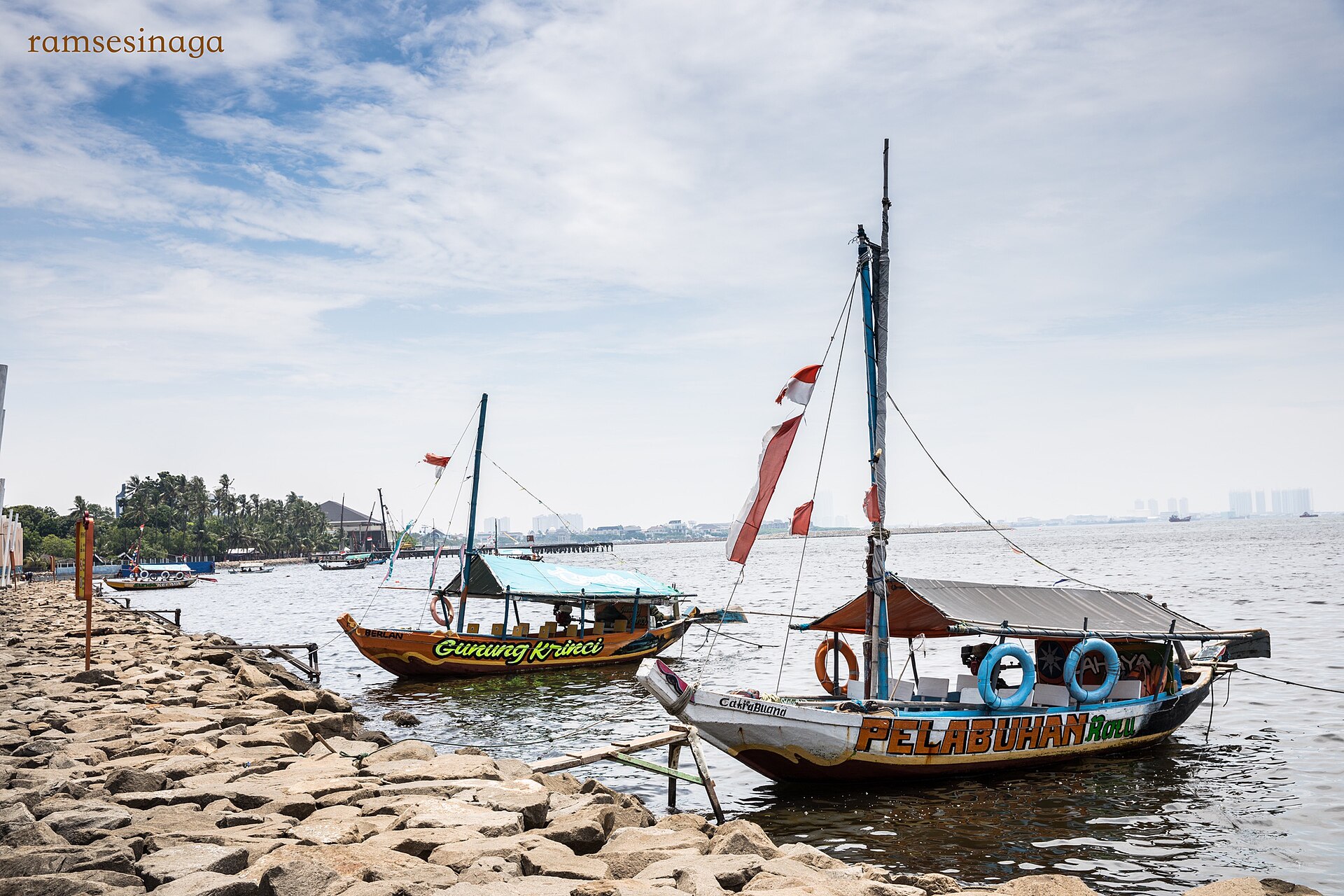
Ancol Bay waterfront: Ancol Bay Area by Ramses Sinaga, CC BY-SA 4.0, via Wikimedia Commons.