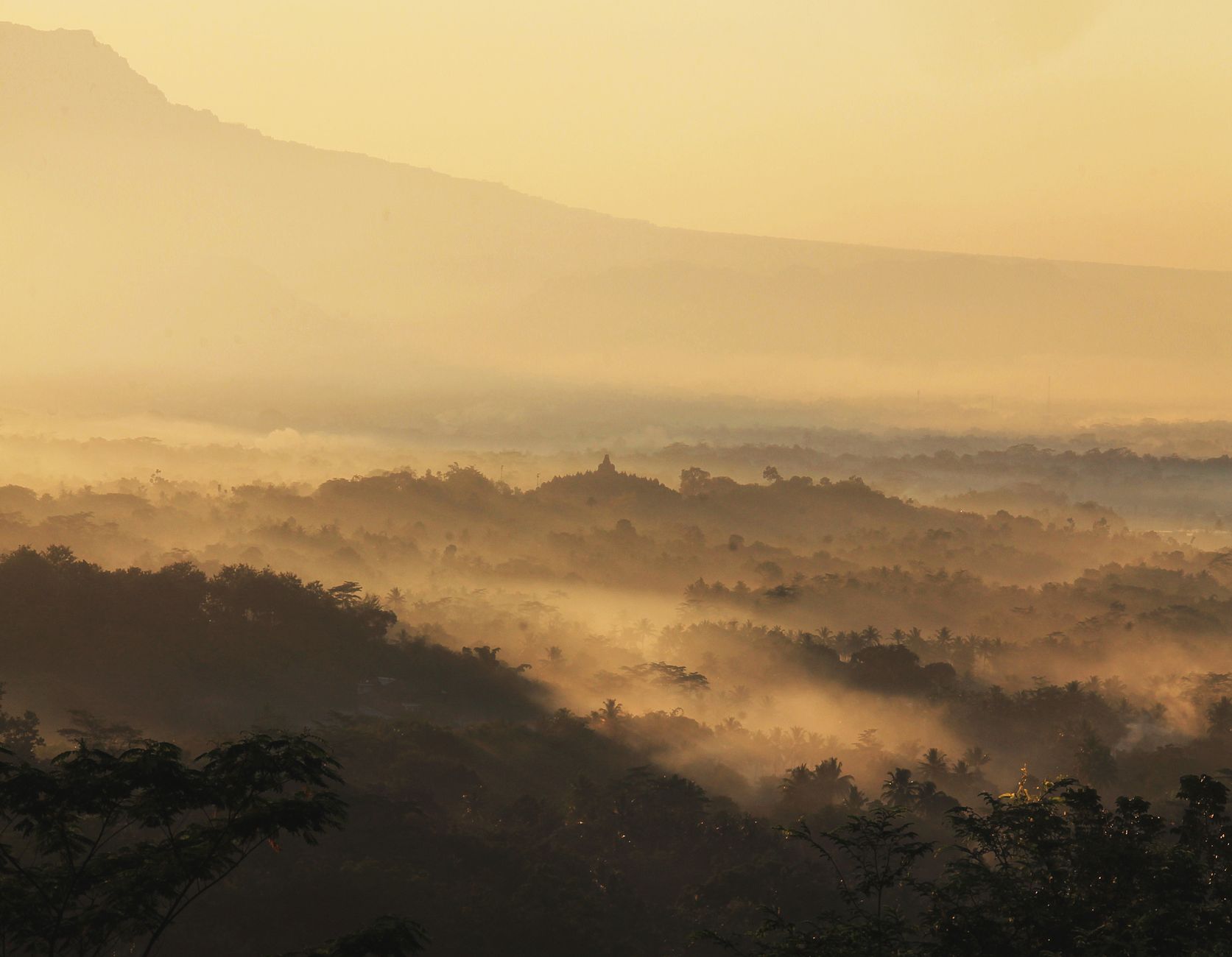
Bogor is called Kota Hujan — the rain city — and that nickname is not marketing. It sits at around 265 metres on the flank of Gunung Salak, catches moist air pushed up from the coastal plain, and turns it into cloud almost every afternoon. Local figures put annual rainfall somewhere between 3,500 mm and 4,800 mm depending on which station and which decade you read, and rain falls on roughly seven days in ten across the year. That single fact should shape everything about a Bogor day trip from Jakarta. The morning is usually bright and sharp. By one or two in the afternoon the light goes flat and grey. By three it is often coming down hard. Plan the day around that rhythm and Bogor is one of the easiest, cheapest and most rewarding escapes from the capital. Ignore it and you will spend the afternoon standing under a banyan tree watching your shoes fill with water.
This guide is the timed, weather-shaped version of the trip. For the wider set of options — Thousand Islands, Bandung, the Sundanese highlands — start with our overview of the best day trips from Jakarta, which puts Bogor in context against the alternatives. Because the whole plan hangs on the commuter railway, it is worth reading alongside our guide to the KRL Commuter Line and our explainer on the Jak Lingko card, since you cannot buy a paper ticket at the barrier the way you might expect. If you are still deciding how to move around the capital itself, our overview of getting around Jakarta covers the rest of the network.
Why Bogor’s Weather Dictates the Itinerary
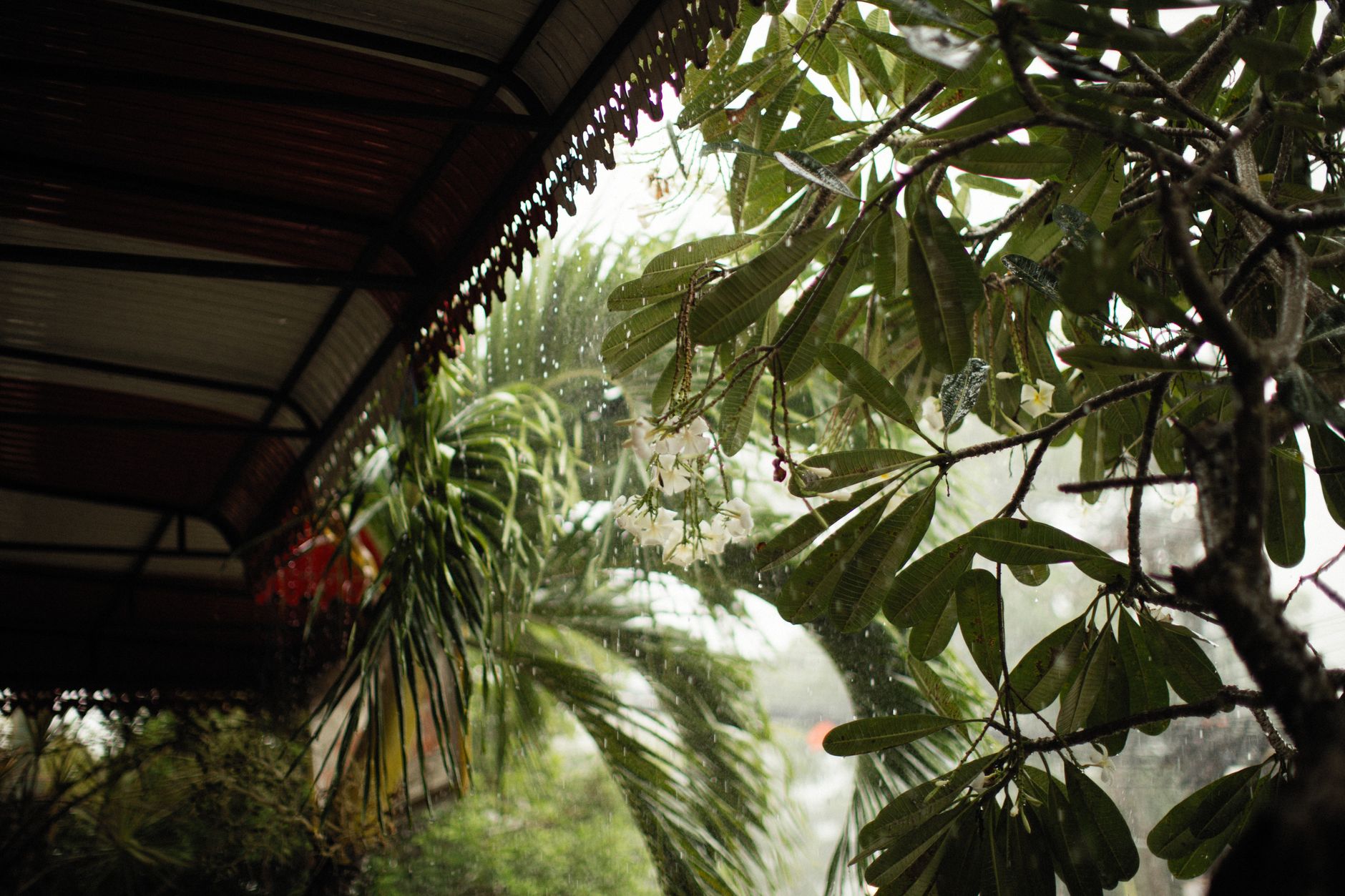
Most Jakarta day-trip guides treat rain as a wet-season problem. In Bogor it is not seasonal, it is daily. The pattern is convective: the morning sun heats the valley floor, moist air rises against the mountains, cloud builds through late morning, and the whole thing collapses into a downpour in the early to mid afternoon. Locals set their watches by it. Ask anyone in Bogor when it rains and you will get an answer somewhere between two and four o’clock.
The wet season, roughly November to March, makes this worse rather than different. Rain starts earlier, lasts longer, and can arrive before noon. It also brings the risk of genuine thunderstorms with lightning, at which point the botanical gardens will move people out of open lawns. The so-called dry season, June to September, does not mean dry in Bogor. It means the rain is more likely to be a sharp ninety-minute burst than a four-hour soak, and more likely to hold off until three.
What this gives you is a usable structure. You have a reliable dry window from roughly eight in the morning until one in the afternoon. That window is for the outdoor half of the day — the gardens, the palace railings, the walk. Everything after it should be indoors or under cover, which in practice means eating. Bogor happens to have one of the best eating streets in West Java, and it runs under awnings. The city is almost perfectly designed for this itinerary, though nobody planned it that way.
One practical consequence: bring a small umbrella, not a rain jacket. Humidity in Bogor sits high enough that a waterproof shell will simply cook you. Every minimarket sells a folding umbrella for Rp25,000–Rp50,000 and a plastic poncho for under Rp15,000.
Getting There: Why the KRL Beats Driving
Bogor sits about 55–60 km south of central Jakarta. On paper that is an hour. In practice, on the wrong day, it is four. The reason is that the Jagorawi toll road does not just serve Bogor — it is the funnel for everyone heading up to Puncak, the hill resort strip above Ciawi, and on weekends that traffic is enormous. Worse, the police run a buka-tutup one-way system on the Puncak road on Saturdays, Sundays and public holidays, alternating the direction of flow. When the road is closed downhill, cars queue. When it opens, a wall of vehicles pours back through Ciawi and into Bogor’s already congested ring road. Bogor absorbs the overspill either way.
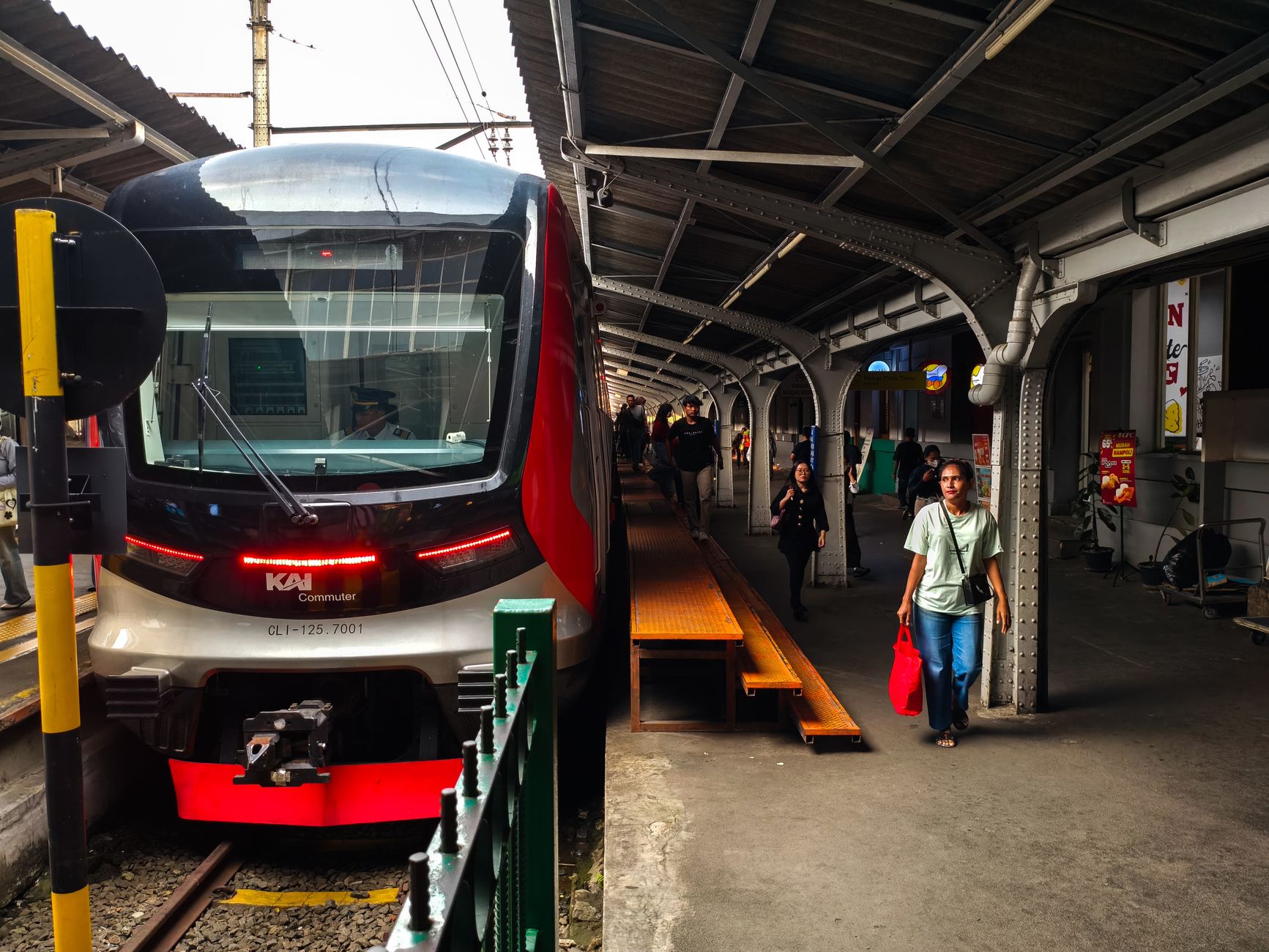
The train sidesteps all of this. The KRL Commuter Line’s Bogor route runs on dedicated track from central Jakarta straight to a terminus a short walk from the botanical gardens, and it does not care what the Puncak traffic is doing. Journey time from Manggarai is about an hour; from Jakarta Kota, running the full length via Juanda, Gondangdia, Cikini and Manggarai, it is about an hour and twenty to an hour and thirty. The fare, at time of writing, is calculated at Rp3,000 for the first 25 km plus Rp1,000 for each subsequent 10 km, which puts Jakarta Kota to Bogor at Rp6,000 and most central boarding points at Rp5,000–Rp6,000. That is not a typo. You can cross a metropolitan region of 30 million people for the price of a bottle of water.
Useful boarding stations include Jakarta Kota, Juanda, Gondangdia, Cikini, Manggarai, Tebet, Duren Kalibata, Pasar Minggu, Lenteng Agung, Universitas Indonesia, Depok, Depok Baru, Citayam, Bojonggede and Cilebut. Manggarai is the hinge of the whole network, and if you board anywhere on the loop through Sudirman or Tanah Abang you will probably change there. Manggarai’s interchange platforms are genuinely chaotic at peak; give yourself ten minutes and do not panic when the crowd surges.
| Option | Door-to-door time | Cost (one way, 2 people) | Hassle | Who it suits |
|---|---|---|---|---|
| KRL Commuter Line | 1h–1h30 plus 20 min to the gardens | Rp10,000–Rp12,000 total | Low on weekdays, high on weekends and holidays | Almost everyone |
| Grab / GoCar | 1h15 clear, 2h30–4h weekend | Rp250,000–Rp400,000 | Moderate; surge pricing, parking pain in Bogor | Families with small children, early starts |
| Self-drive hire car | Same as above plus parking hunt | Rp500,000–Rp800,000/day plus Rp8,000 toll each way and fuel | High; Bogor’s one-way system is unforgiving | Only if you are continuing to Puncak or Sentul |
| Car with driver | Same as above | Rp700,000–Rp1,100,000 for 10–12 hours | Low, but you pay for it | Groups of four or more, or mobility needs |
Our breakdown of Jakarta transportation costs goes into the wider maths, and if you are weighing up ride-hailing for the day, the comparison in Grab versus Gojek is worth a look. For anyone determined to drive it themselves, read our guide to renting a car in Jakarta first, and then read it again.
Paying for the Train, the Weekend Crush, and the Walk from the Terminus
There is no cash window for a single journey in the way most visitors expect. You tap in and out with a stored-value card. Your options are KAI Commuter’s own Kartu Multi Trip (KMT), which costs around Rp30,000 including a starting balance of roughly Rp10,000; a bank e-money card such as Mandiri e-Money, BCA Flazz, BRI Brizzi or BNI TapCash, all sold at minimarkets for a similar price; or a Jak Lingko card, which is issued on the same bank rails and works on the KRL as well as TransJakarta, the MRT and the LRT. QRIS payment through the C-Access app has also been rolled out, though it is smoother if you already have an Indonesian phone number and bank account.
Whichever you choose, load at least Rp30,000. The gates will refuse you at Bogor on the way out if your balance dips below the fare, and the queue at the top-up counter is not where you want to spend fifteen minutes. Top-ups are available at station counters, minimarkets and through GoPay and similar wallets.
Now the crowding, and this is where a genuinely counterintuitive point matters. On weekdays, the commuter flow is Bogor into Jakarta in the morning and Jakarta out to Bogor in the evening. A day-tripper travels against that flow in both directions. You will get a seat going down at nine in the morning and a seat coming back at five in the afternoon. On weekends the pattern inverts and multiplies: half of South Jakarta heads to Bogor and Puncak on Saturday morning, and the trains from about seven until eleven are standing-room-only, shoulder to shoulder, with pushchairs and cool boxes. Public holidays and school breaks are worse again.
So the position is simple. Do this trip on a weekday. You get an emptier train, an emptier garden, cheaper garden tickets, an eating street where you can actually sit down, and no Puncak traffic bleeding through the city. If your only free day is a Saturday, go anyway — but leave central Jakarta by seven and accept that you will stand. Our notes on how to avoid Jakarta traffic apply doubly to anything heading south at the weekend.
From Bogor station to the gardens
Bogor station is the terminus, so there is no risk of missing your stop. Everybody gets off. The station sits in the north of the city centre and the main gate of the botanical gardens, on Jalan Ir. H. Juanda, is roughly 1.5–2 km away — a twenty to twenty-five minute walk past Pasar Anyar and down through the old town. If it is already spitting, take an angkot, the green minibuses, for Rp5,000–Rp7,000, or a Grab or Gojek motorbike for around Rp10,000–Rp15,000.
The gardens have several gates and they are not equally useful. Pintu Utama on Jalan Ir. H. Juanda is the main entrance and the one closest to the palace railings and the Museum Zoologi. Pintu 3 on the Jalan Otista side puts you within a couple of minutes of the top of Suryakencana, which is exactly where you want to be at lunchtime. Enter through the main gate in the morning, walk the gardens, and exit at Pintu 3 when the sky goes grey. That is the whole trip in one sentence.
The Rain-Shaped Bogor Day Trip from Jakarta, Hour by Hour
Here is the plan I would actually follow, built around the dry morning window and the near-certain afternoon rain. Times assume a weekday and a start from central Jakarta.
| Time | What you are doing | Why then |
|---|---|---|
| 07:15–07:45 | Board the KRL at Manggarai, Cikini or Gondangdia | Counter-flow to the commute; you get a seat |
| 08:45 | Arrive Bogor; walk or angkot to the main gate | Air is still cool and the light is good |
| 09:00–09:30 | Coffee and doclang or laksa near the station or Pasar Anyar | Breakfast dishes sell out by mid-morning |
| 09:30–12:30 | Kebun Raya Bogor: orchid house, Lady Raffles memorial, Dutch cemetery, Mexican garden, the big canopy walk along the Ciliwung | The only guaranteed dry stretch of the day |
| 12:30–13:00 | Palace railings on Jalan Ir. H. Juanda for the spotted deer | Five minutes’ work, and it is free |
| 13:00–13:30 | Museum Zoologi, or exit at Pintu 3 | First cloud is building; get under a roof |
| 13:30–15:30 | Suryakencana: soto kuning, toge goreng, asinan, cungkring | The rain arrives and you do not care |
| 15:30–16:30 | Vihara Dhanagun, then roti unyil and talas cake for the journey home | Covered walking; shops are on the same strip |
| 16:30–17:00 | Grab or angkot back to Bogor station | Before the evening inbound crowd fills the platform |
| 17:00–18:30 | KRL back to Jakarta | Against the evening commute; trains every 10–20 minutes |
If you are doing this on a Saturday, shift everything ninety minutes earlier and cut the museum. If it is not raining by three, congratulations, you have a bonus hour — spend it walking the gardens’ outer loop rather than adding another attraction.
Kebun Raya Bogor: Tickets, Hours and What Is Actually Worth Walking To
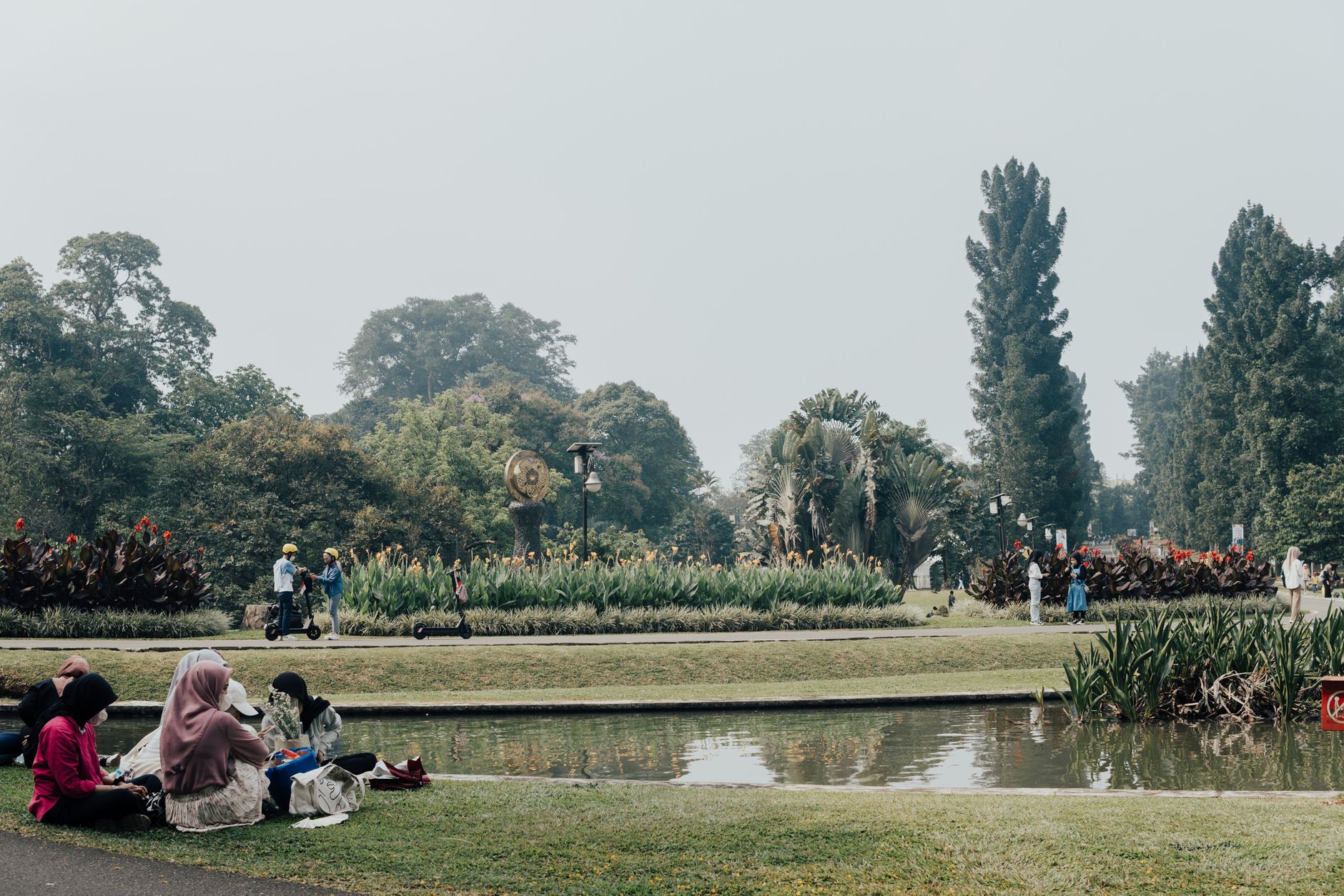
Kebun Raya Bogor is the reason most people come, and it deserves the reputation. Founded in 1817 under the Dutch botanist Caspar Georg Carl Reinwardt on grounds that Stamford Raffles had already begun landscaping during the brief British interregnum, it covers roughly 87 hectares and holds something like 12,000–15,000 accessioned plants across several thousand species. It is one of the oldest tropical botanical gardens in the world, and unlike a great many Indonesian attractions it is still run as a serious scientific institution rather than a photo backdrop.
Opening hours are generally 08:00–16:00 Monday to Friday and 07:00–16:00 on Saturdays, Sundays and national holidays, with last entry an hour or so before closing. Tickets have run at Rp15,500 on weekdays and Rp25,500 at weekends and on public holidays. Note something unusual here: the price is the same for foreign and Indonesian visitors. There is no tourist surcharge, which is rare enough in Indonesia to be worth stating plainly. Tickets are increasingly sold online or at electronic gates, so bring a card or a working e-wallet rather than assuming cash will do. Prices and hours have moved more than once since the gardens came under the national research agency’s management, so check before you travel.
The orchid house
The Griya Anggrek holds several hundred orchid species and is the single best rain shelter in the gardens, being both indoors and genuinely interesting. Around 400 varieties are on display in rotation. Go here first if the sky looks unreliable.
The Lady Raffles memorial
A small neoclassical monument to Olivia Mariamne Raffles, who died in Buitenzorg in 1814, sits in the northern section near the lake. It is not much to look at. What it is, is the oldest European object in the garden and the physical thread connecting the place to the brief British period. If you have any interest in the colonial layer of the region, it is a five-minute detour worth taking — and our piece on colonial Jakarta architecture and history sets the same period in the capital’s own streets.
The old Dutch cemetery
Tucked away in the north-west corner, the Kerkhof holds around forty graves, some predating the garden itself, including the tomb of the German-born naturalist Heinrich Kuhl. It is quiet, mossy, half-forgotten and considerably more atmospheric than the memorial. Very few weekend visitors find it, which is exactly the point.
The Mexican garden and the palms
The Taman Meksiko is a dry-climate collection of cacti and succulents, and its comic value is that it sits in the wettest city in Java. Adjacent to it, the palm avenue running toward the palace is the most photographed stretch of the gardens and rightly so — the canarium and palm rows are enormous. Combined, these two take about forty minutes.
The corpse flower and Rafflesia
The garden holds a collection of Amorphophallus titanum, the titan arum, near the Kahuripan spring area. One specimen bloomed in early February 2026 after a twelve-year wait, reaching around 140 cm in height, and the queues were long. Blooming is unpredictable and lasts only a couple of days, so treat it as a lottery win rather than an itinerary item. The same applies to Rafflesia, which is a parasite on a host vine and cannot be scheduled. If there is a bloom on while you are in Jakarta, it will be all over Indonesian news within hours.
Do the Gardens Justify the Trip on Their Own?
Honest answer: not quite. If you have visited Singapore Botanic Gardens, Kew, or Peradeniya in Sri Lanka, Kebun Raya will not floor you. The collections are historically important and the trees are magnificent, but the paths are patchy, signage is inconsistent, and stretches of the grounds feel underfunded. Weekend crowds picnic on every open lawn and the loudspeakers do not help.
What justifies the trip is the combination. Three hours in the gardens plus two hours eating on Suryakencana plus a train ride that costs less than a coffee adds up to one of the best value days available from Jakarta. Take either half away and it thins out considerably. I would not travel two hours each way for the gardens alone. I would, and do, travel two hours each way for the gardens and the soto kuning together.
Moving Around Inside the Gardens
Eighty-seven hectares is a lot of walking, and the internal loop road is about five kilometres. There is a shuttle service — an open-sided electric or golf-cart style vehicle — running a circuit of the main points, priced at around Rp25,000 per person for individual riders, with private hire options for groups at a higher rate. It is worth it if you are with older relatives or small children, and largely a waste otherwise, since the shuttle stops at the obvious sights and the good bits are between them.
Bicycles can be hired inside for roughly Rp15,000 on weekdays and Rp20,000 at weekends, and bringing your own bike carries a similar fee. Cycling is the best compromise for covering ground, but the surfaces get slick fast and the garden staff will wave you off the paths in heavy rain.
Wear proper shoes. This sounds obvious and it is the single most common mistake visitors make. Bogor’s soil is volcanic clay and the grass verges turn to grease within minutes of a shower. Sandals on wet garden paths is how people end up sitting on the ground looking sheepish. If you are bringing children, the practical notes in our guide to things to do in Jakarta with kids transfer straight across to a day out here.
Museum Zoologi: The Best Rain Shelter in Bogor
Just inside the main gate sits the Museum Zoologi Bogor, established in 1894 as the Landbouw Zoologisch Laboratorium and now one of the oldest natural history collections in Southeast Asia. It is old-fashioned in the best sense: dim halls, glass cases, hand-lettered labels, taxidermy of varying vintage, and a mounted blue whale skeleton that dominates its own building. There are Javan rhinoceros and Sumatran tiger specimens that carry a certain weight given how few of either remain alive.
Entry has sometimes been bundled with the garden ticket and sometimes charged separately at a small additional fee; check at the gate rather than assuming. Allow forty-five minutes to an hour. Its real value is strategic — it is under a roof, it is at the entrance, and it is the obvious place to be when the sky opens at two. If natural history and old museums appeal, our roundup of Jakarta Museums and Cultural Sites: The Complete Guide (2026) covers the equivalents back in the city.
Istana Bogor and the Deer You Will Probably Watch Through Railings
The white neoclassical presidential palace at the northern edge of the gardens is Istana Bogor, built as the Dutch governor-general’s country retreat Buitenzorg from 1745, flattened by an earthquake in 1834 and rebuilt in its current form. Its front lawn is grazed by a herd of spotted axis deer, descendants of animals brought from the Indian subcontinent in the early nineteenth century, and they are the image most people associate with Bogor.
Here is the part that trips visitors up. The palace is a working presidential residence and is not a normal tourist attraction. Access requires a written application to the head of the Bogor Presidential Palace through the State Secretariat, submitted well in advance — one to two months is the standard advice — usually for organised groups rather than individuals, with identity documents checked on the day and a dress code enforced. There is no fee, but there is also no walk-up option. Occasional “Istana untuk Rakyat” open days let the general public in, typically announced at short notice around national commemorations, and they are heavily oversubscribed.
So for practical purposes, plan to see the palace and its deer from Jalan Ir. H. Juanda, through the railings, from the pavement outside the gardens. Vendors sell bundles of carrots and kangkung for around Rp5,000–Rp10,000 and the deer will come to the fence for them. It takes five minutes, it costs almost nothing, and it is a perfectly good version of the experience. Anyone selling you a “palace tour” on the street is selling you the railings.
Suryakencana: The Reason to Actually Come
Jalan Suryakencana runs roughly 800 metres south-east from the corner of the botanical gardens, and it is Bogor’s Chinatown, its market street and its best argument. This is a genuinely old commercial strip — shophouses, narrow alleys running off both sides, a working wet market at the far end, and food stalls layered on top of each other. It is not a curated food street built for visitors. It is a road people shop on, with extraordinary food happening in the gaps.
Start at the north end by Vihara Dhanagun and work south towards Gang Aut and Pasar Bogor. The alleys — Gang Aut in particular — hold several of the most famous stalls, and they are not signposted in English. Point, ask, follow queues. Nothing here needs a reservation and almost nothing takes cards, so bring Rp200,000–Rp300,000 in small notes.
A caveat with teeth: on Saturday and Sunday afternoons Suryakencana is congested to the point of unpleasantness. The road is narrow, it carries through-traffic, angkots stop wherever they like, and the pavements are half-occupied by stalls. You will be eating standing up, being nudged by mopeds. On a weekday afternoon the same street is relaxed and you can sit. This is the strongest single argument for the weekday plan.
What to order
| Dish | What it is | Where to look | Rough price |
|---|---|---|---|
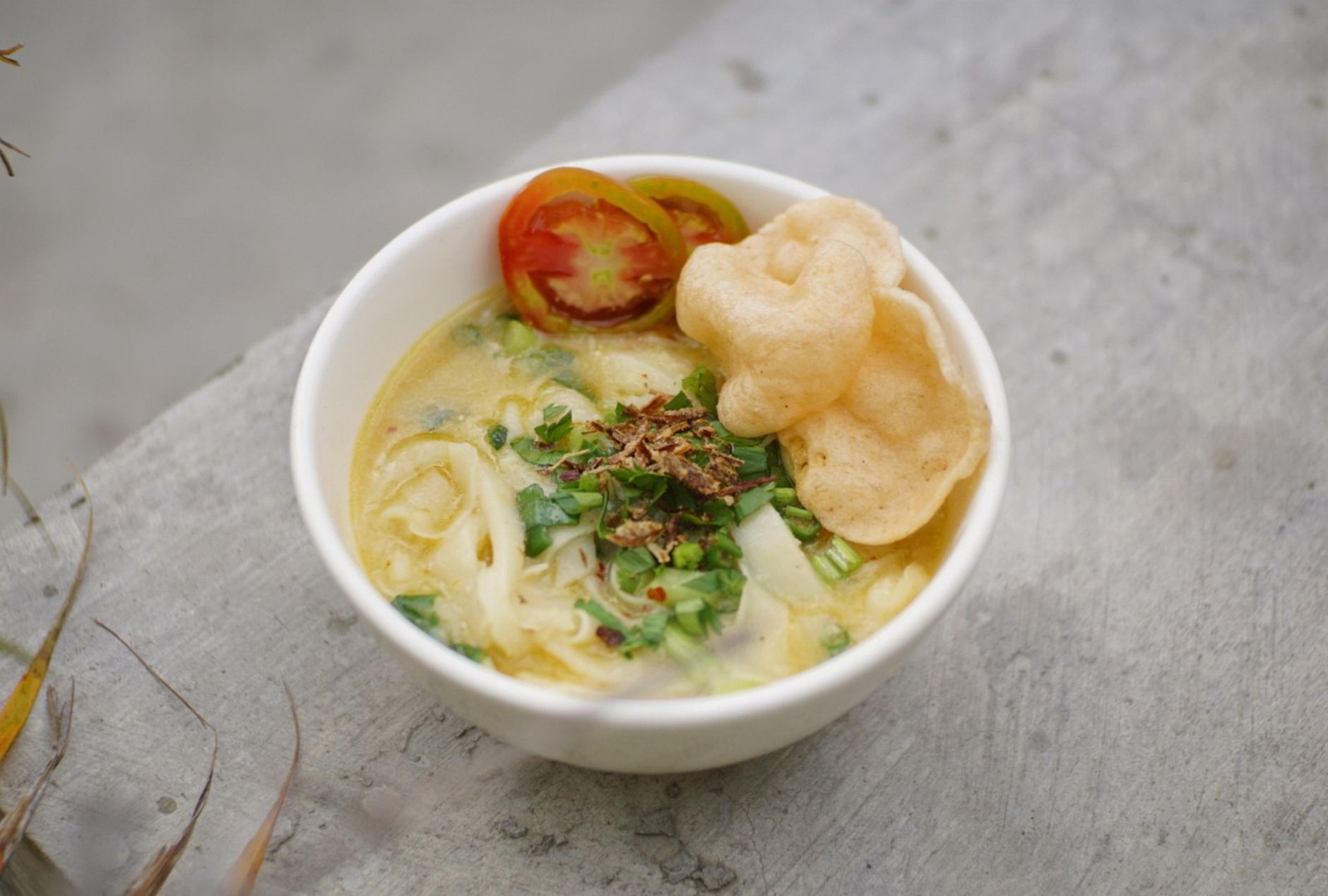
| Soto kuning | Turmeric-and-coconut beef soup; you point at cuts of offal and meat and pay by the piece | The cluster of soto carts around Gang Aut, Pak M. Yusuf among the best known | Rp30,000–Rp45,000 |
| Laksa Bogor | Thick oncom-and-coconut broth over rice vermicelli with ketupat, egg and beansprouts — nothing like Malaysian laksa | Gang Aut; Mang Wahyu is the usual name given | Rp20,000–Rp30,000 |
| Toge goreng | Beansprouts and rice cake in fermented soybean tauco sauce; not fried despite the name | Suryakencana stalls and around Pasar Anyar; H. Gebro is the legend | Rp20,000–Rp30,000 |
| Asinan Bogor | Pickled fruit and vegetables in sweet-sour chilli-peanut dressing, topped with crackers | Gedung Dalam and the Sukasari end | Rp25,000–Rp35,000 |
| Cungkring | Simmered beef trotter and tendon with peanut sauce and rice cake; braver eating | Pak Jumat’s cart, Gang Aut, mornings only | Rp15,000–Rp25,000 |
| Doclang | Ketupat, potato, fried tofu and egg under thick peanut sauce — the local breakfast | Near Pasar Anyar and the station end; sells out early | Rp15,000–Rp25,000 |
| Roti unyil | Thumb-sized filled bread rolls in dozens of flavours; the standard souvenir | Venus, Jalan Siliwangi; also outlets on Jalan Pajajaran | Rp2,000–Rp4,000 each, boxes Rp35,000–Rp60,000 |
| Es pala | Iced nutmeg drink, sweet and faintly medicinal, unique to Bogor | Carts along Suryakencana | Rp8,000–Rp15,000 |
Two of these are worth travelling for on their own: the soto kuning and the laksa. The asinan is an acquired taste and the cungkring is for people who already like offal. Note that street stalls charge what is on the sign — the roughly 21 per cent service and tax that Jakarta restaurants and cafés add does not apply to a cart. If you enjoy this kind of eating, our guide to the best street food in Jakarta and the roundup of must-try Jakarta dishes cover the capital’s own version, and the wider Jakarta food guide explains how the regional cuisines fit together. For the market end of Suryakencana, the context in our piece on traditional markets is useful.
Vihara Dhanagun and the Chinatown layer
At the northern head of Suryakencana, painted deep red and hung with lanterns, stands Vihara Dhanagun, also known by its older name Hok Tek Bio. Sources put its origins in the seventeenth century; the current structure has been rebuilt and extended many times. It is a working temple, busy with incense and offerings, and it anchors the Chinese-Indonesian community that has traded on this street for centuries. Around Chinese New Year the whole strip is decorated and the Cap Go Meh street festival — one of the largest in Java — closes the road entirely, which is spectacular if you plan for it and miserable if you do not.
Visitors are welcome. Dress modestly, do not photograph people praying, and step over rather than on the raised thresholds. Ten minutes is enough unless a ceremony is happening. For the equivalent buildings in the capital, see our guide to Buddhist temples in Jakarta.
What Bogor Is Not: Sentul, Puncak and the Waterfalls
A lot of content lumps Bogor city together with the waterfalls, tea plantations and adventure parks of Bogor Regency. Do not fall for it on a single day. Curug Nangka, Curug Cilember and the Sentul-side waterfalls are 45 minutes to well over an hour beyond the city by road, on routes that require a car, and the trailheads involve real walking. Puncak’s tea gardens are further again, and on a weekend the buka-tutup system alone can eat three hours.
Trying to combine the botanical gardens with a waterfall in one day means rushing both and arriving at the falls exactly when the rain does. That is a separate trip with a hired car and an overnight, and it deserves to be planned as one. Keep your Bogor day trip to the city: gardens, palace railings, museum, Suryakencana. It is a complete day as it stands.
Bogor or Bandung for a First Escape?
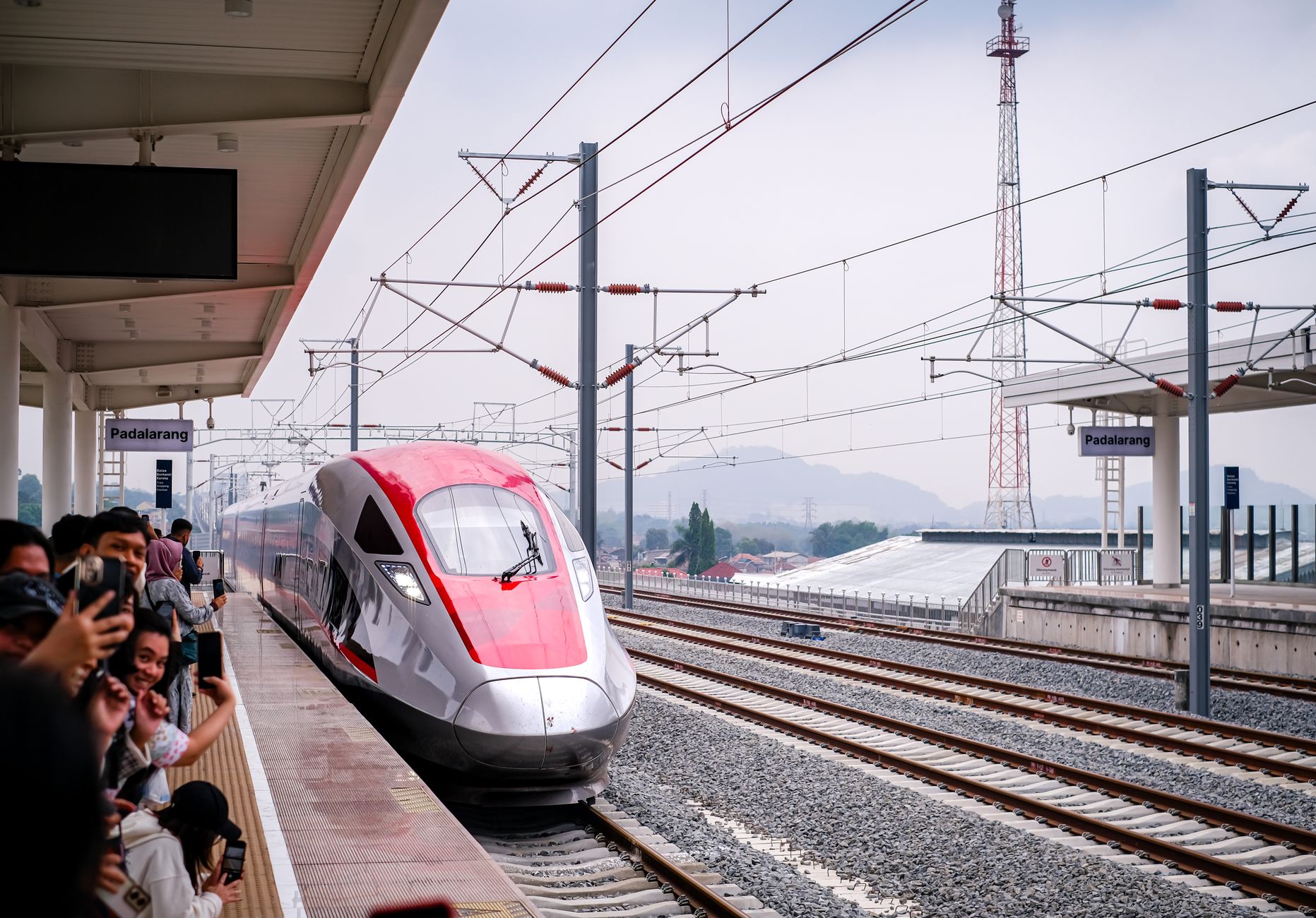
This is the real question for most visitors, and my answer is Bogor — but only for a day trip. Bandung has more to offer overall: better coffee, colonial art deco architecture, cooler air, volcano access, factory outlets. The Whoosh high-speed line has cut the rail journey to well under an hour to the Padalarang interchange, so it is no longer the four-hour slog it once was. But Bandung’s attractions are dispersed and the good parts of it — Dago in the evening, the crater at dawn — need you to be there overnight.
Bogor is compact. One station, one garden, one eating street, all within two kilometres of each other, all reachable for the price of a bus fare. If you have one free day and no car, Bogor wins comfortably. If you have two nights spare, go to Bandung instead and do it properly.
| Bogor | Bandung | |
|---|---|---|
| Travel time each way | 1h–1h30 by KRL | 45 min–1h15 by Whoosh plus feeder, 3h by conventional train |
| Return transport cost | Rp10,000–Rp12,000 | Rp300,000–Rp600,000 |
| Works as a day trip? | Yes, comfortably | Possible but rushed |
| Needs a car on arrival? | No | Effectively yes |
| Best for | Botany, old-world atmosphere, street food | Coffee, architecture, volcanoes, shopping |
Is Bogor Worth It if You Only Have Three Days in Jakarta?
No. I will be blunt about this. If you have three days, Jakarta itself has more than enough to fill them, and burning one of them on a three-hour round trip means you will leave without having properly seen Kota Tua, the National Museum, Glodok or a decent chunk of the food scene. Our three-day Jakarta itinerary is deliberately city-only for exactly that reason.
At five days, Bogor becomes reasonable. At a week it becomes obvious, and the one-week Jakarta itinerary builds it in as a mid-trip change of pace, ideally on a Tuesday or Wednesday. The other case for going regardless of trip length is if you are travelling with children or you simply cannot face another day of Jakarta traffic — Bogor is quieter, greener and about three degrees cooler, and that is worth something in itself.
What the Day Actually Costs
Two people, weekday, travelling by train and eating well: return KRL fares around Rp24,000, garden entry Rp31,000, angkots and a Grab or two around Rp60,000, museum entry if separately charged around Rp30,000, a substantial lunch across three or four stalls around Rp150,000, drinks and snacks Rp50,000, and a box of roti unyil to take home Rp50,000. That is roughly Rp400,000 for two people for a full day out, or about Rp200,000 each. Add a card top-up buffer and call it Rp250,000 a head.
By any measure that is exceptional value, and it makes Bogor one of the strongest entries in our notes on budget travel in Jakarta. If you drive instead, the same day costs Rp600,000–Rp1,200,000 and takes longer. The train is not the cheap compromise here. It is the better product.
Honest Warnings Before You Go
Prices and hours change. The botanical gardens have adjusted ticketing more than once since coming under national research agency management, the KRL fare structure has been reviewed repeatedly, and stall prices on Suryakencana drift upwards. Treat every number in this guide as a realistic estimate rather than a quote, and confirm the garden’s hours on the day you travel.
Venue churn is real. Stalls close, move down the alley, or hand over to a nephew who cooks differently. The famous names have traded for decades and are safe bets, but if a cart is not where a blog said it would be, ask rather than assume — Bogor’s stalls migrate twenty metres far more often than they close.
Bogor floods. Heavy afternoon rain overwhelms drainage on the lower streets around Pasar Bogor and the Ciliwung, and the garden paths become genuinely slippery. If a storm sets in hard, do not try to walk back to the station; get a Grab car, accept the surge, and wait it out over a coffee. During Ramadan, many Suryakencana stalls open late or screen their frontages during daylight hours, and the eating pattern shifts to after sunset — check our general Jakarta travel tips for how that plays out across the region.
Finally, do not leave the return train to chance on a public holiday. Bogor station on the evening of a long weekend is a slow-moving mass of people and the queue for the platform can add half an hour. Leave the eating street by four on those days.
FAQ: Planning a Bogor Day Trip from Jakarta
How long does the train from Jakarta to Bogor take? Around one hour from Manggarai and roughly an hour and twenty to an hour and thirty from Jakarta Kota, which is the far end of the line. Trains run from about 04:00 until roughly 23:00, with departures every ten to twenty minutes off-peak and more frequently at rush hour. Add another twenty minutes to reach the botanical gardens from Bogor station on foot, or five to ten minutes by angkot or ride-hail.
What does the KRL to Bogor cost, and can I pay with cash? The fare works out at about Rp5,000–Rp6,000 one way from central Jakarta, based on Rp3,000 for the first 25 km plus Rp1,000 per additional 10 km. You cannot pay cash at the barrier. You need a Kartu Multi Trip, a bank e-money card, a Jak Lingko card or the QRIS option in the C-Access app. Cards cost around Rp30,000 including a small starting balance and are sold at station counters and minimarkets.
How much is Kebun Raya Bogor entry for foreigners? The same as for Indonesians, which is unusual. Recent pricing has been around Rp15,500 on weekdays and Rp25,500 at weekends and public holidays. Bicycle hire inside adds roughly Rp15,000–Rp20,000 and the internal shuttle around Rp25,000 per person. Buy through the official channel or at the electronic gate, and check current rates before travelling because they have changed more than once.
Can I go inside Istana Bogor and see the deer up close? Almost certainly not on a normal visit. The presidential palace requires a written application through the State Secretariat, usually submitted one to two months ahead and usually for organised groups, with identity checks and a dress code. Occasional public open days are announced at short notice and fill immediately. Most visitors watch the spotted deer through the railings on Jalan Ir. H. Juanda, feeding them carrots bought from pavement vendors for a few thousand rupiah.
Is a Bogor day trip from Jakarta worth it in the rainy season? Yes, provided you go early. Bogor rains almost every afternoon regardless of season, so the November-to-March wet season mainly means the rain starts earlier and lasts longer, not that it appears from nowhere. Arrive by nine, do the gardens before one, and spend the afternoon eating under awnings on Suryakencana. The plan barely changes. Only genuine thunderstorms with lightning will disrupt it.
Should I visit Bogor on a weekend? Avoid it if you can. Weekends bring higher garden ticket prices, packed trains from early morning, Puncak-bound traffic funnelling through the city under the buka-tutup one-way system, and a Suryakencana so congested you will eat standing up. A weekday gives you a seat on the train, a quieter garden, cheaper entry and a food street where you can actually sit down.
Can I combine Bogor with a waterfall or Puncak in one day? Not sensibly without a car and an early start, and even then you will rush both. The waterfalls of Bogor Regency and the tea plantations of Puncak sit 45 minutes to well over an hour beyond the city on roads that are heavily congested at weekends. Treat them as a separate trip, ideally with an overnight stay, rather than bolting them onto a botanical gardens day.
What should I eat in Bogor if I only have time for two things? Soto kuning and laksa Bogor, both found in and around Gang Aut off Suryakencana. The soto is a turmeric-coconut beef broth where you choose your cuts and pay by the piece, running Rp30,000–Rp45,000. The laksa uses a fermented oncom base that exists nowhere else and costs Rp20,000–Rp30,000. Add a box of roti unyil to carry home if you have a spare ten minutes.
Where to Go Next
If Bogor has convinced you that the escape is worth making, work through the rest of the options in our pillar on the best attractions in Jakarta and further afield, and look at the quieter corners collected in Jakarta’s hidden gems for more of the same low-key, food-led travel. Anyone building a longer stay should read where to stay in Jakarta before booking, since a base near Manggarai, Cikini or Gondangdia makes the Bogor run considerably easier than one in the far north or west of the city. And if the eating on Suryakencana was the part that stayed with you, follow it up with our guide to cheap eats in Jakarta, which finds the same kind of value back in the capital.
Bogor also makes the perfect last day of a short, cheap trip to Jakarta. Our 3-day budget Jakarta itinerary builds it in as Day 3, after the old town and the monuments, with the train timed against the flow of commuters in both directions.