The thing nobody tells you before a first family trip to Indonesia is how completely the anxiety evaporates. There is no adults-only dining culture here to negotiate, no raised eyebrows when a toddler shrieks, no waiter visibly counting the minutes until you leave. A child at a table in Jakarta is a social asset. Which means choosing between the family-friendly restaurants Jakarta has is a question about play areas, air conditioning and traffic rather than about whether you will be made to feel welcome — because you will be.
This guide names the restaurants with genuine play areas, explains what the mall food court actually offers, sets out which Indonesian dishes children reliably eat, and decodes the “++” on the menu that adds a fifth to your bill. Venues and prices were checked in September 2026; Jakarta’s restaurant scene turns over quickly, so confirm opening hours before you make a journey.
The shortlist
| Restaurant | Where | The play area | Food |
|---|---|---|---|
| Tamani Kids Cafe | Kemang Raya, South Jakarta | Large indoor: ball pit, slides, tunnels | Western, Asian, local |
| Hakuna Matata | Pejaten (S) and Cijantung (E) | Mini playground, shaded outdoor area | Western — pasta, steak |
| Convivium | Panglima Polim V, South Jakarta | Play space + pizza-making classes | Italian |
| KANANA Jakarta | Panglima Polim, South Jakarta | Semi-open playground, reading space, slide | Café |
| Twin House | Cipete, South Jakarta | Garden playground with slide | Café, Western |
| JAG’s Kitchen | Jagakarsa, South Jakarta | Semi-outdoor playground, green garden | Indonesian, Western |
| Kangoo’s Cafe | West Jakarta | Indoor and outdoor play areas | Café |
| Kupinami | Ceger, East Jakarta | Play space with storybooks | Acehnese, Indonesian |
| Nanny’s Pavillon | Kota Kasablanka mall | Separate playroom | Western |
| Signatures | Hotel Indonesia Kempinski, Thamrin | Treehouse and slides | International buffet |
| Talaga Sampireun | Menteng | Lake with boats, wooden pavilions | Sundanese |
Restaurants with a real play area
A note on geography first: nearly all of these are in South Jakarta, and specifically in the Kemang, Cipete, Panglima Polim and Jagakarsa belt. That is not an accident — it is where Jakarta’s young professional families live, where land is available for a garden, and where the café culture is strongest. If you are staying in Central Jakarta or SCBD, most of these are a twenty- to forty-minute ride away depending entirely on the hour.
Tamani Kids Cafe, Kemang
On Jalan Kemang Raya, and the biggest dedicated children’s play area of any family restaurant in South Jakarta — a proper indoor playground with a ball pit, slides and soft rubber tunnels rather than a corner with a plastic slide in it. The menu covers Western, Asian and Indonesian dishes, which solves the fussy-eater problem in one move, and the space is designed so parents can sit and eat while watching.
They run birthday party packages, which tells you what the place is really for and also that it will be busy on Saturday afternoons. Weekday lunch is the calm slot. Kemang generally is the most foreigner-friendly district in Jakarta and worth a wander afterwards — see our Kemang guide.
Hakuna Matata, Pejaten and Cijantung
Two branches, one in Pejaten in South Jakarta and one in Cijantung in East Jakarta. A bohemian, deliberately photogenic two-storey space with a shaded outdoor section and a mini playground, serving Western food — pasta, steak, a mozzarella-topped fish dish that is the house signature.
Two practical warnings that come up repeatedly: parking is limited, and it fills up at weekends. Arrive early, or come on a weekday, or take a Grab and let the driver worry about it.
Convivium, Panglima Polim
An Italian bakery and café on Jalan Panglima Polim V with a play space and — the reason it belongs near the top of this list — children’s pizza-making classes. A child who has made their own pizza will eat their own pizza, which is a truth about parenting that transcends geography.
The pasta and tiramisu are good enough that adults are not merely tolerating the visit, which cannot be said of every restaurant with a ball pit.
KANANA Jakarta, Panglima Polim
A purpose-built children’s café a few minutes from Convivium: a clean, modern, semi-open playground with interactive toys, a reading space and a slide, alongside a café menu for the adults. The concept is Korean and Japanese in inspiration and the execution is noticeably tidier than the Jakarta average.
Best for the under-sevens. Older children will finish the play area in twenty minutes.
Twin House, Cipete
A garden café in Cipete with a safe slide-equipped playground and outdoor seating under trees, which is a genuinely rare combination in a city this dense. Parents sit on garden chairs with coffee and supervise from a comfortable distance. Cipete is a leafy, low-rise pocket of South Jakarta and pleasant in itself.
JAG’s Kitchen, Jagakarsa
Further south again, in Jagakarsa, with a green garden and a semi-outdoor playground. Indonesian and Western food at mid-range prices — a family of four eats here comfortably in the 200,000 to 400,000 range. It is a long way from central Jakarta, so this is one for people staying in the south rather than a destination to cross the city for.
Kangoo’s Cafe, West Jakarta
The best of the West Jakarta options, with play areas both indoors and outdoors — useful in the wet season, when an outdoor-only playground becomes decorative at three in the afternoon. Convenient if you are staying near Central Park, Taman Anggrek or Neo Soho, which is also where Museum MACAN and the Jakarta Aquarium are.
Kupinami, Ceger
In Ceger in East Jakarta, and the most interesting of the group on food: Acehnese and Indonesian — kopi sanger, mie Aceh, roti canai, nasi goreng — alongside a children’s play space stocked with storybooks. There is a mushola and there are private rooms, which makes it a genuine local family restaurant rather than a Western café with a slide.
If you are doing a Taman Mini day in East Jakarta, this is the obvious lunch stop.
Nanny’s Pavillon, Kota Kasablanka
Inside the Kota Kasablanka mall in South Jakarta, with a playroom separated from the dining area — which is the right architecture, because it means the noise stays over there. Western food, pasta and steak, in the American-diner idiom the chain is known for.
The mall setting is the real selling point: air conditioning, lifts, clean nursing rooms, a supermarket, a cinema and somewhere to go afterwards.
The lake restaurants
A specifically Indonesian format that works remarkably well with children and has no Western equivalent: a restaurant built as a set of open wooden pavilions on stilts over an artificial lake, where you sit on the floor at low tables and food arrives by tray.
Talaga Sampireun in Menteng is the best-known example in central Jakarta. The architecture is Sundanese, the food is Sundanese — grilled gurame, nasi liwet, sambal that adults should approach with respect — and there is boating on the lake. Children get water, ducks, boats and the freedom to move around a pavilion rather than being pinned to a chair. It is not cheap and it is not a play area, but for a long lunch it works better than either.
Menteng itself is the most walkable and most handsome part of central Jakarta — see our Menteng guide.
Hotel buffets
Jakarta’s five-star hotels compete hard on Sunday brunch, and several build children’s facilities directly into the offer. Signatures at Hotel Indonesia Kempinski on Thamrin is the clearest example: an international buffet with a treehouse and slides on site, so children eat, leave, play, and come back for pudding.
The economics are less absurd than they look. A hotel buffet in Jakarta is expensive by local standards and cheap by European or Australian ones, children under a certain age often eat free or half price, and what you are buying is two hours of air conditioning, a bathroom you would be happy to change a baby in, and a menu that will contain something every member of the family will eat. On a wet Sunday in Jakarta, that is a strong proposition. Our luxury hotels guide covers which properties do it best.
The mall food court, which deserves more respect

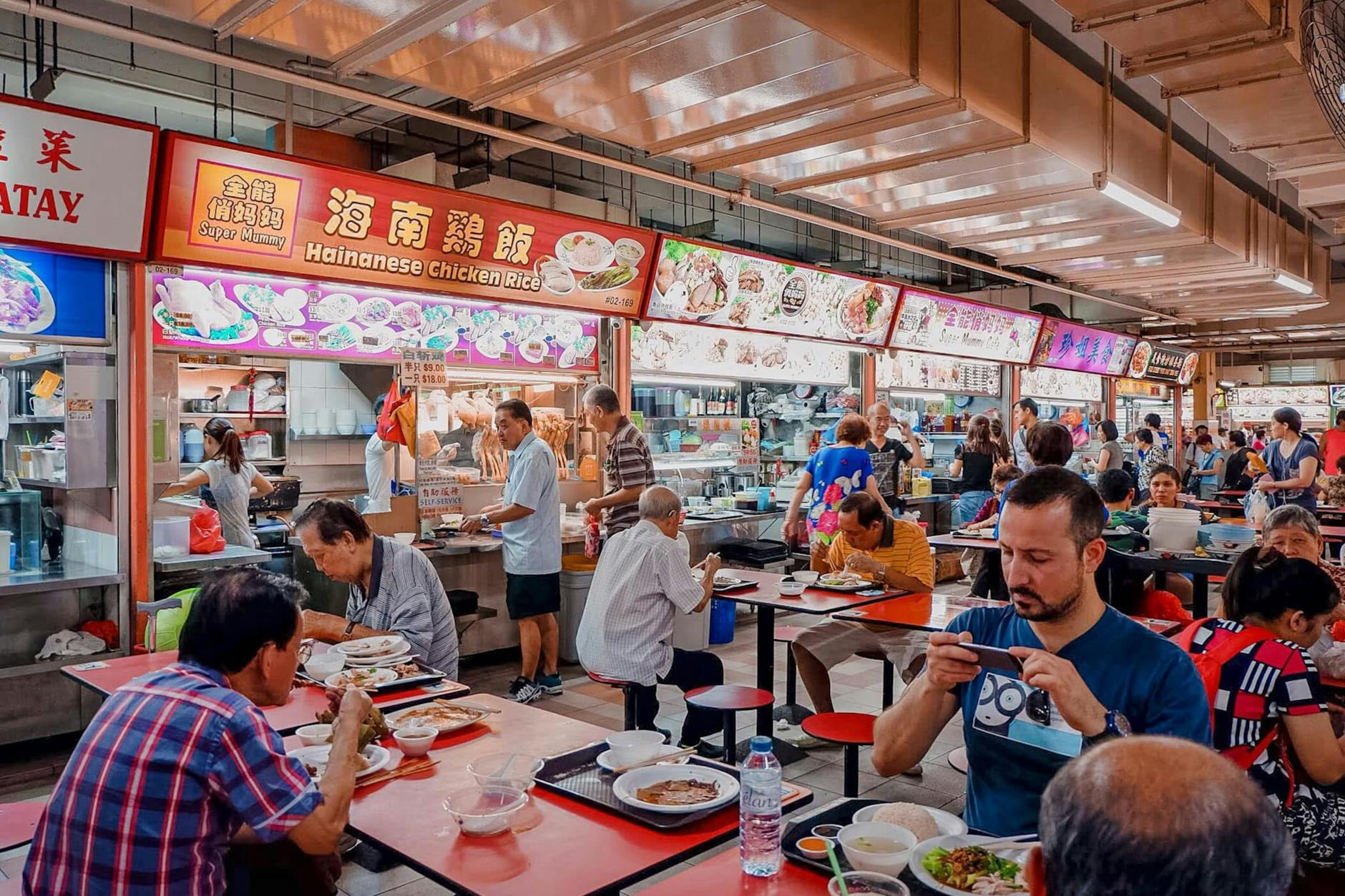
Visitors from countries where a food court means a sad row of fast-food counters routinely underestimate this. A large Jakarta mall food court has twenty to forty independent counters covering Indonesian regional cooking, Japanese, Korean, Chinese, Thai, Middle Eastern, Western and every international chain, all at prices between a warung and a restaurant. There are highchairs. There are clean toilets and nursing rooms. There is a supervised play zone somewhere in the building, and usually a cinema.
For a family with four different opinions about lunch, this is not a compromise — it is the correct answer. Everyone gets what they want, nobody waits, and the whole thing costs a fraction of a restaurant meal.
The malls worth knowing for this are Grand Indonesia and Plaza Indonesia on Thamrin, Pacific Place and Ashta in SCBD, Plaza Senayan and Senayan City in Senayan, Pondok Indah Mall in the south, Kota Kasablanka and Gandaria City in South Jakarta, and Central Park and Neo Soho in the west. Our guide to the best malls in Jakarta covers what each one has, and the Grand Indonesia guide goes deeper on the biggest.
Big, loud places that need no play area
Some restaurants work with children not because they have installed anything but because they are large, noisy and full of other families, so nobody notices yours.
- Bandar Djakarta at Ancol — an open-sided seafood hall at the marina where you choose live fish, prawns and crabs from tanks, specify how you want them cooked, and pay by weight. The choosing is an activity in itself, the setting is on the water, and it is the standard end to an Ancol day. See our seafood guide.
- Padang restaurants — a dozen small dishes land on the table uninvited and you pay only for what you touch, which means a cautious child can try things without committing to a plateful. Fast, cheap, everywhere. Note that some dishes are seriously spicy; the rendang usually is not.
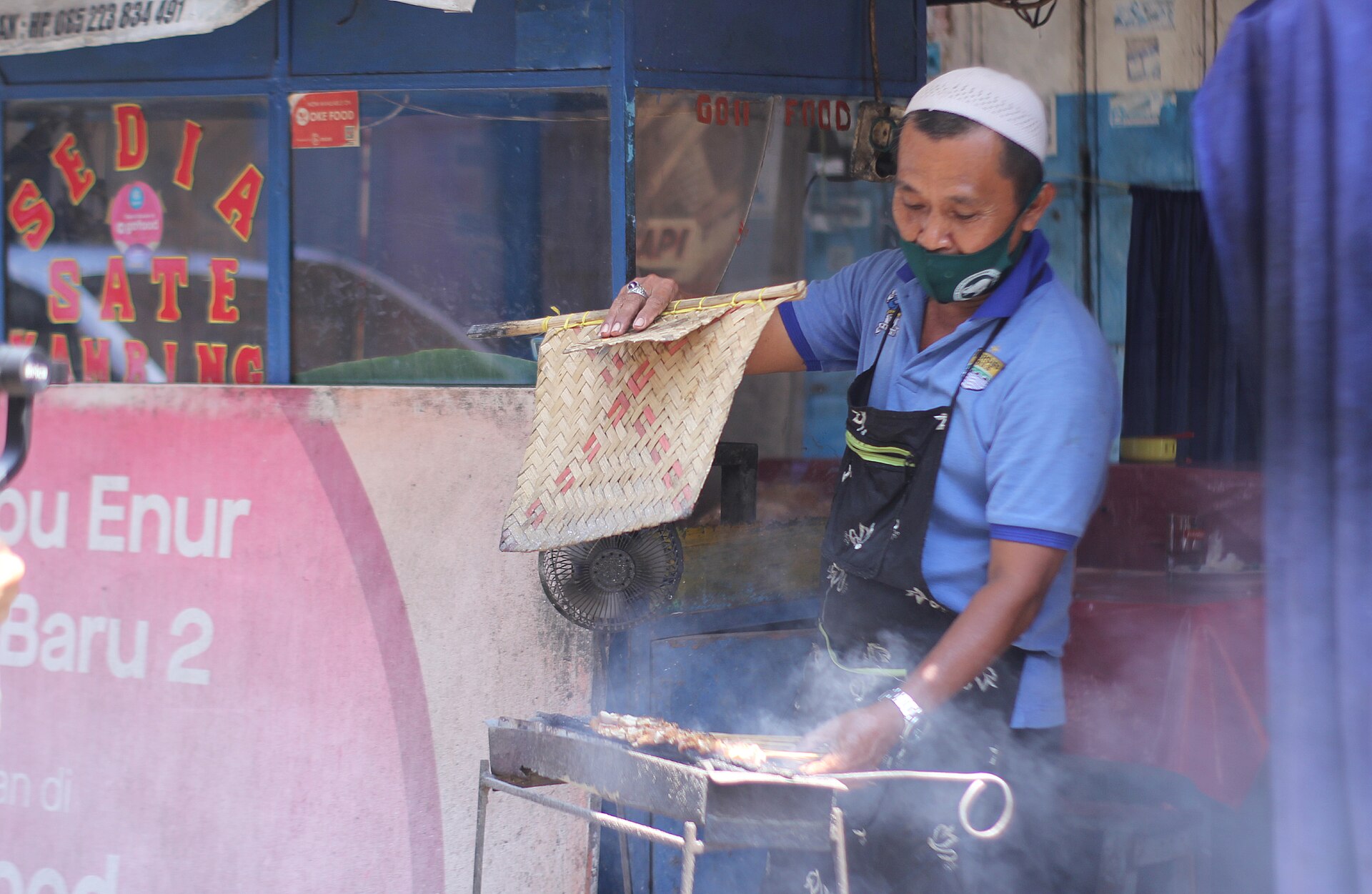
- Sate and grill places — chicken on a stick with peanut sauce, cooked over charcoal in front of you. Reliable, quick, and the theatre of the charcoal fan does a lot of work.
- Warungs generally — you point at what you want from a display case, it arrives on rice, it costs almost nothing and nobody minds anything. Our cheap eats guide has the names.
Where to eat by district
Because the deciding factor in Jakarta is almost always the journey rather than the restaurant, it is more useful to know what is good near where you are than what is best in the city. Roughly:
| If you are in | Go to |
|---|---|
| Thamrin / Menteng (Central) | Talaga Sampireun for a long lunch; Signatures at the Kempinski for a buffet; the Grand Indonesia and Plaza Indonesia food halls for anything quick |
| SCBD / Senayan | Pacific Place food hall, directly under KidZania; Plaza Senayan and Senayan City for the wider choice |
| Kemang / Cipete / Panglima Polim (South) | Tamani Kids Cafe, Twin House, Convivium, KANANA — the densest cluster of play-area restaurants in the city |
| Pondok Indah / Jagakarsa (far South) | JAG’s Kitchen; Pondok Indah Mall for the food court and cinema |
| Kota Tua (North-west) | The cafés on Fatahillah Square; better, the food streets of Glodok just south of it |
| Ancol (North) | Bandar Djakarta at the marina — choose from the tanks, pay by weight |
| PIK (North) | The Pantjoran food street and the surrounding restaurant strip, best after dark |
| West Jakarta | Kangoo’s Cafe; the Central Park and Neo Soho food halls |
| East Jakarta / TMII | Kupinami in Ceger; the food outlets inside TMII itself for convenience |
The rule underneath that table is the same one that governs everything else in this city: eat where you already are. A restaurant forty minutes away in the wrong direction is not a better restaurant by the time you reach it with two hungry children. Our neighbourhoods guide maps how the districts fit together.
What Indonesian food children actually eat
The good news is that Indonesian cooking is not intrinsically fiery. The heat generally arrives in a separate sambal on the side, which means the base dish is often perfectly acceptable to a cautious eight-year-old. Say tidak pedas — not spicy — when you order rather than after, and be aware that Indonesian “not spicy” and European “not spicy” are still different things.
| Dish | What it is | Child rating |
|---|---|---|
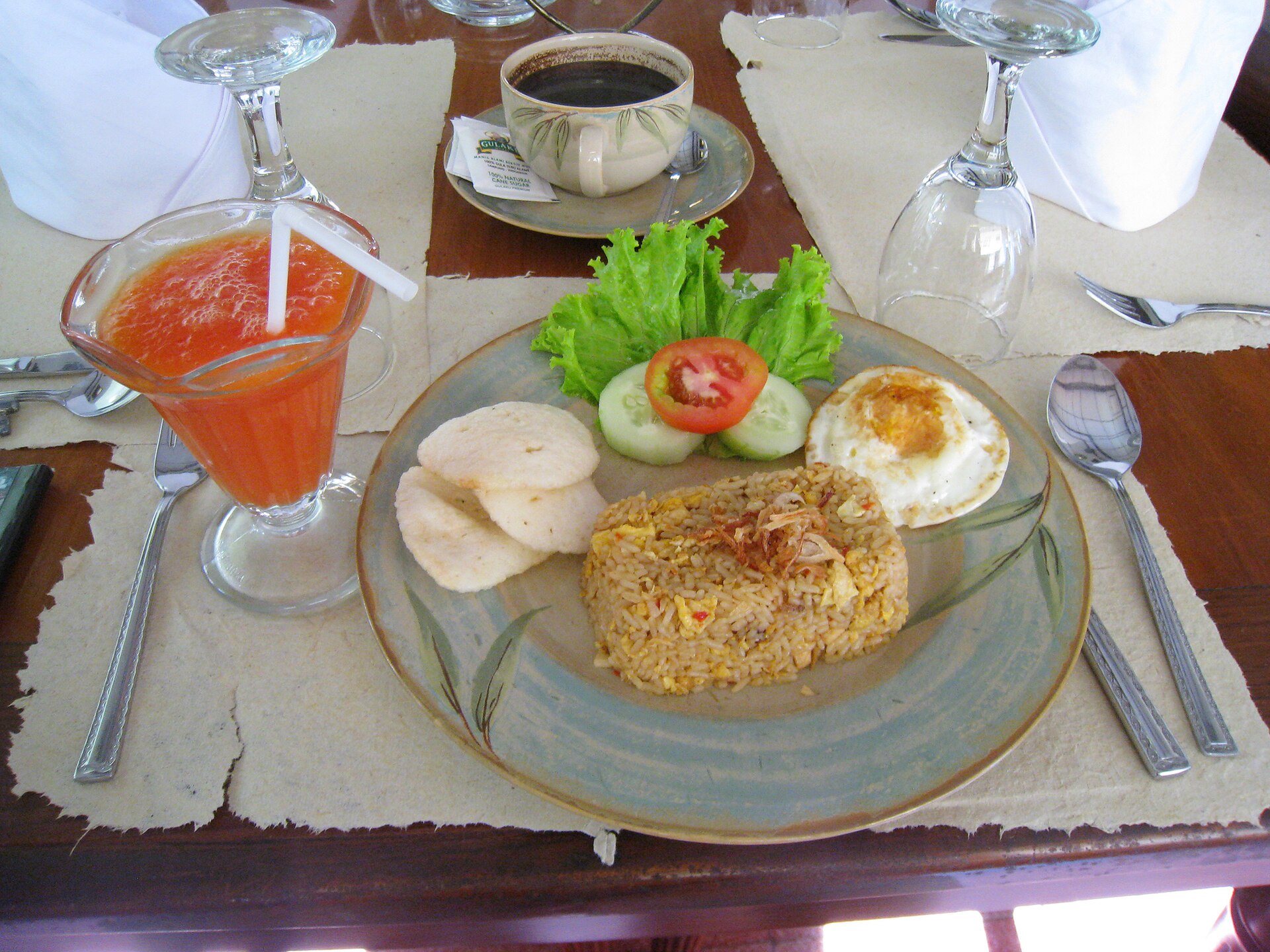
| Nasi goreng | Fried rice, usually with egg and krupuk | Universal. The safe order everywhere |
| Mie goreng | Fried noodles | Universal, and often preferred to rice |
| Sate ayam | Grilled chicken skewers, peanut sauce | Excellent. Ask for sauce on the side |
| Ayam goreng | Fried chicken | Self-explanatory and always available |
| Gado-gado | Blanched vegetables, peanut sauce, egg | Good for adventurous children; watch for peanut allergy |
| Bakso | Meatball soup with noodles | Very good. Mild, familiar-looking, everywhere |
| Soto ayam | Turmeric chicken soup | Mild and comforting; the soto Betawi version is richer |
| Martabak manis | Thick sweet pancake with chocolate and cheese | Transformative. Buy one at least once |
| Es teh manis | Sweet iced tea | The default drink, and very sweet indeed |
| Rendang | Slow-cooked beef in coconut and spice | Rich rather than hot. Worth trying |
A serious note on peanuts: peanut sauce is everywhere in Indonesian food — sate, gado-gado, ketoprak, pecel — and cross-contamination in a busy kitchen is a real risk. If your child has a peanut allergy, carry a written explanation in Indonesian, ask explicitly at every meal, and be cautious at street stalls. Our health precautions guide covers medical practicalities.
What it costs, and the “++” on the menu
Restaurant pricing in Jakarta spans an enormous range, and the crucial thing to understand is the surcharge.
Menu prices in mid-range and upmarket restaurants are quoted “++”, meaning a service charge of typically 5 to 10 per cent plus the local restaurant tax of 10 per cent gets added at the till. Together that is roughly 15 to 21 per cent on top of the number you read. It catches people every time, and it is why a bill can arrive noticeably higher than the mental arithmetic you did over the menu.
Warungs, street food and food courts do not do this. The price on the board is the price, nothing is added, and no tip is expected.
| Where | Family of four, roughly |
|---|---|
| Warung or street food | 100,000–150,000 |
| Mall food court | 200,000–300,000 |
| Mid-range family restaurant with a play area | 200,000–400,000 |
| Talaga Sampireun or similar | 500,000–800,000 |
| Five-star hotel Sunday brunch | 1,500,000 and up, often with children’s rates |
Full trip budgeting is in our Jakarta trip cost breakdown.
The practicalities
Highchairs and space
Highchairs are standard in malls, chains and mid-range restaurants and rare in warungs. Ask — kursi bayi. Pushchair access is good in malls and hotels and poor almost everywhere else, since Jakarta’s pavements are inconsistent and often blocked by parked motorbikes. A carrier beats a pram in this city.
Halal, pork and dietary requests
The large majority of restaurants in Jakarta are halal and do not serve pork or alcohol. Chinese-Indonesian restaurants and some Western places do; they are usually signposted as non-halal. The phrase for a halal request is tidak pakai babi — without pork.
Vegetarians do better here than in most of Asia because of the Chinese-Buddhist and Padang traditions, though shrimp paste (terasi) and fish sauce turn up in unexpected places — say tidak pakai terasi if it matters. Our vegetarian and vegan guide goes further.
Water and ice
Do not drink the tap water. Bottled water is cheap and universal. Ice in malls, hotels and established restaurants is made from treated water and is fine; ice at roadside stalls is more variable, and cautious families skip it. Use bottled water for making up formula and for brushing teeth.
Nappy changing
Excellent in malls and hotels — dedicated nursing rooms are standard in the larger ones. Scarce to non-existent everywhere else, which is another argument for building a family day around a mall or a ticketed attraction.
Booking
Weekend lunch and dinner at the popular play-area restaurants genuinely fills up, and several of them have limited parking. Book, or go on a weekday, or arrive before noon. Most take reservations by WhatsApp, which is how Jakarta does almost everything.
Timing
Restaurants get busy from around 12:00 to 14:00 and again from 19:00. The Jakarta trick is to eat early — 11:30 lunch, 18:00 dinner — which also means your journey home avoids the worst of the evening traffic. During Ramadan, the hour before sunset is the busiest of the entire year and the traffic is at its very worst; our etiquette guide explains what changes.
Street food with children: yes, with conditions
Parents often arrive assuming street food is off the table with children, and that is a shame, because it is one of the best things about Jakarta and children generally love it — the cooking happens in front of them, it arrives in two minutes, and it costs almost nothing.
The conditions are straightforward and they are about hygiene rather than about children specifically:
- Pick stalls with a queue. High turnover means fresh food and ingredients that have not been sitting in the heat. An empty stall at a busy hour is telling you something.
- Eat what is cooked in front of you, hot. Sate off the charcoal, martabak off the griddle, bakso out of a simmering pot. Be more cautious with anything pre-assembled and sitting at room temperature.
- Skip the ice and the uncooked garnishes at roadside stalls if you are being careful, though both are fine in malls and established restaurants.
- Go early evening rather than late. Around 17:00 to 19:00 the carts have just set up and everything is fresh.
- Carry hand gel. Washing facilities at a cart are theoretical.
The dishes that work best with children are sate ayam, bakso, martabak manis, and pisang goreng — fried banana, sold everywhere, and the single most reliable way to end an argument with a five-year-old in this country. Our street food guide names the areas and the specific carts worth seeking out, and the food markets guide covers the covered options, which are cleaner and easier with a pushchair.
Frequently asked questions
Which restaurants in Jakarta have playgrounds?
Tamani Kids Cafe in Kemang has the largest indoor playground of any family restaurant in South Jakarta. Others with genuine play areas include Hakuna Matata in Pejaten and Cijantung, Convivium and KANANA on Panglima Polim, Twin House in Cipete, JAG’s Kitchen in Jagakarsa, Kangoo’s Cafe in West Jakarta, Kupinami in Ceger and Nanny’s Pavillon at Kota Kasablanka. Signatures at the Hotel Indonesia Kempinski has a treehouse and slides.
Is Jakarta child-friendly for eating out?
Extremely. Indonesian social life is built around family and there is essentially no adults-only dining culture outside a handful of fine-dining rooms and late-night bars. Staff will fuss over your children, other diners will smile at them, and nobody will make you feel that a noisy toddler is a problem.
Is Indonesian food too spicy for children?
Usually not, because the heat comes in a separate sambal on the side rather than in the dish. Say tidak pedas when ordering. Nasi goreng, mie goreng, sate ayam, bakso and ayam goreng are all reliably mild, and every one of them is available almost everywhere.
How much does it cost to eat out with a family in Jakarta?
Roughly 100,000 to 150,000 for a family of four at a warung, 200,000 to 300,000 in a mall food court, 200,000 to 400,000 at a mid-range family restaurant, and 1,500,000 upwards for a five-star hotel brunch. Remember the “++” — mid-range and upmarket menus add a service charge plus a 10 per cent restaurant tax, together around 15 to 21 per cent.
Do Jakarta restaurants have highchairs?
Malls, chains and mid-range restaurants generally do; warungs and street stalls do not. Ask for a kursi bayi. Nursing and nappy-changing rooms are excellent in the larger malls and hotels and scarce elsewhere.
Are Jakarta restaurants halal?
Most are, and do not serve pork or alcohol. Chinese-Indonesian and some Western restaurants are non-halal and generally signposted as such. If it matters to you, the phrase is tidak pakai babi — without pork — and halal certification is widely displayed.
Where can I eat with kids near the main tourist sights?
Near Monas and the National Museum, head to Grand Indonesia or Plaza Indonesia on Thamrin. In Kota Tua, the cafés around Fatahillah Square are fine and the food streets of Glodok are better. At Ancol, Bandar Djakarta at the marina is the standard family choice. In SCBD, Pacific Place’s food hall sits directly below KidZania.
Can you bring children to Jakarta rooftop bars and restaurants?
Generally no after dark — most rooftop bars are eighteen-plus in the evening and enforce a smart-casual dress code. Some hotel rooftop restaurants allow children for lunch or early dinner, but check first. Our rooftop bars guide notes which are which.
What is the best family restaurant in Central Jakarta?
Talaga Sampireun in Menteng for a long Sundanese lunch in wooden pavilions over a lake, with boats. Signatures at the Hotel Indonesia Kempinski for a buffet with a treehouse. And the food courts at Grand Indonesia and Plaza Indonesia for anything quick, cheap and air-conditioned.
Do I need to book family restaurants in Jakarta?
For weekend lunch and dinner at the popular play-area places, yes — several have limited parking and fill early. Most take bookings by WhatsApp. On weekdays you can usually walk in, and eating early at 11:30 or 18:00 avoids both the queue and the traffic.
Related Jakarta Guides
- Best Family-Friendly Attractions in Jakarta
- Things to Do in Jakarta with Kids
- Family-Friendly Hotels in Jakarta
- The Jakarta Food Guide
- Must-Try Jakarta Dishes
- Cheap Eats in Jakarta
- The Best Malls in Jakarta
- The Best Restaurants in Jakarta
- Kemang Neighbourhood Guide
- Vegetarian & Vegan Food in Jakarta
Photo Credits
Nasi goreng breakfast set: Nasi Goreng Breakfast Set in Solo by Gunawan Kartapranata, CC BY-SA 3.0, via Wikimedia Commons.
Satay seller: Pedagang Sate “satay seller” by Randynovianr, CC BY-SA 4.0, via Wikimedia Commons.