Jakarta is one of Southeast Asia’s richest cultural cities — and one of its most poorly explained to foreign tourists. Most visitors arrive knowing the city has “some museums” but unable to name three of them, untangle the Betawi-Sundanese-Javanese cultural mix, or place Indonesia’s colonial history. This guide is the definitive entry point. It’s organized as a cultural primer (60 seconds on each layer of Jakarta’s heritage) plus a geographic itinerary (which museums cluster together, which to combine in one day). This is the most comprehensive English-language Jakarta museums and cultural sites resource.
For broader Jakarta planning, see our pillar on things to do in Jakarta. If you just want the visitor-facing shortlist — which museums to see, in what order, for how much — our companion guide to Jakarta museums and cultural sites covers the practical details, while this article is the deeper primer on how the city’s heritage fits together. Most of these sites cluster in the old town and around Merdeka Square, both of which feature in our guide to Jakarta’s landmarks.
A 60-Second Primer on Jakarta’s Cultural Layers
To understand Jakarta’s museums, you need to understand the city’s six cultural layers — each visible in different museums and neighborhoods:
- Indigenous Sundanese (pre-16th century) — Original inhabitants of West Java; small artifacts at National Museum and Sunda Kelapa heritage sites.
- Islamic Sultanate (16th century) — Jayakarta period, when the Demak and Banten sultanates controlled the area before European arrival.
- Dutch Colonial (1619-1942) — Batavia under VOC and Dutch East Indies rule. Kota Tua, Fatahillah, and colonial architecture across the city.
- Chinese Peranakan (16th century onwards) — Glodok Chinatown, Vihara Dharma Bhakti temple, mixed Chinese-Indonesian heritage.
- Betawi (16th century onwards) — The unique Jakarta ethnic group blending Sundanese, Javanese, Chinese, Arab, Dutch, and Portuguese influences. Setu Babakan Betawi Cultural Village showcases this.
- Modern Indonesian (1945 onwards) — Independence, Sukarno’s Monas, contemporary national identity. National Museum, Monas, Lubang Buaya monument.
Each cultural layer is visible in different parts of the city. This guide maps them.
It helps to hold one fact in mind as you visit: Jakarta is not, and never really was, a single coherent old city the way Yogyakarta or Solo are. It is a port that successive powers grabbed, renamed, and rebuilt on top of one another — Sundanese Sunda Kelapa, Islamic Jayakarta, Dutch Batavia, and finally independent Jakarta. That layered, contested past is exactly why the museums are scattered and the “heritage” feels fragmented. Read the city as a stack of overwritten chapters rather than one continuous story and the museum map suddenly makes sense.
One more orienting note. Indonesia recognizes Betawi as the indigenous community of Jakarta itself, distinct from the Sundanese of the surrounding highlands and the Javanese further east. Much of what tourists experience as “Jakarta culture” — the ondel-ondel puppets, the gambang kromong music, the lenong theater, the kerak telor street snack — is specifically Betawi, and Setu Babakan is where it’s deliberately kept alive. Keeping the Betawi thread separate from the broader pan-Indonesian story (which is what TMII and the National Museum tell) will make both far more legible.
Four Names, One Port: A Short History
Understanding the sequence of Jakarta’s names is the single most useful piece of context for the museums, because each name corresponds to a layer you’ll meet in the galleries.
Sunda Kelapa (to 1527). The story starts as a modest Hindu-era harbour serving the Sundanese kingdom of Pajajaran, trading pepper out to the world. The original port still exists in North Jakarta and is the one place you can watch wooden pinisi schooners loading by hand much as they did centuries ago. The Maritime Museum next door, in old VOC warehouses, tells this seafaring chapter.
Jayakarta (1527–1619). In 1527 the Muslim commander Fatahillah took the port and renamed it Jayakarta, “victorious deed,” the name from which “Jakarta” ultimately derives. This brief Islamic-sultanate period is thinly represented in physical remains but is the hinge between the Hindu past and the colonial centuries.
Batavia (1619–1942). The Dutch East India Company under Jan Pieterszoon Coen razed Jayakarta and built Batavia, the fortified capital of a trading empire that would run for three centuries. This is the layer with the most surviving architecture — the Stadhuis that is now the Jakarta History Museum, Toko Merah, the canals of Kali Besar, the bank buildings — and it’s the heritage most visible to visitors today. It is also the most morally complicated, built on monopoly and coercion.
Jakarta (1942–present). The Japanese occupation restored the name Jakarta in 1942, and independence was proclaimed here on 17 August 1945. The modern national story — Sukarno, Monas, the building of a pan-Indonesian identity out of hundreds of cultures — is told at the National Museum, the Proclamation Museum, and TMII. Walk the city with this four-part arc in mind and the scattered sites resolve into a single, legible narrative.
How Jakarta’s Museums Are Geographically Clustered
Jakarta’s 30+ museums and cultural sites cluster into three geographic zones. Plan visits by zone for efficiency:
Zone 1: Kota Tua (Old Batavia) — North Jakarta
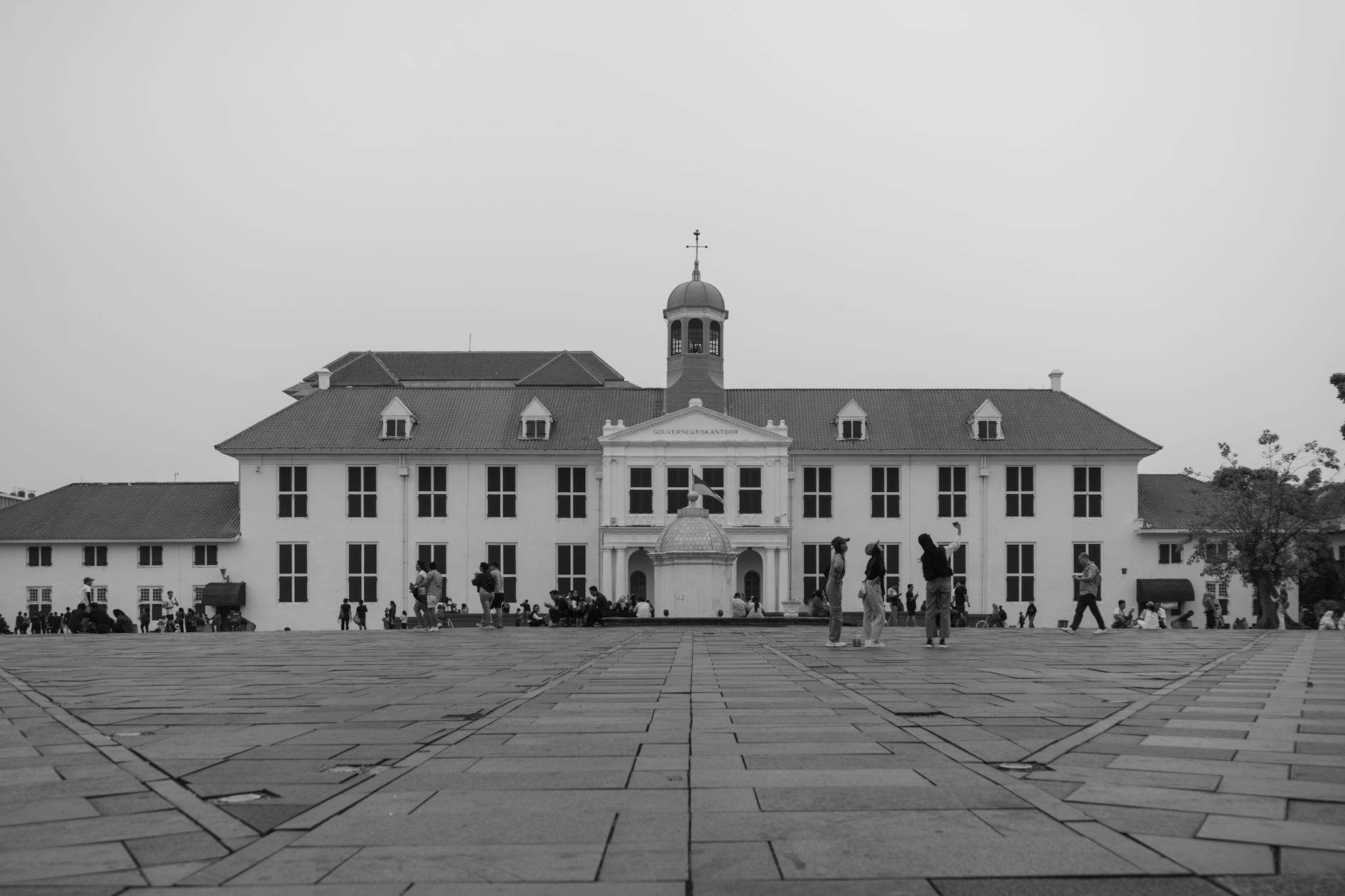
The colonial heart. Six major museums within 10 minutes walking of Taman Fatahillah Square:
- Jakarta History Museum (Fatahillah) — Former Stadhuis (City Hall), 1710-1712
- Wayang Museum — Indonesian puppet heritage, 6,000+ puppets
- Museum of Fine Arts & Ceramic — Indonesian fine art and ceramics
- Bank Indonesia Museum — Banking and monetary history, free entry
- Bank Mandiri Museum — In former Dutch trading bank building
- Maritime Museum / Sunda Kelapa — 2 km north; original Dutch warehouses + working harbor
Zone 2: Merdeka Square — Central Jakarta
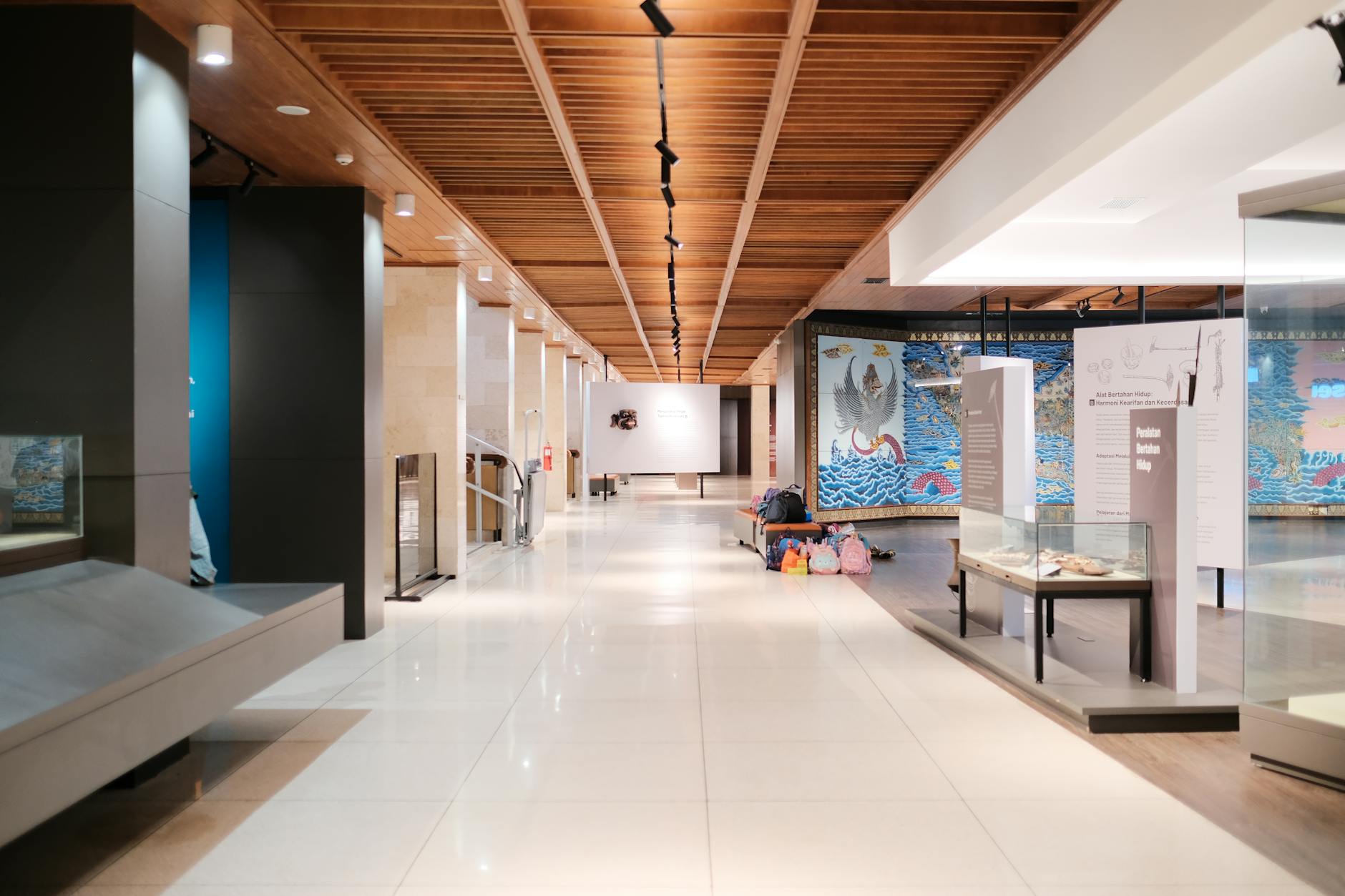
The administrative and ceremonial heart of modern Jakarta:
- National Museum of Indonesia (Museum Gajah) — Southeast Asia’s largest collection (~140,000 artifacts)
- Monas (National Monument) — Indonesia’s most iconic landmark; observation deck
- National Gallery of Indonesia — Contemporary and historical Indonesian art
- Indonesian Independence Building — Where independence was proclaimed
- Istiqlal Mosque — Southeast Asia’s largest mosque (covered in our guide to temples and mosques in Jakarta)
- Jakarta Cathedral — Neo-Gothic Catholic cathedral, faces Istiqlal
Zone 3: South Jakarta & Outskirts
Living culture and large-scale outdoor sites:
- Taman Mini Indonesia Indah — Indonesia-in-Miniature park, 26 provincial pavilions
- Textile Museum (Tanah Abang) — Indonesian textile heritage, batik workshop
- Setu Babakan Betawi Cultural Village — Living Betawi culture, performances
- Bahari Maritime Museum — North Jakarta, maritime heritage
- Pancasila Sakti Monument (Lubang Buaya) — Site of 1965 generals’ murders
Beyond History: Jakarta’s Contemporary Art Scene
It would be a mistake to treat Jakarta’s culture as purely historical. Over the past decade the city has become one of Southeast Asia’s most dynamic contemporary-art capitals, and two institutions anchor it. Museum MACAN (Modern and Contemporary Art in Nusantara), which opened in 2017 in West Jakarta, was the country’s first museum built to international standards for modern art; it pairs Indonesian pioneers like Raden Saleh and Affandi with global names such as Yayoi Kusama and shows that draw collectors from across Asia. The National Gallery of Indonesia (Galeri Nasional), near Merdeka Square, is free and traces Indonesian visual art from the colonial era to the present. Around them sits a lively private-gallery scene concentrated in Kemang, Menteng, and Senopati. If you want a fuller, visitor-facing tour of all of this alongside the historical museums, our companion guide to Jakarta museums and cultural sites covers it in detail.
Jakarta’s Cultural Sites at a Glance
| Site | What it’s for | Zone | Time needed |
|---|---|---|---|
| National Museum (Museum Gajah) | The grand overview of Indonesian history and art | Merdeka Square | 1.5–2 hrs |
| Jakarta History Museum (Fatahillah) | Colonial Batavia, the Stadhuis, prison cells | Kota Tua | 1–1.5 hrs |
| Wayang Museum | UNESCO puppet heritage, weekend shows | Kota Tua | 1–1.5 hrs |
| Textile Museum | Batik, ikat, songket + hands-on workshop | Tanah Abang | 1.5 hrs |
| TMII | All of Indonesia’s provinces in one park | East Jakarta | 4–8 hrs |
| Setu Babakan | Living Betawi culture and performances | South Jakarta | 2–3 hrs |
| Museum MACAN | Modern and contemporary art | West Jakarta | 1.5–2 hrs |
| Glodok & Vihara Dharma Bhakti | Chinatown, Peranakan heritage, oldest temple | West Jakarta | 2–3 hrs |
The Big Three Museums You Cannot Skip
If you have only one day for Jakarta culture, these three are essential:
1. National Museum of Indonesia (Museum Gajah)
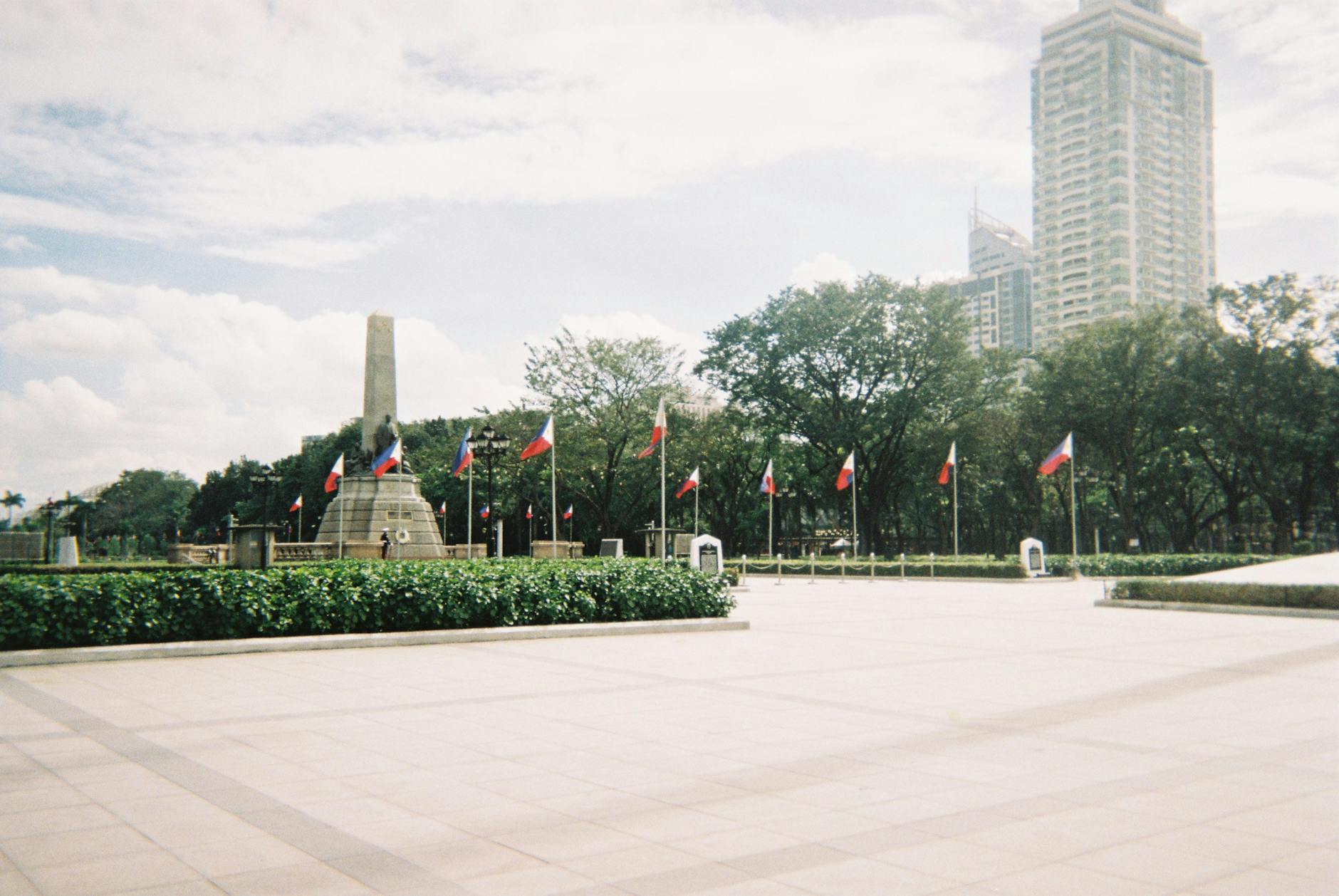
Indonesia’s most important museum. Founded 1868, currently holds approximately 140,000 artifacts — the largest collection in Southeast Asia. Reopened October 15, 2024 after recovering from the September 2023 fire that damaged Building A. Features the new ImersifA immersive digital room.
- Address: Jl. Medan Merdeka Barat No.12, Gambir, Central Jakarta
- Hours: Tue-Thu 08:00-16:00; Fri-Sun 08:00-20:00; closed Monday and national holidays
- Tickets: Adults IDR 25,000; international visitors IDR 50,000 (verify current pricing)
- Time needed: 1.5-2 hours minimum
For a room-by-room breakdown — the ethnographic halls, the Hindu-Buddhist statuary, the gold room, and the new ImersifA digital gallery — see our full National Museum of Jakarta guide.
If you only have time to focus on a few things inside, prioritize the Gedung Arca (Statue Building) for its 7th-to-15th-century Hindu-Buddhist sculpture — some of the finest in Southeast Asia, recovered from the temple cultures of Java and Sumatra — and the upstairs gold room, where the Wonoboyo hoard from Central Java displays the staggering wealth of the ancient Mataram kingdom. The ethnographic galleries, organized by region, are the quickest way to grasp just how many distinct cultures the modern nation contains: a single afternoon takes you from Batak houses in Sumatra to Asmat carving in Papua. The bronze elephant out front, a gift from King Chulalongkorn of Siam in 1871, is why locals still call the whole place Museum Gajah, the Elephant Museum.
2. Jakarta History Museum (Fatahillah)
The former Batavia City Hall (Stadhuis), completed 1712. Located on Taman Fatahillah Square in Kota Tua. Features 23,500+ collection items including a famous Portuguese-Dutch bronze cannon (Si Jagur), governor portraits, and the underground prison cells.
- Address: Jl. Taman Fatahillah No. 1, Pinangsia, Tamansari, West Jakarta
- Hours: Tue-Sun 09:00-15:00; closed Mondays
- Tickets: IDR 5,000 adults, IDR 2,000 students (same for locals and foreigners)
- Time needed: 1-1.5 hours
3. Wayang Museum (Kota Tua)

Indonesia’s premier puppet museum, dedicated to UNESCO-inscribed wayang heritage. Houses 6,000+ puppets from across Indonesia and abroad. Reopened January 2025 after extensive renovation with interactive displays and bilingual signage.
- Address: Jl. Pintu Besar Utara No. 27, facing Fatahillah Square
- Hours: Tue-Sun 09:00-15:00 (some sources 16:00); closed Mondays
- Tickets: IDR 5,000 adults, IDR 2,000 children
- Weekend puppet shows: Saturdays/Sundays; longer “all-night” shows on 2nd-4th Sundays
- Time needed: 1-1.5 hours; +1 hour for puppet show
Specialty Museums Worth Your Time
Textile Museum (Tanah Abang)

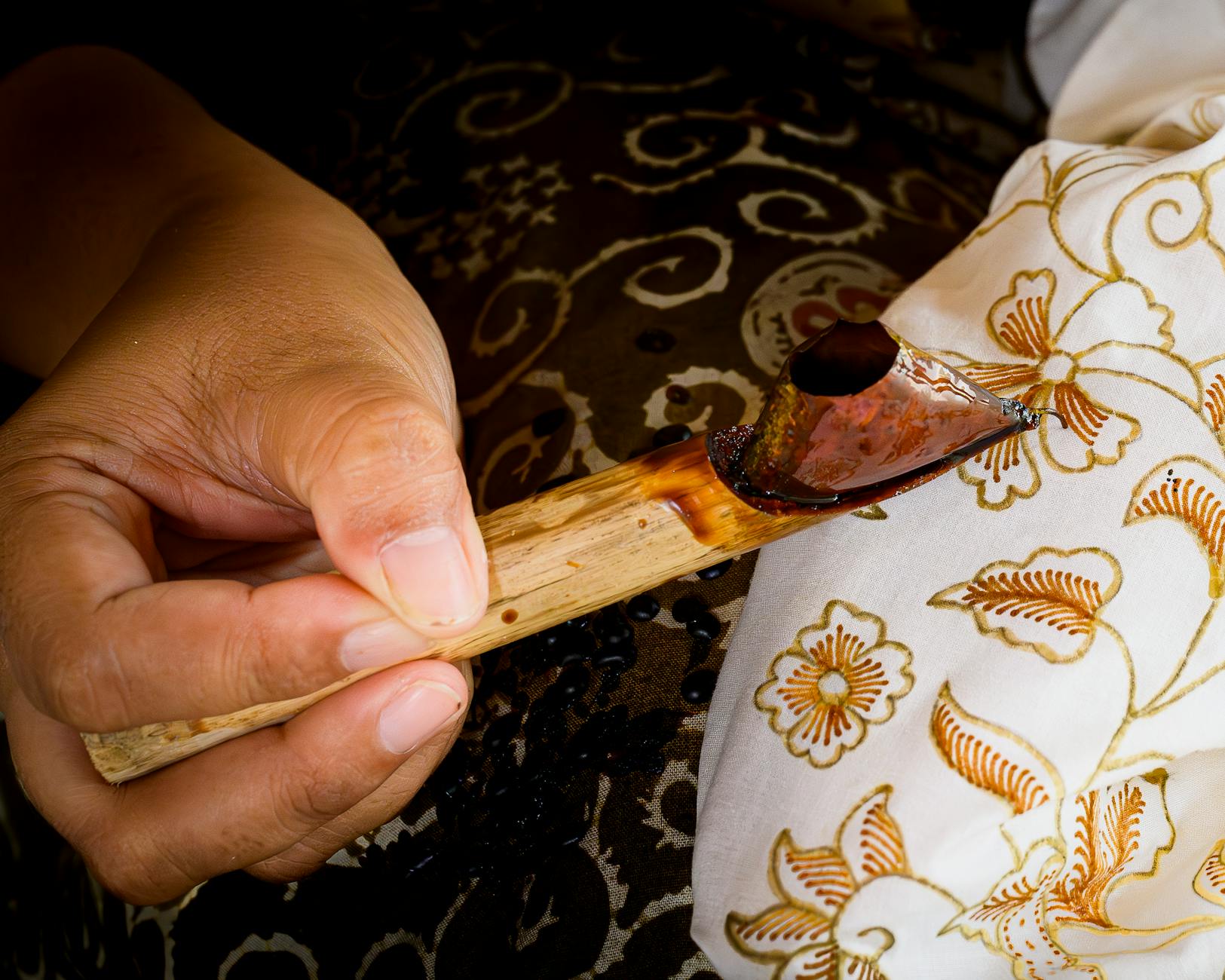
The country’s premier showcase of Indonesian textiles — batik, ikat, songket, tenun. Housed in a 1890s Dutch colonial mansion. Famous for its hands-on batik workshop (IDR 50,000-100,000 per person). Pair with our batik shopping guide and handicrafts guide.
Maritime Museum (Sunda Kelapa)
Located in former Dutch East India Company warehouses. Original 17th-century buildings. Pair with a visit to the working Sunda Kelapa port (Indonesia’s last working wooden ship harbor).
Museum of Bank Indonesia
Free entry. Surprisingly engaging exhibits on Indonesian monetary history. Housed in a beautiful 1828 colonial bank building. 30-45 minutes recommended.
Fine Arts & Ceramic Museum
Indonesian fine art and ceramic traditions. Smaller (1-hour visit) but excellent for those interested in Indonesian art. Located on Taman Fatahillah Square.
Taman Mini Indonesia Indah — A Day in Itself

Indonesia’s most ambitious cultural park. 250 hectares featuring 26 provincial pavilions, 19 museums, traditional houses from every region, and the Indonesia-in-Miniature lake. Completed extensive 2022-2023 renovation (Rp 1.9 trillion), now car-free with electric shuttles and cable car. Full day visit recommended.
The concept sounds kitschy on paper — a theme park of the whole country — but it works because it’s done at full scale and with real artifacts. Each provincial pavilion is a faithful traditional house furnished with regional textiles, tools, and instruments, and on weekends many host live dance and music from their home region. For a traveler who won’t make it beyond Java, it’s the single most efficient way to glimpse the breadth of Indonesia, from Toraja tongkonan roofs to Minangkabau buffalo-horn gables to Papuan honai huts. The post-renovation park is genuinely pleasant to walk now that cars are gone, and the cable car over the central lake — with its relief map of the archipelago — is the best orientation you can get. Treat it as a half-to-full day and pick five or six pavilions rather than trying to see all twenty-six.
- Address: Jl. Taman Mini Indonesia Indah, Ceger, Cipayung, East Jakarta
- Hours: Daily 05:00-20:00
- Entry: IDR 25,000-35,000 per person; additional tickets for cable car, museums, IMAX
- Time needed: 4-8 hours
Kota Tua Walking Tour — The Self-Guided Loop
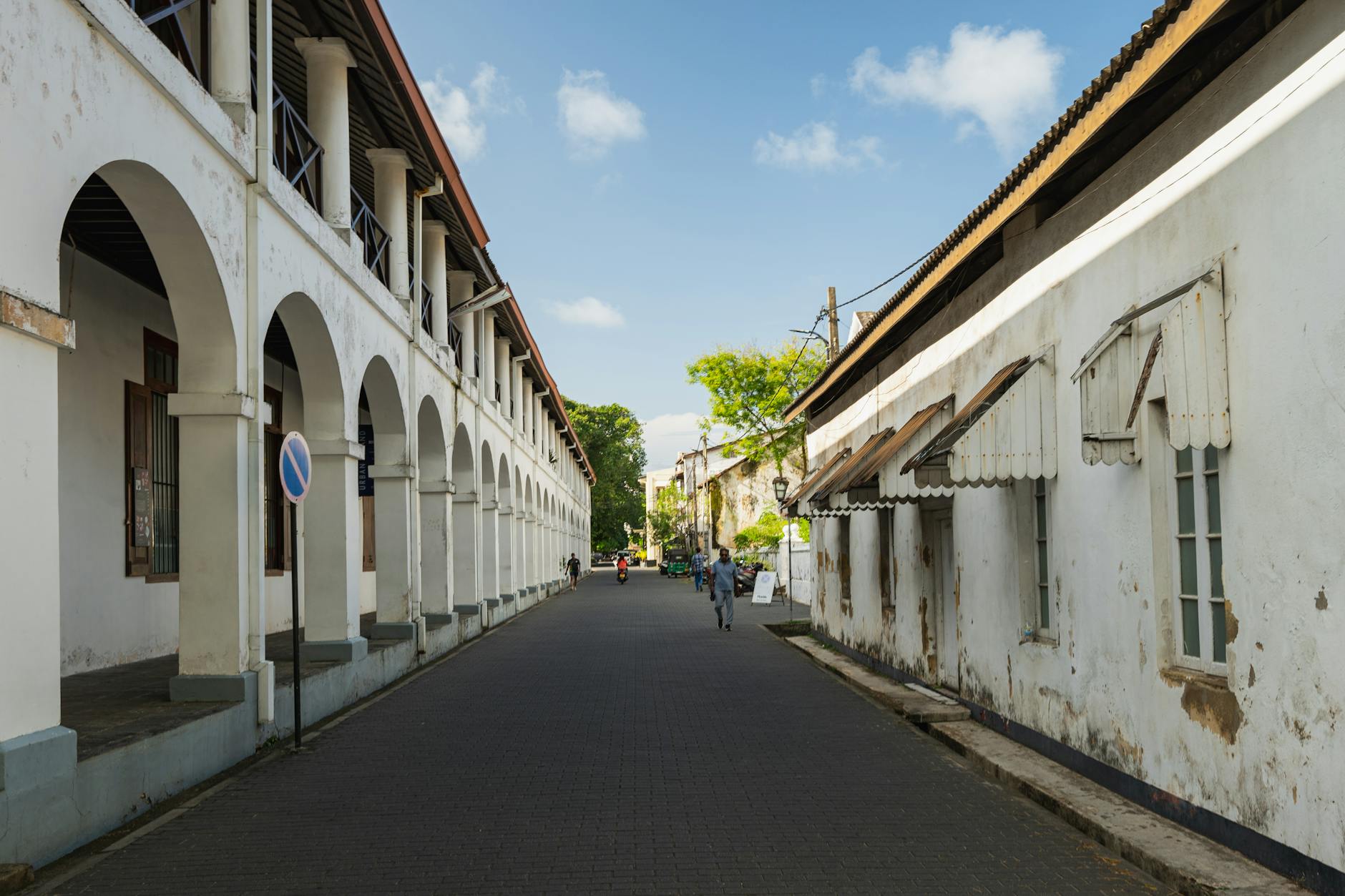
Jakarta’s old Dutch town. The 2-3 hour self-guided walking tour covers Fatahillah Square, Cafe Batavia, the Wayang Museum, Bank Indonesia Museum, Fine Arts Museum, the Kali Besar canal, Toko Merah (one of Jakarta’s oldest buildings, c. 1730), and optionally Sunda Kelapa Harbour.
Colonial Jakarta Architecture
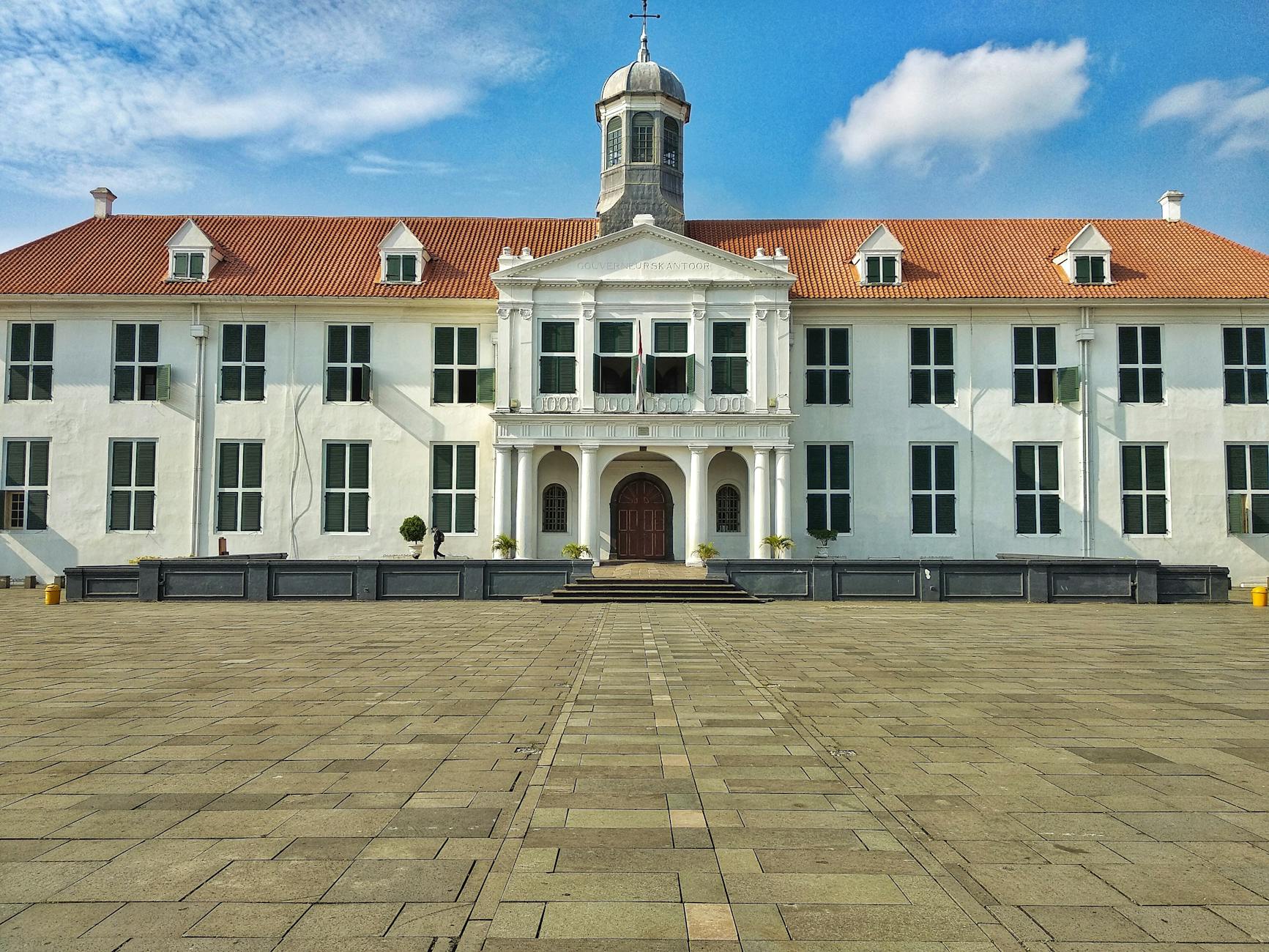
Jakarta’s colonial architectural heritage spans three districts:
- Kota Tua — Original 17th-19th century Old Dutch style (Stadhuis, Toko Merah, Wayang Museum building)
- Lapangan Banteng / Gambir — 19th-century buildings (Istana Negara, Immanuel Church, Gedung Pancasila)
- Menteng — 1910s Indische Stijl garden suburb designed by Moojen and Kubatz
Betawi Culture: Setu Babakan Cultural Village
The Betawi are Jakarta’s indigenous ethnic group — a unique cultural mixture of Sundanese, Javanese, Chinese, Arab, Dutch, and Portuguese influences. Setu Babakan in South Jakarta is the living Betawi cultural village, featuring traditional houses, food, dance (lenong), music (gambang kromong), and language (Bahasa Betawi) — and the cooking alone is worth the trip, as our guide to Betawi cuisine in Jakarta explains.
Two-Day Cultural Itinerary for First-Time Visitors
Day 1: Kota Tua (Colonial Heart)
- 9:00 AM: KRL to Jakarta Kota Station
- 9:15 AM: Walk to Fatahillah Square
- 9:30 AM – 11:00 AM: Jakarta History Museum (Fatahillah)
- 11:00 AM – 12:30 PM: Wayang Museum
- 12:30 PM – 1:30 PM: Lunch at Cafe Batavia (historic, atmosphere) or Historica
- 1:30 PM – 2:30 PM: Museum of Fine Arts & Ceramic
- 2:30 PM – 3:30 PM: Bank Indonesia Museum (free)
- 3:30 PM – 5:00 PM: Walk Kali Besar canal, see Toko Merah, optional Sunda Kelapa Grab
- 5:00 PM: Coffee at Acaraki Jamu
- 5:30 PM: Return via KRL
Day 2: Merdeka Square + Setu Babakan or TMII
Morning (Merdeka Square cluster):
- 8:30 AM: Monas observation deck (early to avoid crowds)
- 10:00 AM – 12:30 PM: National Museum of Indonesia
- 12:30 PM – 1:30 PM: Lunch
Afternoon option A (TMII):
- 2:00 PM – 6:00 PM: TMII (5-7 pavilions of interest, cable car, Indonesia Museum)
Afternoon option B (Betawi):
- 2:00 PM – 5:00 PM: Setu Babakan Betawi Cultural Village
- 5:00 PM: Sunset coffee in South Jakarta
Going Deeper: A Cultural Week in Jakarta
If culture is the reason you’re in town and you have most of a week, the city can absorb it without repeating itself. Days one and two follow the two-day itinerary above — Kota Tua and then Merdeka Square with either TMII or Setu Babakan. Day three is for contemporary art: Museum MACAN in the morning, the National Gallery and a couple of the Kemang or Senopati private galleries in the afternoon, which also drops you in two of the city’s best eating-and-coffee districts. Day four goes to Glodok and the Chinatown heritage walk, ideally timed to a temple festival if one falls in your window, with lunch deep in Petak Sembilan. Day five takes the Textile Museum and its batik workshop in the morning, then the craft markets — our guides to where to buy batik and Indonesian handicrafts turn the morning’s learning into something you can take home.
With any remaining time, fold in the living-culture options — a wayang performance, a Betawi dance weekend, an evening of contemporary theatre at Taman Ismail Marzuki in Cikini — and a slow architectural wander through Menteng, the 1910s garden suburb whose Indische Stijl villas are a museum in their own right. Spread across a week and grouped by zone, Jakarta’s heritage reveals itself as far richer than its reputation suggests, and the affordability means a deep cultural trip here costs a fraction of the equivalent in most Asian capitals.
Budget: Total Cost for All Major Cultural Sites
| Site | Entry Fee |
|---|---|
| National Museum | IDR 25,000-50,000 |
| Jakarta History Museum (Fatahillah) | IDR 5,000 |
| Wayang Museum | IDR 5,000 |
| Museum of Fine Arts & Ceramic | IDR 5,000 |
| Bank Indonesia Museum | Free |
| Bank Mandiri Museum | IDR 10,000 |
| Textile Museum | IDR 5,000-15,000 |
| Maritime Museum | IDR 5,000 |
| Monas observation deck | IDR 20,000 |
| TMII entry | IDR 25,000-35,000 |
| TMII cable car | IDR 50,000 |
| TMII Indonesia Museum | IDR 20,000 |
| Two-day cultural budget (per person) | ~IDR 250,000 ($16) |
Plus transport (KRL/MRT/Grab) of IDR 100,000-200,000 total. Jakarta is one of the world’s most affordable major cities for culture-focused tourism.
Glodok Chinatown and Peranakan Heritage
No cultural read of Jakarta is complete without Glodok, the city’s Chinatown in West Jakarta and one of the oldest Chinese settlements in Southeast Asia. The community here dates to the early colonial period, and the neighborhood survived the brutal 1740 Batavia massacre and the 1998 riots to remain a dense, living quarter of temples, herbalists, and food. The spiritual anchor is the Vihara Dharma Bhakti (Jin De Yuan), founded in 1650 and the oldest Chinese temple in Jakarta, where worshippers still burn coils of incense beneath the rafters. The Peranakan culture on display — the blended Chinese-Indonesian world of language, dress, and cuisine — is a heritage layer you won’t find inside any single museum; you simply walk it. The lanes of Petak Sembilan (Gang Gloria) are the place to see, smell, and taste it, and our wider neighborhoods guide sets Glodok in context with the districts around it.
For visitors, Glodok rewards a slow morning rather than a checklist. Come hungry, bring cash, and treat the temple visit with the same modesty you’d bring to a mosque — quiet voices, no flash during prayer, and a small donation if you light incense. During Lunar New Year and Cap Go Meh the whole quarter erupts into lion dances and lanterns, and it becomes one of the best free cultural spectacles in the city.
The Religious Architecture Worth Seeing
Jakarta’s religious buildings double as some of its finest architecture and its clearest statement of the national motto, Bhinneka Tunggal Ika (Unity in Diversity). The Istiqlal Mosque, completed in 1978, is the largest mosque in Southeast Asia, a vast modernist space of white marble and stainless steel that can hold over 200,000 worshippers; it offers guided tours to non-Muslim visitors and lends headscarves at the door. Directly across the road stands the neo-Gothic Jakarta Cathedral (1901), and the two facing each other — mosque and cathedral, sharing parking on major holidays — is the single most photographed emblem of Indonesian pluralism. The full picture of the city’s mosques, temples, churches, and viharas, and how to visit each respectfully, is laid out in our guide to temples and mosques in Jakarta.
Reading Jakarta’s Colonial History Honestly
It’s worth visiting these sites with clear eyes about what they represent. The handsome Dutch buildings of Kota Tua were the administrative machinery of a colonial trading empire built on the monopoly of the spice trade and, for long stretches, on coerced labor. The underground cells beneath the Jakarta History Museum, where the Javanese prince and national hero Diponegoro was once held, are part of that story too. Indonesian museums increasingly tell this history with nuance rather than nostalgia, and the best guides — including the free walking tours run by Jakarta Good Guide — don’t shy away from the harder chapters. You come away understanding not just how Batavia looked, but what it cost and why independence in 1945 mattered so much. That arc, from Sunda Kelapa to Merdeka, is the thread that ties every site in this guide together.
Museum Etiquette in Indonesia
Indonesian cultural and religious sites are welcoming to foreign visitors, and a little awareness goes a long way. The country is overwhelmingly Muslim but constitutionally pluralist, and you’ll move between mosques, Chinese temples, and Catholic and Protestant churches in the course of a single cultural day — each with its own small courtesies. The basics below cover the great majority of situations; when in doubt, watch what locals do and follow their lead.
- Photography — Generally permitted; flash usually prohibited; some special exhibits restricted
- Modest dress — Cover shoulders and knees, especially at Istiqlal Mosque (women receive headscarves)
- Shoes — Removed at mosques, some Betawi traditional houses
- Friday prayer (12-1 PM) — Some museum staff at prayer; entry may pause briefly
- Tip guides 10-15% — Particularly for private/audio-guided tours
- Quiet voices — Especially in religious sites
Living Culture vs. Museum Culture
This distinction matters more in Jakarta than in most cities. The static museums are excellent, but the heritage is at its most alive in performance and ritual — a wayang puppeteer working a leather screen for hours, a gambang kromong ensemble at a Betawi wedding, the incense haze of a Glodok temple at festival time. Wherever you can, choose the living version. Below are the most reliable places to catch it:
For tourists wanting living culture (not just static displays):
- Setu Babakan — Betawi cultural performances on weekends (dance, music, food)
- Wayang Museum weekends — Live puppet performances
- TMII — Provincial dance performances at various pavilions (schedule varies)
- Taman Ismail Marzuki (TIM) — Contemporary Indonesian performing arts center, Cikini
- Jakarta Performing Arts Theatre — Wayang, Jakarta dance theatre productions
- Gambir Expo (annual June) — Largest Indonesian cultural festival
Getting Around: MRT, KRL, TransJakarta, Grab
Jakarta’s cultural sites are well-connected by public transit:
- Kota Tua zone — the KRL commuter line to Jakarta Kota Station (most efficient)
- Merdeka Square zone — the TransJakarta “Monas” stop or Gambir KRL Station
- Setu Babakan — Grab/Gojek (no direct transit; ~30 minutes from Sudirman)
- TMII — LRT Jabodebek (Ciracas Station) or Grab/Gojek
- Textile Museum — Tanah Abang KRL Station (10-min walk)
See our transportation in Jakarta guide for complete transit comparisons.
First-Timer Mistakes at Jakarta’s Cultural Sites
A few errors recur often enough to be worth flagging. Showing up on a Monday. Nearly every museum in the city closes on Mondays, so build that day around outdoor or living sites — a Kota Tua walk, TMII, Setu Babakan — rather than indoor collections. Underestimating the distances. The three museum zones (Kota Tua in the north, Merdeka Square in the center, the southern and eastern outliers) are genuinely far apart in Jakarta traffic, so visiting by zone rather than by interest will save you hours. Trying to do Kota Tua and TMII in the same day. They sit on opposite sides of a vast city and each deserves half a day or more; pairing them guarantees a rushed, frustrating slog.
Visiting Kota Tua only at midday. The square bakes in the early afternoon heat and the museums fill with school groups; come at opening or in the late afternoon, when the light is kinder and the atmosphere on the square is at its best. Skipping the living culture. Static displays tell only half the story — time a visit to a weekend so you can catch a puppet performance at the Wayang Museum or a Betawi dance at Setu Babakan, and the heritage stops being abstract. And not carrying small cash. Entry fees are tiny (often IDR 5,000) and many ticket windows, snack stalls, and the Textile Museum’s batik workshop don’t take cards, so keep a pocket of small notes.
Best Time to Visit Jakarta Cultural Sites
- Dry season (May-September) — Best for outdoor walking tours (Kota Tua, TMII)
- Weekday mornings — Smaller crowds, more attentive guides
- Weekends — Live performances at Wayang Museum and Setu Babakan; busier
- Mondays — Most museums closed; plan TMII or outdoor walking
- Ramadan — Museums open but reduced hours; cultural performances limited
Accessibility & Family-Friendly Notes
- National Museum — Wheelchair accessible, modern facilities post-2024 reopening
- Fatahillah, Wayang, other Kota Tua museums — Limited accessibility (old buildings)
- TMII — Mostly accessible; electric shuttles assist
- Setu Babakan — Outdoor, mostly flat, generally accessible
- Family-friendly — TMII, Wayang Museum, Setu Babakan are excellent for kids; National Museum has interactive ImersifA room
Guided Tour or Do It Yourself?
Both approaches work, and the right choice depends on the site. For the National Museum and TMII, a self-guided visit is fine: signage is bilingual, the post-renovation facilities are good, and audio or app guides fill the gaps. For Kota Tua, a guide genuinely changes the experience — the buildings are handsome but the stories behind them (the massacres, the trade monopolies, the prince in the cells) aren’t obvious from the facades, and a knowledgeable guide turns a pretty square into a coherent history lesson. The free, tip-based walking tours run by Jakarta Good Guide are an excellent, low-commitment way to get that context, and several outfits offer themed colonial-era walks if you want more depth.
For Glodok, a local guide helps you navigate the warren of lanes, read the temple etiquette, and find the food worth queuing for, though confident independent travelers manage fine with a map and an appetite. Whatever you choose, the universal tip is to start early: Jakarta’s heat, traffic, and midday crowds all compound as the day goes on, and the visitors who see the most are invariably the ones who began at opening time. Tie the museums together with the right transit — the KRL for Kota Tua, ride-hailing for the southern sites — and a culture-focused trip here runs smoothly on a remarkably small budget.
Solo Traveler Notes
Jakarta cultural sites are safe and welcoming for solo travelers. Useful resources:
- Jakarta Good Guide — Free walking tours of Kota Tua and Menteng
- Walkindies — Themed colonial-era walking tours
- Jakarta Sejarah — Indonesian-language historical walking tours
- Pulse Jakarta — Hospitality-network walking tours
Frequently Asked Questions About Jakarta Museums and Cultural Sites
What are the best Jakarta museums and cultural sites?
The big three: National Museum (largest collection in SE Asia), Jakarta History Museum/Fatahillah (colonial heritage), and Wayang Museum (UNESCO puppet heritage). TMII for outdoor cultural park, Setu Babakan for living Betawi culture.
How much do Jakarta museums cost?
Very affordable. Most Jakarta museums charge IDR 5,000-50,000 (USD 0.30-3) for entry, with foreigners paying the same as locals (unusual for Indonesian tourism). Two-day comprehensive cultural budget: about IDR 250,000 ($16) total entry fees.
When are Jakarta museums open?
Most open Tuesday-Sunday 09:00-15:00, closed Mondays. National Museum has extended Friday-Sunday hours (until 20:00). Always check current hours as these can change with renovations and major holidays.
How do I get to Kota Tua museums?
Take the KRL Commuter Line to Jakarta Kota Station — about 25 minutes from Manggarai or 35 minutes from Gambir. From Jakarta Kota Station, all major Kota Tua museums are within a 5-10 minute walk through pedestrian-friendly streets.
Is Taman Mini Indonesia Indah worth visiting?
Yes for travelers interested in Indonesian cultural diversity. TMII showcases all 38 Indonesian provinces in one location through pavilions, museums, traditional houses, and performances. After 2022-2023 renovation, the park is car-free with electric transport and improved facilities.
Can foreign tourists see authentic wayang performances in Jakarta?
Yes. The Wayang Museum hosts weekend performances (Saturdays/Sundays). Additional venues: Setu Babakan Betawi Cultural Village, Taman Ismail Marzuki, and various performances at TMII. Full-night traditional shows occur 2nd-4th Sundays of each month.
What should I know about the 2023 National Museum fire?
September 16, 2023, electrical fire damaged Building A. 890 artifacts were rescued. Reopened October 15, 2024 with full restoration plus new ImersifA digital immersive room. Some collections may rotate; check official channels for current exhibition status before visiting.
Are Jakarta museums good for children?
Yes. Wayang Museum’s interactive displays appeal to children; TMII is designed for families; National Museum’s ImersifA digital room is highly visual. Setu Babakan offers outdoor space and live performances.
Jakarta culture rewards visitors willing to look past the traffic and the modern sprawl. If you want to go deeper, the one museum we’ve covered end to end is the National Museum of Jakarta, and the wider visitor rundown lives in our guide to Jakarta museums and cultural sites. To weave the heritage into a full trip, pair it with our pillar on things to do in Jakarta, the practical neighborhoods guide, and — for the batik and crafts the museums will leave you craving — our shopping in Jakarta pillar.
A Final Word on Seeing Jakarta’s Culture Well
Jakarta does not hand its heritage to visitors the way a compact European capital does. The sites are spread across a sprawling, traffic-choked metropolis, the labels aren’t always in English, and the city’s reputation for modern chaos can drown out its much older story. But that’s precisely what makes the effort rewarding: with a little structure — visiting by zone, starting early, choosing living culture over static display where you can, and reading the four-name history as a single arc — you uncover one of Southeast Asia’s richest and least-understood cultural landscapes. Few cities offer this much history, art, and living tradition for so little money, and almost none reward a curious, patient traveler so generously.
External Resources for Jakarta Culture & Museums
For official information, the National Museum of Indonesia website and the TMII official ticket portal provide current hours and pricing. The Wikipedia entry on Jakarta colonial architecture offers detailed historical context.
Visiting with children changes the calculation entirely: the collections that reward an adult’s patience rarely hold a seven-year-old, and the museums that do are not the famous ones. Our guide to the best museums for kids in Jakarta sorts them on that basis, and flags the National Museum’s sharp price rise in January 2026.
Related Jakarta Guides
- Kota Tua Walking Tour Jakarta (2026): Self-Guided 12-Stop Route
- Colonial Jakarta Architecture & History: A 2-Day Walking Guide (2026)
- Indonesian Heritage Sites in Jakarta (2026): A Historical Deep Dive
- Jakarta Cultural Experiences (2026): 12 Hands-On Immersive Activities
- Jakarta Hidden Gems: 15 Secret Spots Locals Love
- Hindu Temples in Jakarta (2026): Pura Aditya Jaya & Beyond — Complete Guide