Soto Betawi — Jakarta’s signature beef-and-coconut soup, finished, unusually, with a splash of fresh cow’s milk — is the dish I’d send anyone to first. But not all of it is equal, and the differences are real once you start paying attention. Some vendors go pure coconut milk for a bright tropical richness, others lean all the way into cow’s milk for something creamier and almost dairy-forward, and the legendary stalls blend both for the gold-standard balance. Beyond the broth, the cuts (daging beef, jeroan offal, paru lung, torpedo testicle, kikil tendon), the spice ratio, the sambal heat, and whether you eat it with rice or emping all separate the city’s top specialists. This is a proper ranking of the best soto Betawi Jakarta has — with broth comparisons, addresses, ordering tips, and a first-timer’s guide to the menu.
Soto Betawi is the cornerstone of Betawi cuisine, and it sits near the top of any honest list in the wider Jakarta food guide. Here, we go deep on just the soup.
What Makes Soto Betawi Different from Other Indonesian Sotos
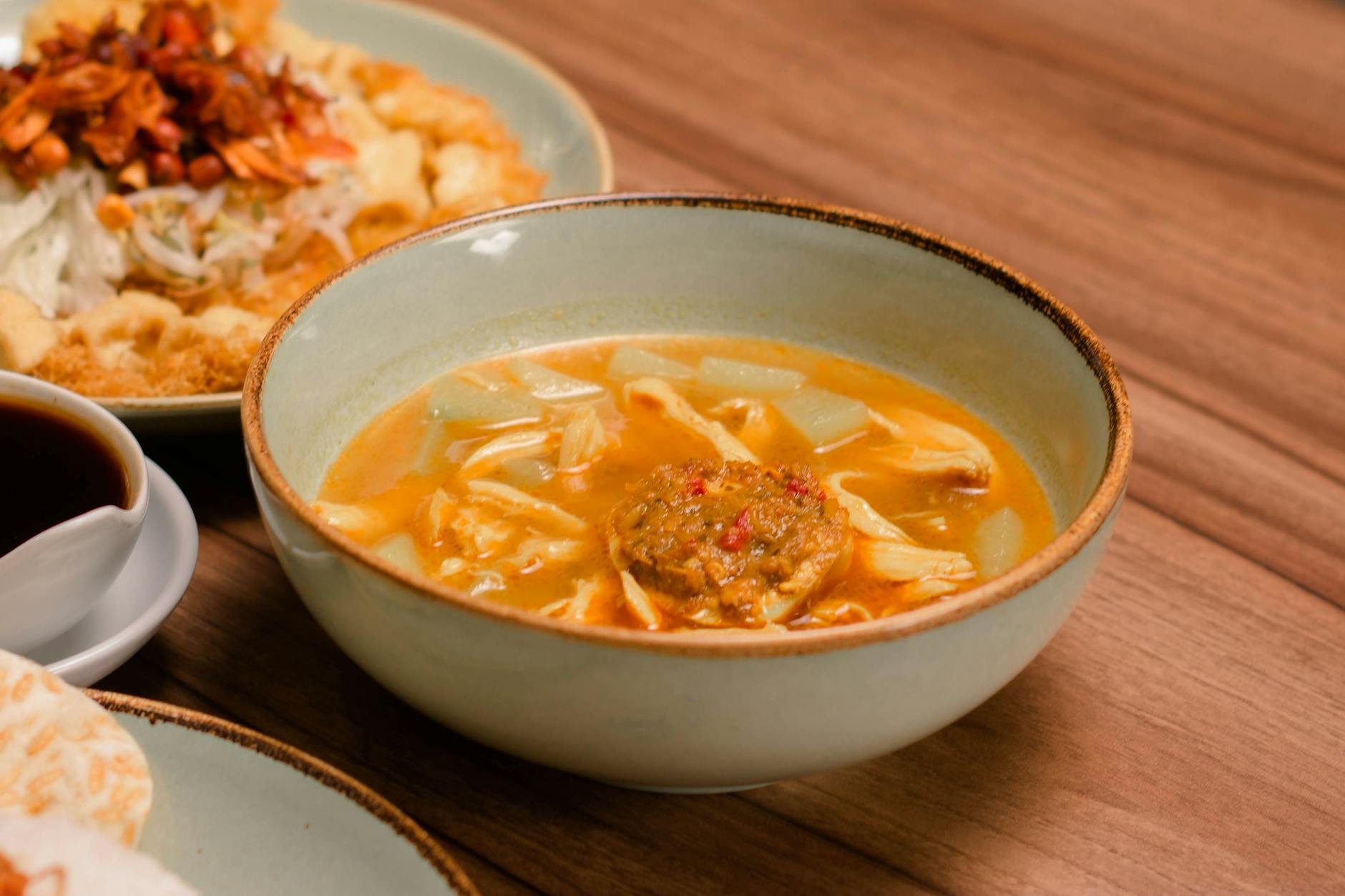
Indonesia has dozens of regional soto variations — soto ayam Lamongan, soto Bandung, soto Madura, coto Makassar, soto Padang, all worth knowing if you’re working through the must-try Jakarta dishes — but soto Betawi stands apart for one defining feature: the dairy addition. Most Indonesian sotos use clear broth or coconut milk. Soto Betawi blends coconut milk with fresh cow’s milk for a uniquely creamy, almost cappuccino-like richness. This Dutch-influenced dairy element reflects Jakarta’s 400-year cosmopolitan colonial history and is essentially impossible to replicate authentically outside the Jakarta metropolitan area.
Other distinguishing features of soto Betawi:
- Beef-only protein — never chicken (unlike soto ayam variations)
- Multiple cuts — daging (beef chunks), jeroan (offal mix), paru (lung), torpedo (testicle), kikil (tendon), babat (tripe), iso (intestines)
- Aromatic base — lemongrass, kaffir lime leaves, salam (Indonesian bay), galangal, ginger, garlic, shallots
- Yellow-orange color — from turmeric and candlenut paste
- Served with — white rice, sliced tomato, diced potato, sambal, emping melinjo (crackers), fried shallots, and lime wedges
The Broth Spectrum — Three Soto Betawi Styles
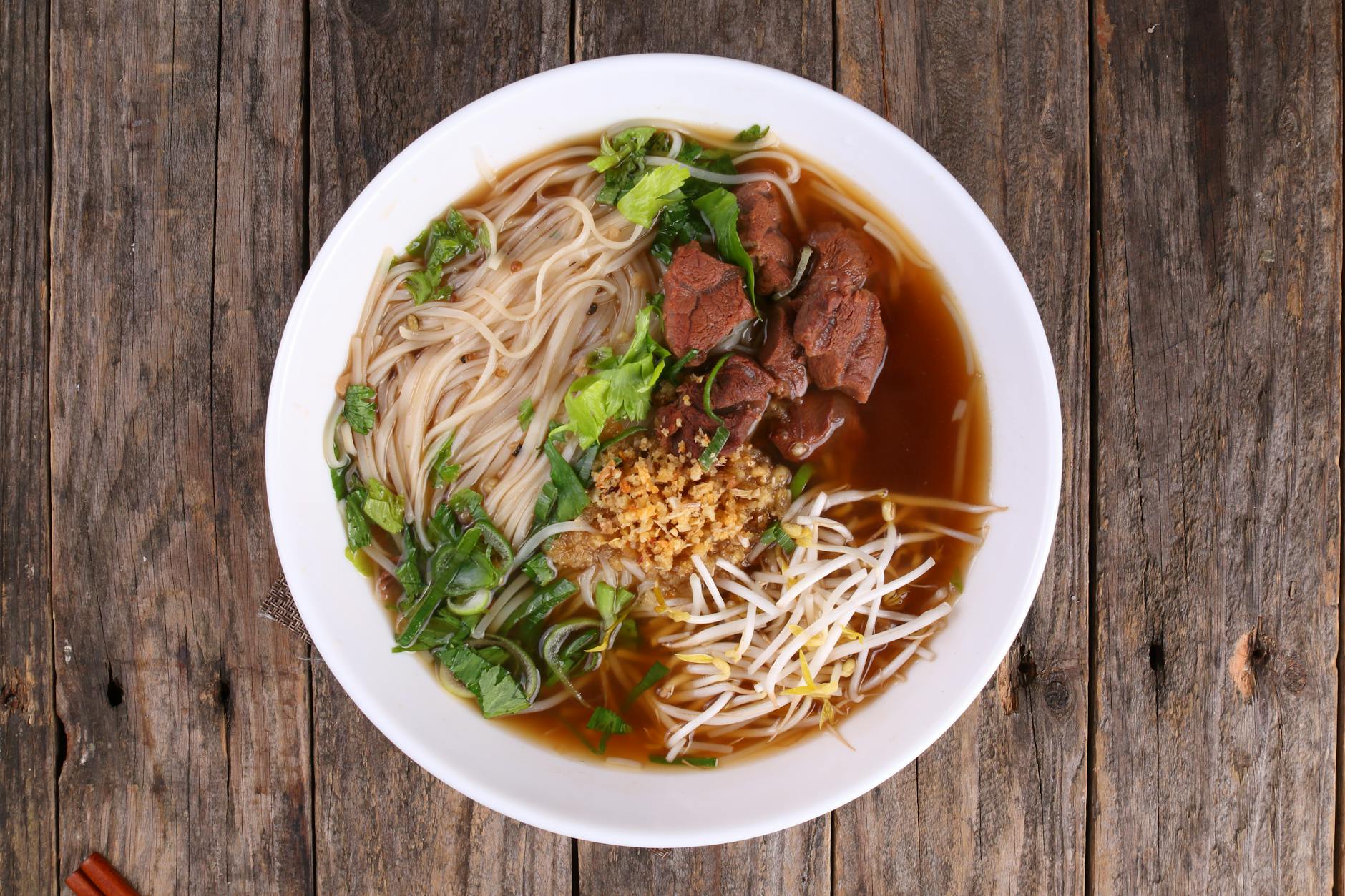
Jakarta’s top soto Betawi specialists fall along a spectrum based on their broth composition:
Pure Coconut Milk (Santan) — Lighter, Tropical
Coconut-milk-forward recipes have a brighter, more obviously tropical character. The broth has slightly thinner consistency and more sweetness. Closer to other Indonesian regional sotos. Examples: traditional Betawi village versions, several Setu Babakan vendors.
Blended Coconut + Cow’s Milk (Santan + Susu) — The Gold Standard
The most celebrated soto Betawi recipes blend both — typically 60% coconut milk and 40% fresh cow’s milk. The result is uniquely balanced: tropical richness from coconut, creamy depth from dairy, neither dominating. This is the version most legendary Jakarta vendors serve. Examples: Soto Betawi H. Ma’ruf, Soto Betawi H. Husein, Sambung Nikmat.
Pure Cow’s Milk (Susu) — Creamier, Dutch-Influenced
The most dairy-forward versions go nearly all cow’s milk for a thick, white, almost cream-soup-like texture. Closer to a Western-style cream soup than to other Indonesian sotos. Examples: some upscale modern Jakarta restaurants, certain Cikajang and Pondok Pinang specialists.
| Broth style | Character | Best for | Where to find it |
|---|---|---|---|
| Pure coconut (santan) | Lighter, brighter, faintly sweet | First-timers, hot days | Village-style stalls, several Setu Babakan vendors |
| Blended coconut + cow’s milk | Balanced, creamy, the gold standard | The definitive experience | H. Ma’ruf, H. Husein, Sambung Nikmat |
| Pure cow’s milk (susu) | Thick, white, almost cream-soup rich | Dairy lovers | Upscale modern restaurants, some Cikajang/Pondok Pinang specialists |
The Top 10 Best Soto Betawi in Jakarta
1. Soto Betawi H. Ma’ruf — The 1943 Legend
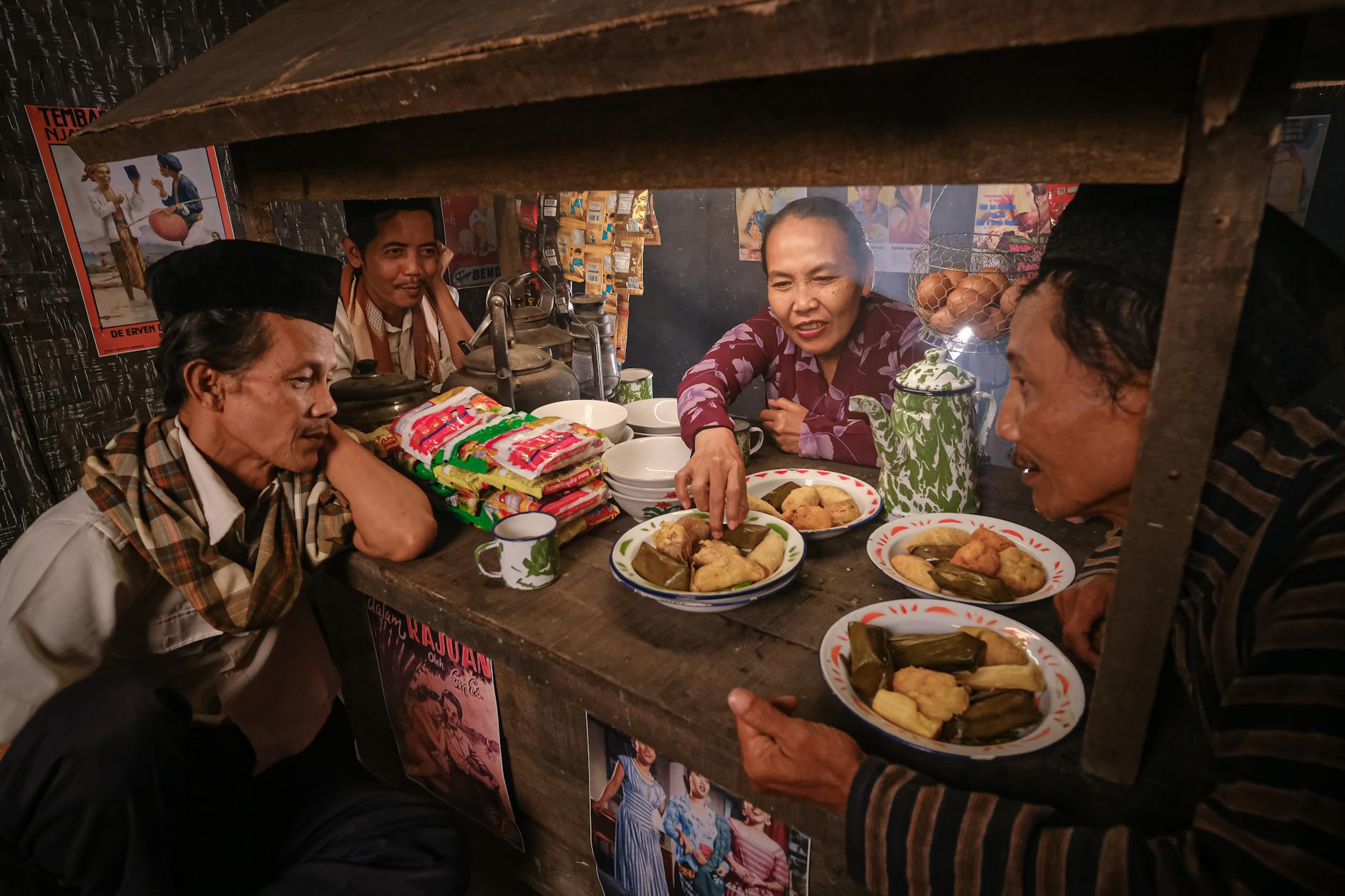
The single most legendary soto Betawi stall in Jakarta, Soto Betawi H. Ma’ruf has been continuously operating since 1943 near Pasar Senen. Four generations of the Ma’ruf family have served the same recipe — coconut milk and cow’s milk blended in the gold-standard ratio, slow-cooked with beef chunks, tendon, and tripe, and finished with crispy fried shallots, sliced tomato, diced potato, fresh sambal, and lime. The warung is no-frills (plastic tables, electric fans, the same metal urns since the 1960s) but the soto is sublime. Address: near Pasar Senen, Central Jakarta. Open: ~9:00 AM until sold out (usually 5:00 PM). Spend: IDR 45,000–75,000.
2. Soto Betawi H. Husein / Hj. Madsani (Cikajang)
One of South Jakarta’s most beloved soto Betawi specialists, Soto Betawi H. Husein on Jalan Cikajang serves the gold-standard blended-milk style. The signature feature is the unusually wide variety of cuts offered — daging, paru, torpedo, kikil, babat, all available individually or in “campur” (mixed). The atmosphere is cleaner and more upscale than H. Ma’ruf, with air-conditioning and comfortable seating. Spend: IDR 60,000–110,000.
3. Sambung Nikmat (Pondok Pinang, since 1987)
A South Jakarta institution since 1987, Sambung Nikmat serves one of Jakarta’s most consistent soto Betawi experiences. The broth leans slightly more dairy than coconut, with a beautifully balanced spice profile. Open for breakfast and lunch only. Spend: IDR 55,000–95,000.
4. Soto Betawi Pak Haji Yus (Minangkabau Barat)
Beloved among Jakarta’s serious food enthusiasts, Pak Haji Yus in Minangkabau Barat serves a particularly rich version with high coconut-milk content. Strong jeroan game for offal enthusiasts. Spend: IDR 50,000–85,000.
5. Soto Betawi H. Mamat (Tomang)
In West Jakarta’s Tomang neighborhood, Soto Betawi H. Mamat serves a gold-standard blended-milk soto with particularly good kikil tendon. Family-run since the 1970s. Spend: IDR 55,000–90,000.
6. Soto Betawi Globe H. Oji
Soto Betawi Globe H. Oji is famous for its torpedo (beef testicle) cut — considered the most luxurious option among traditional cuts. The broth is medium-creamy with strong aromatic depth. Spend: IDR 65,000–120,000.
7. Soto Betawi Bang Sawit (Kelapa Gading)
The North Jakarta favorite, Bang Sawit serves a slightly lighter, less dairy-heavy version that some prefer for its cleaner flavor profile. Open until late evening. Spend: IDR 50,000–90,000.
8. Soto Betawi Afung (Glodok)
The Chinese-Indonesian-influenced version, Soto Betawi Afung in Glodok serves a slightly more savory, less sweet take on the dish. The interior is a no-frills hawker stall, but the soto is among the best in West Jakarta — and it slots neatly into a day of eating around Kota Tua. Spend: IDR 45,000–80,000.
9. Soto Betawi Pak Min (Cipete)
A Cipete neighborhood favorite, Soto Betawi Pak Min serves a particularly aromatic version with strong lemongrass and ginger character. Spend: IDR 50,000–85,000.
10. Soto Betawi Setu Babakan Village
For the most traditional village-style soto Betawi, the family-run warungs at Setu Babakan cultural village serve simpler, often coconut-forward versions in an authentic Betawi setting. Combine with cultural performances on weekends. Spend: IDR 40,000–70,000.
First-Timer’s Ordering Guide
Walking into a soto Betawi stall for the first time can be confusing. Here’s how to order like a Jakartan:
Choose Your Cut
- Daging — beef chunks (safest first-timer choice)
- Jeroan — mixed offal (adventurous)
- Paru — lung (light, sponge-like texture)
- Torpedo — bull testicle (luxurious, for adventurous eaters)
- Kikil — tendon (gelatinous, rich)
- Babat — tripe (chewy, flavorful)
- Iso — intestines (strong flavor, acquired taste)
- Campur — mixed cuts (the classic order)
Choose Your Sides
- Nasi putih — white rice (standard)
- Emping — melinjo crackers (for crunch)
- Sambal — chili paste (start with small amount; can be very hot)
- Jeruk nipis — lime wedges (squeeze in to taste)
- Kerupuk — additional crackers
Basic Bahasa Indonesia Phrases
- “Satu soto Betawi campur” — One mixed-cut soto Betawi
- “Pakai nasi” — With rice
- “Tidak pedas” — Not spicy
- “Berapa harganya?” — How much?
- “Terima kasih” — Thank you
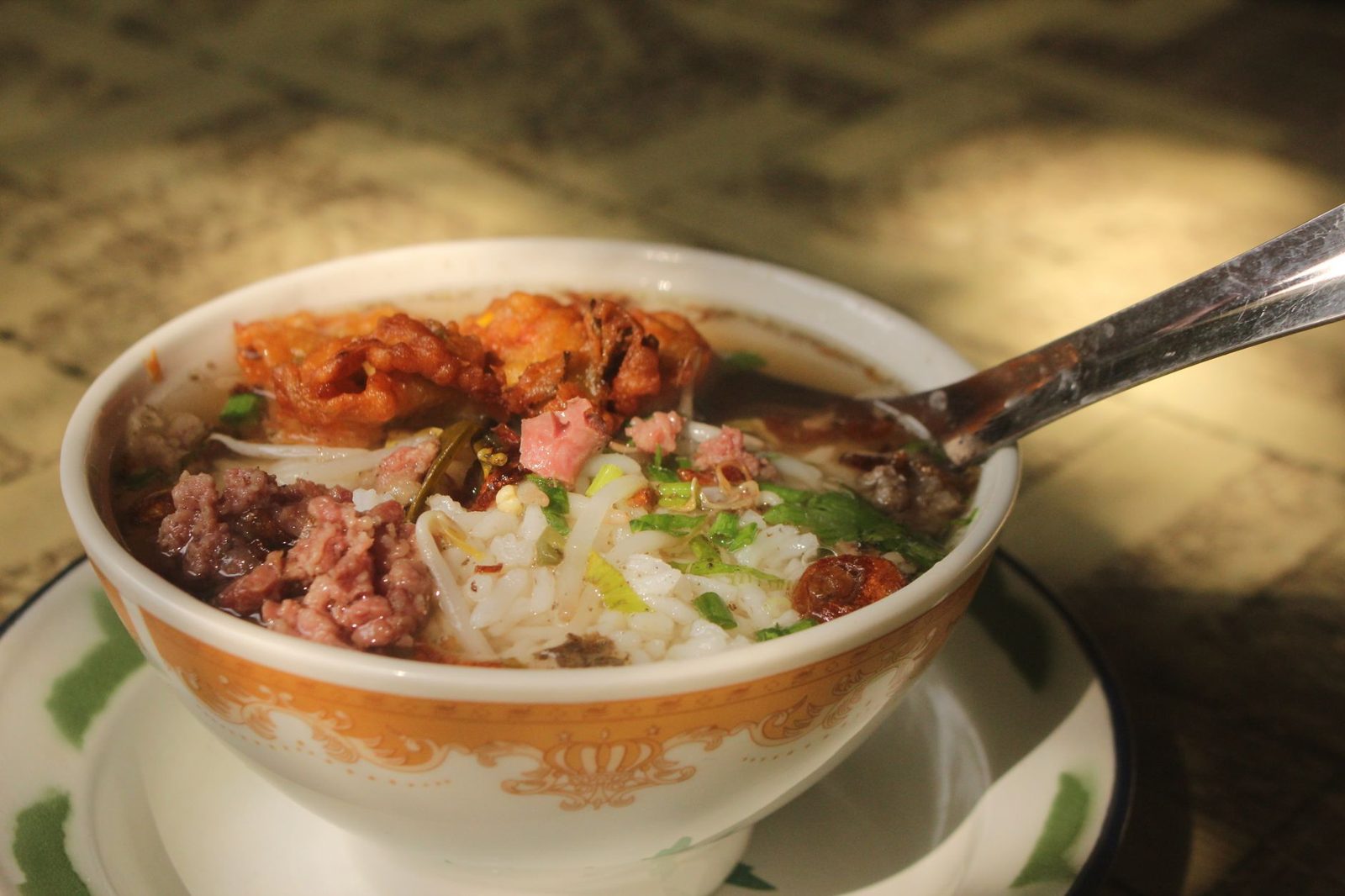
How to spot a great bowl of soto Betawi
Once you’ve had a few, the tells become obvious. The broth should be opaque and creamy without being greasy — a thin layer of orange oil on top is normal and good, but a thick slick of fat usually means the kitchen is cutting corners on the milk. Give it a sniff: you want lemongrass, galangal, and a warm clove-and-nutmeg background, not just the smell of beef. The meat is the other tell. Properly cooked daging gives way easily but still has structure; kikil (tendon) should be gelatinous rather than rubbery; and if you ordered campur, the offal should be clean-tasting, not aggressively gamey, which is the sign it was prepped well.
The same turnover rule that governs the rest of the city’s street eating applies here: a stall with a steady lunchtime queue is refilling its pot constantly, which means fresher broth and better milk. An empty soto stall at 1pm is empty for a reason. Squeeze the lime in at the end rather than the start — it brightens the broth just before you finish the bowl — and add sambal in small increments, because a good soto Betawi sambal is hotter than it looks.
Best Soto Betawi by Neighborhood
Where you base yourself shapes which of these you’ll actually reach — Jakarta’s traffic makes a cross-town soto run a genuine commitment — so it’s worth lining these up with the Jakarta neighborhoods guide before you set out.
Central Jakarta
Soto Betawi H. Ma’ruf (Pasar Senen) — the ultimate. Also check Lara Djonggrang and Bunga Rampai for refined restaurant versions.
South Jakarta
Soto Betawi H. Husein (Cikajang), Sambung Nikmat (Pondok Pinang), Soto Betawi Pak Min (Cipete), Setu Babakan village stalls.
West Jakarta
Soto Betawi H. Mamat (Tomang), Soto Betawi Afung (Glodok).
North Jakarta
Soto Betawi Bang Sawit (Kelapa Gading).
East Jakarta
Several family warungs in Condet — the traditional Betawi neighborhood.
Soto Betawi vs. Soto Ayam — Don’t Confuse Them
First-time Indonesia visitors often confuse soto Betawi with the more common soto ayam (chicken soto). Key differences:
- Soto Betawi: beef-only, creamy coconut-and-milk broth, yellow-orange color, Jakarta-specific
- Soto ayam: chicken-based, clear broth, yellow from turmeric, eaten across Indonesia
If your trip is to Jakarta specifically, prioritize soto Betawi — you can eat soto ayam anywhere in Indonesia.
What it costs, and where the value is
Soto Betawi is one of the better-value bowls in the city. At a traditional warung a full portion runs roughly IDR 40,000 to 75,000 (about $2.50 to $5), and that buys you a generous bowl, rice, and the full garnish. The price climbs mainly with the cuts — torpedo (bull testicle) and a loaded campur of mixed offal push toward the top of that range, while a clean bowl of daging sits at the bottom. The upscale restaurant versions in Menteng hotels and heritage venues charge IDR 150,000 to 300,000, and while the setting is lovely, the broth at a 1943-vintage warung is usually every bit as good. If you’re eating across the city on a budget, soto Betawi is an easy anchor — and it pairs naturally with the wider strategy in the guide to cheap eats in Jakarta.
When to Eat Soto Betawi
Soto Betawi is traditionally a breakfast or lunch dish — most legendary stalls run from morning until early afternoon and often sell out by 3:00 PM. If you want a second classic Jakarta breakfast in the same window, the guide to the best nasi uduk in Jakarta pairs perfectly with a soto crawl. Some specialists (Bang Sawit, certain Cikajang vendors) extend into evening service. Plan to eat soto Betawi at lunch on a Jakarta food day rather than dinner.
Soto Betawi Etiquette and Tips
Cash only at most warungs; cards are accepted only at the upscale restaurant versions, several of which appear in the guide to the best restaurants in Jakarta. Small bills appreciated. Eat with a spoon and fork Indonesian-style (fork pushes food to spoon). Don’t waste the broth — most Indonesians eat the rice into the broth at the end. Take your time — soto Betawi is meant to be lingered over.
Halal note: All soto Betawi vendors above are halal (beef only, no pork). The dish is considered Indonesian Muslim heritage.
Sample Soto Betawi Crawl Itinerary
For serious soto Betawi enthusiasts, a “soto Betawi crawl” sampling 3 versions in one day:
- 10:00 AM: Soto Betawi H. Ma’ruf (Pasar Senen) — the legend
- 12:30 PM: Soto Betawi H. Husein (Cikajang) — the gold standard
- 3:00 PM: Setu Babakan village stalls — village-style traditional
Total spend: IDR 180,000–280,000 (US$12–18). One of Jakarta’s most rewarding food days. If you’d rather have it organized for you — with the addresses, the ordering, and the context handled — a guided crawl is an easy option, and the formats are laid out in the Jakarta food tour guide. Several of these stalls also sit inside or beside traditional markets worth a wander, covered in the guide to Jakarta food markets.
A short history of the soup
The name “soto Betawi” is younger than the dish itself. The soup existed in Jakarta’s warungs for generations, but the specific label is usually credited to the late 1970s and a vendor at the old Theater Princen Park (around today’s Lokasari, in West Jakarta), who is widely said to have popularized the term to distinguish the local, dairy-enriched version from the many other regional sotos arriving with migrants. Whether or not any single origin story is exact, the timing fits: it was the era when Jakarta’s food identity was crystallizing, and giving the city’s soup its own name was part of that.
The cow’s-milk signature is the genuinely unusual part, and it is the clearest fingerprint of the Betawi melting pot — a Dutch colonial dairy habit folded into an Indonesian coconut-milk soup, something you simply don’t see in the sotos of Java or Sulawesi. That single ingredient is why an authentic bowl is so hard to find outside the metropolitan area: the recipe, the cuts, and the technique all stayed local. Eating it where it was born, from a stall that has been making it the same way for fifty or eighty years, is the whole point.
Frequently Asked Questions About Best Soto Betawi Jakarta
What is the best soto Betawi in Jakarta?
Soto Betawi H. Ma’ruf (Pasar Senen, since 1943) is widely considered the city’s best soto Betawi, served the same way for four generations. Soto Betawi H. Husein (Cikajang) and Sambung Nikmat (Pondok Pinang) are also exceptional.
What makes soto Betawi different from other Indonesian sotos?
Soto Betawi is the only major Indonesian soto that uses both coconut milk AND fresh cow’s milk in the broth — a Dutch-influenced touch that gives it a uniquely creamy, almost cappuccino-like texture. It’s also exclusively beef-based (never chicken).
How much does soto Betawi cost in Jakarta?
At traditional warungs, soto Betawi costs IDR 40,000–75,000 ($2.50–5) per bowl. At upscale Jakarta restaurants (Lara Djonggrang, Bunga Rampai), refined versions run IDR 150,000–300,000 ($10–20).
Is soto Betawi halal?
Yes — all traditional soto Betawi vendors are halal (beef only, no pork). The dish is considered Indonesian Muslim heritage cuisine.
What’s the best cut of meat to order in soto Betawi?
For first-timers, order “campur” (mixed cuts) to taste daging beef, paru lung, kikil tendon, and other offal together. For pure beef, order “daging.” Adventurous eaters should try torpedo (testicle) or babat (tripe).
Can I find soto Betawi outside Jakarta?
Authentic soto Betawi — particularly the dairy-blended versions — is essentially impossible to find outside the Jakarta metropolitan area. Some Indonesian-restaurant chains serve “soto Betawi” abroad, but the authentic recipe with fresh cow’s milk and the specific cuts only exists in Jakarta.
Soto Betawi is the single most defining dish of Jakarta cooking, and tasting it across several legendary stalls in one day is one of the most rewarding things you can do here. From the soup, work outward: the best street food in Jakarta covers the stalls that surround these soto vendors, and the Jakarta food guide maps the rest of the scene.
External Resources for Soto Betawi
For more soto Betawi research, the Wikipedia Soto Betawi entry provides historical context, and TasteAtlas’s Soto Betawi profile ranks the dish globally and recommends additional restaurants.