Tian Hou Temple (Vihara Bahtera Bhakti) — dedicated to Mazu (Tian Hou), the Chinese sea goddess and protector of sailors — is one of Glodok’s most beautifully preserved Chinese temples. While Vihara Dharma Bhakti gets most foreign tourist attention as Jakarta’s “oldest,” Tian Hou Temple offers a more atmospheric, less crowded alternative just steps away. Founded in the 1700s and rebuilt multiple times after fires, the temple preserves classic Hokkien architecture and active Mazu worship traditions among Jakarta’s Chinese-Indonesian community. This guide is the most comprehensive English-language Tian Hou Temple Jakarta resource — covering history, Mazu worship traditions, the Glodok context, and how to combine with other Chinese temples in a 90-minute circuit.
For broader religious tourism, see our pillar religious tourism in Jakarta, the Buddhist temples guide, the Istiqlal Mosque guide, the Jakarta Cathedral guide, the Hindu temples guide, and our Kota Tua walking tour.
Who Is Tian Hou (Mazu)?
Tian Hou — literally “Heavenly Queen” in Chinese — is one of the most widely worshipped deities in Hokkien and Cantonese folk religion. Her origin story:
- Historical figure: Lin Moniang (960-987 CE), a young woman from Fujian Province, China
- Legend: She could predict storms and miraculously rescue sailors lost at sea
- Deification: Worshipped as Mazu (literally “ancestral mother”) after her death
- Official imperial title: Granted “Tian Hou” (Heavenly Queen) title by various Chinese emperors
- Pan-Asian veneration: Spread with Chinese maritime trade across Southeast Asia
- Patron of: Sailors, fishermen, traders, anyone crossing water
Mazu temples appear wherever Chinese diaspora communities settled — particularly in Indonesia, Malaysia, Singapore, Vietnam, and Thailand. Jakarta’s Tian Hou Temple is among the most historically significant outside China itself.
Practical Info: Hours, Address, Entry
- Indonesian name: Vihara Bahtera Bhakti
- Address: Glodok area, West Jakarta (verify exact address on arrival as multiple Mazu shrines exist in Glodok)
- Hours: Daily 6:00 AM – 4:00 PM (typical Glodok temple hours)
- Entry: Free
- Founded: 1700s (rebuilt multiple times after fires)
- Style: Hokkien Chinese architecture
- Time needed: 30-45 minutes
- Photography: Permitted; no flash inside; ask before photographing worshippers
Getting There: Glodok Petak Sembilan Access
- TransJakarta: Halte Glodok (Corridor 1) — 5-min walk
- KRL: Mangga Besar Station — 15-min walk
- Walking from Kota Tua: 1.5 km / 15-20 min walk south
- Grab/Gojek: Direct drop-off in Petak Sembilan area; IDR 40,000-80,000 from central Jakarta
Tip: Glodok’s narrow alleys can confuse first-time visitors. Use the Vihara Dharma Bhakti (a few steps away) as your initial GPS landmark, then walk through Petak Sembilan to Tian Hou.
Hokkien Chinese Architecture
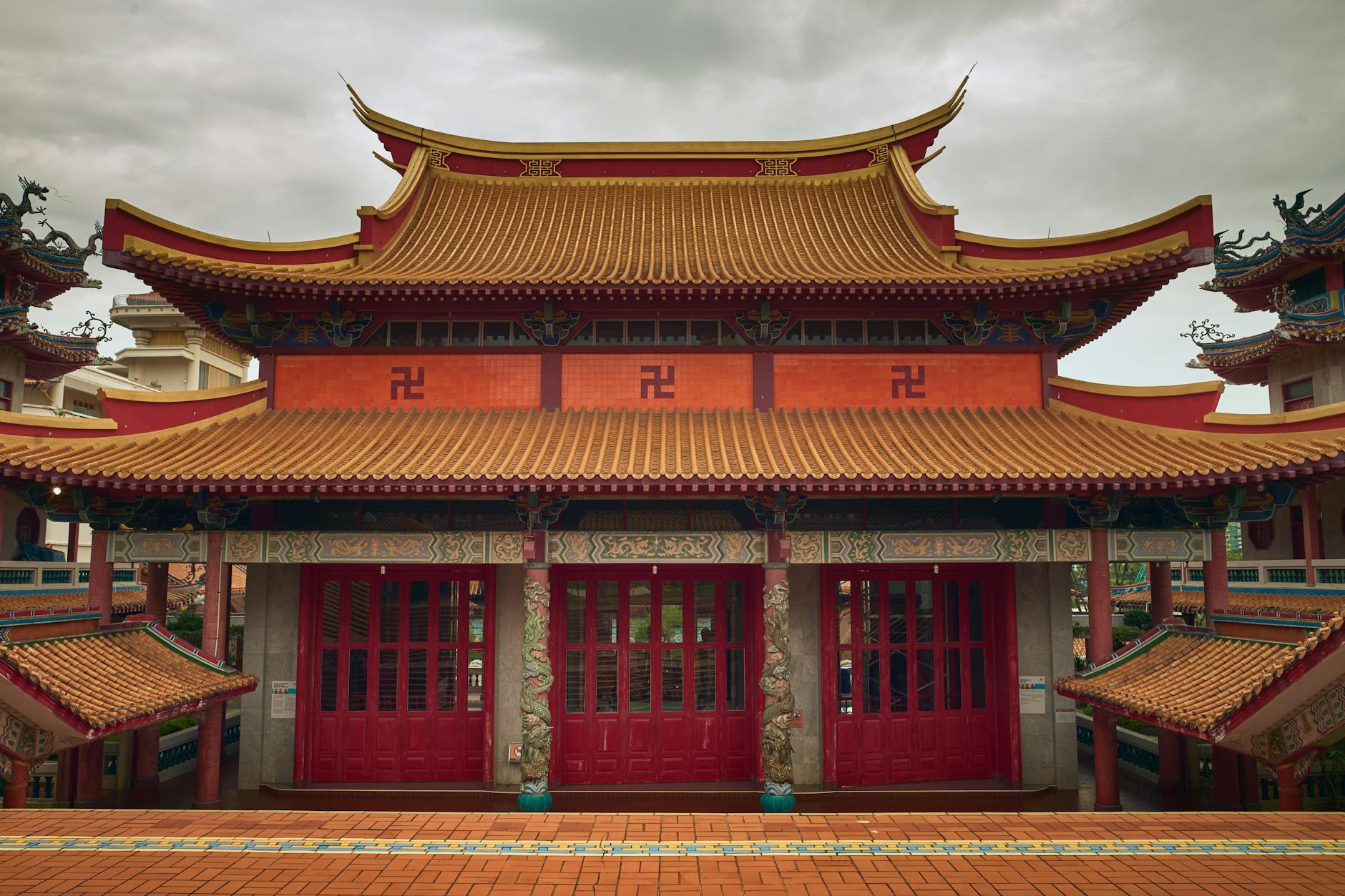
Tian Hou Temple preserves classic Hokkien (Fujian Province) Chinese temple architecture, which differs from Mainland Chinese imperial style:
Distinctive Features
- Curved roof ridges (yan wei) — Distinctive swallow-tail upturned ends
- Glazed roof tiles — Often green or red ceramic
- Stone door gods — Painted figures guarding the entrance
- Cut-paste ceramic figures (jian nian) — On roof ridges depicting mythological scenes
- Open courtyards — Multiple courtyards between halls
- Wooden lattice work — Intricate window screens
- Red brick walls — Indigo and red-painted accents
- Stone column dragons — Carved spirals around exterior columns
Layout
Standard Hokkien temple layout:
- Front courtyard — Public access; statues; incense burners
- Main hall — Mazu altar with her gold statue
- Side halls — Other deities (sometimes Guan Yin, Guan Yu)
- Rear courtyard — Ancestor altars
Mazu Worship Traditions
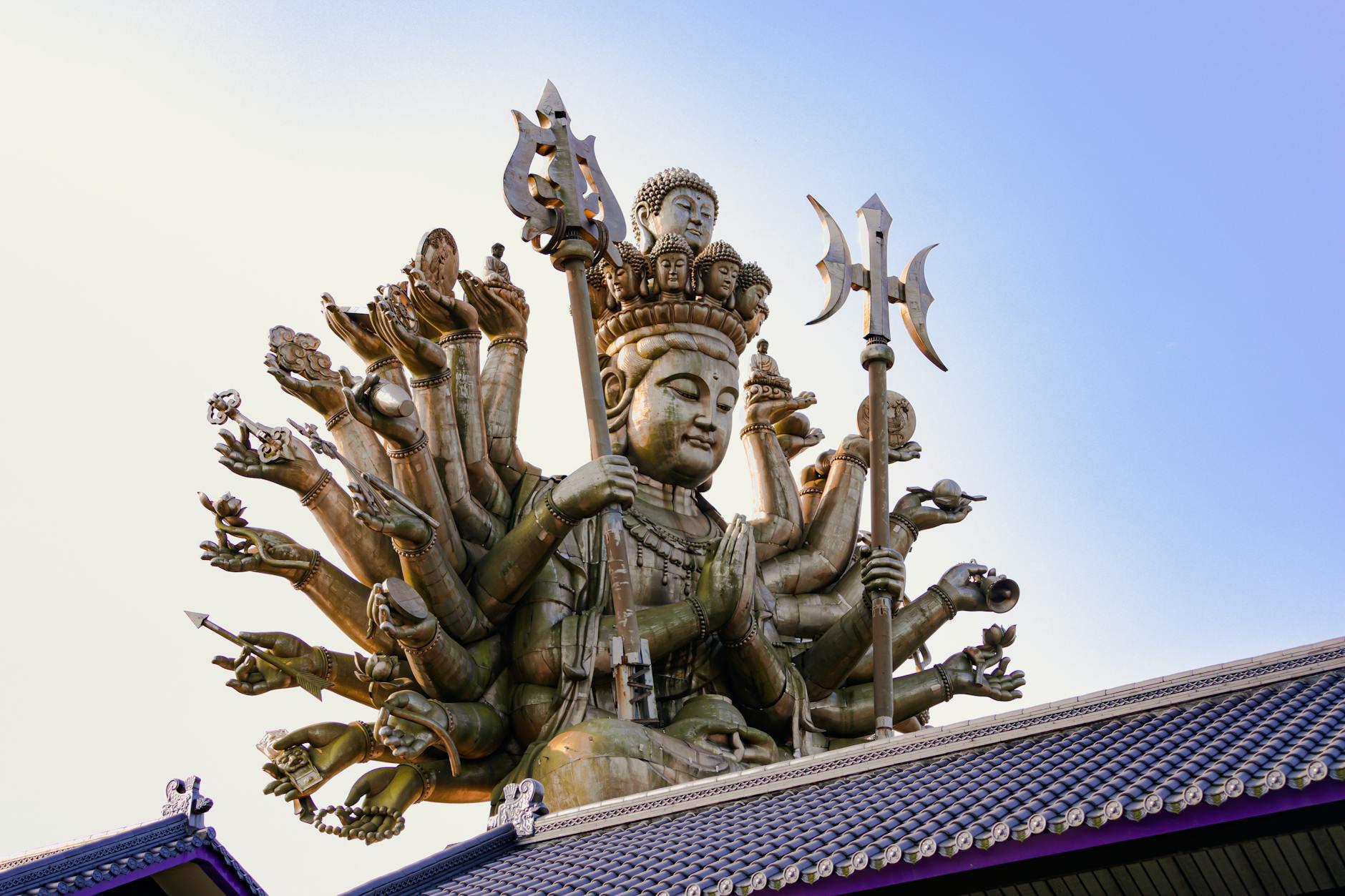
Mazu’s Iconography
The Mazu statue at Tian Hou Temple follows traditional Chinese conventions:
- Imperial robes — Gold or red embroidered ceremonial dress
- Phoenix headdress — Elaborate crown with phoenix imagery
- Calm facial expression — Mature, queenly demeanor
- Carrying ritual tools — Often a tablet of office
- Attendant figures — Sometimes flanked by “Thousand-League Eye” and “Wind-Following Ear” — her supernatural assistants
What Worshippers Pray For
- Safe travel (especially water/air travel)
- Family safety
- Business prosperity (Mazu is also patron of merchants)
- Protection from natural disasters
- Generally for spiritual peace
Common Offerings
- Incense sticks — Three lit sticks placed in urn
- Fruit — Apples, oranges, pomegranates (auspicious)
- Flowers — Especially chrysanthemums and lotus
- Joss paper — Symbolic money burned for ancestors
- Vegetarian food — Buddhist vegetarian offerings
The Altars and What They Mean
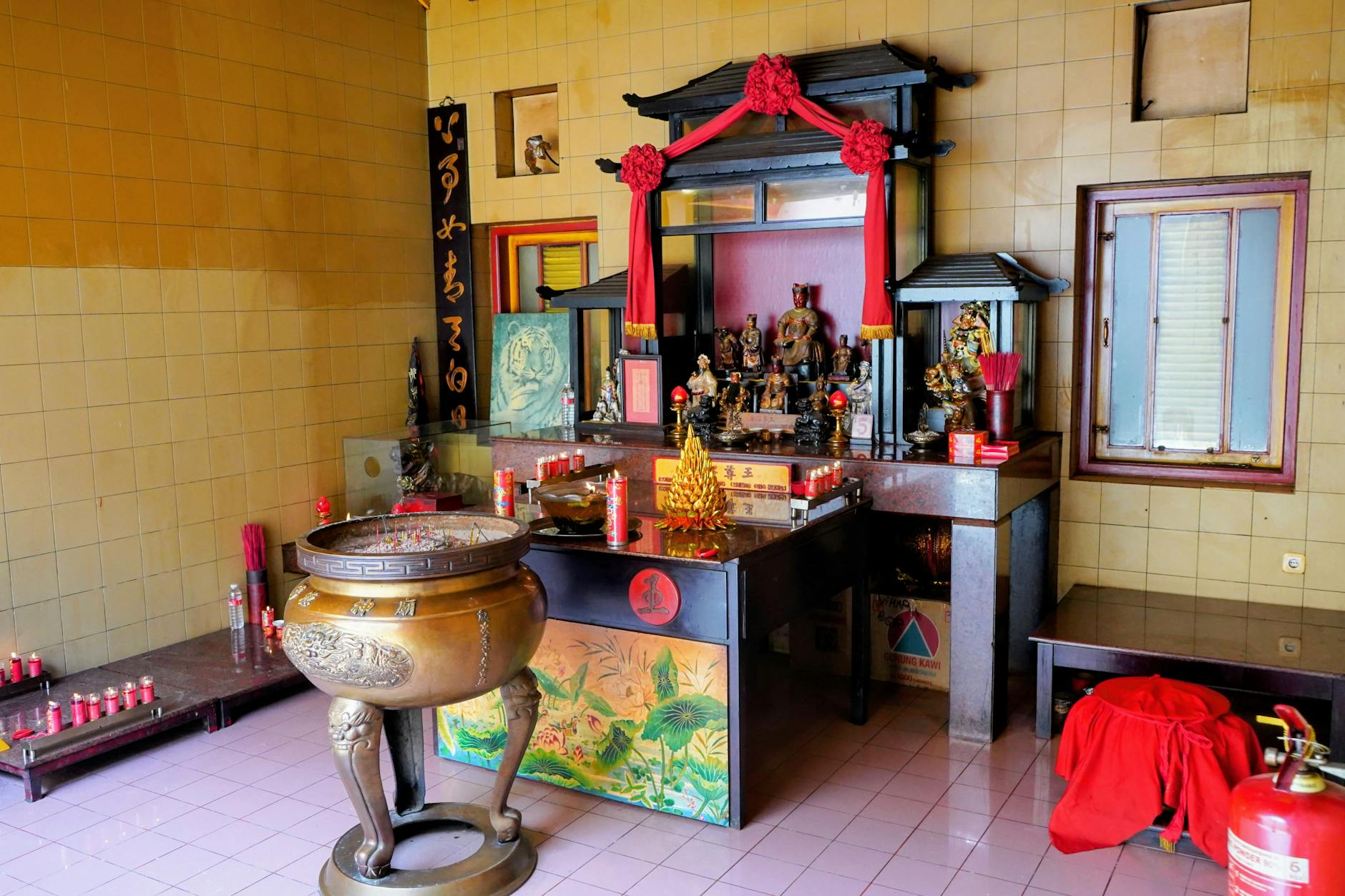
Main Altar (Mazu)
The central focus. Visitors approach with three lit incense sticks, bow three times, place sticks in incense urn, and offer silent prayers. The Mazu statue is the spiritual heart of the temple.
Side Altars
- Guan Yin (Kwan Im) — Bodhisattva of Compassion; Buddhist figure popular in Chinese folk religion
- Guan Yu (Guan Gong) — Deified general, patron of business and brotherhood
- Earth God (Tudi Gong) — Local protector deity
- Ancestor tablets — Memorial tablets for community ancestors
Outdoor Altars and Burners
- Large bronze incense urn — For congregational offerings
- Joss paper burning oven — For ancestor offerings
- Stone lion guardians — Pair flanking entrance
Incense, Joss Paper, and Fortune Sticks
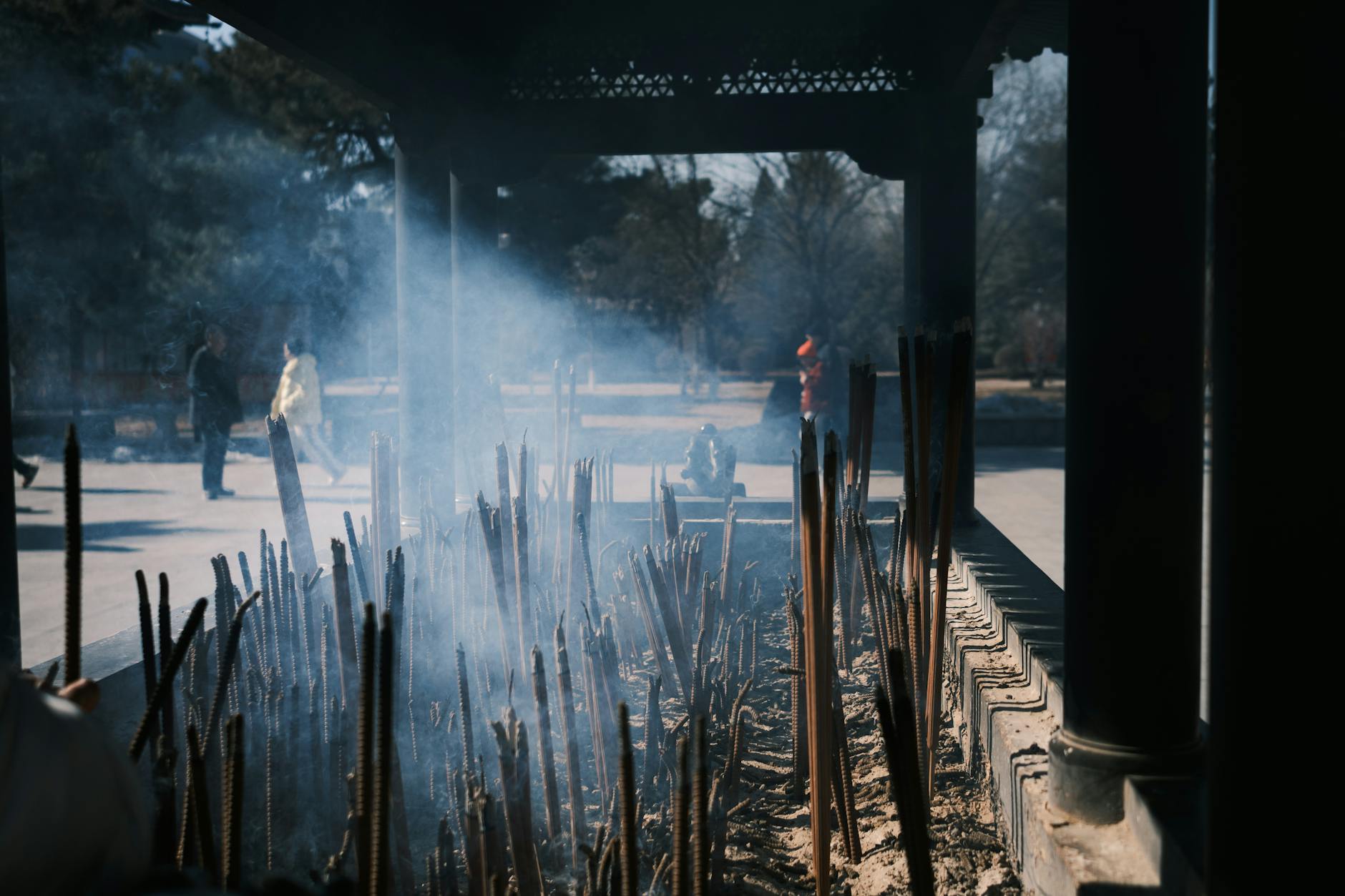
Three-Stick Incense Tradition
Standard worship procedure:
- Purchase incense at temple shop — IDR 5,000-20,000 for standard bundles
- Light three sticks from temple flame
- Stand before main altar — Hold sticks in both hands
- Bow three times — Pause briefly between each bow
- Make silent prayer — Personal intention or thanksgiving
- Place sticks in incense urn
The “three” pattern represents the Three Jewels of Buddhism (Buddha, Dharma, Sangha) and the Triple Heaven of Chinese cosmology.
Joss Paper Offerings
Symbolic paper goods burned to deceased ancestors:
- Spirit money — Paper money to support ancestors in afterlife
- Paper houses, cars, clothing — Material goods symbolically transferred
- Buring tradition — Most active during Tomb-Sweeping Day (Qing Ming)
- Available at temple — IDR 10,000-50,000
Fortune Sticks (Kau Cim)
Traditional Chinese fortune-telling:
- Shake numbered bamboo sticks in a cup until one falls out
- Note the number
- Look up corresponding prophecy on temple wall or in book
- Optional donation for fortune slip
Non-Buddhists welcome to participate respectfully; treated as cultural experience.
The Courtyards and Atmospheric Elements
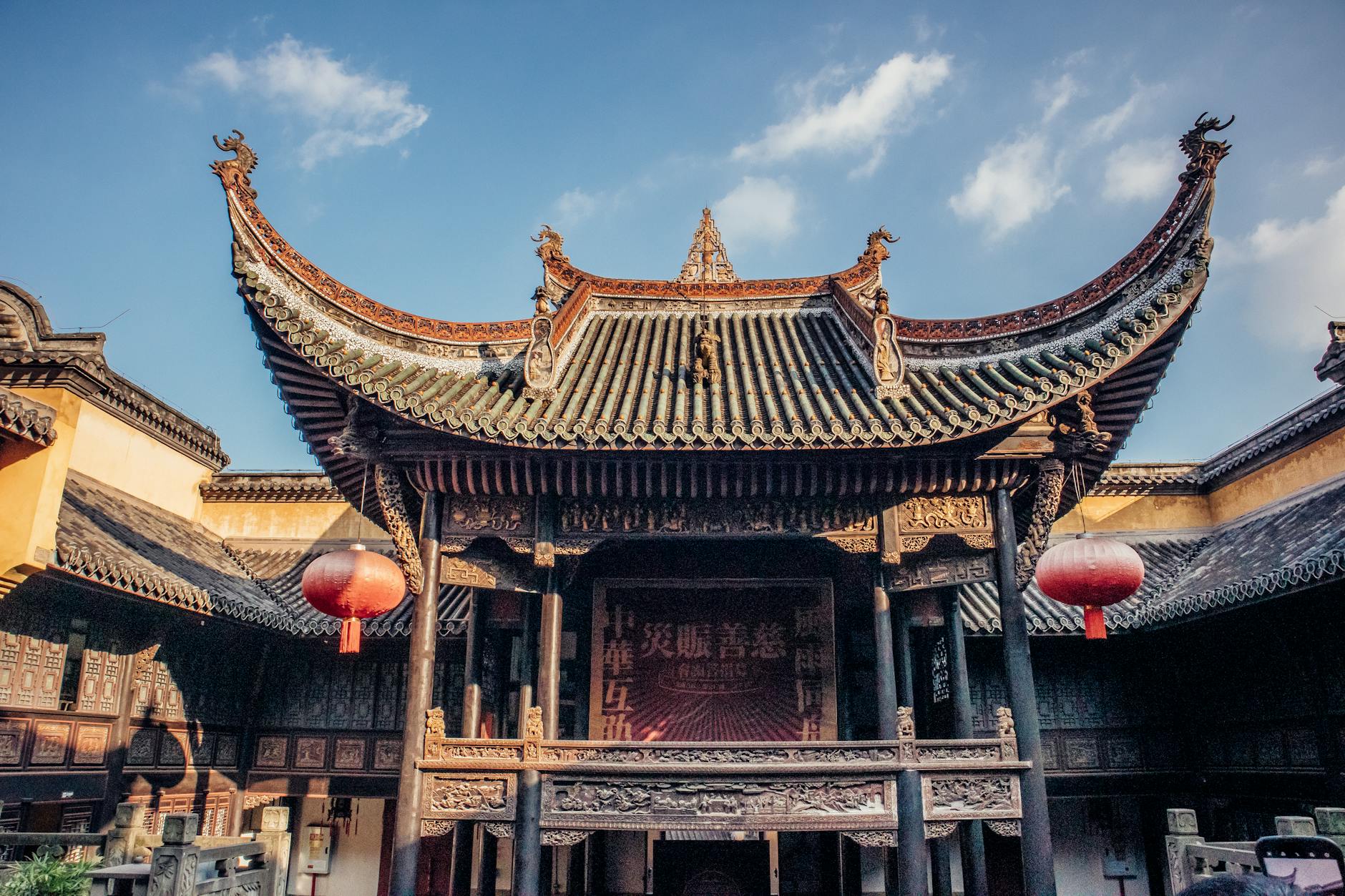
The temple’s multiple courtyards create distinct atmospheric zones:
- Front courtyard — Open to street; active with worshippers; incense smoke; vendor stalls outside
- Inner courtyard — Quieter; older trees; bronze incense burners; rest spots
- Rear courtyard — Most peaceful; ancestor halls; meditation space
The transition from busy Petak Sembilan street to inner courtyard provides one of Jakarta’s best contemplative urban experiences.
Tian Hou Festival and Annual Celebrations
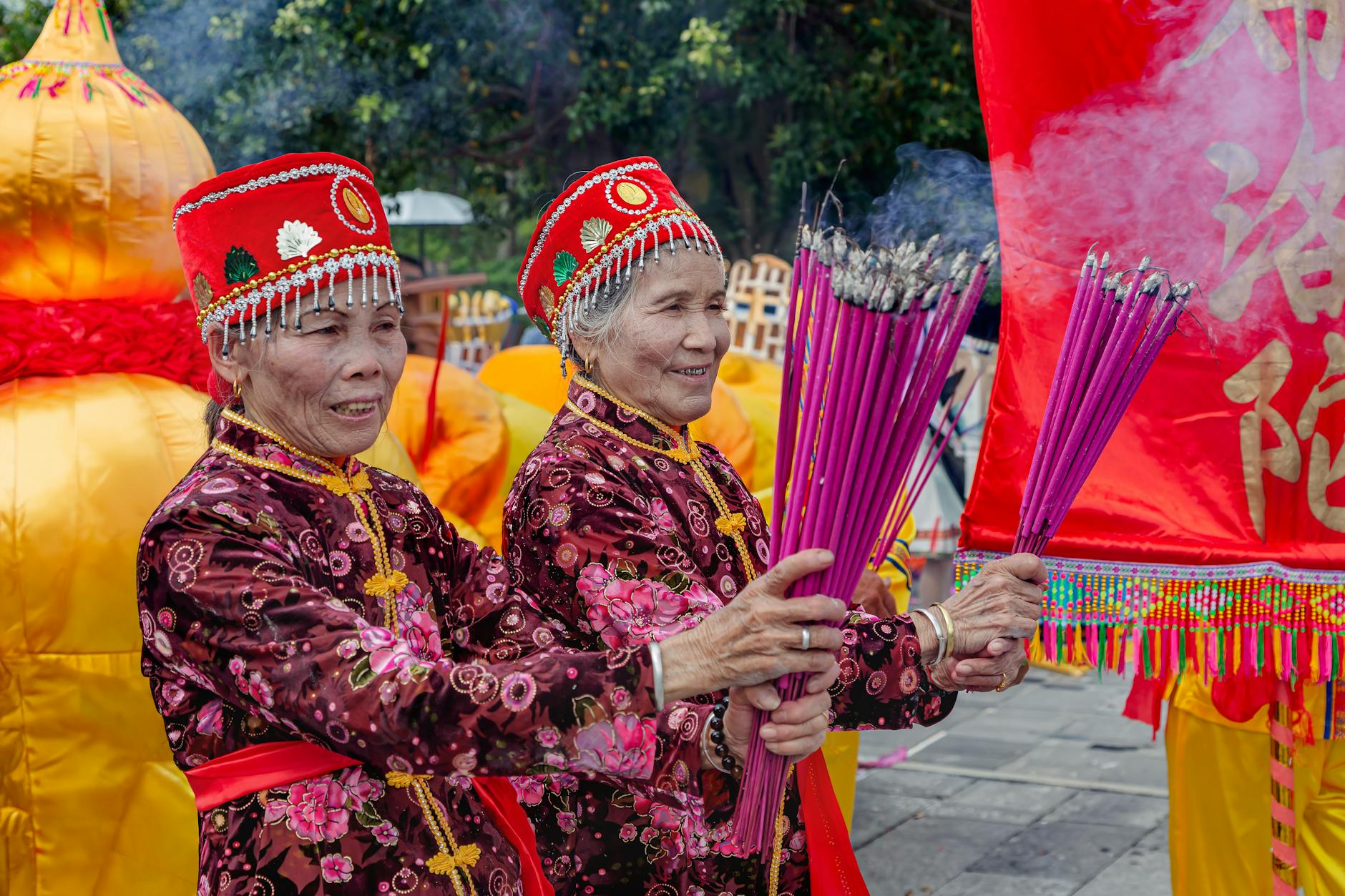
Mazu’s Birthday (Tian Hou Festival)
Mazu’s birthday is celebrated on the 23rd day of the 3rd lunar month — typically falling in April or May. Tian Hou Temple becomes the focal point of Mazu worship in Jakarta:
- Elaborate ceremonies with monks and community leaders
- Special offerings — Larger fruit displays, traditional Chinese music
- Devotional processions through Glodok streets (some years)
- Vegetarian feasts for community participants
- Lion dances and traditional performances
- Best time to visit if interested in living Chinese-Indonesian religious culture
Chinese New Year (Imlek)
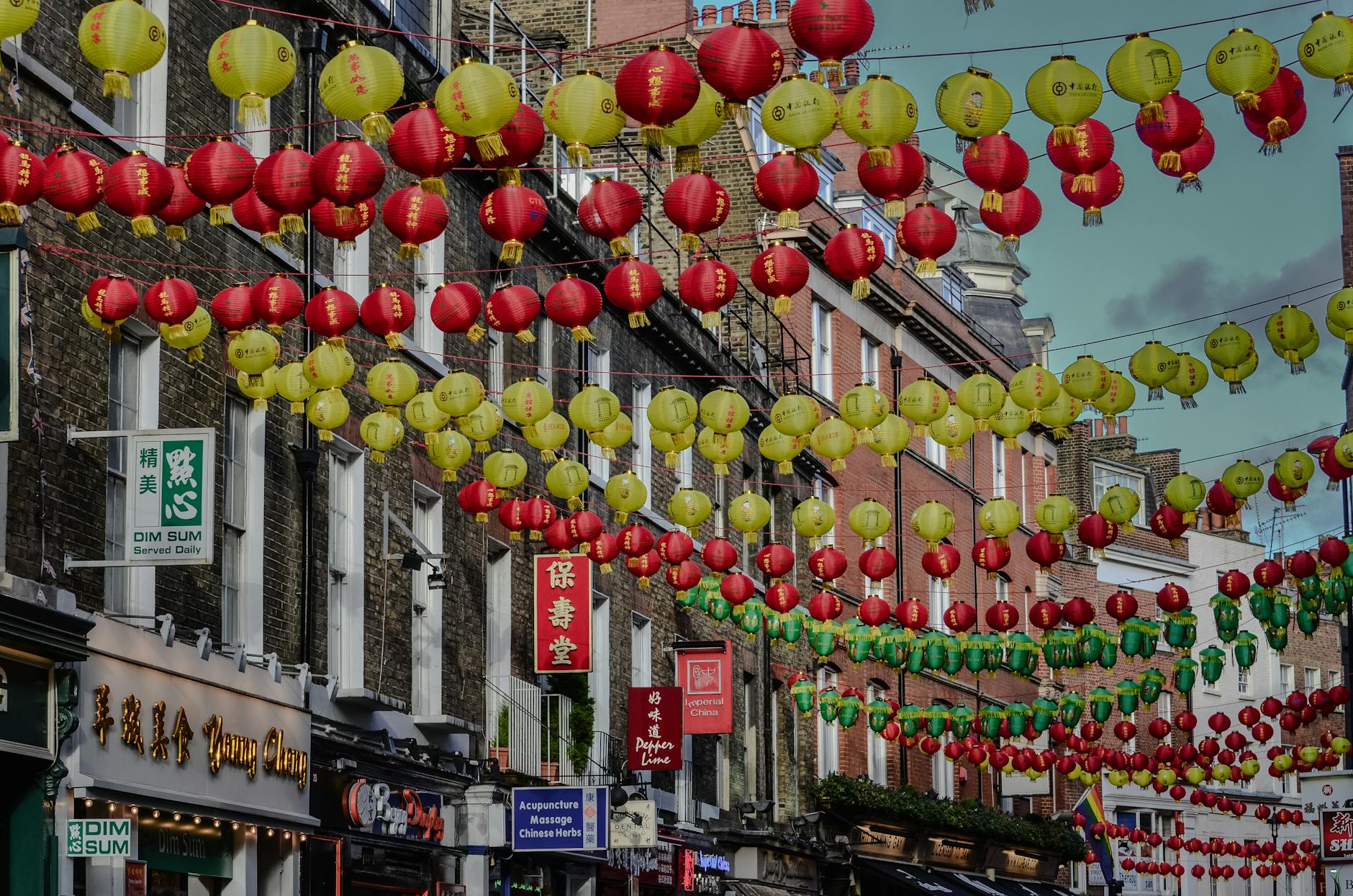
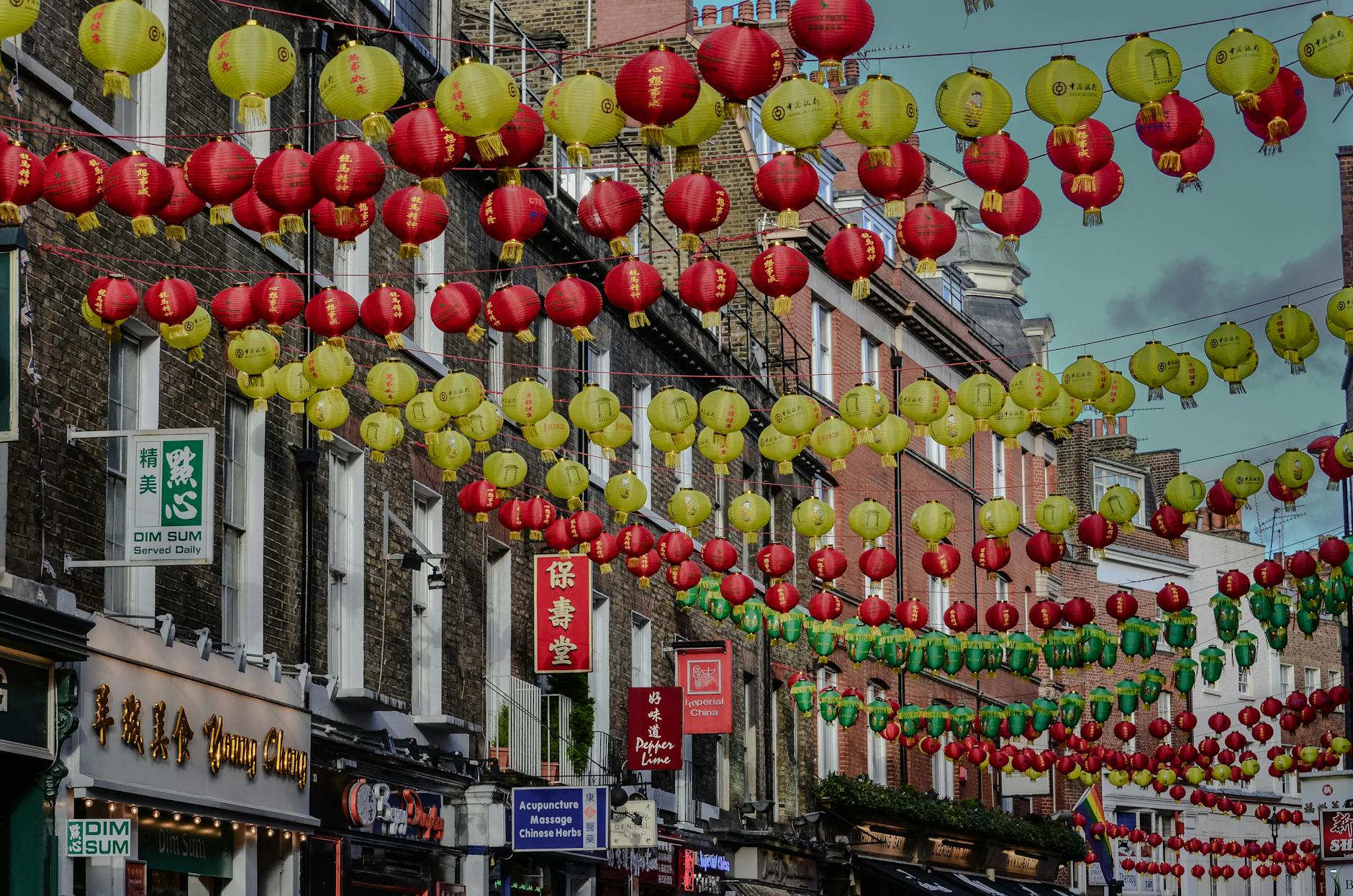
The temple participates fully in Glodok’s Imlek celebrations (January-February). Decorated with red lanterns; special blessings for the new year; large devotional crowds.
Cap Go Meh (Lantern Festival)
15 days after Imlek. Closing celebration of Chinese New Year. Lantern displays at the temple.
Other Significant Days
- Ghost Month (7th lunar month) — Special offerings to wandering spirits
- Mid-Autumn Festival — Moon viewing and mooncake offerings
- Qing Ming (Tomb-Sweeping Day) — Major ancestor remembrance
Combining with the Glodok Temple Circuit
Tian Hou is best visited as part of a Glodok temple walking tour:
- 9:00 AM: Start at Vihara Dharma Bhakti (1650 — Jakarta’s oldest) — see our Buddhist temples guide
- 9:30 AM: Walk through Petak Sembilan to Tian Hou Temple (5 min)
- 9:30 – 10:15 AM: Tian Hou Temple exploration
- 10:15 AM: Walk to Vihara Dharma Jaya Toasebio (10 min)
- 10:30 – 11:00 AM: Toasebio Temple visit
- 11:00 AM: Lunch at Gloria Alley (Gang Gloria) for authentic Chinese-Indonesian food
- 12:30 PM: Coffee/tea at Pantjoran Tea House
Total: ~3.5 hours for a comprehensive Glodok temple circuit.
Dress Code and Etiquette
- Modest dress — Cover shoulders and knees
- Shoes worn inside (unlike mosques)
- Quiet voice in worship areas
- No flash photography
- Ask before photographing worshippers
- Donations welcomed at offering boxes (IDR 10,000-50,000 typical)
- Walk slowly and respectfully
- Don’t touch altars or deity statues
- Phone silent
Photography Tips
- Best light: Late morning (10-11 AM) when sunlight illuminates roof tiles
- Hokkien architectural detail shots: Roof ridges, ceramic figures, door gods
- Incense smoke: Beautiful in afternoon backlight
- Worshipper portraits: Only with permission; small tip appreciated
- Courtyard wide-angle shots: Capture the contemplative architecture
- Imlek decorations: January-February brings red lanterns and decorations
Where to Eat Nearby
- Gloria Alley (Gang Gloria) — Most famous Glodok food street; authentic Chinese-Indonesian (bakmi noodle dishes, soto mie, dim sum)
- Pantjoran Tea House — Modern Chinese-Indonesian café; beautiful interior
- Various Petak Sembilan stalls — Street food and small restaurants
- Pricing: IDR 30,000-100,000 per dish typical
- Halal options nearby — Some non-pork Chinese-Indonesian dishes available
Best Time to Visit
- Weekday mornings (Tue-Fri, 9-11 AM) — Quietest; best for photography
- Saturday mornings — Active worship; cultural atmosphere
- Sunday afternoons — Busiest; family devotions
- Imlek (January-February) — Most spectacular but crowded
- Mazu’s birthday (April-May) — Special festival
- Avoid: Late afternoon (temple closes 4 PM)
Common Visitor Mistakes
- Visiting after 3 PM — Temple closes at 4 PM
- Wearing shorts above knees — Disrespectful
- Loud talking — Even in courtyards
- Touching altar items — Including deity statues, incense urns
- Photographing prayers without permission
- Not allowing time for Glodok circuit — Visit other temples too
Frequently Asked Questions About Tian Hou Temple Jakarta
Who is Tian Hou?
Tian Hou (Mazu) is a Chinese deity worshipped as the goddess of the sea and protector of sailors. Originally a 10th-century woman from Fujian Province named Lin Moniang, she was deified after her death for legendary storm-predicting and sailor-rescuing abilities. Worship spread with Chinese maritime communities across Southeast Asia.
Where is Tian Hou Temple in Jakarta?
Located in the Petak Sembilan area of Glodok, West Jakarta — the heart of Jakarta’s Chinatown. Multiple Mazu shrines exist in Glodok; the main Tian Hou Temple is also known as Vihara Bahtera Bhakti.
When is Tian Hou Temple open?
Daily 6:00 AM – 4:00 PM (standard Glodok temple hours). Best visited weekday mornings for quiet exploration; Saturday and Sunday mornings for active worship atmosphere.
Is there an entrance fee at Tian Hou Temple?
No, entry is free. Donations welcomed at offering boxes (IDR 10,000-50,000 typical). Incense and joss paper available for IDR 5,000-50,000 if you want to participate in worship.
Can non-Chinese tourists visit Tian Hou Temple?
Yes. All Chinese temples in Jakarta welcome respectful non-Chinese visitors. Dress modestly (cover shoulders/knees), maintain quiet voice, follow photography etiquette, and the Chinese-Indonesian community welcomes your interest in their cultural heritage.
When is Mazu’s birthday celebration?
23rd day of the 3rd lunar month — typically April or May. Tian Hou Temple celebrates with elaborate ceremonies, special offerings, traditional music, and sometimes processions through Glodok streets. The best time to visit for living Chinese-Indonesian religious culture.
What’s the difference between Tian Hou Temple and Vihara Dharma Bhakti?
Both are Glodok Chinese temples but with different focuses. Vihara Dharma Bhakti (1650, Jakarta’s oldest) is dedicated primarily to Kwan Im (Guan Yin). Tian Hou Temple is dedicated to Mazu/Tian Hou (sea goddess). Vihara Dharma Bhakti is currently under partial reconstruction following the 2015 fire; Tian Hou Temple is fully intact. Both worth visiting in the same temple circuit.
Can I light incense as a tourist at Tian Hou Temple?
Yes. Buy incense at the temple shop (IDR 5,000-20,000), light three sticks, bow three times before the main altar, place sticks in the incense urn. Non-Buddhist tourists are welcome to participate respectfully — treated as a cultural experience.
Tian Hou Temple offers a quieter, equally significant alternative to the more famous Vihara Dharma Bhakti — and showcases the deep Mazu worship tradition in Indonesia’s Chinese-Indonesian community. To plan further, see our pillar religious tourism in Jakarta, the Buddhist temples guide, the Istiqlal Mosque guide, the Jakarta Cathedral guide, the Hindu temples guide, and our Kota Tua walking tour.
Glodok rewards a slower visit. Pair the temple with our religious sites walking tour, eat your way through the quarter with eating in Kota Tua, get your bearings from the Jakarta neighbourhoods guide, and check the events and festivals calendar if you want to catch Chinese New Year or Cap Go Meh.
External Resources for Tian Hou Temple Jakarta
For background on Mazu/Tian Hou worship across Asia, the Wikipedia entry on Mazu provides comprehensive context. For Indonesian Chinese-community cultural heritage, the Wikipedia entry on Glodok covers the broader Chinatown context.