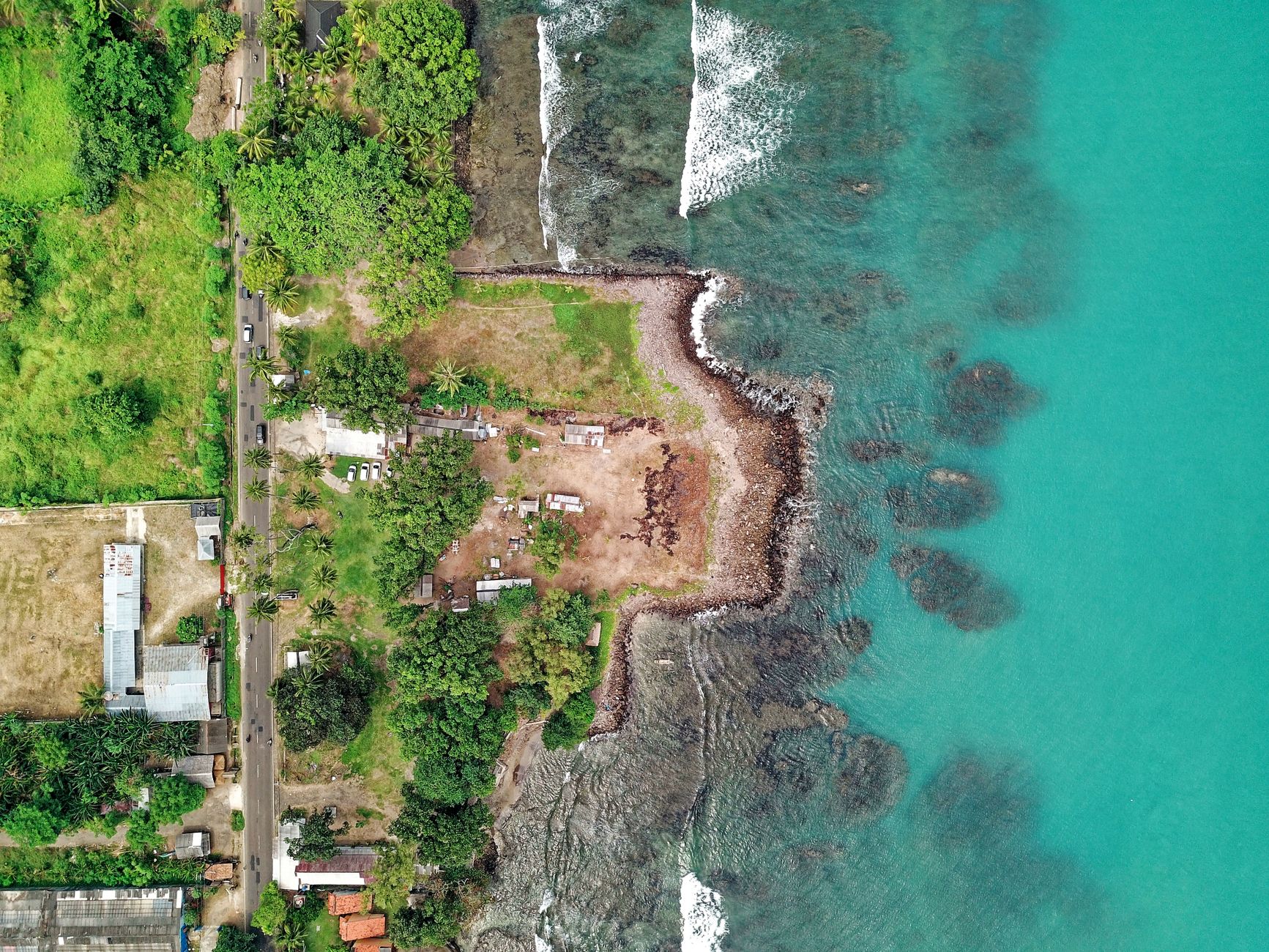
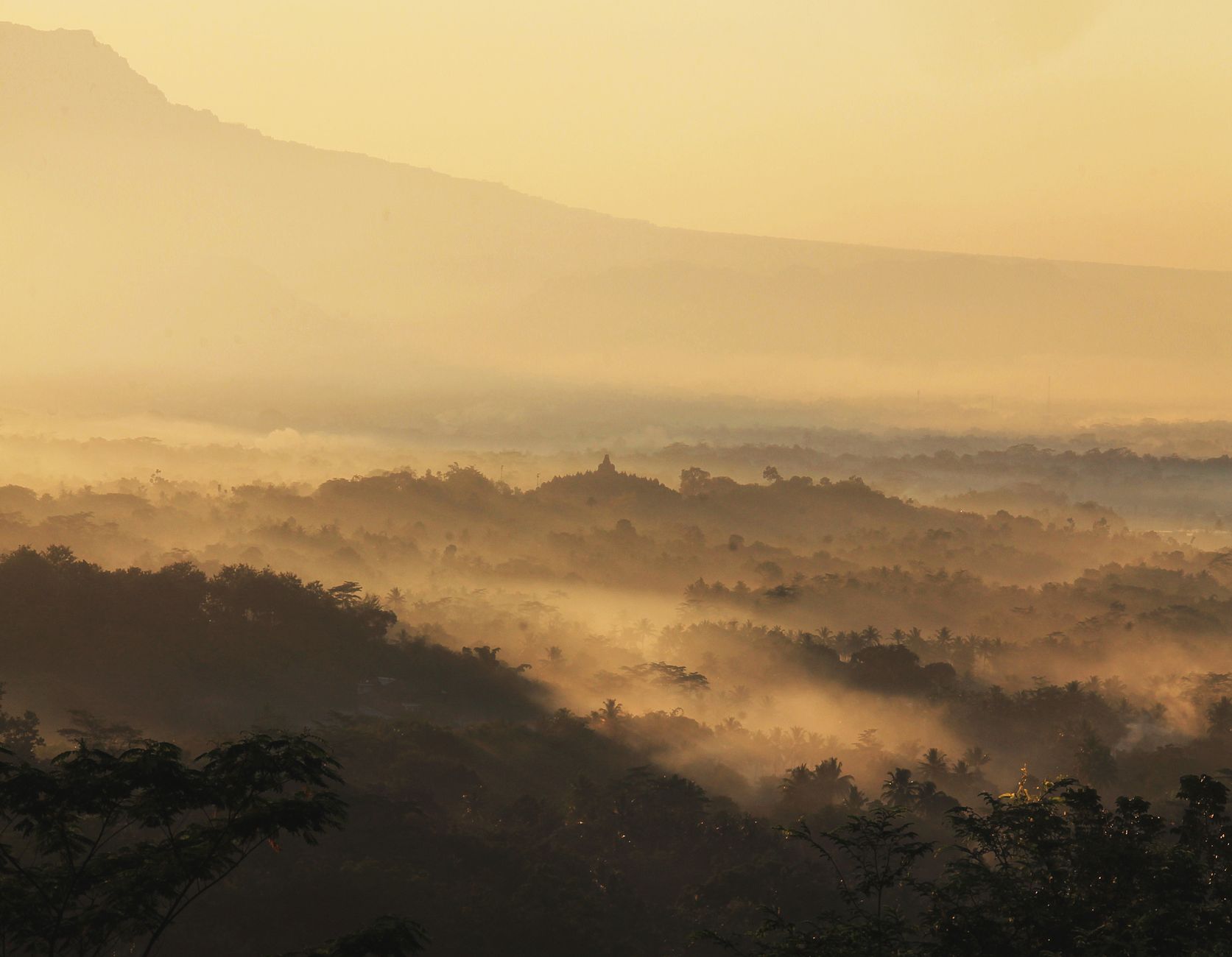
Search Pelabuhan Ratu Jakarta and you get a hundred near-identical sunset photographs and almost nothing about the water. That is a serious omission, because the water is the whole story. This is not a sheltered bay like the ones north of the city. Palabuhanratu — the local one-word spelling, the one on the road signs — faces the open Indian Ocean, south into thousands of kilometres of unbroken fetch. It is the only real surf coast within driving distance of the capital, and the one beach destination near Jakarta where the sea regularly kills people.
Weigh it against the alternatives first. Our pillar on the best day trips from Jakarta lays out the full field. If you want to swim and snorkel in flat water, the Thousand Islands off Jakarta Bay or the calmer Banten coast around Tanjung Lesung serve you better; if you want cool air, the Puncak highlands are closer. This coast is for surfers, geology enthusiasts and seafood eaters.
This Is the Indian Ocean, Not a Bay
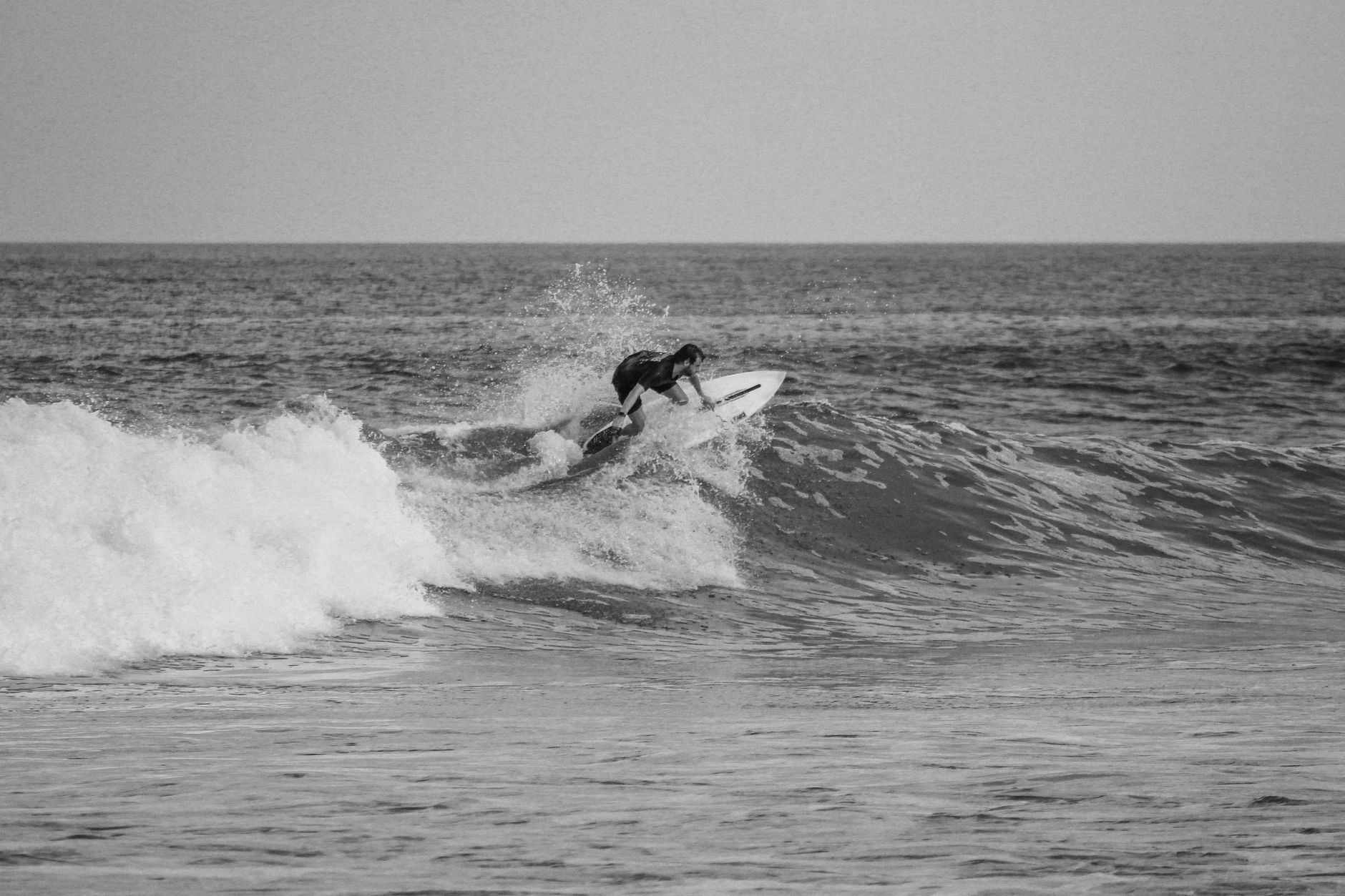
Jakarta’s default beach is the Java Sea: shallow, warm, windless, with waves that would not trouble a child’s inflatable ring. Cross to the south side of the island and the geology changes completely. This coast sits above the Sunda subduction zone and the shelf drops away steeply within a few kilometres of shore, so swell does not gradually dissipate the way it does in the north. It arrives at full strength and unloads in one go.
You feel it before you understand it: a continuous low roar rather than a lapping, coarse dark sand, a beach that shelves so steeply a wave looking knee-high from the dry sand breaks over your chest. That makes this coast excellent for surfing and dangerous for casual swimming — not two facts but one seen from two directions. The groundswell that makes Cimaja one of the best point breaks in Java generates the rips that drown people at Karang Sari a few kilometres away.
Where You Can Swim and Where You Must Not
Start from a default of not swimming, then look for reasons to change your mind. That is the opposite of how most visitors approach it, and it is the right way round.
The stretch in front of the town and the fishing harbour is the worst place to enter the water and, perversely, the busiest — a working port frontage with strong longshore drift and murky water. Pantai Citepus to the west and Pantai Karang Sari near the newer jetty are where a disproportionate share of incidents happen. Karang Sari has claimed both Indonesian day-trippers and foreign visitors in recent years, including a young man from Cimahi recovered against the rocks nearly two hours after being pulled out near the pier. Cipatuguran has its own list. These are not obscure spots; they are the beaches nearest the car parks.
The more forgiving water is in pockets protected by rock: the shallow shelves at Cibangban and Pantai Cibutun give waist-deep water at low tide with the swell breaking outside you rather than on you. Even there the tide governs everything — what is a paddling pool at 08:00 can have surge running through it by midday.
Sukabumi Regency does staff the coast: the Balawista rescue corps fields somewhere in the order of 100 to 130 personnel across roughly nineteen posts from Palabuhanratu to Cibangban. Reassuring until you do the arithmetic — nineteen posts across more than twenty kilometres, mostly equipped with rescue tubes rather than powered craft. When police and Balawista announce a swimming ban during a high-swell warning, that is not theatre.
Rip Currents: What They Look Like and What to Do
Rips are the mechanism behind almost every drowning here. Water pushed shoreward by breaking waves has to return seaward somewhere; it finds a channel — a gap in a sandbar, the scour beside a jetty — and funnels out at one to two metres per second, quicker than most people can swim. The visual signature is counter-intuitive, because a rip looks like the calm bit: a darker, flatter, glassier corridor running seaward through the line of white water, often with a ragged plume of sandy water beyond the break. That inviting smooth patch is exactly where you must not go in.
If you are caught, the whole game is not exhausting yourself. Do not swim straight back at the beach; you will lose, and drowning here is usually exhaustion rather than a wave. Float, raise an arm, shout. Then swim parallel to the shore — a rip is a river, usually ten to thirty metres wide, so you cross it rather than fight up it — and once you are back among breaking waves, angle in and let the whitewater carry you. Never enter this water alone, and keep children out of the sea entirely on this coast. Take the family to the flat water of Pulau Bidadari in Jakarta Bay instead.
Nyai Roro Kidul and the Green Taboo
You cannot write honestly about this coast without Nyai Roro Kidul, and you should not treat her as a curiosity. Across Java the southern ocean is understood to be the realm of the Queen of the South Sea, and her authority is taken seriously well beyond Pelabuhan Ratu: the Yogyakarta and Surakarta courts maintain ceremonial relationships with her.
The rule visitors meet first is the taboo on wearing green on these beaches. Green is the Queen’s colour, and to wear it in her sea is an invitation, or an impertinence, depending on who is telling it. Guides will ask you to change. The best-known story attached to the taboo concerns a Bulgarian embassy official who drowned here in 1965 and was said to have been wearing green.
There is a reading that requires you to believe nothing, and it is why the legend is more than a novelty paragraph. Green is close to useless as a visibility colour in green-brown water full of suspended sand. A community with centuries of drownings and no lifeguard service encoded a survival rule in the only durable format available — a story with a queen in it, told to every child. The prohibition is the folk memory of a lethal coastline.
Its physical focus is the Grand Inna Samudra Beach hotel, built in the Sukarno era on the headland. Room 308 is permanently reserved for the Queen — decorated in green, hung with paintings of her, holding offerings and clothing left by visitors. Staff will usually let you look in for a small fee, typically under Rp 50,000. Go quietly; people come to pray, not to pose.
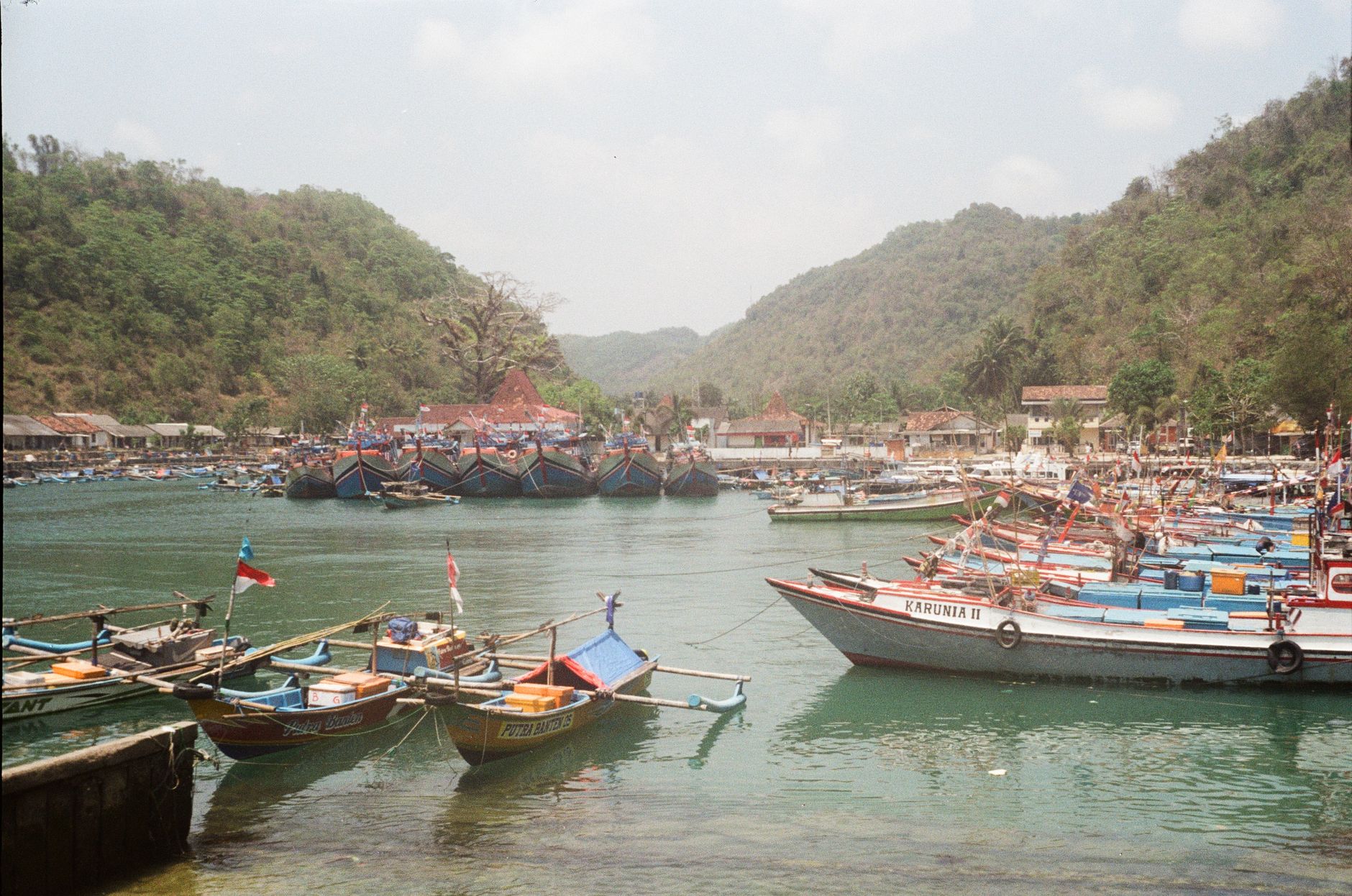
The other expression of all this is Hari Nelayan, the fishermen’s day, and its Labuh Saji ceremony, when hundreds of decorated boats escort a raft of offerings into the bay to be cast into the sea in thanks for the year’s catch. The offerings traditionally included a buffalo head; recent editions have shifted towards conservation, releasing egg-bearing female lobsters alive into the open sea. It usually falls in April or May and the date moves, so check locally. It is one of the more genuine cultural experiences within reach of Jakarta, and not staged for visitors.
Getting There: Toll Road, Winding Descent and the Train Problem
Pelabuhan Ratu is 180 to 200 kilometres from South Jakarta by road, and the first two-thirds is fast while the last third is not. The route is Jagorawi to Ciawi, then the Bocimi toll towards Sukabumi, which transformed the middle leg: Jakarta to Sukabumi once took five hours and could hit nine, and now runs two to three. But the toll is still being extended west in stages, so you exit around Cibadak or Parungkuda and cover the last fifty-odd kilometres on ordinary road, then a long winding descent with tight switchbacks. Anyone prone to car sickness should sit in the front and skip breakfast.
Budget four to five hours door to door leaving South Jakarta at 05:30 on a weekday, seven to nine on a Friday evening or Saturday morning, and expect the Sunday afternoon return to be the worst leg of the trip. Tolls run roughly Rp 50,000 to Rp 70,000 each way for a car, plus fuel. Our notes on timing journeys around Jakarta traffic and what transport costs are worth reading before you set an alarm.
Take a car with a driver rather than self-driving: the descent is demanding and you will want to sleep on the way back. Reckon on Rp 700,000 to Rp 1,200,000 a day excluding fuel and tolls — our guide to renting a car in Jakarta covers pricing and insurance. Ride-hailing is not practical: Grab and Gojek will quote a long-distance fare, but driver availability for the return leg is thin.
There is no direct train, and the rail option is a chore rather than a hack. The KA Pangrango runs Bogor Paledang to Sukabumi in about one hour forty, from roughly Rp 35,000 economy and Rp 50,000 executive, on around four departures a day each way. You reach Bogor Paledang by taking the KRL Commuter Line to Bogor and walking a few hundred metres, and from Sukabumi city you still have sixty kilometres and two hours or more by angkot or taxi. Cheap, but five to seven hours each way — if you are stopping en route it belongs in a Bogor day trip rather than a beach weekend.
| Route from Jakarta | Off-peak | Friday/weekend | Approx. cost one way | Who it suits |
|---|---|---|---|---|
| Private car via Jagorawi + Bocimi toll | 4–5 hours | 7–9 hours | Rp 400,000–700,000 fuel and tolls | Families, surfers with boards |
| Car with driver, same route | 4–5 hours | 7–9 hours | Rp 700,000–1,200,000 per day | The sensible default |
| KRL + KA Pangrango + taxi | 5–7 hours | 6–8 hours | Rp 250,000–450,000 | Solo budget travellers, no board |
| Bus from Lebak Bulus or Kampung Rambutan | 6–8 hours | 8–10 hours | Rp 80,000–150,000 | Budget only; slow and unreliable |
Pelabuhan Ratu Jakarta Trip Planner: Day Trip or Overnight
Stated plainly: do not do this as a day trip. Nine hours of driving to spend four hours at a beach you cannot safely swim at is a bad exchange. One night is the minimum that makes sense, two is what the place deserves, three if you intend to reach Ciletuh.
The best-shaped weekend: leave Jakarta Friday after 20:00 to sleep through the traffic. Saturday is a dawn surf at Cimaja, then Cisolok hot springs and Karang Hawu late morning, the fish market and an early seafood dinner. Sunday is a second dawn surf, then leave by 11:00 to beat the queue back through Cibadak. If your window is genuinely one day, go to Bandung and save this coast; if you have a full week, our one-week Jakarta itinerary shows where a two-night coastal leg fits.
Cimaja and the Surf Breaks
Cimaja is why surfers come. It sits about ten kilometres west of town in Cikakak district, reached by walking a few hundred metres from the main road past rice paddies. It is a right-hand point break over cobblestone and rock — round stones rather than sharp coral, though the urchins are real and reef booties are sensible at low tide. On a clean south or southwest swell it delivers rides of 100 to 200 metres with sections that will barrel. Mid-tide is the sweet spot, light easterly wind grooms it, and a 6’2″ to 6’4″ shortboard covers most days. It is an intermediate wave: the paddle out through shorebreak is awkward and the takeoff at the point is steep. Beginners belong at Cikembang and Karang Papak, the sandier breaks nearby.
The other breaks along this coast
Karang Sari, by the newer jetty, picks up swell and is surfed, but it is also one of the deadliest stretches for swimmers here and the currents around the pier are vicious. Cibareno, west towards the Banten border near Sawarna, is a river-mouth setup that works on a mid-size swell. Ombak Tujuh — “seven waves” — is in another category: a big-wave left over deep reef beyond Ujung Genteng, capable of holding twenty-foot faces, reachable only by boat or a long motorbike-and-walk approach, with no facilities and no realistic rescue. Experienced big-wave surfers with a guide, and nobody else.
Seasonality is simple. April to October brings the consistent southwest groundswell and offshore mornings, with June to August the biggest window. November to March the swell drops and the wind turns onshore — which does not make the beaches safer, because the wet season also brings storm surge and river runoff that muddies the water and puts debris in it.
Are the surf lessons worth it?
For a genuine beginner, yes. Cimaja has a well-established cottage industry of local guides and small schools running lessons, board hire and pickups. Expect roughly Rp 250,000 to Rp 500,000 for a two-hour lesson with board included, and Rp 100,000 to Rp 200,000 a day for hire, softening over several days. Good value by any international comparison — and the instructors know the sandbanks and rips intimately, which here is worth more than the instruction. The caveat: packaged two-day “surf lessons from Jakarta” sold at USD 250 and upwards mark up a Rp 400,000 lesson enormously. Arrange your own car and room, then hire an instructor on arrival.
| Break | Type | Level | Bottom | Best conditions |
|---|---|---|---|---|
| Cimaja | Right-hand point break | Intermediate and up | Cobblestone and rock | Mid tide, SW swell, light E wind |
| Cikembang / Karang Papak | Beach break | Beginner | Sand | Small swell, mornings, with an instructor |
| Karang Sari | Beach and jetty break | Intermediate | Sand and rock | Small to mid swell; severe currents by the pier |
| Cibareno | River-mouth | Intermediate to advanced | Sand and rock | Mid to large SW swell, dry season |
| Ombak Tujuh | Big-wave left | Experts only | Deep reef | Large groundswell; boat access, no rescue cover |
Karang Hawu, Cisolok and the Hot River
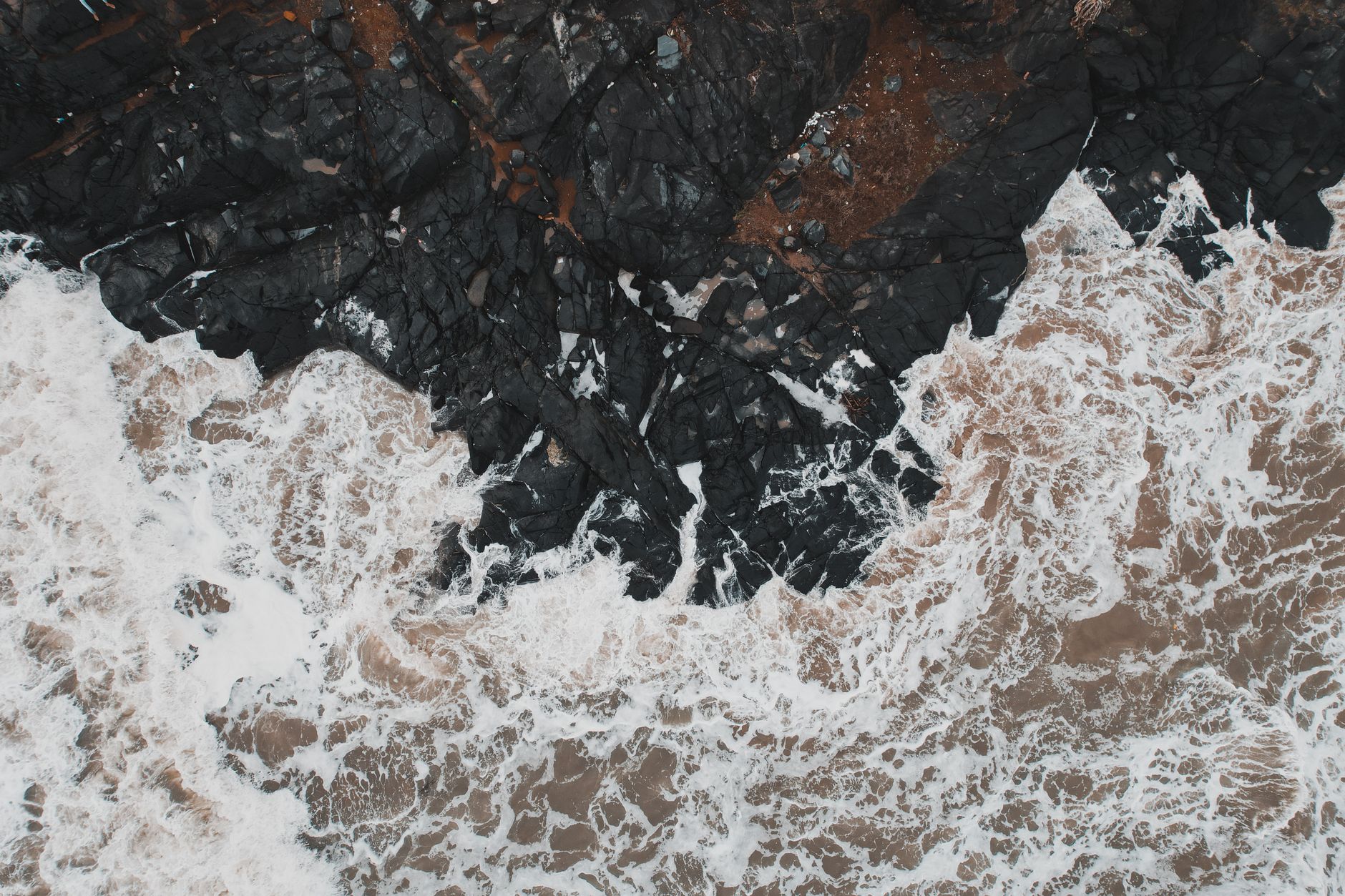
Pantai Karang Hawu is the landmark west of town: a jagged shelf of black volcanic rock cut with pools and arches and a stack that resembles a traditional stove — hawu in Sundanese, hence the name. It is one of the sites most strongly associated with Nyai Roro Kidul, with a small shrine on the rocks where people leave offerings. Entry is nominal, around Rp 2,500 to Rp 5,000 plus parking. Come at low tide, wear shoes with grip and stay well back from the seaward edge: waves break over that platform without warning and people have been swept off it.
A few kilometres inland at Cipanas, in Wangunsari village, is the reason to bring a towel. The Cisolok hot springs are geothermal water from the Halimun system forcing up through fissures in the bed of a cold mountain river, so scalding water jets straight into the flow. Source temperatures run between roughly 40 and 80 degrees, so the jets themselves will burn you; the trick is finding the spot downstream where hot and cold mix. Entry is around Rp 10,000 for adults and Rp 5,000 for children under the current regency tariff. Busy at weekends, and the only water here you can get into without a risk assessment.
The Ciletuh–Palabuhanratu UNESCO Global Geopark
The whole district sits inside the Ciletuh–Palabuhanratu UNESCO Global Geopark, which took full UNESCO status in 2018. The town end of it is ordinary; the far western end, around Ciletuh Bay, is what will make you glad you came. The centrepiece is the Ciletuh amphitheatre, a vast horseshoe of cliffs formed by the collapse of the Jampang Plateau and opening onto the sea — the largest of its kind in Indonesia. Rivers pour off the escarpment in a series of waterfalls, of which Curug Awang is the most photographed: roughly sixty metres wide and forty high over reddish-brown rock, five to ten minutes’ walk from the parking area. Curug Cimarinjung, Curug Sodong and Curug Puncak Manik are the next priorities, and Palangpang beach at the foot of the amphitheatre is where people watch the sunset. Fees are small — around Rp 10,000 per person at the Cimarinjung ticket post plus village retribution of Rp 3,000 to Rp 5,000 at individual sites.
Access is the real cost. Ciletuh is two and a half to three and a half hours from Pelabuhan Ratu on roads ranging from adequate to genuinely rough, with sections a low city car will struggle on. Returning the same day means nine hours of driving on top of the driving you already did, so plan a separate night at Ciletuh or Ujung Genteng. This is the reason to make it a three-day trip.
Eating at the Harbour
The fish market and auction hall has been the town’s economic centre since the Dutch period, and it is the best meal you will have here by a distance. Boats land through the early morning and the auction runs from roughly 06:00, tapering as the catch clears. At the warungs around the market — including the long-running restaurant directly opposite the auction hall — you buy the fish and they cook it. You choose from the ice, it is weighed, you pay per kilo, then a separate cooking charge. Expect roughly Rp 40,000 to Rp 90,000 a kilo for common pelagic and reef fish, Rp 90,000 to Rp 180,000 for prawns and squid, and Rp 25,000 to Rp 40,000 a kilo to cook it. Prices swing with the catch and weekend demand, so agree the number before they weigh it. Ask for ikan jangilus, the sailfish Palabuhanratu is known for; cakalang, layur and kakap are the reliable everyday choices, grilled over coconut husk with sambal dabu-dabu. Warungs do not add service and tax, so the agreed price is what you pay; hotel restaurants add roughly 21%, as they do across Indonesia.
Honestly, the seafood here is fresher but simpler than in the city — the best seafood restaurants in Jakarta do more with the same fish, and our rundown of dishes to try covers the Sundanese repertoire you meet in the warungs down here.
Where to Stay Across the Price Brackets
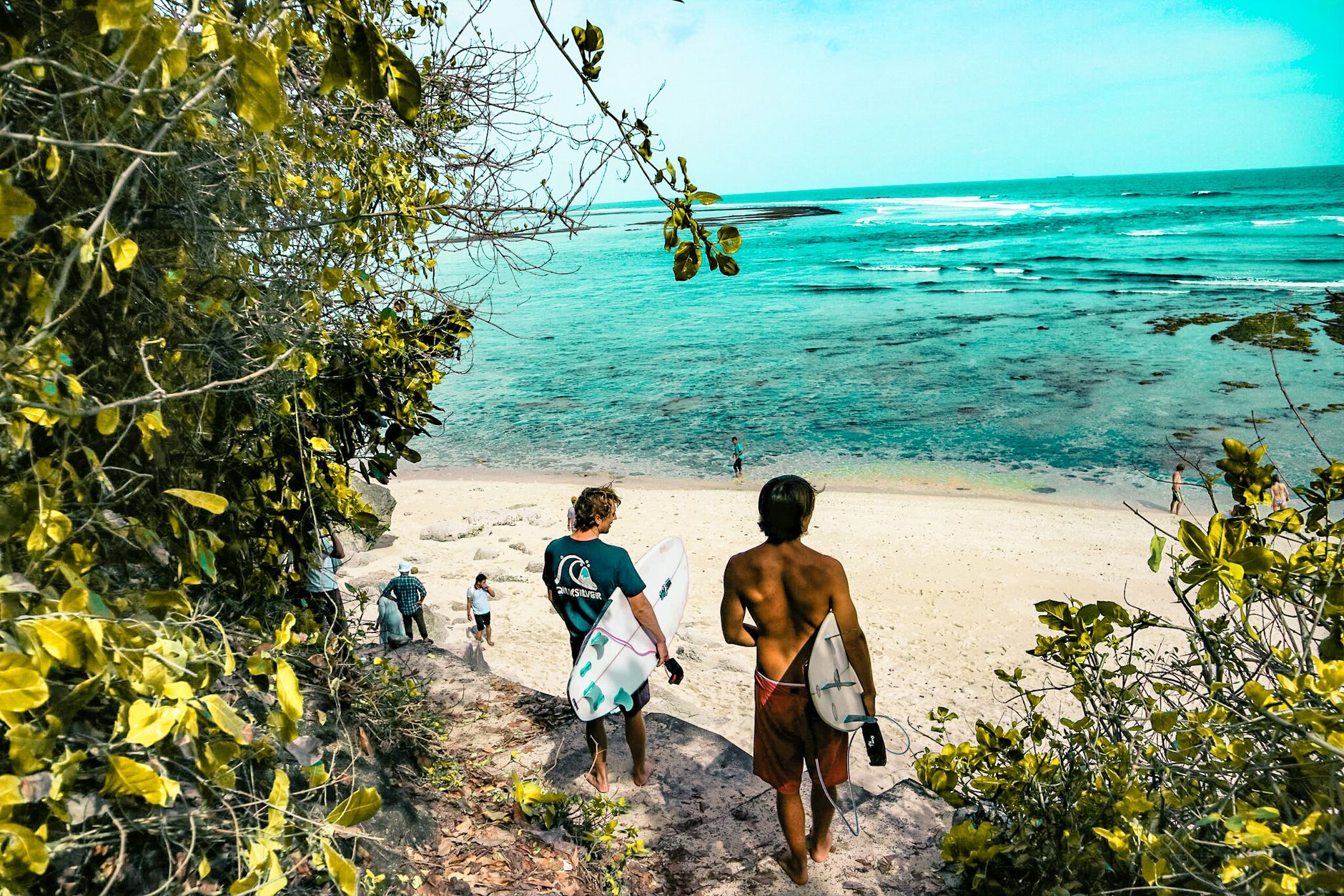
Accommodation splits between the surf village of Cimaja, the town itself, and a handful of larger properties on the headland. Cimaja is where you want to be if you are here to surf: you can walk to the break at dawn and the homestays are used to boards and early breakfasts. The town is cheaper and handier for the market but noisier.
The Grand Inna Samudra Beach deserves a mention, because it is where room 308 is and because opinions split hard. It is a landmark 1960s hotel with an unbeatable position; it also shows its age, and reviews consistently flag rooms and bathrooms needing updating. Published rates start around Rp 570,000 for a standard, rising through roughly Rp 1,050,000 for a deluxe to Rp 1,600,000 and up for suites, though online rates often sit well below rack. Book it for the setting, not the fittings.
| Bracket | Typical rate per night | Where | What you get | Best for |
|---|---|---|---|---|
| Budget homestay | Rp 150,000–350,000 | Cimaja village, town backstreets | Fan or basic AC, simple bathroom, board storage | Solo surfers, long stays |
| Surf camp / guesthouse | Rp 350,000–700,000 | Cimaja, Cikakak | AC, breakfast, board hire and guiding on site | Anyone here primarily to surf |
| Mid-range hotel | Rp 600,000–1,200,000 | Headland and coast road | Pool, sea view, restaurant, parking | Couples and families wanting comfort |
| Villa or suite | Rp 1,200,000–3,000,000 | Cliff-side villas, hotel suites | Private pool or suite, kitchen, staff | Groups splitting a villa |
Weekend rates jump sharply and the better places fill weeks ahead over Lebaran and school holidays. Midweek you can often walk in and negotiate. If you would rather keep your base in the capital, our guide to where to stay in Jakarta is the better starting point.
The Honest Downsides
The town is not charming. Palabuhanratu is a working fishing port with a busy main road through it, and the waterfront is functional — concrete and shopfronts rather than a promenade. Litter is a real problem on the accessible beaches, worst after weekends and at the peak of the wet season when the rivers flush plastic out of the interior. Citepus and the town frontage are the worst affected; Cimaja, Cibareno and the beaches towards Cisolok are noticeably cleaner.
Weekend crowding is severe. Saturday and Sunday bring Jakarta and Bandung day-trippers by the coachload, the coast road backs up, the warungs run out of the good fish by lunchtime and the beaches near the car parks become packed. Lebaran week is another order of magnitude again. The November-to-March wet season changes the calculation too: heavy afternoon downpours, a slick mountain descent, occasional landslides on the road towards Ciletuh and disorganised surf. Come between May and September if you have the choice.
Who Should Go, and Who Should Go Elsewhere
Go if you surf, or want to learn properly. Go if you are interested in geology, because the Ciletuh amphitheatre and the Cisolok geothermal river are the most striking landforms within a day of Jakarta. Go if living Javanese belief interests you and you will treat it with respect. Go for an early-morning fish market and a grilled sailfish lunch.
Do not go if your mental image is lounging in calm turquoise water — you will spend seven hours in a car to look at a sea you should not swim in. Take a boat into Jakarta Bay instead, or drive west to Anyer where the swimming is straightforward. Do not go with small children expecting beach time, do not go for a single day, and do not attempt the Sunday of a long weekend. For everyone else, this is the most distinctive stretch of coast within reach of the capital, and the fact that it demands something of you is the point. Our Jakarta travel tips and notes on travelling on a budget will keep the cost sensible.
Pelabuhan Ratu Jakarta FAQ
Is it safe to swim at Pelabuhan Ratu? Not on most of the coast. Indian Ocean swell generates strong rip currents and drownings are recorded most years, particularly around Karang Sari, Citepus and the town frontage. The safer water is in the reef-protected pockets at Cibangban and Cibutun at low tide. Check flags and Balawista guidance, and never swim alone.
How long is the drive to Pelabuhan Ratu Jakarta visitors should allow? Four to five hours from South Jakarta leaving before 06:00 on a weekday, via Jagorawi and the Bocimi toll. On a Friday evening or Saturday morning it stretches to seven to nine, and the Sunday afternoon return is the slowest leg of all. The final fifty kilometres through Cibadak and the winding descent is the slow part.
Can you get there by train? Not directly. Take the KRL Commuter Line to Bogor, walk to Bogor Paledang, then the KA Pangrango to Sukabumi — about one hour forty, roughly Rp 35,000 economy and Rp 50,000 executive, around four departures daily. From Sukabumi city it is still sixty kilometres and two hours or more by angkot or taxi.
Why should you not wear green on these beaches? Green is the colour of Nyai Roro Kidul, Queen of the South Sea, and local belief holds that wearing it in her waters invites her to claim you. Guides will ask you to change. There is a practical reading too: green is nearly invisible in murky coastal water, so a swimmer wearing it is very hard to spot from a rescue board.
Is Cimaja suitable for beginner surfers? The main point break is not — a right-hander over cobblestones with a steep takeoff, best suited to intermediates. Beginners learn at the sandy breaks nearby such as Cikembang and Karang Papak. Reckon on Rp 250,000 to Rp 500,000 for a two-hour lesson including a board, and Rp 100,000 to Rp 200,000 a day for hire.
When is the best time of year to visit? May to September. The dry season brings the consistent southwest groundswell, offshore mornings, clearer water and fewer road problems. November to March means smaller messier surf, heavy rain, more litter washed onto the beaches and occasional landslides on the road west towards Ciletuh — though the waterfalls run full.
Is one day enough, and what does the trip cost? One night is the practical minimum; a day trip means eight to eighteen hours in a car for a few hours on a coast you cannot casually swim at. For two people over one night, budget roughly Rp 1,500,000 to Rp 3,000,000 all in — transport, a mid-range room, two seafood meals, site entry fees and a surf lesson.
Where to Go Next
If this coast sounds like more effort than you want, our three-day Jakarta itinerary keeps you in the city and still fills a long weekend. Before you book a car, read our notes on getting around Jakarta, and check what is on around Jakarta if you are trying to line the trip up with Hari Nelayan. Back in the city with salt in your hair, our guides to things to do in Jakarta and eating your way through it will fill whatever is left of the weekend.