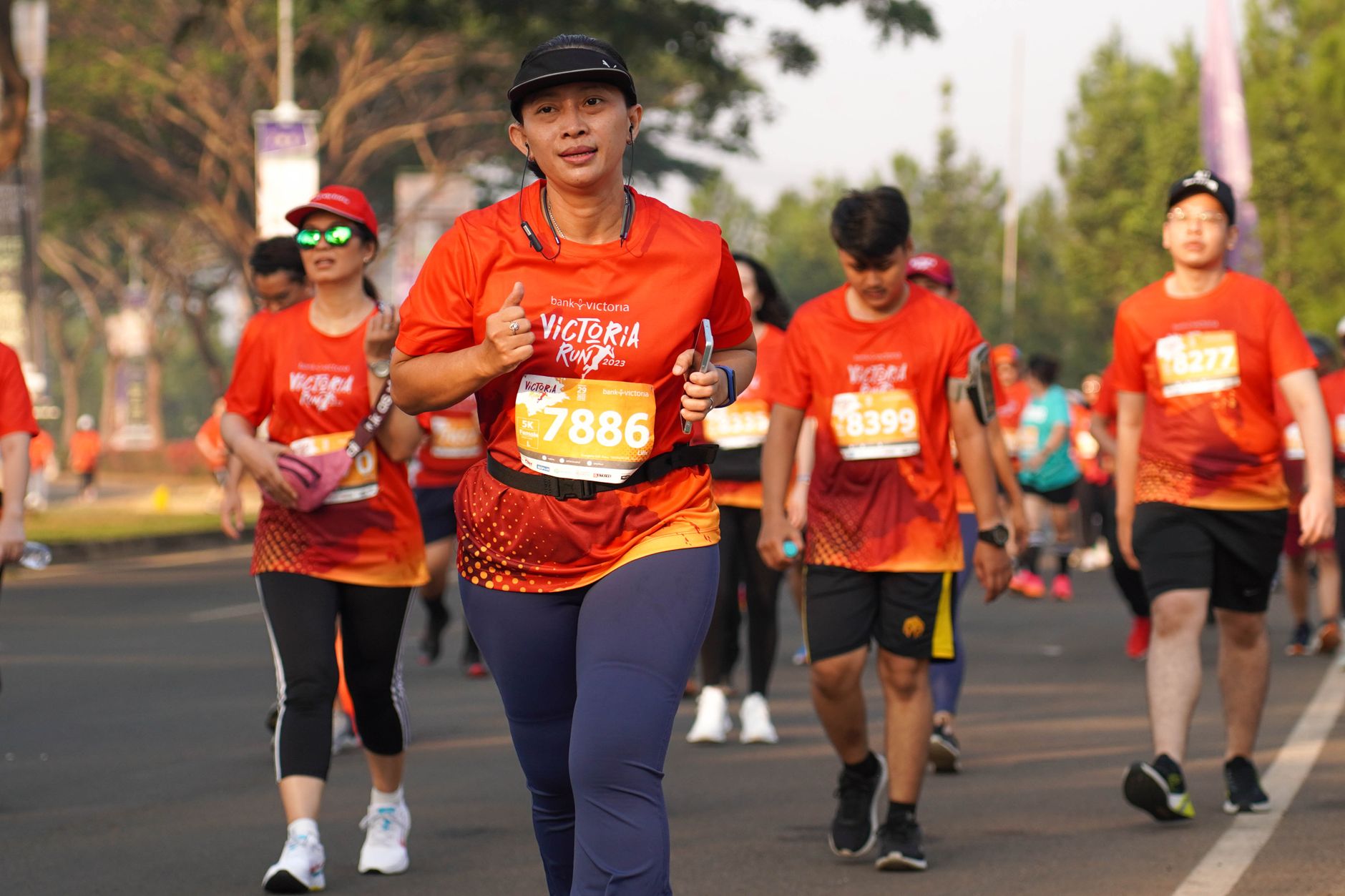
At six in the morning, the ring road inside the Gelora Bung Karno complex fills with several thousand people running, and it is the closest thing Jakarta has to a public commons. That matters more than it sounds. In a city with almost no usable pavements and very little accessible green space, Senayan is one of the few places where an ordinary person can go outside and exercise for free. Any Senayan area guide Jakarta visitors can act on has to start there rather than with the shopping, because the running track is the thing that makes this district genuinely unusual and the malls are just malls.
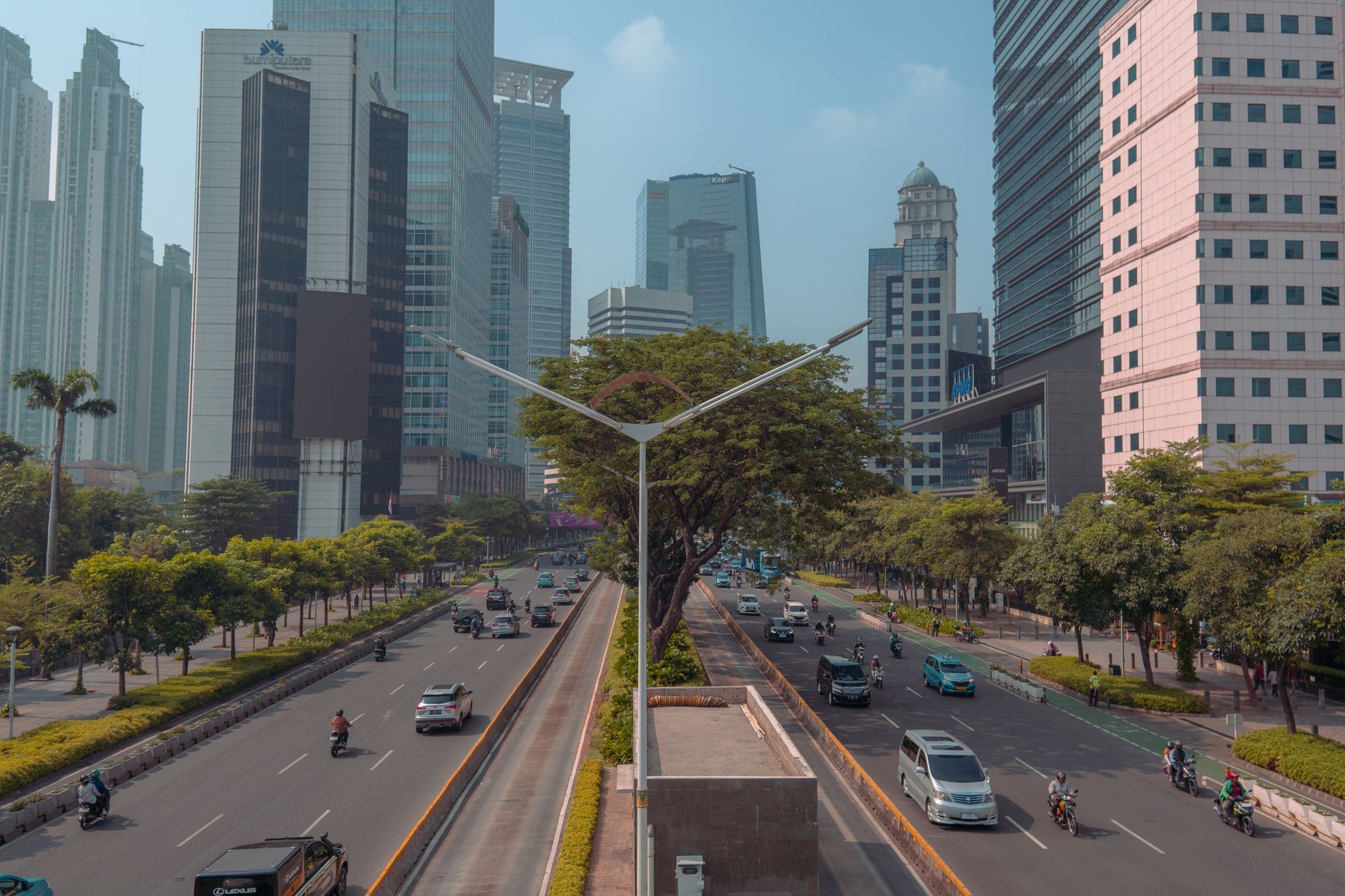
Senayan sits at the southern hinge of Jakarta’s Golden Triangle, where Sudirman meets Kebayoran Baru, and it is the city’s event district: stadium, arena, convention centre, four malls and a very large amount of grass. For how it fits into the rest of the city, start with the Jakarta neighbourhoods guide, then compare it with the office-and-embassy world of the Central Jakarta guide and the more residential South Jakarta guide. If you want the creative, low-rise alternative, the Kemang neighbourhood guide is the other end of the spectrum.
What Senayan Actually Is
Senayan is not a single administrative unit, which trips people up. The Gelora Bung Karno complex and the Jakarta Convention Center sit in Gelora, Tanah Abang, which is Central Jakarta. The Senayan kelurahan proper, along with Plaza Senayan and Senayan City, is in Kebayoran Baru, South Jakarta. The two halves face each other across Jalan Asia Afrika and nobody living here cares about the boundary, but it explains why addresses in the area sometimes say Jakarta Pusat and sometimes Jakarta Selatan.
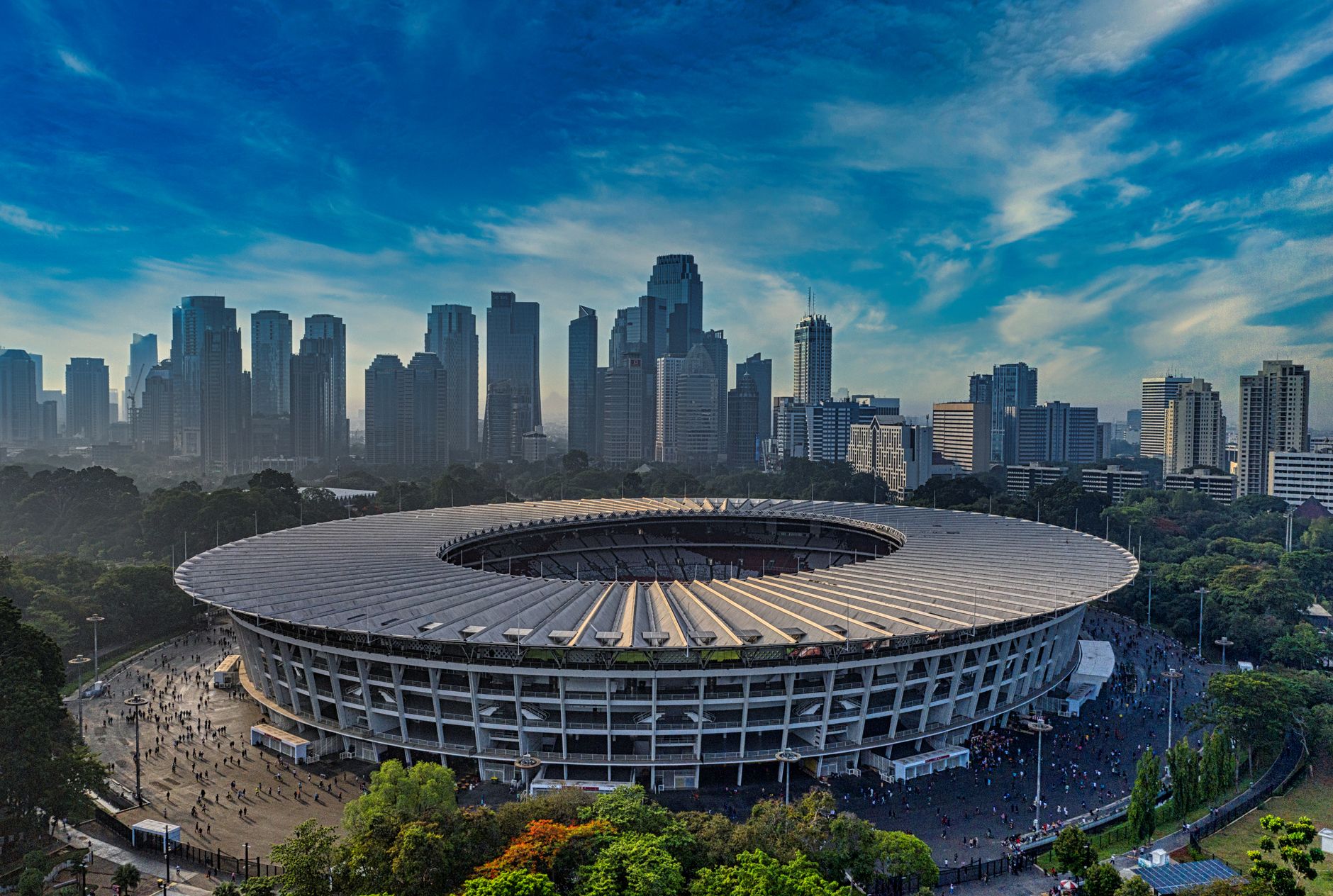
The sports complex covers roughly 279 hectares, which makes it the largest in Indonesia and, by some distance, the largest walkable open space in central Jakarta. It was built for the 1962 Asian Games with Soviet technical assistance, on land that had been Betawi villages. That part rarely appears in tourist material: the clearance in 1960 displaced something like 8,600 households and tens of thousands of residents, who were resettled in Tebet, Slipi, Pejompongan and elsewhere. Tebet as a neighbourhood essentially exists because Senayan was cleared. Worth knowing while you jog past the statue.
The Running Loop: What Is Free and What Is Not
This confuses almost everyone, including a lot of page-one search results, so here it is plainly. There are two different things called the GBK jogging track.
The outdoor ring road (free)
The road that circles the main stadium and threads through the complex is open to the public and free to use. You walk in through one of the gates, you run, you leave. No ticket, no registration, no gym membership. The complex grounds are generally open from around 06:00 to 22:00, though gates and hours shift for events and the whole area can be closed off entirely on concert and match days. The surface is tarmac, well shaded in stretches by mature trees, and lit at night. A full outer circuit is a little over three kilometres; the shorter loop that hugs the main stadium is closer to two. Most regulars do laps and count.
The athletics track inside the main stadium (paid)
The blue synthetic track inside the stadium bowl itself is a separate, ticketed thing. Expect to pay in the region of IDR 100,000 per person for a one-hour session, booked in advance through the GBK reservation system, with several slots a day — roughly 08:00 to 18:00 on weekdays and starting earlier, around 06:00, at weekends. It is a genuinely special hour: an empty 77,000-seat stadium and a competition-grade track. It is also entirely unnecessary if you just want a run. Prices and session times have changed more than once since the system launched, so check the booking page rather than trusting a blog.
When to go
Weekday mornings from 05:30 to 07:30 are busy but pleasant. Sunday morning is chaos in the good sense: Car Free Day traffic spills in, running clubs meet, and the complex is packed until about 10:00. Weekday evenings from 17:30 to 20:00 are the second peak. The dead hours are 10:00 to 16:00, when the sun is brutal and you will have the place largely to yourself for reasons that will become obvious within four minutes.
Bring your own water. There are vendors and small carts around the gates but the interior of the complex is not densely served. Free-to-use public space of this quality is rare enough in this city that it belongs on any list of free things to do in Jakarta.
The Rest of the Sports Complex
Beyond the main stadium and the ring road, GBK is a working sports campus rather than an attraction, and most of it operates on a booking basis rather than a turnstile.
| Venue | What it is | Public access | Rough cost |
|---|---|---|---|
| Main Stadium (Stadion Utama) | 77,193 seats, football and concerts | Event tickets; paid track sessions | Track from ~IDR 100,000/hr |
| Ring road / outdoor area | Jogging, cycling, walking | Open to all, ~06:00–22:00 | Free |
| Aquatic Stadium | Four pools inc. 50m competition pool | Public sessions, book online | Budget IDR 50,000–100,000 |
| Istora Gelora Bung Karno | Indoor arena, opened 1962, badminton and concerts | Event tickets only | Varies by event |
| Madya Stadium | 9,170 seats, athletics training venue | Occasional public sessions | Low, book ahead |
| Tennis Indoor / outdoor courts | Match venue and bookable courts | Court hire and events | Varies, book ahead |
The Aquatic Stadium is the one most visitors could realistically use. It was rebuilt for 2018 and holds four international-standard pools including a 50-metre, eight-lane competition pool and a separate diving pool. Public swimming operates in sessions, typically from early morning to around 21:00, and you book through the GBK reservation site rather than turning up. Published public-session prices have moved around, so treat any figure you read as indicative and confirm on the day.
Istora is worth a mention for a different reason: it is where the Indonesia Open badminton is played, and badminton in Indonesia is not a niche sport. If your trip coincides with it, the atmosphere in that arena is one of the best live-sport experiences in Southeast Asia, and considerably easier to get into than a national-team football match at the main stadium.
The 2018 Asian Games Legacy, and Why It Is Better Than You Expect
Jakarta hosted the Asian Games in 2018, and the renovation programme is the reason Senayan works today. Eight 1960s venues were rebuilt, a new basketball arena went up, and the main stadium was converted to individual seating, which cut declared capacity from a nominal six figures to 77,193 while making it a vastly better place to watch anything.
The more important change was to the grounds. The architects deliberately opened the complex outward — clearing informal commerce, replanting, laying permeable paving, adding lighting and connecting the stadia to the green areas rather than fencing each one off. The result is that Jakarta accidentally acquired a large public park, and residents took it seriously and immediately. It is the single most successful piece of public-realm work in the modern city and it stands in stark contrast to almost everything around it.
It is not perfect. Sections are still fenced, access is controlled and inconsistent between gates, and the commercial development creeping around the edges — restaurants, event pavilions, a lot of paid parking — chips away at the openness. But turn up at six on a Tuesday and you will see what Jakarta could be.
Concerts, Match Days and What They Do to Everything Else
The main stadium takes stadium-scale international tours and Indonesian national team fixtures. Istora and the surrounding halls take everything from K-pop to trade fairs. On those days, Senayan is a different and considerably worse place to be if you are not attending.
Expect road closures on Jalan Gerbang Pemuda and the roads inside the complex from mid-afternoon. Expect the ring road to be shut to runners. Expect Grab and Gojek surge pricing of two to three times normal in the two hours after an event ends, plus long driver wait times, and expect the pickup pins around the gates to be unusable because thousands of people are all trying the same thing. The reliable move is to walk 15 to 20 minutes out of the cordon — north toward Bendungan Hilir or east toward Senayan MRT — and order from there. If it is before midnight, the MRT is the better answer entirely; it runs until roughly 24:00 and it does not surge. Our Jakarta MRT guide covers the timings, and the Grab and Gojek comparison explains how the surge behaves.
On tickets, be careful. Indonesian concert demand vastly exceeds supply for big international acts, sales sell out in minutes, and a large scalping ecosystem operates on Twitter, Instagram and outside the gates. Fake and duplicated e-tickets are common enough that stadium entry queues regularly turn people away. Buy through the official platform for the event, use only the promoter’s designated resale channel if one exists, and treat anyone offering a below-face-value ticket as a fraud, because they are. Our Jakarta events and festivals guide tracks what tends to be on and when.
The Malls, Compared Properly
Every Senayan area guide Jakarta searches return leads with the shopping, and then fails to explain how four malls within 900 metres of each other differ. They differ a lot. One of them is close to a waste of your time.
| Mall | Tier | Best for | Nearest MRT | Verdict |
|---|---|---|---|---|
| Plaza Senayan | Upper | Established luxury, cinema, reliable Indonesian food court | Senayan | The one to pick if you pick one |
| Senayan City | Upper / luxury | Fashion, beauty, higher-end dining, cinema | Senayan | Newer, glossier, marginally pricier |
| Senayan Park (SPARK) | Mid | Eating outdoors, families, lake and skywalk | Istora Mandiri | A restaurant park with shops attached |
| fX Sudirman | Mid | Lunch, a quick errand, meeting someone | Senayan | Skip unless you are already there |
Plaza Senayan
Opened in 1996 and still the most coherent mall in the district. It is not the flashiest, but the tenant mix is stable, the layout makes sense, the cinema is good, and the basement food court is one of the better mall food courts in Jakarta — Sate Khas Senayan, Padang, Japanese chains, all at IDR 45,000 to 90,000 a plate. If you want one mall in Senayan, make it this one.
Senayan City
Directly across Jalan Asia Afrika, connected by a bridge, opened 2006 and pitched slightly higher. More international fashion, more beauty counters, a stronger upper-tier restaurant floor. In practice most visitors do both in one trip because they are five minutes apart. If your interest is genuinely high-end brands, though, our luxury shopping in Jakarta guide will point you at Plaza Indonesia and Pacific Place first, and the wider best malls in Jakarta roundup ranks the whole field.
Senayan Park
The newest of the four, built around a lake with a park, a jogging path, a rooftop garden and a skywalk you can access by showing a receipt of about IDR 100,000. Roughly 70% of the tenancy is food and drink, plus a cinema and an arcade. Call it what it is: an outdoor dining destination that happens to have retail. As a place to eat with children on a dry evening it is excellent. As shopping it is thin.
fX Sudirman
A narrow vertical mall on the Sudirman frontage, close to Senayan MRT. It has restaurants, a supermarket and offices, and it is convenient if you are already in the area. It is not a shopping destination and it has felt half-occupied for years. Do not cross town for it.
And to settle a recurring confusion: Sarinah is not in Senayan. Sarinah is on Jalan MH Thamrin in Central Jakarta, about 4 kilometres north, reachable in three MRT stops. It is worth visiting for Indonesian craft and design, but do not go looking for it here. Grand Indonesia, likewise, is up in Thamrin — see our Grand Indonesia mall guide.
Green Space, and How It Compares
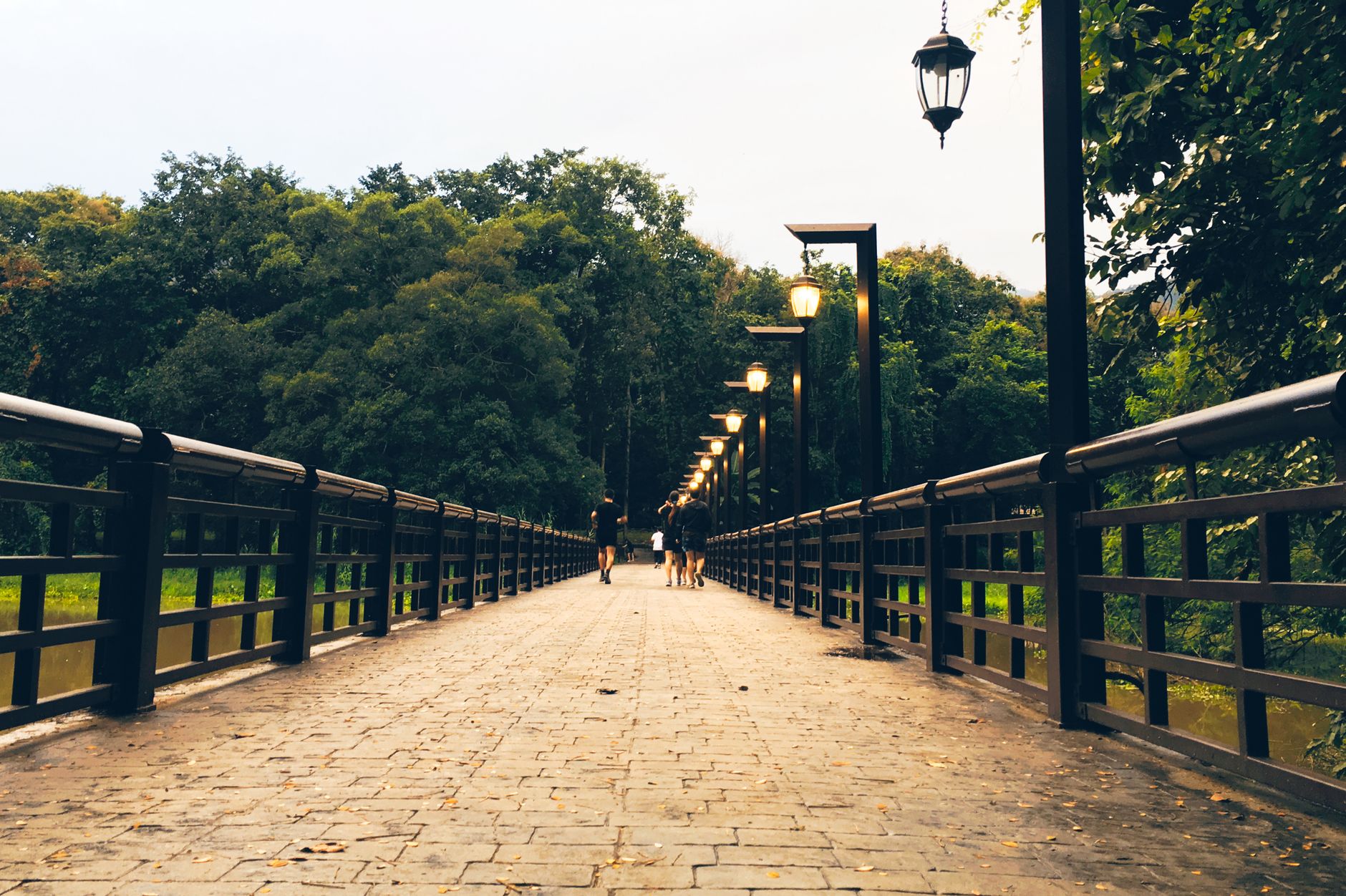
The GBK grounds are the green space. There are lawns, mature trees, plazas at the east and west of the complex, and a designated city-forest area on the northern side with a restaurant and boardwalks that has been developed since the Asian Games work. There is no admission charge to walk the grounds.
Set against the rest of Jakarta, this is exceptional. Set against a normal capital city, it is a decent municipal park with a stadium in it. Manage expectations accordingly: there is no lake to hire a boat on, few benches, limited shade in the middle of the day, and no picnic culture to speak of because it is 32 degrees and humid.
If you want green space with more to do, Ragunan Zoo is the serious alternative — about 8 kilometres south, reachable by TransJakarta or a 25 to 40 minute drive, with a nominal entry fee in the low tens of thousands of rupiah usually payable by prepaid card rather than cash. It is far larger, far greener, and much better with children. Read our things to do in Jakarta with kids guide before choosing between them, and the Jak Lingko card guide for how the prepaid ticketing works.
The Jakarta Convention Center
The JCC sits inside the GBK grounds and is Jakarta’s oldest major exhibition venue, built for the 1992 Non-Aligned Movement summit. It handles the mid-size end of the trade-fair calendar: INACRAFT, the big Indonesian handicraft fair, usually lands here in the first half of February; franchise, property, tourism, book and Islamic-lifestyle expos fill much of the rest of the year.
One factual correction worth making, because plenty of pages get it wrong: the Indonesia International Motor Show has not been at JCC since 2008. It moved to JIExpo Kemayoran in North Jakarta and stays there — the 2026 edition ran 5 to 15 February at Kemayoran. Same for the Jakarta Fair. If a listing tells you a giant expo is at Senayan, check the venue line before you travel; our North Jakarta and Ancol guide covers that side of town.
For a casual visitor, a trade fair is only worth it if the subject interests you. INACRAFT is the exception. It is genuinely good for textiles, silverwork and woodcraft direct from regional producers at prices below the tourist shops, and it beats most retail alternatives — see our Indonesian handicrafts guide for what to look for.
Museums: There Aren’t Any Here
Senayan is one of the few central districts with essentially no museum of consequence. That is not a failure of research on your part. The nearest serious institution is the National Museum near Monas, three or four MRT stops north and then a short walk, and it is worth the trip — see our National Museum guide. The Textile Museum is west in Tanah Abang, and the colonial museums cluster in the old town, covered in the Kota Tua neighbourhood guide.
What Senayan does have is architecture. The main stadium’s cantilevered roof ring, Istora’s shell, and the 1960s modernist language of the complex are a coherent statement of Sukarno-era national ambition, and reading the place as architecture is more rewarding than most people expect. Our Jakarta Museums and Cultural Sites: The Complete Guide (2026) overview puts it in the wider picture.
Where to Eat, at Every Price Level
Senayan eats well because it feeds office workers, mall shoppers and event crowds, which are three different budgets.
Cheap, IDR 20,000 to 45,000. Warungs and street carts cluster along the streets bordering the complex and around Bendungan Hilir to the north, which has one of the better concentrations of workday food in central Jakarta. Nasi goreng, soto, bakso, ayam penyet. Around the GBK gates on Sunday mornings, temporary stalls sell bubur ayam and fresh juice to the Car Free Day crowd for well under IDR 30,000. Our cheap eats in Jakarta guide has the vocabulary you need.
Mid, IDR 60,000 to 150,000. The Plaza Senayan basement food court and the Senayan Park restaurant strip cover this bracket well. Sate Khas Senayan, trading since 1974, is the safe Indonesian option and does a proper chicken satay with lontong and gado-gado; it is a chain, it is a bit polished, and it is still good. Senayan Park’s outdoor tenancy is where locals actually go for a relaxed dinner.
Upper, IDR 200,000 to 500,000 a head. The upper floors of Senayan City and Plaza Senayan hold the serious restaurants — Japanese, Chinese, Italian, a few Indonesian fine-dining rooms. Add roughly 21% for service and tax on top of menu prices, which is standard across Jakarta and catches people out. Our best restaurants in Jakarta guide covers the ones worth booking, and the general Jakarta food guide is a good orientation before any eating day.
The Two MRT Stations, and Which Exit You Want
Senayan is one of the best-connected districts in Jakarta, which is the main practical argument for spending time here over somewhere like Kemang. Two North–South line stations serve it, one stop apart.
Senayan Mastercard station sits at the southern end, on Sudirman by the Bundaran Senayan roundabout. Come out on the eastern side for fX Sudirman and Ratu Plaza; come out on the western side and walk about eight to ten minutes for Plaza Senayan and Senayan City. It is the station for shopping.
Istora Mandiri station is one stop north and is the station for the sports complex. Exit toward the west and you are at the GBK gates in five minutes, with Senayan Park close by. If you are going for a run, a match or a concert, this is your station, and after an event it is a far better bet than trying to order a car.
Fares on the MRT run roughly IDR 3,000 to 14,000 depending on distance, so anywhere along Sudirman costs you a few thousand rupiah. Trains run from about 05:00 to midnight. TransJakarta corridor 1 also runs down Sudirman with a stop at Bundaran Senayan at a flat IDR 3,500, though services mostly wind down around 22:00 — see the TransJakarta guide. For the full cost picture, our Jakarta transport costs page compares every option.
Car Free Day: The Best Sunday Morning in Jakarta
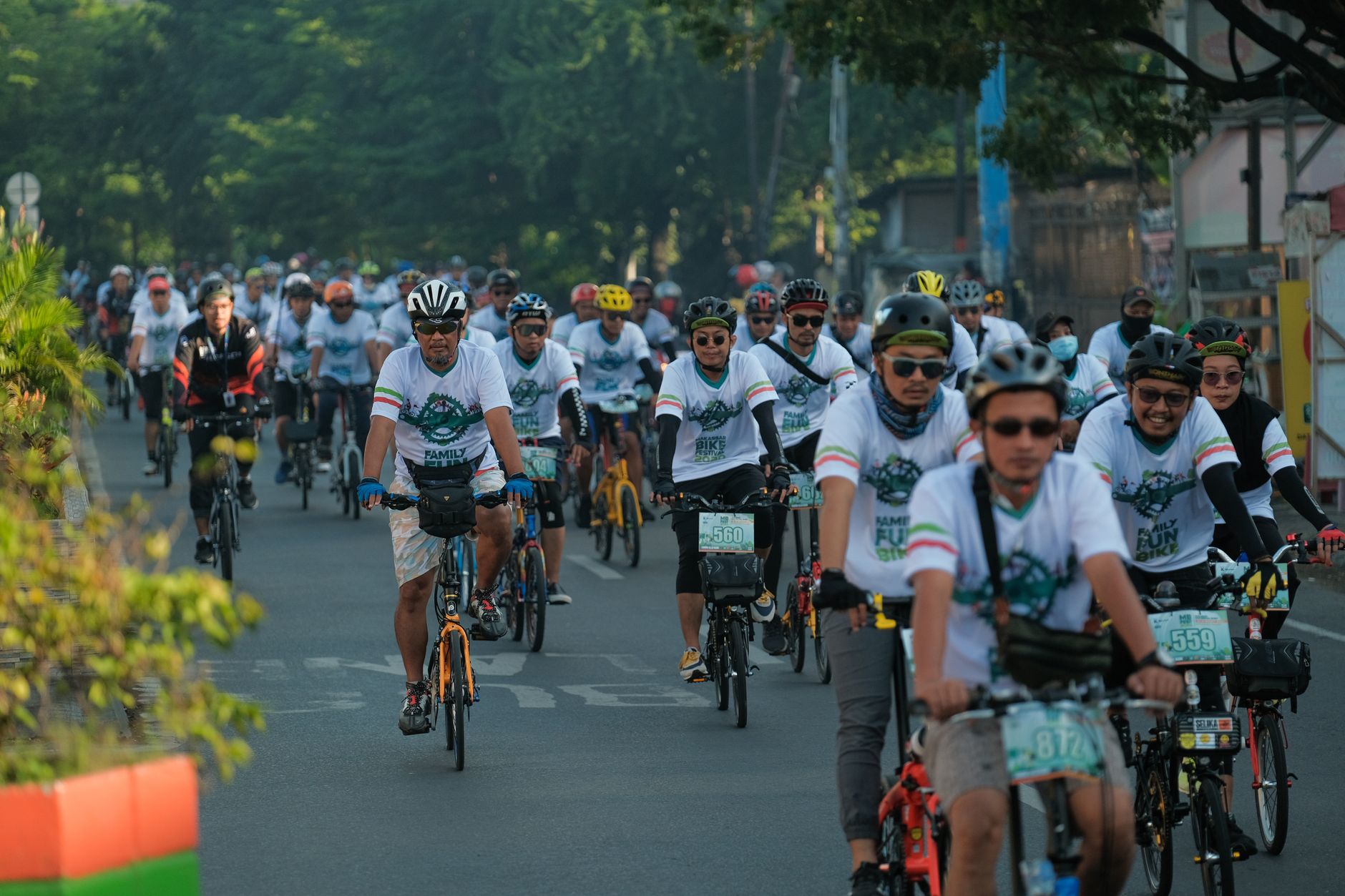
Every Sunday, Jalan Sudirman and Jalan MH Thamrin close to cars, from Bundaran Senayan at the southern end all the way north toward Monas. It runs roughly 06:00 to 10:00, sometimes extended to 11:00, and the whole eight-kilometre corridor fills with runners, cyclists, families, aerobics classes, street food and a certain amount of low-grade commerce. It is free and it is the single most enjoyable thing to do in Jakarta on a Sunday morning.
Senayan is the southern terminus, which makes it a natural start or finish. Get off at Istora Mandiri or Senayan MRT, walk into the corridor, and go north as far as you like — Bundaran HI is about 4 kilometres. Combine it with a loop of the GBK ring road and you have covered ten kilometres before breakfast.
Caveats: it is suspended fairly often, for major events, election periods, occasionally during Ramadan and in the run-up to national holidays, and there is no reliably published English-language schedule. It is also genuinely crowded — this is not a quiet run, it is a street party you happen to be jogging through. Go at 06:00 rather than 08:00 if you want to move at pace. Anything after Bundaran Senayan heading south is outside the closure and back to normal traffic.
A Senayan Area Guide Jakarta Visitors Can Actually Follow
If you have one morning: arrive at Istora Mandiri by 06:30 on a Sunday, do two or three laps of the GBK ring road, walk out into Car Free Day and head north for a couple of kilometres, then come back for breakfast at one of the stalls by the gates. Shower, then Plaza Senayan for lunch and a wander. That is a better Jakarta Sunday than any paid attraction will give you.
If you have an evening and there is an event on: buy the ticket officially, arrive at Istora Mandiri two hours early, eat at Senayan Park beforehand, and plan to walk out to the MRT afterwards rather than fighting for a Grab.
If you are here for a conference at JCC: stay along Sudirman rather than in Senayan itself, because the hotel stock right at the complex is thin and the MRT makes distance irrelevant. Our business hotels in Jakarta guide covers the corridor properly.
What to skip: fX Sudirman unless you need lunch. The paid stadium track unless the novelty appeals. And the whole district on a match or concert day if you do not have a ticket, because the traffic will eat your afternoon. Our Jakarta traffic guide explains the wider pattern, and the three-day Jakarta itinerary shows where a Senayan morning fits.
Senayan Area Guide Jakarta FAQs
Is the GBK jogging track free? The outdoor ring road and the paths around the main stadium are free and open to everyone, generally from about 06:00 to 22:00. The synthetic athletics track inside the stadium bowl is a separate, ticketed facility costing around IDR 100,000 for a one-hour booked session. Most runners use the free outdoor loop, which is roughly three kilometres for a full circuit.
Which MRT station is closest to Gelora Bung Karno? Istora Mandiri, on the North–South line. Take the western exit and the complex gates are about five minutes on foot. Senayan Mastercard station, one stop south, is the one for Plaza Senayan, Senayan City and fX Sudirman. Trains run from roughly 05:00 to midnight and fares are IDR 3,000 to 14,000.
Which Senayan mall is best? Plaza Senayan, if you only go to one. It has the most coherent tenant mix, the best mall food court in the district and a good cinema. Senayan City next door is glossier and slightly pricier. Senayan Park is really an outdoor dining destination. fX Sudirman is convenient but has felt underoccupied for years and is not worth a special trip.
What time is Car Free Day in Jakarta? Sundays, roughly 06:00 to 10:00 and sometimes to 11:00, along Sudirman and Thamrin from Bundaran Senayan north toward Monas. It is free. It is suspended fairly regularly for major events, elections and around national holidays, and there is no dependable English schedule, so check locally the day before.
How bad is traffic in Senayan on concert days? Bad. Roads inside and around the complex close from mid-afternoon, and ride-hailing surges to two or three times normal for a couple of hours after the crowd leaves, with long waits. The MRT is the reliable exit if it is before midnight. Otherwise walk 15 to 20 minutes clear of the cordon before ordering a car.
Can I swim at the GBK Aquatic Center? Yes, in public sessions, but book online through the GBK reservation system rather than turning up. The facility was rebuilt for the 2018 Asian Games and has four pools including a 50-metre competition pool. Sessions typically run from early morning to around 21:00. Published prices have changed several times, so confirm at the point of booking.
Are there museums in Senayan? Not really. The district is built around sport, events and shopping. For museums, take the MRT three or four stops north to the National Museum near Monas, or head to the old town for the colonial-era collections. Senayan’s own cultural interest is architectural — the 1960s modernist stadium complex itself.
Is Senayan a good place to stay in Jakarta? It is a reasonable base if you are attending an event or working along Sudirman, thanks to the two MRT stations and the green space. But hotel stock immediately around the complex is limited, and Sudirman, Thamrin or Kuningan give you more choice at the same commute. Consider it a district to visit rather than a district to sleep in.
Where to Go Next
Senayan pairs naturally with a walk north up Sudirman into the office district and on to Thamrin. For the colonial and residential contrast, the Menteng guide covers the leafiest part of Central Jakarta, ten minutes away by train. If you are chasing live music rather than stadium shows, our live music venues guide lists the rooms that put something on every week. For the wider practicalities — SIM cards, tipping, the wet season, what to do when the traffic beats you — the Jakarta travel tips page is the one to read before you land, and getting around Jakarta covers every mode from the MRT to the ojek.
Hutan Kota GBK, the 4.5-hectare city forest inside the sports complex, is free to enter from 06:00 to 18:00, Tuesday to Sunday, and it is one of the few properly shaded green spaces in central Jakarta. It features in our guide to free attractions in Jakarta, alongside nineteen other places that cost nothing.