Let us clear something up before you spend a morning in traffic. Pondok Indah is not a tourist district. It is a planned residential suburb laid out on former plantation land in the 1970s, and it was designed for people who own cars and want a garden, not for visitors with a camera and three days. Any honest Pondok Indah Jakarta guide has to say that first, because the alternative is watching you burn ninety minutes each way to look at a shopping mall. That said, there are four very good reasons to come here, and if one of them applies to you, this is the most useful square kilometre in the city.
This piece sits under our Jakarta neighbourhoods guide, which explains how the city’s districts relate to each other. For the wider context of the district Pondok Indah sits inside, read our South Jakarta guide, which walks the MRT line that stops just short of here. For the expat neighbourhood most often compared to Pondok Indah, see the Kemang neighbourhood guide.
What Pondok Indah Actually Is
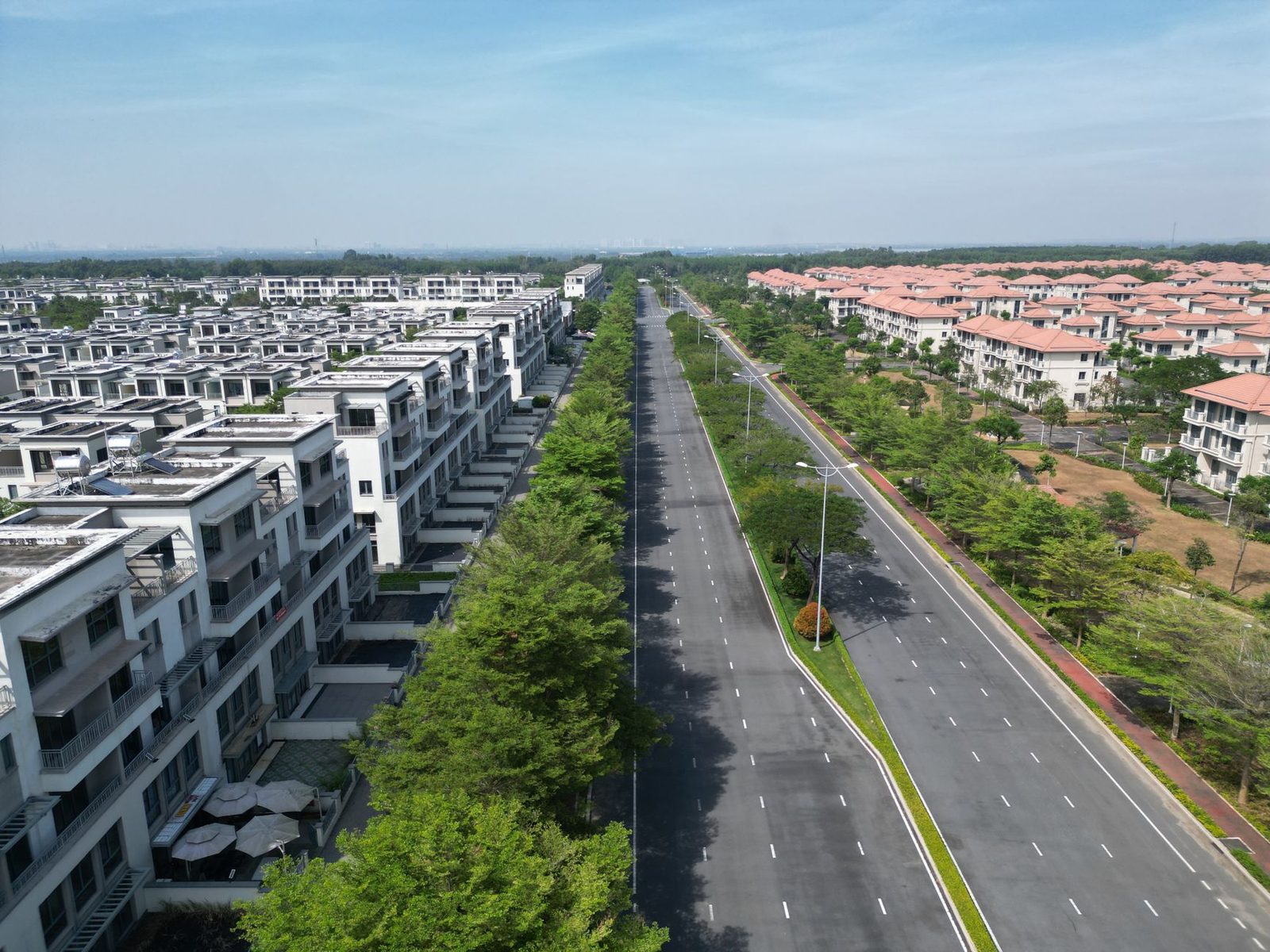
Pondok Indah straddles the Kebayoran Lama and Cilandak subdistricts of South Jakarta, west of the MRT line and south of Kebayoran Baru. Development started in the mid-1970s under Metropolitan Kentjana, and the plan was unusually coherent for Jakarta: wide roads, generous plots, mature planting, a golf course as the green centrepiece, and commercial uses corralled onto one spine road rather than scattered along every street.
Fifty years on, it has aged well in the way that suburbs designed for cars age well. The trees are enormous. The pavements exist, which is more than can be said for much of Jakarta, though they are frequently blocked by parked vehicles. Houses sit behind walls on plots that would be unthinkable anywhere else this close to the centre. The population skews wealthy Indonesian, Korean, Japanese and Western expatriate, with a heavy tilt towards families with school-age children.
What it does not have is history you can visit, street life you can wander into, or the kind of dense small-business texture that makes Kebayoran Baru or Tebet rewarding on foot. There is no market worth a special trip, no colonial architecture, no museum. Set your expectations accordingly and the place makes perfect sense.
The Pondok Indah Mall Complex, Properly Decoded
Most write-ups of Pondok Indah Mall get the structure wrong, usually by claiming Street Gallery and PIM 3 are the same building. They are not. Here is the actual layout.
PIM 1: the oldest and the most practical
PIM 1 opened in 1991 and it shows, in a good way. This is the everyday mall: a large supermarket on the lower level, a proper food court, mid-market Indonesian and international chains, a pharmacy, phone repair, a bank branch, an optician. Nobody comes to PIM 1 for a fashion pilgrimage. Everybody who lives locally comes here for the weekly shop. If you are staying in the area with a self-catering apartment, this is where you go.
PIM 2: the upmarket one
PIM 2 arrived in the mid-2000s and took the premium positioning: international fashion labels, a bigger cinema complex, more polished food and beverage, a top-floor food court next to the screens. It connects to PIM 1 by skybridge, so the two function as one building even though they feel entirely different. This is the half where you will find recognisable luxury brands, though for a serious high-end shop Jakarta pushes you towards Plaza Indonesia or Plaza Senayan, as our luxury shopping in Jakarta guide sets out.
PIM 3: the newest, opened 2021
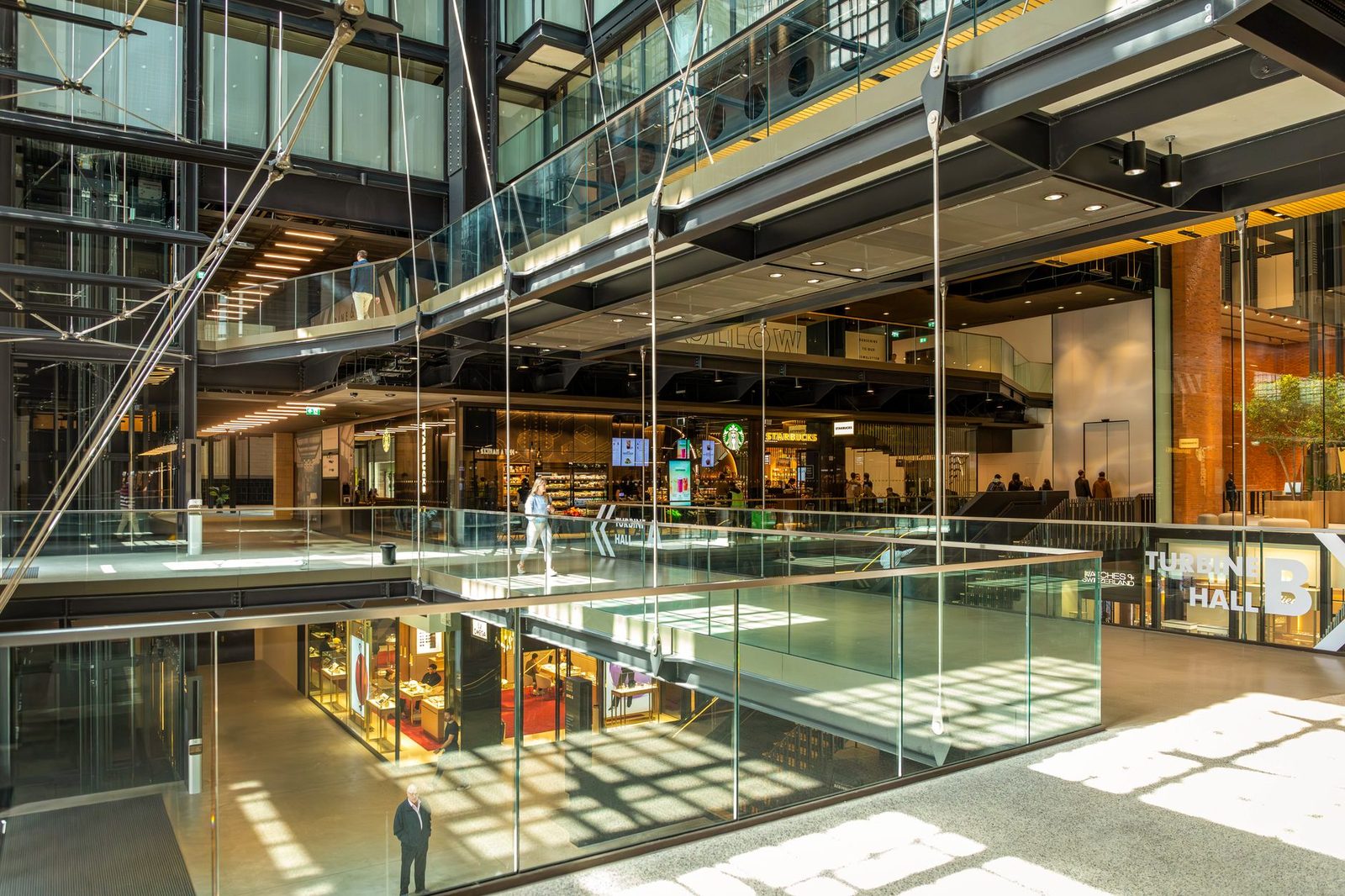
PIM 3 opened on 9 April 2021 and is the reason the complex now claims to be the largest integrated mall in South Jakarta. It is anchored by a Seibu department store and a Ranch Market supermarket, with a tenant mix that leans premium: flagship sportswear, homeware, beauty, and a good deal of family-oriented entertainment. It is architecturally the most pleasant of the three, with more natural light and better circulation. It connects to PIM 1 and 2 by elevated walkways.
Street Gallery: the food strip, and not the same thing as PIM 3
Street Gallery opened in 2013 as a three-storey extension immediately south of PIM 1, and every tenant is food and drink. That is the entire concept. It is where you go for a proper sit-down dinner rather than a food court tray, and several outlets keep going until midnight on Friday and Saturday nights, which makes it one of the few late options in this part of town. Older articles and a few mapping apps still label it “PIM 3”, a legacy of the years before the real PIM 3 was built. Ignore that.
| Building | Opened | Positioning | Go here for | Rough spend |
|---|---|---|---|---|
| PIM 1 | 1991 | Everyday | Supermarket, food court, services | Rp40,000–120,000 a meal |
| PIM 2 | Mid-2000s | Premium | Fashion, cinema, polished dining | Rp120,000–300,000 a meal |
| PIM 3 | 2021 | Premium plus family | Seibu, Ranch Market, kids’ venues | Rp100,000–350,000 a meal |
| Street Gallery | 2013 | All food and drink | Dinner, late opening Fri/Sat | Rp150,000–400,000 a head |
Mall hours across the complex run roughly 10:00 to 22:00, with Street Gallery outlets running later at weekends. Cinema tickets sit around Rp50,000 to Rp100,000 depending on day and format, cheaper before noon on weekdays. Restaurants inside the malls add service and tax that typically comes to around 21 per cent on top of menu prices, which catches people out. For how this complex compares against the rest of the city’s retail, see our best malls in Jakarta comparison, and if you are mall-hopping to escape a downpour, our Jakarta indoor attractions guide has the wet-season backup plan.
Pondok Indah Golf Course: Real Numbers
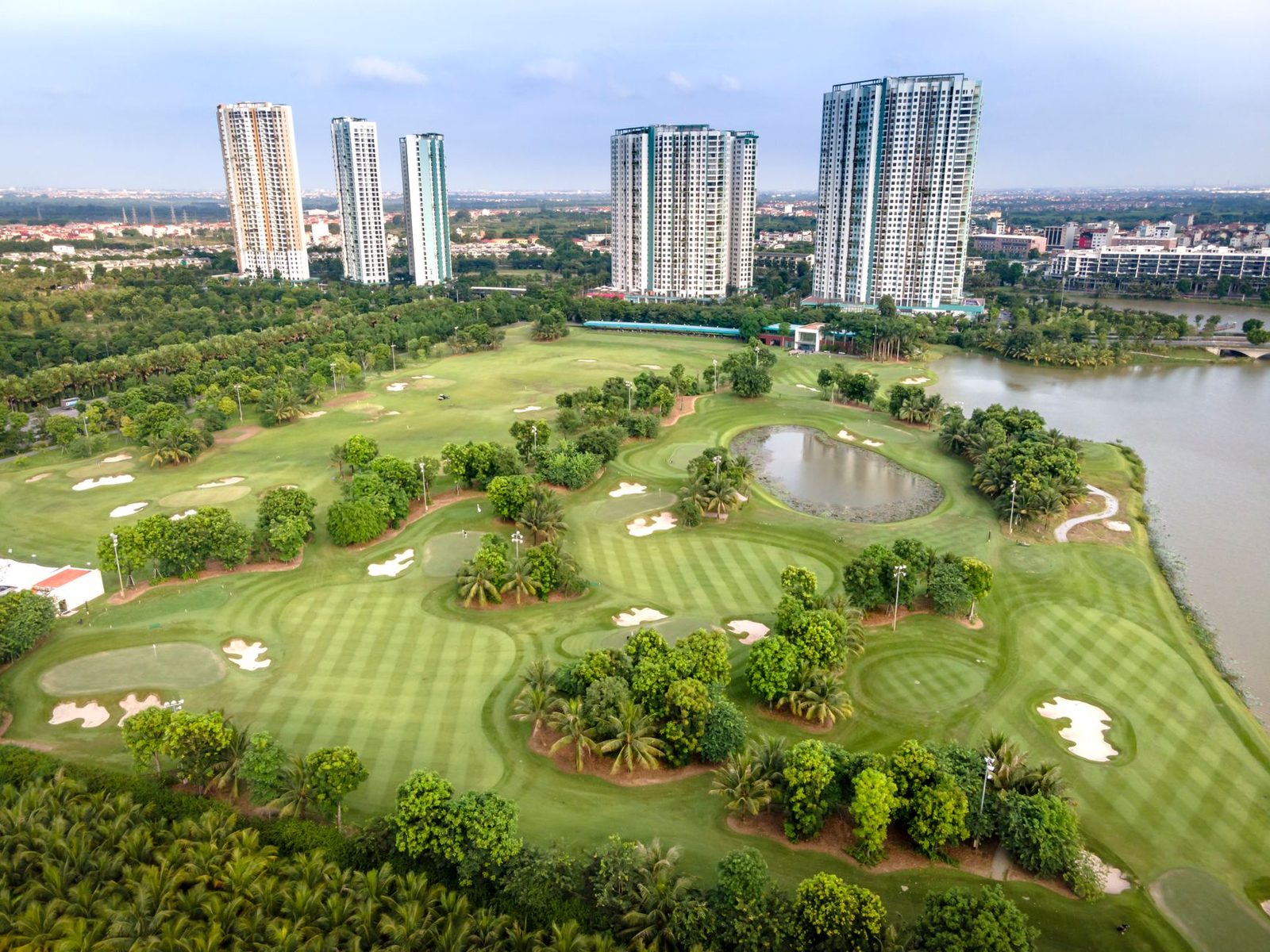
Pondok Indah Golf Course is the green heart of the suburb and one of the few genuine championship layouts inside Jakarta’s city limits. It is a par 72 of roughly 7,240 yards from the back tees, opened in the 1970s, and despite what several travel sites claim, it is an 18-hole course, not 27. The confusion comes from the fact that the club sells nine-hole rounds, so you will see nine and eighteen quoted side by side on the rate card.
Guests are welcome without a member, which is not true of every private club in Jakarta, but you pay heavily for the privilege and you must book ahead. Rates published by the club and valid to 31 December 2026 look like this, all inclusive of green fee, cart, caddy and tax.
| Who and when | 9 holes (sharing cart) | 18 holes (sharing cart) |
|---|---|---|
| Member, any day | Rp380,000 | Rp585,000 |
| Guest, Monday–Thursday | Rp1,118,000 | Rp1,618,000 |
| Guest, Friday | Rp1,418,000 | Rp1,928,000 |
| Guest, Saturday morning | Rp2,728,000 | Rp3,968,000 |
| Guest, Saturday afternoon | Rp2,458,000 | Rp3,688,000 |
| Guest, Sunday/holiday afternoon | Rp2,358,000 | Rp3,418,000 |
| Guest with member, Mon–Thu | Rp1,008,000 | Rp1,428,000 |
A few things the rate card does not shout about. Playing a single cart rather than sharing adds Rp210,000 for nine holes or Rp280,000 for eighteen. Cancellation is charged at 25 per cent two days out, 50 per cent if you cancel after midday the day before, and 100 per cent for a no-show, which is stricter than most Jakarta clubs. Reservations are taken daily 08:00 to 17:00 by phone or WhatsApp. And the weekend premium is brutal: a Saturday morning round as an unaccompanied guest costs more than double the same round on a Tuesday. If you are here for golf and have any flexibility, play midweek.
The driving range and golf academy operate alongside the course and are considerably more accessible, both in price and in booking. If you simply want to hit balls for an hour after work, that is the sensible option. There is also a water park within the wider golf and country club complex, which is the reason a lot of local families end up here on a Sunday.
Pondok Indah Hospital: Why Everyone Knows the Name
RS Pondok Indah opened in 1986 and became the reference point for private healthcare in Jakarta, to the extent that “Pondok Indah” functions as shorthand for a good hospital among expatriates and wealthy Indonesians alike. The group now runs three hospitals: the original in Pondok Indah, RSPI Puri Indah in West Jakarta from 2008, and RSPI Bintaro Jaya from 2017.
The details that matter if you are unwell in Jakarta. The Pondok Indah and Puri Indah hospitals are Joint Commission International accredited and run dedicated international patient services with English-speaking coordinators, which removes most of the friction of being treated abroad. In 2025 the Pondok Indah hospital was named in the Newsweek and Statista list of Best Specialized Hospitals in Asia-Pacific across cardiology, orthopaedics and paediatrics, the only Indonesian hospital listed in three specialties. Orthopaedics in particular draws patients from across the region, and there is a substantial medical tourism flow from neighbouring countries.
Practically: it is expensive by Indonesian standards and cheap by Singaporean ones, which is exactly the market it serves. Bring your insurance details, expect to pay a deposit for anything inpatient, and expect the emergency department to be efficient. If you are in Jakarta on business and want a hotel within reach of it, our South Jakarta hotels guide flags the closest options.
The Schools Cluster and What It Means for Families
The single strongest reason foreigners live in Pondok Indah is the schools. Jakarta Intercultural School, founded in 1951 and the largest international school in the country, operates across more than one South Jakarta campus, with an elementary campus in Pondok Indah itself, the main middle and high school provision at Cilandak, and early years at Pattimura in Kebayoran Baru. Living in Pondok Indah means one of those campuses is a short drive rather than an hour’s crawl.
The money is significant. For 2026/27, JIS annual tuition spans roughly Rp131 million at the youngest end to about Rp633 million at the top of the school, with primary years commonly Rp320 million to Rp420 million and secondary running higher. On top of that there is a one-off capital fee of around Rp68 million per student and a non-refundable application fee near Rp5.5 million. Employers relocating staff usually cover school fees; individuals moving themselves frequently do not realise the scale until the offer letter arrives.
Other options within reach include the Australian Independent School, whose main campus is at Pejaten, a handful of well-regarded national-plus schools, and several Korean and Japanese community schools reflecting the local demographic. British School Jakarta, which relocation blogs routinely list as a South Jakarta school, is actually in Bintaro across the boundary in Tangerang. That is a different commute entirely, and families who assume otherwise end up in the wrong postcode.
The order of operations for a relocating family is not negotiable: choose the school, time the drive at 07:15 on a weekday, then look at houses. Doing it the other way round is how people end up moving twice.
Housing and Rent in Plain Numbers
Pondok Indah is among the most expensive residential addresses in Indonesia, and the price gap versus the rest of Jakarta is stark. Landed houses on the classic Pondok Indah plots are usually marketed in dollars, and something substantial, meaning 500 to 800 square metres of land with four or five bedrooms, a pool and staff quarters, commonly lists around USD 4,000 to 5,000 a month. Smaller houses on the fringes of the estate start closer to Rp29 million to Rp35 million a month.
On the apartment side, Pondok Indah Residence units run roughly Rp20 million to Rp69 million a month depending on size and tower, while Pondok Indah Golf Apartment, the older complex overlooking the course, spans about Rp34 million to Rp88 million with two, three and four bedroom layouts. Both come with the full facilities package: pools, gym, tennis, badminton, 24-hour security, function rooms.
| Option | Monthly rent | Best for | Trade-off |
|---|---|---|---|
| Landed house, core Pondok Indah | USD 4,000–5,000 | Families, entertaining, pets | Highest cost, you must drive everywhere |
| Pondok Indah Golf Apartment | Rp34m–88m | Families wanting facilities without a garden | Older building stock |
| Pondok Indah Residence | Rp20m–69m | Couples and small families | Mall-adjacent, so weekend noise |
| Cilandak or Cipete instead | Rp12m–30m | Value, and MRT access | Smaller plots, less prestige |
| Kemang instead | USD 2,500–4,500 | Social life, walkable strip | Flood risk, no MRT |
Two warnings. Indonesian landlords generally expect twelve months paid up front, and often two years, which is a large cash outlay that catches new arrivals badly. And the further you get from the golf course, the faster the price falls, so it is worth walking the estate boundaries before signing anything. For a broader view of where to base yourself in the city, our best areas to stay in Jakarta guide compares the main options side by side.
Where to Eat That Is Not a Mall Chain
This is the hardest section to write about Pondok Indah, because so much of the eating genuinely does happen inside the mall complex. But it is not the whole picture.
Jalan Metro Pondok Indah, the 3.1 kilometre spine running from Jalan Margaguna Raya down to the Lebak Bulus junction, carries a string of standalone restaurants and cafes outside the mall footprint: Japanese, Korean, Chinese-Indonesian seafood houses, a growing number of independent coffee shops. The Korean concentration in particular is real and reflects the sizeable Korean expat community in this corner of the city. Expect Rp120,000 to Rp250,000 a head at the sit-down places, before service and tax.
For anything cheaper, the honest answer is to head east. The warungs and street kitchens around Cipete Raya, Fatmawati and Blok M are ten to fifteen minutes away by car and cost a fifth as much. A plate of nasi padang or a bowl of soto in that direction is Rp25,000 to Rp45,000. Our cheap eats in Jakarta guide and street food guide both cover that belt properly. For destination dining, Pondok Indah loses comfortably to Senopati and SCBD, as our best restaurants in Jakarta list makes clear, and the SCBD and Sudirman guide explains why that district hoovered up the ambitious kitchens.
Pondok Indah With Children
If you have children in tow, Pondok Indah suddenly stops being a chore and starts being the most efficient place in Jakarta. The mall complex concentrates a genuinely large number of children’s venues in one air-conditioned block: indoor playgrounds, trampoline and ninja-course centres, character parks aimed at under-sevens, and arcade complexes, spread across PIM 1, 2 and 3 and reachable from each other on foot. Individual operators do come and go, so check current listings before you promise anything to a five-year-old, but the category density is stable and has been for years.
Beyond the mall, the water park in the golf and country club complex is the main outdoor draw, with a wave pool, a lazy river and shallow play areas. It is popular with local families at weekends and much calmer midweek.
What Pondok Indah does not have is a good public park. The pleasant pocket parks people mention in the same breath, Taman Langsat and Taman Ayodia, are actually up in Kebayoran Baru near Blok M, fifteen to twenty minutes away. If you want green space with your children rather than air conditioning, Tebet Eco Park is the better target even though it is further. Our things to do in Jakarta with kids guide ranks these properly, and family-friendly hotels in Jakarta covers where to sleep with a young family.
The Transport Problem
Pondok Indah’s biggest structural weakness is that the MRT does not come here. The North–South line runs down Jalan RS Fatmawati, a couple of kilometres east, and the two nearest stations are Lebak Bulus Grab at the southern terminus and Fatmawati Indomaret one stop north. Both are ten to fifteen minutes away by car in good conditions, and considerably more at peak. Our Jakarta MRT guide covers fares and operating hours; the short version is that the line runs from around 05:00 to late evening, and Lebak Bulus to Bundaran HI costs Rp14,000 and takes about half an hour.
TransJakarta runs feeder services into the area and there are angkot minibuses, but neither is designed for visitors and both are slow. In practice, everyone here uses Grab or Gojek. A car from Pondok Indah Mall to Blok M is roughly Rp45,000 to Rp70,000; a motorbike is Rp20,000 to Rp30,000 and about half the time. Our Grab versus Gojek comparison explains which app performs better where, and Jakarta transportation costs has the full fare picture. For the bus network, see the TransJakarta guide.
Then there is the school run. Jalan Metro Pondok Indah and the roads around the mall intersection seize up twice a day, roughly 06:45 to 08:15 and 14:00 to 16:00, on top of the normal evening peak. This is not ordinary Jakarta congestion; it is a concentrated surge of family cars converging on a small number of school gates, and a journey that takes eight minutes at 11:00 can take thirty-five at 07:30. An underpass at the mall junction helped but did not solve it. If you are visiting, arrive after 10:00 and leave before 15:00, or accept the consequences. Our guide to avoiding Jakarta traffic covers the odd-even plate rules that apply on some major roads nearby.
One more seasonal note. Between November and March, heavy afternoon rain can flood underpasses and low sections along the Grogol river corridor west of the estate. Pondok Indah itself is better drained than Kemang, but the roads connecting it to the rest of the city are not immune.

The Verdict: How to Use This Pondok Indah Jakarta Guide
Skip Pondok Indah as a tourist. That is the recommendation, and it is not a close call. If you have three days in Jakarta, they belong to Kota Tua, Menteng, the Blok M and Cipete axis, and a night out in Senopati. Nothing in Pondok Indah will make your trip memorable.
Come anyway if one of these four things is true. You are travelling with children and need a reliable half-day of indoor entertainment, especially in the wet season. You have a medical appointment or want a consultation at one of Asia’s better-regarded private hospitals. You have booked a round of golf, ideally midweek when the guest rate halves. Or you are scouting somewhere to live, in which case Pondok Indah belongs on your shortlist alongside Kemang, Cilandak and the Kebayoran Baru streets covered in our Senayan area guide.
There is a fifth, softer reason: if you are curious about how Indonesia’s wealthy actually live, an hour driving the estate roads and an afternoon in the mall complex tells you more than any museum will. That is a legitimate interest. Just do not confuse it with sightseeing.
Pondok Indah Jakarta Guide: Frequently Asked Questions
How do I get to Pondok Indah from central Jakarta? Take the MRT south to Lebak Bulus Grab or Fatmawati Indomaret, which costs up to Rp14,000 and takes about 30 minutes from Bundaran HI, then a Grab car for the last two kilometres at Rp25,000 to Rp40,000. A direct Grab from Thamrin is Rp90,000 to Rp160,000 and takes 40 to 90 minutes depending on the hour.
Is Pondok Indah Mall worth visiting? Only if you were coming to the area anyway or you have children. It is a very good suburban mall complex with four connected buildings, but Grand Indonesia, Plaza Indonesia and Plaza Senayan are all more interesting and far easier to reach. Pondok Indah’s advantage is the concentration of children’s venues, not the shopping.
What is the difference between PIM 3 and Street Gallery? They are separate buildings. Street Gallery opened in 2013 as a three-storey food and drink extension attached to PIM 1. PIM 3 opened in April 2021 as a full premium mall anchored by Seibu and Ranch Market. Older articles call Street Gallery “PIM 3”, which was true before the real PIM 3 existed.
Can non-members play Pondok Indah Golf Course? Yes, with an advance booking. Guest rates in 2026 are Rp1,618,000 for eighteen holes Monday to Thursday, rising to Rp3,968,000 on Saturday mornings, all inclusive of cart, caddy and tax. Playing with a member cuts roughly Rp200,000 off. Cancellation charges apply from two days before the tee time.
Is Pondok Indah a good place for expats to live? It is excellent for families with children at Jakarta Intercultural School and for anyone who wants a house with a garden. It is a poor choice for singles and couples who want to walk to a bar, because there is no MRT and no walkable social strip. Kemang, Senopati or Cipete serve that profile far better at lower cost.
How bad is the traffic really? Bad in a narrow window. Jalan Metro Pondok Indah is manageable most of the day, but between 06:45 and 08:15 and again from 14:00 to 16:00 the school run turns an eight-minute drive into thirty-five. Add the standard evening peak from 16:30 to 20:00 and Friday afternoons, which are the worst of the week.
Where should I stay if I have an appointment at Pondok Indah Hospital? There is no hotel cluster in Pondok Indah itself. Most people base themselves in the wider South Jakarta hotel belt around Senopati, SCBD or Cilandak and take a fifteen to twenty-five minute Grab. Book somewhere on the same side of the city as the hospital so the morning journey does not cross the centre.
Is Pondok Indah safe? Yes, it is among the safest parts of Jakarta. Estate roads are patrolled, houses have private security, and the mall complex is heavily staffed. The realistic risks are traffic, opportunistic phone theft on quiet streets after dark, and overpaying for a taxi you flagged down rather than booked through an app.
Where to Go Next
If Pondok Indah has told you what you needed to know, the rest of the city awaits. Start with our Central Jakarta guide for the monuments and museums, then work outward through North Jakarta and Ancol for the waterfront and theme parks. For shopping with more character than a suburban mall, our Blok M shopping guide is the antidote. Families who want a full day out should look at Taman Mini Indonesia Indah, and anyone still building an itinerary should start from the best attractions in Jakarta and our overview of getting around Jakarta.