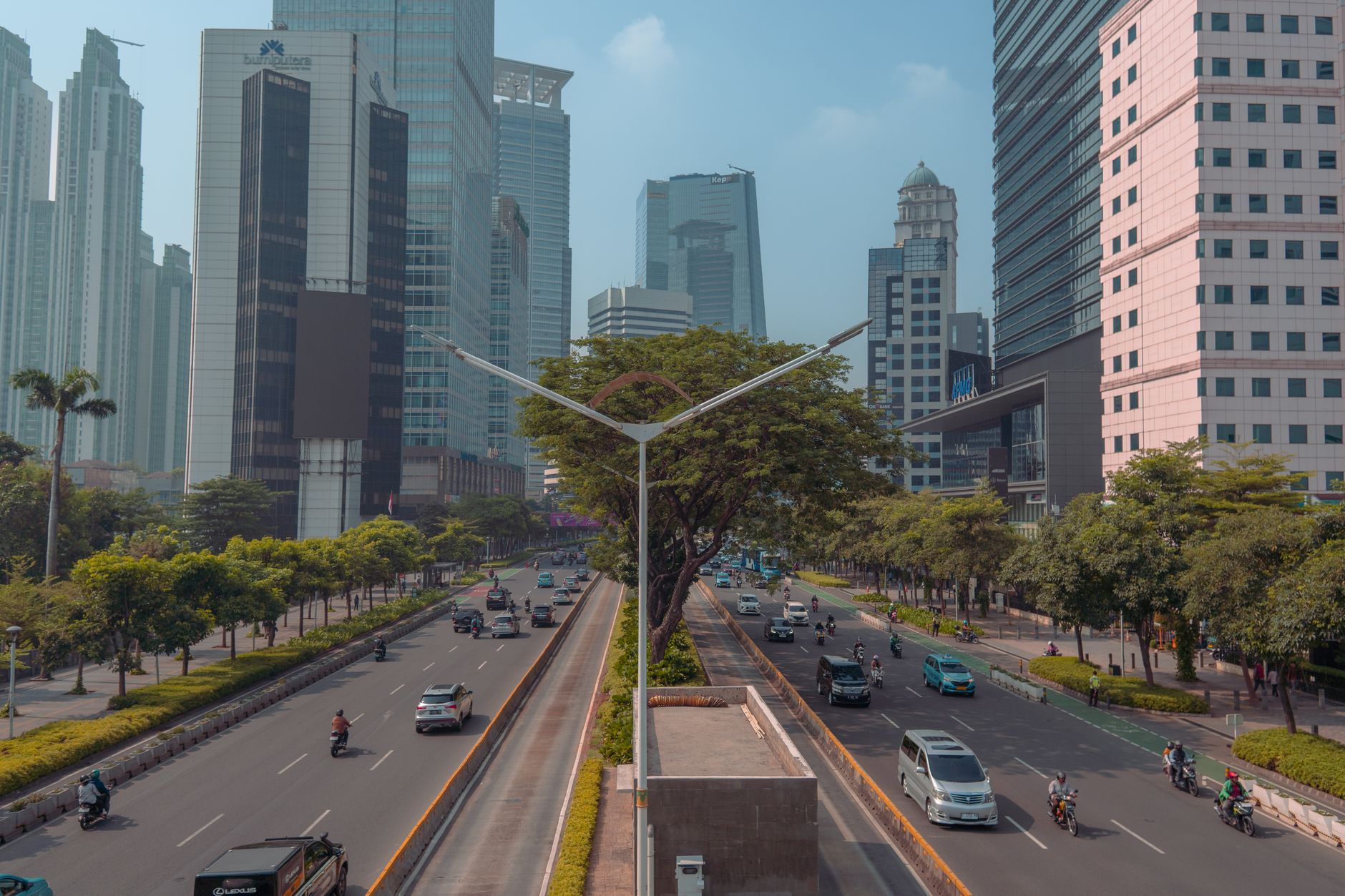
South Jakarta is not a neighbourhood. It is roughly 145 square kilometres containing a national stadium, a golf course, three or four separate nightlife economies, Jakarta’s densest concentration of specialty coffee roasters, and about two million people who mostly do not know each other. Any South Jakarta guide that treats it as a single destination will send you to the wrong half of it. The fix is simple: stop thinking in districts and start thinking in stations. The MRT North–South line cuts straight down the spine of the place, and once you understand the line, the map falls into shape.
This is the deep-dive companion to our Jakarta neighbourhoods guide, which frames how the city’s five administrative cities fit together. If you want the accommodation side of South Jakarta, that lives in our South Jakarta hotels roundup. If you want the nights out, see Kemang nightlife and SCBD nightlife. And for the northern half of the same rail line, our Central Jakarta guide picks up where this one stops.
Why the MRT Is the Only Sane Frame for South Jakarta
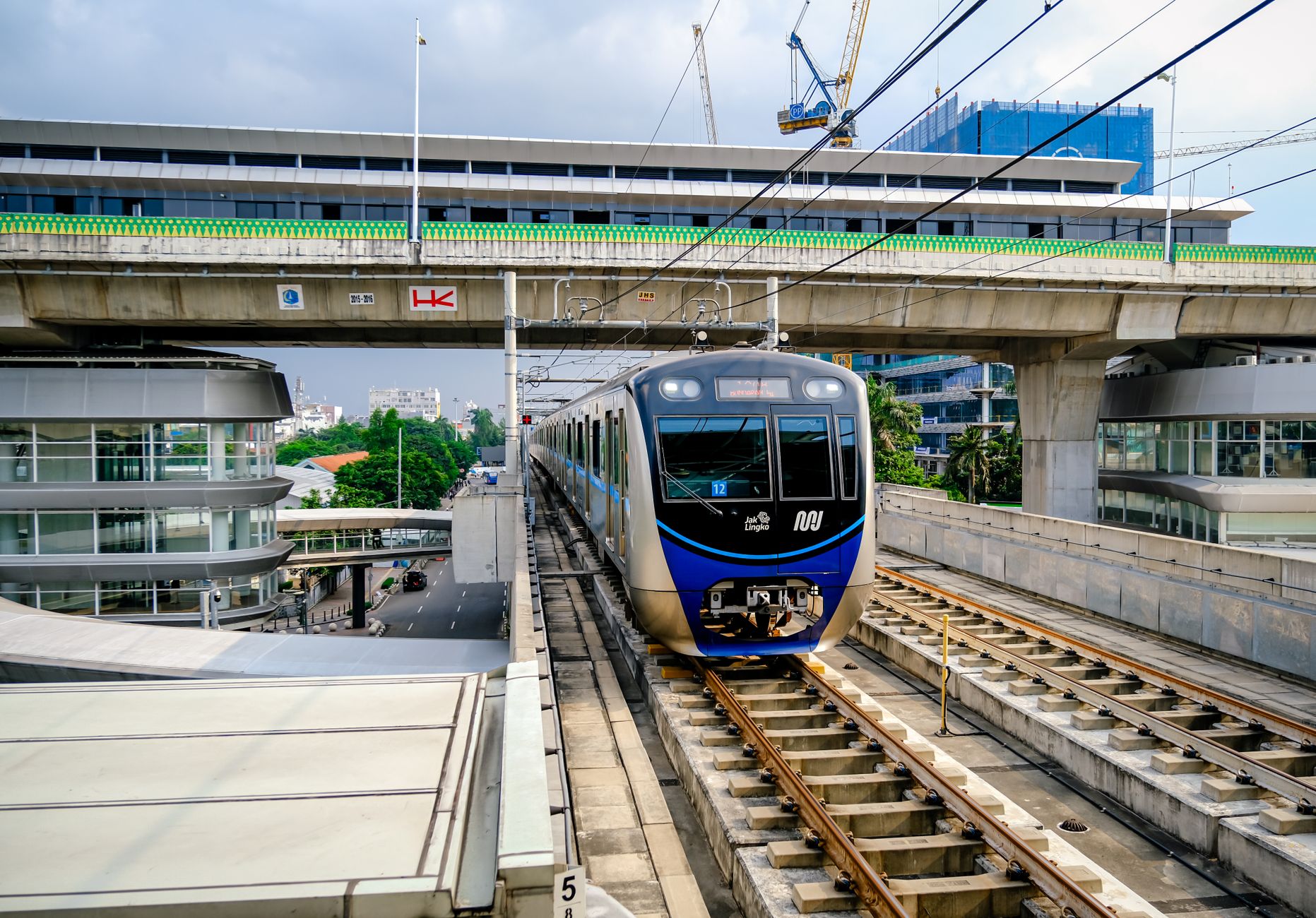
The North–South line runs 16 kilometres from Lebak Bulus Grab in the far south to Bundaran HI Bank Jakarta at the top of Jalan Thamrin, with 13 stations: seven elevated, six underground. End to end takes about 30 minutes. Doing the same journey by car at 17:30 on a Thursday can take 90 minutes and occasionally longer. That single fact reorganises how you should plan a day here.
Fares run roughly Rp3,000 to Rp14,000 depending on distance, with the full Lebak Bulus to Bundaran HI run at the top of that range. You tap in and out with a stored-value card, a bank card, or the MRT-J app; our JakLingko card guide explains which one to buy on arrival, and the Jakarta MRT guide covers etiquette, women-only carriages and interchange logic in more detail. First trains leave around 05:00. Last departures are late evening and have shifted about over the years, so check the app rather than trusting a printed timetable; assume you want to be on a train well before midnight, and after that it is Grab or Gojek only.
One quirk worth knowing before you read the station list: almost every station now carries a corporate sponsor’s name. Lebak Bulus Grab, Fatmawati Indomaret, Cipete Raya Tuku, Blok M BCA, Senayan Mastercard, Istora Mandiri, Setiabudi Astra, Dukuh Atas BNI, Bundaran HI Bank Jakarta. Visa took Blok A in August 2026. Haji Nawi, ASEAN and Bendungan Hilir were still unsponsored at the time of writing. Announcements and signage use the sponsored names, Google Maps sometimes uses the short names, and locals almost always say the short version. If you ask for “Cipete” nobody will correct you.
Walking the Line Southward, Station by Station
Senayan Mastercard and Istora Mandiri: the green lung and the malls
These two sit either side of the Gelora Bung Karno sports complex, and the administrative boundary between Central and South Jakarta runs awkwardly through the area, which is why sources disagree about which city they belong to. Ignore that. What matters is that this is the one stretch of the line where you can walk for an hour without hitting a wall of traffic.
Istora Mandiri puts you at the GBK complex: the 1962 main stadium, the Istora arena that hosts the Indonesia Open badminton, and a wide public jogging loop that fills with several thousand people every Sunday morning. It is free, it is genuinely pleasant, and it is the closest thing central Jakarta has to a park you can move in. Senayan Mastercard drops you between Plaza Senayan and Senayan City, two upmarket malls about six minutes’ walk apart, plus the sprawling Senayan Park across the road. If you only have time for one Jakarta mall, our best malls in Jakarta comparison makes the case for a different one, but Plaza Senayan is the most civilised place on this line to sit out an afternoon downpour.
Bendungan Hilir and Setiabudi Astra: the office edge
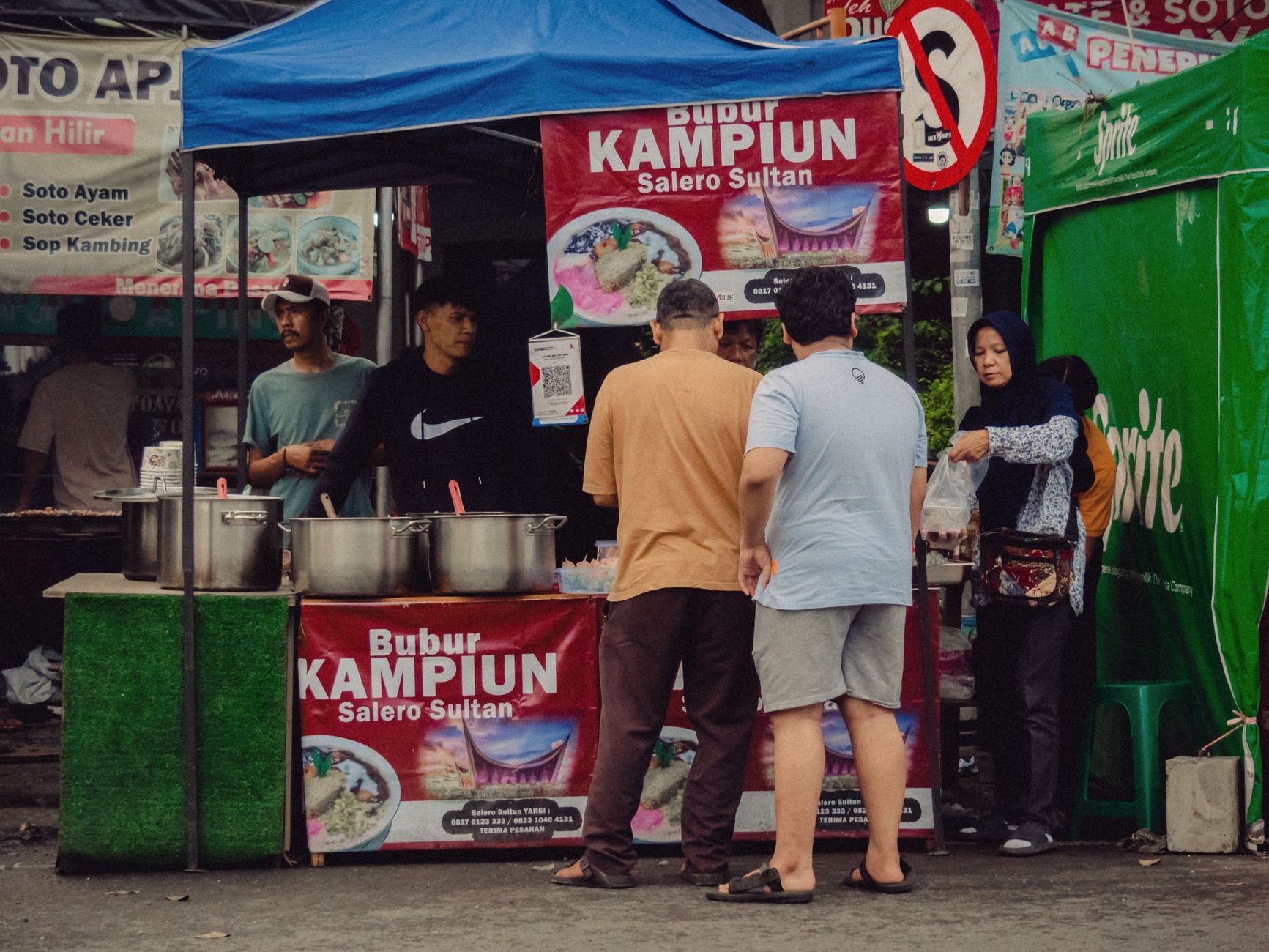
Be honest about these two: they are administratively Central Jakarta, not South, and they exist for people who work in the Sudirman office towers. Bendungan Hilir, universally shortened to Benhil, is worth a stop for exactly one reason, which is the Benhil street food market on Jalan Bendungan Hilir. It runs properly in the late afternoon and evening and goes into overdrive during Ramadan, when it becomes one of the biggest takjil markets in the city. Outside Ramadan it is a solid, unglamorous, extremely cheap dinner: nasi padang, martabak, sate, all under Rp40,000. Our Jakarta street food guide has the wider picture.
Setiabudi Astra is a commuter station and nothing else. Skip it unless you are staying there. Dukuh Atas BNI, one stop further north, is the real prize: it is the city’s main interchange, linking MRT, the KRL commuter line, the airport rail link, the LRT and a large TransJakarta hub. If you are heading to the airport by train, you change here.
ASEAN and Blok M BCA: the most useful stop on the line
Going south, the line surfaces onto the viaduct at ASEAN station (formerly and still often called Sisingamangaraja), which sits beside the ASEAN Secretariat and a cluster of embassies. It is a two-minute walk from ASEAN to Blok M BCA, so treat them as one destination.
Blok M is where South Jakarta stops being corporate and starts being interesting. Blok M Square and Blok M Plaza are old-school Indonesian malls with a bookshop basement and food courts that have not been refurbished since the 2000s, which is part of the appeal. Melawai, the block behind them, is Jakarta’s Little Tokyo: Japanese izakayas, karaoke rooms and salarymen expat bars that have been running for decades. And M Bloc Space, built into a decommissioned state money-printing complex five minutes from the station, is the best-executed adaptive reuse project in the city, with indie coffee, live music, small-label retail and a rotating events calendar. Entry is free. Our Blok M shopping guide goes deeper, and if the karaoke rooms tempt you, read the Jakarta karaoke guide first so you understand the pricing model.
If you have one stop in South Jakarta, make it this one.
Blok A and Haji Nawi: the residential middle
Here is where a lot of guides quietly stop being useful, because there is no attraction at either station. Blok A (now Visa Blok A) serves Pasar Blok A, a working traditional market strongest in the morning, and a stretch of Jalan RS Fatmawati lined with tyre shops and phone repair kiosks. Haji Nawi is a quiet Kebayoran Baru residential station named after a local landowner.
What both stations actually offer is access to a walkable grid of tree-lined streets that almost no visitor sees. Kebayoran Baru was laid out in the early 1950s as Indonesia’s first planned satellite suburb, and the bones of that plan survive: wide pavements, roundabouts, low houses, mature trees. Within ten minutes of Haji Nawi you can find neighbourhood warungs selling nasi uduk for Rp15,000 and small independent bakeries that would charge triple in Senopati. If you have half a morning and no fixed plan, get off at Haji Nawi and walk west. See our Jakarta hidden gems piece for more in this vein.
Cipete Raya Tuku: the coffee stop
The station is named after Toko Kopi Tuku, and that naming deal tells you everything. Tuku started as a tiny walk-up window on Jalan Cipete Raya, built its reputation on an iced palm-sugar latte, and grew into a national chain without ever losing the original shopfront. The street around it has become one of the best short cafe crawls in Jakarta: Pikul Coffee and Roastery and SRSLY Coffee sit almost next door to each other in the low numbers of Cipete Raya, Sophie Authentique does serious French pastry further along at number 66, and Kukira Coffee and Space occupies a converted house on a side street a few minutes off the main road.
Almost all of it is within a ten-minute walk of the station, which makes Cipete the single most efficient stop on the line for anyone who cares about coffee. Expect Rp30,000 to Rp55,000 for a filter or a signature latte, which is roughly double a chain price and about a third of what you would pay in London.
Fatmawati Indomaret: hospitals, furniture and cheap food
Fatmawati is a big, functional stop serving the Fatmawati General Hospital, a long commercial strip and the Cilandak Town Square area a Grab ride to the west. It is also a decent food stop: the streets off Jalan RS Fatmawati are thick with warungs, and the area around Blok M and Fatmawati is the traditional home of Jakarta’s best-known nasi uduk stalls, which our nasi uduk guide maps properly.
Lebak Bulus Grab: the end of the line, and the way out of town
Lebak Bulus is the terminus, the depot, and the reason a lot of people use the line at all. It connects directly to Poins Square mall and, more importantly, to the Lebak Bulus intercity bus terminal, which is where long-distance coaches to Bandung, Yogyakarta and beyond depart. It is also the closest MRT station to Pondok Indah, though “closest” still means a 10 to 15 minute Grab ride. If you are planning a trip out of the city, our day trips from Jakarta piece explains which departures are worth the early start.
| Station (short name) | Type | Worth a stop? | What’s actually there |
|---|---|---|---|
| Senayan | Underground | Yes, for malls and rain | Plaza Senayan, Senayan City, Senayan Park |
| Istora | Underground | Yes, Sunday mornings | GBK stadium complex, free public jogging loop |
| Bendungan Hilir | Underground | Evenings only | Benhil street food market, office towers |
| Setiabudi | Underground | No | Offices, serviced apartments |
| ASEAN | Elevated | Only as a walk-in to Blok M | Embassies, ASEAN Secretariat |
| Blok M | Elevated | Yes, the best stop | M Bloc Space, Melawai, Blok M Square and Plaza |
| Blok A | Elevated | Morning market only | Pasar Blok A, hardware and phone shops |
| Haji Nawi | Elevated | Only if you like walking | 1950s Kebayoran Baru streets, neighbourhood warungs |
| Cipete Raya | Elevated | Yes, for coffee | Toko Kopi Tuku, Pikul, SRSLY, Sophie Authentique |
| Fatmawati | Elevated | Functional | Hospital, warungs, gateway to Cilandak |
| Lebak Bulus | Elevated | Only in transit | Poins Square, intercity bus terminal, depot |
What the MRT Does Not Reach, and Why That Matters
Here is the awkward truth about this South Jakarta guide’s central conceit: the most talked-about parts of South Jakarta are not on the line. Kemang, Tebet, Pasar Santa, Senopati and Pondok Indah are all off it, and the gap between “on the MRT” and “off the MRT” is the single biggest practical divide in the district.
Senopati and the SCBD spillover
Senopati is the closest of the off-line areas, about a 12-minute walk from ASEAN station or a Rp20,000 Grab ride from Blok M. It is a narrow strip of restaurants, wine bars and design shops that has become the default answer to “where should we eat in Jakarta”. The food is genuinely good and the prices are Jakarta’s highest outside a hotel: expect Rp150,000 to Rp350,000 per head at a mid-range place, before the roughly 21 per cent service and tax that gets added at the till. Adjacent SCBD is a different animal, a purpose-built financial district with rooftop bars stacked in the towers; see our rooftop bars guide for the ones worth the lift ride.
Kemang
Kemang is roughly four kilometres east of the MRT line with no rail access and one main road in, Jalan Kemang Raya, which becomes a car park most evenings. It has been the expat social centre since the 1980s, and it now reads as slightly faded compared with Senopati, though the bar and live music scene is still the deepest in the city. It also floods. During the November to March wet season, parts of Kemang near the Krukut river go under water with real regularity, and 2020 and 2021 both produced waist-deep flooding on Kemang Raya. Renting in Kemang without asking about flood history is a rookie mistake. Our live music venues guide covers what is still worth crossing town for.
Tebet and Pasar Santa
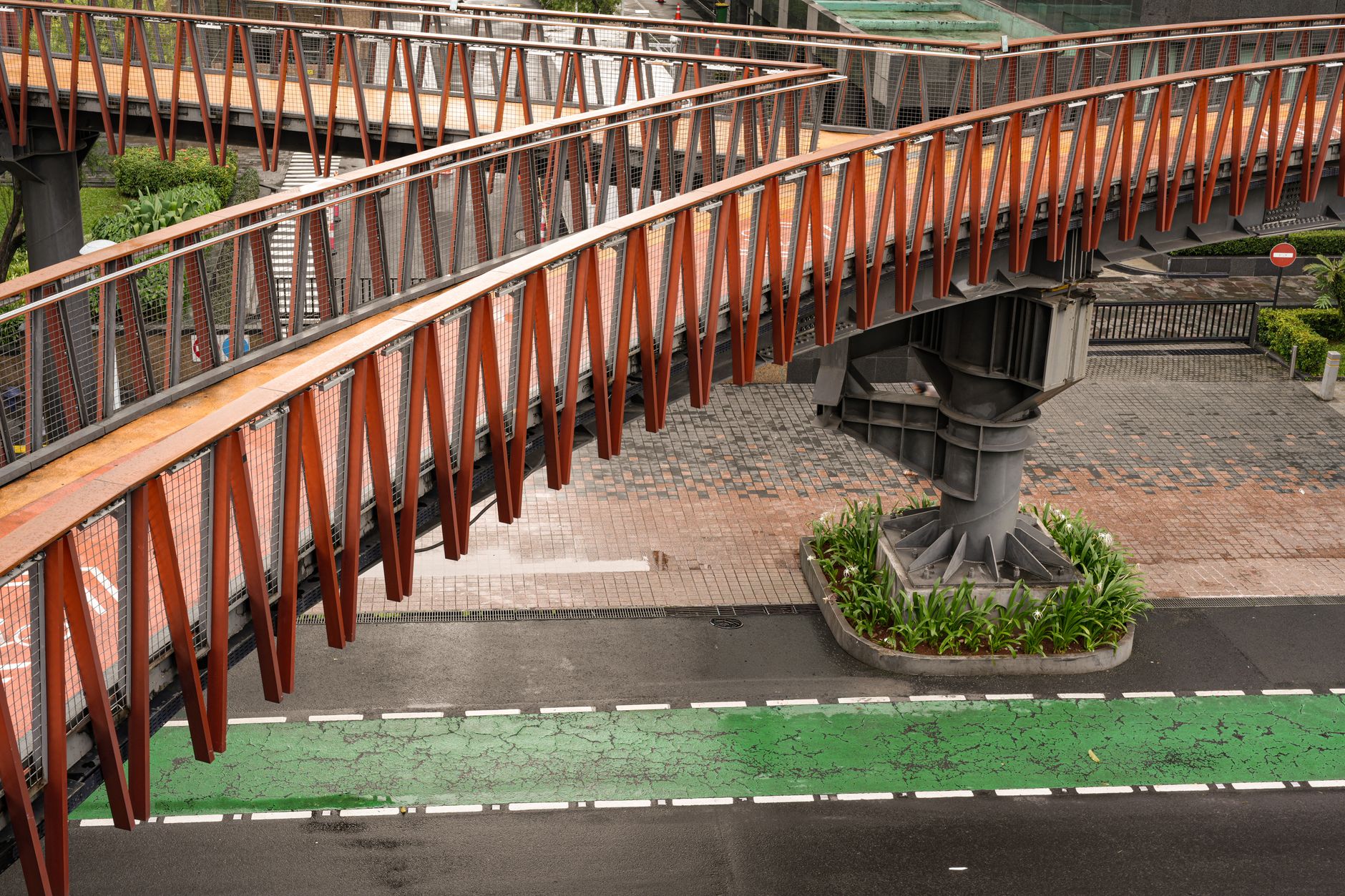
Tebet is served by the KRL commuter line rather than the MRT, which is why it feels culturally separate from the Blok M axis. It is worth the trip for Tebet Eco Park, a Rp100 billion-plus rebuild of two sad municipal parks into a genuinely good piece of public landscape, opened in 2022 and reopened after early over-crowding damage. It is free, open roughly 07:00 to 17:00 daily, and visitor numbers are capped per session with slots bookable through the city’s JAKI app. Go early. The orange Infinity Link Bridge over Jalan Tebet Barat is the photograph everyone takes; the community garden and the children’s play forest are the reasons to stay.
Pasar Santa, in Kebayoran Baru, is the other essential off-line stop. The ground floor is an ordinary wet market. The upper floor was colonised by young Indonesian cooks and record sellers around 2014, collapsed under its own hype, and has since settled into something steadier: 50-odd tiny kitchens, vinyl dealers, and a few of Jakarta’s original third-wave coffee counters. Opening is nominally 11:00 to 22:00, but many stalls only trade Wednesday to Sunday and plenty keep their own hours. Go at lunchtime on a Saturday and expect to spend Rp50,000 to Rp120,000. Our Jakarta food markets guide and flea market and vintage guide both cover it in more detail.
Pondok Indah
Pondok Indah is a 1970s planned suburb of large houses, a golf course and a three-part mall complex, sitting a frustrating 10 to 15 minutes by car west of Lebak Bulus or Fatmawati. There is no rail. If you are visiting with children, going to the hospital, playing golf or house-hunting, it makes sense. As a sightseeing destination it does not, and no amount of mall square footage changes that.
The Coffee, Properly Explained
South Jakarta is the centre of Indonesian specialty coffee, and that is not a marketing claim. Indonesia grows the beans, Jakarta has the disposable income, and South Jakarta has the concentration of young professionals and returning graduates who created the demand. The result is a density of serious cafes that few Asian cities match.
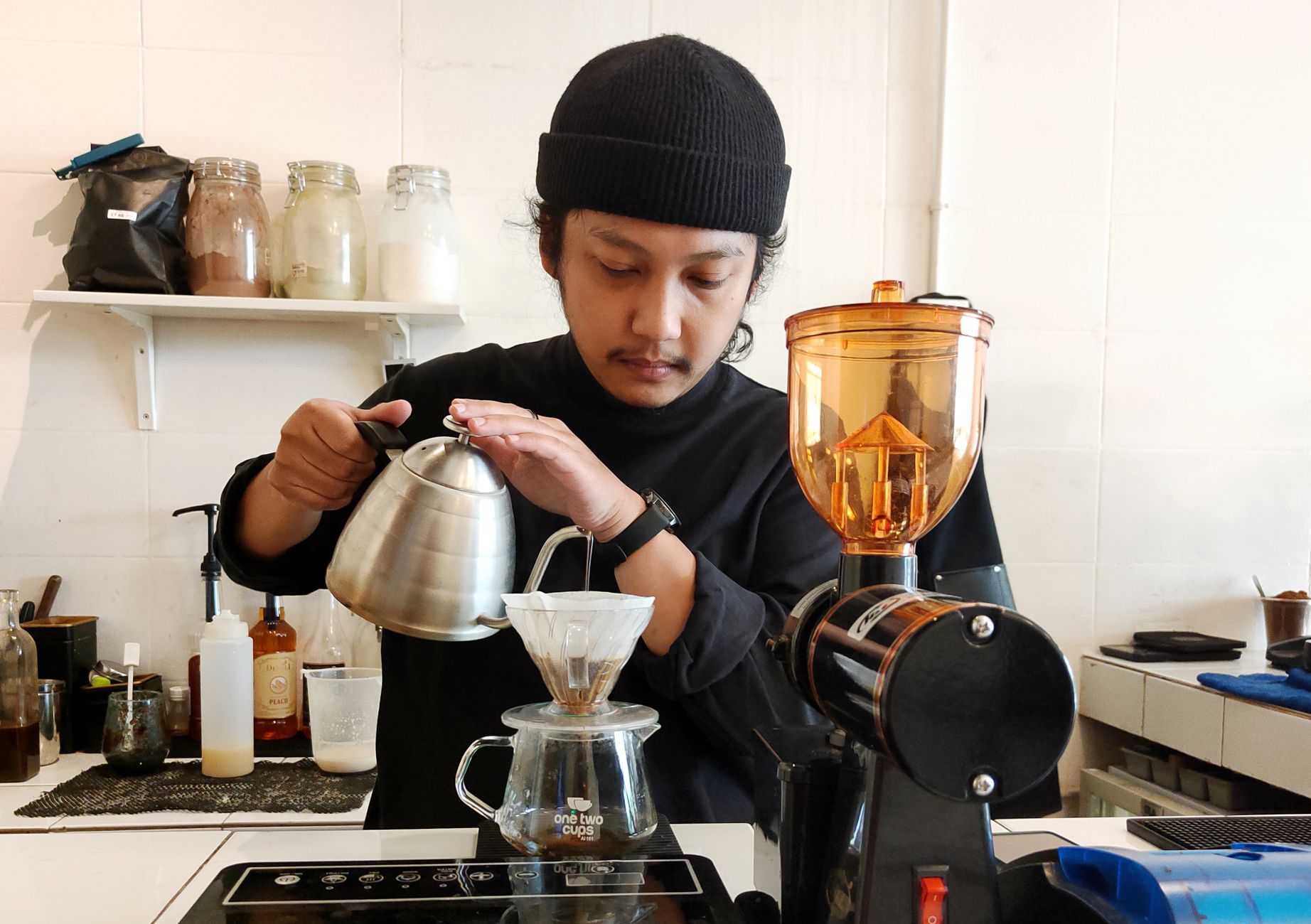
The scene sorts into three tiers. At the top are the tasting-flight roasters: Common Grounds, which pioneered rare micro-lot flights, and Kurasu, the Kyoto roaster that opened its first Jakarta shop in Senopati in 2023 and brings a Japanese pour-over discipline you rarely see locally. In the middle are the neighbourhood roaster-cafes: Ombé in Senopati, KINA on Jalan Birah II with house blends from West Java alongside rotating single origins from Kalimantan, Bali and Papua, Pison, and the Cipete Raya cluster. At the bottom, and I mean that as a compliment, is Toko Kopi Tuku, which proved a Rp22,000 palm-sugar latte could build a national brand.
Two practical notes. Most independents open around 08:00 and close between 21:00 and 23:00, later on weekends. And Jakarta cafes are working spaces: expect laptops, expect it to be full between 14:00 and 18:00 at weekends, and expect the good ones to have deliberately limited plug sockets.
Eating Beyond the Coffee
The gap between what South Jakarta charges and what the rest of the city charges is widest at the dinner table. A bowl of soto betawi at a Blok A warung is Rp30,000. The same dish styled and plated in Senopati is Rp95,000. Neither is wrong, but you should know which one you are ordering.
For the traditional end, work the areas around Blok M, Fatmawati and Cipete: this is where you find the nasi uduk, the sate, the soto and the gado-gado stalls that have been trading for generations. Our soto betawi guide and Betawi cuisine primer explain what to order and why the coconut-milk version differs from the milk version. For the modern end, Senopati and Kemang carry most of the city’s ambitious independent kitchens; our best restaurants in Jakarta list is weighted heavily south for a reason. If you need vegetarian options, South Jakarta is by some distance the easiest part of the city, as the vegetarian and vegan guide sets out.
| Where you eat | Typical spend per head | Service and tax | Best for |
|---|---|---|---|
| Warung near Haji Nawi or Blok A | Rp20,000–45,000 | None | Nasi uduk, soto, breakfast |
| Pasar Santa upper floor | Rp50,000–120,000 | Usually none | Small independent kitchens, weekend lunch |
| M Bloc Space, Blok M | Rp70,000–180,000 | Often added | Casual dinner plus live music |
| Cipete Raya cafes | Rp60,000–150,000 | Usually added | Coffee and brunch |
| Senopati restaurants | Rp150,000–350,000 | ~21% added | Dinner out, wine, date night |
| SCBD rooftops | Rp250,000–600,000 | ~21% added | Views, cocktails, expense accounts |
The Expat Question, Answered Honestly
South Jakarta is where foreigners cluster, and the reason is boringly practical: the international schools are here, the embassies are nearby, and the housing stock includes actual houses with gardens rather than only apartment towers. That clustering has consequences for everyone, including short-term visitors, because it is what pushes prices in Senopati, Kemang and Pondok Indah 30 to 50 per cent above equivalent places in Central or East Jakarta.
On rents, the numbers as of 2026 look roughly like this. A two-bedroom apartment in Senopati runs Rp18 million to Rp31 million a month; three bedrooms go Rp29 million to Rp50 million. A family townhouse in Kemang is typically quoted in dollars at USD 2,500 to 4,500 a month. Pondok Indah Golf Apartment units run Rp34 million to Rp88 million. Landed houses in Pondok Indah are frequently listed around USD 4,000 to 5,000 a month for something large. Move to Tebet, Pasar Minggu or Cilandak and the same money buys noticeably more, which is why an increasing number of longer-term foreigners have quietly left the classic expat streets.
On schools, the anchor is Jakarta Intercultural School, which operates across South Jakarta on more than one campus, with its main secondary provision in Cilandak and early-years and elementary provision further north in Kebayoran Baru and Pondok Indah. Annual tuition sits in a very wide band, roughly Rp130 million at the youngest end up to Rp630 million at the top of the secondary school, with primary commonly Rp320 million to Rp420 million and secondary above that. There is also a one-off capital fee in the region of Rp68 million and a non-refundable application fee around Rp5.5 million. The Australian Independent School has its main campus in Pejaten. British School Jakarta, contrary to what several relocation blogs claim, is not in South Jakarta at all: it sits in Bintaro, over the boundary in Tangerang, which is a meaningful commute difference.
The practical upshot for a family relocating: pick the school first, then draw a 20-minute morning drive radius around it, then look at housing. Doing it the other way round is how people end up with a 70-minute school run.
| Area | MRT access | Rough monthly rent (family unit) | Suits |
|---|---|---|---|
| Senopati / Kebayoran Baru | 12 min walk to ASEAN | Rp18m–50m | Couples, singles, short postings |
| Kemang | None; Grab only | USD 2,500–4,500 | Families wanting a garden, social expats |
| Pondok Indah | None; 10–15 min to Lebak Bulus | Rp34m–88m+ | Families near JIS, golfers, medical stays |
| Cipete / Cilandak | On the line | Rp12m–30m | Value seekers who still want the coffee |
| Tebet | KRL only | Rp8m–20m | Younger residents, creatives, budget-conscious |
Traffic, Flooding and the Things Nobody Puts in the Brochure
South Jakarta’s traffic is not evenly bad; it is bad in specific, predictable places. Jalan Kemang Raya, Jalan Antasari, the Fatmawati corridor and Jalan Metro Pondok Indah at school-run times are the worst offenders. Peak hours run roughly 07:00 to 09:30 and 16:30 to 20:00, and Friday afternoons are worse than the rest of the week because of Friday prayers plus the weekend exodus. The odd-even licence plate scheme applies on some major roads on weekdays and catches out visitors in hired cars; our guide to avoiding Jakarta traffic spells out the current rules, and the car rental guide explains why hiring a car with a driver beats self-driving here.
For anything off the rail line, the default is a motorbike taxi. A Gojek or Grab bike from Blok M to Kemang is around Rp20,000 to Rp30,000 and takes 15 minutes; the same trip in a car can take 40. Our Grab versus Gojek comparison covers which app to install, and Jakarta transportation costs has the full fare picture. TransJakarta buses fill the gaps the MRT leaves, particularly Corridor 1 and the feeder routes into Kemang and Pondok Indah; most corridors wind down around 22:00 with a handful of night services, as our TransJakarta guide details.
On flooding: November to March is the wet season, and South Jakarta’s low-lying pockets, especially along the Krukut and Ciliwung rivers through Kemang, Mampang and parts of Pasar Minggu, are genuinely vulnerable. Rain tends to arrive in the mid-afternoon and clear within a couple of hours, but when it is heavy, drains back up and side streets become impassable within twenty minutes. Build slack into your plans, and if you are on the MRT you will mostly be fine, because the line is either elevated or below the water table with pumps.
Finally, the price honesty. Everything in Senopati, SCBD, Kemang and Pondok Indah costs meaningfully more than the same thing elsewhere in Jakarta. Not double, but consistently 30 to 50 per cent up, and the gap is widest on coffee, cocktails and rent. If your budget is tight, the budget travel guide and cheap eats guide will save you more here than in any other part of the city.
How to Use This South Jakarta Guide in One Day
If you have a single day and want the district’s actual character rather than its shopping malls, ride the line and get off four times.
Start at Istora Mandiri around 07:30 and walk a loop of the GBK complex while it is still cool. Take the train two stops to Blok M, spend an hour in Blok M Square and Melawai, then walk to M Bloc Space for a mid-morning coffee. Hop back on and go two more stops to Cipete Raya for a second coffee, because that is the point of Cipete. Grab a bike taxi east to Pasar Santa for lunch upstairs. In the afternoon, either continue by bike to Tebet Eco Park, or reverse north and get off at Bendungan Hilir for the evening street food market. Finish in Senopati or at a SCBD rooftop, and take a Grab home because the last trains are earlier than you think.
That itinerary costs around Rp40,000 in MRT fares, Rp80,000 in bike taxis and whatever you decide to spend on food. Slot it into a longer trip using our three-day Jakarta itinerary, which balances the south against Kota Tua and Menteng.
South Jakarta Guide: Frequently Asked Questions
Is South Jakarta worth visiting for a tourist? Yes, but not for sights. South Jakarta has almost no monuments and few museums. What it has is the city’s best eating, its best coffee, its best nightlife and its most walkable planned streets. Come here for a day of neighbourhoods and food, and spend your monument time in Central Jakarta and Kota Tua instead.
How do I get from the airport to South Jakarta? The cheapest reliable route is the airport rail link to Sudirman or BNI City, then a two-minute walk to Dukuh Atas BNI and the MRT south. Total around Rp85,000 and 75 to 90 minutes. A Grab direct to Blok M runs Rp250,000 to Rp400,000 and takes 60 to 150 minutes depending entirely on traffic.
Which South Jakarta area should I stay in? If you want to walk to things, stay near Senopati or between ASEAN and Blok M stations. If you want space and a pool at a lower price, Cipete and Cilandak give you more for the money and keep you on the rail line. Kemang has the most character but no MRT, which will cost you an hour a day.
Is the MRT enough to get around South Jakarta? For the corridor, yes. For Kemang, Tebet, Pasar Santa and Pondok Indah, no. Plan on combining the MRT with motorbike taxis for the last two to four kilometres. That combination is faster and cheaper than a car for almost every journey inside the district.
Is South Jakarta safe at night? Broadly yes. Violent crime against visitors is rare, and the main risks are phone snatching on quiet streets, inflated bar tabs in a small number of Melawai and Kemang venues, and getting stranded after the trains stop. Use the ride apps rather than street taxis, agree drinks prices where a menu is not shown, and you will be fine.
When is the worst time to be in South Jakarta? Weekday rush hours, Friday afternoons, and heavy rain days between November and March. Ramadan changes the rhythm rather than ruining it: daytime dining is quieter and many restaurants curtain their windows, but the evening food markets, especially Benhil, become the best they are all year.
How much should I budget per day? A frugal day using warungs and the MRT runs Rp250,000 to Rp350,000 excluding accommodation. A comfortable day with specialty coffee, a mall lunch and a Senopati dinner is Rp700,000 to Rp1,200,000. A rooftop night out on top of that adds Rp500,000 easily, before the roughly 21 per cent service and tax.
Do I need cash in South Jakarta? Less than you used to. Cards and QRIS payments work almost everywhere modern. But warungs, traditional markets like Pasar Blok A, and older Pasar Santa stalls are cash-only, so carry Rp200,000 to Rp300,000 in small notes.
Where to Go Next
Once you have the southern half of the line mapped, ride it north to the monuments: our rundown of Jakarta’s landmarks covers Monas, the National Monument park and the Thamrin corridor, and the wider getting around Jakarta guide ties the MRT, KRL, LRT and TransJakarta networks together. For deciding where to base yourself across the whole city, start with best areas to stay in Jakarta. And if you are travelling with children, things to do in Jakarta with kids flags which South Jakarta options actually work for younger travellers.
At the far southern edge of the district sits Ragunan, 147 hectares of wooded parkland that doubles as Jakarta’s zoo and, at four thousand rupiah, as one of the best-value public spaces in the city. Our Ragunan Zoo guide explains the cashless ticketing, the TransJakarta terminus that serves it, and why the Schmutzer Primate Centre is the part worth the trip.
South Jakarta has the city’s densest cluster of well-loved cheap food, from nasi ulam in the alleys of Karet for as little as 7,000 to sate Padang at Ajo Ramon by Pasar Santa, grilling since 1980. Our guide to eating on a budget in Jakarta names them with prices, and explains where to eat cheaply near each part of the city.