At lunchtime on Sudirman, the people who work in the glass towers do not eat in the glass towers. They walk out of the back door, down a gang — an alley barely wide enough for a motorbike — and sit on a bench at a warung, where a plate of rice with fried tempeh, a curry and a sweet iced tea costs about 20,000 rupiah. That is the whole secret of eating on a budget Jakarta-style: follow the office workers, the students and the drivers, because they know exactly where the best food is at the lowest price, and none of them is paying for the view.
This guide explains how cheap food works in Jakarta — the formats, the times of day, the ordering tricks — and names specific cheap food spots by area, with prices, from the legendary curry corner at Blok M to a nasi ulam stall that sells out by mid-afternoon. Prices were checked in September 2026; treat them as the right order of magnitude, since street prices creep up. A useful rule of thumb from local food writers: street food at 10,000–25,000 a person fills you up, a warung or home-style restaurant meal costs 25,000–50,000, and 30,000 is a very safe budget for eating well almost anywhere.
A day of eating for about 75,000
| Meal | What | Cost (IDR) |
|---|---|---|
| Breakfast | Bubur ayam or nasi uduk from a cart | 10,000–20,000 |
| Coffee | An iced palm-sugar coffee from a chain, or a sachet coffee from a bicycle vendor | A few thousand to 24,000 |
| Lunch | Warteg plate: rice and two or three dishes, plus iced tea | 15,000–30,000 |
| Afternoon snack | Gorengan fritters or pisang goreng from a cart | A few thousand |
| Dinner | Gulai and satay at a night stall, or pecel lele in a tent | 10,000–35,000 |
| Water | A 1.5-litre bottle from a minimarket | About 8,800 |
| Total | About 50,000–125,000 |
That is not a hardship diet. It is how most of Jakarta eats every day, and a good part of it is some of the best food in the country. For how food fits into the rest of a day’s spending, see our daily budget guide.
How cheap food works in Jakarta
The single most useful thing to learn is the format, because each kind of cheap eatery works differently, and once you know the rules you can walk into any of them anywhere in the city.
Warteg: point and pay
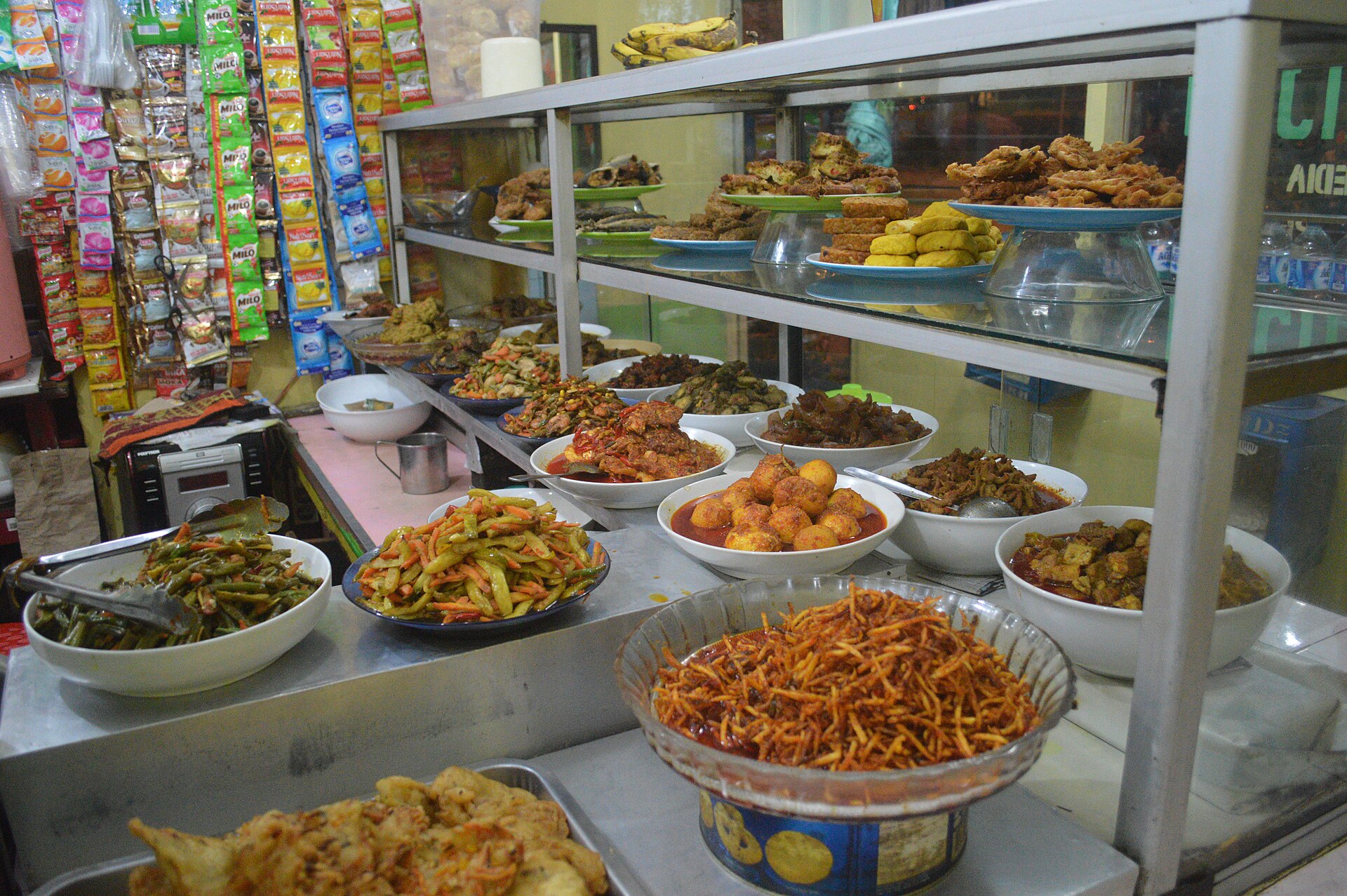
The warung Tegal, named after the Central Javanese town whose migrants built the format, is a small eatery with a glass counter of twenty or so dishes cooked that morning: stir-fried vegetables, fried tempeh and tofu, eggs in chilli, fish, chicken, curries. You ask for rice, point at two or three dishes, and a plate arrives, usually with a sweet iced tea. You pay at the end — say what you had, and they add it up. A plate costs 15,000 to 30,000. Wartegs are on nearly every street and in the gang behind every office district, and a lot of them stay open late or around the clock.
Nasi Padang: pay for what you touch
West Sumatran restaurants come in two styles. At a counter, you choose like a warteg. In the table-service version, a waiter covers your table with a dozen small plates — rendang, curried jackfruit, chicken, eggs, greens — and you pay only for the ones you eat from. Touch a plate and it goes on the bill, even if you take a spoonful. It is the most generous-looking meal in Jakarta and can be one of the cheapest if you are disciplined. One local quirk worth knowing: a nasi bungkus, the takeaway packet wrapped in paper, is famously more generous with the rice than the same order eaten in.
Kaki lima carts
The kaki lima — “five legs”; the popular explanation is the cart’s two wheels and stand plus the seller’s two legs — are the mobile heart of Jakarta’s cheap food. Each sells one thing and does it well: bakso meatball soup, mie ayam chicken noodles, nasi goreng, sate, soto, siomay, martabak, fried bananas. Most cost 15,000 to 25,000 a portion. Some roam residential streets with a distinctive call or a knock on a bowl; others park in the same spot every evening for decades.
Warung tenda: the evening tents
After dark, tarpaulin tents go up on pavements and car parks across the city, each with a painted banner showing what it serves — pecel lele (fried catfish with sambal), fried chicken, grilled fish, seafood, sate. You sit on a bench under the tarpaulin and eat for 20,000 to 40,000. Seafood tents price by weight, so ask before they cook.
Angkringan: the cheapest meal in the city
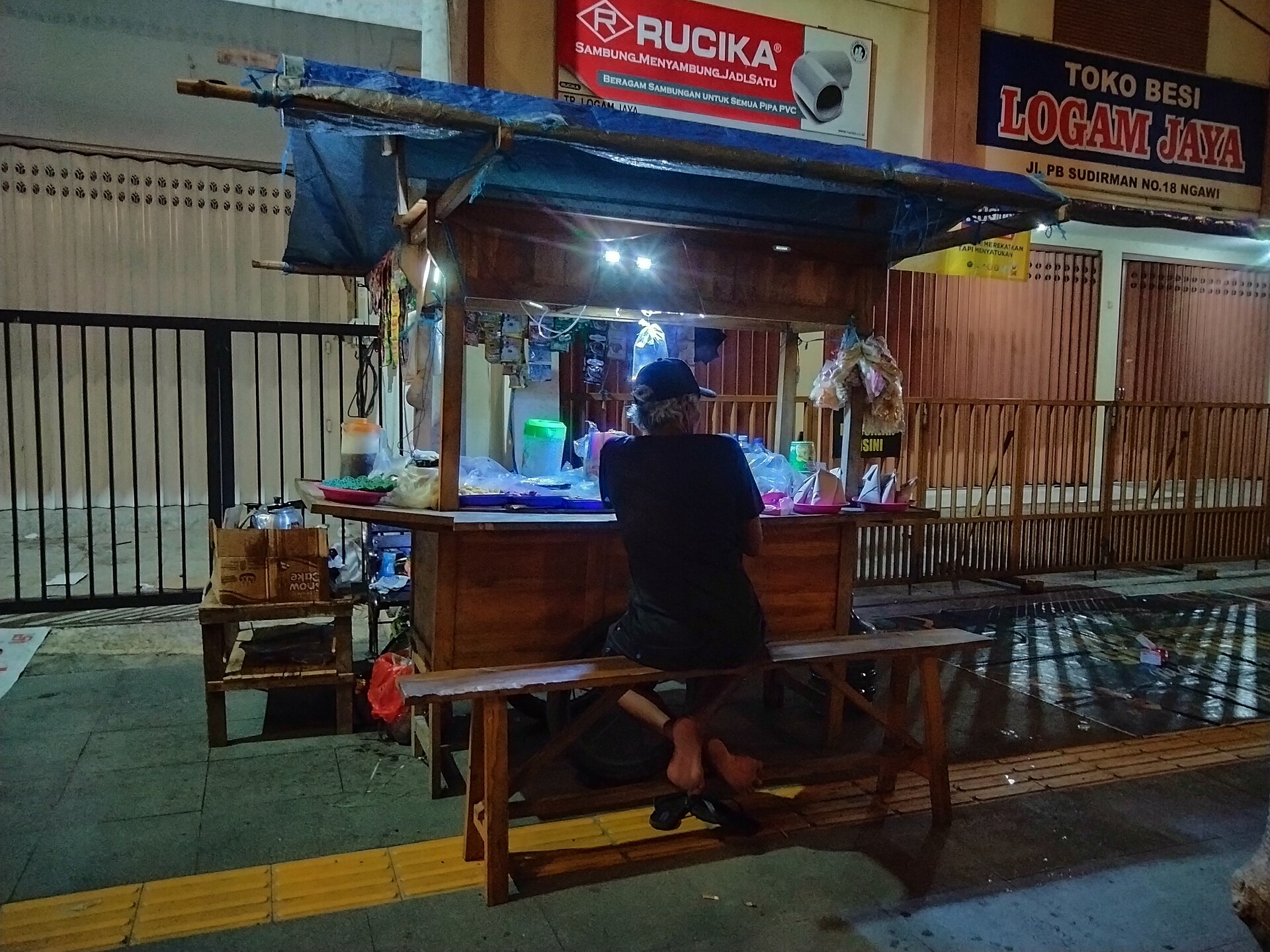
A Yogyakarta tradition that has spread through Jakarta: a wooden cart lit by a lamp, with benches round it, selling nasi kucing — “cat rice”, fist-sized parcels of rice with a little sambal and fish or tempeh — alongside satay skewers of quail eggs and offal, fried snacks and hot sweet drinks such as ginger tea. Everything is priced in a few thousand rupiah; you take what you want, the seller grills it again for you if you ask, and you add it up at the end. Two or three rice parcels and a few skewers make a meal for very little. Angkringan are social places, mostly open in the evening and late at night.
Warkop and warmindo: the 24-hour noodle stop
The warung kopi and the warmindo — named after Indomie, the instant noodle brand — are small, often round-the-clock stalls selling instant noodles cooked to order with an egg, fried rice, toast, fried bananas and coffee. They are where drivers, students and night workers eat, and they are the reliable answer to being hungry at 2am.
Kantin and food courts
Office towers, universities and government buildings have canteens, often in the basement, where the food is the price of a warteg and the setting is air-conditioned. Mall food courts cost more, but not by much, and give you dozens of stalls under one roof. On a hot afternoon, they are a completely reasonable place to be a budget traveller.
The best cheap food spots: South Jakarta
South Jakarta has the richest concentration of well-loved cheap places, partly because it is where students and young office workers live and eat. These were recommended by local food writers in 2026, with their prices.
Gultik Blok M
The gulai tikungan — “curry on the corner” — at the bend of Jalan Mahakam and Jalan Bulungan in Blok M has been Jakarta’s late-night comfort food since 1982. A cluster of stalls serves small plates of rice with beef gulai, a thin, rich curry, with satay and fried snacks on the side, to customers on low stools along the pavement. Portions are small, so most people order two. Expect 10,000 to 25,000 a person. It opens at around 16:30 and runs until 03:00 or later, and it is at its best after 22:00, when half of South Jakarta seems to be there.
Sate Padang Ajo Ramon, Pasar Santa
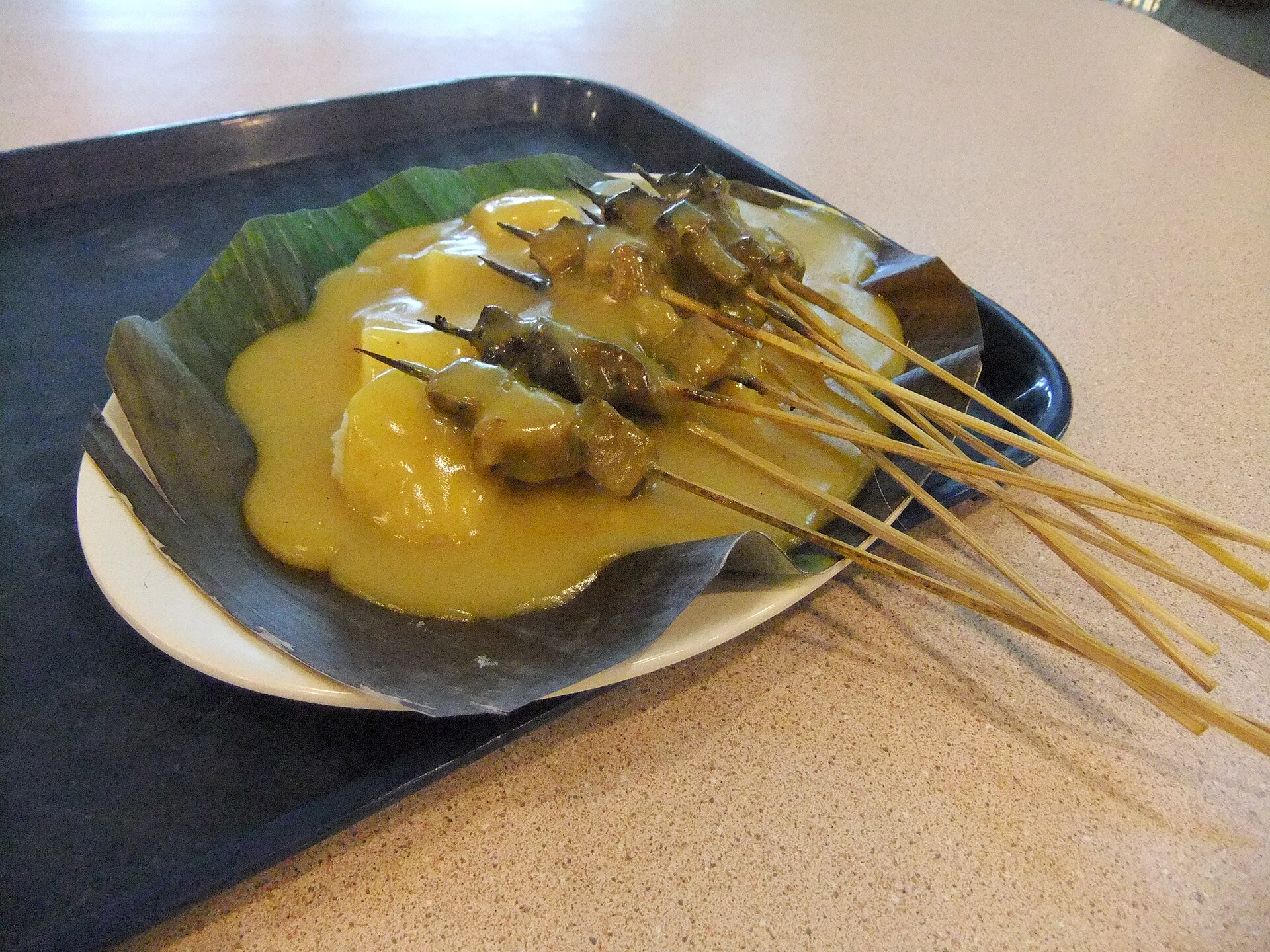
By the Pasar Santa market on Jalan Cisanggiri and Jalan Cikajang, Ajo Ramon has been grilling Padang-style satay since 1980: beef, tongue or mixed skewers under the thick, spiced yellow sauce, with rice cakes. Allow 28,000 to 35,000 a person. Open from 16:00 to about midnight. Parking is scarce, so come by Grab or on foot.
Nasi Ulam Ibu Yoyo, Karet
Down Gang Dogol off Jalan Karet Pedurenan in Karet Kuningan, a small stall sells nasi ulam — rice tossed with herbs, toasted coconut, bean sprouts, cucumber and basil — to office workers from the towers nearby, for 7,000 to 20,000. It opens in the morning and often sells out before the afternoon is over. This is the kind of place that makes the gang worth exploring.
Sate Taichan Bang Ocit 87, Simprug
On Jalan Simprug Golf 2 in Kebayoran Lama, one of the pioneers of sate taichan: plain grilled chicken skewers with no peanut sauce, just a fierce red chilli sambal and lime, with rice cakes. Skewers are about 3,000 each, and eight to ten with lontong come to 25,000 to 35,000.
Roti Bakar Eddy, Kebayoran Baru
On Jalan Raden Patah in Kebayoran Baru since 1971, Roti Bakar Eddy toasts thick bread over charcoal and fills it with chocolate, cheese and banana, alongside fried rice and satay. It opens in the afternoon and runs into the early morning, for 20,000 to 40,000 a person. It is where South Jakarta goes for something sweet at midnight.
Warkop Kebagian, Panglima Polim
A round-the-clock warkop in the Panglima Polim area serving fried and boiled noodles, fried rice, fried bananas and coffee for 20,000 to 40,000. It is a late-night hangout rather than a destination, and exactly the right place to end an evening at Blok M.
Bubur Ayam Barito, Gandaria
Chicken rice porridge on Jalan Gandaria Tengah III, served — unusually — with cheese sticks in place of the traditional crackers, from the afternoon until midnight, for 20,000 to 30,000. Comfort food of a very South Jakarta kind.
When you want a roof and air conditioning
- Warung MJS, Jalan Setia Budi Tengah 11, Kuningan — Javanese home cooking such as gudeg and crispy fried chicken in an air-conditioned dining room; 25,000 to 74,000.
- Kedai Halaman, Jalan Cipete Raya 4B — grilled chicken, rendang and vegetables in a quiet, family-friendly room; 22,000 to 50,000.
- Bebek Kaleyo, Jalan Lapangan Roos 49, Tebet — crispy duck since 2007, with floor seating; 32,500 to 95,000. Avoid the noon rush.
- Warung Betawi H. Apen, Jalan Saco 12, Ragunan — proper Betawi cooking, including gabus pucung, snakehead fish in a black kluwek sauce, semur jengkol and goat soup, from 20,000. The obvious lunch after the zoo.
- Sopo Ngiro, Jalan Panglima Polim 46 — street-style Japanese, with yakiniku, teriyaki and katsu on rice, for 20,000 to 50,000. A student favourite.
- Abusan, Jalan Karet Karya, Kuningan — enormous chicken katsu and beef yakiniku for 30,000 to 50,000; evenings only, and there is a queue.
For seafood, the tents price by weight: Seafood Santa 68 on Jalan Wolter Monginsidi near Senopati is a well-known tent for crab in Padang sauce and grilled squid, and Warung Blekok on Jalan Cipete Raya sells clams by the kilo with your choice of sauce. Ask the price per kilo before they cook, and it stays a budget meal. Our South Jakarta guide covers the neighbourhoods.
Central Jakarta, Glodok and the north
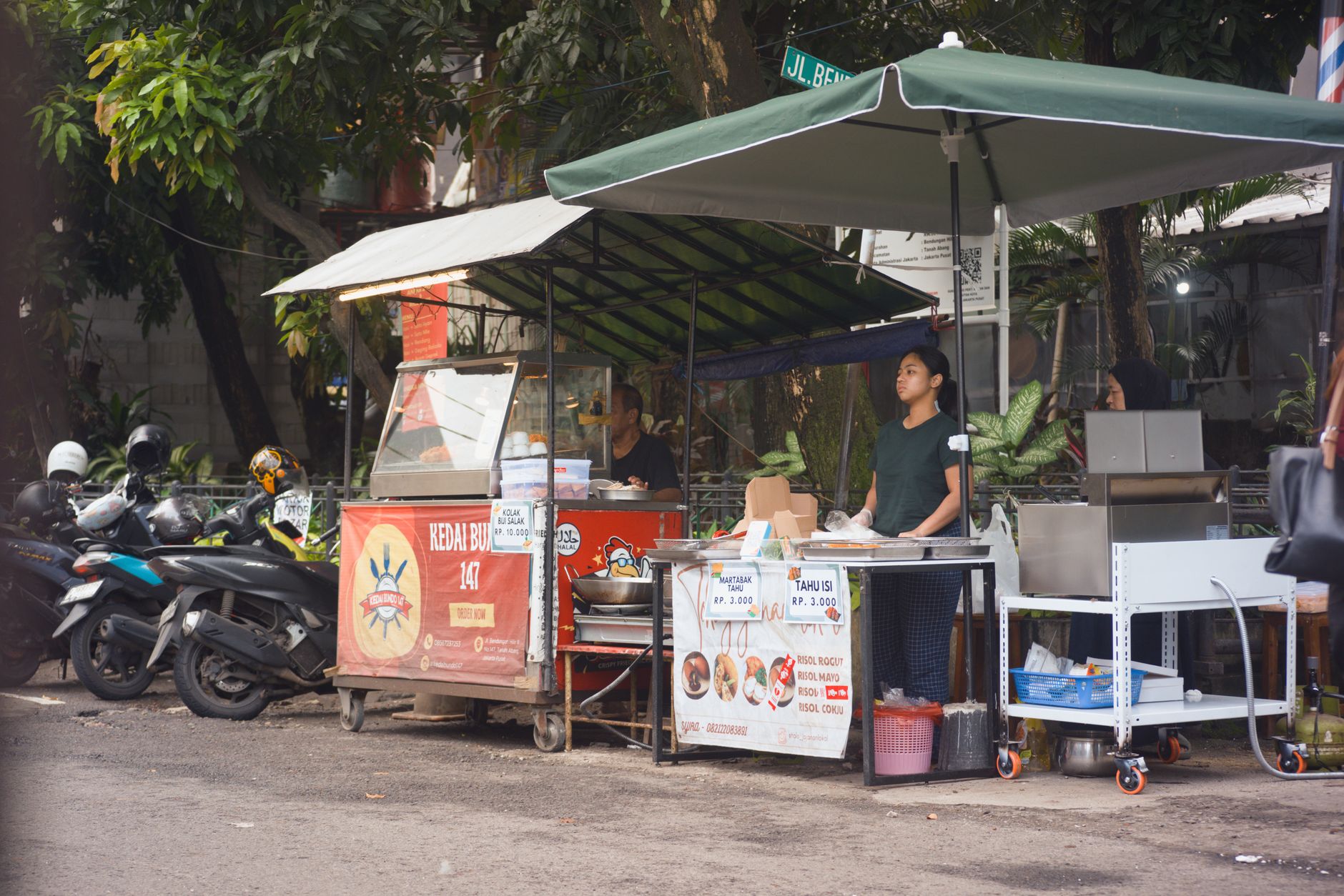
The centre of the city has its own famous cheap food, most of it covered in depth in our other food guides. The short version:
- Jalan Sabang, a street over from Jalan Jaksa, is the classic first night: satay, fried rice, noodles, soto and martabak from carts and tents, a short walk from Monas and the Thamrin hotels.
- Kebon Sirih is famous for its goat fried rice, nasi goreng kambing, cooked in huge woks at night.
- Cikini has old-school gado-gado and bubur ayam stalls near the station and the arts centre.
- Kebon Kacang, near Tanah Abang, is the home of Jakarta’s best-known nasi uduk, coconut rice with fried chicken and sambal. See our nasi uduk guide.
- Glodok, Jakarta’s Chinatown, has noodle shops, rice porridge, the nearly century-old coffee shop Kopi Es Tak Kie and the lanes of Petak Sembilan — see our Glodok guide. Many Chinese-Indonesian places here are non-halal and serve pork.
- Pecenongan fills with seafood tents and martabak stalls after dark, and Mangga Besar is the city’s big late-night food street.
For named stalls with walking routes, see our street food guide, and for a week of named meals under 50,000, the cheap eats guide.
Where to eat cheaply near your base
The expensive mistake in Jakarta is crossing the city for a famous meal. A 40-minute ride each way can cost more than the food, and the traffic will decide when you eat, not you. It is almost always better to find the cheap food near where you are staying:
| If you are staying in | Eat cheaply at |
|---|---|
| Kebon Sirih, Jalan Jaksa, Thamrin | Jalan Sabang’s carts and tents at night; Kebon Sirih’s goat fried rice; wartegs in the side streets |
| Kota Tua and Glodok | The noodle shops and porridge stalls of Glodok and Petak Sembilan, a few minutes south of the square |
| Cikini and Menteng | The stalls around Cikini station and the arts centre; Menteng’s evening carts |
| Sudirman, Kuningan, SCBD | The gang behind the towers, where Nasi Ulam Ibu Yoyo, Warung MJS and Abusan feed the office crowd |
| Blok M and Senopati | Gultik at night, Sopo Ngiro and Warkop Kebagian on Panglima Polim, Ajo Ramon by Pasar Santa |
| Kemang and Cipete | Kedai Halaman and the clam stall at Warung Blekok on Cipete Raya; the warungs off Kemang Raya |
| Tebet | Bebek Kaleyo on Lapangan Roos and the evening tents on the main roads |
Wherever you are, look for three things: a warteg within walking distance for lunch, a cart for breakfast, and the tents that go up at dusk. Every neighbourhood in Jakarta has all three. Our neighbourhoods guide maps how the districts fit together.
Cheap eating by time of day
06:00–09:00: breakfast on the pavement
Jakarta eats early. Carts outside stations, office blocks and markets sell bubur ayam (chicken rice porridge), nasi uduk (coconut rice with fried chicken, egg and sambal), lontong sayur (rice cakes in a vegetable curry) and ketoprak (tofu, rice cake and noodles in peanut sauce), mostly for 10,000 to 20,000. Many sell out by nine. Breakfast from a cart is the easiest meal of the day to eat cheaply and well, and it is much better than most hotel buffets.
11:30–13:30: the warteg hour
Lunch is when the warteg and Padang counters are at their freshest and busiest. Eat just before noon to beat the office rush, or after 13:00 when it calms down. On Fridays, many men go to the mosque at midday, and some small eateries close briefly around the Friday prayer.
15:00–17:00: snacks
Afternoon is gorengan time — fritters of tofu, tempeh, banana, cassava and vegetables, fried in front of you and sold for a few thousand rupiah each — with iced drinks such as es cendol or es teh manis. Martabak stalls start to set up.
18:00–23:00: the tents and the carts
Dinner is Jakarta’s biggest street food moment. The tents go up, the night streets fill, and the choice is at its widest. This is the time for Jalan Sabang, Pecenongan, Blok M and the tents on your own street.
After 23:00: gulai, noodles and martabak
Gultik in Blok M, the warkop and warmindo stalls, angkringan carts and the martabak sellers keep going long after midnight. Jakarta is a genuinely good city for late-night eating on a budget. Our late-night eats guide has more.
Cheap buys from minimarkets and fruit carts
Between meals, the Indomaret or Alfamart on the corner is a budget traveller’s pantry. Bottled water, bread, instant noodles, biscuits, yoghurt drinks and bananas are all cheap, and many branches have a hot counter or a coffee machine. It is not where you should eat your meals — a warteg is cheaper and better — but it is where you should buy water, snacks for a long train ride and anything you need at midnight.
Fruit is the other quiet saving. Carts sell cut pineapple, papaya, mango, melon and guava in plastic bags with a sachet of chilli salt, and rujak, a fruit salad in a sweet, spicy palm-sugar dressing. In the markets, buy whatever is in season by the kilo: rambutan, mangosteen, salak — snake fruit — and dozens of varieties of banana. A bag of fruit from a market costs very little and makes a better breakfast than anything in a hotel.
Money-saving tactics that actually work
- Eat where office workers eat. The alleys behind the towers of Sudirman, Kuningan and SCBD are full of warungs priced for people who eat there every day.
- Avoid the “++”. Mid-range and upmarket restaurants add a 5–10 per cent service charge and a 10 per cent restaurant tax to menu prices, together 15–21 per cent. Warungs, carts and most food courts charge the price on the board.
- Drink tea, not beer. Sweet iced tea costs a few thousand rupiah. A beer can cost more than the meal.
- Order the local coffee. A Kopi Kenangan Mantan, the chain’s signature iced coffee with palm sugar, costs 18,000 to 24,000; a Western-style café cappuccino costs more. The bicycle vendors’ sachet coffee costs a few thousand.
- Get the takeaway at a Padang restaurant if you want more rice for the same price.
- Buy water by the big bottle. A 1.5-litre bottle costs about 8,800 at a minimarket; small bottles in restaurants add up fast.
- Use the delivery apps carefully. GoFood and GrabFood promotions can make a meal very cheap, but delivery and service fees eat the savings on small orders. They are best for splitting a big order.
- Skip imported food. Cheese, steak, wine and Western chains carry import premiums. Indonesian food does not.
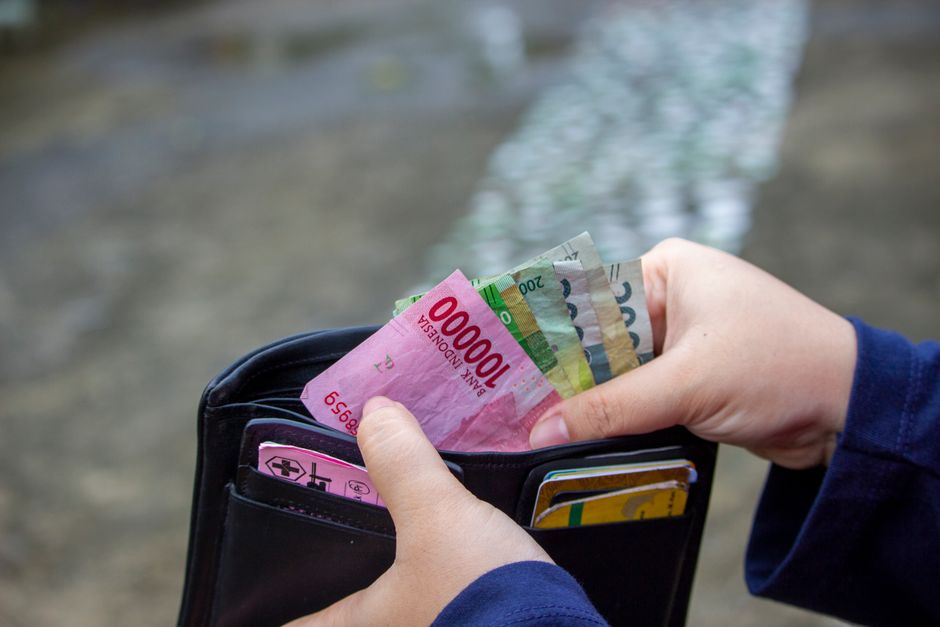
- Carry small notes. A cart or warteg may not be able to break a 100,000 note.
Ordering: the words that save money
| Say | Meaning |
|---|---|
| Berapa? | How much? |
| Makan di sini | Eating here |
| Bungkus | Takeaway |
| Tidak pedas / pedas sedikit | Not spicy / a little spicy |
| Nasi setengah | Half a portion of rice |
| Es teh manis / teh tawar | Sweet iced tea / plain unsweetened tea |
| Air putih | Plain water, often free with a meal at a warung |
| Pakai / tanpa | With / without |
| Sudah | That’s all — I’ve finished |
You will manage without any of it — pointing works everywhere — but a berapa before a seafood tent starts cooking is worth learning.
Cheap, safe and dietary needs
Staying well
Busy stalls are safest, because high turnover means fresh food. Eat things cooked hot in front of you, be more careful with anything pre-assembled that has sat in the heat, and carry hand gel. Do not drink tap water; ice in malls and established restaurants is made from treated water, while at roadside stalls it is more variable. Our health guide has more.
Vegetarian on a budget
Easier than you might expect. Wartegs always have tempe, tofu, eggs and several vegetable dishes; gado-gado, ketoprak and pecel are vegetables with peanut sauce; and fried rice and noodles can be ordered without meat. The catch is terasi, fermented shrimp paste, in many sambals — say tidak pakai terasi. See our vegetarian and vegan guide.
Halal and pork
Most cheap food in Jakarta is halal. Chinese-Indonesian eateries, especially in Glodok, often serve pork and usually say so; look for babi on the menu or a “non-halal” sign.
Eating on a budget during Ramadan
During the fasting month, which moves through the calendar by about eleven days each year, Jakarta’s eating rhythm changes completely, and it is worth knowing how.
- Daytime. Many warungs close in the daytime or stay open behind a curtain for non-fasting customers. Malls, hotels and Chinese-Indonesian eateries carry on as normal. Eating and drinking openly in the street during fasting hours is inconsiderate; do it indoors.
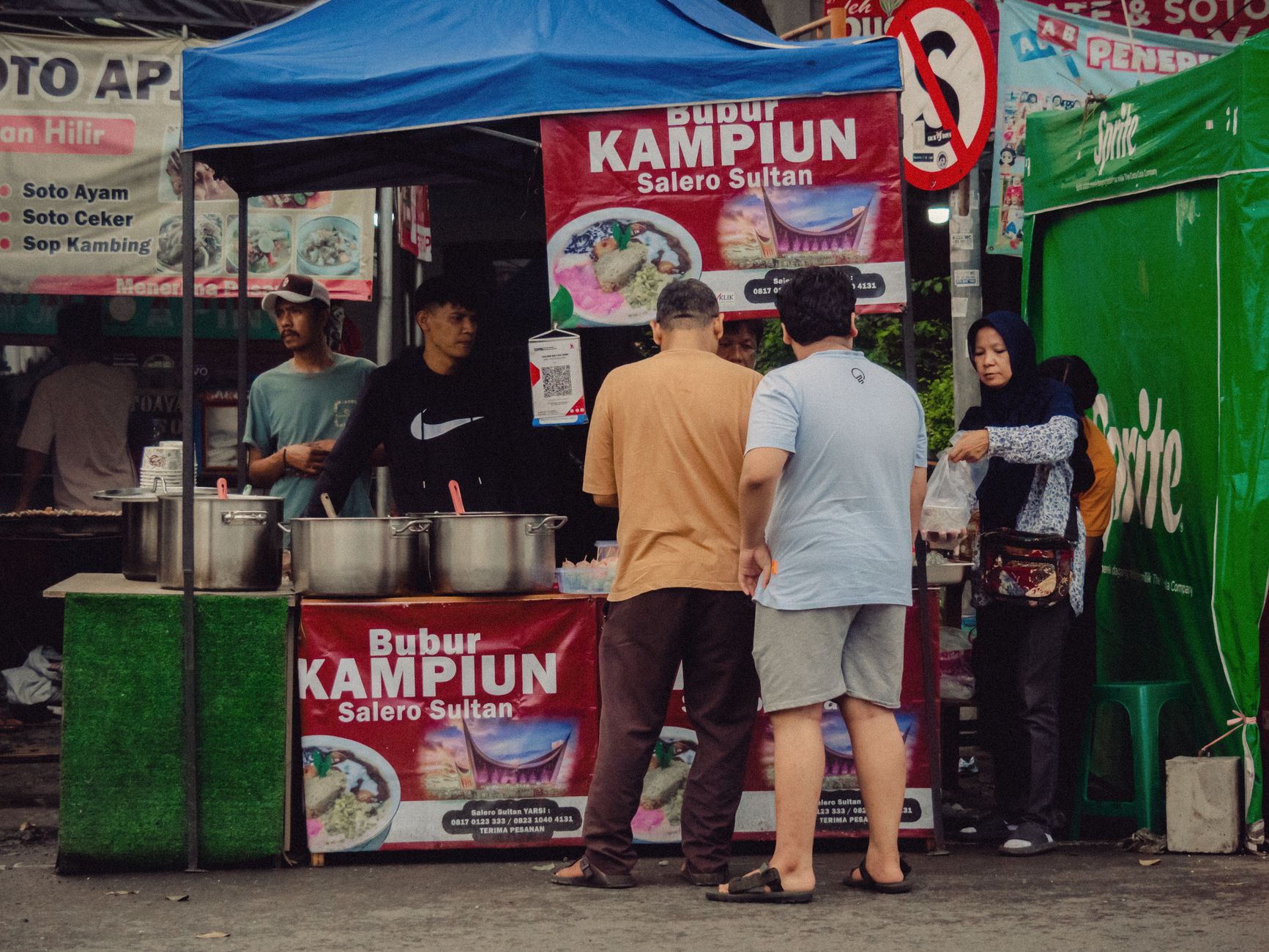
- Late afternoon. From around 16:00, takjil sellers line the streets with sweet drinks, fritters, cakes and snacks for breaking the fast, at very low prices. The market at Bendungan Hilir — Benhil — is the most famous, and one of the great street food experiences of the year.
- Sunset. The buka puasa, breaking of the fast, fills every restaurant at once, and the hour before it has the worst traffic of the year. Be where you want to eat well before sunset, or eat a little later.
- Late night. Many places reopen and stay busy late, and some serve sahur, the pre-dawn meal. Jakarta after dark in Ramadan is lively and very good value.
Our etiquette guide explains what else changes, and the events and festivals guide covers the Lebaran holiday that follows.
What is not worth the saving
Budget eating in Jakarta is mostly a delight, but a few economies are false ones.
- Empty stalls at busy times. If nobody is eating there at 19:00, there is usually a reason.
- Seafood without a price. Tents that sell by weight are fair when you ask first and expensive when you don’t.
- The tourist square. Vendors right on Fatahillah Square in Kota Tua tend to charge more than the lanes of Glodok a few minutes’ walk away.
- Crossing the city for a famous stall. A 50,000 taxi ride to a 20,000 meal is not budget eating. Eat what is famous near where you are.
For the wider picture, see our budget travel guide and the Jakarta food guide.
Frequently asked questions
How much does food cost per day in Jakarta on a budget?
Around 50,000 to 125,000 rupiah if you eat at carts, wartegs and night stalls: 10,000–20,000 for breakfast, 15,000–30,000 for lunch and 10,000–35,000 for dinner, plus drinks and snacks. Local food writers reckon 30,000 is a very safe budget for a good single meal.
What is the cheapest food in Jakarta?
The rice parcels at an angkringan cart, a few thousand rupiah each; fried snacks from a gorengan cart; and a warteg plate of rice with two or three dishes for 15,000 to 30,000. Nasi ulam from a stall such as Ibu Yoyo’s in Karet starts at 7,000.
What is Gultik in Blok M?
Gulai Tikungan, “curry on the corner”: a cluster of stalls at the bend of Jalan Mahakam and Jalan Bulungan in Blok M serving small plates of rice with beef curry, satay and fried snacks since 1982. It costs 10,000 to 25,000 a person and runs from about 16:30 until the early hours.
How do I order at a warteg?
Ask for rice, point at two or three dishes in the glass counter, and sit down. A plate usually comes with sweet iced tea. Pay at the end by telling them what you had. No Indonesian is needed, though berapa? (how much?) helps.
Is street food in Jakarta safe to eat?
Generally yes, if you choose busy stalls, eat food cooked hot in front of you, avoid tap water and carry hand gel. Be more cautious with ice and uncooked garnishes at roadside stalls than in malls and restaurants.
Where can I eat cheaply late at night in Jakarta?
Gultik in Blok M until the early hours, the 24-hour warkop and warmindo noodle stalls, angkringan carts, martabak sellers, Mangga Besar’s late food street, and Roti Bakar Eddy in Kebayoran Baru until the early morning.
Do cheap restaurants in Jakarta add service charge?
No. Warungs, carts, wartegs and most food courts charge the price on the board. The “++” — a service charge plus 10 per cent restaurant tax, 15–21 per cent in total — applies at mid-range and upmarket restaurants.
Is it cheaper to cook for yourself in Jakarta?
Rarely. Supermarket staples such as milk, bread, eggs and chicken cost enough that a warteg plate at 15,000 to 30,000 is usually cheaper than cooking a meal for one. Buy fruit, breakfast things and water, and let the city cook the rest.
Can I eat on 50,000 rupiah a day in Jakarta?
Yes, with care. A cart breakfast at around 10,000, a warteg lunch at 15,000 to 20,000, gorengan in the afternoon and a cheap dinner from an angkringan or a noodle stall come in around 50,000, with sweet iced tea and a big bottle of water. It is how many students eat. It leaves little room for coffee or restaurant meals, so 75,000 is a more comfortable figure.
Related Jakarta Guides
- Cheap Eats in Jakarta: Best Meals Under 50,000 IDR
- Best Street Food in Jakarta
- Jakarta Night Food Markets
- The Jakarta Food Guide
- Must-Try Jakarta Dishes
- Betawi Cuisine in Jakarta
- Budget Travel in Jakarta
- Jakarta Daily Budget
- Backpacking Jakarta
- Vegetarian & Vegan Food in Jakarta
Photo Credits
Angkringan food cart at night: Angkringan – a food stall on PB Sudirman Street Ngawi by YT Arty, CC BY-SA 4.0, via Wikimedia Commons.
Sate Padang: Sate Padang by Sakurai Midori, CC BY 3.0, via Wikimedia Commons.