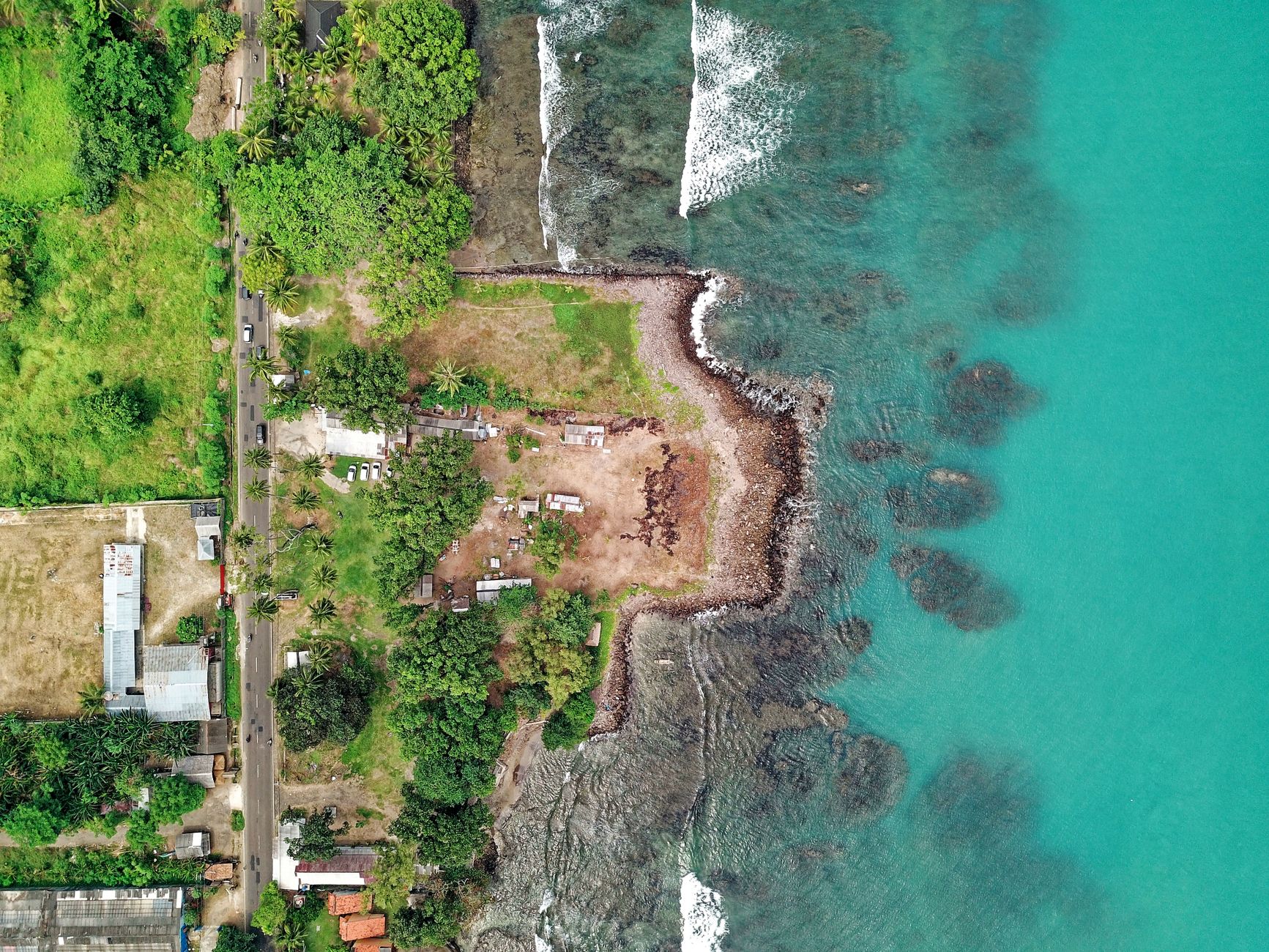
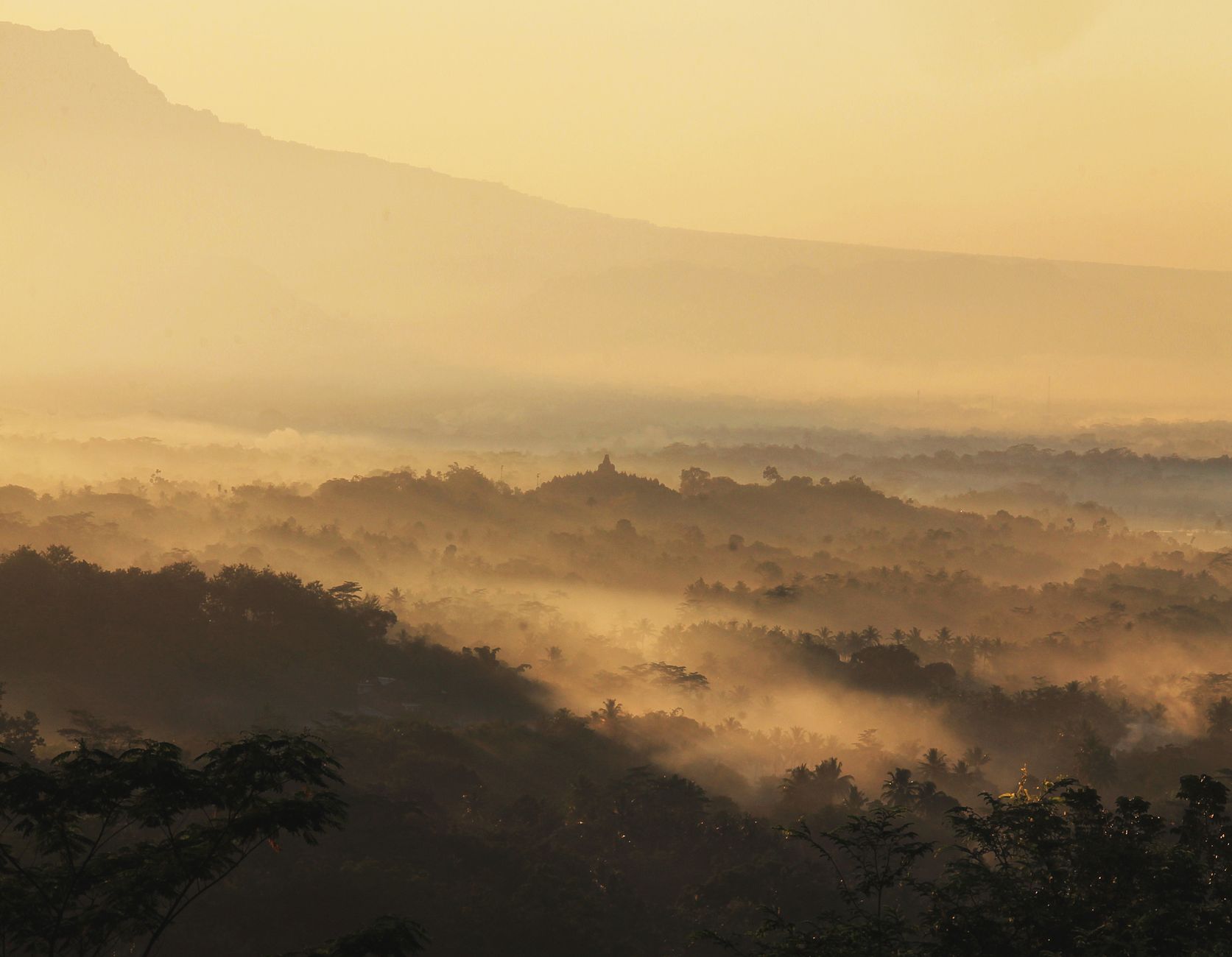
Search Tanjung Lesung beach Jakarta and you will get twenty near-identical listicles about white sand, banana boats and a “paradise just three hours from the capital”. Almost none of them mention that on the night of 22 December 2018 a tsunami came ashore on this exact stretch of coast, that it killed 437 people across Banten and Lampung, and that the largest single cluster of deaths happened here, at an outdoor company event held on the beach. That is the defining fact of the place. It is also the reason the resort area you will drive into today feels half-finished rather than half-ruined — the difference matters, and it is worth understanding before you book.
This guide sits inside our wider round-up of the best day trips from Jakarta, and Tanjung Lesung is the one on that list that most stubbornly refuses to work as a day trip. If you want sand and salt water inside a single day, the Thousand Islands are the honest answer, and Pulau Bidadari in particular is a ninety-minute boat ride from Ancol. If you want a proper change of air and can spare a night, this competes directly with a Bandung weekend or the Puncak highlands — and it wins on one specific thing that neither of them can offer.
The Thing Most Guides Leave Out
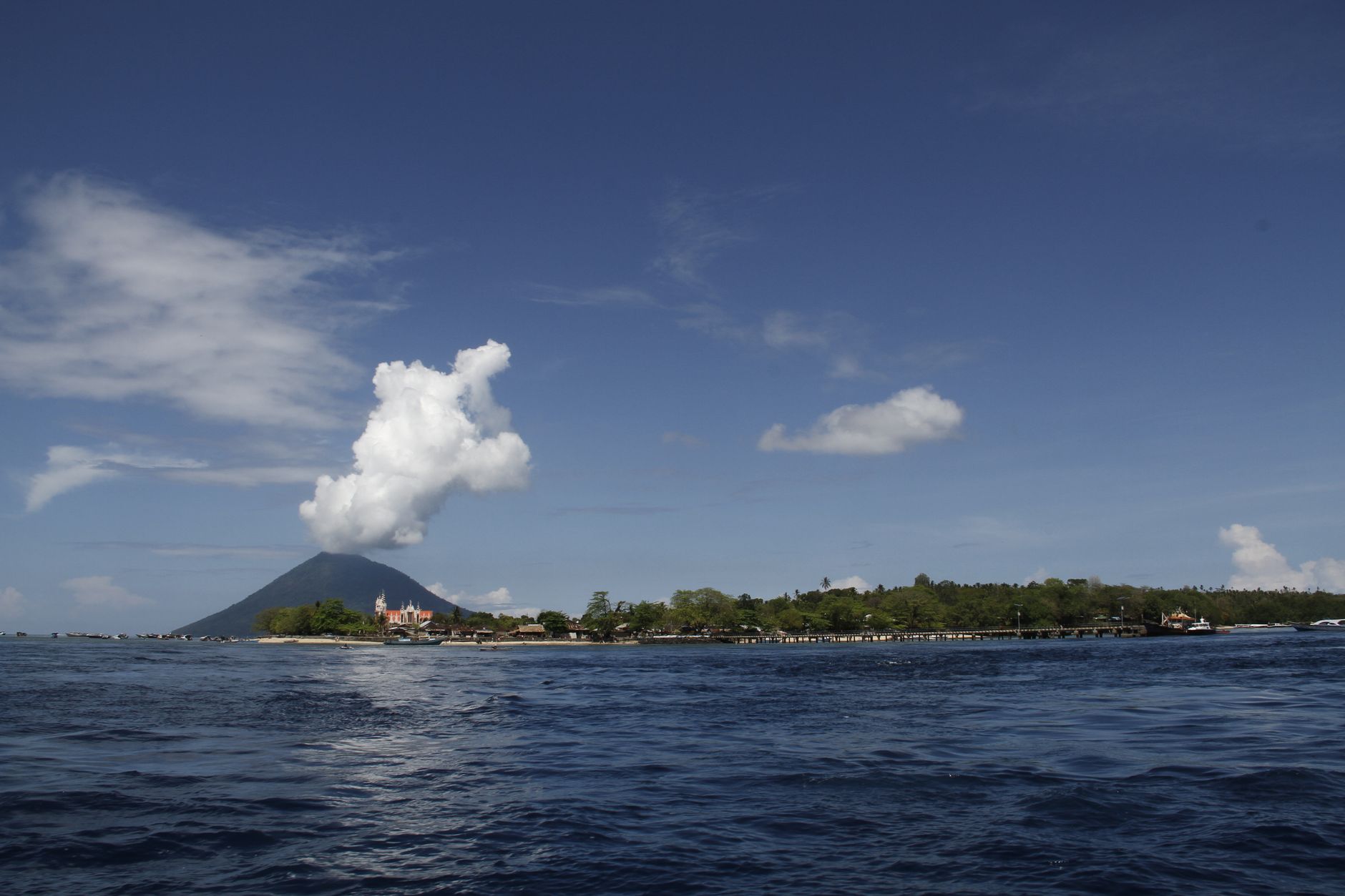
Anak Krakatau sits about 50 kilometres offshore in the Sunda Strait. In December 2018 it was in a long eruptive phase, and on the evening of the 22nd a section of its south-western flank — less than 0.2 cubic kilometres of rock — slid into the sea. That displacement generated the wave. Crucially, a flank collapse produces almost no short-period seismic energy, so there was no earthquake to feel and no seismic trigger for the warning system. The water simply arrived, around 21.30, in the dark, at high tide, on a Saturday night before Christmas.
Tanjung Lesung was busy. A state utility company had booked a beachfront year-end party with live music, and more than fifty people at that event died. Roughly a third of the cottages at the main resort were damaged or destroyed. The Special Economic Zone Indonesia had spent years promoting as its flagship beach development in Banten lost most of its front line of buildings in a few minutes.
None of this makes Tanjung Lesung a place to avoid, and none of it should be the reason you go — the wreckage was cleared years ago and there is nothing here to gawp at. But you will notice things on the ground that make no sense unless you know the history: empty concrete pads where buildings used to be, a beach access road that ends at nothing, evacuation arrows on lamp posts, and a resort strip visibly smaller than the marketing suggests. Knowing why stops you concluding the place is simply run-down.
What Is Actually Open Now
Recovery has been real but slow. The main resort reopened to guests within about ten days of the wave, and by mid-2019 operators were describing the area as somewhere between 50 and 60 per cent restored. Investment in the Special Economic Zone has continued: cumulative realised investment reached around Rp3.09 trillion by the end of 2025 across roughly thirty businesses, and the zone survived a national review that recommended revoking the status of other underperforming SEZs. “Survived a review” is not the same as “thriving”, and government language about Tanjung Lesung still uses the word belum optimal — not yet optimal. That is a fair description of what you will see.
Concretely, and with the caveat that Indonesian hospitality churns fast: Tanjung Lesung Beach Hotel is trading and bookable across the major platforms, with recent guest reviews that praise the setting and the staff and are honest about tired rooms, dated bathrooms and patchy maintenance. Kalicaa Villa, a cluster of self-catering villas a couple of hundred metres back from the sand, is also bookable and is usually better value for a group — a four-bedroom villa sleeping six can come in under Rp3 million a night. Beyond that the picture gets murky. Various beach clubs and village-concept attractions appear in resort literature; some are genuinely operating, some open only for groups. Pulau Umang, the small private-island resort just south of the peninsula, appears in almost every listicle about this coast, and we could not confirm from current sources that it is trading normally — do not build a trip around it without phoning first.
The practical rule for this coast: book accommodation through a platform with free cancellation, and confirm everything else by WhatsApp two or three days before you drive.
The Toll Road: What Has Opened, What Has Not
This is the single biggest variable in the trip, and it is genuinely changing as you read this. The Serang–Panimbang toll road is 83.67 kilometres in three sections. Section 1, Serang to Rangkasbitung, 26.5 kilometres, has been open since 2021. Sections 2 (Rangkasbitung–Cileles, 24.17 km) and 3 (Cileles–Panimbang, 33 km) reached 100 per cent physical completion during 2026 and are targeted to open in October 2026, with full end-to-end operation of the corridor flagged as a 2027 national priority.
Read that carefully, because a lot of published advice quietly assumes the whole road is already open. Today the toll takes you to Rangkasbitung and then abandons you. From there it is conventional two-lane provincial road down to Panimbang — market towns, trucks, motorbikes, speed bumps, and one long slow stretch that will make you wonder whether you took a wrong turn. The much-quoted “Jakarta to Tanjung Lesung in two hours” figure describes the completed corridor, not the drive as it stands.
When Sections 2 and 3 do open, the change is substantial and worth waiting for if your dates are flexible: four to five hours becomes something like two and a half to three, which converts Tanjung Lesung from a grudging overnight into a viable Saturday-morning departure. If you are reading this after October 2026, check the operator’s tariff page before assuming it is live — Indonesian toll sections routinely open in stages, sometimes free for a fortnight before tariffs are set.
What the Drive Really Takes, Door to Door
From central Jakarta you take the Jakarta–Merak toll, exit around Serang Timur, pick up the Serang–Rangkasbitung section, then run south on regular roads. Google will tell you three and a half hours. Google is measuring the road, not your Sunday.
Realistic door-to-door times from a South Jakarta start: leave at 05.30 on a Saturday and you park at Tanjung Lesung by about 10.00. Leave at 09.00 and it is five and a half to six hours, most of the extra lost between Tomang and Tangerang and again at the Serang exit. Sunday afternoon is worse in every direction — leave the beach at 15.00 and you will be crawling inward from Serang by 17.00. Leave at 10.00 on Monday instead if you can. Same dynamics as our guide to avoiding Jakarta traffic, only compressed onto a single arterial with no alternative.
Budget realistically for tolls. A Class I car pays roughly Rp63,500 to Rp70,000 for the Jakarta–Merak corridor end to end and about Rp44,500 for the Serang Timur–Rangkasbitung spur, so plan on close to Rp100,000 each way plus fuel; our breakdown of Jakarta transport costs puts that in context. If you do not own a car, renting one in Jakarta with a driver is the sane option — self-driving unfamiliar Banten provincial roads after dark is not a good introduction to Indonesian traffic.
Doing it without a car
You can, and you will regret it. The chain is a bus from Kalideres terminal in West Jakarta to Labuan, then a DAMRI service or angkot on the Labuan–Panimbang–Tanjung Lesung route, then an ojek. Alternatively, the commuter train from Tanah Abang to Rangkasbitung and a sequence of angkots south. Both work. Both take six hours or more, both leave you with no transport at the other end on a peninsula where the interesting bits are kilometres apart, and neither runs usefully late. There is no scheduled shuttle worth recommending, and Grab and Gojek coverage thins badly west of Serang — see how the two apps compare for where their service areas end. Without a vehicle, our guide to getting around Jakarta is more use to you than this article, because you should pick a different destination.
| Option | Realistic time each way | Cost (2 people) | Who it suits |
|---|---|---|---|
| Own car / rental, current roads | 4–5.5 hrs | Rp100,000 tolls + fuel each way | Anyone comfortable driving Banten roads |
| Car with driver | 4–5.5 hrs | Rp900,000–1,400,000 per day, plus tolls and fuel | Families, first-timers, anyone arriving after dark |
| Own car, after Sections 2–3 open | 2.5–3 hrs | Higher tolls, less fuel | Everyone — wait for it if you can |
| Bus via Kalideres and Labuan | 6–8 hrs | Under Rp200,000 total | Budget solo travellers with patience |
| Train to Rangkasbitung, then angkot | 6–8 hrs | Under Rp150,000 total | Nobody in a hurry |
Why the Tanjung Lesung Beach Jakarta Trip Earns the Distance
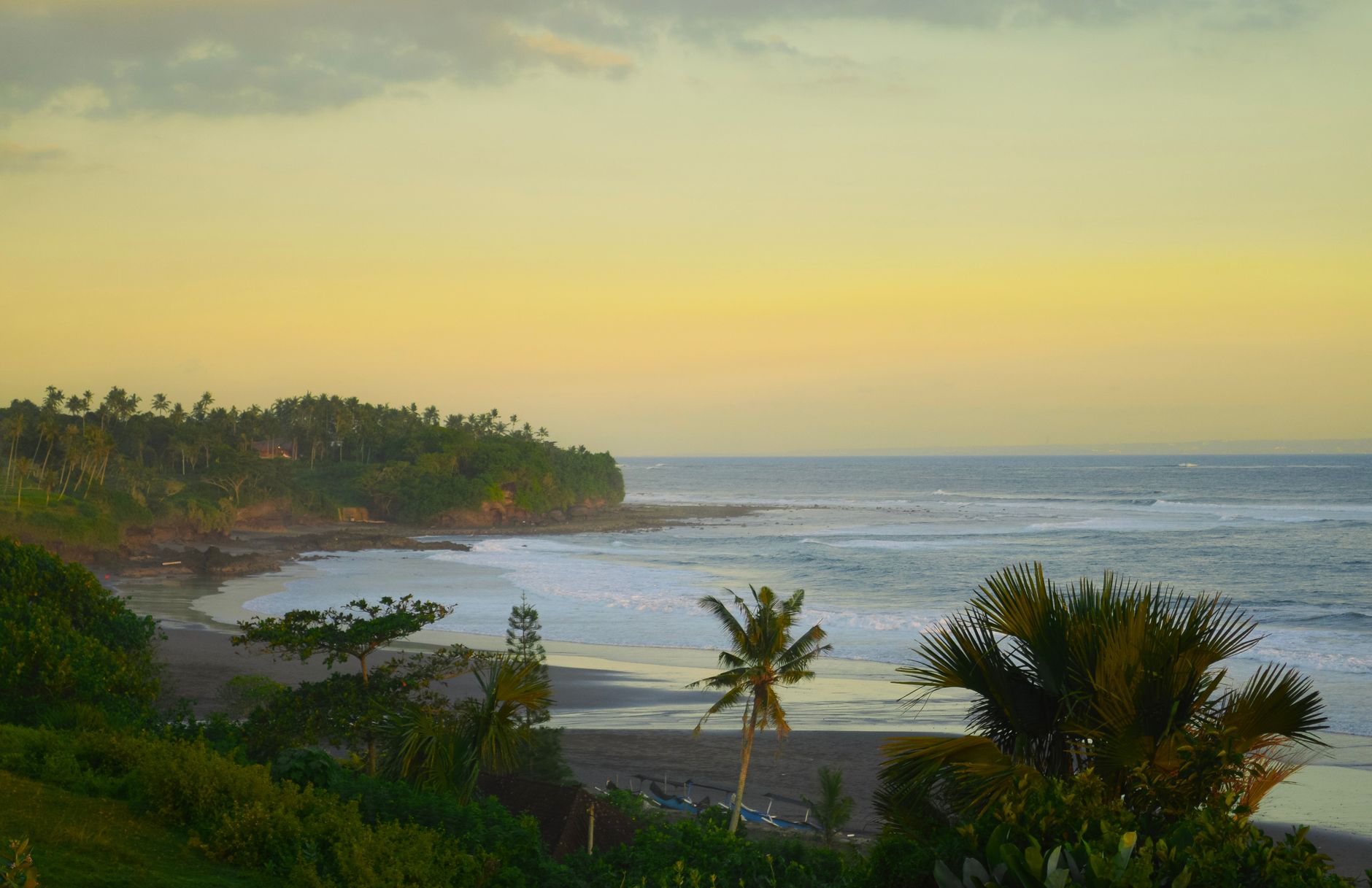
The argument for going is geographical rather than promotional. Tanjung Lesung is a peninsula hooking out into the Sunda Strait, so its main beaches face west and north-west and you watch the sun go down over open water. That sounds trivial until you realise how rare it is within reach of Jakarta: the north coast faces the Java Sea and is grey and murky for most of its length; the accessible south-coast beaches face the Indian Ocean with dangerous surf and rip currents; and the Thousand Islands are so low and flat that sunsets there are pleasant rather than dramatic. A calm, west-facing tropical beach four to five hours from the capital is a genuinely short list.
The sand is pale grey-gold rather than Bali white, clean by Java standards without being pristine. The water inside the bay is shallow, warm and unusually calm — the peninsula shelters it from the swell — which is why this coast has always been sold as a family beach. You can walk out fifty metres and still be waist deep. That is the whole appeal, and it is a real one with small children; our guide to things to do in Jakarta with kids covers the in-city alternatives, none of which involve a genuinely swimmable sea. Entry to the managed beach runs around Rp30,000 per person, with a less developed stretch nearby at about Rp10,000. Bodur beach, on the quieter side of the peninsula, is open to resort guests and is the better spot for being left alone.
The Water: Swimming, Water Sports and Snorkelling
The standard menu is banana boat, jet ski, kayak, glass-bottom boat and a slider tube, sold from beachside kiosks and the hotel activity desk. Prices move and are negotiable off-season; expect roughly Rp50,000 to Rp100,000 per person for a banana boat run and considerably more for jet skis by the half hour. Instructors here have a good reputation with reviewers, and life jackets are standard rather than optional — not universally true on Indonesian beaches.
Snorkelling directly off the main beach is disappointing: sand, some seagrass, not much else. The reef worth seeing is offshore around the small islands, and reaching it means chartering a boat. Manage expectations — this is not Raja Ampat or even Karimunjawa. Visibility is moderate, coral cover patchy, and the wet season stirs everything up. If underwater scenery is your primary motivation, you are on the wrong coast.
Pulau Liwungan and the Offshore Islands
Pulau Liwungan is the easy one and the one worth doing: an uninhabited islet roughly half an hour by boat from Dermaga Cipanon, a fishing jetty about five kilometres from the main Tanjung Lesung beach. Parking at Kampung Nelayan Cipanon costs Rp10,000 for a car and Rp3,000 for a motorbike, and island entry is Rp10,000 for adults, Rp5,000 for children.
Boat charter is where the money goes: Rp500,000 to Rp1,000,000 for a boat carrying ten to twenty people, or around Rp150,000 a head joining a group. That usually includes life jackets, basic snorkelling gear and a boatman who doubles as guide. Negotiate before you board and agree how many hours you get. The island has a beach, some shade, a modest fringing reef and very little else — bring water and food, and take your rubbish home, because nobody else will.
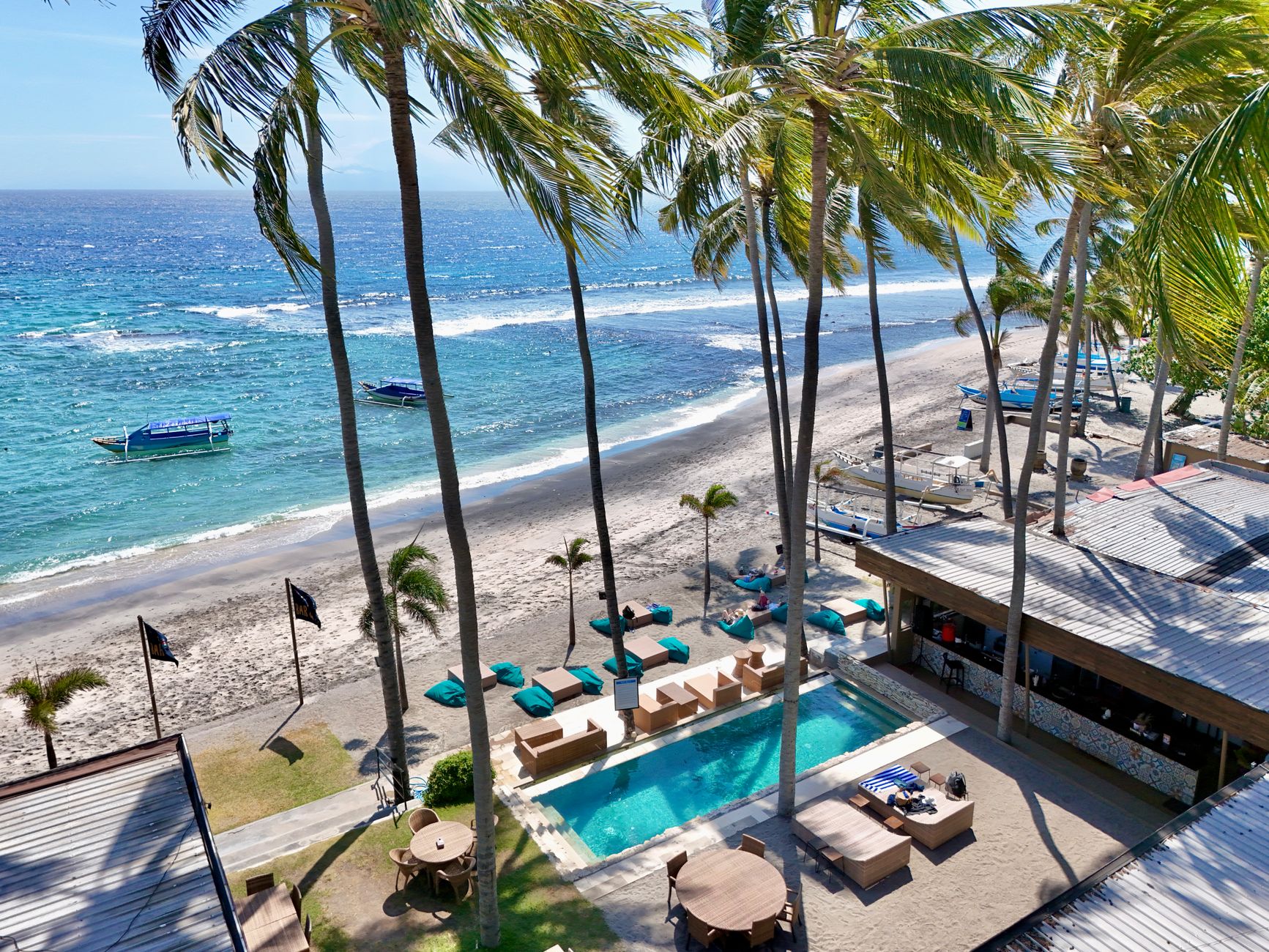
Other boats will offer Pulau Umang and small islands towards Sumur. Confirm what is actually running on the day rather than what the laminated brochure promises.
Anak Krakatau: At Siaga, and Off Limits
Boat trips out to the Krakatau complex — Rakata, Sertung, Panjang and Anak Krakatau itself — are the headline excursion from this coast, usually sold as a long day out of Carita or Tanjung Lesung with a climb up the volcano’s ash slopes and a snorkel stop.
They are not running normally at the moment. PVMBG, Indonesia’s volcanology agency, raised Anak Krakatau from Level II (Waspada) to Level III (Siaga) on 2 July 2026 after a sharp increase in activity, and it remains there — twenty separate eruptive events were logged on 17 August 2026 alone. The exclusion zone is two to three kilometres from the active crater depending on the bulletin, fishermen have been giving it a wider berth than that, and the regional government has publicly asked open-trip operators to stop approaching. Cancellations have been heavy. Tourists were caught climbing the flank in defiance of the ban in early August; do not be one of them.
Practically: assume the climb is unavailable, and treat any operator who offers it confidently as a warning sign rather than a bargain. Some boats run distant-view trips that stay well outside the radius, which is legitimate. Alert levels move in both directions, so check the PVMBG magma.esdm.go.id bulletin the week you travel rather than trusting a booking page. The beaches at Tanjung Lesung, Carita and Anyer sit outside the hazard zone and have operated normally throughout, which is why the coast is busy despite the headlines.
Ujung Kulon and the Javan Rhino
Ujung Kulon National Park occupies the far south-western tip of Java and holds the last wild population of Javan rhinoceros — a few dozen animals, unseen by essentially every visitor. It is a UNESCO World Heritage site and it is spectacular. It is also not a day trip from Tanjung Lesung, whatever a tour desk tells you.
The standard trip is three days and two nights staging out of Sumur, with a chartered boat to Pulau Peucang costing around Rp2,500,000 for a vessel taking up to twenty people. Park entry, under tariffs revised on 30 October 2024, is Rp20,000 for domestic visitors on weekdays and Rp30,000 at weekends and public holidays, with group rates of Rp10,000 and Rp15,000; foreign visitors pay Rp200,000 per entry. Motorboat permits add Rp100,000 to Rp200,000 by engine size. Accommodation on Peucang is basic government guesthouse standard.
You could drive down for a long day and see the fringes — eight hours in a car and a boat to look at a coastline. Give Ujung Kulon its own trip and build the itinerary around it; if you are fitting Java’s highlights into a week, our one-week Jakarta itinerary is a more realistic frame.
Eating in Banten
The food is a genuine pleasure and a reason to get off the resort. Banten cooking sits at the western edge of the Sundanese tradition: grilled fish, sambal in several distinct dialects, raw vegetables as lalapan, coconut-heavy curries. Look for sate bandeng, the Serang speciality of deboned milkfish remixed with coconut and spice, packed back into its own skin and grilled, sold at roadside shops along the route and durable enough to take home as a gift. Rabeg, a goat dish in a sweet-sour, heavily peppered sauce, is the other Banten classic, and angeun lada, a beef offal soup scented with local walang leaf, is the one locals will test you with.
The warungs in the fishing villages around Cipanon and Panimbang grill whatever came in that morning at a fraction of resort prices — Rp40,000 to Rp90,000 for a whole fish with rice and sambal, cash only, no service charge. Resort restaurants add the standard ~21 per cent service and tax, so a beachfront dinner for two lands closer to Rp400,000 than the menu suggests. Our guides to Jakarta’s best seafood restaurants and the broader Jakarta food guide are useful benchmarks, and the dishes worth trying in the city overlap only partly with what you find out here.
Banten Lama: The Detour on the Way Home
If you are driving back through Serang anyway, Banten Lama is a thirty-minute detour off the Merak toll and easily the best cultural stop on this route. This was the capital of the Sultanate of Banten, a pepper port that traded with the Portuguese, the English and the Dutch before the VOC dismantled it. What survives is genuinely atmospheric: the Great Mosque of Banten from 1556 with its tiered roof and a minaret attributed by local tradition to a Dutch convert; the roofless coral-block ruins of Keraton Surosowan, begun around 1552 and destroyed in 1832; the crumbling arches of Keraton Kaibon; and Benteng Speelwijk, the seventeenth-century Dutch fort whose walls you can still walk.
A provincial revitalisation programme is running through 2026 across Surosowan, the Great Mosque, Kaibon and Speelwijk, with a push to designate the whole precinct a national heritage area — expect scaffolding and fenced-off sections. The mosque is a major pilgrimage site, busiest at weekends and around Islamic holidays, so dress for it: covered shoulders and knees, headscarf for women in the prayer areas. Entry is free or a nominal parking donation. Our round-ups of Indonesian heritage sites around Jakarta and cultural experiences in the city cover the closer-in equivalents.
What a Weekend Actually Costs
Tanjung Lesung is not cheap in the way a Java beach town ought to be, because the accommodation stock is resort stock. Weekend and public-holiday rates commonly run 40 to 60 per cent above weekday rates, and Indonesia’s many long weekends push higher still. Villas price per unit rather than per person, so groups of six or eight do dramatically better than couples.
| Item | Typical cost | Notes |
|---|---|---|
| Resort room, weekday | Rp700,000–1,200,000 | Includes breakfast; rooms are dated |
| Resort room, weekend | Rp1,100,000–1,900,000 | Book early for long weekends |
| Four-bedroom villa | Under Rp3,000,000 | Sleeps six; best value for groups |
| Beach entry | Rp10,000–30,000 per person | Managed beach at the higher rate |
| Boat charter to Pulau Liwungan | Rp500,000–1,000,000 per boat | 10–20 people; or ~Rp150,000 per head |
| Pulau Liwungan entry | Rp10,000 adult / Rp5,000 child | Bring your own water |
| Water sports | Rp50,000–100,000+ per activity | Negotiable off-season |
| Warung seafood meal | Rp40,000–90,000 per person | Cash; no service charge |
| Resort dinner for two | Rp350,000–500,000 | Add ~21% service and tax |
Two nights costs roughly 60 per cent more than one and delivers roughly double the actual beach time, because the first day is consumed by the drive. That is the honest calculation: at current road conditions, one night is not enough. Once Sections 2 and 3 open, one night becomes perfectly reasonable. If the budget is tight, our budget travel guide to Jakarta stretches further than a discounted resort room will; if it is not, the five-star hotels in Jakarta are frankly better hotels than anything on this coast, and the city’s romantic hotels will do more for a couples’ weekend than a tired beachfront room with a good view.
Season, Sea State and the November–March Problem
The wet season runs roughly November to March, and on this coast it is not simply a matter of afternoon rain. West monsoon winds blow onshore into a west-facing bay, which is exactly the wrong geometry. Seas get choppy, visibility collapses, and boat trips to Liwungan and the islands are cancelled at short notice — sometimes on the morning of departure, with no refund unless you booked through a platform. Rivers push brown water and debris along the shoreline after heavy rain, and the road south from Rangkasbitung floods in places.
April to October is the window and June to September the best of it: dry, settled, clearest water of the year. July and August coincide with Indonesian school holidays, so book ahead. Ramadan changes things too — many warungs close during daylight, resort restaurants run reduced service, and the week after Idul Fitri brings domestic travel volumes that make the drive genuinely miserable. Our general Jakarta travel tips cover the seasonal patterns in more detail.
Tsunami Signage and Sensible Awareness
You will see blue-and-white evacuation route signs along the coast road and around the resort area, and warning sirens are installed at points along the Banten shoreline. BNPB and Basarnas have run repeated preparedness exercises in Pandeglang, including a Sunda Strait megathrust scenario, and the local briefing is that sirens plus signed routes give people a ten to twenty minute window to reach higher ground.
The sensible response is neither anxiety nor indifference. Spend two minutes on arrival noting where the nearest evacuation arrow points and where the ground rises behind your accommodation — the terrain climbs quickly inland, so it is rarely far. Understand the one lesson of 2018: a flank-collapse tsunami produces no earthquake, so an absence of shaking does not mean an absence of risk. If the sea withdraws unusually far, or a siren sounds, or staff tell you to move, go immediately and uphill rather than waiting for confirmation. That is the entire briefing. It takes less thought than a hotel fire exit.
Tanjung Lesung or the Thousand Islands?
For a Jakarta-based traveller with one free weekend, this is the real decision, and the answer depends almost entirely on whether you have a car and how many nights you have.
| Tanjung Lesung | Thousand Islands | Anyer / Carita | |
|---|---|---|---|
| Travel time from central Jakarta | 4–5.5 hrs by road (2.5–3 once toll completes) | 1.5–2.5 hrs by boat from Ancol or Marina | 3–4 hrs by road |
| Works as a day trip? | No | Yes | Marginally |
| Car needed? | Effectively yes | No | Yes |
| Water clarity | Moderate; better offshore | Good on the outer islands | Poor to moderate |
| Sunset over water | Yes — the main draw | Flat and unremarkable | Yes |
| Crowds | Low midweek, moderate weekends | Heavy at weekends | Heavy, and built up |
| Best for | Two-night escape, families, groups in a villa | Day trips, snorkelling, no-car travellers | Cheap, close, unlovely |
Our position: if you have one day, take the boat to the Thousand Islands and do not think about it further. If you have two nights and a car, a Tanjung Lesung beach Jakarta weekend is the better trip — quieter, prettier, with a real sunset, food worth eating and a genuine sense of having left the city, which is more than can be said for the over-developed Anyer–Carita strip that most Jakartans default to. Once the toll opens fully, Tanjung Lesung wins outright on a single night too.
Who should not bother
Skip it if you do not have a car or the budget for a driver — the public transport chain will eat your weekend. Skip it if you are chasing world-class snorkelling or diving; fly to Komodo or Bunaken instead. Skip it if you only have one day. Skip it if you are travelling between November and February and the boat trips are the point of the exercise. And skip it if what you actually want is a beach club with a DJ and a decent cocktail list — that does not exist here, and you will have a better night in the city, where our guides to things to do in Jakarta and the quieter corners most visitors miss will serve you better.
FAQ: Planning a Tanjung Lesung Beach Jakarta Trip
Is Tanjung Lesung safe to visit after the 2018 tsunami? Yes, in the ordinary sense that any Indonesian coastline is. The area has been rebuilt, evacuation routes and sirens are installed, and preparedness drills are run regularly by BNPB and Basarnas. The residual risk is the same tectonic and volcanic risk that applies to the whole Sunda Strait. Note where the evacuation signs point when you arrive, know that a flank-collapse tsunami comes without an earthquake, and move uphill immediately if the sea behaves strangely or a siren sounds.
Can you visit Anak Krakatau from Tanjung Lesung right now? Not as a landing or climb. PVMBG raised the volcano to Level III (Siaga) on 2 July 2026 and it remains there, with an exclusion zone of two to three kilometres around the crater and repeated eruptive activity through August. Local government has asked boat operators to stop approaching. Alert levels change, so check the official PVMBG bulletin in the week you travel rather than trusting a tour listing.
How long is the drive from Jakarta, honestly? Four to five and a half hours door to door as things stand, depending on when you leave. Only Section 1 of the Serang–Panimbang toll, from Serang to Rangkasbitung, is currently open; the remaining sections were physically complete in 2026 and targeted to open in October 2026. Once they do, expect roughly two and a half to three hours. The “two hours from Jakarta” figure you will see quoted describes the finished road, not today’s.
Is one night enough? Not at current road conditions. The drive consumes most of your first and last days, so a single night gives you perhaps one full afternoon on the beach. Two nights costs around 60 per cent more and roughly doubles your usable time. Once the toll corridor opens end to end, one night becomes a reasonable proposition and the whole trip changes character.
Can you get to Tanjung Lesung without a car? Technically yes, practically no. Take a bus from Kalideres to Labuan and then a DAMRI service or angkot towards Panimbang and Tanjung Lesung, or the commuter train to Rangkasbitung followed by a chain of angkots. Both routes take six to eight hours and leave you stranded on a peninsula with no local transport. There is no reliable scheduled shuttle. Hire a car with a driver or choose a different destination.
What does a weekend at Tanjung Lesung cost? Budget Rp1,100,000 to Rp1,900,000 a night for a resort room at weekend rates, or under Rp3,000,000 for a four-bedroom villa sleeping six. Add roughly Rp100,000 in tolls each way, Rp30,000 beach entry per person, Rp500,000 to Rp1,000,000 for a boat charter to Pulau Liwungan, and remember that resort restaurants add about 21 per cent service and tax to menu prices.
When is the best time to go? April to October, with June to September the strongest window for calm seas and clear water. The November to March wet season brings onshore winds into a west-facing bay, so expect cancelled boat trips, poor visibility and murky water after heavy rain. Avoid the week following Idul Fitri, when domestic travel volumes make the drive punishing, and book well ahead for Indonesian long weekends.
Is Ujung Kulon a day trip from Tanjung Lesung? No. The national park sits at Java’s south-western tip and the standard visit is three days and two nights staging out of Sumur, with a boat charter to Pulau Peucang costing around Rp2,500,000 for up to twenty people. Entry is Rp20,000 to Rp30,000 for domestic visitors and Rp200,000 for foreigners. You will almost certainly not see a Javan rhino — fewer than a hundred survive and they avoid people entirely.
Where to Go Next
If Tanjung Lesung sounds like more driving than you want, the rest of our Bogor day trip guide covers the closest genuine escape from the city, with botanical gardens and cooler air an hour down the Jagorawi. For a full weekend with better food and infrastructure, weigh it against Bandung and the Puncak passes. Before you commit to any of these, our advice on where to stay in Jakarta and the character of the different Jakarta neighbourhoods will help you pick a base with easy toll access, which matters more than anything else on a trip like this. And if you would rather spend the weekend in the city entirely, the best attractions in Jakarta and our three-day itinerary will fill it without a single toll gate.