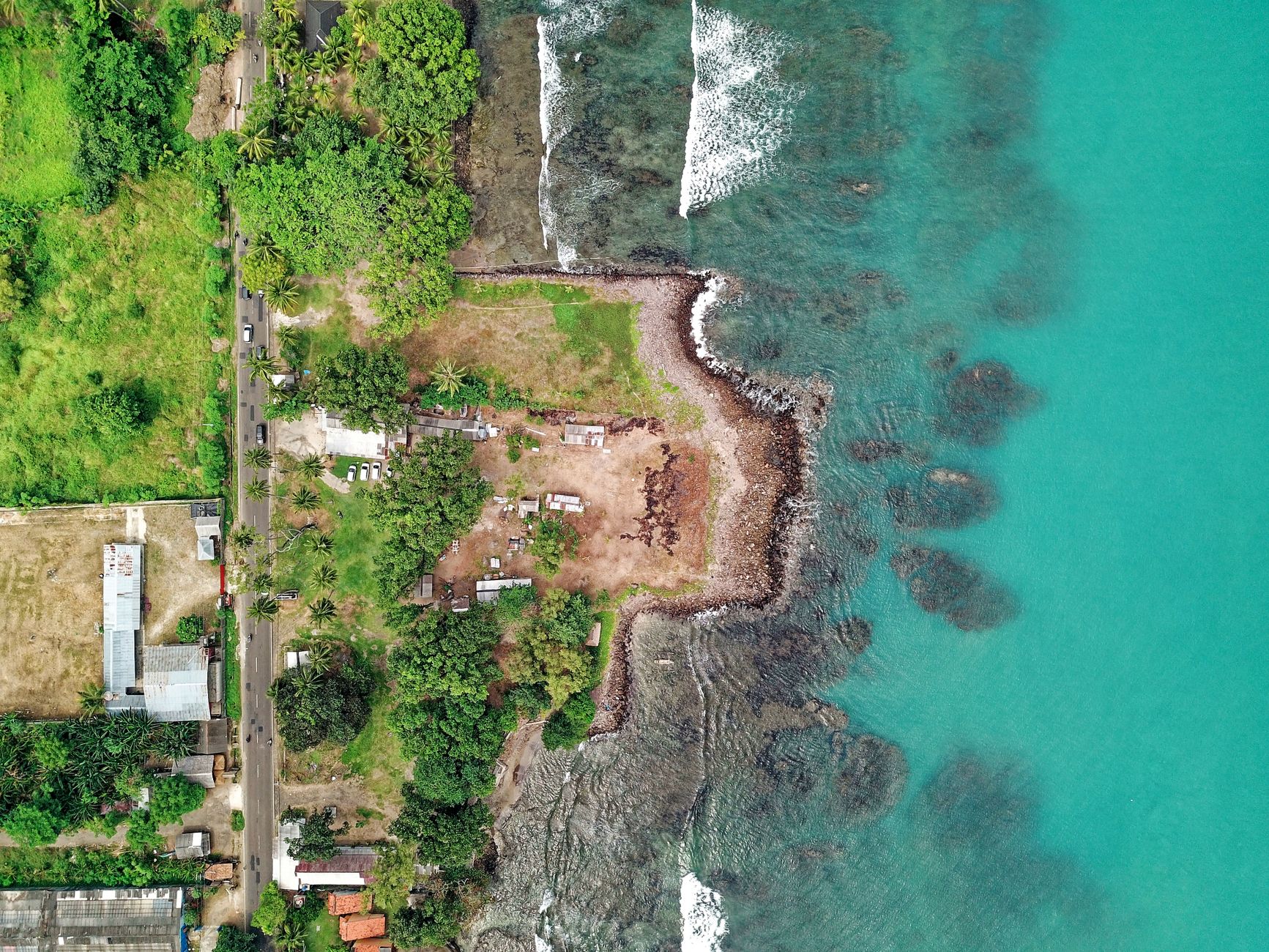
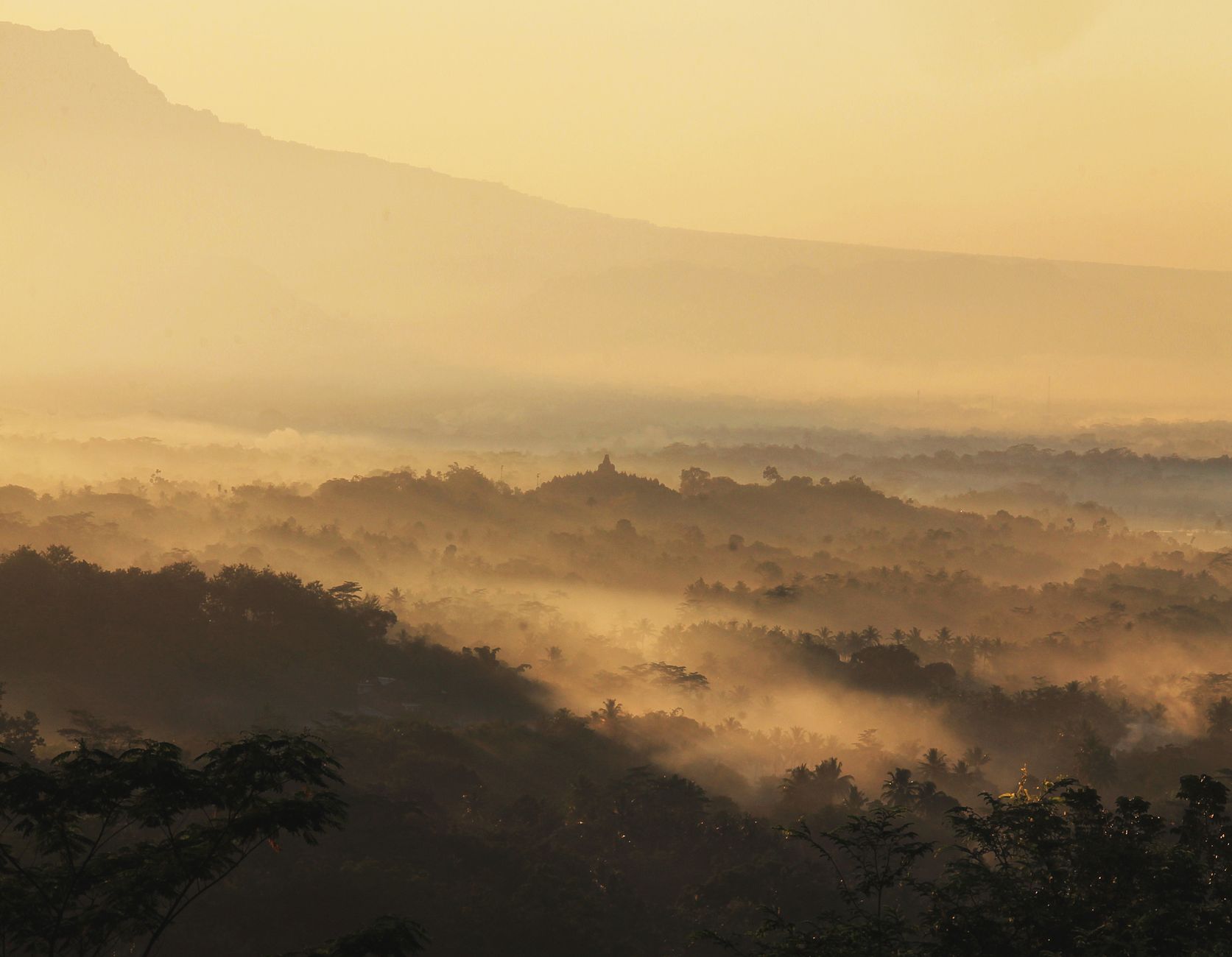
The decision that traps people is not which island looks best in photographs. It is which port to leave from, and almost nobody answers it. Search the Thousand Islands Jakarta and you get list after list of a dozen islands presented as equivalent, with no mention that the departure pier sets your budget, your wake-up time, your fellow passengers and, largely, the quality of the water you end up swimming in. Kepulauan Seribu is not one destination. It is a 45-kilometre string of about 110 islands running north from Jakarta Bay, and the gap between the nearest and the furthest is the gap between a murky paddle and genuinely clear water.
This guide sits under our pillar on the best day trips from Jakarta, which covers the archipelago only in outline. If the sea is not what you want, the mountain alternatives are our guides to a day trip to Bogor, the Puncak highlands and a weekend in Bandung. Pulau Bidadari, the closest island and the only one that truly works as a half-day outing, has its own article on this site. Everything else is here.
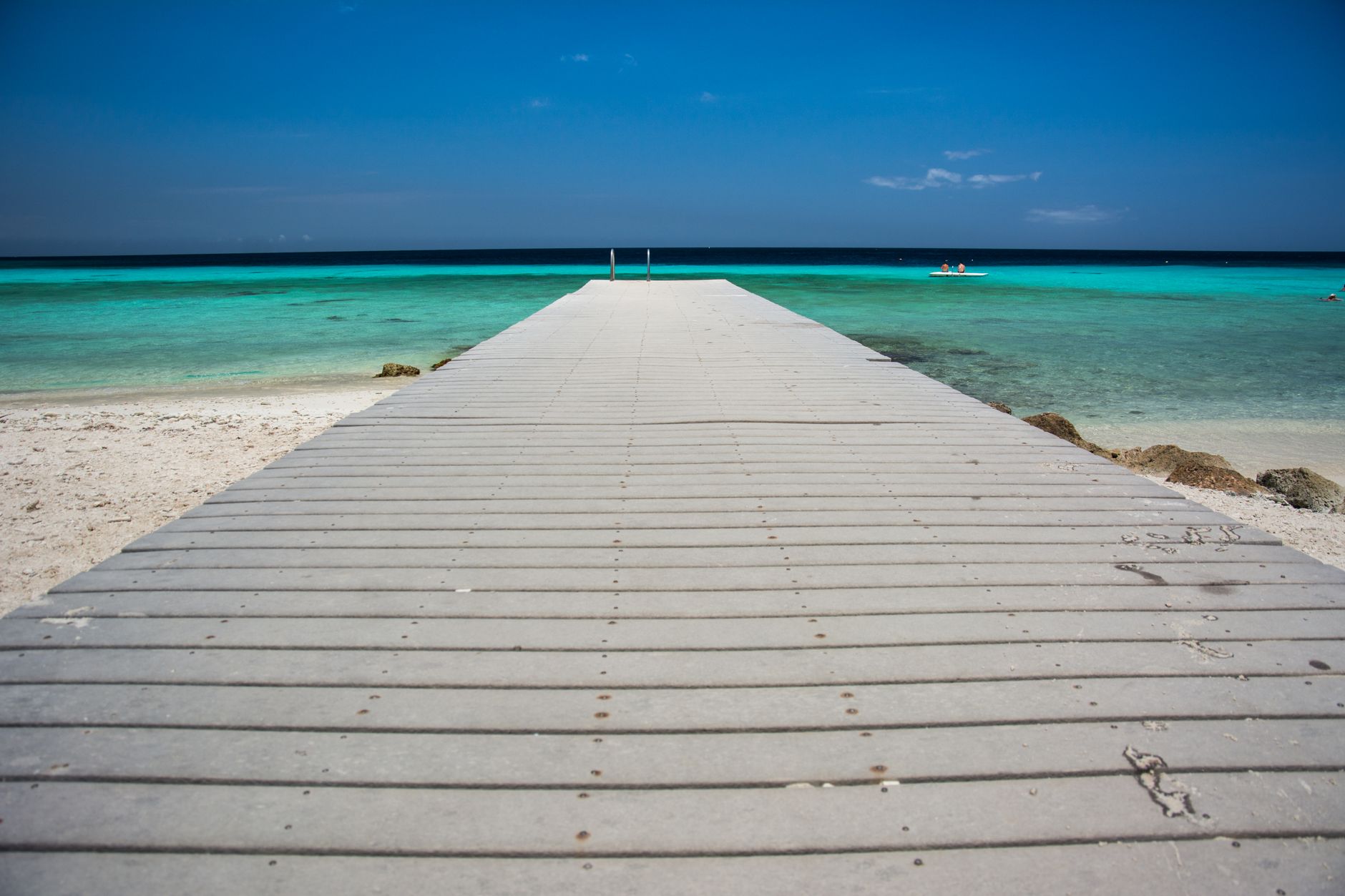
Why the Port Matters More Than the Island
There are two ways to reach Kepulauan Seribu, and they produce two different holidays. One is a wooden public ferry from a working fishing port. The other is a fibreglass speedboat from a tourist pier at roughly double the price. The crowd on board is not the same crowd.
Kali Adem, Muara Angke: the public port
Kali Adem is the passenger dock inside the Muara Angke fishing complex on Jalan Mandala Bahari, and it is the cheapest way to the islands by a wide margin. It is also a hard start to a holiday. The approach road runs past the wholesale fish market and the smell arrives long before the pier does. The waiting area is basic, the ticket queue chaotic, and most operators tell you to be there by 06:30 for a 07:30 or 08:00 sailing.
The boats are traditional wooden vessels, called ojek by islanders, carrying between 120 and 210 people. Seats are unnumbered, so the boarding scrum decides whether you spend two hours on a bench or on deck with your bag on your knees. Baggage is nominally capped at around 10 kg per person, there is no air conditioning, and the crossing takes anything from an hour and a half to three and a half hours.
Fares are the payoff. The DKI-regulated tariff has historically sat in the Rp 42,000 to Rp 72,000 band, and you can occasionally still buy close to that at the window. In practice most visitors book through an agent and pay roughly Rp 110,000 one way to Pari, Tidung or Pramuka and Rp 120,000 to Harapan, returns bundled at Rp 170,000 to Rp 190,000. A subsidised Dishub speedboat also leaves Kali Adem around 09:00, cutting the Pramuka run to under an hour. Boats back to Jakarta leave the islands around 13:00 to 14:00 — the single most important thing to plan around.
The speedboat port has moved — check before you go
This is where page-one results are now actively wrong. For years the answer was Dermaga Marina Ancol, inside the Taman Impian Jaya Ancol complex, and hundreds of pages still say so. Marina Ancol has been withdrawn from Thousand Islands service during construction of the MRT depot at Ancol. Departures shifted to Dermaga Baywalk in Pluit from mid-February 2026, and Pelabuhan Sunda Kelapa came into service from May 2026. Operators are split across both, and older listings still quote Ancol prices for a pier that no longer runs the route.
Practically, this means one thing: confirm your departure pier in writing with whoever sells you the ticket, the day before you travel. Do not assume Ancol. Turning up at the wrong dock at 07:00 costs you the whole trip, because there is exactly one sailing a day on most routes.
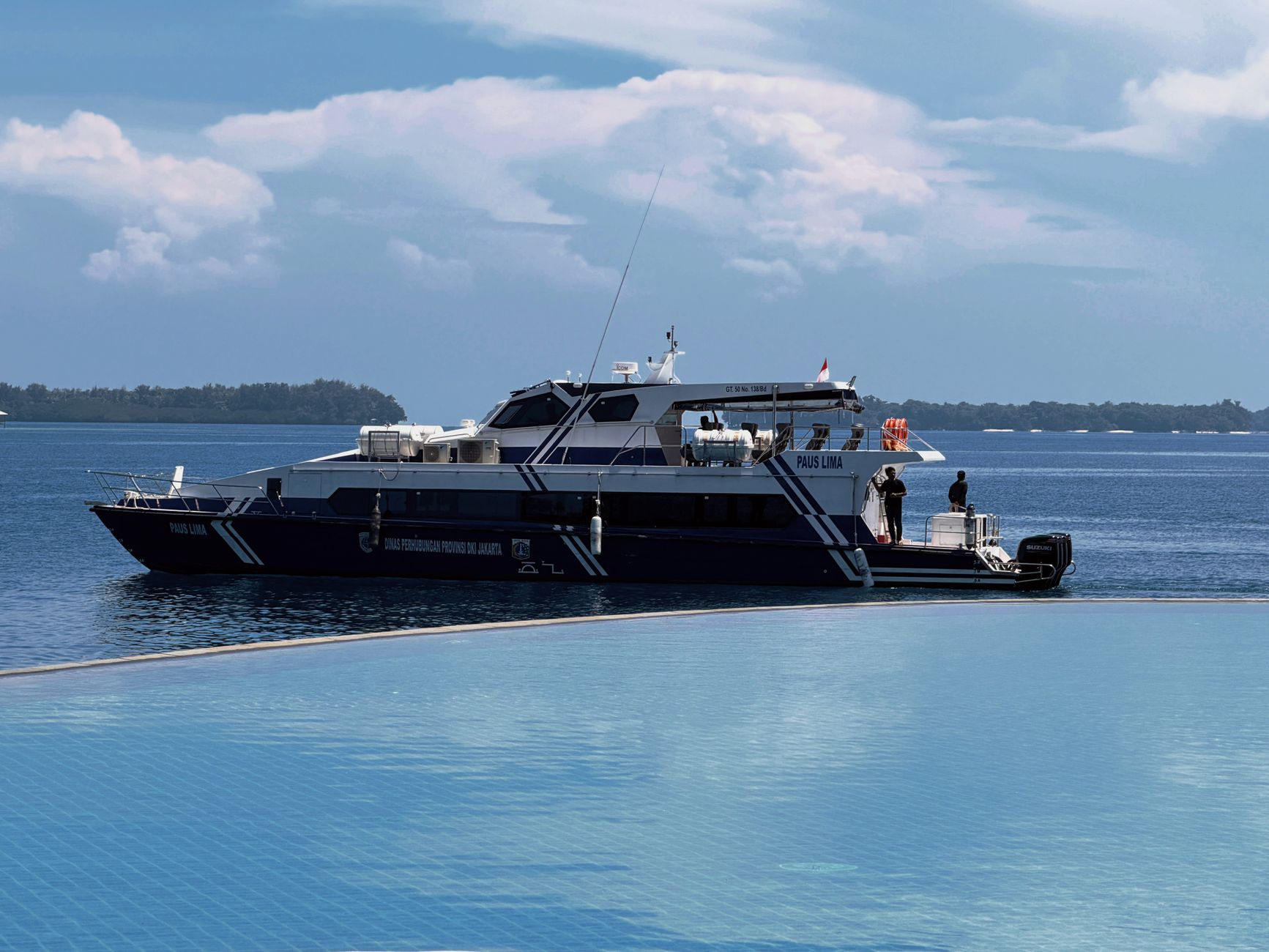
What has not changed is the experience on board. Speedboats are enclosed, air-conditioned, faster and more expensive, with boarding around 07:30 for an 08:00 departure. Journey times run roughly 60 to 90 minutes to Pari, 75 to 90 minutes to Tidung and 90 to 120 minutes to Pramuka, Harapan or the northern resorts.
| Factor | Kali Adem / Muara Angke | Speedboat piers (Sunda Kelapa / Baywalk) |
|---|---|---|
| Boat type | Wooden public ferry, open sides, no air con | Enclosed fibreglass speedboat, air-conditioned |
| Be at the pier by | 06:30, often earlier at weekends | 07:30 (30–60 min before sailing) |
| Typical departure | 07:30–08:00, plus a 09:00 Dishub fast boat | 08:00, usually one sailing a day |
| One-way fare to Tidung/Pari/Pramuka | Rp 110,000 via agent (official tariff lower) | Rp 250,000 from Sunda Kelapa |
| One-way fare to Harapan/Kelapa | Rp 120,000 | Rp 350,000 |
| Journey time | 1.5–3.5 hours | 60–120 minutes |
| Who is on board | Islanders, cargo, domestic weekenders | Tour groups, families, resort guests |
| Comfort | Unnumbered seats, 10 kg bag limit, fish market approach | Assigned pier lounge, still unnumbered seats |
| Best for | Budget trips, homestays, longer stays | Short trips, resorts, anyone with limited patience |
My own position: if you are staying two nights or more and money matters, take the public ferry out and the speedboat back, so the rough leg happens while you are fresh rather than sunburnt. If you have a single night, pay for the speedboat both ways — the hours saved are worth more than the Rp 280,000 difference.
Getting to the Ports from Central Jakarta
All three piers are in North Jakarta, and all need an unreasonably early start. From Sudirman, Menteng or Kemang, budget 45 to 75 minutes on the road at 05:30, more if it has rained; our guide to avoiding Jakarta traffic explains why 05:00 to 06:00 is the one window when the northern arterials still flow.
By public transport, Kali Adem is reachable on TransJakarta route 12A from Kota, about 50 minutes end to end; from South Jakarta take corridor 9 to Penjaringan and change. Corridors mostly run 05:00 to 22:00, so the first buses only just get you there in time. Our TransJakarta guide covers transfer rules and card top-ups, and the wider getting around Jakarta guide explains how the MRT, KRL and bus network connect. Sunda Kelapa and Baywalk are short rides from Kota and Penjaringan respectively.
Most visitors take a car. A Grab or Gojek from central Jakarta to Muara Angke runs roughly Rp 60,000 to Rp 110,000 at that hour; our overview of Jakarta transport costs gives the wider picture, and a metered taxi is similar and easier to book at 05:00. If you are driving yourself, all three piers have paid parking, though leaving a car at Muara Angke for two nights is not something I would do. Better still, sleep north or central the night before: our guides to where to stay in Jakarta and the best areas to base yourself explain the trade-offs, and Kota Tua cuts half an hour off a 05:30 ride.
Which Island to Pick: A Thousand Islands Jakarta Comparison
The rule that governs water quality is geography. Jakarta Bay drains thirteen rivers, and the islands closest to the city carry that runoff: suspended sediment, nutrient load and visible plastic on windward beaches after a storm. Visibility improves markedly from Pramuka northwards, and the reefs around Harapan, Kelapa, Sepa and Pantara are a different proposition entirely. This is also why a genuine day trip to the far islands does not work: two hours out, two hours back and a 13:00 return ferry leaves you ninety minutes on land.
| Island | Type | Journey (speedboat) | Water quality | Typical bed price | Best for |
|---|---|---|---|---|---|
| Pulau Bidadari | Small resort, closest | 15–30 min | Poor, bay water | Day trip or resort rate | Half-day escape, Fort Martello |
| Pulau Ayer | Resort, over-water cottages | 30–45 min | Poor to fair | Rp 900k–2m per person, package | Families wanting minimum travel |
| Pulau Pari | Inhabited, homestays | 60–90 min | Fair | Rp 250k–450k per room | Beaches, cycling, low-key weekends |
| Pulau Tidung | Inhabited, largest tourist village | 75–90 min | Fair | Rp 200k–450k per room | Budget groups, the Jembatan Cinta |
| Pulau Pramuka | Inhabited, regency capital | 90–120 min | Fair to good | Rp 250k–500k per room | Conservation, diving, sensible base |
| Pulau Harapan | Inhabited, far north | 2 hours | Good | Rp 250k–450k per room | Island-hopping and snorkelling |
| Pulau Kelapa | Inhabited, far north | 2 hours | Good | Rp 250k–450k per room | Quieter alternative to Harapan |
| Pulau Macan | Eco-resort, no plastic | ~2 hours | Good | Rp 2.1m–8m per person, package | Off-grid stays, no air conditioning |
| Pulau Sepa | Resort | ~2 hours | Very good | From Rp 2.18m per person, 2D1N | Diving and reef access |
| Pulau Putri | Resort, underwater tunnel | ~2 hours | Very good | Rp 1.25m–2.65m per person | Families paying for comfort |
| Pulau Pantara | Resort, furthest north | ~3 hours | Best in the chain | Rp 2.5m–5.8m per person | Near-resort standard, long stays |
Pulau Tidung: the Bridge, the Bikes and the Weekend Crowd
Tidung is the archipelago’s most photographed island and the one most likely to disappoint if you arrive with the wrong expectations. The draw is the Jembatan Cinta, the yellow-arched footbridge linking Tidung Besar to the uninhabited Tidung Kecil. Walking it is free. Teenagers jump off the high span into the channel, which is technically discouraged and universally ignored. The bridge has been rebuilt more than once after storm damage, so the structure in old photographs may not be the one standing.
Tidung Besar is genuinely inhabited — some 5,000 people, a mosque, schools, a health post, warungs selling nasi goreng for Rp 20,000 and grilled fish for Rp 35,000 to Rp 60,000. Everyone gets around by bicycle; hire is Rp 20,000 to Rp 30,000 a day and is the correct way to see the island. Homestays are plentiful, typically Rp 200,000 to Rp 450,000 for a fan or air-conditioned room, often with breakfast and dinner folded in.
The caveat is the weekend. Tidung is Jakarta’s default corporate outing and student trip destination, and on a Saturday it turns loud and party-adjacent: sound systems on the beach, banana boats, groups of thirty in matching T-shirts, and rates up by a third. If you want quiet, go midweek; if you want quiet and clear water, go somewhere else. On a tight budget, though, this is the highest-value island in the chain, and it suits the approach in our guide to travelling Jakarta on a budget.
Pulau Pramuka: Turtles, Coral and the Regency Capital
Pramuka is the administrative seat of the Kepulauan Seribu regency, which gives it something the other islands lack: infrastructure. A district office, a proper clinic, a police post, more reliable electricity and mobile signal, and the national park authority’s field station. If something goes wrong, this is where you want to be.
The main attraction is the hawksbill turtle sanctuary run under Taman Nasional Kepulauan Seribu, rehabilitating Eretmochelys imbricata here since 1984. Eggs are collected from nesting beaches across the park, moved to protected hatchery pens and incubated for five to six weeks; hatchlings are reared until their shells harden enough for release. It is a working facility rather than a polished attraction — concrete tanks, informal hours in the region of 08:00 to 16:00, a donation box rather than a ticket desk. Releases are irregular, so ask on arrival rather than planning around one.
Pramuka also launches most dive activity in the southern half of the park and sits beside Pulau Panggang, where much of the coral transplantation work happens. Homestays run Rp 250,000 to Rp 500,000. It is the island I would send a first-time visitor who wants a real place rather than a resort, and it works well as the sea component of the three-day Jakarta itinerary.
Pulau Pari: Beaches, Flooding and a Land Dispute
Pari has the best beach in the southern group. Pantai Pasir Perawan is a genuinely pretty curve of shallow, sheltered water on the northern shore, with mangroves at one end and warungs selling coconuts and grilled corn. Entry is a local fee of roughly Rp 5,000 to Rp 25,000. The island is flat, tiny and perfect for cycling, with a sunset spot at Pantai Bukit Matahari worth the ride.
Two things to know before booking. First, Pari sits in a long-running land-ownership dispute between residents and a corporate claimant to much of the island. Villagers have farmed and occupied contested plots as an act of resistance, and the case has run through the courts for years, including a 2025 administrative suit over damage to the marine ecosystem. You will see banners, and locals will talk if you ask respectfully. Tourism revenue helps keep the community’s claim viable, which argues for a locally run homestay over a package.
Second, Pari floods. Tidal flooding — banjir rob — now hits the island something like fifteen to eighteen times a year, with the sea pushing roughly 70 metres inland at Pasir Perawan during the worst events. Residents took a landmark climate case against the cement multinational Holcim to a Swiss court in 2023 precisely because of this. It does not make the island unvisitable, but check conditions in the days before you travel, particularly around spring tides in the wet season.
Pulau Harapan and Pulau Kelapa: Where the Water Gets Good
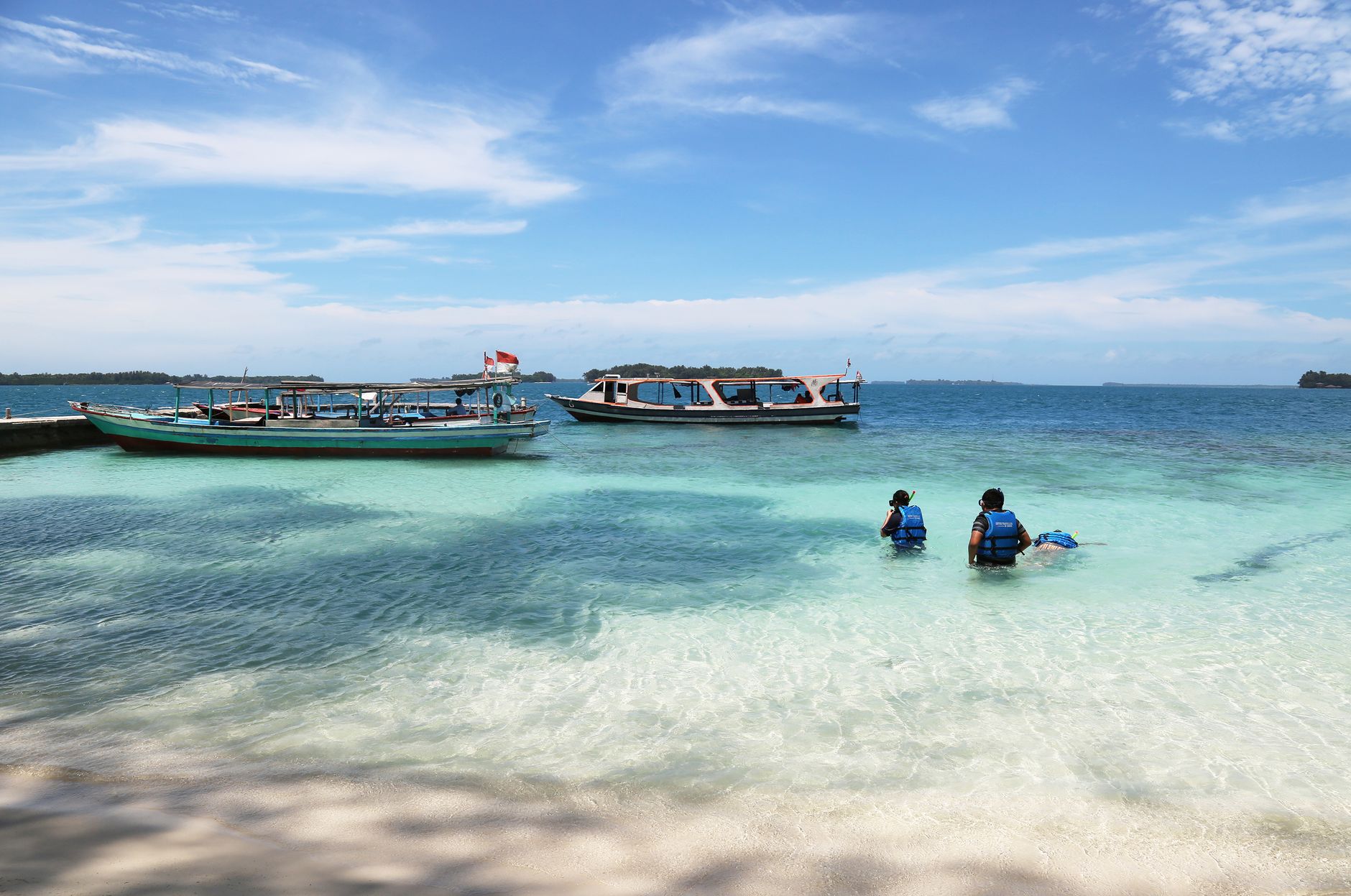
If snorkelling is the point of the trip, go north. Harapan and its neighbour Kelapa sit near the top of the chain, about two hours by speedboat or three and a half by wooden ferry, and the difference in the water is not subtle: visibility that hovers around three to five metres off Tidung can reach ten or more up here.
Neither island is scenic in itself — both are densely built village islands of concrete alleys and satellite dishes — but they are the base for the best island-hopping in Kepulauan Seribu. A typical boat day takes in the sandbar-fringed Pulau Perak, Pulau Bulat, Pulau Dolphin and a couple of reef drop-offs. Homestays are the same Rp 250,000 to Rp 450,000 bracket as further south, and the food is better because the fishing fleet is local.
The trade-off is time. You lose most of two days to the journey, so one night here is barely worth it; two is the minimum that makes sense and three is better. Nobody should attempt Harapan as a day trip. The arithmetic does not work.
The Resort Islands: Macan, Sepa, Putri, Pantara and Ayer
The private-island resorts are a different market with a different price structure. You buy a package, not a room: the rate covers the speedboat transfer, all meals and basic watersports, quoted per person rather than per night. That looks eye-watering next to a Rp 300,000 homestay, and slightly less so once you have added up ferry tickets, meals, boat hire and gear.
| Resort island | Character | Indicative package price (per person) | Notes |
|---|---|---|---|
| Pulau Macan | Off-grid eco-lodge, solar powered, no air conditioning, no plastic bottles | From about Rp 2,150,000 for a short package; Rp 4.8m–8.1m for 3D2N ocean-view or oceanfront | Communal meals, coral restoration activities, adults-oriented |
| Pulau Sepa | Long-established dive resort with a real house reef | 2D1N from about Rp 2,178,500; day trip from about Rp 1,150,000 | Best reef access of the mid-range resorts |
| Pulau Putri | Family resort with an underwater observation tunnel | Roughly Rp 1,250,000–2,650,000 | Cottages and villas, easy for children |
| Pulau Pantara | Furthest north, closest to near-resort standard | Roughly Rp 2,500,000–5,800,000 | Three-hour transfer; go for two nights minimum |
| Pulau Ayer | Over-water cottages, 30–45 minutes out | Roughly Rp 900,000–2,000,000 | Cheapest resort option; the water is bay water |
Pulau Macan is the one I would single out. It runs on solar, refuses single-use plastic, has no air conditioning, composts its waste and involves guests in coral planting — while also asking you to accept cold showers and shared tables, which some people love and others quietly resent. If you want polished service and a proper bar, Putri or Pantara are the sensible choices; our guide to luxury travel in Jakarta covers that tier of spend on the mainland. For families, Putri and Ayer are safest, and pair with our list of things to do in Jakarta with kids.
What a Snorkelling Day Package Actually Includes
Most people visit the inhabited islands on an open trip: a shared package sold by a small operator, usually two days and one night, from about Rp 345,000 to Rp 500,000 per person departing Muara Angke. Expect the return ferry ticket, a night in a shared homestay room, three meals plus a beachside barbecue, hire of a local boat for island-hopping, snorkelling gear, a guide and island entry fees. Private trips for a fixed group cost more per head but let you set the itinerary.
Not included: alcohol, camera hire, tips and the speedboat upgrade. Check how many snorkelling stops you get — three is standard, two is being short-changed — and whether fins cost extra. Gear quality varies; if you own a mask, bring it, and pack water shoes, because many entry points are coral rubble rather than sand. Diving runs from Pramuka, Sepa and several resorts, with two-tank fun dives typically Rp 500,000 to Rp 750,000 and open-water courses Rp 4,000,000 to Rp 6,000,000.
Conservation Work You Can Actually See
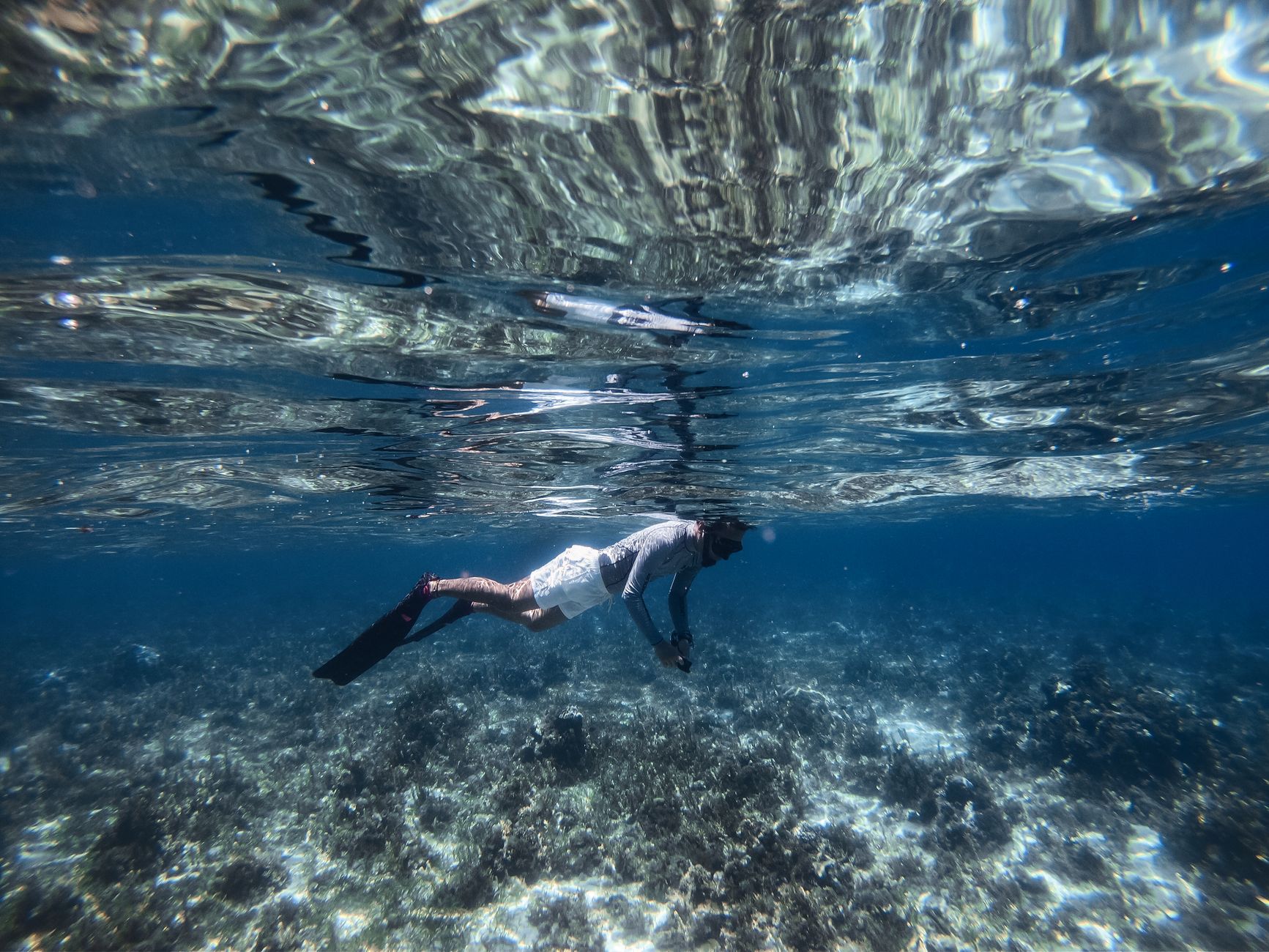
Kepulauan Seribu has been a marine national park since the 1980s, and there is real restoration work going on across the northern islands. Coral transplantation is a standing programme run by the regency’s tourism office with NGOs including Smiling Coral Indonesia, seeding substrate structures off Pramuka and Panggang; the 2026 provincial coastal rehabilitation programme has placed thousands of coral substrates across the park. Some operators and resorts let visitors plant a fragment themselves, which is a better souvenir than most.
Turtle work on Pramuka is the other visible strand, alongside mangrove replanting. Both exist because the reefs here have taken a beating from sedimentation, bleaching and decades of destructive fishing. Set expectations accordingly: these are reefs in recovery, not pristine ones, and the most photogenic stretches are often transplanted nursery frames rather than natural reef.
The Colonial and Wartime Remains
The southern cluster nearest Jakarta is thick with history. Benteng Martello, a circular brick artillery tower built from around 1850, once stood on four islands: Onrust, Cipir, Kelor and Bidadari. It survives in reasonable shape on Kelor and Bidadari; on Onrust and Cipir only foundations remain. Onrust was a VOC shipyard and later a quarantine station for pilgrims bound for Mecca, and its cemetery and ruined dormitories are still there. Kelor was originally Kerkhof — Dutch for churchyard — because prisoners were buried on it.
These islands are reached from Muara Kamal, not Kali Adem, on a separate three-island tour from around Rp 120,000 per person that takes a morning. Facilities are minimal and there is little shade, but it is a genuinely interesting half-day for anyone who enjoyed Kota Tua, and it belongs with the sites in our round-up of Jakarta’s overlooked corners.
Fees, Cash, Food and Alcohol
Bring cash. This is the single most common mistake people make on a Thousand Islands Jakarta trip. There are almost no ATMs across the inhabited islands — Pramuka and Tidung have one or two that are frequently empty or out of service — and card acceptance is close to zero outside the resorts. QRIS works in some warungs when the signal holds, which it often does not.
Fees are small but numerous. The national park lists a daily visitor tariff of Rp 5,000 for Indonesian nationals and Rp 150,000 for foreign visitors; in practice it is collected inconsistently and often bundled into package prices, so keep small notes. Local beach retribution on Pari and Tidung runs Rp 5,000 to Rp 25,000. If a resort transfer routes you through Ancol, the area entrance charge is around Rp 30,000 per person plus Rp 30,000 per car or Rp 20,000 per motorbike. Piers charge a small platform fee.
Food on the inhabited islands is simple and cheap: grilled fish, sambal, rice, fried banana, at Rp 25,000 to Rp 60,000 a meal. Do not expect the mainland range — our guides to Jakarta’s seafood restaurants and the wider food scene show what you are leaving behind. Alcohol is the bigger adjustment: these are conservative Muslim communities and beer is either unavailable or sold quietly and expensively, so do not expect a beach bar. Resorts serve alcohol at resort prices with the usual roughly 21 per cent service and tax on top. During Ramadan, warung hours shift and daytime eating in public is impolite.
When to Go, and When the Boats Simply Stop
The dry season, roughly April to October, is the season for this trip. Seas are calmer, visibility is better and cancellations are rare, with May to September the sweet spot.
From November to March the picture changes. High winds and swell regularly shut the route down. In January 2026 alone, DKI’s transport agency suspended fast-boat services on several occasions, with BMKG recording winds of 11 to 15 knots and waves of 1.25 to 2.5 metres and the harbourmaster at Muara Angke declining to issue sailing permits for days at a stretch. If you are on an island when that happens, you stay. Build in slack, never book an island night immediately before a flight, and check the BMKG maritime forecast the evening before.
Weekends and Indonesian public holidays are the other variable: boats fill, homestay rates climb by 20 to 50 per cent, and Tidung becomes very loud. Long weekends around Idul Fitri and the New Year are busiest — worth cross-checking against our calendar of Jakarta events and festivals.
Honest Expectations: What This Is Not
This is not the Gili Islands and it is emphatically not Raja Ampat. Calibrate before you book, because the gap between the marketing photographs and the reality is where disappointment lives.
The southern islands sit in a bay that receives the runoff of a city of ten million. After heavy rain you will see plastic in the water and on the windward beaches, and the volunteer clean-ups residents organise cannot keep pace with what the tide brings in. Coral cover is patchy. Village islands are crowded and built up — neighbouring Panggang is among the most densely populated islands on earth — and their beaches are small, functional and shared. Infrastructure is thin: intermittent power, variable water, basic sanitation.
What you get in return is real. A two-hour boat ride out of one of the world’s largest cities into water you can actually swim in, for less than a hotel breakfast in Sudirman costs. Villages that are not staged. Sandbars off Harapan where nobody else is standing. Go north, go midweek, go with cash and low expectations about luxury, and it is one of the better things to do in Jakarta. Go to the nearest island on a Saturday expecting the Maldives and you will hate it.
Thousand Islands Jakarta: Frequently Asked Questions
Can you do the Thousand Islands as a day trip from Jakarta? Only to the nearest islands. Bidadari, Ayer and Untung Jawa work because the crossing is 15 to 45 minutes. Pari and Tidung are possible but rushed, giving about four hours ashore. Anything from Pramuka northwards does not work: the return boat leaves around 13:00, so a Harapan day trip buys you roughly ninety minutes on land after four hours of travel.
Which port should I leave from, Muara Angke or the speedboat pier? Kali Adem at Muara Angke if you are on a budget, staying more than one night and can tolerate a 06:30 arrival at a working fish port. The speedboat services — now running from Sunda Kelapa and Baywalk rather than Marina Ancol — if you value time and comfort, are visiting a resort, or have only one night. The speedboat costs roughly double and halves the journey.
Is the water clean enough to swim in? It depends entirely on how far north you go. Around Tidung and Pari the water is swimmable but often murky, with visibility of three to five metres and visible litter after storms. From Pramuka northwards it improves steadily, and around Harapan, Kelapa, Sepa and Pantara it is genuinely clear. Jakarta Bay runoff is the reason, and no amount of marketing changes the geography.
How much should I budget for two days and one night? A backpacker doing it independently via the public ferry can manage on Rp 700,000 to Rp 900,000 all in. A shared open trip from Muara Angke, including boat, homestay, meals, barbecue and snorkelling, runs Rp 345,000 to Rp 500,000 per person. Add the speedboat instead of the ferry and you are at Rp 900,000 to Rp 1,200,000. Resort packages start around Rp 1,250,000 per person and climb well past Rp 5,000,000.
Are there ATMs on the islands? Effectively no. Pramuka and Tidung have a machine or two that are unreliable and frequently out of cash. Card payment is not accepted outside resorts, and mobile signal is patchy enough that QRIS often fails. Withdraw everything you need in Jakarta before you leave, in small denominations, and carry a reserve.
What happens if bad weather cancels the boat? Services are suspended by the harbourmaster, not the operator, and there is no override. In January 2026 fast boats were grounded repeatedly by 1.25 to 2.5 metre swells. If you are on the mainland you lose the trip and usually get a reschedule rather than a refund; if you are on an island you stay until sailing permits resume, which can be a day or several. Never book an island night directly before a flight.
Can I drink alcohol on the islands? On the resort islands, yes, at resort prices with about 21 per cent service and tax added. On the inhabited islands — Tidung, Pramuka, Pari, Harapan, Kelapa — these are conservative communities and alcohol is largely unavailable, sometimes sold discreetly at a heavy markup. Do not bring a crate and drink on the beach; it causes genuine offence.
Which island would you choose for a first visit? Pulau Pramuka for two nights, arriving by speedboat and returning on the public ferry. It has the best combination of decent water, real infrastructure, the turtle sanctuary, dive access and easy onward boats to better reefs, without the weekend party atmosphere of Tidung or the price tag of a resort.
Where to Go Next
If the islands are one half of your escape from the city, the mainland is the other: our round-up of fun activities for visitors to Jakarta covers what to do on the days you are not at sea. For fitting the sea into a longer stay, our one-week Jakarta itinerary builds in an island night, while the two-day itinerary is the version for people who should skip the boats entirely. Before you go, read our general Jakarta travel tips for the cash, SIM card and weather practicalities that catch first-timers out, and our neighbourhood guide for how North Jakarta fits with the rest of the city. If you end up with a spare day because a ferry was cancelled, our lists of free things to do in Jakarta and more unusual ways to spend an afternoon will fill it, and the attractions map shows what is within reach of the northern piers.
If you would rather stay on an island that is entirely a resort, our guide to luxury resorts near Jakarta covers Pulau Putri, Pulau Ayer, Pulau Macan’s eco-lodge and the private-villa islands, with crossing times from Marina Ancol and what the packages include.