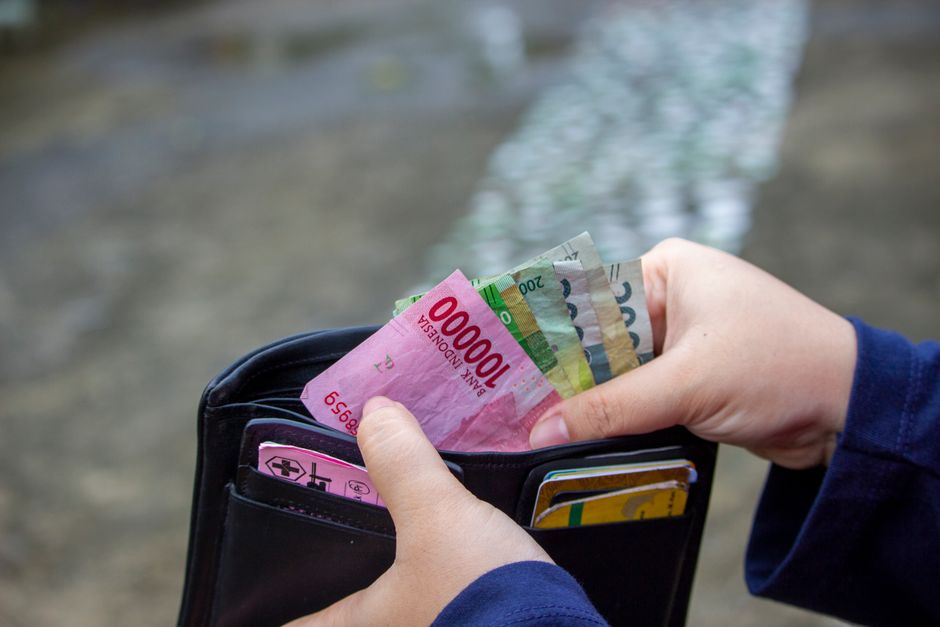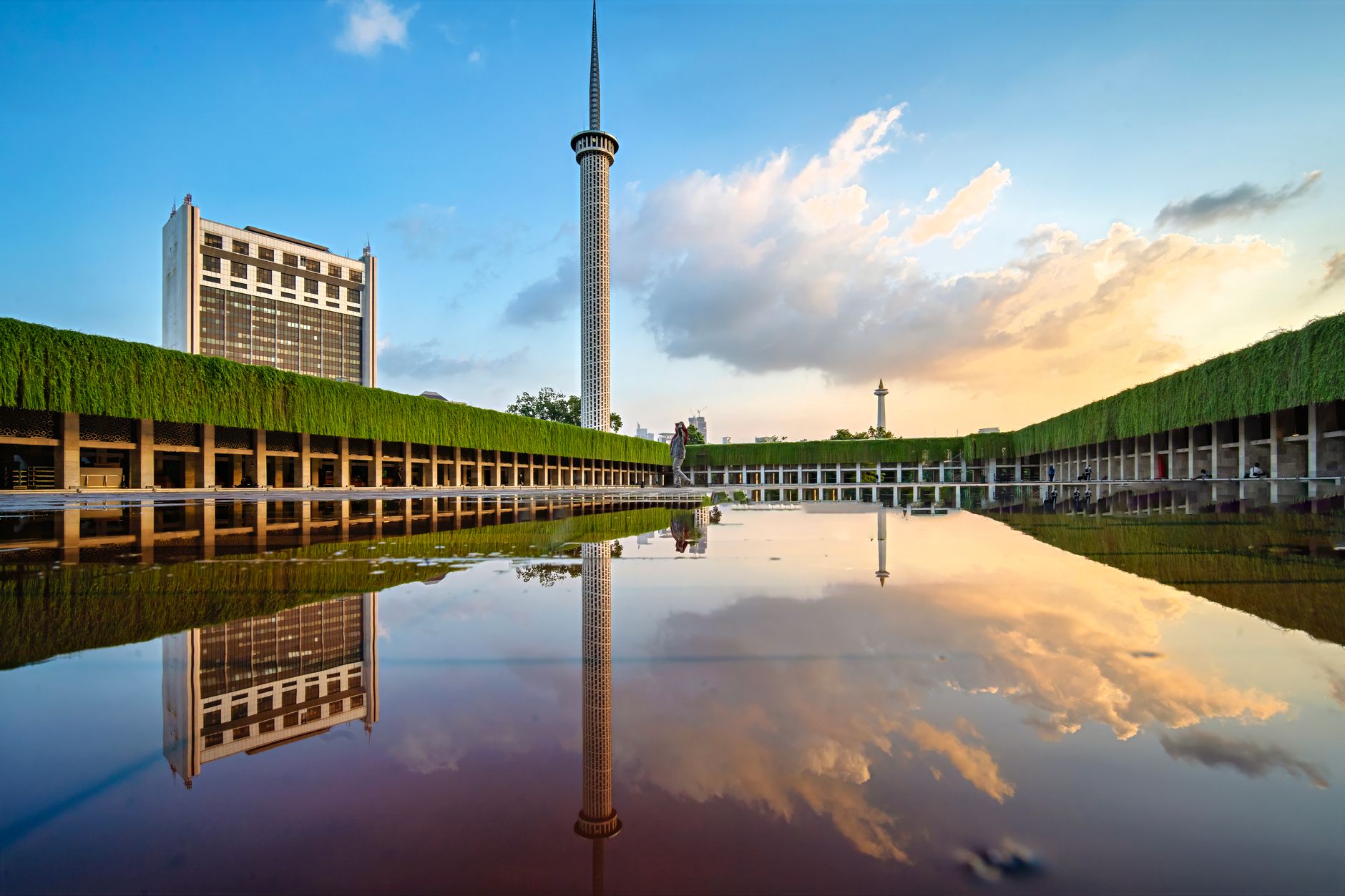
The best view of Monas costs nothing. Stand on the grass of Merdeka Square at half past six in the morning, when the joggers are out and the light is soft, and the 132-metre obelisk is all yours. Queue for the lift at noon and pay for the privilege, and it is somebody else’s. That is the quiet truth about the free attractions Jakarta offers: many of the city’s best places have no ticket at all, and they are at their best at exactly the hours when the paid ones are shut or crowded.
This guide lists twenty places in Jakarta that genuinely cost nothing to enter — no ticket, no gate fee, no “suggested” charge at the door — grouped by area so that you can string several together in a morning. Getting to them is not free, but it is close: a TransJakarta ride is 3,500 rupiah wherever you go. Hours were checked in September 2026 and do change, particularly around public holidays. For free experiences rather than places — tea ceremonies, wayang performances, sports crowds — our sister guide to free things to do in Jakarta has twenty-five more.
The twenty at a glance
| # | Attraction | Area | Open |
|---|---|---|---|
| 1 | Merdeka Square and the Monas grounds | Central | 05:00–21:00 |
| 2 | Istiqlal Mosque | Central | Outside prayer times |
| 3 | Jakarta Cathedral | Central | 08:00–20:00 |
| 4 | Lapangan Banteng | Central | 24 hours |
| 5 | Pos Bloc | Pasar Baru, Central | Mon–Fri 10:00–21:00; weekends from 07:00 |
| 6 | National Library | Central | Mon–Fri 08:00–17:00; weekends 09:00–15:30 |
| 7 | Sarinah | Thamrin, Central | Shop hours |
| 8 | Sunday car-free day | Sudirman–Thamrin | Sunday mornings |
| 9 | Taman Suropati | Menteng | 24 hours |
| 10 | Taman Menteng | Menteng | 24 hours |
| 11 | Taman Ismail Marzuki | Cikini | Daytime and evenings |
| 12 | Fatahillah Square and Kota Tua | Old Town | 24 hours |
| 13 | Kali Besar and Toko Merah | Old Town | 24 hours |
| 14 | Jakarta Kota station | Old Town | Station hours |
| 15 | Glodok’s temples and lanes | West | Daytime |
| 16 | Taman Kalijodo | West | Daytime and evenings |
| 17 | Hutan Kota GBK | Senayan | Tue–Sun 06:00–18:00 |
| 18 | Tebet Eco Park | South | 06:00–22:00 |
| 19 | Taman Literasi, Blok M | South | 06:00–22:00 |
| 20 | M Bloc Space | Blok M, South | From 07:00 until late |
Central Jakarta
The densest cluster of free sights in the city sits around Merdeka Square, and seven of the twenty below are within a long morning’s walk of each other. Start early: the square has almost no shade, and by eleven the heat makes walking between them hard work.
1. Merdeka Square and the Monas grounds
The grounds around the National Monument are open from 05:00 to 21:00 and cost nothing. The monument itself, the museum in its base and the observation deck at 115 metres are ticketed — around 30,000 for foreign visitors, closed on Mondays — but for many people the obelisk is better seen from outside than from the top of it. The square is one of the largest urban open spaces in the world, lined with deer paddocks, fountains and lawns, and it is where half of Central Jakarta comes to run before work.
Go at dawn, when the light is kindest and the heat has not arrived, or in the evening, when the monument is lit and families come out with their children. Our landmarks guide covers the monuments around the square.
2. Istiqlal Mosque
The largest mosque in Southeast Asia, with room for some 200,000 worshippers, welcomes visitors outside prayer times free of charge. Dress modestly — long trousers or a long skirt, covered shoulders, and for women a headscarf, which can be borrowed — and take your shoes off where you are asked to. The scale of the prayer hall, under its great dome, is extraordinary, and the building’s modernist lines are a surprise to anyone expecting domes and minarets in the Middle Eastern style. See our Istiqlal guide for the visitor entrance and times.
3. Jakarta Cathedral
Directly across the road from Istiqlal, Jakarta’s neo-Gothic Catholic cathedral is open from 08:00 to 20:00 and free to enter. Its spires and stained glass make a striking contrast with the mosque opposite, and the pairing of the two — deliberately placed side by side — is one of the most telling sights in the capital. An underground passage, the Tunnel of Friendship, links them; our Tunnel of Friendship guide explains when it is open, and the Cathedral guide covers Mass times, when visitors should hold back.
4. Lapangan Banteng
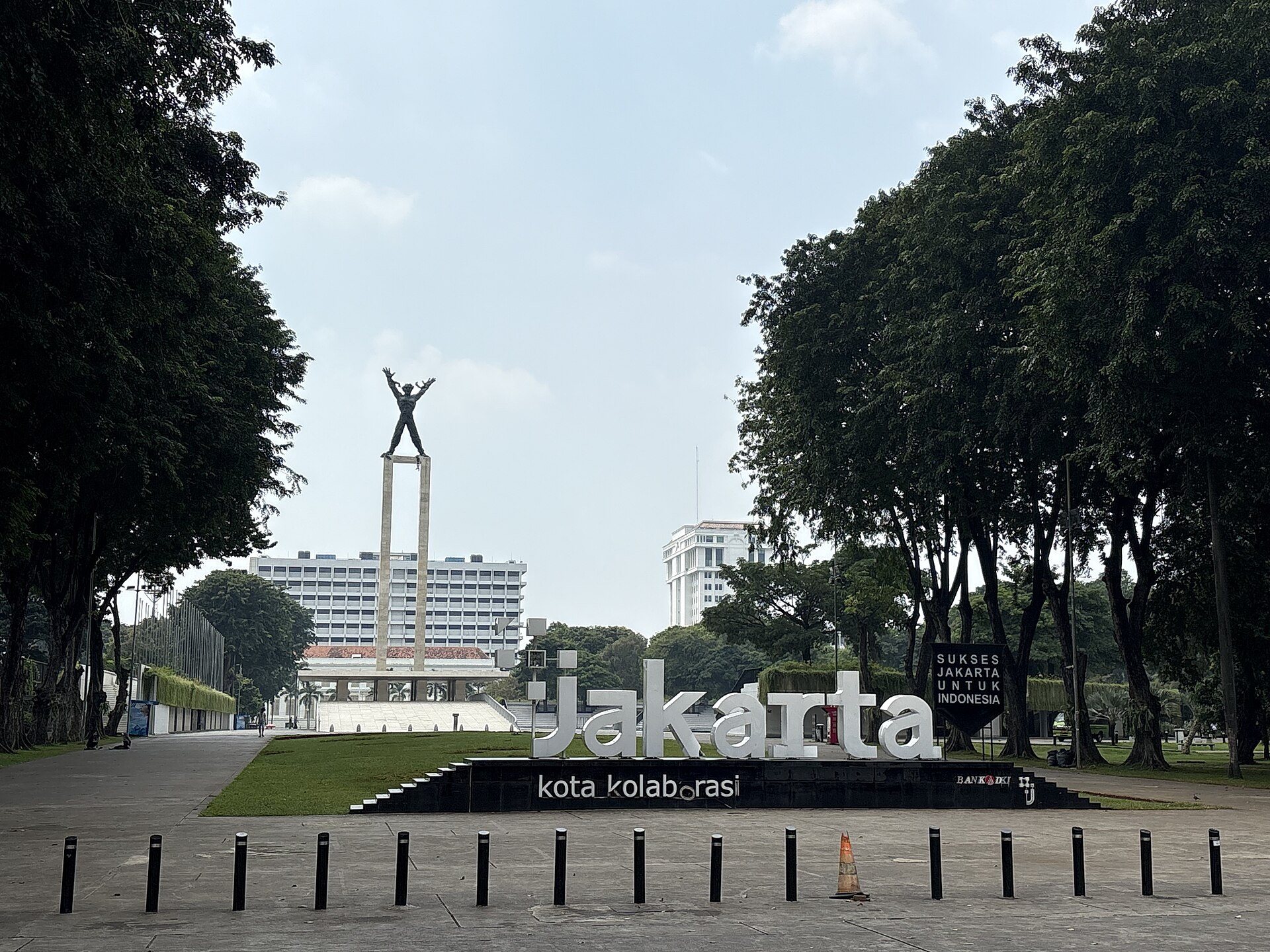
A few minutes’ walk east of the Cathedral, Lapangan Banteng is a large, recently landscaped square open around the clock. Its centrepiece is the West Irian Liberation Monument, a bronze figure breaking free of his chains on top of a tall concrete frame, a piece of Sukarno-era monumental sculpture that is worth seeing up close. There are lawns, a jogging track, an amphitheatre and a dancing fountain that runs on some evenings. It is one of the best places in Central Jakarta to see how the city spends a free evening.
5. Pos Bloc
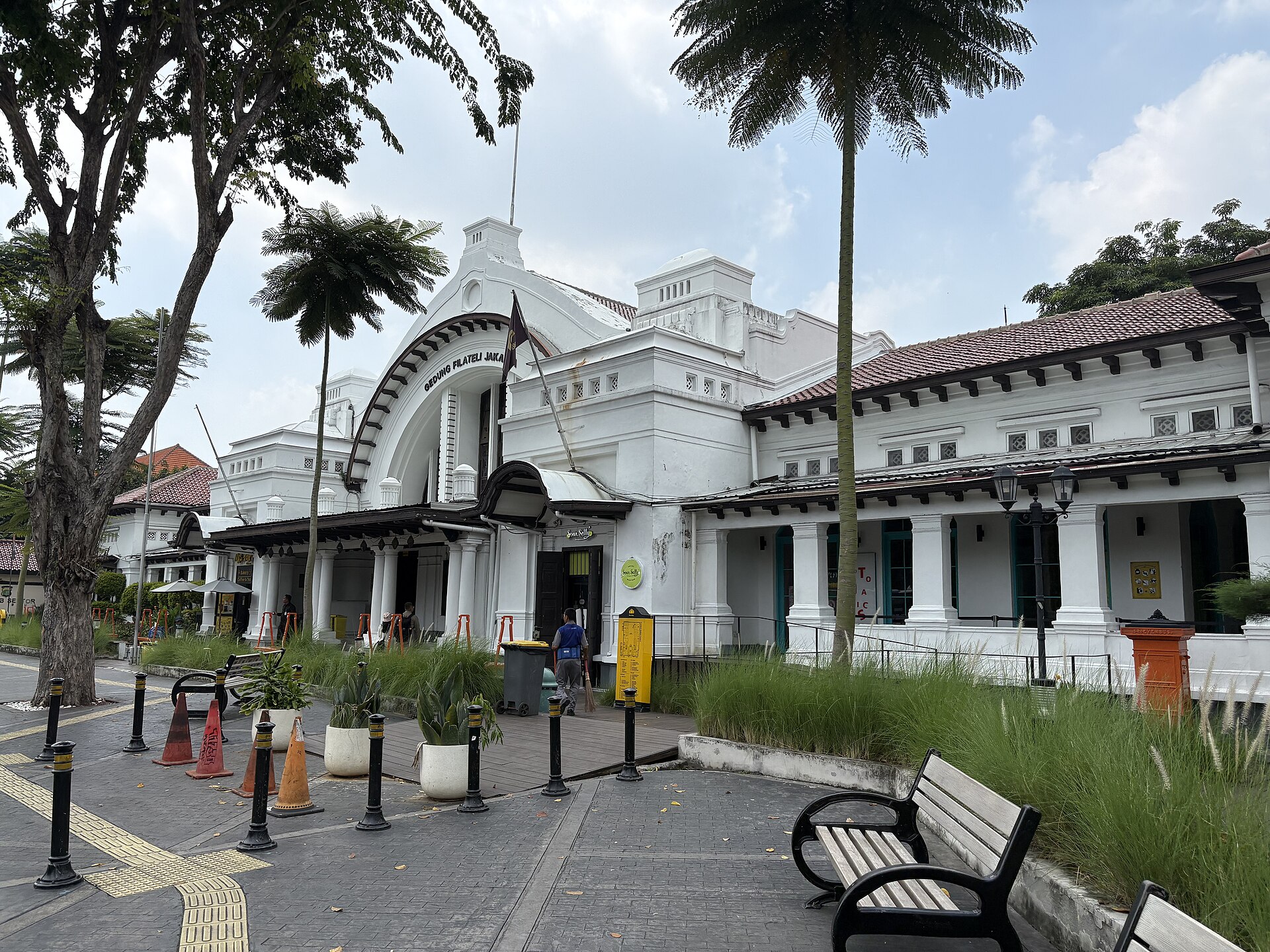
Jakarta’s old central post office on Jalan Pos, beside the Pasar Baru shopping street, has been turned into Pos Bloc: a creative hub of small cafés, food counters, independent shops and event spaces inside the handsome white colonial building. Entry is free. It opens from 10:00 to 21:00 on weekdays and from 07:00 at weekends, when it is at its busiest. It works best as a stop on a walk: combine it with Pasar Baru, Jakarta’s oldest shopping street, across the road, and with Lapangan Banteng and the Cathedral a few minutes away.
6. The National Library
The Perpustakaan Nasional on Jalan Medan Merdeka Selatan, on the south side of Merdeka Square, is housed in a modern tower that is one of the tallest library buildings in the world, and it is free to enter. The reading rooms are quiet, air-conditioned and genuinely beautiful, and the upper floors give views across the square to Monas. Hours are Monday to Friday 08:00 to 17:00 and weekends 09:00 to 15:30. Bring identification to register at the desk. On a hot afternoon, it is the most civilised free hour in Jakarta.
7. Sarinah
Sarinah on Thamrin, “The Indonesia Emporium”, has its origins in the 1960s as the country’s first modern department store, and its refurbishment has turned it into a showcase of Indonesian craft and design: batik, woven tenun textiles, handicrafts and local beauty brands, across floors that are free to wander. It is a short walk from the Bundaran HI MRT station, with step-free access and prayer rooms. You do not have to buy anything; it is the best free introduction to Indonesian textiles in the city, and a good way to learn what a fair price looks like before you go to the markets.
8. Sunday car-free day
Every Sunday morning, the main avenue from Sudirman up to Thamrin closes to motor traffic until around 11:00, and the city pours onto it: runners, cyclists, families with pushchairs, street food stalls, dance classes, marching bands, protests, and everyone who wants to be seen. It is completely free, it is the best people-watching in Jakarta, and it passes the Selamat Datang monument at Bundaran HI. Arrive by MRT — it runs as normal — and walk the length of it.
Menteng and Cikini
9. Taman Suropati
The loveliest small park in central Jakarta, in the heart of Menteng’s old garden suburb, open around the clock. Mature trees shade the paths, there is a small lake and a fountain, and a series of sculptures by artists from the ASEAN countries stands among the lawns. At weekends, street musicians and young violinists practise here, which is one of the city’s small, unexpected pleasures. Go early in the morning, when the joggers are out, and walk the surrounding streets of colonial villas afterwards. See our Menteng guide.
10. Taman Menteng
A short walk away on Jalan HOS Cokroaminoto, Taman Menteng is a larger, more active park, also open around the clock, with sports pitches, a jogging track and shaded seating, laid out on the site of an old football stadium. It is where Menteng plays football, and where local families come in the cool of the evening. Less beautiful than Suropati, more alive.
11. Taman Ismail Marzuki
Jakarta’s arts centre on Jalan Cikini Raya, founded in the late 1960s and rebuilt in recent years, is a campus of theatres, galleries, a planetarium and a public library around open plazas. The plazas, the library and many exhibitions are free; performances and the planetarium are ticketed. Check the programme — on a good evening there is free music or a film screening — and combine it with the cafés of Cikini.
Old Jakarta: Kota Tua, Glodok and the north-west
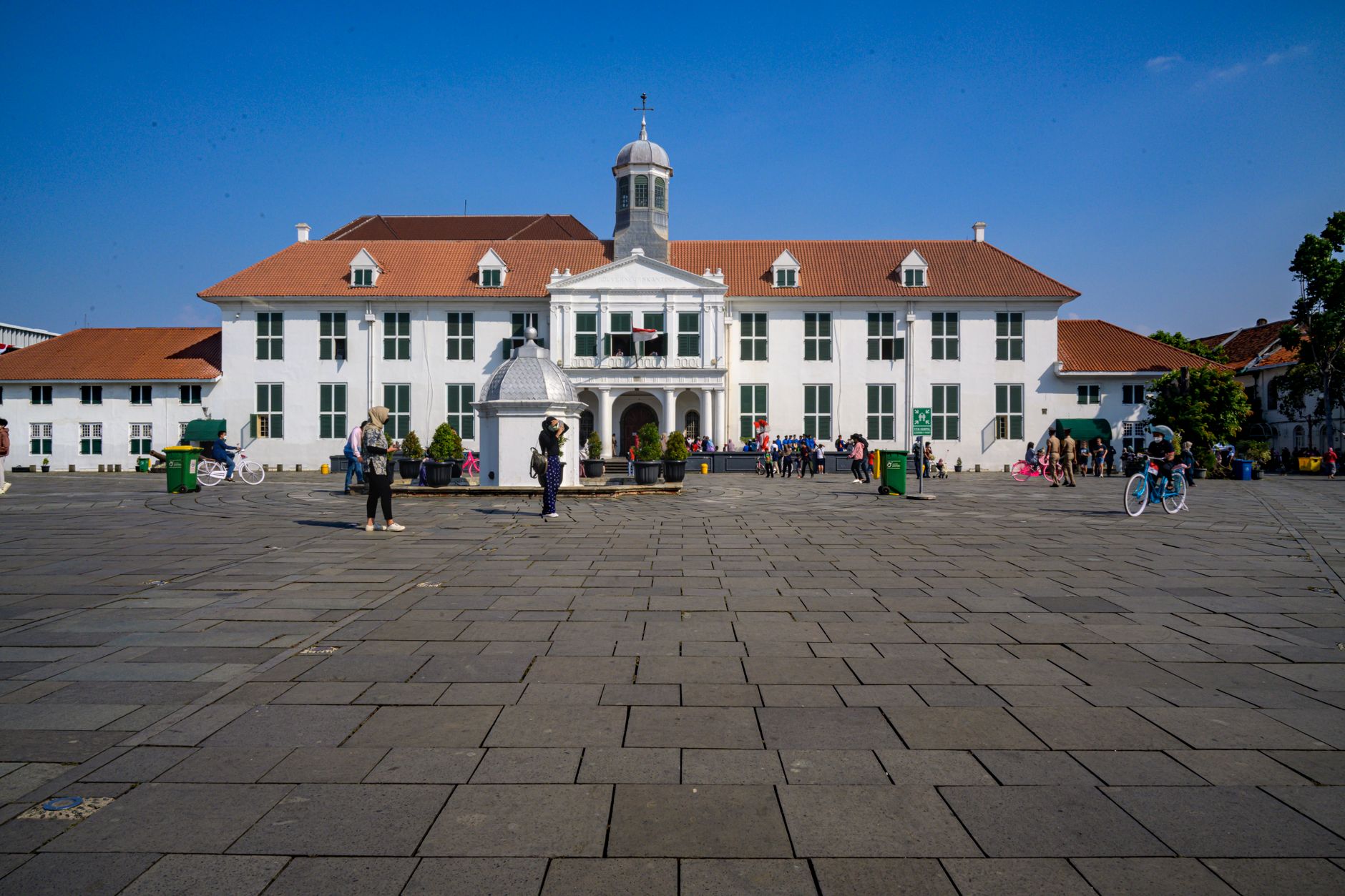
12. Fatahillah Square and the Kota Tua streets
The heart of old Batavia, the Dutch East India Company’s capital, is a large cobbled square in front of the old city hall, now the Jakarta History Museum. The square and the streets around it are open around the clock and cost nothing to walk. The museums around it are not free, but at 10,000 for adults on weekdays they are close. Be here early, before about nine: the square is at its most atmospheric when it is nearly empty, and by the afternoon it is hot and crowded with day-trippers and the hire bicycles painted in bright colours. Our Kota Tua walking tour sets out a route.
13. Kali Besar and Toko Merah
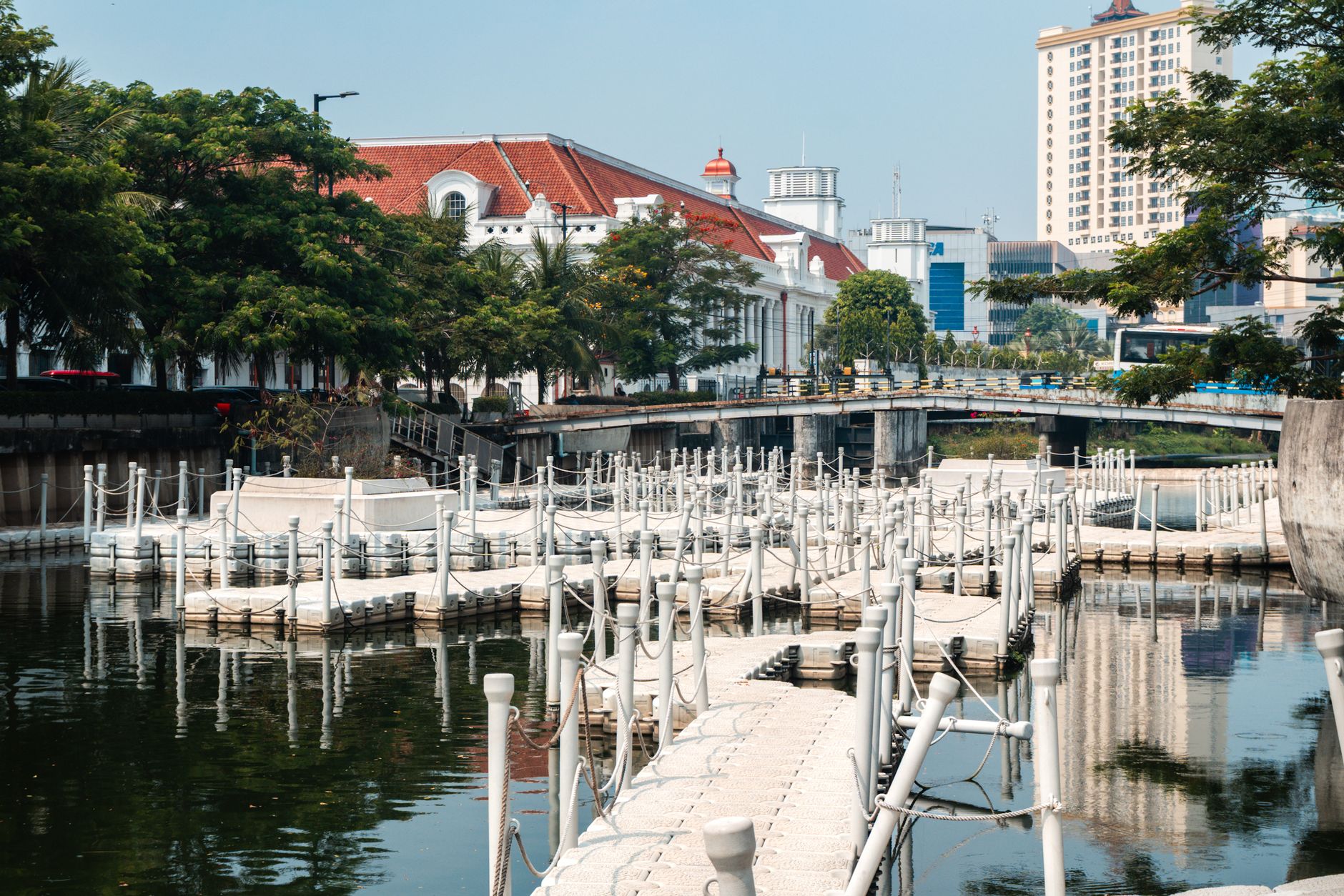
A couple of minutes west of Fatahillah Square, the Kali Besar canal has been restored with a boardwalk promenade along its banks, lined with the colonial-era warehouses, banks and trading houses of the old port city. The most famous of them is Toko Merah, the red-brick house on the west bank built in the 1730s, one of the oldest buildings in Jakarta. It is a free, shaded-in-places walk that most visitors to Kota Tua miss because they never leave the square.
14. Jakarta Kota station
The terminus of the KRL commuter network, opened in 1929, is one of the finest Art Deco buildings in Southeast Asia, and its great arched hall is free to walk into and look at from the concourse. If you arrive in Kota Tua by train, you already have; if you arrive by bus, it is worth the five-minute detour. Stand in the hall at rush hour and watch the commuters stream through under the arches — it is the best free display of how Jakarta moves.
15. Glodok’s temples and lanes
Jakarta’s Chinatown, a short walk south of Kota Tua, is free to wander and one of the most rewarding parts of the city on foot. The Vihara Dharma Bhakti temple, dating from the mid-17th century, is the oldest in the city, and the temples around the Petak Sembilan market fill with incense, giant red candles and worshippers. Visitors are welcome if they are respectful; a donation is appreciated but not required. On the edge of the district, the Pantjoran Tea House has revived an old tradition of leaving teapots outside for passers-by to drink from, free. The food, alas, is not free, and you will want it. See our Glodok guide.
16. Taman Kalijodo
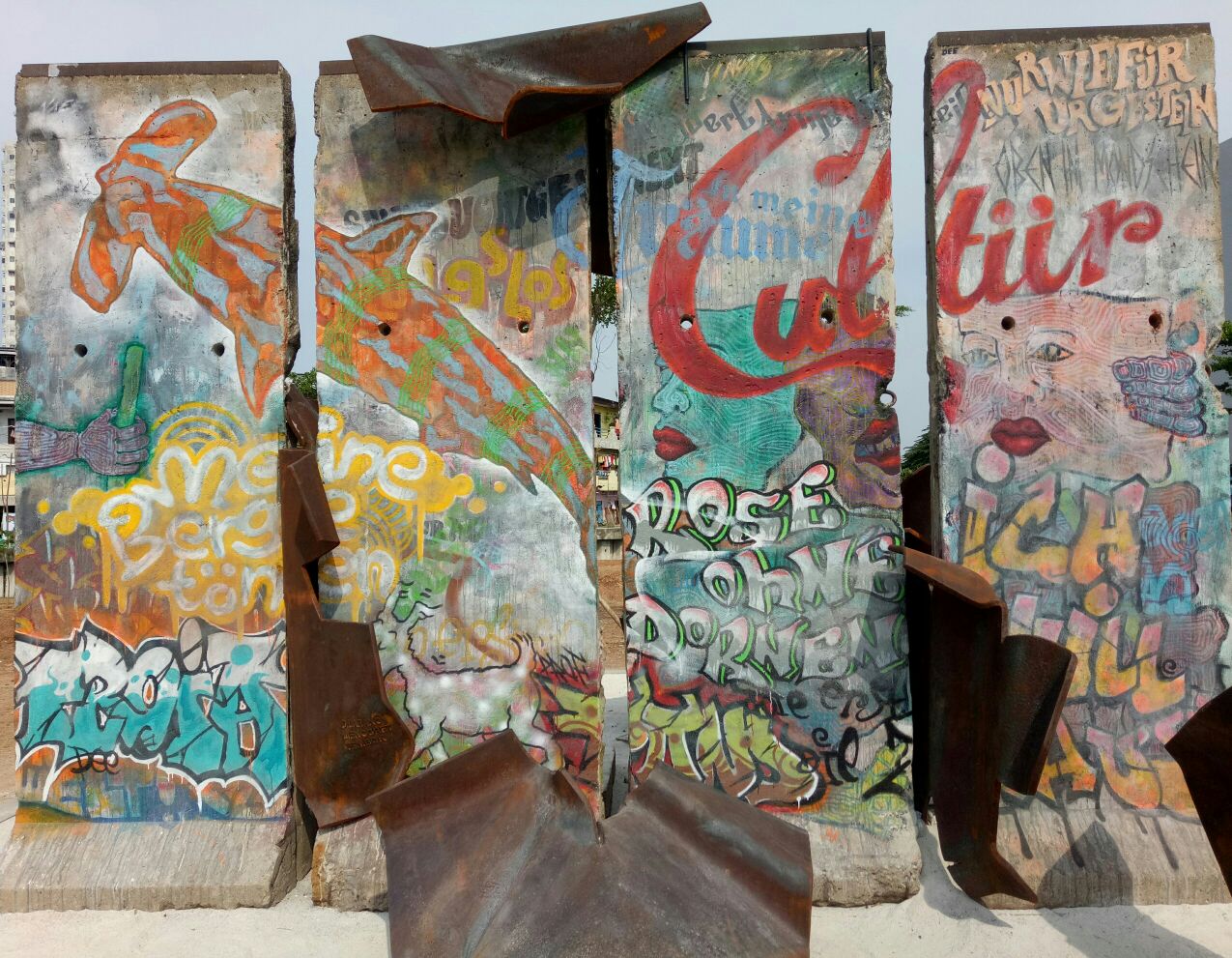
On Jalan Pangeran Tubagus Angke in Tambora, West Jakarta, Kalijodo was for decades a notorious red-light district until it was cleared in 2016 and turned into a public park. Today it has a BMX arena and a skate park, a children’s playground, riverside space and — the reason to come — a set of graffiti-covered sections of the Berlin Wall, standing among rusted steel sculptures. Entry is free. It is out of the way for most visitors, so combine it with Kota Tua and Glodok rather than making a special trip.
South Jakarta
17. Hutan Kota GBK
Inside the Gelora Bung Karno sports complex in Senayan, the Hutan Kota — city forest — is 4.5 hectares of trees, lawns, jogging and cycling paths and an amphitheatre, with the skyline of Sudirman rising behind it. It is open Tuesday to Sunday from 06:00 to 18:00 and closed on Mondays. Entry is free. Combine it with a walk around the GBK complex itself, where the running track around the main stadium is one of Jakarta’s great early-morning social spaces. See our Senayan guide.
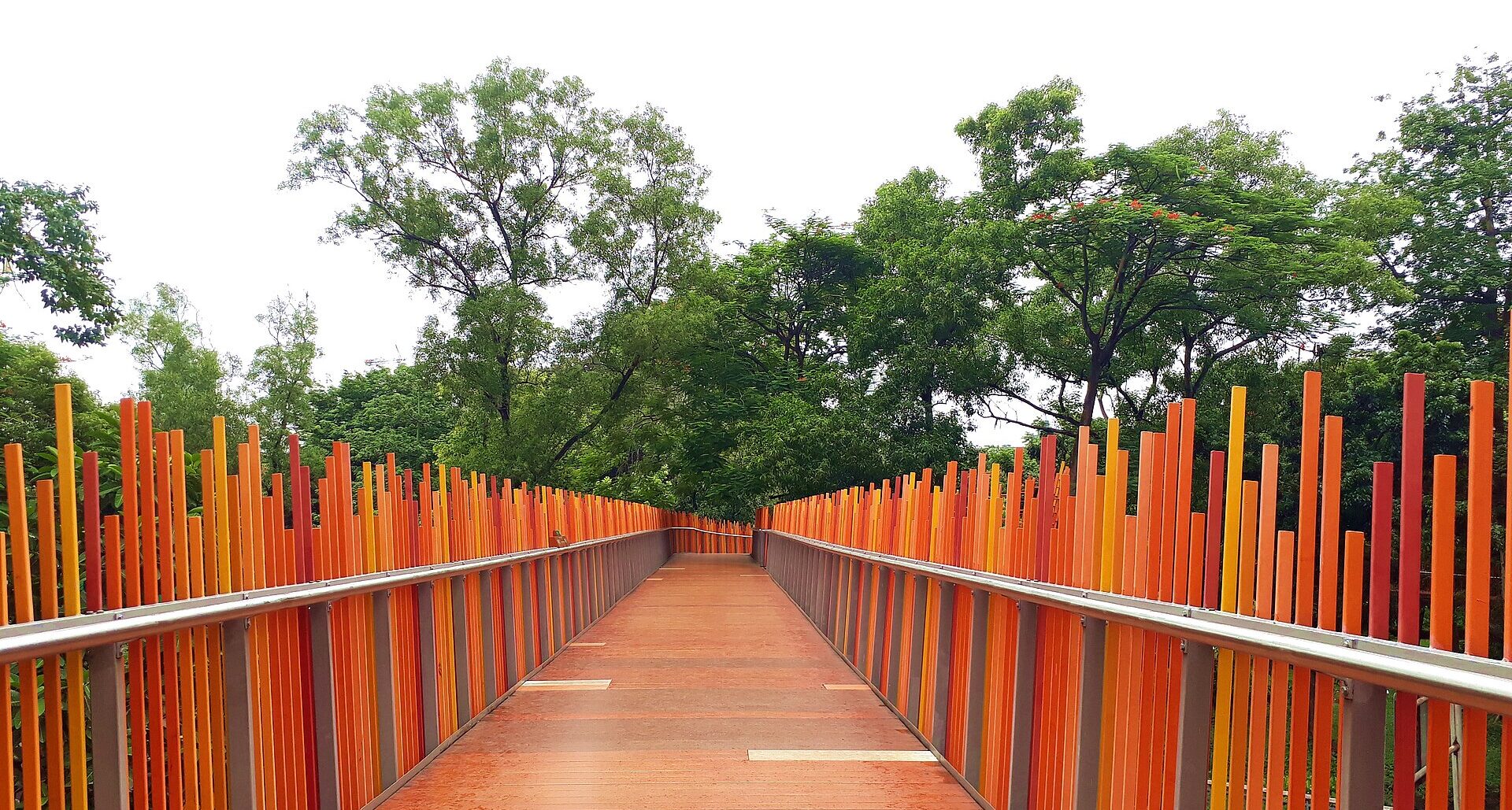
18. Tebet Eco Park
The most successful new park in Jakarta: 7.3 hectares on Jalan Tebet Barat Raya in South Jakarta, open from 06:00 to 22:00 and free. Its two halves are joined by the orange, curving Infinity Link Bridge, which is the photograph everyone takes. The northern side has themed gardens and a big community lawn and is quieter — better for a run. The southern side has a wetland boardwalk, a children’s playground and a community garden, and is very busy at weekends. Go on a weekday morning.
19. Taman Literasi, Blok M
Taman Literasi Martha Christina Tiahahu, named after the Moluccan national heroine, sits on Jalan Mahakam II beside Blok M and is one of the most pleasant new public spaces in the city. It combines a park — with a pond and fountain, a children’s plaza and an amphitheatre — with a reading room, a children’s library, a bookshop and a café. It opens from 06:00 to 22:00 (some listings say around the clock) and is free. It is small; combine it with Blok M’s markets, the second-hand bookshops and M Bloc Space.
20. M Bloc Space
A few minutes away on Jalan Panglima Polim, M Bloc Space has turned a row of former staff houses of Peruri, the state banknote printer, into a creative hub of cafés, restaurants, record and clothing shops and a small live-music venue. Entry is free — some events charge — and it is open from 07:00 until 23:00 on weekdays and midnight at weekends. It is at its best in the evening, when the courtyards fill up. Our South Jakarta guide covers the rest of the area.
Getting to each cluster
Free sights are only free if you do not spend an hour and 80,000 rupiah in a taxi reaching them. Each of the clusters above sits on or near a rail line or the main TransJakarta corridor, and that is how to reach them.
| Cluster | Nearest rail or bus | Tip |
|---|---|---|
| Merdeka Square, Istiqlal, Cathedral, Lapangan Banteng, Pos Bloc | KRL to Juanda, next to Istiqlal; TransJakarta Corridor 1 along Thamrin; Gambir station | Walk the loop clockwise from Istiqlal and finish at the square |
| Sarinah and car-free day | MRT to Bundaran HI | The MRT is the only sensible way in on a Sunday morning |
| Menteng parks and Taman Ismail Marzuki | KRL to Cikini; a short ride from Bundaran HI | Suropati and Taman Menteng are about fifteen minutes apart on foot |
| Kota Tua, Kali Besar, Jakarta Kota station | KRL to Jakarta Kota; Corridor 1 to its northern terminus | You arrive at attraction number 14 |
| Glodok | Corridor 1 to Glodok; or walk south from Kota Tua | Walk it in the morning and eat lunch there |
| Kalijodo | A short Grab ride from Kota Tua | Late afternoon, when the skaters come out |
| Hutan Kota GBK | MRT to Istora Mandiri or Senayan | Closed on Mondays |
| Tebet Eco Park | KRL to Tebet, then a short walk or ride | Weekday mornings are quietest |
| Taman Literasi and M Bloc Space | MRT to Blok M | Go at dusk and stay for dinner |
A single stored-value card works on TransJakarta, the MRT and the KRL. With it, a whole day of free sights costs 10,000 to 20,000 rupiah in fares. The alternative — cars between clusters at rush hour — can cost more than a paid attraction and take twice as long. Our MRT guide and KRL guide have the details.
Free attractions for families
Several of the twenty suit children particularly well, and they are also the easiest on a family budget:
- Tebet Eco Park has a proper playground on its southern side and space to run everywhere.
- Taman Literasi in Blok M has a children’s plaza and a children’s library, which is a rare combination.
- Taman Kalijodo has a children’s playground next to the skate park, and older children will happily watch the BMX riders for an hour.
- The Monas grounds have lawns, the deer paddock and space to cycle; go early or late.
- Car-free day is the one morning a week when a pushchair can go anywhere on Jakarta’s main avenue.
- Hutan Kota GBK has shaded lawns in the middle of the city, which in Jakarta is worth a great deal.
For the ticketed family attractions, see our guide to Jakarta with kids, and for the under-fours, Jakarta with toddlers.
Etiquette at the free religious sites
Three of the twenty are places of worship, and they stay free because the communities who use them welcome visitors. A little care keeps it that way.
- Dress. Covered shoulders and knees at all of them; at Istiqlal, women should also cover their hair. Carry a light scarf and you are ready for anything.
- Timing. Avoid Istiqlal during the five daily prayers and particularly at midday on Fridays, when the mosque fills for the main congregational prayer. Avoid the Cathedral during Mass, especially on Sunday mornings.
- Shoes. Off at the mosque, and at some temple entrances; follow what everyone else does.
- Photographs. Of buildings, freely. Of people praying, not at all, unless you have asked.
- Ramadan. Do not eat or drink inside or around the mosque during fasting hours. The hour before sunset is extraordinary at Istiqlal, but crowded.
Our etiquette guide covers the rest.
When it rains
From roughly November to April, heavy afternoon storms are routine, and they flood streets and stop traffic for an hour or two. The free places that still work in a downpour are the indoor ones: the reading rooms of the National Library, Sarinah’s floors of textiles and crafts, the covered parts of Pos Bloc and M Bloc Space, the library at Taman Ismail Marzuki, and the great hall of Jakarta Kota station. The malls are free to wander too, and in Jakarta that is not a cop-out: they are where the city spends its wet afternoons. Plan outdoor free sights for the morning and keep the indoor ones in reserve.
Almost free: under 10,000 rupiah
We kept the list of twenty strictly to places with no charge at all. A handful of others cost so little that they deserve a mention alongside:
- The city-run museums in Kota Tua — the Jakarta History Museum, the Wayang Museum and the Fine Art and Ceramics Museum — cost 10,000 for adults on weekdays, and 5,000 for students.
- Museum Bank Indonesia, in a grand colonial bank on Jalan Lada in Kota Tua, costs 5,000, and is open Tuesday to Sunday from 08:00 to 15:30.
- Ragunan Zoo costs 4,000 for adults, though you need a JakCard, bought at the gate from 45,000 with 20,000 of credit on it. It is closed on Mondays.
- The KRL to Bogor costs under 10,000 each way; the Botanical Gardens charge international visitors 50,000.
- Setu Babakan, the Betawi cultural village by a lake in Jagakarsa, is free to wander; see our Betawi cultural village guide.
Three free days
Central Jakarta on foot
Merdeka Square at 06:30. Walk east to Istiqlal for 08:00, then across to the Cathedral. Lapangan Banteng next, then Pos Bloc for a coffee and Pasar Baru’s shopping street. Then back to the square for the National Library, and an hour in its reading rooms through the worst of the heat. In the late afternoon, take the MRT south from Bundaran HI to Blok M and finish at Taman Literasi and M Bloc Space as the evening crowd arrives. The only costs are food, water and an MRT fare of no more than 14,000.
The old city
Take the KRL or TransJakarta Corridor 1 to Kota for 07:00. Walk through the hall of Jakarta Kota station, then Fatahillah Square while it is empty. Kali Besar and Toko Merah, then south into Glodok for the temples of Petak Sembilan and lunch in the food lanes. If you have energy left, take a short ride west to Kalijodo in the late afternoon for the Berlin Wall and the skaters. Home on the train.
A green Sunday
Car-free day on Sudirman and Thamrin from 06:00, walking the length of it. Hutan Kota GBK and the stadium running track mid-morning (the forest closes on Mondays, not Sundays). Home or to a mall for the hot hours. Tebet Eco Park from 16:00 until dusk.
What “free” still costs
- Getting there. TransJakarta is 3,500 a ride and the MRT 3,000–14,000, so a free day still needs a stored-value card. Buy one at a station or minimarket; see our TransJakarta guide.
- Water. You will drink two litres on a free day in Jakarta. A 1.5-litre bottle from a minimarket costs about 8,800.
- Time. The traffic is the hidden price of everything here. The same twelve kilometres can take 25 minutes or 80. Keep each free day to one area and use the rail lines between them.
- Parking, if you drive, and small fees at some public toilets.
- Donations. Temples and mosques appreciate them; they are never compulsory.
When free is not worth it
Our house rule is to say when something is not worth your time, and a few free sights come with conditions.
- Merdeka Square at midday is a shadeless expanse of heat. At dawn or dusk it is wonderful; at noon, go somewhere with a roof.
- Kota Tua on a weekend afternoon is crowded, hot and noisy. The same square at 07:00 on a weekday is one of the best places in Jakarta.
- Car-free day in heavy rain loses most of its crowd and all of its food stalls.
- Kalijodo is well worth seeing if you are in the north-west anyway, and not worth an hour’s drive on its own.
- Taman Literasi and M Bloc Space are small. They are the perfect end to a day in Blok M, not a reason to cross the city.
For the rest of a low-cost trip, see our budget travel guide, the daily budget guide and the backpacking Jakarta guide.
Frequently asked questions
What are the best free attractions in Jakarta?
Merdeka Square and the Monas grounds, Istiqlal Mosque and the Cathedral opposite it, Fatahillah Square and the old streets of Kota Tua, Glodok’s temples, Taman Suropati, Tebet Eco Park, and the Sunday car-free day on Sudirman and Thamrin. All of them cost nothing to enter.
Is Monas free to visit?
The grounds of Merdeka Square around the monument are free and open from 05:00 to 21:00. The monument, its museum and the observation deck are ticketed, at around 30,000 for foreign visitors, and closed on Mondays.
Is Istiqlal Mosque free for tourists?
Yes. Visitors are welcome free of charge outside prayer times. Dress modestly, with long trousers or a skirt and covered shoulders; women should cover their hair, and scarves can usually be borrowed.
Are there free museums in Jakarta?
Few are entirely free, but many are close to it. The city-run museums in Kota Tua cost 10,000 for adults, and Museum Bank Indonesia 5,000. The National Library, which has exhibitions as well as reading rooms, is free, and Taman Ismail Marzuki’s galleries often are.
What can I do for free in Jakarta at night?
Walk Merdeka Square with Monas lit up, sit by the fountain at Lapangan Banteng, visit Pos Bloc and M Bloc Space as the evening crowds arrive, or walk Tebet Eco Park until 22:00. The night food streets are free to wander, though you will not leave without eating.
What is Jakarta’s car-free day?
Every Sunday morning, the main avenue from Sudirman to Thamrin closes to motor traffic until around 11:00, and runners, cyclists, families and food stalls take it over. It is free, and the MRT runs as normal to reach it.
Are Jakarta’s parks free?
Yes. Taman Suropati, Taman Menteng and Lapangan Banteng are open around the clock; Tebet Eco Park from 06:00 to 22:00; Hutan Kota GBK from 06:00 to 18:00, Tuesday to Sunday; and Taman Literasi in Blok M from 06:00 to 22:00. None charge for entry.
Where is the Berlin Wall in Jakarta?
Graffiti-covered sections of the Berlin Wall stand in Taman Kalijodo, a free public park on Jalan Pangeran Tubagus Angke in Tambora, West Jakarta, alongside a skate park and BMX arena.
Can I visit Istiqlal Mosque on a Friday?
Yes, but avoid the middle of the day, when the mosque fills for the main Friday congregational prayer. Mornings and mid-afternoons are better. At any time, dress modestly and follow the visitor route.
What free things can I do in Jakarta when it rains?
The National Library’s reading rooms, Sarinah, the covered parts of Pos Bloc and M Bloc Space, the library at Taman Ismail Marzuki and the hall of Jakarta Kota station are all free and indoors. Malls are free to wander too, and are where Jakarta itself spends a wet afternoon.
Related Jakarta Guides
- Free Things to Do in Jakarta: 25 No-Cost Experiences
- Budget Travel in Jakarta
- Jakarta Daily Budget
- Backpacking Jakarta
- Jakarta Landmarks
- Istiqlal Mosque Guide
- Kota Tua Walking Tour
- Glodok Chinatown Guide
- Jakarta Hidden Gems
- Things to Do in Jakarta
Photo Credits
Lapangan Banteng and the West Irian Liberation Monument: Central Jakarta – Lapangan Banteng (2025) – img 01 by Chainwit., CC BY 4.0, via Wikimedia Commons.
Pos Bloc in the old post office: Gedung Filateli Jakarta (Pos Bloc Jakarta) (2025) – img 01 by Chainwit., CC BY 4.0, via Wikimedia Commons.
Berlin Wall sections at Kalijodo Park: Berlin Wall section at Kalijodo Park by Johnstad Di Maria, CC BY-SA 4.0, via Wikimedia Commons.