Indonesia is governed from a square kilometre of grass with a gold-tipped obelisk in the middle, and almost everything that matters administratively sits within a twenty-minute walk of it. That is the useful thing to understand before you spend a day here. This Central Jakarta guide treats the district not as a sightseeing checklist but as the country’s civic core: a ring of ministries, courts, national museums and state mosques wrapped around Medan Merdeka, hung off a rail spine that runs north to south, and stitched together by pavements that range from excellent to actively hostile.
Central Jakarta is one piece of a much larger puzzle, and it helps to know how it sits against the alternatives before you commit a day to it. Our guide to Jakarta’s neighbourhoods maps the whole city district by district, and it is worth reading alongside this page. If you are still deciding where to base yourself, the best areas to stay in Jakarta compares Central against Kuningan, SCBD and Kemang on price and transport. And because nothing in this city works without a transport plan, start with how to get around Jakarta before you plot a single route.
Where Central Jakarta Actually Begins and Ends
Jakarta Pusat is an administrative city of roughly 48 square kilometres and about 1.1 million residents, divided into eight districts: Gambir, Menteng, Tanah Abang, Senen, Sawah Besar, Kemayoran, Cempaka Putih and Johar Baru. Almost everything a visitor wants sits in the first four, and realistically in the first two.
Gambir is the government district. It contains Medan Merdeka and the national monument, the Presidential Palace complex, the National Museum, the Supreme Court, Istiqlal Mosque, Jakarta Cathedral and the northern half of Jalan MH Thamrin. Menteng, immediately east and south, is the leafy 1910s garden suburb where ministers and ambassadors live. Tanah Abang, to the west, contains Southeast Asia’s largest textile market and, confusingly for anyone reading a map, the northern end of Jalan Sudirman. Senen, to the northeast, is a working-class transport hub most visitors only see through a car window.
Where people get tripped up: Sudirman, Kuningan and SCBD are not Central Jakarta. Sudirman straddles the boundary and Kuningan and SCBD are firmly in South Jakarta. If a hotel calls itself “central” because it is on Sudirman, it is telling you something about traffic, not about administration. That distinction matters more than it sounds, because it determines whether you can walk to Monas in the morning or need twenty-five minutes in a car first.
Gambir Station and the Mistake Almost Every Visitor Makes
Gambir sits on the eastern edge of Medan Merdeka, a raised concrete station from the early 1990s that looks like a municipal swimming pool from the outside. It is Jakarta’s principal long-distance passenger station and it handles almost exclusively intercity services: the Argo trains to Bandung, Yogyakarta, Solo, Semarang, Cirebon and Surabaya, plus a handful of overnight runs further east. Executive and premium-economy classes dominate. If you are taking a train to Yogyakarta or Bandung, you are very likely leaving from here.
Why there is no KRL commuter train at Gambir
This is the single most common Central Jakarta transport error, and it costs people an hour. KRL Commuter Line trains run on tracks that pass directly through Gambir. They do not stop. There is no commuter platform in service, no ticket gate for it, and no amount of standing hopefully on the concourse will change that. Visitors who buy a Commuter Line ticket expecting to alight at Gambir end up at Juanda or Gondangdia and then have to work out the last kilometre on foot in full sun.
The nearest working KRL stations are Juanda, about a kilometre northeast of the monument, and Gondangdia, about the same distance east in Menteng. Both are on the Bogor line. Sawah Besar is a third option slightly further north. Plan around those, not around Gambir. Our KRL Commuter Line guide covers the line colours, the women-only carriages and the card situation in detail.
The Ministry of Transportation has publicly floated integrating commuter services into Gambir so that intercity and KRL passengers can interchange without leaving the building. As of August 2026 that remains a stated intention with no operating date and no visible platform works. Treat it as something that may happen, not something to plan around.
The airport train does not serve Gambir either
The Soekarno-Hatta Airport rail link is genuinely useful, and it is the one piece of Jakarta transport that reliably beats a car at rush hour. It runs roughly every 30 minutes, takes about 45 to 50 minutes end to end, and stops at Soekarno-Hatta, Batu Ceper, Rawa Buaya, Duri, BNI City and Manggarai. Fares have sat around IDR 70,000, with a standard published rate closer to IDR 100,000 and frequent promotional pricing, so check the app rather than trusting a two-year-old blog post. First departure from the airport is around 05:00; the last service out of BNI City is around 22:00.
Notice what is missing from that station list. Gambir is not on it. The airport train’s city-centre stop is BNI City, sometimes still signed as Sudirman Baru, which is next to Dukuh Atas and a good 3.5 kilometres south of Monas. From BNI City you connect to the MRT at Dukuh Atas BNI or take a ten-minute Grab north. It is still the right choice at 07:00 on a weekday, when the toll road from the airport can swallow ninety minutes. Our airport transfer comparison runs the numbers against taxis and ride-hailing.
| Rail service | Serves Gambir? | Useful Central Jakarta stop | Typical fare |
|---|---|---|---|
| KAI intercity (Argo, Bima, Taksaka) | Yes, principal terminus | Gambir | IDR 200,000–600,000 depending on route and class |
| KRL Commuter Line | No, passes through without stopping | Juanda, Gondangdia, Sawah Besar | IDR 3,000–7,000 |
| Soekarno-Hatta Airport train | No | BNI City, then MRT or Grab | Around IDR 70,000, sometimes IDR 100,000 |
| MRT North–South line | No | Bundaran HI, then 20-minute walk or short ride | IDR 3,000–14,000 |
The MRT Spine and What Is Not Open Yet
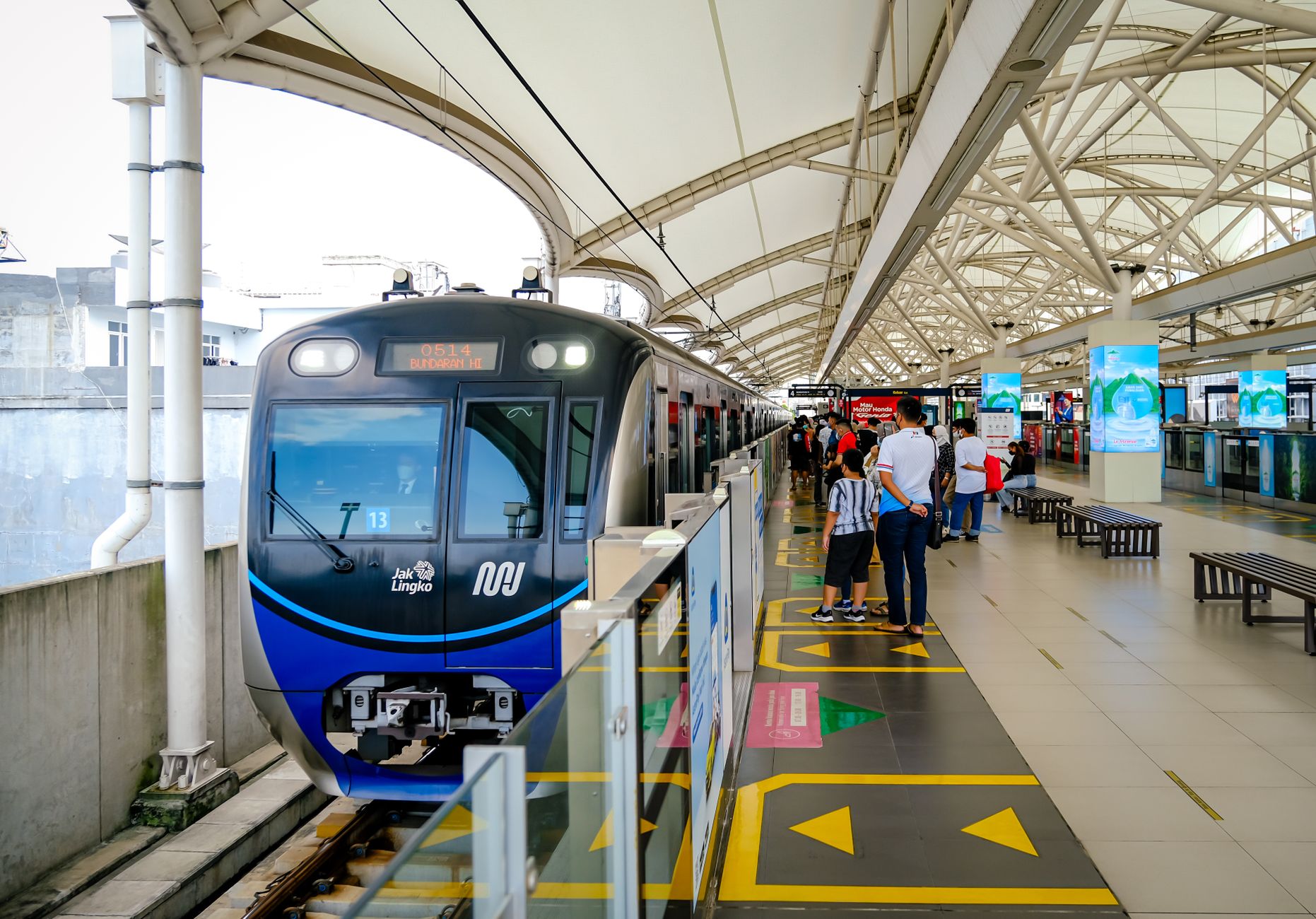
The MRT North–South line runs from Lebak Bulus in the far south to Bundaran HI, and as of August 2026 Bundaran HI is still the northern terminus. Trains run roughly 05:00 to midnight, fares are distance-based between IDR 3,000 and IDR 14,000, and the whole thing is air-conditioned, punctual and clean in a way that will surprise anyone whose mental image of Jakarta transport was formed in 2005. Full details on ticketing and station layout are in our Jakarta MRT guide.
Here is the part that page-one search results routinely get wrong. There is no MRT station at Monas yet. Phase 2A will extend the line north from Bundaran HI through Thamrin, Monas, Harmoni, Sawah Besar, Mangga Besar, Glodok and Kota. Construction on the Thamrin and Monas station boxes was above 90 percent complete in mid-2026 and the overall Phase 2A works were tracking around 63 percent, but the operating target for Thamrin and Monas is late 2027, with the full run to Kota around 2029. If you read a guide that tells you to “take the MRT to Monas station”, it is describing a future that has not arrived.
What this means practically: get off at Bundaran HI and walk north up Thamrin, or take TransJakarta. The walk from Bundaran HI to the Monas west gate is roughly 1.8 kilometres and takes 22 to 28 minutes on decent, mostly shaded pavement. It is one of the few genuinely pleasant long walks in Jakarta, and it is far better done at 07:30 than at 13:00.
TransJakarta fills the gaps the MRT does not reach. Corridor 1 runs the length of Thamrin and Sudirman with a stop at Monas, and the fare is a flat IDR 3,500 regardless of distance. Most corridors wind down around 22:00 with a limited night network after that. Our TransJakarta guide explains the corridor numbering, and the JakLingko card guide covers the single card that works across bus, MRT and KRL. Buy one on arrival. It removes an enormous amount of friction.
Monas: Worth It, With Caveats
The National Monument is a 132-metre marble obelisk topped with 35 kilograms of gold leaf, commissioned by Sukarno and finished in 1975. It is the symbol of the city and the anchor of this whole district, and you should go. But go with the right expectations.
The park itself, Medan Merdeka, is around 75 hectares and roughly a kilometre on each side. The distance from the perimeter fence to the base of the obelisk is longer than it looks on a map, and there is almost no shade on the approach. A small shuttle runs across the grounds for a token fare when it is operating. Entry to the park is free.
To go up, you buy at the counter on the day. There is no online booking system and there is no queue-jumping product worth paying for. Payment is by JakCard rather than cash or QRIS at most counters, and if you do not have one you buy it on the spot for around IDR 50,000, which includes about IDR 20,000 of stored balance. One card can be tapped for several people. Local-rate tickets have sat around IDR 24,000 for the observation deck including the museum and the Hall of Independence, and around IDR 8,000 for the museum only, with reduced rates for students and children. Foreign visitors are sometimes charged a higher rate; check the board at the counter rather than assuming.
The observation deck holds only around fifty people at a time, which is the real constraint. On weekends and school holidays the queue for the lift can run past ninety minutes. Arrive at opening, on a weekday, or accept that you are seeing the museum and the ground level only. Monas is closed on Mondays for maintenance. Standard hours are roughly 08:00 to 18:00, with occasional extended evening opening on selected days; the schedule has changed more than once in the past two years, so verify before you build a day around it.
The view from the top is worth having once. Jakarta from 115 metres up is a genuinely instructive sight: the ordered colonial grid to the north, the glass towers marching south along Sudirman, and the low red-tiled sprawl going on forever in every direction. The diorama museum in the base is dated in an oddly charming way and takes twenty minutes. If you have limited time in Jakarta and only want a viewpoint, one of the city’s rooftop bars will give you a better one with a drink in your hand, but it will not give you the national-symbolism context that Monas does.
The Merdeka Square Ring: National Institutions in One Loop
The genuinely interesting thing about Medan Merdeka is not the obelisk. It is that the Indonesian state arranged itself around this lawn, deliberately, and you can walk the whole ring in an afternoon.
National Museum of Indonesia
On the west side, and the single best indoor hour in Central Jakarta. The museum suffered a serious fire in September 2023 that damaged the rear of Building A and hundreds of objects, and it reopened, revitalised, in October 2024. Ticket prices were adjusted on 1 January 2026: around IDR 25,000 for Indonesian adults, IDR 15,000 for children aged 3 to 12, and IDR 50,000 for foreign visitors, with the immersive room an extra IDR 35,000 on top. Published hours run to 20:00, later than most Jakarta museums, though it is generally closed on Mondays. The prehistory, bronze and ceramics collections are outstanding and the new building’s Indonesian textile displays deserve more time than most people give them. Our National Museum guide goes gallery by gallery.
Istiqlal Mosque and Jakarta Cathedral
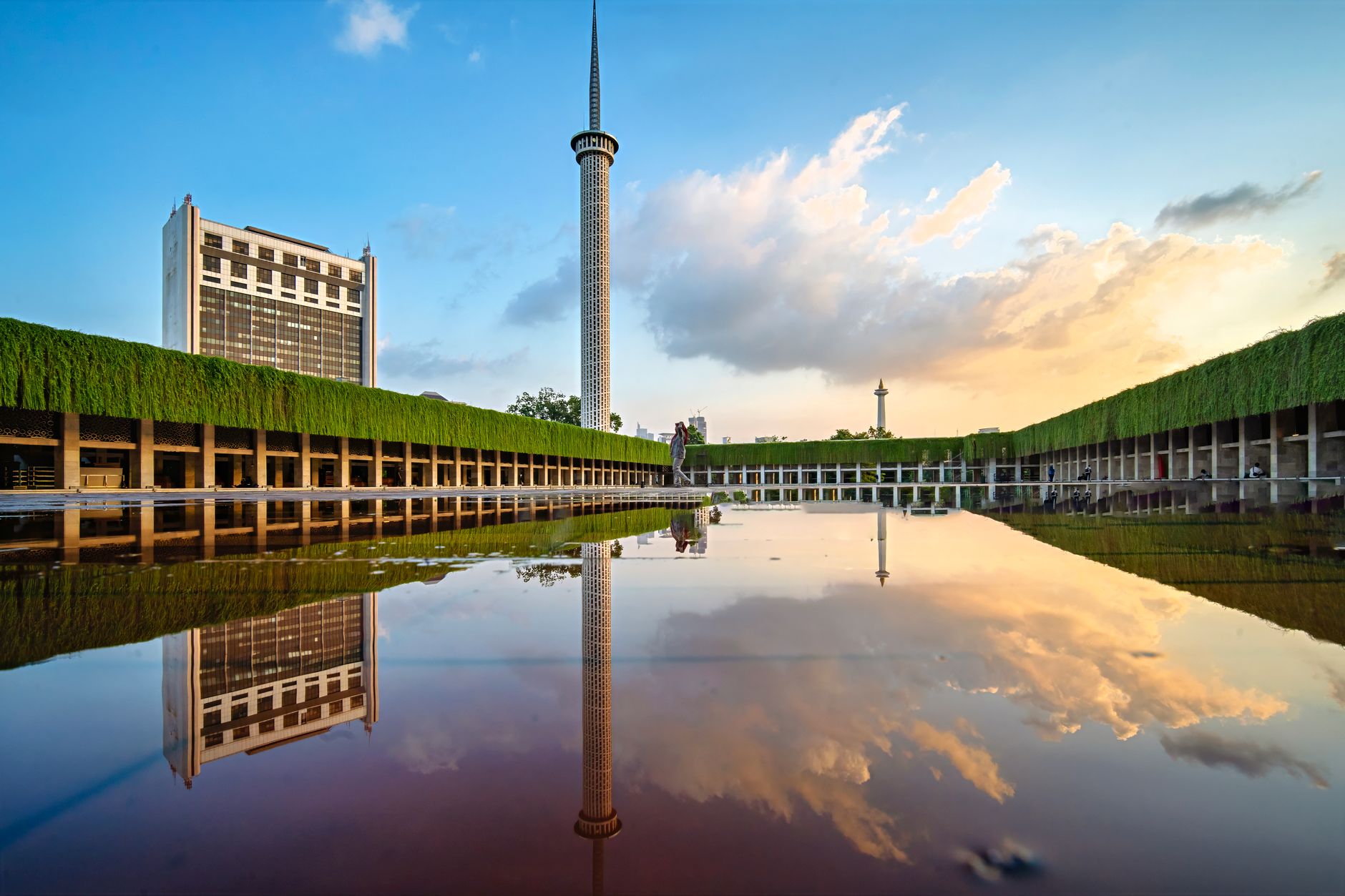
Northeast of the square, facing each other across Jalan Perwira, sit Southeast Asia’s largest mosque and a neo-Gothic Catholic cathedral from 1901. Istiqlal was deliberately sited opposite the cathedral, and the architect, Friedrich Silaban, was a Protestant. It is free to enter, generally open around 04:00 to 21:00 outside prayer times, and non-Muslim visitors are escorted by a volunteer guide throughout. Modest dress is required; robes are lent at the visitor entrance. Tips for the guides are customary rather than compulsory.
In 2024 an underground pedestrian passage was opened linking the two buildings, and it has become a small pilgrimage in its own right. We cover it in the Tunnel of Friendship guide, along with the practicalities of the Istiqlal Mosque visit and the cathedral. Doing all three together takes ninety minutes and is the most efficient cultural block in the district. If the theme appeals, the wider religious sites walking tour extends it.
The state buildings you look at rather than enter
The north side of the square is the Presidential Palace complex: Istana Merdeka facing the lawn and Istana Negara behind it on Jalan Veteran. Neither is open for drop-in visits. Occasional public open days are announced with little notice and require registration. You can photograph the gates and the guards from the pavement, which is what most people do, and the presence of the palace explains the road closures and the ceremonial traffic you will encounter.
On the east side is the Supreme Court, a heavy 1970s building housing the Mahkamah Agung, alongside the Ministry of Finance and other government blocks. Architecturally they are unremarkable. Their value is contextual: standing on the east pavement and turning slowly through 360 degrees gives you the entire apparatus of the Indonesian state in one view. Our Jakarta landmarks overview puts these in order of what actually merits a stop.
| Merdeka Square site | Entry | Time needed | Verdict |
|---|---|---|---|
| Monas observation deck | Around IDR 24,000 local rate, JakCard only | 60–120 min including queue | Go early on a weekday, or skip the lift |
| National Museum | IDR 50,000 foreign visitors | 90–150 min | The strongest single attraction here |
| Istiqlal Mosque | Free, guided, tip customary | 45 min | Essential, and genuinely welcoming |
| Jakarta Cathedral | Free | 20 min | Quick, worthwhile, pairs with Istiqlal |
| Presidential Palace | Exterior only | 10 min | A photo stop, nothing more |
| Supreme Court and ministries | Exterior only | 10 min | Skippable unless you like brutalist officialdom |
Lapangan Banteng: The Square Jakarta Got Right
Ten minutes northeast of Monas, past Istiqlal, is a park that most visitors miss and shouldn’t. Lapangan Banteng was a Dutch parade ground, then a neglected bus terminal, and since a 2018 redesign it has been the most successful piece of public space in Central Jakarta. It is free, open roughly 05:00 to 22:00, and it works: joggers at dawn, families at dusk, a decent amount of shade, and a dancing fountain that runs on Friday, Saturday and Sunday evenings with shows generally around 18:30 and 19:30, sometimes with a later slot.
At the centre is the West Irian Liberation Monument, a muscular 1963 bronze of a man breaking his chains, which is worth thirty seconds of looking at and rather longer of reading about. Around the edges sit the Ministry of Finance in the former Daendels Palace, one of the largest colonial buildings in Indonesia, and the Gereja Katedral just to the west. If you want green space in this district and Merdeka’s sunbaked lawns have defeated you, come here instead. It is among the better entries in our free things to do in Jakarta roundup.
The Cikini Arts Corridor and Taman Ismail Marzuki
Jalan Cikini Raya, running east from Menteng, is the closest thing Jakarta has to a cultural quarter. The anchor is Taman Ismail Marzuki, the city’s arts centre since 1968, which reopened after a long and contentious rebuild. Inside are the Graha Bhakti Budaya theatre, exhibition halls, the HB Jassin Literary Archive and, since December 2025, a fully reopened Planetarium.
The Planetarium is the news here. It had been shut for around 13 years and it reopened to the public on 25 December 2025 with a new digital projection system, an AI virtual host and roughly 185 seats per show. Public tickets have been priced at about IDR 10,000, with free entry for students holding a Jakarta Smart Card or valid student ID. Sessions are booked through a per-show registration link posted on the venue’s Instagram account, and demand has been high enough that a secondary market of ticket touts appeared almost immediately. Book direct. Do not pay a reseller a multiple of a ten-thousand-rupiah ticket.
Around TIM, Cikini has a genuine street life that the rest of Central Jakarta lacks after office hours: warungs, secondhand bookshops, coffee roasters and the KRL station. Cikini station is on the Bogor line and is the practical rail access point for this whole corridor. Our museums and cultural sites guide and the broader Jakarta cultural experiences page cover what else is programmed across the year.
Pasar Baru and Kwitang
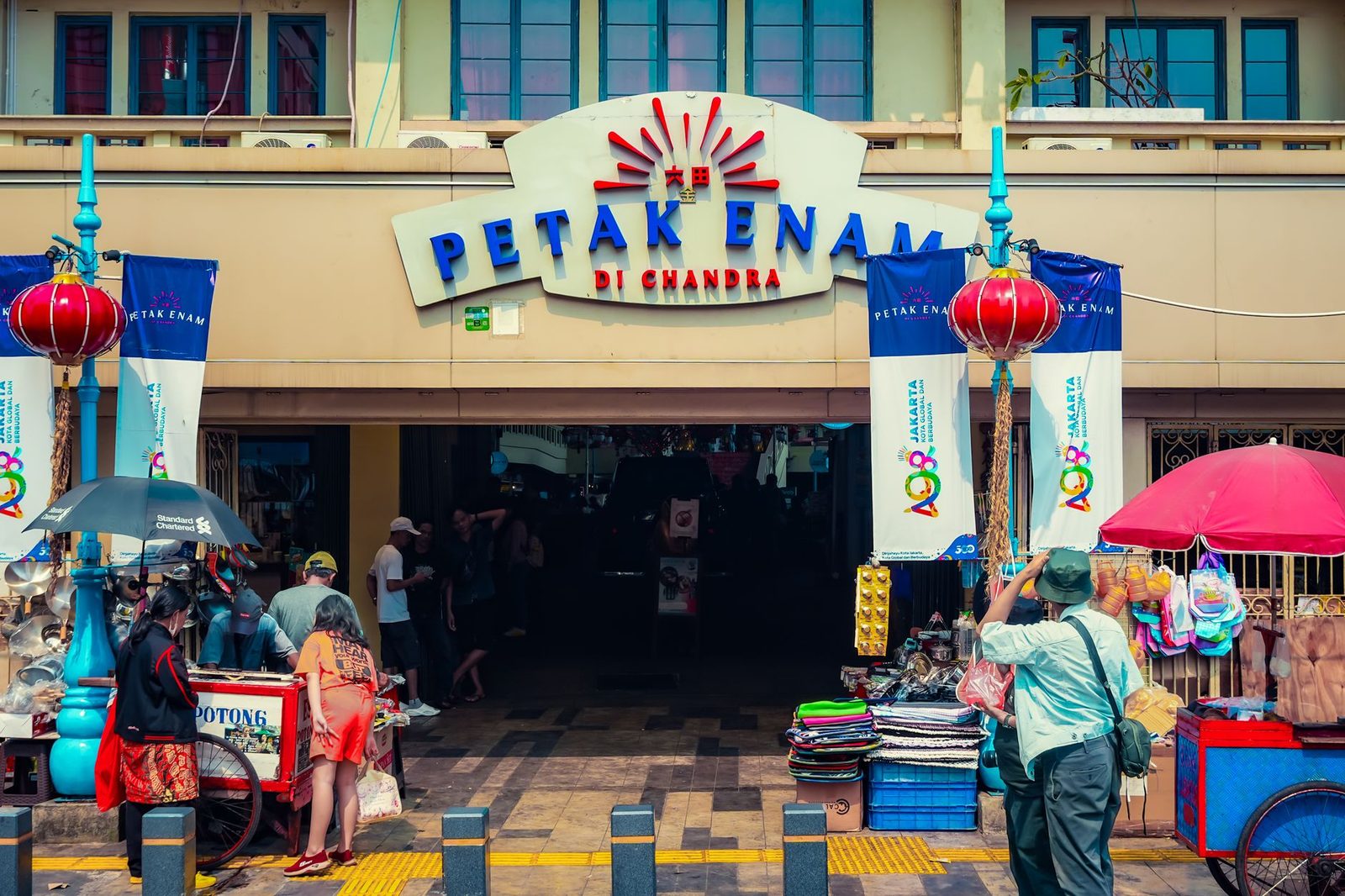
Pasar Baru, north of Merdeka Square in Sawah Besar, has been a shopping street since 1820, which makes it the oldest in the city. The main run is pedestrianised, marked by an ornamental gate, and lined with textile shops, tailors, shoe shops and camera dealers. It has always been a strongly Indian and Chinese Indonesian trading street and it still is: you will find sari fabric next to Hakka noodle shops.
Be realistic about it. Pasar Baru is not a curated heritage experience. Much of it is tired, some units are empty, and the merchandise skews towards things residents need rather than things travellers want. The reason to go is the tailoring, which remains genuinely good value if you have three or four days in Jakarta and want a shirt or a suit made, and the street food along the side alleys. For fabric specifically, the far larger and better-stocked option is Tanah Abang market, twenty minutes west. For batik in particular, see where to buy batik in Jakarta.
Kwitang, southeast of Pasar Baru towards Senen, is a name older Jakartans associate with two things: the historic Al-Riyadh mosque and religious study circle, and the Sunday secondhand book market along Jalan Kwitang. The book trade here has thinned considerably as buyers moved online and stock migrated to Blok M and Senen. Do not make a special journey for it. If you happen to be passing on a Sunday morning, browse. Otherwise the flea market and vintage guide will point you somewhere with more left in it, and Jakarta’s traditional markets covers the food-focused options.
The Thamrin and Sarinah Axis
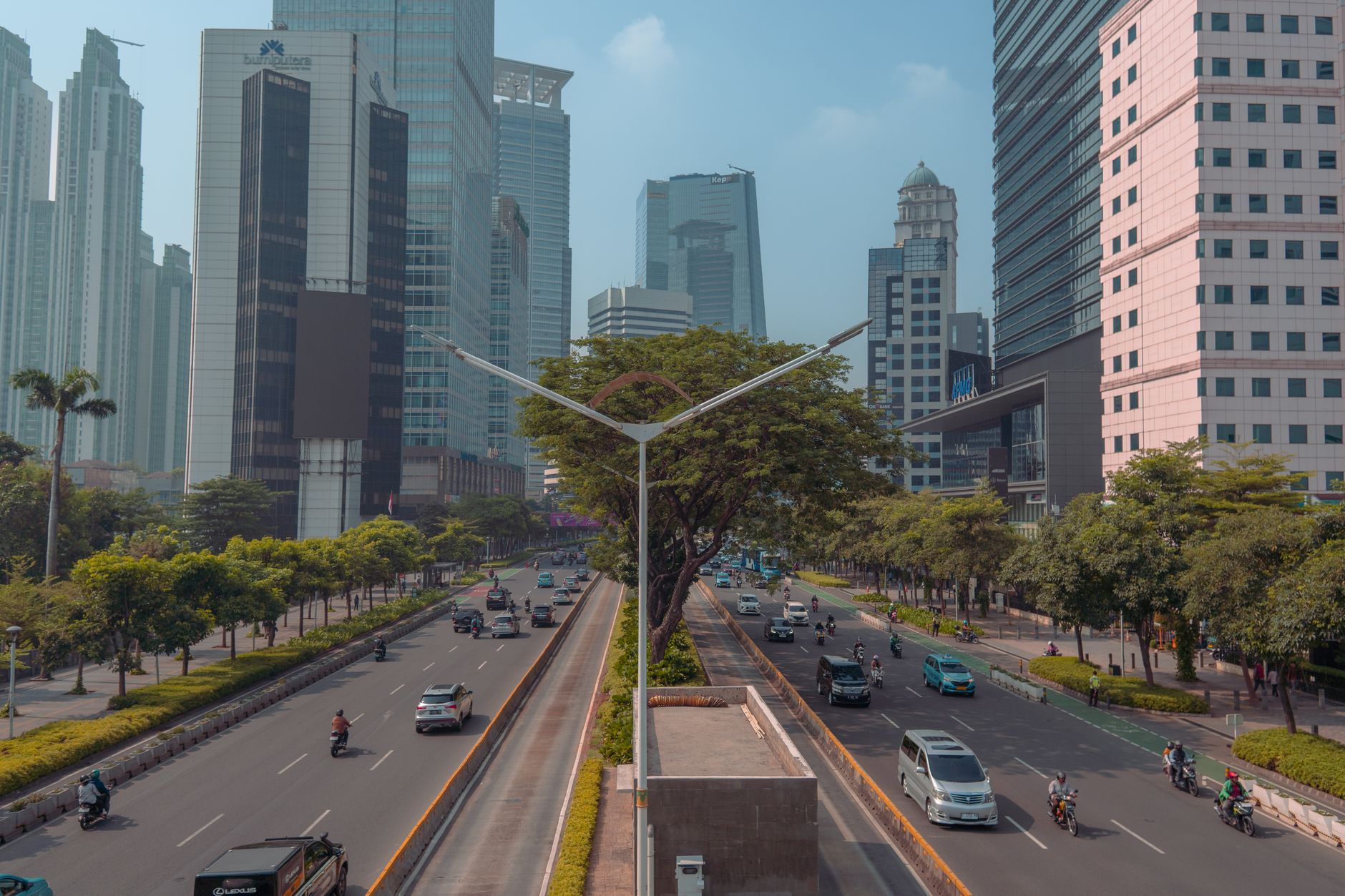
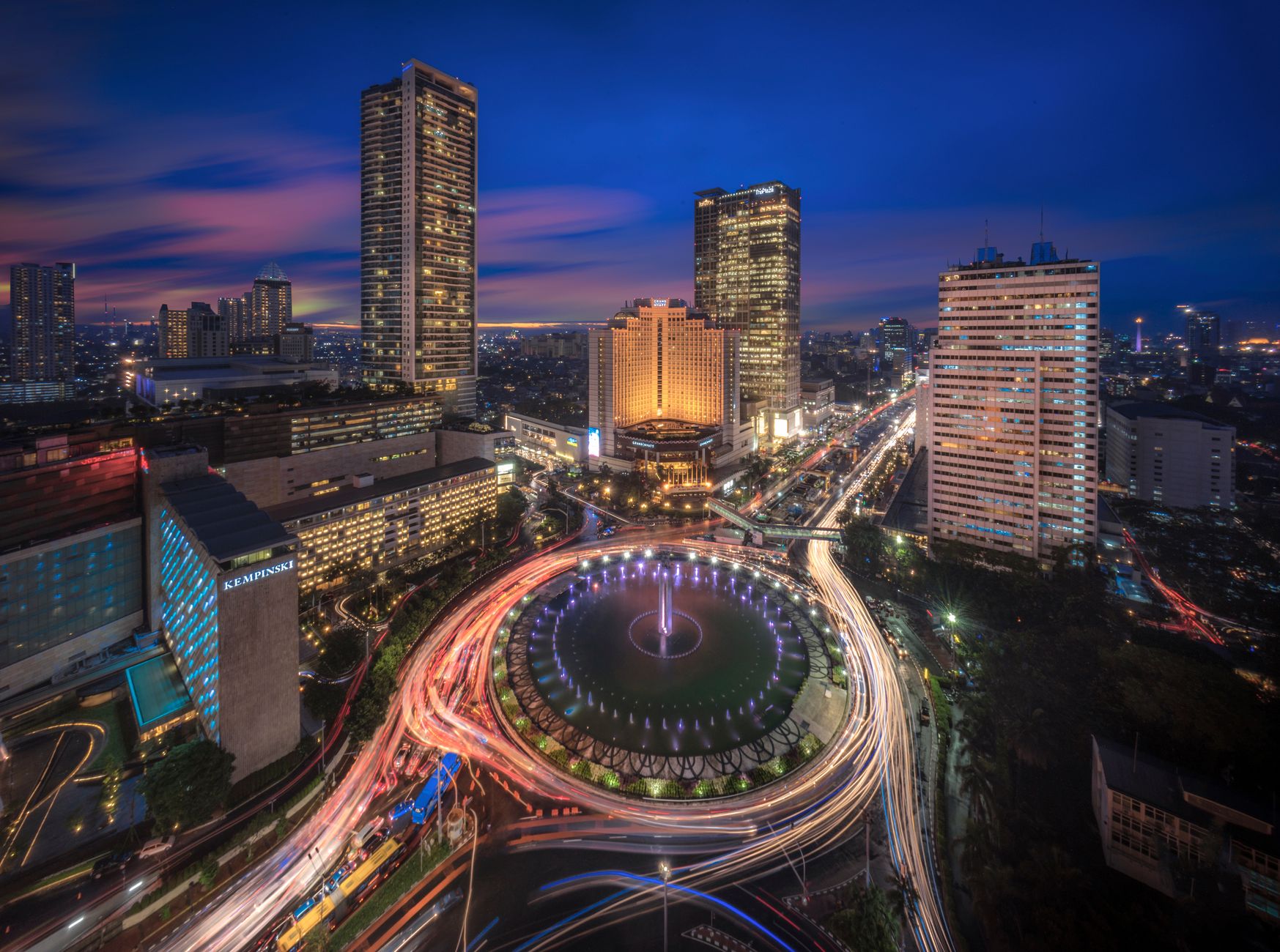
Jalan MH Thamrin is the ceremonial spine of modern Jakarta: four lanes each way, the Selamat Datang welcome monument at Bundaran HI, and a run of towers, embassies and hotels between the roundabout and Merdeka Square. It is also the only long stretch of Central Jakarta where the pavement is consistently wide, shaded and continuous, so it is where you should do your walking.
Sarinah, at the northern end, is Indonesia’s first department store, opened in 1962 as a Sukarno project. Its 2022 reinvention repositioned it around Indonesian brands, crafts and food rather than international retail, and the Pasar Nusantara food hall was relaunched with around 55 curated food and drink tenants and a little over 300 seats. It is a good lunch stop and a much better souvenir option than the airport, because the batik, silverwork and craft tenants are actual makers rather than importers. Cross-reference with our Indonesian handicrafts guide and best Jakarta souvenirs.
Two hundred metres away, Grand Indonesia and Plaza Indonesia sit on either side of Bundaran HI and represent the other end of the retail spectrum. Our Grand Indonesia guide covers the layout, which is genuinely confusing on a first visit. Remember that restaurants and bars in these malls typically add around 21 percent in service charge and tax to menu prices, so budget accordingly.
Sunday Car Free Day
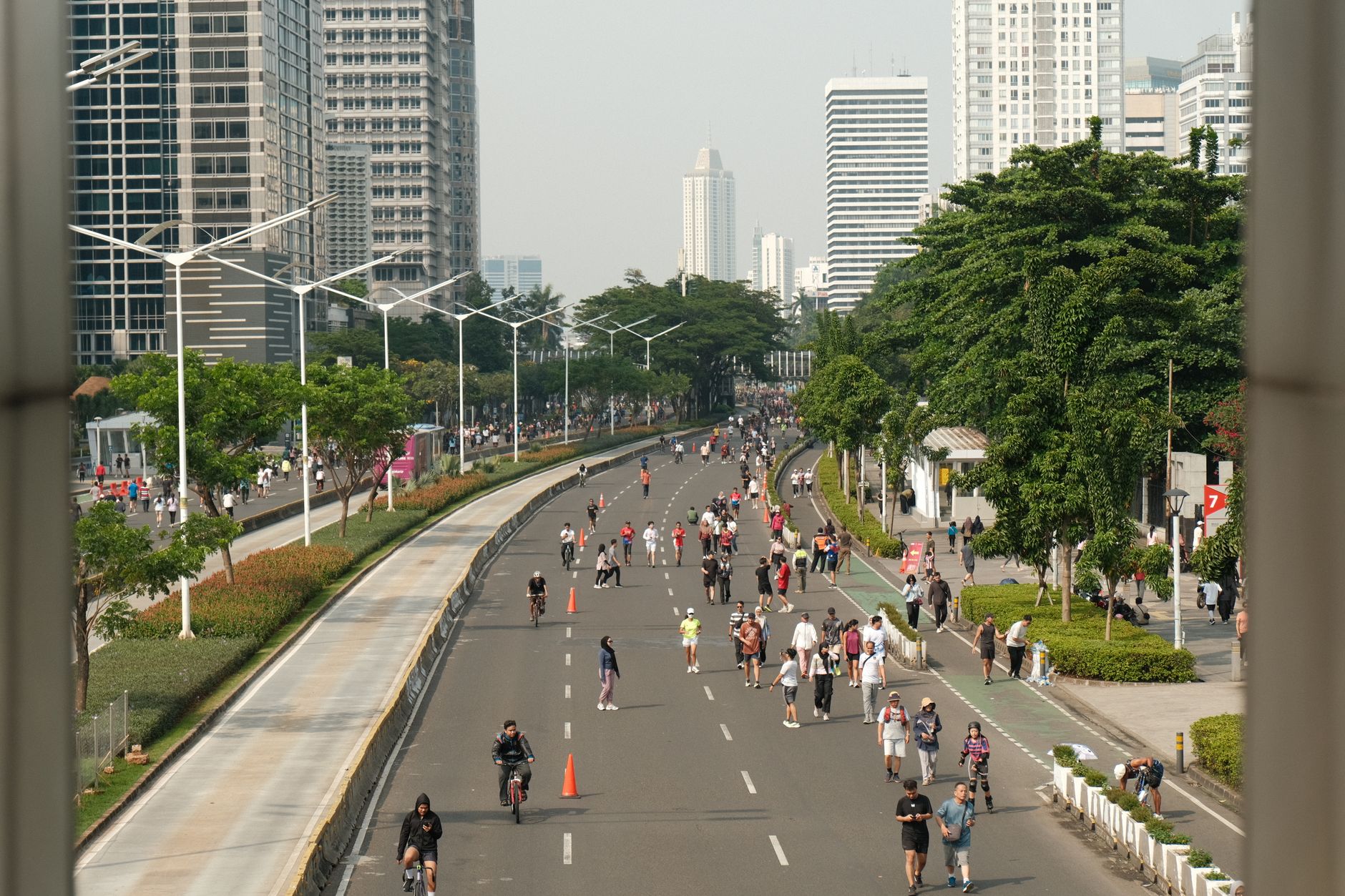
Every Sunday, Jalan MH Thamrin and Jalan Jenderal Sudirman close to motor traffic between Bundaran HI and Bundaran Senayan. As of 7 June 2026 the hours were brought forward to 05:30 to 10:00, having previously started at 06:00. Two carriageways of eight-lane highway fill with runners, cyclists, aerobics classes, food carts, street performers and families, and for four and a half hours Jakarta behaves like a different city.
This is, without much competition, the best free thing to do in Central Jakarta. Arrive by 06:30. By 09:00 the sun is punishing and the crowd thins fast. Note that Car Free Day is suspended on national holidays and during some official events, so check before committing a Sunday morning to it; the Jakarta transport agency posts cancellations on social media. It also occasionally shifts during Ramadan.
How to Sequence a Day: A Central Jakarta Guide Itinerary
The heat dictates the order, not the geography. Jakarta runs at 32 to 34 degrees with high humidity for most of the year, and the difference between 08:00 and 13:00 outdoors is the difference between a good day and a miserable one. Front-load everything outdoors. Push everything air-conditioned into the middle of the day.
| Time | Where | Why then |
|---|---|---|
| 06:30–08:00 | Car Free Day on Thamrin (Sundays) or a walk up Thamrin from Bundaran HI | Cool, empty, best light of the day |
| 08:00–09:30 | Monas, at opening | Shortest lift queue; the lawn is still bearable |
| 09:45–11:15 | Istiqlal Mosque, Tunnel of Friendship, Cathedral | Before midday prayers thicken the crowd |
| 11:30–13:30 | National Museum | Air-conditioned, and it absorbs the worst two hours |
| 13:30–14:30 | Lunch at Sarinah’s Pasar Nusantara or a Menteng warung | Indoors, cheap, and you need to sit down |
| 15:00–17:00 | Cikini and Taman Ismail Marzuki, or Pasar Baru | Shade returns; galleries and shops are open |
| 17:30–19:30 | Lapangan Banteng for the fountain, Fri–Sun | Sunset, cooler air, fountain shows from around 18:30 |
Two things break this plan. The first is Monday, when Monas, the National Museum and most of the smaller museums close. If you only have one day and it is a Monday, do Istiqlal, the Cathedral, Lapangan Banteng, Sarinah and Cikini, and save the museums for another city. The second is rain. Between November and March the afternoon downpour is close to daily, arrives around 15:00, and lasts an hour. Have an indoor option ready; Jakarta’s indoor attractions lists the good ones.
Be Honest About the Walking
Central Jakarta has the best pavements in the city and they are still inconsistent. Thamrin between Bundaran HI and Merdeka Square is genuinely excellent: wide, shaded, level, with proper crossings. Around Merdeka Square itself it is fine. North of Pasar Baru and east towards Senen it deteriorates into broken slabs, parked motorbikes and sections where the pavement simply stops.
The bigger problem is the square itself. Medan Merdeka is a kilometre on each side with a perimeter fence and a limited number of gates. Walking from the National Museum on the west side to Istiqlal on the northeast is around 2 kilometres if you go around, in full sun, and there is no shortcut across. Plan the ring in one direction and use a Grab motorbike for one leg if you are flagging. A GoRide or GrabBike across that distance costs around IDR 10,000 to 15,000 and takes five minutes; see Grab versus Gojek for which app to install.
Pedestrian crossings on the major roads are often footbridges rather than surface crossings, and some are unpleasant. Underpasses at Bundaran HI and Dukuh Atas are clean and air-conditioned. Carry water, wear a hat, and accept that you will be sweating within ten minutes of leaving anywhere air-conditioned. Our Jakarta travel tips covers the heat, the traffic and the etiquette in more depth, and how to avoid Jakarta traffic is worth reading before you book anything with a fixed start time.
What Is Skippable
Not everything in this district earns its place. The Monas diorama museum is fine but not worth a second visit. The Museum Nasional is worth two hours; the smaller government museums around the square mostly are not, unless you read Indonesian. The National Gallery on the east side of the square has intermittent programming and can be excellent or nearly empty depending on the month; check what is on before going.
The Jakarta Planetarium is now genuinely good, but the queue system means it is only worth it if you have booked. Pasar Baru is skippable unless you want tailoring. Kwitang’s book market is a shadow of what guidebooks describe. And the Selamat Datang monument at Bundaran HI is a traffic island; look at it from the pavement, do not attempt to reach it.
If you have only two days in the city, do not spend both here. One day in Central Jakarta and one in Kota Tua covers the historic and civic ground properly; our Kota Tua walking tour and the two-day Jakarta itinerary set that out. The colonial architecture history piece is the right companion read if the built environment is what draws you.
Eating and Sleeping in the District
Central Jakarta eats early and empties at night. This is a government district, and outside the hotel restaurants and Sarinah’s food hall, options thin considerably after 21:00. The best cheap eating is around Cikini, in the alleys off Pasar Baru, and at the Menteng warungs, where a plate of nasi campur runs IDR 25,000 to 45,000. Hotel restaurants on Thamrin will charge IDR 150,000 to 400,000 per head plus that 21 percent. Our cheap eats guide and best street food in Jakarta both have Central entries worth walking to.
For accommodation, Central Jakarta buys you walkability to the national sights and easy MRT access at Bundaran HI, at the cost of nightlife and restaurant depth compared with South Jakarta. Our Central Jakarta hotels guide covers the district as a whole and hotels near Monas narrows it to the immediate Merdeka Square area.
Central Jakarta Guide FAQ
Can I catch a KRL commuter train from Gambir station? No. Commuter Line trains run through Gambir but do not stop there. Gambir handles long-distance KAI intercity services only. Use Juanda, Gondangdia or Sawah Besar instead, each roughly a kilometre from Monas. Integration of commuter services into Gambir has been discussed by the transport ministry but has no confirmed date as of August 2026.
Does the airport train stop at Gambir? It does not. The Soekarno-Hatta line runs to Batu Ceper, Rawa Buaya, Duri, BNI City and Manggarai. BNI City, next to Dukuh Atas, is the closest useful stop to the city centre and sits about 3.5 kilometres south of Monas. From there take the MRT one stop to Bundaran HI or a short ride north.
Is there an MRT station at Monas? Not yet. Bundaran HI remains the northern terminus in 2026. The Phase 2A stations at Thamrin and Monas are targeted to open in late 2027, with the extension to Kota expected around 2029. Any guide telling you to take the MRT directly to Monas is out of date. Walk 1.8 kilometres up Thamrin or take TransJakarta Corridor 1.
How much does it cost to go up Monas? Local-rate tickets have been around IDR 24,000 for the observation deck including the museum, and around IDR 8,000 for museum-only entry, with student and child rates lower. Payment is by JakCard rather than cash. A card costs about IDR 50,000 including starting balance and can be shared. Foreign visitor rates may differ, so check at the counter.
What is the best day to use this Central Jakarta guide? Sunday morning for Car Free Day, then Tuesday to Friday for the museums. Avoid Monday entirely, when Monas, the National Museum, Museum Joang 45 and the Proclamation Text museum all close. Saturday works but the Monas lift queue is at its worst and Merdeka Square fills with domestic day-trippers.
Is Central Jakarta safe to walk around? Yes, including after dark on the main axes. Petty theft is the realistic risk rather than anything worse, and the government district is heavily policed. The genuine hazards are traffic, uneven pavements, and heat exhaustion. Cross at footbridges or signalled crossings, not by darting through Thamrin traffic.
How many days do I need for Central Jakarta? One full day covers Monas, the National Museum, Istiqlal, the Cathedral and Lapangan Banteng comfortably. A second day lets you add Cikini, Taman Ismail Marzuki, Pasar Baru and a proper wander through Menteng. Beyond two days you are better off spending the time in Kota Tua or South Jakarta.
Where should I eat around Merdeka Square? Sarinah’s Pasar Nusantara food hall at the Thamrin end is the most reliable sit-down option, with around 55 tenants covering most Indonesian regional cuisines. For cheaper and more atmospheric, walk east to Cikini for warungs and street stalls, or into Menteng for the long-running gado-gado and soto places. Budget IDR 30,000 to 60,000 per person at either.
Where to Go Next
Central Jakarta gives you the state. For the commercial and colonial city, head north to eating your way around Kota Tua and the Dutch quarter. For the modern city, go south. If you are building a longer trip, the three-day Jakarta itinerary and the one-week itinerary both use Central as their opening act. And if you would rather see the whole city laid out before you choose, the Jakarta attractions map is the fastest way to orient yourself.
Central Jakarta is also where the best-rated budget beds are. Konko Hostel on Jalan Kebon Sirih Raya scored 9.2 on Hostelworld when we checked, and it is about 13 minutes’ walk from Monas, with the Jalan Sabang food carts close by. Our guide to budget hostels in Jakarta covers it and the rest of the city’s dorms, capsules and guesthouses.
For a free overview of the centre, catch one of Transjakarta’s Jakarta Explorer double-deckers from the Balai Kota or IRTI Monas stops: the sightseeing routes loop past the National Library, Istiqlal and the towers of Thamrin and Sudirman, and cost nothing. Our guide to cheap transportation in Jakarta has the routes and the rest of the budget tactics.